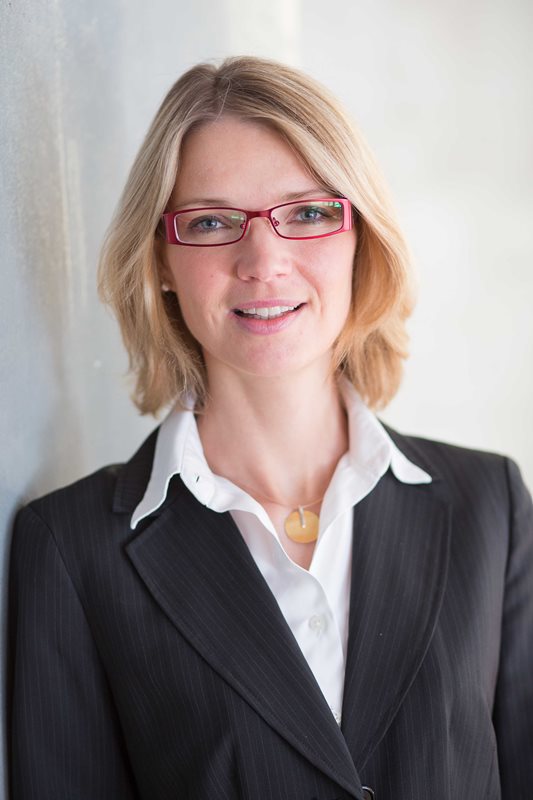
Christine Di Martinelly is an Associate Professor in Operations Management at IÉSEG School of Management. She holds two PhDs in Economic and Management Sciences from Louvain School of Management and Applied Sciences from INSA Lyon. Her research focuses on operations management, healthcare systems, supply chain optimization, and resource allocation. Di Martinelly's extensive publication record addresses operational challenges in healthcare, including surgical scheduling, inventory management, and resource allocation. Her work employs mathematical modeling, optimization algorithms, and multicriteria decision analysis to improve efficiency in healthcare delivery systems. She has served as Academic Director at IÉSEG since 2014 and has professional experience as a consultant at Arthur Andersen earlier in her career.
Yvain Bruned is a Professor of Mathematics at Université de Lorraine, Nancy, France, where he leads research in singular stochastic partial differential equations and related fields. He serves as Principal Investigator for the ERC Starting Grant LoRDeT (2023-2028), which focuses on advancing the theory of decorated trees and Hopf algebraic structures for solving singular SPDEs and dispersive PDEs at low regularity. Previously, he was a Lecturer at the University of Edinburgh (2019-2022) and completed postdoctoral work at Imperial College London and University of Warwick under Martin Hairer. His educational background includes: PhD in Mathematics (2012-2015), UPMC (Paris 6), on "Singular KPZ type equations" under Lorenzo Zambotti Master 2 in Probability and Statistics, ENS Cachan / Rennes 1, with honors Master 1 in Mathematics, ENS Cachan, with honors Bachelor in Mathematics and Computer Science, University of Rennes 1, with honors Student at ENS Cachan Brittany extension (2009-2013) Classes Préparatoires in Mathematics and Physics (2007-2009) Bruned's research centers on singular stochastic partial differential equations, with particular focus on Regularity Structures, renormalization theory, and their connections to Hopf algebras. His work bridges theoretical mathematics with applications in quantum field theory, wave turbulence, and numerical analysis. He has developed novel approaches using decorated trees to handle renormalization procedures for singular SPDEs and has extended these methods to dispersive PDEs with random initial data. His research program aims to establish existence and uniqueness results for quasilinear and dispersive SPDEs while developing algebraic tools through deformations of Hopf algebras. His extensive publication record demonstrates consistent contributions to the field of singular SPDEs, with a clear trajectory from foundational work on Regularity Structures to more recent applications in dispersive PDEs and numerical methods. The publications reveal a strong collaborative network with leading researchers in stochastic analysis, mathematical physics, and algebra. His work shows increasing sophistication in handling renormalization procedures through algebraic structures, with recent papers exploring connections between different mathematical frameworks. His major scientific recognition includes: ERC Starting Grant LoRDeT (2023-2028) Bruned actively supervises a large group of researchers, currently advising 4 PhD students and 2 postdoctoral researchers at Université de Lorraine, with several former PhD students having completed their degrees at the University of Edinburgh. His ERC grant has enabled him to organize multiple international workshops in Nancy, fostering collaboration between researchers in singular SPDEs, algebraic structures, and numerical analysis. The grant also supports the development of software platforms for decorated trees and their Hopf algebraic structures. As Principal Investigator of the ERC LoRDeT project, Bruned leads a vibrant research team based at the Elie Cartan Institute of Lorraine, which includes postdocs, PhD students, and visiting researchers. The team regularly organizes specialized workshops on topics including operads, symmetries for quantum field theory, and normal forms for singular dynamics, creating a dynamic research environment that bridges multiple mathematical disciplines.
Bernhard Rumpe is a Professor and Chair of Software Engineering at the Department of Computer Science 3, RWTH Aachen University, Germany. He leads a research group focused on model-based software engineering, domain-specific languages, and digital twins, with strong industrial collaborations and applications in embedded systems, AI, IoT, and autonomous vehicles. His research centers on improving software development through model-driven engineering, generative techniques, and formal modeling using UML, SysML, and the MontiCore language workbench. Key interests include digital twins, variability modeling, model composition, and the integration of cyber-physical systems with information systems. The recent publications highlight a consistent focus on model-driven digitalization, language workbenches, and system integration. Trends show increasing emphasis on digital twins in manufacturing and societal systems, formal verification of model transformations, and educational applications of model-driven low-code platforms. His work bridges theoretical foundations with industrial applicability. Keynote Speaker, OOPSLE 2025 General Chair, GPCE 2023 Session Chair, MODELS 2020 Program Committee Member, SLE, GPCE, ICSE, ECMFA He advises master’s and doctoral students and leads a vibrant research team that has successfully executed over 100 research projects. His group develops foundational tools like MontiCore and applies them in industrial contexts, contributing to software quality and developer efficiency. No formal grants are listed, but sustained project funding is evident. He is involved in several research labs and teams centered around the Software Engineering Chair at RWTH Aachen, focusing on language workbenches, model-driven development, and digital twin systems. The team actively contributes to open research through publications, tools, and industrial partnerships.
Aida Jebali is a Professor of Operations and Supply Chain Management at SKEMA Business School's Digitalization Academy. She holds a PhD and Habilitation (HDR) from Grenoble Institute of Technology and has held faculty positions at ESIEE Paris, University of Sharjah, Masdar Institute, and Prince Sultan University. Her research focuses on supply chain resilience, pandemic planning, healthcare operations, and maritime logistics. Education: 2023: HDR in Industrial Engineering, Université Grenoble Alpes 2004: PhD in Industrial Engineering, Grenoble INP 2000: Master of Science in Industrial Engineering, Grenoble INP 1999: National Engineer Diploma, Ecole Nationale d'Ingénieurs de Tunis Research Interests: Pandemic resilience in supply chains Maritime logistics and quay crane optimization Emergency medical service design Healthcare operations and operating room scheduling Environmental sustainability in supply chains Recent Contributions: Her work addresses critical challenges such as pandemic-induced disruptions, ambulance relocation systems, and carbon-efficient supply chains. Recent studies include optimizing production under pandemic conditions and resilience strategies for food supply chains. Awards: High Level Scientific Stay (French Ministry of Foreign Affairs, 2009 & 2007) PhD Scholarship Award (French Ministry of Foreign Affairs, 2000) PhD Supervision: Co-director: G. Pinto, H. NOUIRA, R. BOUJEMAA Jury Member: L. WANG Research Affiliations: Senior Editor of IMA Journal of Management Mathematics and active reviewer for top journals such as International Journal of Production Economics .
Kiwon Um is a tenured Assistant Professor in the Computer Graphics group at Télécom Paris, France, since October 2019. He focuses on physics-based simulations and data-driven approaches using deep learning, with an emphasis on human visual perception in computer graphics and engineering applications. Education: Ph.D. in Computer Science and Engineering from Korea University His research explores effective simulation of natural phenomena through refined data utilization and develops reliable data acquisition methods for machine learning. He also investigates perceptual evaluation of simulations to advance numerical method understanding. Recent work trends include: (1) turbulence modeling with machine learning integration, (2) elastic material simulation stability, (3) fluid dynamics optimization, and (4) differentiable physics frameworks. His publications range from 2008 to 2025, covering topics like SPH solvers, porous shell simulations, and numerical method validation.
Alain Durmus is a Professor at École Polytechnique, affiliated with the applied mathematics department (CMAP). His research focuses on computational statistics, machine learning, and stochastic methods, including Monte Carlo algorithms, Bayesian inference, and optimization. He explores topics such as Markov chain Monte Carlo (MCMC), stochastic approximation, and generative models. His work emphasizes theoretical guarantees for algorithms like Langevin Monte Carlo and Hamiltonian Monte Carlo, with applications to high-dimensional Bayesian inference and inverse problems. Key contributions include hypocoercivity analysis of piecewise deterministic MCMC processes, convergence guarantees for stochastic gradient methods, and the development of efficient sampling techniques. He has also contributed to Bayesian imaging and federated learning through works like the QLSD algorithm. Awarded the Best Student Paper Award at ICASSP 2020 for his work on the Sliced-Wasserstein distance. His teaching spans mathematical statistics, stochastic methods, and probability at École Polytechnique and ENS Paris-Saclay. He has also contributed to conferences and workshops on topics ranging from MCMC convergence to optimization in machine learning.
Marielle De Jong is an Associate Professor at Grenoble Ecole de Management, serving as the Academic Director of the USA DBA program. Her expertise spans portfolio management, fixed income, and sustainable investing, with a focus on bond portfolio construction and liquidity scoring. MSc in Econometrics from Erasmus University of Rotterdam MSc in Operational Research from Cambridge University PhD in Finance from the University of Aix-Marseille Defended HDR in 2022 Her research integrates quantitative finance with sustainability, addressing topics like ESG investing, derivatives in asset management, and risk modeling. She has extensive industry experience in investment management, notably with HSBC Sinopia and Amundi, where she led fixed-income quant research teams. Marielle's publications highlight trends in bond risk assessment, CDS applications, and green finance. She is Editor-in-Chief of the Journal of Asset Management, emphasizing rigorous quantitative methodologies and sustainable investment frameworks.
Guillaume Chiavassa is a Professor in Applied Mathematics at Ecole Centrale de Marseille, affiliated with the Laboratoire M2P2 (Mechanics, Modeling and Physical Processes Laboratory). He leads research in the Thermodynamics, Waves, Digital, Interfaces and Combustion team, focusing on advanced computational methods for complex physical phenomena. His research spans wave propagation in porous media, numerical modeling of plasma flows in Tokamak configurations, multilevel schemes for conservation laws, penalization methods for compressible flows, and wavelets in numerical analysis. Chiavassa's work demonstrates exceptional mathematical rigor applied to challenging physical systems, particularly in nonlinear wave dynamics and computational fluid mechanics. His methodologies bridge theoretical mathematics with practical engineering applications. Analysis of his recent publications reveals a strong focus on wave propagation phenomena across diverse media, with significant contributions to numerical methods for nonlinear systems. His work consistently addresses the mathematical challenges of modeling complex physical behaviors including material softening, fractional attenuation in porous media, and plasma dynamics in fusion devices. The interdisciplinary nature of his research connects applied mathematics with mechanical engineering, geophysics, and nuclear fusion technology. Chiavassa leads the PROSPERO Software project and participates in the ANR Espoir research initiative and the Consortium SEISCOPE. His teaching activities include courses on hyperbolic equations, finite elements, and heat transfer, with practical computational components developed for student instruction. He maintains an active research program through Laboratory M2P2, where his team develops advanced numerical methods for simulating complex physical phenomena with applications ranging from environmental engineering to nuclear fusion research.
Théodora PSYCHOYOU is Professor at the Department of Music and Musicology of Sorbonne University and a permanent member of the Institute for Research in Musicology (IReMus – UMR 8223), which she directed from 2022 to 2024. She currently serves as Director of the Collegium Musicæ institute of the Sorbonne University alliance and is responsible for two Master's programs: Interpretation of Early Music - Baroque Music track, and the Franco-Italian Master's in Musicology Research in partnership with the University of Palermo. Her research focuses on the history and mechanisms of discourse on music in 17th and early 18th century France, the economy and status of musical and theoretical sources, and religious music in the 17th century, particularly the works of Marc-Antoine Charpentier (1643-1704). Her specialty areas include early music (Baroque), historically informed practice, history of musical theory, music and science in the 17th and 18th centuries, religious music in the modern era, study of sources, musical ecdotics, reception of antiquity and Hellenism, and the Ancients and Moderns debate. She has organized numerous research seminars and conferences on these topics, including the Hellenism seminar and the ANR Agon project. Her recent publications demonstrate a strong focus on the intersection of music with science, philosophy, and cultural history from the 17th century to contemporary times. She has made significant contributions to understanding the reception of ancient musical thought in modern contexts, the relationship between music and scientific developments, and the cultural significance of musical practices across different historical periods and geographical contexts. Her work spans historical musicology, theoretical approaches, and contemporary applications. Mention spéciale du Prix des Muses 2010 Prix des Muses 2007 dans la catégorie ouvrage collectif As an academic leader, she has directed major research initiatives including the Hellenism seminar, ANR Agon project, and Baroque XXI Praxis. She serves as Vice President of the International Musicological Society (2022-2027) and has held significant administrative roles including Director of IReMus (2022-2024) and Director of Collegium Musicæ (2023-present). Her collaborative work extends to international partnerships, particularly with Greek institutions, reflecting her interest in Hellenism and Mediterranean musical cultures. Her laboratory work focuses on critical musical editions, performance practices, history of musical theories, historiography, gender studies in music, music and religion, iconography, organology, and aesthetics. She leads research teams investigating the intersection of music with other disciplines, particularly through the Collegium Musicæ which connects music with sciences.
Oliver Nash is a researcher at Imperial College London, actively engaged in the formalisation of advanced mathematical concepts. His work bridges geometry and computational logic, with a focus on rigorous proof systems. Research Interests: Oliver's research lies at the intersection of geometry and the formalisation of mathematics. He specialises in using proof assistants to verify deep mathematical results, including topics such as the h-principle, sphere eversion, and Lie algebras. His work contributes to the growing field of certified mathematics, ensuring correctness through machine-checked proofs. Publication Trends: His recent publications at the CPP conference demonstrate a consistent focus on formalising foundational results in differential geometry and algebra. These works reflect a trend toward computational trust in mathematical proofs, particularly in complex geometric transformations and algebraic structures. Professional Activities: Oliver is an active contributor to the Certified Programs and Proofs (CPP) conference, presenting cutting-edge work in formal verification. He maintains a personal website detailing both his academic contributions and early explorations in computer graphics, such as raytracing and radiosity rendering from the early 2000s. Labs and Projects: While specific lab affiliations are not mentioned, his work is closely aligned with research groups in formal methods and interactive theorem proving, likely involving tools like Lean, Coq, or Isabelle.
Geoffroy Couteau is a CNRS research scientist at IRIF (Institut de Recherche en Informatique Fondamentale), Université Paris Cité, where he conducts research in theoretical and applied cryptography. He obtained his PhD from École Normale Supérieure de Paris in 2017 under the supervision of David Pointcheval and Hoeteck Wee, followed by a postdoctoral position at Karlsruhe Institute of Technology (KIT) from 2017 to 2019. His primary research interests include secure multiparty computation, zero-knowledge proofs, and the theoretical foundations of cryptography, with a particular emphasis on pseudorandom correlation generators and efficiency improvements in cryptographic protocols. He has made significant contributions to fine-grained cryptography, non-interactive zero-knowledge proofs, and post-quantum secure computation. The recent publications reflect a strong trend toward foundational advances in secure computation, with increasing focus on efficiency, practicality, and connections to complexity theory and learning theory. His work often bridges theoretical hardness assumptions with practical protocol design. ERC Starting Grant (2023) for project OBELiSC (Overcoming Barriers and Efficiency Limitations in Secure Computation) Geoffroy Couteau has advised numerous PhD and master’s students, including Dung Bui, Clément Ducros, Eliana Carozza, and Ulysse Léchine. He has also hosted many visiting students and postdocs, fostering a vibrant research group. He has served on the program committees of major conferences such as EUROCRYPT, CRYPTO, TCC, and PKC. He is currently leading research in cryptography at IRIF and is involved in postdoctoral hiring for projects in advanced cryptographic primitives. He maintains a research blog and resource collection for students, including LaTeX templates, a probability cheat sheet, and curated answers to common cryptography questions.
Samuel Herrmann is a Professor of Applied Mathematics at the University of Burgundy, France. He is a member of the Statistics, Probability, Optimization and Control team and an external member of the TOSCA project team at INRIA. His research focuses on stochastic processes, particularly asymptotic analysis of non-linear stochastic processes, large deviations, and stochastic resonance phenomena, with applications in climatology, biology, and financial modeling. Education: PhD in Mathematics (2001) - University of Burgundy Habilitation (2009) - Asymptotic analysis related to stochastic processes Research Interests: Stochastic differential equations and their numerical simulation Large deviation phenomena in stochastic processes Self-stabilizing diffusions and stochastic resonance First-passage and exit time problems for diffusions Applications in climatology, biology, and finance Scientific Contributions: Professor Herrmann has published extensively on stochastic processes, with over 50 peer-reviewed articles and a monograph on stochastic resonance. His work includes exact simulation methods for diffusion processes, studies on self-stabilizing systems, and theoretical contributions to large deviations theory. He has collaborated with leading researchers such as Peter Imkeller and David Peithmann. Awards and Recognition: Contributed to the encyclopedia of mathematical physics Co-authored the book "Stochastic Resonance: A Mathematical Approach in the Small Noise Limit" (2014) Teaching and Supervision: He teaches courses on stochastic processes and their simulation at both undergraduate and master's levels, including the Master in Turin program. He has supervised numerous PhD and master's students in stochastic processes and related fields.
Slava Rychkov is a Permanent Professor of Theoretical Physics at the Institut des Hautes Études Scientifiques (IHES), a position he has held since 2017. He specializes in strongly coupled quantum and conformal field theories, with applications across high energy physics, statistical mechanics, and condensed matter physics. His current research focuses on the conformal bootstrap and renormalization group techniques, including both perturbative and nonperturbative methods like tensor network renormalization. Education: Ph.D. in Physics, Princeton University (2002) Master of Science, Moscow Institute of Physics and Technology (1996) Recent research highlights include a groundbreaking connection between Deligne categories and symmetries of probabilistic loop ensembles in statistical physics, and a novel method for analytic continuation of Euclidean CFTs to Lorentzian signature. His work on the 2+ϵ expansion challenges established assumptions about critical exponents in 3D systems. Publications span topics from tensor renormalization group methods to rigorous mathematical approaches in the conformal bootstrap program. Scientific Awards: Jacques Solvay International Chair in Physics (2025) Grand Prix Mergier-Bourdeix, French Academy of Sciences (2019) New Horizons in Physics Prize (2014) As Deputy Director of the Simons Collaboration on the Nonperturbative Bootstrap, Rychkov leads efforts to rigorously analyze conformal field theories. His former advisees include prominent researchers at institutions like EPFL, Princeton, and Università di Genova. Current projects focus on resolving fundamental questions about critical phenomena and phase transitions using advanced mathematical physics tools.
Éric Tanter is a Full Professor in the Computer Science Department (DCC) at the University of Chile, where he also leads the PLEIAD Lab. He holds an Inria International Chair (2025–2029) and is an Associate Researcher at the Millenium Institute for Foundational Research on Data (IMFD). His academic leadership includes prior roles as Director and Deputy Director of the DCC, and Coordinator of the PhD Program in Computer Science. His research centers on programming languages and software engineering, with a strong focus on gradual typing, type systems, program verification, and secure programming. He explores both theoretical foundations and empirical practices, aiming to bridge the gap between static and dynamic language paradigms. His recent work emphasizes gradual verification, refinement types, and applications in proof assistants and security. The trends in his recent publications show a deep engagement with foundational aspects of gradual and dependent typing, often aiming to enhance the reliability and security of software systems. These works frequently involve formalization in proof assistants like Coq and explore applications in differential privacy, secure interoperability, and symbolic execution. Inria International Chair (2025–2030) Best Paper Awards at POPL 2019, OOPSLA 2018, ICFP 2018, MSR 2011, AOSD 2010, SBLP 2008, DAIS 2006 Most Influential/Most Notable Paper Awards at DLS, Programming, DLS Facebook Research Testing and Verification Award (2018) Google Faculty Research Awards (2015, 2016) Best Professor Award, University of Chile (2011) Éric Tanter has advised numerous PhD and Master’s students, many of whom have gone on to publish influential work in top venues. He has led multiple research projects funded by FONDECYT, ANID, INRIA, and other national and international agencies. His service includes editorial roles in journals such as the Journal of Functional Programming and Science of Computer Programming, and extensive participation in program committees of major conferences like POPL, ICFP, and OOPSLA. He leads the PLEIAD Lab at the University of Chile, a research group focused on programming languages, software engineering, and formal methods. The lab fosters collaboration with international institutions and emphasizes both theoretical rigor and practical impact.
Carlo Angiuli is an Assistant Professor of Computer Science at the Department of Computer Science in the Luddy School of Informatics, Computing, and Engineering at Indiana University. His research focuses on programming languages and logic through the lens of type theory, particularly dependent types, proof assistants, and homotopy type theory. He is currently coauthoring a book on dependent type theory with Daniel Gratzer. Ph.D. in Computer Science from Carnegie Mellon University (CMU) Develops programming language foundations and computational interpretations of type theory Active in the HoTTEST Summer School organization and PL Wonks seminar group Recipient of multiple prestigious awards for type theory research His recent publications explore universe polymorphism, cubical type theory, and the intersection of category theory with programming language design. As a community builder, he organizes international research seminars and maintains experimental proof assistants like RedPRL. His teaching includes advanced courses on modern dependent types and foundational computer science topics. Scientific Awards : Best Paper Award (FSCD 2019) CMU School of Computer Science Distinguished Dissertation Award He contributes to proof assistant development and hosts the PL Wonks research group at Indiana University.