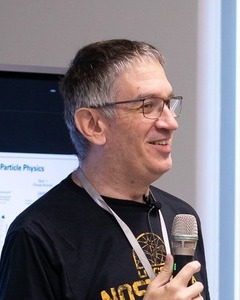
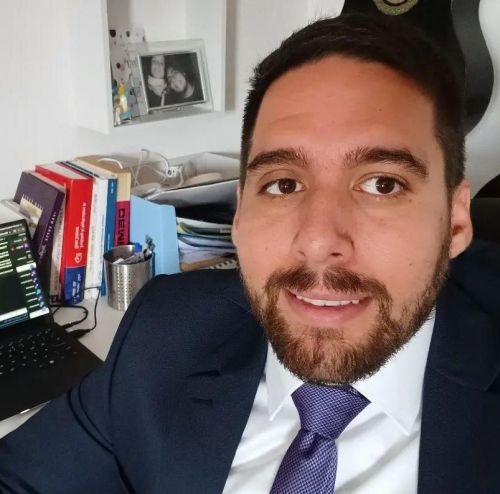
Ivan Maglić serves as Managing Director at Calisto, representing Gartner Inc. in the Adriatic region (Croatia, Serbia, Bosnia and Herzegovina), and as a lecturer for the Mini MBA Digital Transformation program at Algebra University. He focuses on technology's impact on business processes and economic transformation. Education: Graduated from the Faculty of Natural Sciences and Mathematics at the University of Zagreb. Expertise: With over 35 years in IT leadership, Maglić specializes in bridging ICT-business communication gaps through Digital Transformation frameworks. His work emphasizes Industry 4.0 strategies, agile technology management, and digital disruption in banking, insurance, and manufacturing sectors. He authored the book "Introduction to Unix" and led Croatia's first SAP ERP implementation at INA, demonstrating tangible results in organizational transformation and business efficiency.
Dunja Ćosić serves as a Lecturer at the Polytechnic of Požega, Croatia, based at Holy Trinity Square 3 in Požega. Her academic credentials include a master's degree in mathematics (univ. mag. math.), and she maintains active contact through email dunja.cosic@ptfos.hr. Her educational foundation in mathematics directly informs her academic role. While specific institutional details of her degree are unlisted, her position demonstrates advanced expertise in mathematical disciplines requiring rigorous analytical training. Research activities center on Mathematics with interdisciplinary applications evident through doctoral supervision in Food Technology. Her work likely involves statistical modeling, computational methods, and quantitative analysis relevant to food science optimization and process engineering, bridging theoretical mathematics with industrial applications. Dr. Ćosić currently mentors two doctoral candidates: Mario Nosić (defense scheduled August 26, 2025) Esma Karahmet Farhat (defense scheduled July 18, 2025) Both students are engaged in the Food Technology doctoral program, indicating her role in advancing research at the mathematics-technology interface. No scientific awards or honors are documented in available institutional records.
Nataša Erceg is an Associate Professor of Physics Education at the Faculty of Physics, University of Rijeka, Croatia. She has been with the institution since 2009, progressing from Assistant to her current position as Associate Professor since 2022. Her academic career includes significant administrative roles such as Pro-dean of the Faculty (2022-2023) and Deputy Head of the Department (2018-2022). She earned her PhD in Methodological Sciences in Physics from the University of Sarajevo (2011-2013), following a Master's degree in Natural Sciences Education from the University of Split (2003-2006), and her initial teacher education at the University of Rijeka (1992-1998). Before joining academia, Dr. Erceg taught physics and mathematics at primary and secondary schools in Rijeka from 1999 to 2009, providing her with practical classroom experience that informs her educational research. Dr. Erceg's research focuses on physics education, particularly on conceptual understanding in physics, development of concept inventories, and physics teacher training. Her work examines how students understand microscopic models of electrical and thermal conductivity, gravitational acceleration measurements, and wave optics. She investigates the causes of physics teacher shortages in Croatia and develops pedagogical approaches to improve physics instruction at various educational levels. Her research has resulted in numerous publications in high-impact journals including Physical Review Physics Education Research, European Journal of Physics, and Education Sciences. Her work often involves collaboration with international researchers and addresses both theoretical and practical aspects of physics education. 2019: Award for teaching excellence at the University of Rijeka 2009: Award from the City of Rijeka for exceptional work with a student who won 3rd place in the National Physics Competition She actively mentors students, having guided numerous master's and diploma theses on topics related to physics education methodology. Her administrative service includes committee memberships focused on curriculum development, quality assurance, and academic recognition processes at both institutional and national levels. She organizes professional development workshops for physics teachers across multiple Croatian counties and leads popular science initiatives such as the 'Saturday Morning Physics' program for high school students.
Prof. Dr. Mario Basletić is a full professor at the Department of Experimental Physics within the Faculty of Natural Sciences and Mathematics at the University of Zagreb. He has been affiliated with the institute since 1992, progressing from graduation (1992) to Master's (1996) and PhD (2003). His teaching responsibilities include courses in Fundamentals of Physics 3 and Fundamentals of Physics 4 for undergraduate and graduate students. Graduation Year: 1992 Master's Degree: 1996 PhD: 2003 As a leading researcher in experimental and condensed matter physics, Prof. Basletić's work spans materials science, surface physics, and nanotechnology. His research likely involves experimental techniques to investigate physical properties of materials, though specific projects are not detailed in the provided text. He contributes to academic programs through lectures and mentorship. Contact information: Office located at room 220, phone numbers +385(0)1 4605524/+4605504, email basletic@phy.hr , and personal website here .
Davor Horvatić is a full professor at the Institute for Theoretical Physics of Particles and Fields , Faculty of Natural Sciences and Mathematics, University of Zagreb. His professional journey began in 2000, and he has held various teaching roles in physics and computational subjects. Graduated: 1999 PhD: 2008 Email: davorh@phy.hr Teaching Activities He teaches courses such as Electrodynamics, Quantum Physics, and Symbolic Programming, often combining theoretical instruction with laboratory and auditory exercises. Research Focus His research aligns with the institute’s focus areas: theoretical physics of particles and fields, including cosmology and field theory. Key project: Elementary particles, field theory and cosmology (MZOŠ 119-0982930-1016)
Jamal Hammoud serves as an Assistant Professor at the Institute for Theoretical Physics of Particles and Fields within the Faculty of Natural Sciences and Mathematics at the University of Zagreb. His teaching responsibilities span undergraduate and integrated graduate programs, including General Physics courses (auditory exercises and seminars), Statistics and Fundamentals of Physical Measurements, and Computer Science and Practicum laboratory sessions. His research focuses on theoretical frameworks in particle physics and quantum field theory, as evidenced by his affiliation with the Institute for Theoretical Physics of Particles and Fields. This institute specializes in high-energy theoretical physics, elementary particle phenomena, and advanced field theory applications within the university's physics research ecosystem. No scientific awards, student advisement records, or publication details were documented in the source materials.
Associate Professor Petar Žugec is affiliated with the Department of Experimental Physics at the Faculty of Natural Sciences and Mathematics , University of Zagreb. He actively contributes to both undergraduate and graduate teaching , covering core topics in Physics 1, Physics 2, Symbolic Programming , and specialized courses in Nuclear Physics and Particle Physics . As a member of the CERN n_TOF collaboration , he focuses on neutron cross-section measurements critical for astrophysics and nuclear reactor applications . His research involves experimental nuclear physics using advanced detector systems , including Segmented Total Energy Detectors (sTED) and Compton gamma cameras . He participates in projects like PRECIOUS and SAT-PHENO , aiming to improve neutron capture data for stellar nucleosynthesis modeling . Recent publications emphasize machine learning applications in resolution function parametrization and event classification for high-precision experiments. His work at the CERN n_TOF facility addresses challenges in high count rate scintillation detectors and neutron-induced fission studies , particularly for 235U and 239Pu . He contributes to gamma-ray polarization research in positron emission tomography and has co-authored technical guidelines for detector setup characterization . No scientific awards or student advisement details were explicitly mentioned in the provided texts.
Karla Filipović is an Assistant Professor at the Department of Experimental Physics within the Faculty of Natural Sciences and Mathematics, University of Zagreb. She holds a Master of Science degree in Physics and contributes to undergraduate and graduate teaching programs. Her instructional responsibilities focus on: Practical exercises for Fundamentals of Atomic and Molecular Physics courses Laboratory sessions for Practicum in Modern Physics Statistical methods and basic measurements training Based on her teaching portfolio, her academic interests center on experimental physics with emphasis on atomic/molecular systems and contemporary physics methodologies.
Luka Rogić serves as a Lecturer at the Department of Experimental Physics within the Faculty of Natural Sciences and Mathematics, University of Zagreb. Holding a Master of Physics degree, he actively conducts laboratory instruction for foundational physics courses across undergraduate and integrated graduate programs. His educational background includes: Master of Physics (M.Sc. in Physics) His professional focus centers on experimental physics education, specializing in designing and supervising introductory laboratory experiences. This work emphasizes hands-on pedagogical approaches to develop core experimental skills in physics students through structured practicum sessions. His institutional affiliation with the Department of Experimental Physics places him within a research environment focused on empirical methodologies and instrumentation development in physical sciences.
Krešimir Pavlovski is a full Professor at the Department of Experimental Physics within the Faculty of Natural Sciences and Mathematics at the University of Zagreb. He maintains an active academic position with teaching and research responsibilities. His research spans multiple domains of physics: Experimental Physics methodologies Condensed Matter Physics phenomena Particle Physics investigations Atomic, Molecular, and Optical Physics applications Professor Pavlovski's scholarly work is documented in the Croatian Scientific Bibliography (CroRIS), reflecting his contributions to the physics research community in Croatia. He participates in teaching across multiple physics study programs including research-focused and teacher-training tracks in Physics, Physics and Informatics, Physics and Technology, and Physics and Chemistry. Contact information shows his office location at 210 with telephone number 4605536, and he maintains a professional web presence at http://www.phy.pmf.unizg.hr/~kresimir/.
Dr. Marijana Ivanov is a full professor at the Department of Finance, Faculty of Economics and Business, University of Zagreb. She coordinates courses such as 'Monetary Analysis' and 'Personal Finance' at the integrated graduate level, teaches 'Liquidity and Profitability Management' and 'Behavioral Finance' at the postgraduate specialist level, and co-teaches 'Monetary Policy and Analysis' in the doctoral program. She also serves as a visiting professor at the Department of Mathematics, Faculty of Science, University of Zagreb, and teaches 'Financial Markets' there. Research Interests: Monetary policy, green finance, central banking, personal finance, and risk management. Publications: Recent works include studies on financial education impacts, green monetary policy, and pandemic-era monetary strategies. External Roles: Member of the Supervisory Board of the Central Depository and chief macroeconomist for the Croatian Exporters Association.
Katarina Kostelić, Ph.D., serves as an Assistant Professor at the Faculty of Informatics in Pula, part of Juraj Dobrila University of Pula. She earned her doctorate in 2017 and maintains an active role in both undergraduate and graduate education, teaching courses including Social Network Analysis, Quantitative Methods of Business Decision Making, Operations Research, Statistics, and Business Analytics. Her office is located at room 13 (Negrijeva ulica 6; university campus). Dr. Kostelić's research spans multiple interconnected domains, with a strong emphasis on game theory applications in decision-making processes, social network analysis, and cybersecurity. Her work frequently examines how awareness (or lack thereof) influences strategic interactions, with particular attention to emotional intelligence in organizational contexts. She has made significant contributions to understanding business networks, tourism economics, and statistical methodologies. Analysis of her recent publications reveals a clear trajectory toward increasingly complex applications of game theory in cybersecurity contexts, alongside continued exploration of social networks in tourism and business environments. Her research demonstrates interdisciplinary reach, connecting computer science, economics, psychology, and management studies. The integration of neutrosophic sets in satisfaction measurement and the application of TOPSIS frameworks to cybersecurity risk assessment highlight her methodological innovation. Dr. Kostelić serves in multiple editorial capacities, including Managing Editor of Applied Sciences and Business Economics, Member of the Editorial Board of Journal of Interdisciplinary Sciences, and Member of the Editorial Team for Symmetry. She has also contributed to the popularization of science through accessible explanations of strategic situations, game theory applications in cybersecurity, and business network dynamics. Her research leadership is evident through projects including 'Analysis of social networks in Croatian tourism' (2019-2022), 'Role of emotions in strategic decision-making' (2019-2023), and contributions to international collaborations like MEGASFORA and SMART INNO. Dr. Kostelić has also developed educational resources, most notably her 2024 publication 'Introduction to R and RStudio,' supporting statistical education.
Ivan Lorencin is an Assistant Professor at the Faculty of Informatics in Pula , University of Pula. He holds a PhD in Electrical Engineering and Computer Science (2022) from the University of Rijeka, where he also graduated in 2018. His academic roles include Vice-Dean for Business Cooperation and Science, and he teaches courses such as Artificial Intelligence, Network Systems, and Mechatronics. PhD: 2022, University of Rijeka MSc: 2018, University of Rijeka Dr. Lorencin’s research focuses on Artificial Intelligence , Robotics , and High-Performance Computing . His work spans biomedical applications (e.g., cancer diagnostics), maritime domain (e.g., vessel recognition), and energy systems (e.g., power plant optimization). He has published over 90 papers, with 31 in Q1/Q2 journals. His recent publications emphasize machine learning in healthcare (bladder/cervical cancer diagnosis), symbolic regression for energy systems, and computer vision applications (YOLO algorithms, CLIP). He collaborates on international projects like DATACROSS , EDIH Adria , and Erasmus+ WICT . He serves as an editor for the journal Mathematics and contributes to scientific consortia including the Science Center for Excellence in Data Science . His teaching portfolio includes courses in artificial intelligence, data science, and robotics, with a focus on practical exercises and thesis supervision.
Siniša Miličić is an Assistant Professor at the Faculty of Informatics in Pula, University of Pula, where he also serves as Vice Dean for Teaching and Students since 2021. He holds a PhD in mathematics from the University of Zagreb (2013) and previously worked as a junior researcher at the Faculty of Electrical Engineering and Computing in Zagreb from 2007 to 2017. Dr. Miličić's research focuses on the theory of dynamical systems and fractal dimensions, with applications extending to informatics and computer science, particularly in data science. His work bridges theoretical mathematics with practical computational applications, demonstrating expertise in both pure mathematical theory and its implementation in modern technological contexts. His teaching portfolio spans from foundational mathematics to advanced computational topics, including Differential and Integral Calculus, Geometry and Linear Algebra, Functional Programming, and Statistics across undergraduate, graduate, and integrated programs. His publication record shows a clear evolution from theoretical mathematics toward applied computational methods. Early works (2006-2013) focused on fundamental aspects of dynamical systems, fractal geometry, and differential equations. More recent publications (2018-2025) emphasize time-frequency analysis, image processing, and signal denoising, reflecting his growing interest in practical implementations of mathematical theory in data science applications. As Vice Dean for Teaching and Students, Dr. Miličić actively participates in the development of courses and design of study programs at the Faculty of Informatics in Pula. He teaches a comprehensive range of mathematics courses from introductory level to advanced topics including methodological courses in mathematics teaching, demonstrating his commitment to both theoretical foundations and practical applications of mathematics in informatics education.
Aleksandar Pekeč serves as Associate Professor of Business Administration at Duke University's Fuqua School of Business, teaching core statistics courses for daytime MBA and Cross Continent MBA programs. His academic credentials include: B.S. from University of Zagreb Ph.D. in Applied Mathematics from Rutgers University Professor Pekeč's expertise spans Statistics, Business Administration, Economics, and Applied Mathematics, with significant consulting engagements across banking, internet, pharmaceutical, retail, and telecommunications sectors demonstrating practical application of his research. He holds influential external appointments as Supervisory Board member of Atlantic Grupa (leading FMCG company in Southeast Europe) and as Council Member of Economic Advisors to the President of Croatia, highlighting his policy impact. While specific student advising details and research grants aren't documented in the source material, his industry board positions and presidential advisory role reflect substantial real-world influence bridging academic research with corporate strategy and economic policy formulation.