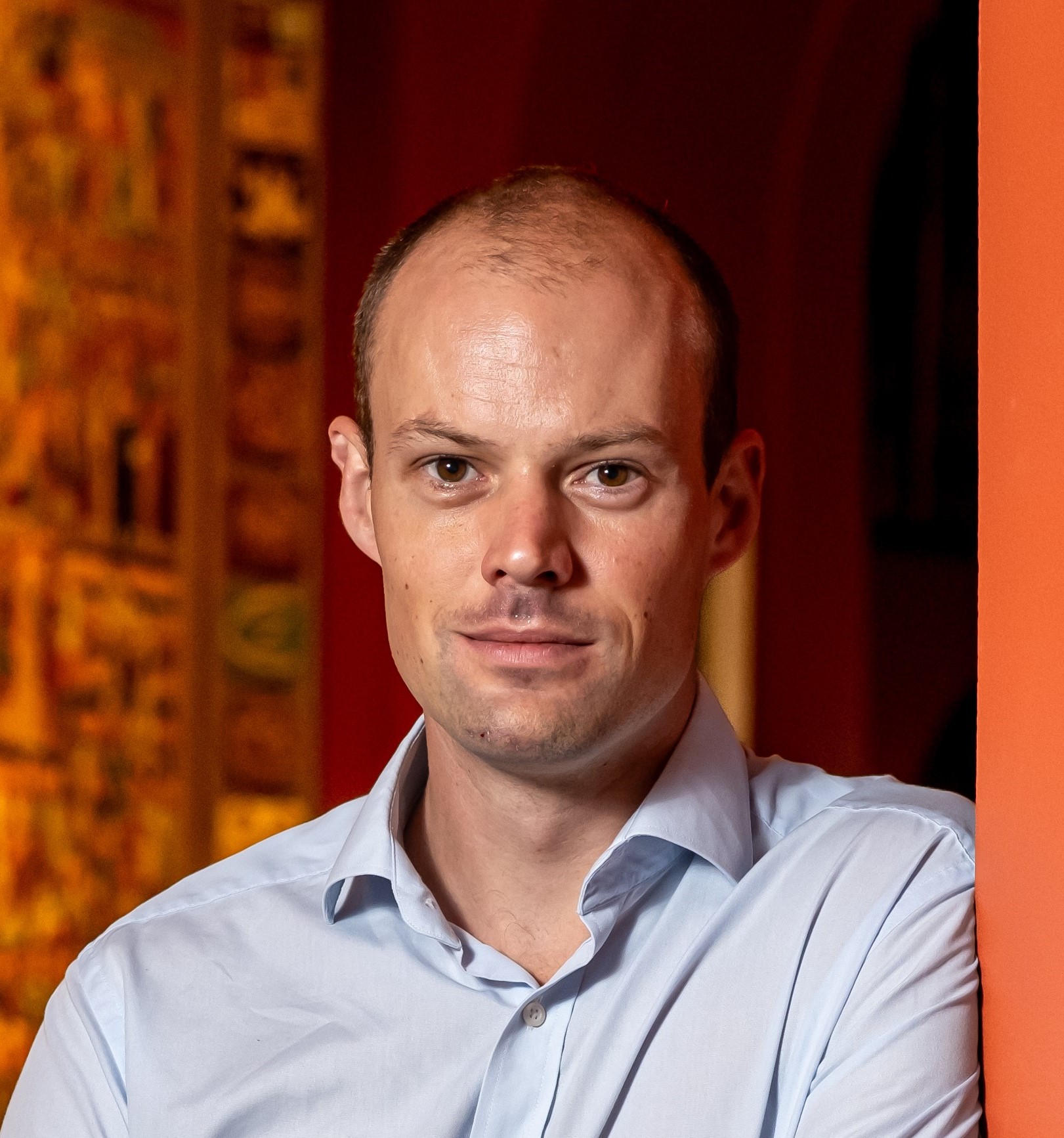
Stefan Vandewalle is a full professor at the Department of Computer Science, Faculty of Engineering Sciences, KU Leuven. His research focuses on numerical analysis, applied mathematics, and computational methods for stochastic differential equations, wind energy modeling, and uncertainty quantification. Department Chair, KU Leuven Member, Subdivision Numerical Analysis and Applied Mathematics Member, iSi Health Institute Observer, Faculty Council of Sciences Chair, Department Council for Computer Science His recent work explores multiscale modeling, Monte Carlo methods, and data assimilation techniques. Projects include micro-macro Parareal algorithms, wind turbine aeroelasticity, and turbulent flow reconstruction for wind farms. He supervises PhD candidates and collaborates on interdisciplinary studies involving structural mechanics and renewable energy systems. Publications highlight advancements in parallel-in-time methods, stochastic optimization for tokamak reactors, and DNS-based control of turbulent flows. Key keywords: Multiscale numerical methods Uncertainty quantification Wind energy simulation Monte Carlo algorithms PDE-constrained optimization Stochastic differential equations He contributes to academic governance as a member of extended faculty boards and evaluation committees.
Johan Meyers is a full Professor at KU Leuven's Faculty of Engineering Science, Department of Mechanical Engineering, where he heads the Applied Mechanics and Energy conversion (TME) research unit. He serves as a contact person for TME and is an active member of the KIES – KU Leuven Institute for Energy and Society. His administrative roles include membership on the Council of the Faculty of Engineering Science, the Mechanical Engineering Department Council and Board, and chairing the HPC Steering Committee. Professor Meyers' research focuses on turbulent flow simulation and optimization, with particular emphasis on wind energy applications, atmospheric pollutant dispersion, and computational methods. His work spans Direct Numerical Simulation (DNS), Large-Eddy Simulation (LES), and model reduction techniques for applications in energy engineering. Current research categories include flow control & optimization, wind farm engineering, and atmospheric pollutant dispersion modeling, with specific applications in radioactive release scenarios and wind turbine system optimization. His recent publications demonstrate a strong trend toward wind energy applications, particularly in optimizing wind farm layouts and operations through advanced computational methods. The research shows significant emphasis on Large-Eddy Simulation techniques to study atmospheric boundary layer interactions with wind farms, with growing interest in hybrid wind-solar energy systems and the effects of surface temperature heterogeneity on flow patterns. His work increasingly integrates machine learning approaches to enhance computational efficiency in wind farm modeling. Professor Meyers actively supervises numerous PhD students including Bon, T., Janssens, N., Jamaer, S., and ALREWENY, A., among others. His research is supported by multiple ongoing projects through 2028, including 'Wind-farm co-design in the North-Sea basin given climate and market uncertainty' and 'Reconstruction of turbulence from partial observations,' primarily funded by research councils and industry partnerships. He leads the Turbulent Flow Simulation and Optimization (TFSO) research group, which develops efficient supercomputing simulation tools for turbulent flow applications in energy engineering. The group specializes in wind farm optimization, atmospheric pollutant dispersion modeling, and airborne wind energy systems, with a particular focus on LES studies of wind farm interactions with the atmospheric boundary layer.
Prof. Wim Desmet is a full professor at the Faculty of Engineering Science and head of the Department of Mechanical Engineering at KU Leuven . His research focuses on advanced modeling techniques for mechanical systems, including: noise and vibration control in automotive and industrial systems computational acoustics and interval field uncertainty modeling metamaterials for broadband vibroacoustic performance AI-driven diagnostic systems in renewable energy and manufacturing Current research projects address challenges in electric vehicle drivetrains, wind turbine monitoring, and multi-physical digital twin development. He actively contributes to academic governance as: Managing Director of KU Leuven Head of Subdivision HIST Chair of multiple executive committees Member of 15+ academic and administrative councils
Sven De Rijcke is a Full Professor at the Faculty of Sciences , Ghent University , affiliated with the Department of Physics and Astronomy (WE05). His research focuses on galaxy formation and evolution , particularly dwarf galaxies , disc galaxies , and numerical simulations involving dark matter, star formation, and gravitational lensing. Key research themes: dwarf galaxy dynamics, spiral structure in discs, cosmological simulations, and interstellar medium analysis. Recent publications (2020–2025) highlight work on primordial black holes , spiral eigenmodes , and ultra-diffuse galaxies , with affiliations to European framework programs (e.g., PRODEX-13, SUrvey Network) and regional grants. His supervised doctorates include Michele Mastropietro (2021), Eric Muires (2026), and Shivangee Rathi (2021), among others. Funding sources include the Research Foundation - Flanders (FWO) and the Special Research Fund . No explicit scientific awards are listed, but his roles as promotor and administrative supervisor underscore his academic mentorship.
Prof. Stefaan Poedts is a Full Professor at the Department of Mathematics of KU Leuven , leading the Center for Mathematical Plasma Astrophysics (CmPA) . He specializes in modeling solar and space plasma phenomena, particularly focusing on coronal heating, solar wind dynamics, and the evolution of coronal mass ejections (CMEs). His research addresses critical space weather challenges, supported by grants like the ERC AdG "Open SESAME". Education & Career: Bachelor’s in Applied Mathematics (1984, KU Leuven) PhD in Applied Mathematics (1988, KU Leuven) Postdoctoral research stints at Max-Planck-Institut für Plasmaphysik (Germany) and FOM Institute for Plasma Physics (Netherlands) Joined KU Leuven in 1996 as FWO Research Associate, becoming Full Professor in 2000 Research Interests: Solar corona and solar wind dynamics CME initiation, propagation, and geoeffectiveness MHD modeling of plasma instabilities and waves Controlled nuclear fusion (tokamak stability) Development of operational space weather models like EUHFORIA Teaching & Outreach: Teaches courses in differential equations, calculus, and plasma physics Active in science communication, including public lectures on space weather Labs & Collaborations: Leads the CmPA and contributes to ESA’s Virtual Space Weather Modelling Centre (VSWMC), advancing global heliospheric forecasting systems.
Liane Gabora is a Full Professor in the Department of Psychology at the University of British Columbia's Okanagan Campus, affiliated with the Irving K. Barber Faculty of Arts and Social Sciences. She holds additional research affiliations with the Australian National University's School of Music, University of Waterloo's Institute for Complexity & Innovation, and Free University of Brussels' Centre Leo Apostel for Interdisciplinary Studies. Her educational background includes a BSc from the University of Western Ontario, PhD from the Free University of Brussels, and postdoctoral positions at UC Berkeley and the Free University of Brussels. Gabora's research program explores creativity, cultural evolution, and cognitive transitions through interdisciplinary approaches. Her work examines: How concepts combine and adapt to new contexts The origins of modern cognition and human creativity Computational models of cultural evolution Quantum formalisms for concept interactions Self-Other Reorganization (SOR) theory of cultural evolution Honing theory of creativity integrating complex systems and memory Her publications demonstrate strong cross-disciplinary integration spanning psychology, physics, anthropology, and computer science. Major research awards include the 2011 Berlyne Award from the American Psychological Association for outstanding research by a junior scholar. She has secured over $1 million in funding from NSERC, SSHRC, and private donors. Gabora supervises graduate students in Psychological Science and Digital Humanities programs and leads research on cognitive transitions underlying cultural evolution. Her laboratory focuses on mathematical and computational modeling of creativity mechanisms, with ongoing projects exploring AI creativity, quantum models of cognition, and the evolution of behavioral modernity through autocatalytic network frameworks.
Dirk Nuyens is a Senior Lecturer in the Department of Computer Science at the Faculty of Engineering Sciences, KU Leuven, Belgium. He is affiliated with the Numerical Analysis and Applied Mathematics (NUMA) research unit and is a member of the iSi Health Institute for Physics-based Modeling for In Silico Health. He also serves on the Faculty Council of Engineering Sciences and the Programme Committees for Engineering Sciences and Computer Science. Education: While specific degrees are not listed, his expertise and research output indicate advanced training in numerical analysis, computational mathematics, and applied mathematics. Research Interests: His primary research focuses on numerical analysis, computational mathematics, and quasi-Monte Carlo (QMC) methods. Specific areas include high-dimensional integration and approximation, lattice rules, low-discrepancy sequences, uncertainty propagation, and financial engineering. He develops algorithms for efficient sampling, integration, and approximation in high-dimensional spaces, with applications in uncertainty quantification, Bayesian inversion, and PDEs with random coefficients. Research Trends: His recent publications emphasize the construction and analysis of embedded lattice-based algorithms for multivariate function approximation and integration. There is a strong focus on achieving higher-order convergence rates, particularly in Korobov and Sobolev spaces, and on developing randomized lattice rules for improved error bounds. His work bridges theoretical developments in numerical analysis with practical implementations in scientific computing and engineering. Scientific Contributions: He has authored or co-authored numerous influential papers in top-tier journals such as Mathematics of Computation , Journal of Complexity , SIAM Journal on Numerical Analysis , and Journal of Computational Physics . His work on lattice rules, QMC methods, and high-dimensional integration has been widely cited and used in fields ranging from computational finance to theoretical physics. Projects and Funding: He leads or co-leads several ongoing and completed research projects funded by national and international agencies. These include projects on turbulence reconstruction from partial observations, uncertainty quantification for climate control in buildings, computational methods for infinite-dimensional Bayesian inversion, circularity improvements in scrap analysis, and ML-based sensitivity analysis. Software Development: He maintains and contributes to open-source software repositories for QMC point generation, including the Magic Point Shop and QMC4PDE projects. These provide efficient implementations of lattice and digital sequence generators in MATLAB, C++, and Python. Institutional Service: Beyond research, he contributes to academic governance through his roles in faculty and departmental councils, influencing curriculum development and strategic planning in engineering and computer science education at KU Leuven.
Andreas Debrouwere is affiliated with the Department of Mathematics at the Vrije Universiteit Brussel . His research focuses on mathematical analysis, particularly in the areas of ultradifferentiable functions, ultradistribution theory, and surjectivity of differential operators. Projects: Applied harmonic analysis and partial differential equations (2023-2027), Bilateral cooperation for joint PhD (2023-2027), Francqui Chair Fellowship (2023-2024) Debrouwere's work explores functional analysis , operator theory , and weighted spaces . His recent publications analyze surjectivity conditions for differential operators and topological invariants in function spaces. Collaborations with researchers like Thomas Kalmes and Jasson Vindas highlight his contributions to partial differential equations and harmonic analysis. Scientific Awards: Francqui Chair Fellowship (2023-2024) As an advisor, he guided the master's thesis on representation theory of classical Type I groups and quantizations. His research also intersects with applications in image processing and mathematical physics.
Benoit Delhaye is a Professor at Universite catholique de Louvain , affiliated with the Louvain Polytechnic School (EPL) and Mathematical Engineering Center (INMA) . His research bridges tactile neuroscience and biomechanics to understand how tactile receptors encode object information and how the brain uses these signals for dexterous manipulation. He also contributes to Institute Of NeuroScience (IoNS) . Email: benoit.delhaye@uclouvain.be Email: delhayeben@gmail.com His research focuses on three main areas: Tactile Signal Processing : Analyzing skin deformation patterns during object interactions using advanced imaging and computational models Neuroprosthetic Applications : Developing biomimetic afferent response simulations for bionic hand feedback systems Haptic Perception : Investigating how tactile receptors encode friction, slip, and edge orientation The articles demonstrate his contributions to understanding: tactile mechanics (6 papers), grip force adaptation (4 papers), skin strain patterns (5 papers), and neuroprosthetic simulations (3 papers). Key 2024 publications include collagen-induced anisotropy analysis and 3D fingertip deformation modeling. Benoit's technical innovations include: TouchSim - A MATLAB package for simulating tactile afferent responses Open-source instrumented objects for manipulation studies Advanced skin deformation measurement systems His collaborative network spans institutions in Belgium, the USA, and Germany, working with researchers in Philippe Lefevre 's and Jean-Louis Thonnard 's labs. Current teaching includes LEPL1506 Project and LGBIO2110 Clinical Engineering courses.
Thomas Mertens is an Associate Professor in the Department of Physics and Astronomy at Ghent University's Faculty of Sciences. His research focuses on quantum gravity, string theory, and black hole physics, with particular expertise in Jackiw-Teitelboim gravity, the SYK model, and holographic principles. He has established himself as a leading researcher in lower-dimensional quantum gravity models and their connections to quantum information theory. Dr. Mertens' research interests span Quantum Gravity, String Theory, General Relativity, Field Theory, and Black Hole Physics. His work primarily investigates solvable models of quantum gravity, particularly Jackiw-Teitelboim gravity and its supersymmetric extensions. He explores connections between quantum gravity in low dimensions and quantum information theory, with significant contributions to understanding black hole evaporation, entanglement islands, and the holographic nature of quantum gravity. His research often employs advanced mathematical techniques from quantum groups, representation theory, and conformal field theory to address fundamental questions about quantum spacetime. Analysis of Dr. Mertens' publication record reveals a strong focus on Jackiw-Teitelboim gravity and its connections to the SYK model, quantum information, and holography. His recent work extends into q-deformed structures, modular doubles, and the mathematical foundations of gravity models. The research shows a clear progression from foundational work on string thermodynamics near black holes toward increasingly sophisticated treatments of quantum gravity in low dimensions, with a growing emphasis on connections to quantum information theory and computational aspects of gravity. Dr. Mertens has supervised at least one PhD student (Andreas Blommaert, who completed in 2020) and maintains active research collaborations, particularly with Henri Verschelde (17 joint papers), Andreas Blommaert (9 papers), and David Dudal (4 papers). His research is supported through the Department of Physics and Astronomy at Ghent University, where he contributes to projects focused on quantum gravity models and black hole horizons. Dr. Mertens leads research within Ghent University's theoretical physics group, focusing on quantum gravity and its connections to quantum information. His team investigates mathematical structures underlying quantum gravity models, with particular attention to solvable systems that can provide insights into the quantum nature of spacetime and black holes.
Maarten Blommaert is an Assistant Professor at the Department of Mechanical Engineering, Faculty of Engineering Technology at KU Leuven. He leads the Applied Mechanics and Energy conversion (TME) unit at the Geel Campus and heads the Subdivisie EnergyVille TME. His research focuses on numerical optimization of thermal systems, particularly district heating networks, additive manufactured heat exchangers, and plasma-facing components for nuclear fusion reactors. Assistant Professor, KU Leuven Head, Subdivisie EnergyVille TME Member, KIES Institute Member, Leuven.AM Institute Member, EnergyVille Blommaert's research explores three main areas: heat network optimization through automated design tools like PATHOPT, additive manufacturing of high-performance heat exchangers, and thermally resistant wall modules for nuclear fusion reactors. His work combines computational modeling with advanced manufacturing techniques to enhance energy efficiency and reduce carbon emissions. Scientific awards include collaborative research contributions in: Optimizing district heating networks for renewable energy integration Developing next-generation heat exchangers Advancing nuclear fusion reactor technology Blommaert actively supervises research projects in thermal-fluid systems and collaborates with institutions like VITO and EnergyVille. His research team IDEAL (Innovative Design for Energy Applications Lab) specializes in free-shape and topology optimization techniques for energy components and systems.
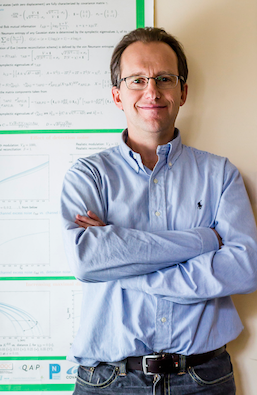
Nicolas Cerf is a Full Professor at the Ecole Polytechnique de Bruxelles, Université Libre de Bruxelles (ULB), where he heads the Centre for Quantum Information and Communication (QuIC). He has been a faculty member at ULB since 1998, initially as an associate professor and promoted to full professor in 2009. Cerf maintains visiting appointments at Caltech, MIT, and the University of Arizona, demonstrating his international standing in the quantum information community. His educational background includes a M.Eng. in Electronics and Telecommunication (1987), M.Sc. in Physics (1988), and Ph.D. in Physics (1993), all from ULB. After his PhD, he was awarded a Marie Curie fellowship and worked at the University of Paris XI, followed by research faculty positions at Caltech before returning to ULB. Nicolas Cerf's research focuses on quantum information science, with significant contributions including the discovery of the role of negative (conditional) entropies in quantum information theory, development of continuous-variable quantum cloning and cryptographic protocols, invention of the adiabatic quantum search algorithm, and establishing the fundamental quantum limit on information transmission via Gaussian bosonic channels. His work spans quantum information theory, quantum cryptography, quantum computation, quantum optics, and quantum foundations. His recent publications (2023-2025) demonstrate continued innovation in quantum information processing, particularly in boson sampling validation, Wigner entropy theory, majorization applications, and quantum channel capacities. These works show a consistent focus on both theoretical foundations and practical applications of quantum information principles. Marie Curie Excellence Award (2006) Caltech President's Fund award (1997) Alcatel-Bell scientific prize (1999) Prize of the Wernaers fund awarded by the Belgian National Fund for Scientific Research (FNRS) (2000) Elected member of the Royal Academies for Science and the Arts of Belgium (2009) COVAQIAL project nominee for 2007 Descartes Prize Nicolas Cerf has supervised numerous PhD students including Sofyan Iblisdir, Jérémie Roland, Gilles Van Assche, and many others. He has hosted many postdocs and senior scientists. His research has been supported by numerous European projects across multiple Framework Programs, including EQUIP, CHIC, RESQ, SECOQC, COVAQIAL, QAP, COMPAS, HIPERCOM, QALGO, QUCHIP, ShoQC, and AppQInfo. As head of QuIC, Cerf leads a research team exploring cutting-edge topics in quantum information. The group maintains strong international collaborations and has been instrumental in establishing Belgium as a significant player in quantum information research. The team's work bridges theoretical developments with potential applications in quantum communication, quantum computing, and quantum cryptography.
Jean-Louis MIGEOT (born November 23, 1961 in Etterbeek) is a Civil Engineer, Doctor of Applied Sciences, and Acoustician who serves as President of the Royal Academy of Belgium and Director of the Technology and Society Class since his election on March 27, 2010. He holds academic positions as Lecturer at both the Free University of Brussels and the Royal Conservatory of Music in Liège. His educational background includes a Bachelor of Management and a Doctor of Applied Sciences. As a scholar deeply engaged at the intersection of science and music, Migeot has authored publications exploring the mathematical foundations of musical structures and acoustic phenomena. Migeot's research spans acoustics, dynamic phenomena modeling, and numerical methods with particular focus on the mathematical principles underlying music theory and noise pollution. His work bridges engineering disciplines with artistic expression, examining how scientific concepts manifest in musical composition, instrument design, and acoustic environments. He has delivered numerous lectures on topics ranging from airport noise pollution to the arithmetic origins of Western musical scales. His scientific recognition includes: Technological Innovation Award (2005) Grand Prix Wallonie Exportation (2006) Jacques Verdeyen Prize (1984) Solvay Award (1997) As co-founder and Managing Director of Free Field Technologies SA (established with Prof. Jean-Pierre Coyette), Migeot has led the development of industry-standard acoustic simulation software adopted globally across multiple sectors. The company maintains subsidiaries in France, Japan, and the United States, reflecting its international impact. Migeot's academic and industrial work demonstrates a unique synthesis of theoretical knowledge and practical application, particularly evident in his exploration of the relationship between mathematical structures and musical expression. His leadership at the Royal Academy of Belgium positions him at the forefront of interdisciplinary dialogue between technology and society.
Pietro D'Antuono is a postdoctoral researcher affiliated with the Applied Mechanics Acoustics & Vibration Research Group. His research focuses on fatigue analysis, structural health monitoring, and offshore wind turbine systems. He has contributed to advancing methodologies for data-driven lifetime assessment of support structures and foundations, integrating physics-informed machine learning and probabilistic modeling. His work bridges mechanical engineering, civil engineering, and renewable energy systems. Research Interests: Offshore wind turbine structural dynamics Fatigue and damage mechanics Data-driven predictive models Structural health monitoring Materials degradation analysis Key Contributions: Developed the py-Fatigue open-source toolbox for fatigue assessment. Authored 24+ peer-reviewed publications and datasets on structural reliability and offshore energy systems. Awards: Best Paper Award (2nd place, ex-aequo) at an international conference (2022). Professional Activities: Presenter at conferences on topics like fatigue modeling, data-driven methodologies, and structural health monitoring. Contributed to international research collaborations in Europe and beyond.
Dominique Lambert is a Visiting Professor at institutions such as the Catholic University of Louvain (UCL), Haute Ecole Namuroise Catholique (HENAC), and Gregorian University in Rome. His work bridges Philosophy of Science , Theoretical Physics , and Ethics of Robotics , with a focus on cosmology, quantum structures, and interdisciplinary applications. Education : PhD in Sciences (Physics, 1988) and Philosophy (1996) from UCL, with highest distinctions. Research : Explores Einstein-Dirac cosmology, ethical implications of AI, and philosophical dialogues between science and theology. Awards : ESSSAT Prize (2000) Namurois of the Year (2000) Georges Lemaître Foundation Prize (1999) His recent publications analyze quantum weak measurements, political philosophy, and ethical frameworks for autonomous weapons. He co-organizes seminars on quantum theory and participates in global conferences like IQSA and QIP.