
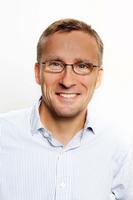
David Lando is a Professor of Finance at Copenhagen Business School (CBS) and Director of the Danish National Research Foundation Center of Excellence, FRIC (Center for Financial Frictions). His academic work focuses on credit risk modeling, derivatives markets, and risk management for financial institutions. Education: Master's in Mathematics-Economics, University of Copenhagen PhD in Statistics, Cornell University Research Interests: Credit risk modeling and systemic effects in financial markets Derivatives pricing and term structure theory Portfolio theory and market liquidity dynamics Honors & Grants: Member, Royal Danish Academy of Sciences (2012) Danish National Research Council Grant (2007-2009) Princeton University Teaching Award (2006) Danish Social Science Research Council Fellowship (2000-2002) BSI Gamma Foundation Award (2000) University of Copenhagen Teacher of the Year (1996) Academic Roles: Head of Department, CBS Department of Finance (2009-2012) Visiting Senior Research Scientist, Princeton University (2005-2006) Professor, University of Copenhagen Department of Statistics and Operations Research (2002-2003)
جستجوی استاد راهنمای دانشگاهی
برای مسیر پژوهشیتان، استاد راهنما، استاد دانشگاه و پژوهشگر مناسب را پیدا کنید و با آنها ارتباط بگیرید.
نمایش ۷۲۱-۷۳۵ از ۵٬۶۹۸ استاد راهنما
اطلاعات پروفایلها از صفحات عمومی دانشگاهها گرفته شده و ممکن است بهروز نباشد.

Professor Gareth Peters is the Janet & Ian Duncan Endowed Chair of Actuarial Science and holds the Chair in Statistics for Risk and Insurance at the Department of Statistics & Applied Probability, University of California Santa Barbara (UCSB). His research focuses on statistical solutions for risk and insurance, with emphasis on actuarial science, financial engineering, environmental data analysis, and cybersecurity risk. He has received notable recognition including the 2024 IFoA Peter-Clark Prize, the oldest actuarial award established in 1891. His academic contributions span advanced statistical modeling techniques for financial markets, climate-related risk analysis, and healthcare analytics. Notable projects include developing methodologies for green bond valuation, cyber insurance frameworks, and machine learning applications in audiology and speech disorders. He has pioneered software tools such as CovRegpy for covariance regression and DivFolio for portfolio divestment analysis. Educations: Advanced degrees in statistics and actuarial science (specific details not provided) Professional Memberships: Fellow of multiple academic societies including the Royal Statistical Society and Institute of Mathematics and its Applications Research interests include: Statistical causality in financial and environmental time series Mortality modeling incorporating long-memory processes Quantifying climate change impacts on energy consumption Machine learning for cybersecurity risk mitigation His recent work emphasizes interdisciplinary applications of statistics in climate finance, sustainable investing, and precision agriculture. Over 2020-2025, his publications explore topics ranging from municipal green bonds to vocal analysis for Parkinson’s diagnostics. Awards: 2024 IFoA Peter-Clark Prize Elected Member of ISI (International Statistical Institute) IEEE Senior Member Labs/Initiatives: Develops open-source software packages for statistical analysis (e.g., AdvEMDpy, PyKronecker) and contributes to regulatory frameworks via tools like AuditChain for blockchain-based trading audits.

- Rock Mechanics
- Geomechanics
- Photogrammetry
- +۲ مورد دیگر
Davide Guccione is an ARC Industry Fellow at the University of Newcastle within the College of Engineering, Science and Environment . His research focuses on rock mechanics , rockfall analysis , and photogrammetry , with significant contributions to understanding rock fragmentation dynamics and improving monitoring systems. Education : PhD in Civil Engineering (University of Newcastle, 2021), Master of Civil Engineering (University of Parma), Bachelor of Civil Engineering (University of Parma), and Diploma in Mining and Geoenvironmental Qualified Industrial Technician. Research Interests span experimental rock mechanics, rockfall hazard assessment, and photogrammetry. His work includes developing a novel VoxFall algorithm for volumetric rockfall detection and a stochastic fragmentation model for rockfall simulations. Current projects involve coastal cliff monitoring and deep learning-based photogrammetric calibration. Scientific Awards include: D.H. Trollope Medal (2023) Early Career Researcher Excellence Award - Highly Commended (2023) NSW Young Geomechanical Professionals Award 1st Runner-Up (2024) Australian Geomechanics Society Postgraduate Research Prize (2019) Grants and Funding highlight a $496,614 ARC Early Career Industry Fellowship and a $300,000 Newcastle City Council grant for coastal cliff monitoring. He supervises three PhD students and collaborates with institutions like Rocscience and the European Commission.
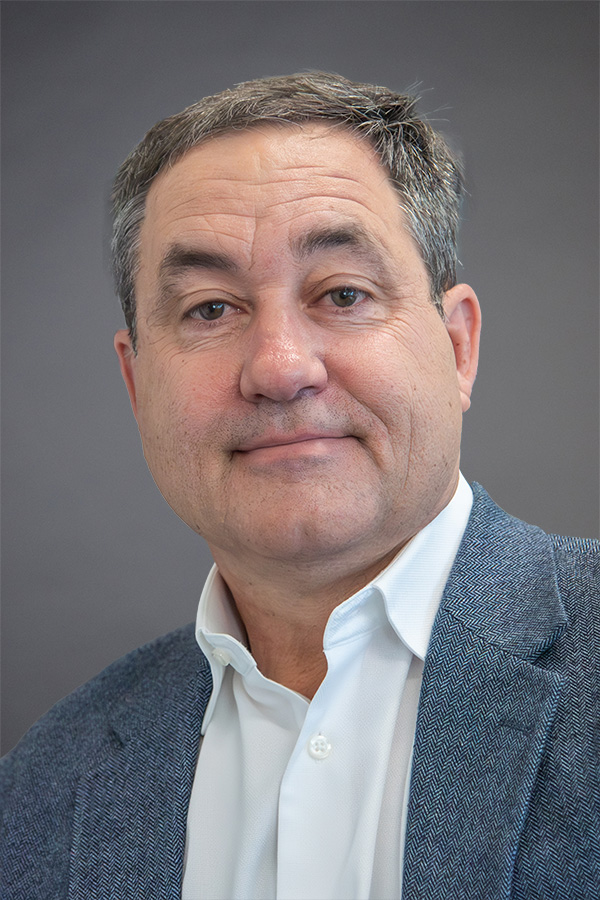
Scott Schaefer is a Professor of Finance at the University of Utah’s David Eccles School of Business and holds the John W. McIntyre Family Endowed Chair for Free Market Economics. He also serves as a Visiting Professor of Management and Strategy at Northwestern University’s Kellogg School of Management. His academic journey includes a PhD in Economic Analysis and Policy from Stanford University (1995) and a BS in Economics and Mathematical & Computational Sciences (1990). His research focuses on the economics of strategy, organizational economics, and labor markets. Notable works include Economics of Strategy (textbook) and Roadside MBA , exploring practical business lessons and elite education impacts. Schaefer has held leadership roles, including Associate Dean at Eccles School (2009–2012) and the Richard M. Paget Chair in Management Policy at Kellogg (1995–2005). His awards highlight teaching excellence: Professional Service Award (2011), Executive MBA Teaching Excellence Award (2010), Brady Superior Teaching Award (2009), and Masters Teaching Excellence Award (2008). Schaefer’s research bridges economic theory and real-world applications in law firms, compensation strategies, and elite education outcomes. He has contributed to policy analysis, including studies on labor market dynamics, legal profession economics, and the impact of regulatory changes like the Civil Rights Act of 1991. His work frequently appears in top journals and addresses strategic decision-making in organizations.
Jiabin Luoمشاهده پروفایل
مدرس ارشد
- Transportation and Logistics
- Maritime Shipping and Port Operations
- Production Planning and Inventory Management
- +۵ مورد دیگر
Dr. Jiabin Luo is a Senior Lecturer in Business Analytics at Aston University's Aston Business School, within the College of Business and Social Sciences. She holds a PhD in Management Science from the University of Southampton and has held academic and research roles at institutions including Coventry University and De Montfort University. Her research focuses on optimization and decision-making in logistics, supply chain management, maritime shipping, and production planning. She is Programme Co-Director of the MSc Degree Apprenticeship in Digital & Technology Solutions Specialist. Education: PhD in Management Science, University of Southampton, UK MSc in Risk and Stochastics, London School of Economics and Political Science, UK MSc in Statistics, University of Nottingham, UK BSc in Mathematics, Zhongshan University, China PGCert in Learning and Teaching in Higher Education Research Interests: Transportation and logistics optimization Maritime shipping and port operations Production planning and inventory management Supply chain management and sustainability Fuzzy optimization and scenario-based modeling Recent Research Trends: Her work emphasizes optimization techniques in logistics systems, including automated container terminals, intermodal transport, and risk management. Recent articles explore machine learning for credit risk prediction and geospatial analysis of traffic datasets. Awards and Memberships: Fellow of The Higher Education Academy Member of The Operational Research Society Member of British Academy of Management Grants and Collaborations: Newton Researcher Links: Strategy & Policy Innovation in Supply Chain Management (2018) Newton Researcher Links: Emission Control in Green Port Development (2017) EPSRC Grant: Resilience of Manufacturing Supply Networks (2013–2016)

Philip Brabazonمشاهده پروفایل
مدرس ارشد
- Operational Research
- Logistics
- Mass Customization
- +۵ مورد دیگر
Dr. Philip Brabazon is a Senior Lecturer at the University of Portsmouth, affiliated with the School of Organisations, Systems and People and the Centre for Operational Research & Logistics. His work focuses on operational research, logistics, and mass customization in industries such as automotive and manufacturing. He has published extensively on topics including order fulfillment systems, supply chain management, and production economics. Dr. Brabazon is currently accepting PhD students and has supervised 7 theses. His research explores themes like automotive order-to-delivery processes, virtual build-to-order systems, and the application of simulation in operational systems. He has contributed to understanding mass customization strategies, risk analysis in offshore operations, and safety case frameworks. His work bridges theoretical models with practical industry applications, particularly in optimizing supply chains and production systems. Notable publications include analyses of automotive logistics, long-tail retail dynamics, and Markovian approximations in fulfillment systems. His research has been cited over 100 times in key journals like the European Journal of Operational Research and Production and Operations Management.

Professor Deborah Greaves is a leading academic in Ocean Engineering at the University of Plymouth, where she holds the position of Professor in the School of Engineering, Computing and Mathematics. She is Director of the Supergen Offshore Renewable Energy (ORE) Hub and the Coastal, Ocean and Sediment Transport (COAST) Laboratory, and served as Head of School from 2017 to 2022. Her work is central to advancing offshore renewable energy in the UK and globally. Her research focuses on offshore and marine renewable energy, particularly wave and tidal technologies, wave-structure interactions, and the integration of physical and numerical modelling. She leads major collaborative projects including the Collaborative Computational Project in Wave Structure Interaction (CCP-WSI) and PRIMaRE, and has secured significant funding from EPSRC, EU Interreg, H2020, and InnovateUK. Her research supports the UN Sustainable Development Goals, especially those related to affordable and clean energy and climate action. The 15 most recent articles reflect a strong trend toward interdisciplinary research, combining engineering innovation with environmental sustainability, policy development, and public engagement. Her work spans fundamental hydrodynamics, technology development, commercialization challenges, and societal impact, with increasing emphasis on decarbonisation, net zero strategies, and inclusivity in engineering. Officer of the Order of the British Empire (OBE), 2018 Fellow of the Royal Academy of Engineering (FREng) Fellow of the Institution of Civil Engineers (FICE) Deborah leads a large team of researchers and PhD students, securing over £20 million in research funding. She is deeply involved in mentoring and outreach, particularly in promoting gender diversity in engineering through initiatives like WISE and Supergen ORE’s EDI programs. She has advised numerous PhD students and leads multidisciplinary teams across academia and industry. She directs the COAST Engineering Research Group and the COAST Laboratory, a state-of-the-art facility with wave basins and flumes for testing marine renewable technologies. She also leads the Supergen ORE Hub, a national consortium uniting universities and industry, and is instrumental in the development of the new Engineering and Design Facility at Plymouth, fostering interdisciplinary collaboration between engineering, computing, and design.
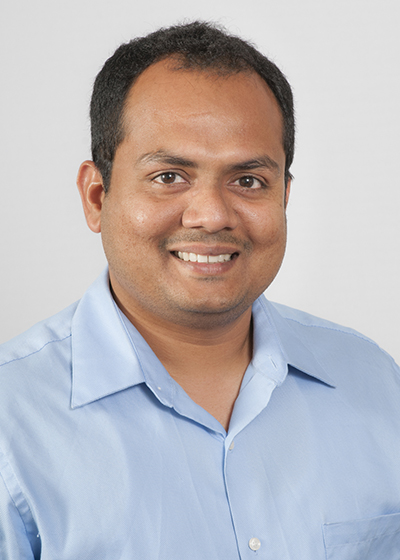
Saravanan Venkatachalam is an Associate Professor in the Department of Industrial and Systems Engineering at Wayne State University. His research focuses on stochastic programming, robust optimization, and discrete event modeling with applications to supply chain management, healthcare, energy systems, and unmanned vehicle operations. Education Ph.D. in Industrial and Systems Engineering, Texas A&M University M.S. in Industrial and Systems Engineering, Texas A&M University B.E. in Production Engineering, PSG College of Technology, India His work addresses decision-making under uncertainty through decomposition algorithms and data-driven approaches. Recent projects include autonomous vehicle path planning with uncertain parameters, community-aware electric vehicle charging networks, and optimization models for radio advertisement placements. Current research trends emphasize stochastic programming for resource allocation in dynamic environments, robust optimization for transportation and energy systems, and multi-vehicle routing under uncertainty. He has supervised multiple graduate students in thesis work related to optimization models and taught core courses such as Operations Research, Deterministic Optimization, and Stochastic Programming at both undergraduate and graduate levels.
- Transport Policy
- Road Safety
- Traffic Psychology
- +۵ مورد دیگر
Professor Wafaa Saleh is affiliated with Edinburgh Napier University , where she contributes to the School of Computing Engineering and the Built Environment . Her research spans Transport Policy , Pedestrian Safety , and Travel Demand Management , with a focus on sustainable mobility and behavioral impacts of technology on road safety. Research Interests : Transportation sustainability, pedestrian behavior at junctions, motorcycle emissions, congestion pricing, and AI applications in transportation. Advisees : Supervised students in studies involving road safety in Qatar, bus passenger discomfort analysis, and mode choice modeling using behavioral theories. Grants & Projects include funding from the European Commission for gender inclusion in transport systems, the Qatar National Research Fund , and Tabuk University for Saudi Arabian transport behavior studies. Key publications address helmet compliance , pedestrian red-light violations , and congestion charging impacts . Collaborations span institutions in Taiwan, Saudi Arabia, and the UK, with work featured in journals like Transportation Research Part A and Accident Analysis and Prevention . Her Transport Research Innovation Centre involvement highlights interdisciplinary approaches to road safety and emissions reduction.

Yanja Dajsurenمشاهده پروفایل
استادیار
Yanja Dajsuren is an Assistant Professor and Program Director of the PDEng Software Technology program at Eindhoven University of Technology's Department of Mathematics and Computer Science. Her work bridges academic research and industry applications in software engineering and mobility systems. Education: PhD in Computer Science (2015), TU/e PDEng in Software Technology (2005), TU/e MBA (2002), Maastricht School of Management Research Focus: Yanja specializes in software architecture for autonomous and cooperative driving systems, with a focus on model-driven development, functional safety, and system modularity. Her work contributes to Cooperative Intelligent Transport Systems (C-ITS) and aligns with UN Sustainable Development Goals related to smart cities and innovation. Projects: Current projects include i-CAVE (Project #6) and Horizon 2020 C-MobILE, addressing challenges in automotive software integration and cooperative driving systems. Past projects at Philips Research, NXP Semiconductors, and CWI demonstrate her long-term expertise in industrial software development. Academic Contributions: She co-founded the International Workshop on Automotive Software Architectures (WASA) and launched the Journal of Automotive Software Engineering (JASE). Her collaborations span academia and industry, including partnerships with ASML, Philips Hue, and international research teams.
Dr. Ahmadreza Faghih Imani is a Teaching Fellow in Urban Sustainability at the Centre for Environmental Policy, part of the Faculty of Natural Sciences at Imperial College London. He also serves as co-convenor of the Urban Sustainable Environments (USE) option for the MSc in Environmental Technology. Previously, he was a Research Associate at the Centre for Transport Studies (Imperial College London) and held an NSERC Postdoctoral Fellowship at the University of Toronto. He earned his PhD from McGill University in 2017, recognized with the Benjamin H. Stevens Graduate Fellowship. His research focuses on urban sustainability, exploring how built environments, transport infrastructure, and advanced modeling techniques can enhance environmental and social sustainability. Key interests include transportation planning, energy consumption modeling, and policy analysis with over 30 publications in top-tier journals. He has contributed to industry/government projects (9 technical reports), volunteered with TRB's Bicycle Transportation Committee, and reviewed for academic journals. His work bridges disciplines such as urban planning, civil engineering, and applied mathematics. Recent efforts emphasize health integration into mobility policies, smart energy systems, and innovative data collection methods (e.g., smartphone apps). He collaborates widely with over 10 faculty members and 20 researchers globally. Notable achievements include modeling air pollution exposure from transit policies and analyzing cycling infrastructure impacts in cities like Toronto and Montreal. His research addresses urgent urban challenges through interdisciplinary frameworks and policy-relevant insights.
Elaine Huangمشاهده پروفایل
دانشیار
Elaine Huang is an Associate Professor of Human-Computer Interaction (HCI) and Head of the People and Computing Lab at the University of Zurich's Department of Informatics. She holds a PhD in Computer Science from Georgia Institute of Technology (2006). Her career includes prior roles as Assistant Professor at the University of Calgary and Senior Staff Researcher at Motorola Labs. Her research focuses on the interplay between technology and human behavior, particularly in areas of gender equality in tech, AI ethics, sustainable HCI design, and accessible technologies. She critiques systemic biases in AI training data and advocates for inclusive design processes integrating Hofstede's cultural dimensions. Her work also explores trust dynamics in sharing economies and predictive health technologies. Huang emphasizes empirical studies over intuition, stressing the need for data-driven insights into disruptive technologies like ChatGPT. She leads initiatives to improve STEM PDF accessibility and designs tools for chronic condition management through incident cards. Her lab develops frameworks addressing obsolescence in smart homes and sustainability in digital interfaces. Awards and recognitions focus on her contributions to HCI ethics and gender studies. She advises students to proactively shape their academic trajectories and leverage institutional resources strategically.
Rich Whittleمشاهده پروفایل
استادیار
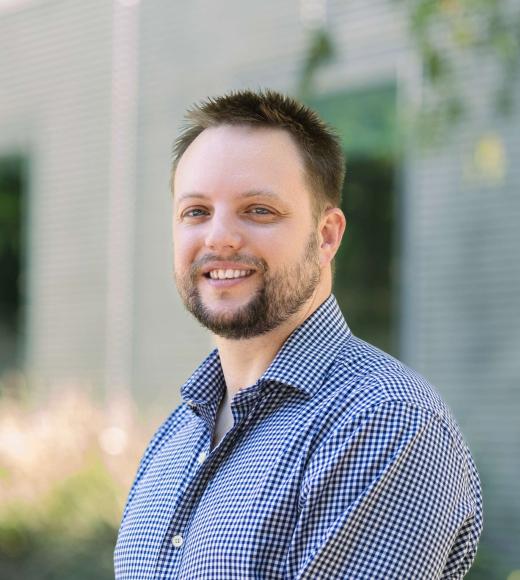
Dr. Rich Whittle is an Assistant Professor in Mechanical and Aerospace Engineering at the University of California, Davis, leading the Bioastronautics and eXploration Systems (BXS) Laboratory within the Center for Space Flight Research (CSFR). His work focuses on understanding human physiological responses to space environments and developing technologies to enhance spaceflight safety and efficiency. Education: PhD in Aerospace Engineering, Texas A&M University MSc in Astronautics and Space Engineering, Cranfield University PGDip in Strategic Management and Leadership, Stratford Business School MA/MEng in Engineering, University of Cambridge Research interests include space physiology, human-systems engineering, and exploration systems design. Key themes involve cardiovascular responses to gravity, virtual reality applications for astronaut training, and countermeasures for long-duration missions. His lab investigates ocular perfusion, metabolic modeling in altered gravity, and lunar habitat safety concepts. Recent publications analyze ocular pressure dynamics, gravitational stress impacts on cardiovascular systems, and virtual reality's role in mission resilience. His work bridges clinical data, engineering systems, and mission-critical design. Awards: Fellow of the British Interplanetary Society (BIS) Advising and grants: While specific student names are unlisted, his lab actively collaborates on NASA-funded projects. Research focuses include military recruit injury prevention and pandemic epidemiology modeling (e.g., NYC's 2020 data). Dr. Whittle leads the BXS Lab and contributes to the CSFR, fostering interdisciplinary teams in space systems engineering and human factors. His prior military service (2009–2023) as a British Army officer informs his focus on operational readiness and mission-critical decision-making in extreme environments.

Tijn Fleurenمشاهده پروفایل
پژوهشگر
Dr. Tijn Fleuren is a researcher and teacher at the Department of Econometrics and Operations Research within the Tilburg School of Economics and Management (TiSEM) at Tilburg University. His work focuses on optimizing production-inventory systems under uncertainty, with applications in high-tech, low-volume manufacturing supply chains. Institution: Tilburg University School: Tilburg School of Economics and Management Department: Department of Econometrics and Operations Research Email: T.W.A.Fleuren@tilburguniversity.edu ORCID: https://orcid.org/0000-0002-0925-6892 Office: Koopmans Building, Room K 423, Warandelaan 2, 5037 AB Tilburg, Netherlands His research lies at the intersection of operations research and supply chain management, with a strong emphasis on stochastic modeling, risk-aware decision-making, and integrated planning under uncertainty. Key themes include production-inventory optimization, customer portfolio selection, procurement planning, and dynamic supply chain configurations. His work often addresses real-world challenges in collaboration with industry leaders like ASML. The recent publications demonstrate a consistent focus on advanced optimization techniques applied to complex supply chain environments. These include multi-stage stochastic programming, conic quadratic programming heuristics, sampling-based methods, and deep reinforcement learning. The research spans both theoretical contributions—such as optimality conditions and bounds—and practical applicability, particularly in high-tech sectors with long lead times and customization requirements. Dr. Fleuren completed his doctoral studies at Tilburg University in January 2025, contributing significantly to the field through his dissertation on stochastic approaches in production-inventory planning. While no formal scientific awards are listed, his research outputs have been published in top-tier journals such as International Journal of Production Economics and Omega–International Journal of Management Science . He is actively involved in teaching courses such as Supply Chain Analytics and Introduction to Data Analysis. As a recent PhD graduate, he may be mentoring students informally, though no formal advisees are listed. His research has been supported through collaboration with industrial partners and academic grants, likely via CentER and the Operations Research Center at Tilburg University. Dr. Fleuren is affiliated with the Operations Research Center at TiSEM, where he contributes to a vibrant research environment focused on quantitative methods in economics and management. His ongoing work continues to advance methodologies for decision-making under uncertainty in complex, real-world supply chains.

Vicky Fasen-Hartmann is a Professor at the Karlsruhe Institute of Technology (KIT) within the Department of Mathematics, specifically affiliated with the Institute of Stochastics. She has held her W3 Professor position since October 2012, with two periods of parental leave (August 2016-August 2017 and October 2018-October 2019). Prior to her current position, she held postdoctoral research positions at ETH Zurich (RiskLab), TU Munich, Université Pierre et Marie Curie, and Cornell University. Her educational background includes: Habilitation (2010) in Heavy Tails in Finance, Insurance and Telecommunication from TU Munich Ph.D. (2004) in Extremes of Lévy Driven Moving Average Processes with Applications in Finance from TU Munich Diploma in Mathematics (2002) from Karlsruhe Institute of Technology Professor Fasen-Hartmann's research spans multiple areas of theoretical and applied statistics with a focus on extreme value theory, heavy-tailed distributions, and their applications in finance and risk management. Her work bridges theoretical probability with practical financial applications, particularly in modeling rare events and systemic risks. She has made significant contributions to the understanding of Lévy processes, continuous-time ARMA models, and multivariate extremes. Her research combines rigorous mathematical theory with practical applications in financial mathematics, insurance, and telecommunications networks. The trends in her recent publications (2020-2025) show a clear evolution toward high-dimensional extreme value theory, financial network risk contagion, and advanced modeling of continuous-time processes. Her work increasingly addresses the challenges of modern financial systems, including systemic risk measurement, high-dimensional dependency structures, and the statistical properties of extreme events in complex systems. She has developed innovative methodologies for analyzing multivariate extremes, risk contagion, and continuous-time state space models. Professor Fasen-Hartmann has served in significant editorial roles including Associate Editor for the Scandinavian Journal of Statistics since 2014, Managing Editor of Lévy Matters (2008-2014), and Editor of Bernoulli News (2009-2011). She has also been active in academic service through committee work, including the Steering Committee of the Probability and Statistics Group in Germany (2014-2016) and the Examination Board of the Department of Mathematics at KIT (since 2017). She has supervised numerous doctoral and master's students, with current PhD candidates including Lucas Butsch (since 2021) and previously Lea Schenk, Celeste Mayer, Markus Scholz, and Sebastian Kimmig. Her teaching portfolio includes advanced courses in Time Series Analysis, Continuous Time Finance, Extreme Value Theory, and Asymptotic Stochastics. She regularly organizes workshops and conferences on specialized topics in probability and statistics, demonstrating her leadership in the academic community.
نمایش نتایج تا ۷۵۰ مورد اول. برای یافتن نتایج دقیقتر، جستجوی خود را با فیلترها محدود کنید.