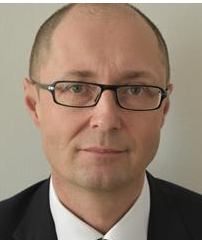
Alessandro Gatti is a Doctoral Research Fellow at the University of Oslo , affiliated with the Faculty of Mathematics and Natural Sciences and the Networks and Distributed Systems research group. His work focuses on computational biology, high-performance computing, and scientific computing. Under the supervision of Prof. Tor Skeie, Prof. Xing Cai, Dr. Hermenegild Arevalo, and Prof. Andrew McCulloch, he contributes to a project titled "Using personalized cardiac models to predict patient risk to arrhythmias and optimal therapy in patients with congenital heart disease." Email: alessaga@ifi.uio.no Contact: Mobile +47 92022677 | Room 315 | Kristian Augusts gate 23, 0164 Oslo
Reidar Haugsrud is a Professor in the Department of Chemistry at the University of Oslo, affiliated with the College of Mathematics and Natural Sciences (SMN). His work focuses on solid-state electrochemistry , particularly defects and transport in functional materials, reaction kinetics at interfaces, and degradation of high-temperature materials. He teaches courses in inorganic material synthesis and defect chemistry. PhD in Chemistry, University of Oslo (1995-1999) Professor, University of Oslo (2013-) Associate Professor, University of Oslo (2008-2013) His research explores electrochemical energy conversion in fuel cells and electrolyzers, with emphasis on oxygen/hydride ion transport, surface kinetics, and material stability. Current projects include OxHyPRO (sustainable hydrogen production) and studies on composite membranes and proton-conducting ceramics. Recent publications address oxygen exchange mechanisms in vanadates, hydration behavior in doped zirconates, defect dynamics in oxyhydrides, and thermal expansion optimization for electrolyte compatibility. Collaborations span computational modeling, experimental kinetics, and material synthesis.
Ana Lucia Campana Perilla is a Postdoctoral Fellow at the University of Oslo , affiliated with the Section for Genetics and Evolutionary Biology and the BEDPAN Project . Her research focuses on Bionanotechnology , Magnetic Force Microscopy , and Nanomaterials Characterization . She holds a Ph.D. in Physics from the University of Oslo, where her work centered on Bio-engineered Palladium Nanoparticles (project RCN294605). Education BSc in Biomedical Engineering, University of Los Andes MSc in Electronic Engineering, University of Los Andes Ph.D. in Physics, University of Oslo Positions Research Assistant (University of Los Andes, 2017–2019) Teacher Assistant (University of Los Andes, 2019–2020) Postdoctoral Research Fellow (UiO, 2020–present) Her publications demonstrate expertise in bacterial nanoparticle synthesis , microfluidic systems , and environmental nanotechnology . Recent work includes characterization of Bimetallic Pd-Fe Nanoparticles (ACS Applied Bio Materials, 2024) and analysis of Magnetic Forces in Bacteria (Frontiers in Nanotechnology, 2023).
Anders Hjort is a Doctoral Research Fellow (now PhD graduate) at the University of Oslo's Department of Mathematics within the Statistics and Data Science group. He successfully defended his PhD dissertation in February 2025, focusing on uncertainty quantification in house price prediction using machine learning techniques. His work bridges academic research and industry applications through collaboration with Eiendomsverdi, a Norwegian property technology company. His educational background includes a Master of Science in Industrial Mathematics from the Norwegian University of Science and Technology (NTNU) in Trondheim (2019), complemented by one academic year at Technische Universität Berlin. Prior to his PhD, he worked as a consultant for Deloitte. Hjort's research centers on tree-based machine learning methods, conformal prediction, and computational statistics for real estate valuation. He specializes in developing interpretable models that quantify prediction uncertainty, particularly for automated valuation systems in housing markets. His approach combines statistical rigor with practical machine learning applications to address challenges in property technology. His publication record reveals a consistent trajectory in applying conformal prediction and interpretable AI to housing market analysis. The research spans theoretical uncertainty quantification frameworks to empirical studies of Norwegian and international markets, often utilizing locally weighted methods and ensemble tree models. This work demonstrates increasing sophistication in handling spatial heterogeneity and model confidence in real estate prediction. Hjort has actively engaged with the academic community through conference presentations at COPA and WEAI events, participation in the Machine Learning Summer School near Cape Town, and a visiting researcher position at North Carolina State University's Statistics Department in fall 2023. His PhD project (2021-2024) was supervised by Associate Professors Johan Pensar and Ida Scheel, and Professor Dag Einar Sommervoll from NMBU.
Christian Johansen is a Professor in the Department of Information Security and Communication Technology at the Norwegian University of Science and Technology (NTNU), Faculty of Information Technology and Electrical Engineering. He leads the Systems Security group (S2G) and is affiliated with the Center for Cyber and Information Security (CCIS), the Norwegian Cyber Range, and the S2G Playground. Professor Johansen's research focuses on Security and Theoretical Computer Science, with emphasis on developing formal methods and tools for ensuring reliability of complex systems. His work spans security, safety, and concurrency properties in software systems, cyber-physical systems like Smart Grids, Internet of Things security, and modeling concurrency in multi-core and high-performance computing. Among his notable contributions are the Timed Distributed pi-calculus, ST-structures, Dynamic Structural Operational Semantics, Synchronous Kleene Algebra, and Higher Dimensional Modal Logic. His research interests include modeling of security protocols, programming language semantics, verification of distributed systems, concurrent systems modeling, and legal electronic contracts. His recent publications show a strong trend toward concurrency theory, security, and privacy, with significant contributions to pi-calculus variants, higher-dimensional automata, attribute-based encryption, and semantic access control frameworks. Many of his papers appear in top venues such as CONCUR, ATVA, FM, POST, CCS, JLAMP, IJCIP, FMSD, and LMCS. Professor Johansen actively mentors students and collaborators, having worked with Manish Shrestha on the LightSC Security Classification Method for Smart Grids and IoT, and with Bjørnar Luteberget on the SAT modulo Discrete Event Simulation method for railway capacity verification. He has secured funding from competitive sources including EU-FP7-FET-Young-Explorers, Horizon-2020, NFR-FRINATEK, UK's EPSRC, and ECSEL-JU. His work often bridges theoretical computer science with practical security applications in critical infrastructure domains.
Bjørn Solvang is a Professor in the Department of Industrial Engineering at UiT The Arctic University of Norway, campus Narvik. His research focuses on advanced manufacturing systems, robotics, and digital transformation in industrial contexts. His primary research interests include: Reconfigurable Manufacturing Systems Industry 4.0/5.0 Technologies Human-Robot Collaboration Digital Twins and Virtual Reality Applications Supply Chain Optimization Cognitive Infocommunication in Robotics He investigates how these technologies enhance flexibility, efficiency, and sustainability in manufacturing, particularly for small and medium enterprises (SMEs). Analysis of his recent publications reveals a strong trajectory toward smart manufacturing systems with increasing emphasis on Industry 5.0 principles. His work consistently addresses real-world industrial challenges through robotics integration, digital twin implementations, and AI-driven optimization, often involving European cross-organizational collaborations. Professor Solvang actively contributes to the ArcLog research group (Intelligent Manufacturing and Logistics) and the "Industry 5.0 enabled Smart Logistics" project. He has participated in multiple European cooperation initiatives providing educational frameworks for SMEs transitioning to advanced industrial paradigms. Based at Campus Narvik (room A4050), he maintains active industry engagement through research projects targeting practical manufacturing innovations and sustainable logistics solutions.
Gitta Astrid Hildegard Kutyniok is a Professor in the Department of Physics and Technology at UiT The Arctic University of Norway. Her research spans machine learning, applied mathematics, and signal processing, with a focus on theoretical foundations and practical applications.
Cécile Daversin-Catty is a Research Scientist at Simula Research Laboratory in the Department of Numerical Analysis and Scientific Computing. Her work bridges computational mathematics and biomedical engineering through advanced finite element methods. Education: PhD in Applied Mathematics (2016, Université de Strasbourg), thesis titled 'Reduced basis method applied to large non-linear multi-physics problems: application to high field magnets design' Her research focuses on scientific computing , finite element methods , and mixed-dimensional coupling , with applications spanning fluid mechanics , cardiac electromechanics , and neurovascular modeling . Recent publications highlight her expertise in computational fluid dynamics for cardiac flow simulations, development of FEniCS-based tools for mixed-domain problems, and modeling of perivascular networks. Key trends in her work include: Development of robust numerical frameworks for multi-physics problems Advancing cardiac electromechanical modeling for heart failure studies Exploring glymphatic system dynamics via mixed-dimensional finite elements Software innovation in computational science tools She collaborates extensively with researchers across computational cardiology and neuroscience, contributing to open-source platforms like FEniCS.
Mohamed Eid Ahmed Safy is a Research Fellow in the Department of Chemistry at the University of Oslo, affiliated with the Faculty of Mathematics and Natural Sciences. His research centers on computational approaches to catalysis, with emphasis on sustainable chemical processes including CO 2 conversion and methanol synthesis. His primary research interests include: Theoretical Chemistry Catalysis Computational Chemistry CO 2 Reduction Machine Learning in Chemistry Analysis of his 2022-2025 publications reveals a consistent focus on integrating Density Functional Theory (DFT) with microkinetic modeling and machine learning to develop catalysts for CO 2 hydrogenation. His work explores ligand effects in palladium catalysis, reaction mechanisms in Ru-PNP pincer complexes, and computational strategies to move beyond Ru-MACHO systems for methanol production, demonstrating strong interdisciplinary methodology. Scientific Awards: No awards listed in source materials. Advising and Grants: As a Research Fellow engaged in doctoral research, Safy has no listed advisees. Source text provides no grant information. Safy collaborates within the Catalysis and Organic Chemistry research group and the Hylleraas Centre for Quantum Molecular Sciences, leveraging advanced computational infrastructure for quantum chemistry simulations and catalyst design projects targeting carbon-neutral chemical synthesis.
Nils Jakob Johannesen serves as Associate Professor in the Department of Electrical engineering, Information Technology and Cybernetics at the Faculty of Technology, Natural Sciences and Maritime Sciences, University of South-Eastern Norway (USN), based at Campus Porsgrunn. He holds the position of Programcoordinator for Power Engineering and maintains active roles in high-impact academic publishing. His research spans critical energy domains: Power engineering systems design and optimization Sustainable energy conversion technologies Environmental impact mitigation in energy processes Advanced mathematical modeling for energy systems Professor Johannesen's scholarly recognition includes: Young Editorial Board Membership for Applied Energy (2022-2025), a premier journal with Impact Factor 11.446 and Citescore 20.4 Early Career Editorial Board Appointment for Franklin Open (2024-2026), focusing on engineering mathematics Prospective students and collaborators may contact him directly at nils.j.johannesen@usn.no or +47 35 57 52 38 to discuss research opportunities in power engineering and sustainable energy systems.
Dr. Gamunu L. Samarakoon Arachchige serves as an Associate Professor in the Department of Process, Energy and Environmental Technology within the Faculty of Technology, Natural Sciences and Maritime Sciences at the University of South-Eastern Norway (USN), based at the Porsgrunn campus. With a strong academic foundation including a Ph.D. in Process Engineering from USN, his career has progressed from PhD student (2011-2015) to PostDoc (2018-2020) and now to his current faculty position. Ph.D. (Eng.) Process Engineering, University of South-Eastern Norway (USN), Norway M.Sc. Energy and Environmental Technology, USN, Norway B.Sc.(Hons.) Chemical Engineering, University of Moratuwa, Sri Lanka Dr. Samarakoon's research spans environmental biotechnology with emphasis on anaerobic digestion, biogas production, wastewater treatment technologies, and life cycle assessment. His work integrates process modeling and simulation to optimize environmental engineering systems, with recent publications demonstrating expertise in handling uncertainty in biological processes through advanced mathematical approaches. His research portfolio shows increasing sophistication in combining experimental validation with computational modeling. Analysis of his recent publications (2023-2025) reveals a strong focus on sustainable waste management solutions, particularly integrated systems for sewage sludge treatment, textile wastewater remediation, and valorization of agricultural and industrial byproducts. His work frequently addresses the challenge of process uncertainty in biological systems while maintaining practical engineering applications. As an educator, Dr. Samarakoon teaches Water Treatment and Environmental Biotechnology, Project Management and Cost Engineering, and Biomass Conversion and Life Cycle Assessment, while supervising Master's students. His technical competencies include Biogas Process simulation (ADM-1), Bioresource management, Analytical chemistry, Environmental management, Life Cycle Assessment (LCA), and Project management. Dr. Samarakoon is an active member of the USN Research Group, Energy and Environmental Technology (URGENT), contributing to collaborative research on sustainable energy solutions and environmental technology development. His work demonstrates strong potential for practical implementation in industrial and municipal environmental management contexts.
Costas Xiouros is an Associate Professor at the Department of Finance at BI Norwegian Business School in Oslo, Norway. He has been in this position since 2010 and has established himself as a prominent researcher in asset pricing theory. Ph.D. in Finance from University of Southern California (2009) MSc in Financial Mathematics from University of Warwick (2001) BSc in Accounting and Finance from University of Warwick (2000) Professor Xiouros's research focuses on asset pricing, specifically investigating what determines expected returns of assets and what drives asset price fluctuations. He primarily works with theoretical models of general equilibrium, examining how investor heterogeneity impacts financial markets. His work often explores the intersection of financial economics and macroeconomics, with particular attention to how risk preferences and information quality affect market dynamics. His recent publications show a strong focus on investor disagreement, information quality, and their impact on asset prices. The 2024 Journal of Financial Economics paper demonstrates how variations in information quality lead to substantial excess stock price volatility, contributing significantly to explaining the equity premium puzzle. His work also explores risk aversion sensitivity in business cycles and its implications for investment volatility and stock market returns. Best Paper Award, 2013 Finance Down Under Conference at the University of Melbourne Professor Xiouros teaches Strategic Asset Allocation, Asset Pricing Theory, and Real Estate Finance at BI Norwegian Business School. He has extensive experience teaching across the finance curriculum including Derivatives, Financial Management, and Investments. His research has been published in top-tier finance journals including the Journal of Financial Economics, Review of Financial Studies, and Management Science. His work has practical implications for understanding market volatility, the equity premium puzzle, and the relationship between macroeconomic conditions and financial markets. Professor Xiouros continues to be active in research, with several working papers examining cyclical beta patterns and the cross-section of expected returns.

.jpg)