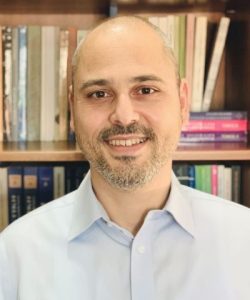
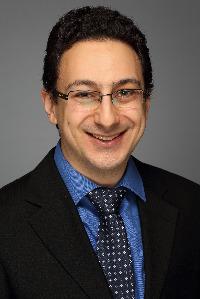
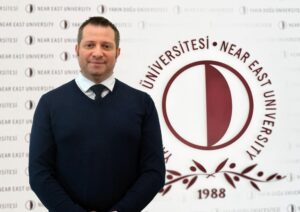
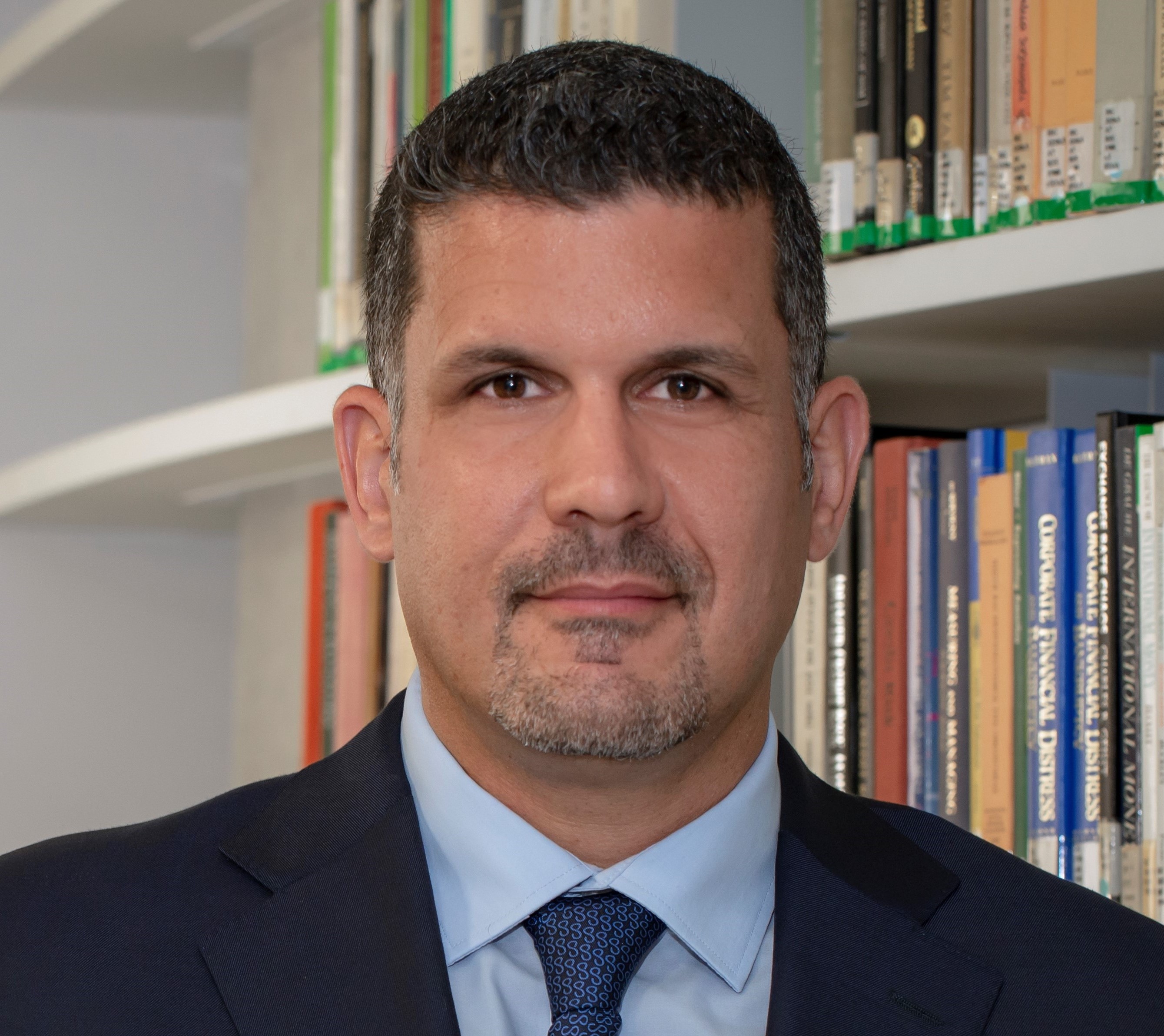
Stelios Timotheou is an Associate Professor at the Department of Electrical and Computer Engineering and faculty member at the KIOS Research and Innovation Center of Excellence, University of Cyprus. He holds a Dipl-Ing from National Technical University of Athens, and MSc/PhD from Imperial College London. His research focuses on developing real-time distributed methodologies using mathematical optimization, machine learning, and computational intelligence to enhance efficiency in critical infrastructure systems. Research interests center on data-driven decision making for urban mobility management, traffic control systems, and energy optimization. Key areas include: Intelligent UAV-based sensing for traffic monitoring Cooperative control algorithms for multi-agent systems Optimization of renewable energy integration Robust infrastructure protection strategies Recent publications demonstrate strong focus on traffic state estimation (76%), energy system optimization (16%), and UAV applications (8%). Awarded the Cyprus Research Award (2017) and ERC Consolidator Grant for URANUS project. Secured multiple research grants focusing on real-time control systems.
Christos Nicolaides is an Assistant Professor at the Department of Business and Public Administration within the School of Economics and Management at the University of Cyprus (UCY), holding a secondary appointment as a Digital Fellow at MIT's Initiative on the Digital Economy. Previously, he spent three years as a James McDonnell Foundation-funded Postdoctoral Fellow at MIT Sloan School of Management. His educational background includes a PhD in Engineering from Massachusetts Institute of Technology (2014), SM from MIT (2011), MSc in Applied Mathematics from Imperial College London (2009), and BSc in Physics from University of Thessaloniki (2008). Nicolaides' research applies mathematical, statistical, and computational tools to large-scale empirical questions in social influence mediated by digital technologies. His work spans Data Science , Machine Learning , Social Networks , and Computational Social Science , with significant contributions to understanding human mobility patterns, disease transmission dynamics, and social contagion effects. His research has established novel methodologies for analyzing complex network structures in mobility data and social interactions. Analysis of his 15 most recent publications reveals a consistent focus on applying network science to real-world problems, particularly in pandemic response (12 publications), human mobility analytics (9 publications), and social contagion dynamics (7 publications). His work demonstrates increasing interdisciplinary integration, combining computer science, epidemiology, and organizational behavior since 2020. Marie S. Curie Fellow Two Highly Cited Papers by Web of Science (2017, 2020) Best Paper Award by Risk Analysis Society (2019) Professor of The Week by Poets & Quants (2020) As principal institutional investigator, Nicolaides has secured over €1 million in research funding from the European Commission, industry partners, Cyprus Innovation and Research Foundation, and Cyprus Ministry of Health. His current teaching includes Social Networks and Entrepreneurship, Introduction to Operations Management, and Quantitative Methods in Management. Media coverage of his work spans major outlets including The New York Times, CNN, Nature, and Science, with significant impact on public health policy discussions during the COVID-19 pandemic.
Angelos Georghiou is an Associate Professor of Operations Management at the Department of Business and Public Administration, University of Cyprus. He previously held academic positions as Assistant Professor at McGill University (2016–2019), Post-Doctoral Researcher at MIT (2012–2013), and Postdoctoral Researcher at ETH Zurich (2013–2016). His work bridges computational methods in stochastic and robust optimization with applications in healthcare, energy systems, and operations management. Ph.D. in Operations Research, Imperial College London (2012) M.Sci. in Mathematics, Imperial College London (2008) His research focuses on stochastic optimization , robust optimization , and decision rules , addressing challenges in healthcare analytics , energy-efficient control systems , and machine learning integration . Recent publications in Management Science and Operations Research highlight his contributions to decision-dependent information discovery and computational frameworks. Key trends in his 15 most recent articles include: Advancing robust optimization techniques for multistage problems Applications in healthcare (psychiatric risk prediction) and energy systems Integration of machine learning with stochastic programming Development of tractable algorithms for complex decision environments Scientific Awards : Esdras-Minville Best Student Paper Award (2023) He serves on editorial boards of Operations Research Letters (Area Editor) and Management Science , and collaborates with institutions like MIT, ETH Zurich, and McGill University. His work with undergraduate students includes a 2021 paper in SIAM Undergraduate Research Online .
Prof. Dr. Fadi AL-TURJMAN serves as the founding Dean of the Faculty of AI and Informatics at Near East University (NEU), Cyprus. He holds multiple leadership roles including Head of the Software Engineering Department and Director of the AI and Robotics Institute and the International Research Center for AI and IoT. With a PhD in Computer Science from Queen’s University (2011), he specializes in AIoT systems, wireless networks, and blockchain integration. Affiliation: Near East University Leadership: Founding Dean for AI and Informatics, Director of AI & Robotics Institute Research Focus: His work bridges Artificial Intelligence of Things (AIoT) , Blockchain Applications , and Smart Networking . He explores cybersecurity frameworks for smart cities, quantum state optimization techniques, and novel AI-driven solutions for healthcare, agriculture, and energy systems. Key Article Trends: Recent publications emphasize Transformer models for environmental monitoring, blockchain-enabled security protocols , and evolutionary algorithms for resource optimization. His research spans interdisciplinary domains including medical diagnostics, vehicular networks, and sustainable infrastructure. Scientific Awards: Lifetime Golden Award of Dr. Suat Gunsel (2022) Multiple Best Research Awards at International Venues Labs & Teams: Directs the International Research Center for AI and IoT at NEU, leading multidisciplinary teams in developing advanced networking technologies and AI-driven solutions for global value chain applications.
Fatma Rızaner is a Senior Lecturer at the Department of Mathematics, Faculty of Arts and Sciences, Eastern Mediterranean University, North Cyprus. She earned her Ph.D. in Mathematics from the same institution and focuses on nonlinear dynamical systems and ecological modeling. B.S. in Applied Mathematics and Computers (1996-2000) M.S. in Mathematics (2000-2002) Ph.D. in Mathematics (2006-2012) Her research explores stability in nonlinear systems, habitat fluctuations, and the Allee effect in population dynamics, often integrating harvesting models and ecological theory. Recent publications highlight her work in computational methods for differential equations (2018) and ecological modeling (2012). These studies span topics like neural networks, population sustainability, and environmental variability. Contact: fatma.rizaner@emu.edu.tr | Web Page
Ioannis Kasparis is an Associate Professor of Econometrics at the Department of Economics , University of Cyprus , within the School of Economics and Management . His research focuses on time series econometric theory, particularly nonstationarity, fractional processes, nonparametric methods, heavy-tailed processes, specification testing, and asymptotic statistical theory. Education : BSc in Economics (University of Reading, 1998) MSc in Econometrics and Mathematical Economics (London School of Economics, 2000) PhD in Econometrics (University of Southampton, 2004) His research spans nonstationary time series analysis, nonparametric regression, and specification testing. Recent publications address topics like time-varying parameter regressions , nonlinear predictive models , and fractional integration . Articles often involve collaborations with prominent econometricians such as P.C.B. Phillips. Teaching roles include Econometrics (ECON 303, BSc) , Statistics & Econometrics (ECON 603, MSc/PhD) , and Econometrics (OIK 663, MSc) , with consistently positive student evaluations highlighting clarity, engagement, and pedagogical effectiveness.
Professor Andreas Milidonis of the University of Cyprus holds a prominent position in the Department of Accounting & Finance within the Faculty of Economics and Management. With a PhD in Risk Management and Insurance from Georgia State University (2007) and a BSc in Actuarial Science (Minor in Mathematics) from Pennsylvania State University (2001), his career spans academic appointments at Nanyang Business School (NTU, Singapore), Manchester Business School (UK), and consulting roles with the European Central Bank. Education PhD (Risk Management & Insurance) - Georgia State University, USA (2007) BSc (Actuarial Science, Honors) - Pennsylvania State University, USA (2001) His research bridges actuarial science, finance, and insurance economics, focusing on risk regimes, corporate governance, and financial markets. Key contributions include regime-switching models for mortality and credit risk, executive compensation dynamics in insurance, and cultural influences on banking risk. His work has been recognized with awards such as the EGRIE 2012 Best Paper and Lloyd’s Science of Risk Prize shortlisting (2011). Recent publications explore financial education spillovers (2025), trade secrets valuation (2024), and desert storm insurance solutions (2024). Earlier studies on cyberattack reputational impacts (2021), CEO debt incentives (2017), and longevity risk sharing (2017) remain influential. Articles consistently integrate finance and actuarial science methodologies across 20+ years of research. Scientific Awards Best paper award at the 2012 EGRIE meeting Nominated for the 2011 Lloyd’s Science of Risk Prize Professor Milidonis has supervised numerous PhD students and contributed to editorial boards, including the Journal of Risk and Insurance since 2022. His consulting work with the European Central Bank and Towers Perrin underscores practical relevance of his research in financial risk and regulatory frameworks.
Professor Panos Papanastasiou is affiliated with the Department of Civil and Environmental Engineering at the University of Cyprus, within the School of Engineering. He has held significant administrative roles including founding President of his department, Dean of the School of Engineering, and founding Director of the Master's Program in Natural Gas Engineering. PhD in Civil Engineering, University of Minnesota (1990) MS in Civil Engineering, University of Minnesota (1986) BSc in Civil Engineering, National Technical University of Athens (1984) His research focuses on geomechanics across petroleum engineering, energy transition, and environmental applications. Key areas include hydraulic fracturing , wellbore stability , sand production , and CO2 geological storage . He also investigates green hydrogen storage , photovoltaic cracking , and offshore pipeline dynamics . Recent publications highlight his leadership in hydraulic fracturing modeling (2025), green hydrogen integration (2024), and geomechanical analysis of faulted reservoirs (2025). His work spans computational mechanics, energy systems, and environmental risk assessment. Scientific Recognition : Top 2% scientist worldwide in Geoscience, Energy and Engineering (Stanford University ranking)
Prof. Dr. Derviş Subası is a faculty member in the Department of Mathematics at Eastern Mediterranean University's Faculty of Arts and Sciences. His research focuses on numerical analysis, partial differential equations, and computational mathematics, with significant contributions to inverse problems and domain decomposition methods. He has supervised multiple master's and PhD students and is actively involved in academic research. Education: PhD and MS in Mathematics from Eastern Mediterranean University (1997, 1992), BS in Electrical and Electronics Engineering (1989). His research interests include numerical solutions of partial differential equations, preconditioning techniques, and iterative methods for linear systems. He has contributed to advancements in fractional calculus-based algorithms, block-grid methods for singular boundary conditions, and parallel computing for parabolic problems. Prof. Subası has co-supervised ongoing PhD research and mentored numerous master's students, with theses focusing on parabolic inverse problems, diffusion coefficient determination, and finite difference schemes. His work often intersects applied mathematics and computational modeling. Contact details: Office AS140, Phone +90 392 630 1138, Email dervis.subasi@emu.edu.tr .
Dr. Andreas Savva is an Associate Professor at the Department of Computer Science , School of Sciences and Engineering , University of Nicosia . He has over 25 years of teaching experience across institutions like the University of North London, Kingsway College, Intercollege, and the University of Nicosia. Education: BSc Hons (First class) in Mathematics and Computing, University of North London PhD in Computer Graphics, University of North London His research focuses on Geometric Modeling , Subdivision Surfaces , and Spline Methods , with over 50 publications. Recent work includes interdisciplinary studies in Computing Education , Accessibility in Information Systems , and Real-Time Emotional Analysis via machine learning. The 15 most recent articles span topics in geometric modeling, software development, and educational technology. Trends include applications of subdivision surfaces in design, stakeholder-driven curriculum reform, and emotional analysis in educational contexts. Grants & Collaborations : He has participated in local and international funded projects, with collaborations across Cyprus, Greece, and the UK. His work aligns with UN Sustainable Development Goals, particularly education quality.
Dr. Nikos Savva is an Assistant Professor in Modelling and Simulation for Engineering Applications at The Cyprus Institute. His research bridges applied mathematics and engineering, particularly focusing on complex fluid dynamics and interfacial phenomena. Education: Holds a PhD in Applied Mathematics from MIT and a BSc in Applied Mathematics Engineering and Physics from the University of Wisconsin-Madison. Research Approach: Combines analytical methods with scientific computing to study wetting dynamics and multiscale flow systems. Previously held academic positions at Cardiff University and research appointments at Imperial College London.
Klea Panayidou is an Assistant Professor in the Department of Health Sciences at the European University Cyprus (EUC), School of Sciences. Her academic journey includes a D.Phil. in Statistics (2011) from the University of Oxford, followed by M.Sc. (2004) and B.Sc. (2003) degrees from the University of Oxford and the University of Warwick, respectively. Her research focuses on biostatistical methodologies applied to clinical and public health challenges, including meta-analysis of clinical trials, HIV/AIDS treatment trends, and molecular prognostication in oncology. Notable work includes validating a molecular panel for clival chordoma prognosis and analyzing global CD4 count trends in antiretroviral therapy. Prior to her current role, she held postdoctoral positions at Carnegie Mellon University (USA), the University of Pittsburgh (USA), and the University of Bern (Switzerland). Her publications span neuro-oncology, global health epidemiology, and statistical modeling innovations, emphasizing real-world drug effectiveness assessment and collaborative treatment program evaluation. Dr. Panayidou’s expertise bridges theoretical statistics with practical applications in healthcare, contributing to both methodological advancements and clinical decision-making frameworks.
Dr. Gülnur Yel is an Associate Professor in the Department of Primary School Mathematics Teaching at Muğla Sıtkı Koçman University's Faculty of Educational Sciences. She holds a PhD (2016), Master's (2012), and Bachelor's (2009) in Mathematics from the same institution. Her research focuses on nonlinear dynamics, fractional calculus, and mathematical physics, with a particular emphasis on soliton theory and analytical solutions to partial differential equations. Dr. Yel has contributed significantly to understanding wave phenomena in contexts ranging from fluid dynamics to quantum mechanics. Her work spans theoretical and applied aspects of nonlinear systems, including studies on the Benjamin-Ono equation, conformable derivatives, and integrable models like the Zoomeron and Gross-Pitaevskii equations. She has explored wave solutions in diverse domains such as electrical transmission lines, water waves, and nonlinear optics. Her publications often emphasize analytical methods and their applications to real-world problems, reflecting her expertise in both pure and applied mathematics. Dr. Yel's research has produced numerous contributions to the understanding of soliton behavior, fractional calculus applications, and mathematical modeling of physical systems. While no specific awards are listed, her extensive publication record underscores her active role in advancing nonlinear science research.
Ioulia Televantou is a Lecturer in Quantitative Research Methods in Social Science at the Department of Education Sciences, European University Cyprus (since 2022). Previously, she held academic positions at the Theological School of the Church of Cyprus (2020-2022) and served as Adjunct staff at the University of Nicosia (2014-2022). Her academic journey includes a DPhil in Education from the University of Oxford (2014), with a thesis focused on methodological advancements in addressing biases in multilevel models. She also holds advanced degrees in Applied Statistics and Educational Research Methodology from Oxford, alongside a Mathematics degree from the University of Cyprus. Her research expertise centers on educational effectiveness, methodological rigor in multilevel modeling, and the impact of school composition on student outcomes. Notable projects include developing bias-corrected value-added models and investigating peer effects in educational settings. She has contributed to interdisciplinary studies on pharmacology teaching in medical curricula and immigrant students' experiences in European schools. Her award-winning work includes the WERA Visiting Scholar Award (2022) and the Bruce Choppin Award (2015). She has secured grants such as the Excellence Hubs-funded pharmacology teaching study (2019-2022) and collaborated on innovative research projects addressing longstanding biases in educational league tables. Her work bridges statistical methodology with real-world educational challenges, emphasizing evidence-based policy and equitable learning environments.
Ioannis Ioannou is a tenured Associate Professor of Strategy and Entrepreneurship at London Business School. He earned his undergraduate degree magna cum laude in Economics and Mathematics from Yale University and his PhD in Business Economics from Harvard University. His research centers on corporate sustainability integration, examining how organizations balance environmental, social, and governance (ESG) imperatives with financial performance. He investigates the strategic trade-offs in sustainable business model development, innovation pathways for ESG integration, and competitive advantages of "sustainable organizations" that embed sustainability into core operations. His work bridges capital markets behavior, corporate strategy, and responsible leadership in the context of global sustainability disruptions. Professor Ioannou holds influential advisory positions including: Co-Chair of Merck KGaA's sustainability advisory panel Member of DWS Group's ESG advisory board World Economic Forum experts network member for sustainable development Advisory board member for AXS Investments Institute on sustainable investing Recognized as a top social media influencer in corporate sustainability, he is frequently cited in Financial Times, Bloomberg, The Guardian, BBC, and Forbes for his expertise on sustainability-driven business transformation.