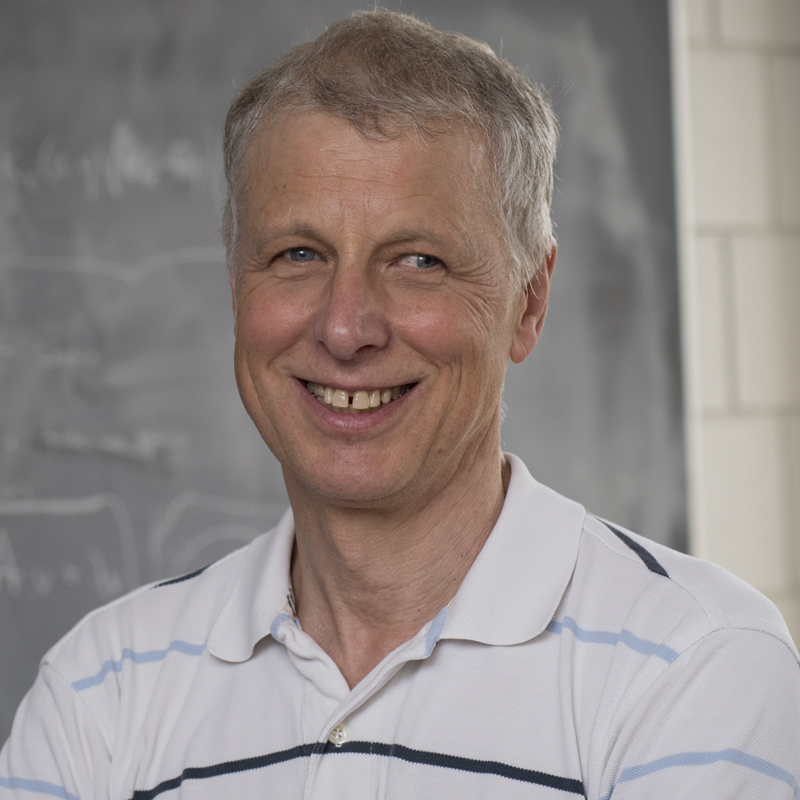
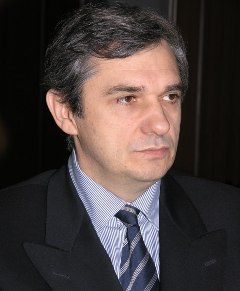
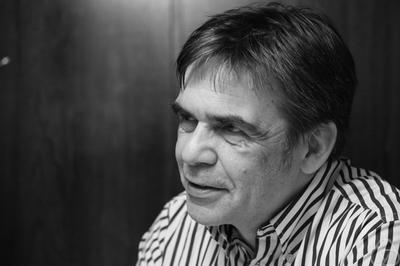
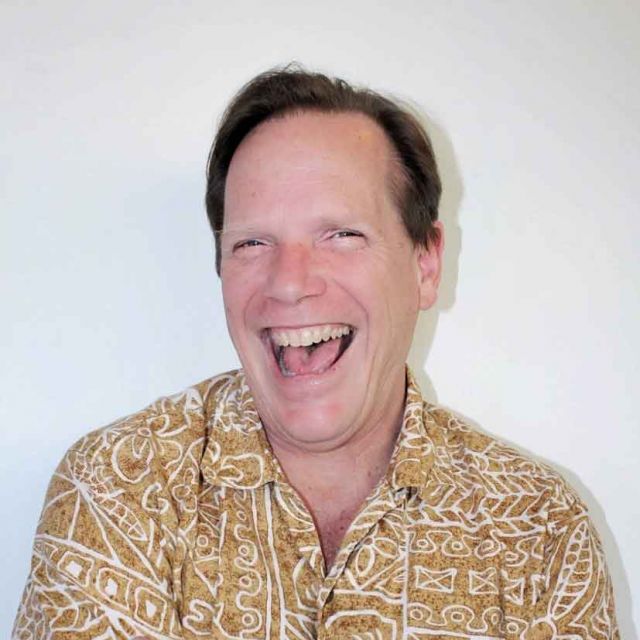
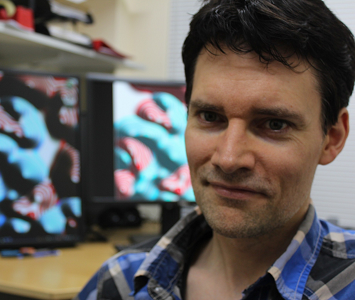
Hao Liu is a researcher affiliated with institutions like Chinese Academy of Sciences , Beihang University , and Stanford University . His work spans Computer Science , Artificial Intelligence , and Robotics . Key affiliations: National Space Science Center (Beijing), School of Astronautics (Beihang), Key Laboratory of Pervasive Computing (Tsinghua) Research interests include Machine Learning , Image Processing , Graph Neural Networks , and Wireless Communication Optimization His recent publications focus on: Advanced control systems for fuzzy models Medical imaging via hyperspectral analysis Transformer-based approaches in NLP and vision Quantum-safe and edge computing protocols
Professor Paul Black is a distinguished academic at King's College London, affiliated with the School of Education, Communication & Society and the Centre for Research in Education in Science, Technology, Engineering & Mathematics (CRESTEM). His career has centered on advancing educational assessment and pedagogy, particularly in STEM disciplines. He is renowned for pioneering formative assessment strategies that integrate learning and evaluation to enhance student outcomes. Research Interests: Black's work explores how teacher-led assessments can drive classroom innovation, emphasizing the synergy between formative and summative methods. His contributions address global educational challenges, including standardization debates and the equitable implementation of assessment frameworks. Key Article Trends: His publications from 2013–2020 highlight themes like ethical assessment practices, the historical impact of formative assessment, and bridging theory-practice gaps in STEM education. Recent works underscore the adaptability of assessment strategies in diverse cultural and linguistic contexts. Professional Impact: The 2023 book 'Educational Assessment: The Influence of Paul Black on Research, Pedagogy and Practice' documents his legacy, noting his influence on scholars worldwide. His ideas have informed policy responses to crises like pandemic-related exam cancellations. Advising & Grants: While specific grants or advisees are not detailed here, his work reflects collaborative research with educators and policy experts. The CRESTEM centre serves as a hub for advancing his vision of holistic educational reform.
Noel J. Walkington is a Professor in the Department of Mathematical Sciences at Carnegie Mellon University, affiliated with the Mellon College of Science. His research focuses on developing numerical algorithms for partial differential equations, bridging mechanical engineering and mathematics. Education: M.S. and Ph.D. in Mechanical Engineering from the University of Missouri-Rolla, and a Ph.D. in Mathematics from the University of Texas at Austin. Postdoctoral appointments at both institutions. Research interests include numerical methods for multiphase flows, viscoelastic fluids, and complex fluid dynamics. His work emphasizes computational techniques for engineering and mathematical challenges. Publications span topics like porous media flow, control volume approximations, and liquid crystal dynamics, reflecting a strong focus on computational and applied mathematics.
Margaret Burnett is a Distinguished Professor at Oregon State University's School of Electrical Engineering and Computer Science (EECS). She specializes in software engineering, human-computer interaction (HCI), and inclusive design. Her research focuses on end-user programming, gender-inclusive software (via the GenderMag method), and improving accessibility in AI systems. She leads the EUSES Consortium and the AgAID Institute, fostering collaboration between academia and industry. Education: Ph.D., Computer Science (with honors), University of Kansas (1987–1991) M.S., Computer Science, University of Kansas (1979–1981) B.A. Mathematics, Cum Laude, Phi Beta Kappa, Miami University (1967–1970) Research & Awards: Recipient of the 2023 AnitaB.org Technical Leadership Abie Award, ACM Fellow, IEEE Fellow, and numerous university awards. Her work has been recognized for advancing inclusive design methodologies and mentoring students in computing. Teaching & Mentorship: Teaches courses like Inclusive Design with Personas (CS 468/568). Mentored over 50 graduate students, many of whom became professors, researchers, or UX professionals. Current students include Sadia Afroz, Alec Busteed, and Fatima Moussaoui. Labs & Collaborations: Leads the EUSES Consortium (multi-institution collaboration on end-user software engineering) and the AgAID Institute (AI for agriculture). Active in developing the GenderMag and InclusiveMag methodologies to address gender and socioeconomic biases in software.
Juan Manuel Pérez Pardo is an Associate Professor in the Department of Mathematics at Universidad Carlos III de Madrid, where he has been a faculty member since 2019, progressing from Assistant Professor to his current position as Associate Professor since December 2022. His academic journey includes postdoctoral research at prestigious institutions including the Istituto Nazionale di Fisica Nucleare in Naples, Italy, and the Instituto de Ciencias Matemáticas in Madrid. Dr. Pérez Pardo earned his PhD in Mathematics from Universidad Carlos III de Madrid in 2013, following a Master's degree in Mathematical Engineering from the same institution and a Master's degree in Theoretical Physics from Universidad Complutense de Madrid. His undergraduate studies were in Physics at Universidad Complutense de Madrid. His research focuses on the intersection of functional analysis and quantum physics, particularly in three main areas: Functional Analysis : Applying functional analytical tools to quantum systems, with emphasis on quadratic forms associated with differential operators and evolution equations in Hilbert spaces. Quantum Systems with Boundary : Studying quantum dynamics when boundaries are present, combining operator theory, spectral theory, and differential geometry. Quantum Control on Infinite Dimensional Systems : Developing mathematical theory for controlling quantum systems that are infinite dimensional in nature, relevant to quantum computation technologies. His publication record shows a strong focus on quantum control theory, self-adjoint extensions of differential operators, and the mathematical foundations of quantum mechanics. Recent work (2022-2025) has concentrated on stability of non-autonomous Schrödinger equations, quantum controllability, and relativistic quantum systems. Dr. Pérez Pardo has received several prestigious awards including the Juan de la Cierva Fellowship and the QUITEMAD+ Postdoctoral Fellowship. His work on boundary dynamics driven entanglement was highlighted in Europhysics News and tagged as IOPselect by the Institute of Physics. He actively mentors students at all levels, currently supervising PhD candidate Ángel Aitor Balmaseda Martín on "Quantum Control at the Boundary." He has also supervised numerous Master's and Bachelor's students on topics ranging from numerical solutions of quantum control problems to modeling Josephson junctions. Dr. Pérez Pardo is a key member of the Q-Math Research Group at UC3M and has organized multiple international workshops on Information Geometry, Quantum Mechanics, and Applications. He also serves on the editorial board of the International Journal of Geometric Methods in Modern Physics.
Hubert Wagner is an Assistant Professor in Data Science at the University of Florida's Department of Mathematics, part of the College of Liberal Arts and Sciences. He teaches courses such as Computational Applied Topology and Linear Algebra for Data Science. Prior to joining UF, he completed a postdoctoral fellowship at IST Austria under Herbert Edelsbrunner and earned his PhD from Jagiellonian University under Marian Mrozek. His research focuses on developing topological algorithms and tools for practical applications in fields like astrophysics and biomedicine. Notably, he received the 2022 Google Research Scholar Award in Algorithms & Optimization for his work on Bregman divergences and topological methods in high-dimensional data analysis. His research interests span computational geometry, topological data analysis, machine learning, and algorithm engineering. Recent projects include optimizing topological computations for large-scale imaging data (e.g., cosmic microwave background analysis) and detecting adversarial attacks on neural networks using persistent homology. He emphasizes practical applications through collaborations with industry and interdisciplinary research. Hubert is actively involved in academic service, including course development and mentoring. His work has been published in leading venues such as SoCG and NeurIPS, with a focus on bridging theoretical foundations and real-world computational challenges.
Ljubisa Stankovic is a Full Professor at the University of Montenegro with extensive academic and political experience. He has served as Rector of the University of Montenegro (2003-2008), Member of the National Academy of Sciences and Arts (CANU) since 1996, and Ambassador of Montenegro to the United Kingdom since 2010. As an IEEE Fellow (2012), he has made significant contributions to signal processing research. His research focuses on Signal Processing , particularly Time-Frequency Analysis , Data Processing in Joint Time and Frequency Domain , Analysis of Non-Stationary Signals , and Radar Signal Processing . With about 300 technical papers published (83 in leading international journals, mainly IEEE editions) and several textbooks in Signal Processing, his work has substantially influenced the field. The analysis of his recent publications reveals a consistent focus on advanced time-frequency methods applied to radar systems, non-stationary signal analysis, and emerging applications in machine learning and quantum processing. His research shows evolution from theoretical foundations toward practical implementations in communications, radar, and biomedical applications. His notable scientific achievements include: Member of the National Academy of Sciences and Arts (1996) Highest State award of Montenegro '13. jul' (1997) Fellow of the IEEE (2012) Fulbright fellowship (1984-1985) Alexander von Humboldt fellowship (1997) Volkswagen award grant (2001) Scientific Achievement Award by Montenegrin Academy of Science and Art (1991) Stankovic has held significant editorial positions including Associate Editor for IEEE Transactions on Image Processing, IEEE Signal Processing Letters, and IEEE Transactions on Signal Processing since 2003. He was also a member of the IEEE Signal Processing Society's Technical Committee on Theory and Methods (2002-2008). His research group received a Volkswagen Foundation research grant (2001-2003), demonstrating his ability to secure competitive funding. Beyond academia, he has held prominent political positions including Vice-president of Montenegro (1989-1991) and Member of Yugoslav Parliament (1992-1996).
Endre Süli is Professor of Numerical Analysis at the University of Oxford, where he has maintained a distinguished academic career since 1985. He currently serves as Fellow and Tutor in Mathematics at Worcester College and Supernumerary Fellow at Linacre College. His progression at Oxford includes University Lecturer in Numerical Analysis (1985-1996), Reader in Numerical Analysis (1996-1999), and Professor of Numerical Analysis (1999-present). Süli completed his B.Sc. in Mathematics at the University of Belgrade (1974-1978), followed by an M.Sc. in Mathematics (1978-1980). As a British Council Visiting Student, he studied at Reading University and Oxford University in 1983/84, earned his Ph.D. from the University of Belgrade in 1985, and received his M.A. from Oxford University in the same year. Professor Süli's research centers on numerical analysis of nonlinear partial differential equations with applications across multiple scientific domains. His work spans free-discontinuity problems and computational modeling of fracture; finite element methods; Navier-Stokes-Fokker-Planck systems; adaptive algorithms with a-posteriori error control; implicitly constituted material models; and discontinuous finite element methods. His research bridges theoretical mathematics with practical computational approaches for complex physical phenomena. Recent publications (2024-2025) demonstrate Süli's continued leadership in numerical analysis, with focus areas including fractional calculus, stochastic PDEs, and advanced finite element techniques. His work shows strong interdisciplinary connections between mathematical analysis, fluid dynamics, and materials science, addressing challenging problems in polymeric fluids, porous media, and capillary flow modeling. Professor Süli's distinguished career has been recognized with numerous prestigious honors: Invited Speaker at the International Congress of Mathematicians, Madrid (2006) Fellow of the Institute of Mathematics and its Applications (2007) Foreign Member of the Serbian National Academy of Sciences and Arts (2009) Fellow of the European Academy of Sciences (2010) IMA Service Award (2011) SIAM Fellow (2016) Member of the Academia Europaea (2020) London Mathematical Society Naylor Prize and Lectureship (2021) Fellow of the Royal Society (2021) As an educator, Süli has received the Oxford University Teaching Excellence Award (2009) and the Mathematical Institute Teaching Award (2013). He has supervised numerous PhD students and postdoctoral researchers throughout his career, though specific names aren't documented in the available materials. His research has been supported by various grants enabling work on computational methods for partial differential equations. Süli maintains active service to the mathematical community through editorial boards and professional organizations. Professor Süli is affiliated with the Numerical Analysis research group and the Oxford Centre for Nonlinear PDE at the Mathematical Institute. These research centers provide a collaborative environment for theoretical and applied work on partial differential equations. His research often involves interdisciplinary collaborations with physicists, engineers, and computational scientists to develop and analyze numerical methods for complex physical phenomena.
Kari Lappalainen is an Assistant Professor in the Department of Electrical Engineering at Tampere University, affiliated with the Faculty of Information Technology and Communication Sciences. His research focuses on photovoltaic power systems, energy storage technologies, and renewable energy integration. He leads studies on photovoltaic module aging, parameter identification, and energy storage system optimization for power smoothing and ramp rate control. Key research interests include: Photovoltaic module diagnostics and performance analysis Energy storage system design for hybrid renewable plants Impact of environmental factors (e.g., temperature, cloud cover) on PV efficiency Advanced modeling techniques for photovoltaic systems Recent work emphasizes real-time monitoring of PV degradation via current-voltage curve analysis and optimization of energy storage configurations to mitigate power fluctuations. Over 50 peer-reviewed publications demonstrate sustained contributions to renewable energy systems research. Notably absent are awards or formal advisee listings, though collaboration with institutions like EU PVSEC and frequent conference participation indicate active academic engagement.
Andreas Grothey is a Senior Lecturer in the School of Mathematics at The University of Edinburgh, a position he has held since 2011. He completed his MSc in Numerical Algebra and Mathematical Computing at the University of Dundee (1995) and his PhD in Optimization at the University of Edinburgh (2001), supervised by Ken McKinnon. His research focuses on stochastic programming, interior point methods, decomposition approaches, high-performance computing, and energy systems optimization. He has contributed to energy planning, power grid reliability, and emergency response strategies for power networks. Grothey has advised seven PhD students, including work on unit commitment, top-percentile traffic routing, and power flow optimization. His projects include the OOPS solver, CESI energy integration center, and the Structured Modelling Language (SML). Recent work addresses pandemic policy optimization and exascale computational challenges. Education: MSc in Numerical Algebra and Mathematical Computing (University of Dundee, 1995) PhD in Optimization (University of Edinburgh, 2001) Research Interests: Stochastic Programming Interior Point Methods Decomposition Methods High-Performance Computing Energy Systems Optimization Advising & Projects: PhD Supervision (7 students, 2007–2022) OOPS Parallel Solver Development CESI Energy Systems Integration SML Structured Modelling Language Labs/Teams: Member of the Edinburgh Research Group on Optimization, leading projects in power grid stability and energy planning.
Dr. Yongchao Huang is a Lecturer (Assistant Professor) in the School of Natural and Computing Sciences at the University of Aberdeen, where he has been employed since August 2023. He also holds affiliations with the University of Oxford and the University of Cambridge through past postdoctoral and collaborative roles. He is actively involved in research, teaching, and academic service, and is currently accepting PhD students. His educational background includes: DPhil in Engineering Science, University of Oxford (2013–2017) Additional training in Machine Learning at Oxford (2015–2019) Dr. Huang's research focuses on fundamental and physics-informed machine learning, with core interests in Bayesian inference, variational methods, generative modeling (especially score-based), reinforcement learning, and interdisciplinary AI applications in mechanics, biology, energy, climate, and finance. A central theme of his work is the inference and sampling of probability densities, particularly through innovative particle-based and physics-inspired computational frameworks. He founded the Computational and Physical Learning (CPL) lab at Aberdeen in 2023. His recent publications (2020–2025) reflect a strong trend in probabilistic machine learning, with increasing focus on physics-based inference methods such as electrostatics, fluid dynamics, and material point methods. These works bridge machine learning with applied mathematics and physical simulation, demonstrating a unique interdisciplinary approach. Topics span Bayesian neural networks, acoustic wave propagation, mortality modeling, and adversarial cybersecurity. Dr. Huang has received academic recognition through invitations to serve on program committees and editorial roles: Program Committee Member, ECAI 2024 Organizing Committee, Bioinference 2024 Guest Editor, Journal of Theoretical Biology Senior Scientific Advisor to a UK firm He has supervised 57 MSc theses independently and currently supervises one PhD student. He has secured research engagement through collaborations with institutions including Oxford, Cambridge, and industry partners. His teaching includes courses such as Introduction to Software Engineering , Software Process and Management , and Computational Intelligence at Aberdeen, as well as practicals in inference at Cambridge. Dr. Huang leads the Computational and Physical Learning (CPL) lab at the University of Aberdeen, a curiosity-driven research group focused on foundational advances in machine intelligence. Though currently a solo researcher due to limited resources, the lab emphasizes end-to-end research and open collaboration. He encourages student mobility and interdisciplinary exploration.
Kevin W. Plaxco is a Professor in the Department of Chemistry & Biochemistry at the University of California, Santa Barbara (UCSB), leading the Plaxco Group. His research focuses on protein folding, biomolecular engineering, and the development of electrochemical aptamer-based (EAB) sensors for real-time molecular monitoring in vivo. These sensors enable high-resolution measurements of drugs and biomarkers in biological fluids, with applications in pharmacokinetic analysis, feedback-controlled drug delivery, and biomedical diagnostics. The lab also investigates protein-surface interactions to enhance biotechnological applications. Research interests include: Protein folding mechanisms and their application to sensor design Electrochemical sensor technology for in vivo diagnostics Real-time pharmacokinetic monitoring and closed-loop drug delivery systems Biophysics of biomolecules at surfaces Advising and Lab Contributions: The Plaxco Group has mentored numerous graduate students, postdoctoral researchers, and visiting scholars, contributing to over 200 publications. The lab is affiliated with UCSB’s Center for Bioengineering and collaborates across disciplines to advance sensor innovation and biophysical studies. Labs/Teams: The Plaxco Group operates within the Department of Chemistry & Biochemistry, emphasizing interdisciplinary approaches to biomedical engineering and molecular sensing.
Brian Ingalls is a Professor in the Department of Applied Mathematics and cross-appointed to Biology at the University of Waterloo. His research applies mathematical and control-theoretic approaches to biological systems, including genetic regulatory networks, microbial communities, and cellular metabolism. Institutional Affiliation: Faculty of Mathematics, University of Waterloo Contact: bingalls@uwaterloo.ca His work focuses on systems biology and synthetic biology , particularly sensitivity analysis of biochemical networks, optimal experimental design, and mathematical modeling of cellular processes. Research funding comes from NSERC and CIHR . Notable contributions include the textbook Mathematical Modeling in Systems Biology (MIT Press, 2013) and the Ingalls Quantitative Cell Biology Lab , which investigates intracellular and intercellular network dynamics through computational and experimental methods. Key Collaborations: iGEM Waterloo, Chemical Engineering, and international synthetic biology networks Advising: Mentored 15+ graduate students and postdocs across applied math, biology, and engineering fields
Nikolaus Kriegeskorte is a Professor of Psychology and Neuroscience, and Director of Cognitive Imaging at the Mortimer B. Zuckerman Mind Brain Behavior Institute at Columbia University. He is affiliated with the Departments of Psychology, Neuroscience, and Electrical Engineering. Institution: Columbia University Academic Roles: Professor of Psychology and Neuroscience; Director of Cognitive Imaging Email: nk2765@columbia.edu Location: Jerome L. Greene Science Center, 3227 Broadway, L3-064 Research Focus: The lab explores the cognitive neuroscience of vision, modeling biological visual systems with artificial neural networks. Key areas include developing statistical inference and visualization techniques to bridge theory and experimental data, understanding representational geometry in neural systems, and optimizing deep learning frameworks for neuroscience. Recent Publications: Highlighted work spans neural network modeling of visual perception, representational similarity analysis, and the topology of brain representations. The lab's methods, such as the TorchLens Python package, enable transparent extraction and visualization of hidden layer activations in neural networks. Grants: Projects are supported by funding from the National Science Foundation (NSF) - Cognitive Neuroscience and the National Institutes of Health (NIH) - NIMH. Laboratory: The Visual Inference Lab (kriegeskortelab.zuckermaninstitute.columbia.edu) is located at Quad 3D, Zuckerman Institute, 3227 Broadway.
Lukas Seitner is a researcher at the Technical University of Munich (TUM), affiliated with the School of Computation, Information and Technology and the Department of Electrical Engineering. He operates within the Associate Professorship of Computational Photonics led by Prof. Christian Jirauschek, focusing on advanced modeling of quantum cascade devices and terahertz photonics systems. His research spans quantum cascade lasers (QCLs), terahertz frequency combs, optical solitons, and computational photonics. Seitner has developed sophisticated simulation frameworks including Maxwell-Bloch and density matrix approaches to study nonlinear dynamics in optoelectronic devices. Key contributions involve passive mode-locking mechanisms in THz QCLs, graphene-integrated saturable absorbers for pulse generation, and backscattering effects in ring-cavity soliton formation. His work bridges theoretical modeling with practical device engineering for next-generation terahertz sources. As an educator, Seitner serves as assistant lecturer for multiple courses including Computational Photonics Laboratory (5 PR), Partial Differential Equations for Electrical Engineering (4 VI), and Simulation of Quantum Devices (4 VI). He actively participates in doctoral candidate seminars and specialized courses on quantum engineering, demonstrating strong commitment to academic training in photonics and quantum device physics. His teaching integrates cutting-edge research concepts into practical computational exercises. Seitner maintains active collaboration within the EU Project QOMBS and contributes to TUM's Computational Photonics group research infrastructure. His technical expertise encompasses numerical methods for partial differential equations, semiconductor device simulation, and nonlinear optical modeling. Current projects focus on optimizing THz comb sources for spectroscopic applications and extending quantum walk models for novel frequency comb generation mechanisms.