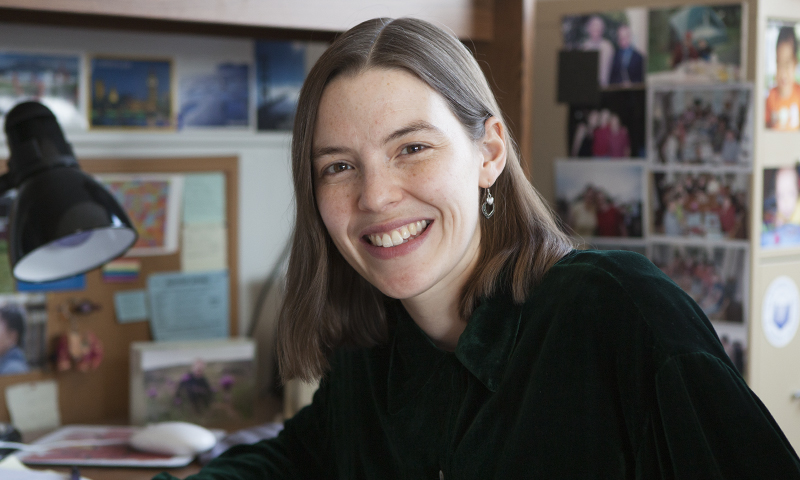
Dr Marika Kaakinen is a Lecturer in Statistical Multi-omics at the University of Surrey's School of Biosciences, within the Centre for Mathematical and Computational Biology. She holds an MSc in Statistics and a PhD in Genetic and Life-Course Epidemiology from the University of Oulu, Finland. Before joining Surrey in 2019, she was a Marie Curie Fellow and Research Associate at Imperial College London. Her research focuses on developing statistical methods for genomic/omics data analysis, particularly in complex human traits like type 2 diabetes and psychiatric conditions. She collaborates with consortia such as DIAGRAM, MAGIC, and SSGAC, and has contributed to software tools like MARV and SCOPA. Key research areas include metabolomics, proteomics, and gut microbiome studies. Teaching includes courses like BMS1050 (Biochemistry) and BMS2036 (Molecular Biology and Genetics). She currently supervises PhD students Tingyu Guo, Igors Pupko, and Liudmila Zudina. Her work emphasizes leveraging multi-omics data and machine learning to enhance disease prevention and treatment strategies.
Jean-Pascal Guironnet is a Lecturer at the University of Caen Normandy , affiliated with the CREM-Caen (UMR CNRS 6211) research structure and associated with the EDEHN-Le Havre (EA 7263) research lab. His work spans applied microeconometrics, labor markets, and sports economics. Education : Habilitation à Diriger des Recherches (HDR) in Economics, University of Normandy (2015) PhD in Economics, University of Montpellier (2007) DEA in Economic Analysis, Modeling and Quantification, University of Montpellier (2002-03) Licence and Maîtrise in Econometrics, University of Montpellier (2000-02) DEUG in MASS (Mathematics Applied to Social Sciences), University of Grenoble (1999-2000) Research Interests : Applied microeconometrics for labor market analysis Economic modeling of sports industry performance Inequality dynamics among recent graduates Historical economic geography of conflicts Regional R&D spillovers and productivity Teaching : Data Analysis (Licence 3, Economics & Management) Survey Theory (M2 Public Policy) Econometrics of Decision (Master 1) Statistical Inference (Licence 2) Economic Evaluations (Master ESED²) Personal Interests : Magic: The Gathering deck builder Board games (Némésis, Anachrony, Evolution, Revive) Role-playing games (Call of Cthulhu, Maléfices, Alien, In Nomine Satanis)
Dan Fretwell is a Lecturer in Security and Protection Science within the School Of Mathematical Sciences at Lancaster University. His academic journey includes a PhD from the University of Sheffield (2015) under Prof. Neil Dummigan, a Heilbronn Research Fellowship at the University of Bristol (until 2022), and a Lecturer position at the University of South Wales (2022-2023). His research spans Algebraic Number Theory with extensive work on: Quadratic forms, lattices, and error correcting codes Modular forms, elliptic curves, and number fields Automorphic forms, Galois representations, and L-functions Interacting particle systems with applications in Statistical Mechanics Fretwell's work is significantly motivated by the Langlands program, focusing on computational evidence for conjectures and practical applications. His recent publications show a clear trajectory toward cybersecurity applications, particularly in cryptography and quantum computation. His 2025 publication on 2-superirreducible polynomials over finite fields demonstrates this applied direction. The publications collectively reveal expertise across pure number theory, computational mathematics, and increasingly relevant cryptographic applications. He teaches MATH320: Mathematical Cryptography and supervises PhD students in Algebraic Number Theory with emphasis on Modular Forms and Galois Representations. His professional activities include public engagement through the STEM Lecturer Series, "The Magic of Maths" public lecture, Pint of Science events, and school outreach programs at Winstanley College and Rochdale Sixth Form College.
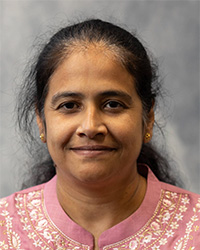
Meera Mainkar is an Associate Professor and Chair of the Department of Mathematics at Central Michigan University (CMU). Her research focuses on Lie Theory, Algebraic Geometry, and Differential Geometry, with significant contributions to the study of Anosov Lie algebras, nilpotent structures, and graph theory applications in algebraic systems. She earned her Ph.D. from the Tata Institute of Fundamental Research (TIFR), Mumbai, India, in 2005. Ph.D., Tata Institute of Fundamental Research (2005) Mainkar's research interests include the interplay between Lie algebras and geometric structures, with a particular emphasis on dynamical systems and metric foliations. Her work bridges algebraic combinatorics and geometric analysis, exemplified by studies on magic squares and Reinhardt domains. Her most recent publications explore metric foliations of homogeneous spaces and applications of graph theory to nilpotent Lie algebras. Earlier work laid foundational insights into Anosov systems on nilmanifolds and algebraic units in number fields. Early Career Grant, CMU (2012) IMU Support for ICM 2006 Kanwal Rekhi Career Development Scholarship (2002–2004) Mainkar advises students in algebraic research, including undergraduate collaborations on projects like Bergman kernel analysis and automorphism groups. She co-organizes CMU’s Algebra and Combinatorics Seminar and leads the Graduate Student Seminar, fostering academic community-building. Her work also extends to geometric analysis, with contributions to metric geometry and homogeneous three-spheres foliation studies. Current research trends emphasize interdisciplinary approaches, blending algebraic structures with geometric and combinatorial tools.
Jonathan Kirby is a Professor of Mathematics at the University of East Anglia (UEA), where he holds roles including Deputy Director of Teaching and LMS Departmental Representative. His academic journey includes a DPhil from the University of Oxford (2002–2006) and a MSc in Mathematical Logic from the University of Manchester (2001–2002). He has held positions ranging from Lecturer (2009–2014) to Senior Lecturer (2014–2019) before becoming a Reader and Professor in 2019. Research Interests : Kirby specializes in Model Theory and its applications to complex analysis, number theory, and algebraic geometry. His work explores connections between model theory and analytic functions, including the complex exponential function, modular j-function, and elliptic curves. Key themes include Zilber’s pseudo-exponential fields, Schanuel’s conjecture, and quasiminimal excellence. Publications Overview : His recent work focuses on quasiminimal structures, closure operators, and independence relations in exponential fields. Notable contributions include studies on algebraic types in Zilber’s exponential field and a geometric approach to exponential equations. These studies reflect his deep engagement with foundational questions in logic and their interactions with algebra and analysis. Teaching & Engagement : Kirby teaches Model Theory, Mathematical Logic, and Category Theory. He authored An Invitation to Model Theory , a textbook accessible to graduate students and researchers. He also coordinates the SEEMOD network, fostering collaboration in model theory across the UK. Grants & Leadership : He has led projects funded by the EPSRC and LMS, including studies on exponentially algebraically closed fields and the Galois theory of exponential fields. His administrative roles at UEA include advising on equality and diversity and managing the MAGIC consortium for PhD-level courses.
Urs Leo Gantenbein is a Researcher affiliated with the University of Zurich's Institute of Evolutionary Medicine and Swiss Reformation Studies Institute. His work focuses on Paracelsus studies, history of medicine, and alchemy in Medieval and Renaissance contexts. He leads the Zurich Paracelsus Project, editing the New Paracelsus Edition and co-developing the Paracelsus Database (THEO). His research includes paleopathological analysis of historical figures like Ulrich von Hutten and conceptual studies of syphilis in Early Modern Europe. Education: M.Sc. in Mathematics/Physics (ETH Zurich, 1979); Dr. med. in Medical History (University of Zurich, 1992). He maintains a part-time medical practice in Winterthur. Academic roles include past leadership in Swiss and international Paracelsus societies. Research highlights: Editing Paracelsus' theological and medical works Pioneering interdisciplinary studies linking theology, alchemy, and medicine Analysis of early modern medical practices and their cultural contexts Key projects: New Paracelsus Edition (multi-volume critical edition) Paracelsus Database THEO (digital resource for his works) Paleopathology investigations of historical remains Honors: Honorary Membership in Deutsche Bombastus-Gesellschaft, past leadership in Swiss Paracelsus Society. Labs/Teams: Zurich Paracelsus Project (collaborating with Sorbonne University), Institute of Evolutionary Medicine research groups.
Dr. Yvette Kisor is a Professor of Literature at Ramapo College of New Jersey's School of Humanities and Global Studies (HGS), specializing in English and Literary Studies. She joined the institution in 2004 and maintains office B-142. Currently scheduled for sabbatical during Fall 2025, her academic foundation includes a B.A. from Rice University and both M.A. and Ph.D. degrees from the University of California, Davis. Her research explores the interplay between medieval traditions and modern reinterpretations, with focus areas including: Old and Middle English literature, particularly Beowulf and Chaucer Tolkien's literary adaptation of medieval forms Gender and queer theory applications to medieval texts History of the English language and computer-assisted textual analysis She teaches diverse courses spanning British medieval literature, Tolkien studies, Arthurian legends, and popular literature. Kisor's publications demonstrate consistent focus on medieval literature and its modern receptions, especially in Tolkien's works. Recent scholarship emphasizes gender/queer readings of fantasy literature while maintaining rigorous analysis of medieval textual traditions. Her 15 most recent works (2007-2023) show progression toward interdisciplinary approaches combining literary criticism with gender studies and cultural theory.
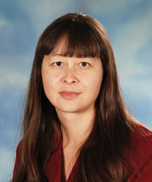
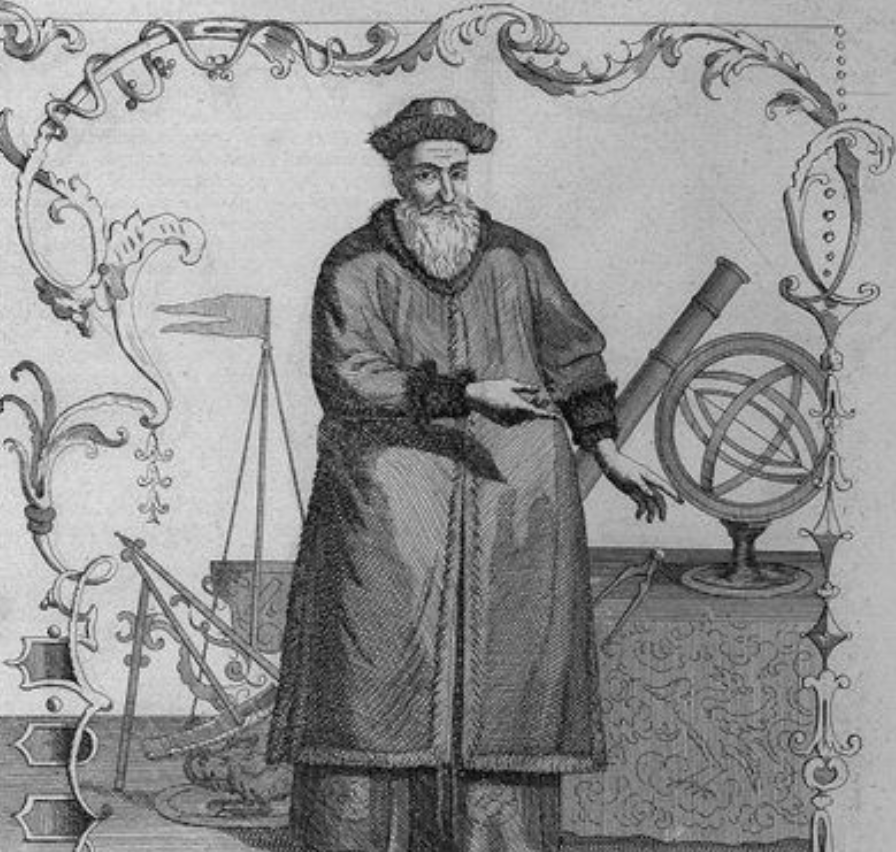
Xiaona Wang is a Research Fellow at the Centre for the Study of the Renaissance, University of Warwick, Faculty of Arts. She joined the Centre in 2021 as a Leverhulme Early Career Research Fellow and continues her research on early modern science, focusing on gravitational theories and evidence-making in Eurasian astronomy. Her research interests include: Early Modern Science and Philosophy, Renaissance Occult Sciences, Science and Religion, Francis Bacon, John Wallis, Isaac Newton, Global Newtonianism in the Eighteenth Century, and the Eurasian History of Early Modern Science. She explores how scientific ideas were transmitted across cultures, particularly between Europe and East Asia, and how evidence was constructed in pre-modern scientific contexts. Her recent publications include a monograph on occult qualities in the Scientific Revolution and several articles on magnetic cosmology, comets, and Newtonian thought. Her work spans disciplines such as intellectual history, history of astronomy, and philosophy of science, reflecting a transnational and interdisciplinary approach to the history of science. Notable scientific award: Charles Schmitt Prize for Intellectual History (2018) She has taught undergraduate modules on Renaissance Europe and contributed to postgraduate methodology training. She is actively involved in organizing academic events, such as the Leverhulme-funded Global History of Science Workshop at Warwick, where she serves as co-organizer and speaker. She has no formal students listed, but her mentoring may occur informally through workshops and seminars. She is associated with research projects on gravitational knowledge and the global history of science, demonstrating a sustained commitment to collaborative and innovative scholarship.
Prof. Edy Tri Baskoro, M.Sc., Ph.D., is a faculty member at the Faculty of Mathematics and Natural Sciences, Bandung Institute of Technology. His academic career spans combinatorics, graph theory, and discrete mathematics, with extensive research on Ramsey graphs, metric dimensions, and graph labelings. Education: Bachelor's from ITB (1987), Master's from University of New England (1992), Ph.D. from University of Newcastle (1996) His research focuses on combinatorial structures, including Ramsey minimal graphs, partition dimensions, irregularity strength, and quadratic embedding constants. Key subfields include tree graphs, path-cycle Ramsey problems, and algorithmic graph theory. Recent publications address edge-locating colorings, unicyclic Ramsey graphs, and applications of graph theory in educational programs. He has contributed to teacher training initiatives in Lombok, Cirebon, and Makassar, as well as textbook development for machine learning. His work involves collaborations in graph theory research and projects like PKR Graph Theory for Nation Building. While no specific awards are documented in the provided text, his contributions to combinatorial research and mathematics education in Indonesia are significant.
Angelo Valli is a Senior PostDoc Researcher at the Department of Theoretical Physics , Budapest University of Technology and Economics. His research spans condensed matter physics, nanotechnology , and quantum physics , focusing on many-body phenomena, quantum interference, and molecular electronics. 2025/S: Instructor for Modern Physics BMETE15AP59 2024/W: Instructor for Physics Problem Solving Tutorial BMETE15AP58 His work combines quantum field theoretical methods with numerical simulations of low-dimensional systems. Key research areas include: Quantum interference in electron transport Spintronics applications in graphene nanoflakes Molecular electronics with ab-initio and many-body approaches Electronic correlations from bulk to nanoscale Quantum dynamics and coherence effects Valli's theoretical frameworks have direct implications for quantum sensor design , spintronic devices , and chemical detection technologies . He has developed efficient local orbital (LO) basis methods for simulating realistic molecular systems while maintaining numerical accuracy.
Paolo Palmieri is an Associate Professor at the Department of History and Philosophy of Science in the School of Arts and Sciences, University of Pittsburgh. His research bridges the history and philosophy of modern science , interdisciplinary studies of art and science , and phenomenology , with a focus on the intellectual traditions shaping modernity. He integrates computer models and lab experimentation to explore cognition and practices at the intersection of science and culture. Education : PhD in History and Philosophy of Science (2002), STS University College, University of London Laurea in Philosophy (1998), University of Bologna Laurea in Aeronautical Engineering (1987), Polytechnic of Milan His research spans mathematical creativity , auditory biomechanics , and humanistic ecology , with recent publications on Galileo's experiments and the philosophy of numbers . His 15 most recent articles reflect trends in the history of physics , phenomenology of sound , and interdisciplinary pedagogy . He has taught courses on Galileo's legacy , the unity of science , and magic, medicine, and science , emphasizing student-centered learning and diversity. His work has been presented at conferences like the American Association for Italian Studies (2018) and International Merleau-Ponty Circle (2014). He also serves as Editor for the book series History and Philosophy of Science: Heresy, Crossroads, and Intersections (Peter Lang). Scientific Awards : No awards explicitly mentioned. He advises graduate students in topics such as women in science , human/animal boundaries , and experimental history , and has contributed extensively to multimedia educational materials for historical experiments in science.
Erika L.C. King is an Associate Professor of Mathematics and Computer Science at Hobart and William Smith Colleges (HWS), where she has been a faculty member since 2001. She earned her Ph.D. and M.S. from Vanderbilt University and her A.B. from Smith College. Her office is located in Lansing Hall, and she can be reached at eking@hws.edu or (315) 781-3355. Dr. King specializes in graph theory with research interests focusing on domination theory of graphs, well-covered graphs, and zero forcing in graphs. Her scholarly work has explored various aspects of graph structures, including vertex-magic edge labelings, plane triangulations, and 4-regular, 4-connected, claw-free graphs. She has supervised numerous undergraduate research projects through the HWS-REU program, mentoring students like Rayan Ibrahim, Rebecca Jackson, and others who have co-authored publications with her. Her recent publications demonstrate a continued focus on domination theory and well-covered graphs, with her 2024 paper 'Well-Forced Graphs' representing the latest development in this line of research. Her work spans both theoretical developments and practical applications of graph theory concepts. Dr. King is actively involved in the mathematical community through memberships in the Association for Women in Mathematics, Mathematical Association of America, and American Mathematical Society. She has organized departmental colloquia and supported students attending conferences like the Nebraska Conference for Undergraduate Women in Mathematics. She has taught a wide range of mathematics courses from introductory calculus to advanced topics in graph theory and abstract algebra. Her teaching portfolio includes MATH 110 (Discovering in Mathematics), MATH 130-131 (Calculus I-II), MATH 204 (Linear Algebra), MATH 232 (Multivariable Calculus), MATH 278 (Number Theory), and multiple sections of MATH 313 and MATH 571 (Graph Theory).
Jan Westenkær Thomsen is an Associate Professor at the Niels Bohr Institute, University of Copenhagen, specializing in quantum information science and technology with expertise in atomic, molecular, and optical physics. His research spans quantum optics, ultracold atoms, and precision measurement techniques with significant contributions to atomic clocks and frequency standards development. Education: Ph.D. in Physics, Université de Paris-Sud, Orsay (1995) D.E.A. de Physico-Chimie Moléculaire, Université de Paris-Sud, Orsay (1992) M.Sc. in Mathematics and Physics, University of Copenhagen (1992) Professor Thomsen's research focuses on two-electron systems in connection with ultra-stable laser systems and optical frequency standards, with particular emphasis on strontium and magnesium atoms. His work includes trapping cold magnesium atoms in optical lattices, determining magic wavelengths, generating ultra-stable laser light, and investigating potential variations in fundamental constants. He also develops novel fiber-optic laser systems and collaborates on medical applications of NMR technology. His recent publications demonstrate a strong focus on advancing quantum metrology and optical communication technologies, with key themes including superradiant lasing with cold atoms, optical frequency combs for high-speed data transmission, and space-based atomic physics experiments that bridge fundamental physics with practical applications in precision measurement and telecommunications. Scientific Awards: JILA fellow, University of Colorado, Boulder (2007-08) TMR Marie Curie Fellow individual grant from the European Union (1996-98) Ph.D. grant from the French Government (1992-95) Internationalization grant from Copenhagen University (1990-91) Professor Thomsen has supervised more than 30 master's students and 9 Ph.D. students throughout his career, along with 6 postdoctoral researchers. Currently, he supervises 2 Ph.D. students (one at NBI, two external) and 3 master's students. As group leader of the NBI cold atoms group since 2000, he typically oversees three Ph.D. students, one postdoc, and seven master's students per year. His research has been supported by various grants including the Carlsberg Research Fellowship and funding from the Danish National Research Foundation. As group leader of the NBI cold atoms group, Professor Thomsen oversees a research team focused on ultracold atoms, quantum degenerate gases, and precision measurement. The group maintains advanced laser laboratories for atomic physics experiments and has developed specialized equipment for optical frequency standards and quantum metrology applications, collaborating with international institutions including JILA, NIST, and various European research centers.
Matthias Beck is a Professor of Mathematics at San Francisco State University (SFSU), where he has held positions since 2004. He specializes in combinatorics, number theory, and discrete geometry, focusing on lattice-point enumeration in polyhedra and Ehrhart theory. His research has led to influential textbooks such as Computing the Continuous Discretely (2007) and Combinatorial Reciprocity Theorems (2018). Beck has also contributed to education through the Art of Proof textbook and leadership roles like Associate Chair of the Mathematics Department. Beck's academic journey includes a Ph.D. from Temple University (2000) and postdoctoral fellowships at institutions like MSRI and the Max Planck Institute. His awards include the MAA's Deborah and Franklin Tepper Haimo Award for Distinguished Teaching (2013). He has advised numerous graduate and undergraduate students, fostering collaborations in research areas from magic squares to graph colorings. His work bridges pure and applied mathematics, with applications in music theory, optimization, and combinatorial geometry. Beck actively participates in academic service, including editorial roles at journals like the Electronic Journal of Combinatorics and leadership in initiatives like the National Alliance for Doctoral Studies in Mathematics.
Margaret Bayer is a Professor in the Department of Mathematics at the University of Kansas, within the College of Liberal Arts & Sciences. She specializes in combinatorics and discrete geometry, with research focusing on convex polytopes, hyperplane arrangements, Eulerian posets, and flag vectors. Her work bridges combinatorics with algebraic geometry, particularly through connections to toric varieties. Her research explores the combinatorial structure of geometric objects, including face lattices of polytopes and the interplay between algebraic and geometric properties. Recent work includes studies on cut complexes of graphs, matching complexes, and applications of combinatorial methods in education and algorithm design. Bayer has authored/co-authored over 40 publications, including foundational works on flag vectors, the cd-index of Eulerian posets, and lattice polytopes derived from Schur polynomials. Her articles often address topics like polytope enumeration, topological properties of graph complexes, and combinatorial optimization in exam design. She serves as Book Review Editor for the Association for Women in Mathematics Newsletter and has advised numerous collaborative projects. Her teaching includes intermediate analysis and discrete mathematics courses.