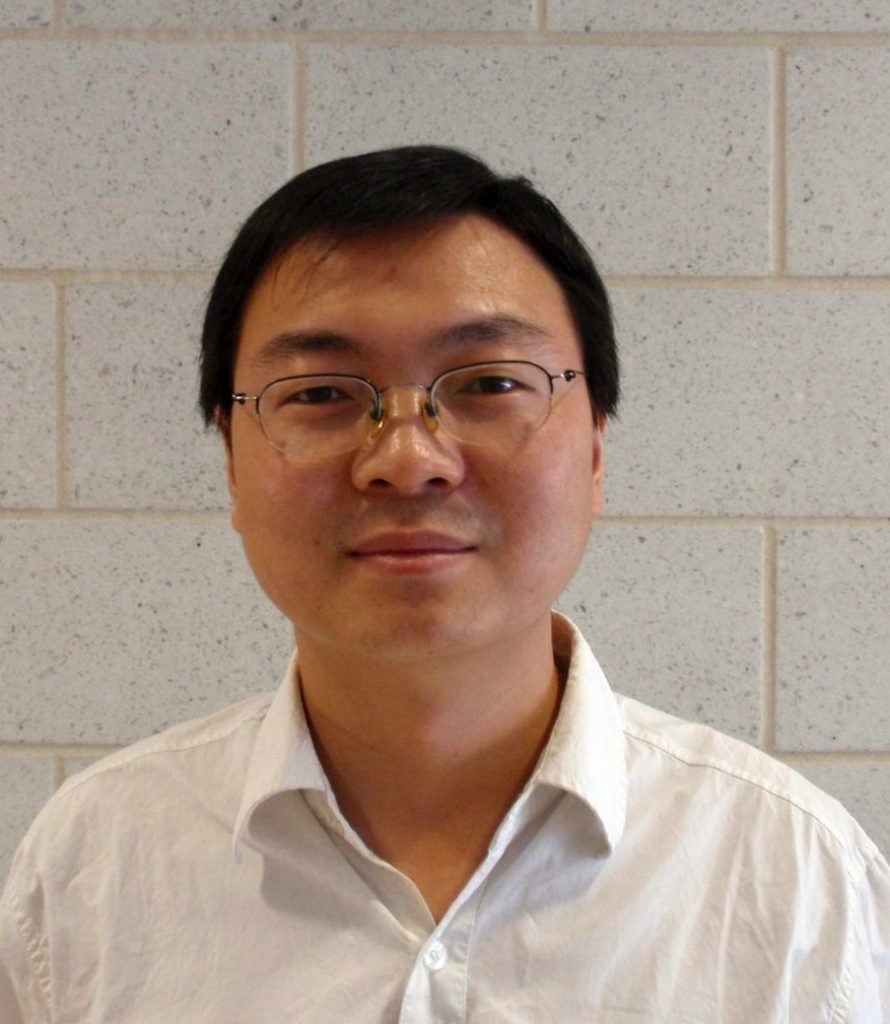
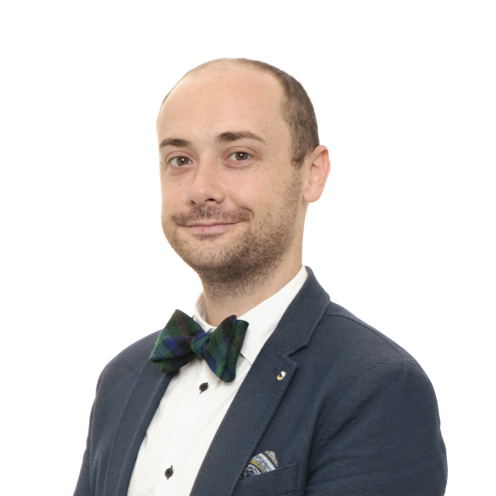
Veerle Vanlerberghe is a senior researcher and educator at the Institute of Tropical Medicine (ITM) in Antwerp, Belgium, coordinating education in the Department of Public Health. Her work focuses on infectious disease control, particularly arboviruses like dengue, zika, and rift valley fever in Latin America and Africa. She leads research on vector control strategies, outbreak response, and the impact of human mobility on disease transmission. Affiliations: ITM (Antwerp), University of Ghent (Faculty of Bioscience Engineering), European Medical Corps. Roles: Academic Council member, MPH Steering Committee chair, and project leader in global health initiatives. Research Interests Her expertise spans cluster-randomized trials for vector control tools, disease surveillance in resource-limited settings, and outbreak investigations (e.g., Yellow Fever in Angola, Cholera in Kinshasa). She integrates spatial analysis and human mobility data to improve disease prevention strategies. Research Highlights Recent work includes developing multiplex PCR diagnostics, evaluating dengue hotspot interventions in Cuba, and analyzing seroprevalence trends during the pandemic. Her studies emphasize interdisciplinary approaches combining epidemiology, public health policy, and community engagement. Grants and Leadership She coordinates large-scale projects funded by EU, NIH, and Flemish government agencies, including the VECTORNET3 initiative on medical entomology and the DI-MOB study on mobility-driven disease spread in Cuba.
Phil Maguire is an Associate Professor in the Department of Computer Science at Maynooth University, part of the Faculty of Science & Engineering. He joined the university in 2006 and currently directs the BSc in Computational Thinking program. His educational background includes a BAI in Engineering from Trinity College Dublin (TCD), followed by an MSc and PhD in Cognitive Science from University College Dublin (UCD). He also holds a DipPysch in Psychology from the Open University (OU) and a PGDHE from Maynooth University. Maguire's research focuses on cognitive science and theoretical computer science, with particular emphasis on representation, uncertainty, measurement standards, and mathematical foundations applied to fintech. His work bridges computational models of human cognition with practical applications in decision-making, education, and financial systems. His publications span cognitive modeling, educational technology, and financial engineering. Recent trends include computational models of surprise, automated assessment in programming education, and robust financial indices using sparse data. His work often integrates interdisciplinary approaches, combining cognitive science principles with real-world applications in economics and education. Maguire has contributed to conferences such as the IEEE Conference on Computational Intelligence for Financial Engineering and the Cognitive Science Society meetings. He has explored portfolio optimization, risk-adjusted algorithms, and authorship attribution through grammatical models. His educational research includes studies on collaborative learning techniques like pair programming and the use of technology-enhanced tools in higher education. No scientific awards are explicitly listed in the provided information. His advising and grant activities are not detailed here. Maguire’s involvement with interdisciplinary labs or teams is not specified in the text.
Joanna O. Masingila is the Laura J. and L. Douglas Meredith Professor for Teaching Excellence and a dual faculty member at Syracuse University, holding positions in the Department of Mathematics (College of Arts and Sciences) and the Department of Teaching and Leadership (School of Education). She earned her Ph.D. in Mathematics Education from Indiana University (1992) and served as Dean of the School of Education from 2014 to 2021. Her research focuses on teacher development, mathematical knowledge for teaching, and out-of-school mathematics practices. She is active in policy advocacy at local, state, and national levels, including roles with the New York State Professional Standards and Practices Board for Teaching. Education: Ph.D., Mathematics Education, Indiana University (1992); M.S., Mathematics (1987); B.A. and A.A., Mathematics (1982, 1980). Research interests include teacher educator development, curriculum design for mathematics education, and bridging in-school and out-of-school mathematical practices. Key projects involve collaborations in Kenya to improve teacher training through video case studies. She has authored numerous textbooks and articles, including works on problem-solving approaches in mathematics education and the impact of class size on teaching effectiveness. Awards: Laura J. and L. Douglas Meredith Professorship for Teaching Excellence. Grants include leadership in programs such as the Collaborative University and School Experience for Fulbright International Teachers (CUSE FIT) and the Collegiate Science and Technology Entry Program (CSTEP). Teaching spans undergraduate and graduate courses in mathematics education, curriculum design, and learning theories. She advises students and mentors faculty across disciplines, emphasizing active learning strategies.
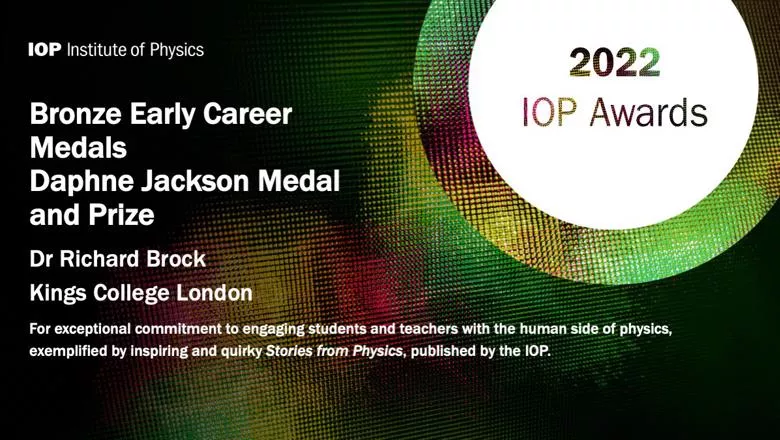
Dr Richard Brock is a Senior Lecturer in Science Education at King’s College London, affiliated with the School of Education, Communication & Society. He chairs the Business and Education Low Risk Ethics Panel and serves as a Research Integrity Advisor. His research focuses on science education, emphasizing the nature of knowledge and understanding, teacher wellbeing, and narratives in physics teaching. He leads the PGCE Science Education program and contributes to the STEM Education MA. Education: Dr Brock holds a PGCE, a Master’s from the University of Cambridge (focused on intuition and insight in science learning), and a PhD supervised by Prof. Keith Taber. His doctoral work used microgenetic methods to study conceptual development in physics learners. Research Interests: He explores learning mechanisms in science education, including tacit knowledge, conceptual change over time, and the role of storytelling. Collaborative projects include investigating teacher wellbeing post-pandemic and developing wellbeing support systems for trainees. Awards: He received the 2022 Daphne Jackson Medal (Institute of Physics) and the 2015 Santander PhD Prize. Advising & Grants: Supervises PhD students researching topics like neurodiverse students’ engagement and queer youth inclusion in science. Active in securing grants for teacher training and wellbeing initiatives. Labs/Teams: Associated with the Centre for Research in Education in Science, Technology, Engineering & Mathematics (CRESTEM), leading research on STEM pedagogy and educational innovation.
Chrystal Whiteford is a Senior Lecturer in early childhood and primary mathematics education at Queensland University of Technology (QUT), affiliated with the School of Education within the Faculty of Creative Industries, Education & Social Justice. She holds a PhD in Early Childhood Education from QUT. Her research focuses on STEM education, mathematics education in early childhood and primary settings, and early childhood education and care quality. She has extensive experience teaching across early childhood, primary, and tertiary environments. Her doctoral research investigated developmental outcomes and quality of care for infants and toddlers in early childhood education contexts. Key research interests include bullying prevention, educator workforce development, and the intersection of mathematics with literacy and numeracy. Whiteford has contributed to projects such as the 'Transforming Mathematics and Science Teacher Education in Queensland' initiative and has authored over 50 peer-reviewed publications. Her work spans educational policy analysis, teacher emotional well-being, and cross-cultural studies of early childhood belonging. She currently teaches courses like EUB302 (Early Childhood Mathematics Education) and EUB208 (Primary Mathematics Curriculum Studies). Professional memberships include Early Childhood Australia. Recent research highlights include analyzing anti-bullying policies, evaluating educator training programs, and exploring STEM curriculum design barriers. Her work emphasizes practical applications to improve teaching practices and support student well-being.
Stephen Ritchie is a Professor in the Department of Science and Mathematics Education at Queensland University of Technology's School of Teacher Education and Leadership. With over 67 publications spanning two decades, his scholarship focuses on the intersection of emotional dimensions and science education, particularly examining how emotional climates shape learning experiences and teacher development. His work bridges theoretical frameworks with practical classroom applications across diverse educational contexts. Ritchie's research interests center on emotional dynamics in science learning environments , context-based curriculum development , and collaborative teacher education methodologies . He has pioneered approaches for measuring emotional climates in classrooms, developed innovative writing techniques for scientific literacy, and explored cross-cultural emotional experiences in teacher education programs. His work frequently examines how metaphors, analogies, and real-world contexts facilitate deeper science understanding while navigating emotional challenges. Analysis of his 15 most recent publications reveals consistent focus on emotional climate measurement across international contexts (including Bhutan), temporal dynamics of learning emotions , and context-based assessment design . His methodological approach combines qualitative depth with multimodal analysis, particularly examining physiological correlates of emotion and longitudinal emotional patterns in both students and teachers. The work demonstrates increasing sophistication in measuring emotional transitions and their relationship to cognitive outcomes. Ritchie has made significant editorial contributions as lead editor of The World of Science Education: Handbook of Research in Australasia (2009) and co-editor of multiple special journal issues. His research collaborations span international networks, with frequent partnerships with Donna King, Alberto Bellocchi, and Kenneth Tobin. Mentorship forms a core dimension of Ritchie's academic practice, evident through sustained collaborations with doctoral students who have become prominent researchers in science education. His projects often involve designing and evaluating professional development programs for pre-service and in-service science teachers, with particular attention to emotional resilience and context-based pedagogy. Ritchie's research teams typically employ multi-method approaches, combining classroom ethnography with physiological measurements and longitudinal narrative analysis to understand the complex interplay between emotion and cognition in science learning.
Lily Popova Zhuhadar is a Professor of Analytics & Information Systems at Western Kentucky University's Gordon Ford College of Business, where she also serves as Director of the WKU Center for Applied Data Analytics and Coordinator of the Undergraduate Business Data Analytics Program. Her academic journey began with a Master of Sciences in Computer Science from Western Kentucky University in 2004, followed by a Doctor of Philosophy in Computer Engineering and Computer Science from the University of Louisville in 2009. Dr. Zhuhadar's educational background includes: Doctor of Philosophy, Computer Engineering and Computer Science, University of Louisville (2009) Master of Sciences, Computer Science, Western Kentucky University (2004) Her research interests span Machine Learning, Artificial Intelligence, Data Mining, Pattern Recognition, Data Science, Analytics, Semantic Web, Smart Cities, and Computers in Human Behavior. Dr. Zhuhadar's work bridges theoretical computer science with practical applications in healthcare, business analytics, and educational technology. She has made significant contributions to semantically enriched e-learning resources, intelligent tutoring systems, and data analytics for crisis management, with particular expertise in applying analytical techniques to solve complex real-world problems across multiple domains. Dr. Zhuhadar's publication record demonstrates a consistent focus on applying advanced data analytics techniques to solve real-world problems. Her recent work has increasingly focused on healthcare applications, including stroke prediction, diabetes diagnosis, and ecosystem management. She has also maintained a strong interest in educational data mining, particularly in understanding student success pathways in STEM disciplines. Her research methodology often combines semantic web technologies with traditional data mining approaches to create innovative solutions. Her scientific achievements have been recognized through numerous awards: College Faculty Award for Research & Creativity (2023-2024) College Faculty Award for Service (2023-2024) College Faculty Award for Research & Creativity (2022-2023) College Faculty Award for Teaching (2021-2022) University Award for the Most Prolific Grant Proposer (2014-2015) Dr. Zhuhadar has secured over $600,000 in external research funding and more than $100,000 in internal grants. She has served as Principal Investigator on diverse projects ranging from AI applications in healthcare to financial fraud detection. Her mentorship of undergraduate students through the WKU Faculty-Undergraduate Student Engagement program has resulted in numerous collaborative research projects and conference presentations, with over 15 students co-authoring publications and presentations with her in the past two years alone. As Director of the WKU Center for Applied Data Analytics, Dr. Zhuhadar has built a thriving research infrastructure that supports faculty and student research across multiple disciplines. Under her leadership, the Center secured over $101,000 in research grants in 2022-2023, with 33% of funds allocated to support student educational pursuits. She has organized multiple webinar series and research enrichment programs to build data analytics capacity across the university community.
Dr. Matthias Rolf is a Reader in Computer Science at the School of Engineering, Computing and Mathematics, Oxford Brookes University. He serves as the First Year Tutor and Postgraduate Research Tutor for Computing. His research focuses on AI, machine learning, robotics, and smart visitor management, with notable collaborations like the Blenheim Palace project. He teaches courses including Artificial Intelligence (BSc/MSc), Computer Science (BSc), and supervises projects in reinforcement learning, ethical AI, and robotics. Rolf leads the Machine Learning and Robotics Group (MLR) and is part of the Centre for AI, Culture and Society (CAICS) and Visual Artificial Intelligence Laboratory (VAIL). His work bridges developmental robotics with ethical AI frameworks, emphasizing autonomous systems and human-robot interaction. Education: PhD (Dr.-Eng.), MSc in Computer Science, and Postgraduate Certificate in Higher Education (PGCHE). He has supervised multiple PhD/MSc students, including Rebecca Raper (PhD 2023 on moral machines) and Mohamed Idries (PhD 2022 on navigational algorithms). His research explores multi-objective reinforcement learning, tactile exploration, and ethical decision-making in AI systems. Publications span journals like IEEE Transactions and conferences, with over 30 articles since 2008. Media coverage includes features in New Scientist and Technology Review. He actively engages in knowledge transfer partnerships, integrating academic research with industry applications.
Peter O'Reilly is a Teaching Professor in the Multidisciplinary Graduate Engineering Programs at Northeastern University, where he has directed the MS in Telecommunications Networks since 2002 and developed the MS in Cyber-Physical Systems program. His career bridges industry leadership and academic innovation in networking technologies. His educational background includes: PhD in Electrical Engineering, Georgia Institute of Technology (1983) MS in Applied Mathematics, Georgia Institute of Technology MS in Electrical Engineering, Colorado State University BE in Electrical Engineering (First Hons), University College Dublin Dr. O'Reilly's research centers on telecommunications infrastructure, network architecture evolution, and cyber-physical system integration. His work addresses fundamental challenges in burst switching, ATM protocols, fiber bandwidth utilization, and LAN performance optimization. The textbook Performance Analysis of Local Computer Networks established foundational methodologies for network simulation and traffic modeling. His publication history (1984-1996) reveals a consistent trajectory from early LAN performance studies through burst switching innovations to advanced telecommunications architecture. This body of work demonstrates exceptional continuity in solving practical engineering problems while anticipating industry transitions from circuit-switched to packet-based networks. Major recognitions include: Warner Award (twice at GTE, the company's highest technical honor) 2024 Faculty Research Team Award at Northeastern University As program director for two flagship MS degrees, he has shaped curricula that integrate industry co-ops with academic rigor, producing graduates who excel at companies like Arista Networks, Ericsson, and Palo Alto Networks. His editorial leadership as Editor-in-Chief of IEEE Network (2000-2003) and technical editor for premier journals established him as a key knowledge disseminator in networking research. His IEEE Network editorial tenure and guest editorship for the IEEE Journal on Selected Areas in Communications on Circuit Switching reflect deep engagement with the field's evolution. As a Life Senior Member of IEEE, he maintains active connections between academic research and industrial implementation through the College of Engineering's industry partnerships.
Bruno Buchberger is a Full Professor at the Research Institute for Symbolic Computation (RISC) of Johannes Kepler University in Linz, Austria. He has held leadership roles including Head of Softwarepark Hagenberg since 1989 and Chairman of RISC from 1987 to 1999. His academic career spans decades, with prior positions at RISC and the Mathematical Institute of Johannes Kepler University. Research Focus: Computer algebra, Groebner bases theory, automated theorem proving, and symbolic computation. Awards: ACM Kanellakis Award (2007), three honorary doctorates, and the Austrian Cross of Honors for Science and Arts, First Class. As a pioneer in mathematical education for computer scientists, he has contributed to logic-based pedagogical frameworks. His technical leadership at RISC and Softwarepark Hagenberg underscores his influence in computational mathematics and software development.
Yuzhe Zhang is a Professor in the Department of Economics at Texas A&M University, specializing in Macroeconomics and Mechanism Design. His research focuses on optimal contracts, economic policy, and institutional design. He has published extensively in peer-reviewed journals and co-authored works on topics such as unemployment insurance fraud, liquidity policy, and housing markets. Teaching: Zhang has taught numerous courses in Macroeconomics, including Intermediate Macroeconomics, Macroeconomic Theory I, and Dynamic Contract and Its Application. His teaching spans over a decade, emphasizing dynamic programming and mathematical economics. Research Interests: His work bridges theoretical economics and policy analysis, addressing issues like incentive mechanisms, public finance, and international trade. Notable areas include optimal policy design, risk sharing contracts, and the impact of private information on economic outcomes. Publications: Over 15+ peer-reviewed articles since 2007, including influential works on unemployment insurance fraud, China's housing bubble, and the Pacific Salmon Treaty. His research often combines rigorous mathematical modeling with real-world policy implications. Labs/Teams: No specific lab/team is mentioned, but collaborations include co-authors like Borys Grochulski and B. Ravikumar on projects related to macroeconomic policy and institutional design.
Associate Professor Jacob Dijkstra is affiliated with the Department of Sociology at the University of Groningen's Faculty of Behavioural and Social Sciences. His research focuses on game theory, exchange networks, and collective decision-making, with a particular emphasis on mathematical sociology and community energy initiatives. He holds a PhD and has contributed significantly to understanding social networks' role in collective action and policy outcomes. Affiliations: University of Groningen, Department of Sociology. Education: PhD in Sociology (implied by research profile). Research Interests: Dijkstra's work bridges theoretical models and empirical analysis, addressing topics like herding behavior, moral objectivity, and the socio-technical dynamics of community energy projects. His recent studies highlight the importance of social ties and network structures in fostering cooperation and sustainability. Article Trends: His publications emphasize interdisciplinary approaches, blending sociology with network science and mathematical modeling. Key themes include the impact of social networks on community engagement, the dynamics of cumulative advantage, and the ethical dimensions of moral beliefs. Awards: RVO STEM Project Eensgezind Energie Neutraal (2016). Grants & Advising: Supervised five academic works, including studies on energy transition and public policy. His research has been cited in policy analyses and interdisciplinary journals. Labs/Teams: Collaborates with interdisciplinary teams on projects like the Eensgezind Energie Neutraal initiative, focusing on community-driven sustainability solutions.
Erich Neuhold is a Professor of Computer Science at the University of Vienna and Darmstadt University of Technology. He holds honorary professorships at several institutions, including the University of Guiyang and the New Jersey Institute of Technology. His career spans over five decades, with roles as Director of the Fraunhofer Institute for Integrated Publication and Information Systems (IPSI) and professorships at multiple universities globally. Education: Erich Neuhold earned a Dipl.-Ing. (M.S.) in Electronics and a Dr.-techn. (PhD) in Mathematics and Computer Science from the Technical University of Vienna. He holds special honors in his academic career, including Fellowships from IEEE and the Gesellschaft für Informatik. Research Interests: His work focuses on distributed databases, object-oriented systems, internet databases, information retrieval, semantic web, interoperability, and applications in digital libraries, e-science, and e-government. He pioneered advancements in transaction models, multimedia databases, and semantic integration frameworks. Publications: Over 200 papers and four books, with recent contributions including retrospectives on computing history and foundational work in supercomputing architectures. His articles reflect deep engagement with historical and future trends in computer science. Awards: Recognitions include the Meritorious Service Award from IEEE, medals from academic institutions, and honorary professorships worldwide. Grants & Labs: Led projects like the POREL distributed database system and contributed to initiatives like the EU’s FRESCO e-science cockpit. His work spans academic-industrial collaborations, with budget leadership at IPSI (€10M/year). Labs/Teams: Co-founded the Fraunhofer IPSI and directed research teams in Austria, Germany, and internationally, emphasizing interdisciplinary collaboration in information systems.
Dr. Paul Harvey is a Lecturer in Low Carbon and Sustainable Computing at the School of Computing Science, University of Glasgow. He specializes in autonomous systems, focusing on safe and meaningful fully-autonomous technologies for design and operation. His roles include co-chair of the UN’s ITU-T Focus Group on Autonomous Networks and visiting researcher at the University of Strathclyde. Industrial experience includes co-founding Rakuten Mobile Innovation Studio, emphasizing open and collaborative research. Research interests span autonomous networks, digital twins, federated learning, and edge computing. Recent work includes digital twin generation for network testing and task offloading strategies in edge-based systems. He actively contributes to standards development (e.g., OntoCommons) and blockchain-based trust frameworks for autonomous systems. His advising includes student Shijia Dong on software modularization using LLMs. Grants and collaborations are managed via his institutional profile. His lab focuses on cross-disciplinary projects at the intersection of networking, AI, and sustainability.
Claus Andreas Gram Foss Rosenstand serves as Associate Professor at Aalborg University's Department of Communication and Psychology within The Faculty of Social Sciences and Humanities. With over 25 years of experience at the institution, he bridges academia and entrepreneurship through interdisciplinary work in digital media, innovation, and organizational management. His affiliations include InDiMedia (Centre for Interactive Digital Media & Experience Design), The Center for Applied Game Research, and leadership roles in AI for the People and Green Societies initiatives. His research spans Digital Media, Innovation Management, and Organizational Change, characterized by a unique blend of academic rigor and entrepreneurial spirit. Key themes include Digital Disruption, Metaverse applications, Digital Ecosystems, and Scientific Methods. The fingerprint analysis reveals strong connections to Innovation Management (100%), Computer Science (95%), Case Study methodologies (84%), and Digitalization (65%). Rosenstand's publication trends show consistent output since 2001 with significant recent activity (2021-2025), focusing on practical applications of digital transformation across business and society. His work emphasizes framing techniques, narrative case studies, and sustainable business models while integrating qualitative research methods. Board member and entrepreneur with extensive industry collaboration Lead researcher for Digital Disruption Consortium with LEGO Systems AS Principal Investigator for Environmental Humanities Cluster Active participant in ISPIM Innovation Conferences since 2017 His media engagement includes 16 press appearances on digital transformation topics, notably 'DigitalLeads nye møderække hjælper nordjyske virksomheder med at bruge AI effektivt' (2024) and commentary on flexible workplaces impacting job markets (2021).