
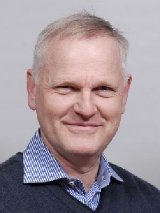
Kees Vuik is a Professor at the Delft Institute of Applied Mathematics within the Faculty of Electrical Engineering, Mathematics and Computer Science at Delft University of Technology. His research focuses on developing advanced numerical methods for complex engineering and scientific simulations across multiple domains including energy systems, environmental engineering, and computational physics. His research interests center on Numerical Analysis and Scientific Computing, with specialized expertise in Computational Fluid Dynamics, Reservoir Simulation, and Wave Propagation. He develops innovative preconditioning techniques for large-scale linear systems and creates high-fidelity models for subsurface flow, flood prediction, and energy conversion systems. Recent work integrates graph-based frameworks for electrolyzer modeling and advanced triangulation methods for point cloud processing. Analysis of his 2025 publications reveals a strong interdisciplinary focus on sustainable energy solutions (hydrogen/CO2 storage), environmental resilience (flood modeling), and computational efficiency (parallel preconditioning). His work consistently bridges theoretical numerical methods with practical engineering applications, particularly in energy transition technologies and climate-related simulations. Professor Vuik's scientific contributions have earned significant recognition: Officer of the Order of Orange-Nassau (2021) Professor of Excellence award (Leermeesterprijs) from TU Delft (2022) He has supervised 49 students across bachelor, master, and PhD levels, with notable successes including undergraduate research published in leading medical journals. His collaborative network spans 21 documented activities including industrial partnerships with Fujitsu Laboratories and leadership in academic societies, indicating substantial research funding and mentorship impact. As chair of the Bataafsch Genootschap der Proefondervindelijke Wijsbegeerte (2023-2024) and active member of the Delft Institute of Applied Mathematics, he contributes to both foundational mathematical research and real-world applications through international collaborations and industrial knowledge exchange.

/idunnam/img-6669.jpg)

