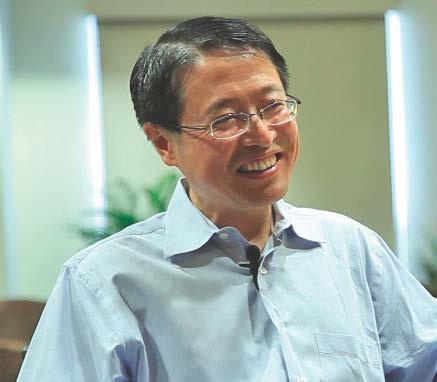
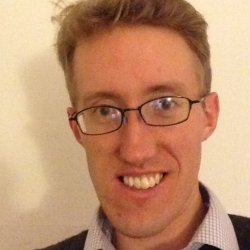
Ana Maria Tarquis Alfonso is a Professor in the Department of Applied Mathematics at the Technical University of Madrid. She has been affiliated with the university since 2011 and serves as a Deputy Director at the Center for Studies and Research on Agricultural and Environmental Risk Management (CEIGRAM), a joint UPM-AGROSEGURO-ENESA center since 2007. Her research focuses on interdisciplinary applications of mathematics to agricultural and environmental systems, including soil science, agronomy, geosciences, and risk modeling. She contributes to the study of complex systems and has worked on topics at the intersection of physics, computer science, and environmental engineering. Her professional activities include leadership roles in research institutions and collaborations in multidisciplinary projects addressing sustainability, food science, and ecological risk assessment.
Frank Syms is a Lecturer in the Department of Physics and Biophysics at Augusta University's College of Science and Mathematics. He holds a Ph.D. in General Geology/Energy and Mineral Resources from the University of South Carolina (2002), where he also completed his M.S. (2002) and B.S. (1997) in Geology/Earth Science. Education: Ph.D., Geology/Earth Science, University of South Carolina (2002) M.Sc., Geology/Earth Science, University of South Carolina (2002) B.Sc., Geology/Earth Science, University of South Carolina (1997) Research Interests: General Geology, Earth Science, Physics, and Biophysics, inferred from his academic appointments and teaching responsibilities. Teaching: Recently taught GEOL 1121 - Intro to Geosciences I.
Aditya Kar, Ph.D., is Associate Professor of Geology in the College of Arts and Sciences at Fort Valley State University (FVSU), Georgia, a position he has held since Fall 1998. Concurrently he serves as Director of STEM Excellence at FVSU (2015–present) and has held visiting or adjunct appointments at Georgia State University, Georgia Tech, and the University of Nevada, Las Vegas. Education Ph.D. in Geology, University of Oklahoma (1997) M.S. in Geology, Virginia Tech (1991) B.S. in Geology (minors in Mathematics & Physics), Jadavpur University, India (1987) Research Interests Dr. Kar’s scholarly work integrates geochemistry and petrology of ocean-island volcanic systems , particularly Ascension Island basalts, with metamorphic petrology and fluid-inclusion studies of the southern Appalachian Uchee Belt. Equally prominent is his dedication to STEM education and diversity , where he designs curricula, online climate-science courses, and national pipeline programs that transition under-represented minority students from high school through dual-degree partnerships into geoscience and engineering careers. Scientific Awards & Honors Outstanding Mentor Award, CDEP/FVSU (2017) eCore Hero Award for online teaching excellence (2017) ExxonMobil Award (~$6,000 annually, 2005–2010) Shell Faculty Awards (total $60,000, 1998–2000) Grants & Leadership Dr. Kar has secured over $700,000 in federal and industry funding, including NSF REU, NASA climate-education, DOE reservoir-characterization, and DOD mathematics-laboratory grants. He founded FVSU’s student chapter of the National Association of Black Geoscientists, authored six educational workbooks, and developed 3+2 dual-degree agreements with UT-Austin, Penn State, University of Arkansas, and UNLV, yielding ~150 minority STEM graduates. Laboratory & Team At FVSU he directs the STEM Excellence unit, oversees geology and physical-science teaching laboratories, and mentors an active cohort of undergraduate researchers who present annually at GSA, AGU, and NABG conferences.
Carl Mastropaolo is a Lecturer in the Applied Geosciences Program at the University of Pennsylvania's College of Liberal and Professional Studies. He holds a Bachelor of Science in Mathematics from St. Joseph's University and a Master of Environmental Science from Drexel University. Prior to joining Penn, he served as an Adjunct Assistant Professor in the Engineering Geology Graduate Program at Drexel University from 1991 to 2002. Education Bachelor of Science in Mathematics, St. Joseph's University Master of Environmental Science, Drexel University Professional Experience 16 years in environmental consulting (12 years self-employed) Current Lecturer at University of Pennsylvania Former Adjunct Assistant Professor at Drexel University His research interests span environmental science, applied geosciences, and engineering geology, informed by his extensive consulting experience and academic work in environmental systems analysis.
Molly Jameson is an Assistant Professor of Psychology at the University of Northern Colorado's College of Education & Behavioral Sciences. Her work focuses on educational assessment and the development of mathematical dispositions across the lifespan, with a particular emphasis on measuring and mitigating math anxiety. Education: PhD in Educational Psychology from Ball State University, with emphases in Human Development and Statistics/Research Methodology. Dr. Jameson's research explores the interplay between math anxiety, self-efficacy, and academic performance, particularly in introductory STEM courses. She has developed validated tools like the Children's Anxiety in Math Scale and investigates how AI and alternative grading methods can transform teaching practices. Recent publications highlight trends in AI integration for education, open educational resources (OER), and inclusive pedagogy. She serves as the School of Psychological Sciences' Assessment Coordinator, advocating for evidence-based assessment strategies that align instruction with learning outcomes.
Alexander Baklanov is a Professor at the Niels Bohr Institute , University of Copenhagen, and Scientific Officer at the World Meteorological Organization (WMO). His research focuses on integrated meteorology-chemistry modeling, urban and boundary layer meteorology, and the interaction between air quality, climate, and megacities. Research Interests : Seamless Earth System modeling, chemical weather forecasting, megacity impacts on climate, atmospheric transport of pollutants, aerosol dynamics, and environmental risk assessments. Awards : Honorary Professor at University of Copenhagen, Academician of the International Eurasian Academy of Sciences, and multiple medals for scientific contributions. Leadership : Coordinator of EU projects like MEGAPOLI, EnviroRISKS, and leader of COST Actions ES0602 and ES1004. His recent work emphasizes two-way interactions in atmospheric systems, with applications to urban planning, climate mitigation, and emergency response. He has published extensively on coupled models, Arctic pollution, and urban heat islands, often in high-impact journals like Bulletin of the American Meteorological Society and Atmospheric Chemistry and Physics . Scientific Awards : Honorary Professor, University of Copenhagen (2011) Academician, International Eurasian Academy of Sciences (2012) Silver Medal, International Association for Mathematical Geosciences Gold Medal, International Eurasian Academy of Sciences He has supervised 12 PhD students and contributed to global initiatives like WUDAPT for urban climate modeling.
Birsen Yazici is a Full Professor in the Department of Electrical, Computer and Systems Engineering and the Department of Biomedical Engineering at Rensselaer Polytechnic Institute. She has made significant contributions to statistical signal processing, inverse problems in imaging, and radar remote sensing. Her work spans theoretical developments in microlocal analysis for imaging applications to practical implementations in synthetic aperture radar and biomedical optics. Her educational background includes: Ph.D in Electrical Engineering from Purdue University (1994) MS in Mathematics from Purdue University (1990) Dual BS degrees in Electrical Engineering and Mathematics from Bogazici University, Istanbul, Turkey (1988) Professor Yazici's research focuses on statistical signal processing, inverse problems in imaging, and image reconstruction techniques. She has pioneered work in synthetic aperture radar imaging, particularly with ultra-narrowband waveforms and passive radar systems. Her biomedical imaging research includes advances in diffuse optical tomography and fluorescence imaging for cancer detection. She has made significant contributions to understanding artifacts in imaging systems and developing robust reconstruction algorithms that account for noise and clutter. Her recent publications demonstrate a clear trajectory toward integrating deep learning with traditional signal processing techniques for phase retrieval and phaseless imaging. This represents a significant shift in her research focus toward leveraging machine learning to solve challenging inverse problems in radar and medical imaging where phase information is unavailable or corrupted. Her scientific achievements have been recognized with several prestigious awards: Elevated to IEEE Fellow (2020) Distinguished Lecturer of the IEEE Aerospace and Electronics Systems Society (2020-2022) Rensselaer Polytechnic Institute School of Engineering Research Excellence awards (2007, 2013) 2nd Best paper award from IEEE Transactions in Industrial Applications Professor Yazici has advised numerous graduate students throughout her career, with current Ph.D. students including Samia Binte Kazemi, Sean Thammakhoune, and Nazia Afroz Choudhury. Her research has been generously supported by multiple federal agencies including NSF, DARPA, NIH, and various defense research organizations (AFOSR, AFRL, ONR, NRL). She has served as an associate editor for several prestigious journals including IEEE Transactions on Computational Imaging, IEEE Transactions on Geoscience and Remote Sensing, SIAM Journal on Imaging Science, and IEEE Transactions on Image Processing. Her laboratory focuses on developing advanced signal processing algorithms for radar imaging systems and biomedical applications. The research group maintains strong collaborations with government laboratories and industry partners to translate theoretical advances into practical imaging systems.
Andreas Herten is a Researcher at the Jülich Supercomputing Centre (JSC) within Research Center Jülich GmbH. He serves as Co-Lead of the Novel System Architecture Design division and heads the ATML Accelerating Devices group, focusing on GPU programming, parallel computing, and high-performance computing (HPC) optimizations. Key Expertise: GPU programming, parallel algorithms, HPC systems, benchmarking, Python, LaTeX Research Focus: Accelerating scientific applications on GPUs, European exascale initiatives, AI workload evaluation, and heterogeneous computing architectures His recent publications highlight advancements in GPU-accelerated materials science, AI training on HPC systems, and exascale benchmarking. Herten contributes to projects like OpenGPT-X, JUPITER, and CARAML, with work spanning computational physics, environmental science, and machine learning applications.
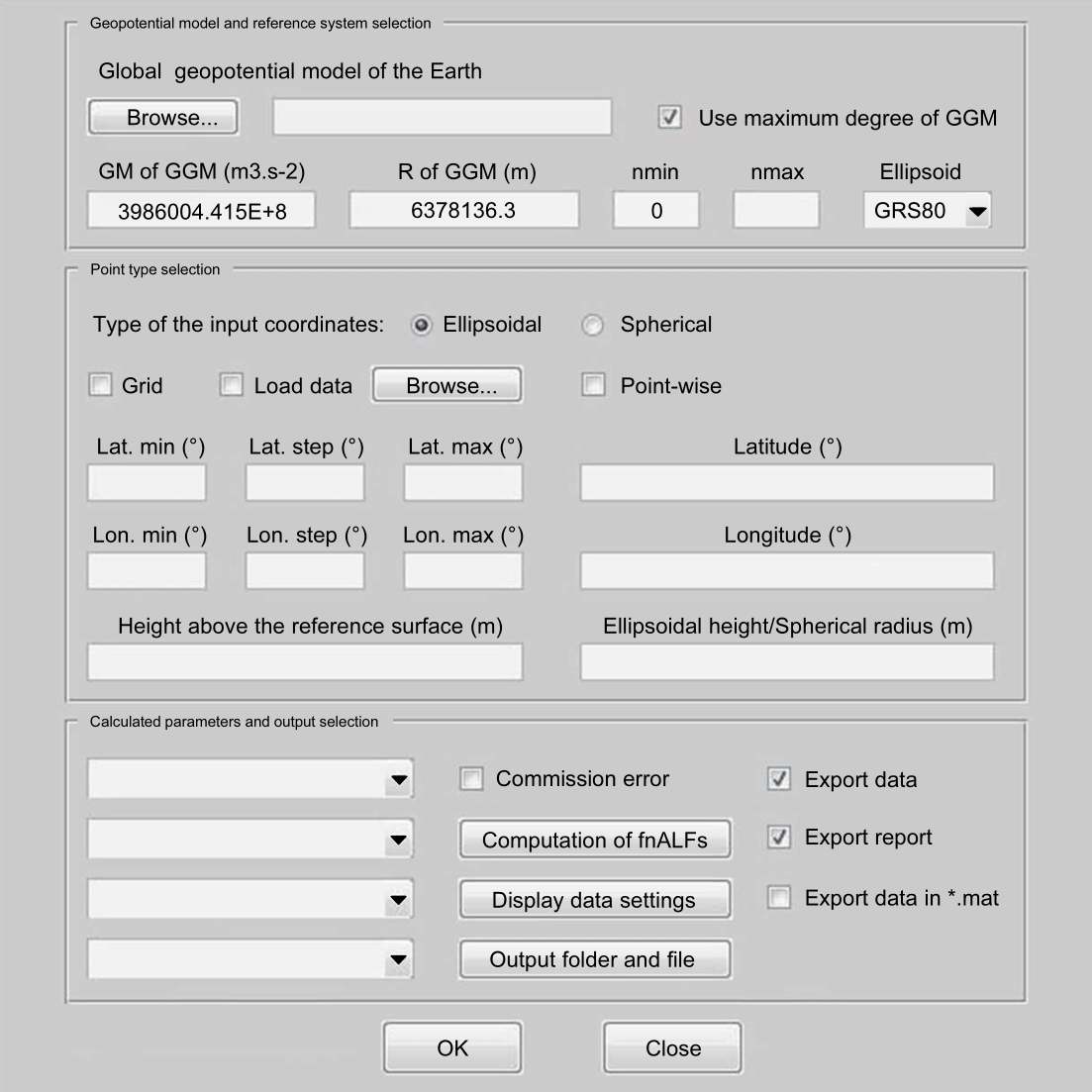
Blažej Bucha is a Lecturer at the Department of Theoretical Geodesy and Geoinformatics , Slovak University of Technology in Bratislava. His research focuses on high-degree spherical harmonic synthesis, gravity field modeling of celestial bodies, and computational geodesy. Developed open-source software packages: GrafLab (gravity field visualization), CHarm (spherical harmonic transforms), and SRBF (regional gravity modeling). Key research areas include planetary geodesy (Moon, asteroid Bennu), divergence-free spherical harmonic expansions , and high-resolution gravitational mapping at scales down to 2 arc-seconds. Highest academic contributions involve ultra-high-degree harmonics (n=21600) and 256-digit precision calculations for resolving divergence effects. His work has applications in geoid determination, gravitational tensor analysis, and geophysical interpretation. Co-authored 15+ peer-reviewed papers in Journal of Geodesy , Geophysical Research Letters , and Computers & Geosciences . Developed grav-sr-2arcsec (Slovak Republic's gravitational maps) and GMSQ2019 (gravimetric quasigeoid at 2" resolution). Teaching activities include co-authoring the textbook Fyzikálna geodézia (2023) and delivering lectures on Physical Geodesy .
Dr. Harald Neidhardt serves as a Senior Lecturer and Researcher in the Department of Geosciences at the University of Tübingen, Faculty of Mathematics and Natural Sciences. His career spans multiple institutions including Karlsruhe Institute of Technology (KIT) and Eawag in Switzerland. Specializing in geochemical and biogeochemical processes, he investigates groundwater contamination, nutrient cycling, and microbial interactions in floodplain aquifers. 2022–present: Senior Lecturer, University of Tübingen 2014–2022: Scientific Assistant, University of Tübingen 2013–2014: Postdoctoral Fellow, Eawag, Switzerland 2008–2012: PhD Researcher, Karlsruhe Institute of Technology His research focuses on groundwater geochemistry, particularly arsenic, fluoride, and phosphorus mobilization mechanisms in aquifers across India, Vietnam, and Inner Mongolia. Key topics include competitive ion exchange, redox-controlled processes, and microbial contributions to nutrient cycling. Google Scholar lists over 20 peer-reviewed publications since 2010. Dr. Neidhardt leads the Geoecology Research Group of Prof. Dr. Yvonne Oelmann, analyzing floodplain aquifers, soil contamination, and climate change impacts on decomposition processes. He teaches geography students and provides advising through in-person and remote office hours.
Dr. Arquimedes Ruiz-Columbie (Senior Lecturer) is a faculty member in the Renewable Energy Program at Texas Tech University. With over 40 years of experience in weather-related topics such as climatology and mesoscale forecasting, he specializes in applied science and mathematics education for renewable energy training. He has been a founding member of the Renewable Energy Program since its inception as the Wind Energy Program under University College. Education: Ph.D. in Geosciences, Texas Tech University (2008) Research Interests: Focus on nocturnal low-level jets characterization, wind energy generation impacts, and meteorological data analysis. His work bridges atmospheric science with renewable energy education. Teaching Contributions: Instructs foundational courses in data analysis, programming, calculus, and statistics for renewable energy students, and leads the Costa Rica Summer Study Abroad Program. Professional Memberships: American Geophysical Union (2008-Present) Golden Key International Honor Society (2006-Present) Weather Modification Association (2001-Present) Awards: Thunderbird Award (2024) for cloud seeding research Eunice Newton-Foote Award (2003) for innovative teaching
Dr. Samuel Shen is a Distinguished Professor at the Department of Mathematics and Statistics , San Diego State University (SDSU) and a Visiting Research Mathematician at Scripps Institution of Oceanography, UCSD. He co-founded the SDSU Big Data Analytics (BDA) MS Program and currently serves as Co-Director of the Center for Climate and Sustainability Studies . Previously, he was McCalla Professor at the University of Alberta and President of CAIMS . B.Sc. in Engineering Mechanics (1982) from East China Engineering Institute M.A. (1985) and Ph.D. (1987) in Applied Mathematics from University of Wisconsin-Madison His research spans three major areas: Climate Informatics : Developed Spectral Optimal Averaging (SOA) and Ensemble Canonical Correlation Analysis (ECCA) for climate uncertainty quantification Data Science : Created US Climate Prediction Center's operational prediction tools and filed a US patent on spectral optimal gridding Nonlinear Wave Dynamics : Advanced theoretical understanding of stochastic differential equations for climate modeling Recent publications focus on 4D climate visualization , heat stress mitigation , AI democratization in climate science , and cloud-aerosol interactions . His work has secured major grants including: $2.7M NSF AI Institute grant (2023) $1.9M California Climate Action grant (2023) $2.1M NSF EaSM-3 grant (2014) Scientific accolades include: Arthur Beaumont Distinguished Service Award (CAIMS) US National Research Council Senior Fellowship Chinese Academy of Sciences Well-known Overseas Scholar He leads the SDSU Climate Informatics Lab (founded 2006) and has been featured in New York Times , NASA Top Story , and Nature Geoscience press releases.
Benjamin Brigaud is a Professor of Earth Sciences at the Faculty of Sciences of Orsay (Université Paris-Saclay) and Deputy Director of Education at the Graduate School Geosciences, Climate, Environment, Planets. He conducts research at the Geosciences Paris-Saclay Laboratory (GEOPS), focusing on sedimentology and diagenetic processes to reconstruct basin histories and evaluate geothermal energy potential. Developed innovative uranium-lead (U-Pb) radiometric dating of carbonates using laser ablation and mass spectrometry Collaborated with BRGM, ENGIE, and IFP New Energies on mineral resources and reservoir rock properties Led the UPGEO project (2024 completion) to improve deep geothermal system efficiency through sedimentary-mathematical data integration Advocates multidisciplinary field teaching, creating immersive educational programs in the Morvan region for energy transition training His work bridges academic geoscience with applied energy solutions, emphasizing the role of diagenetic process dating in understanding reservoir rock porosity for geothermal applications and carbon capture studies.
Ian Hewitt is a Professor at the Mathematical Institute , University of Oxford. His work bridges mathematical modeling with geoscientific applications, focusing on fluid and solid mechanics. Key research areas: Glaciology, Climate Dynamics, and Environmental Systems Research Trends : Recent publications emphasize ice sheet dynamics, subglacial hydrology, and climate modeling. His work addresses both theoretical and applied challenges in glaciology, including environmental impacts and computational simulations. Roles & Contributions : Active in the Oxford Centre for Industrial and Applied Mathematics, with a focus on interdisciplinary collaboration. He also serves as a Mental Health First Aider.
Matthijs de Winter is a Researcher in the Hydrogeology department within the Geosciences school at Utrecht University. With over 10 years of specialized experience, he focuses on advanced microscopy techniques, particularly cryo-Focused Ion Beam - Scanning Electron Microscopy (FIB-SEM), and is actively involved in the Pathways to Sustainability research theme. Dr. de Winter completed his doctoral thesis in 2015 titled 'Focused Ion Beam - Scanning Electron Microscopy Applied to Electrically Insulating Materials' through Utrecht University's Department of Earth Sciences. His expertise spans Cryo Electron Backscatter Diffraction, Electron-Ion Interactions, Energy Dispersive X-Ray Spectroscopy, Focused Ion Beam, Cathodoluminescence, Scanning Electron Microscopy, Transmission Electron Microscopy, Fluorescence Microscopy, and Porous Materials analysis. His research centers on the correlation between nano/micro-world phenomena and macroscopic behavior, particularly regarding matter transport through porous media across different length scales. He has applied his microscopy expertise across diverse scientific fields including Life Sciences, Structural Geology, Heterogeneous Catalysis, and Nanomaterials research. Recently, he has expanded his work to Confocal Laser Scanning Microscopy (CLSM) for investigating fluid behavior in porous media. Analysis of his recent publications reveals a strong focus on porous media characterization, advanced microscopy techniques, and transport phenomena. His work bridges multiple disciplines including geoscience, materials science, and fluid dynamics, with particular emphasis on 3D imaging, nanoscale characterization, and mathematical modeling of transport processes in complex media. Dr. de Winter serves as Editor-in-Chief of the InterPore Newsletter, demonstrating his active engagement with the international porous media research community. His laboratory work appears to center around advanced microscopy facilities, particularly FIB-SEM and cryo-microscopy instrumentation, supporting interdisciplinary research across multiple scientific domains.