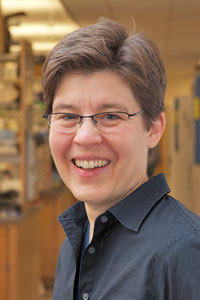
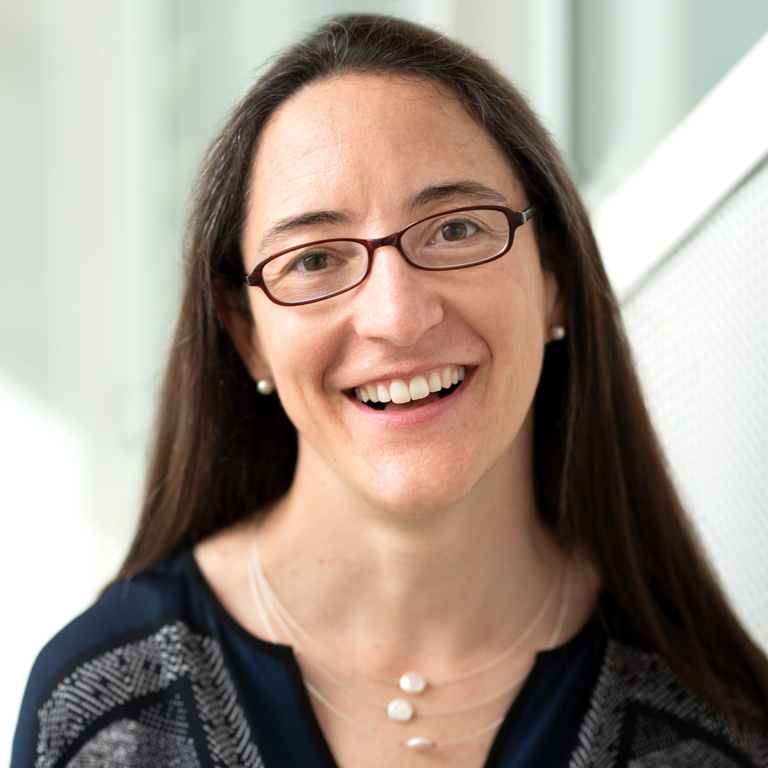
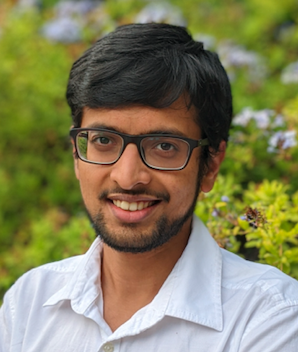
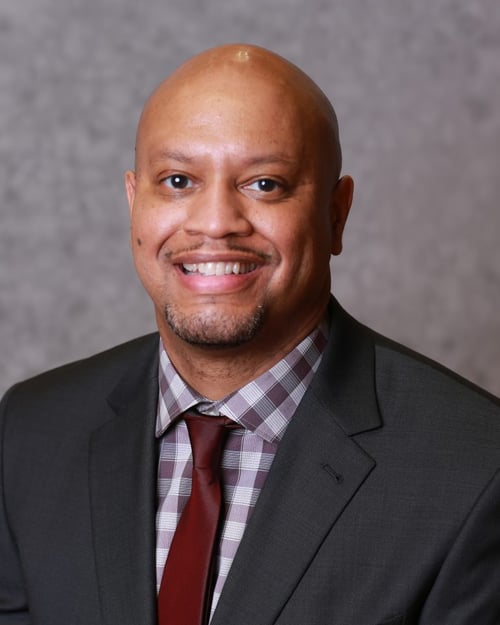
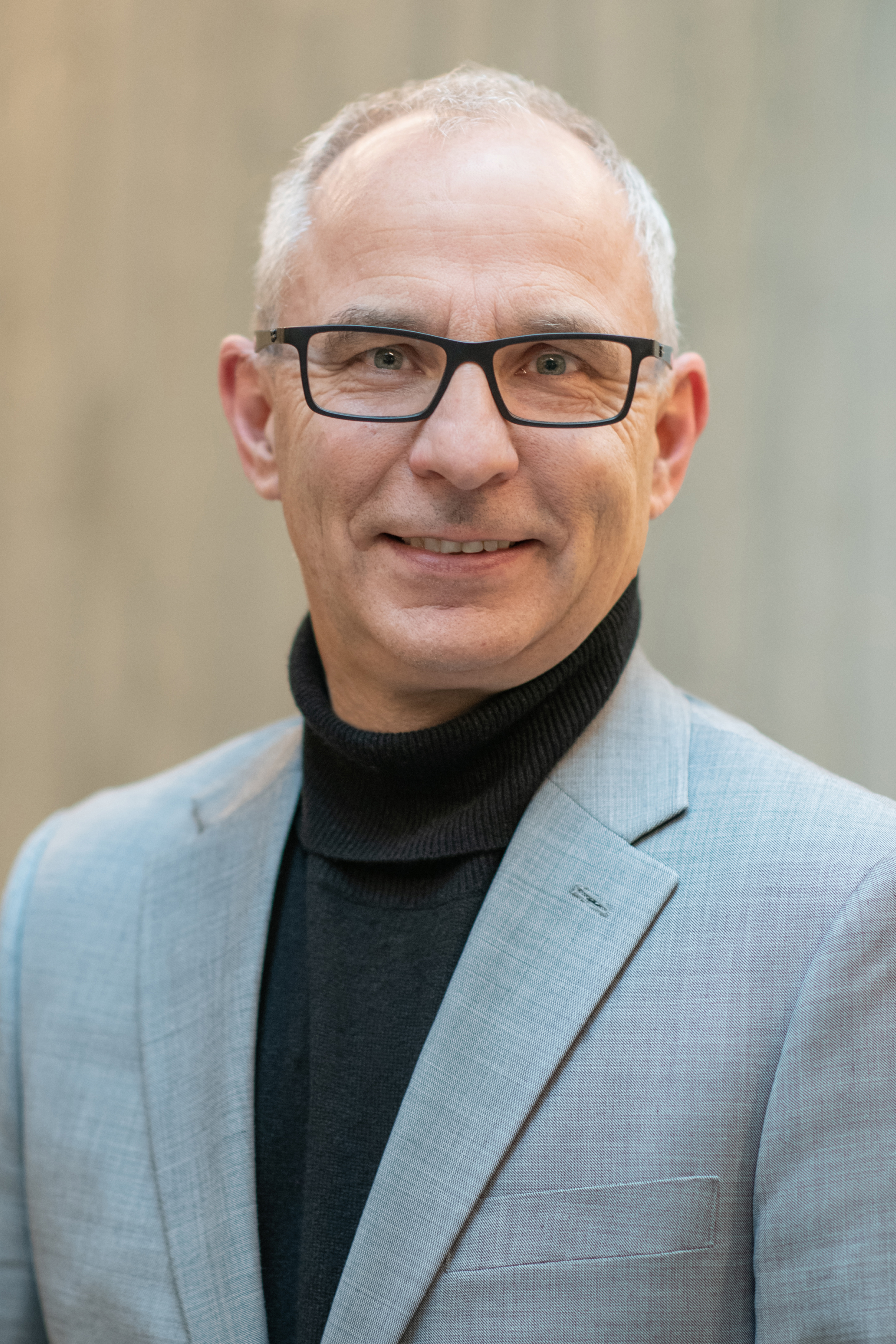
Amy R Greenwald is a Professor of Computer Science at Brown University. Her research spans artificial intelligence, algorithmic game theory, and computational economics, with a focus on multiagent reinforcement learning and market equilibrium computation. Education PhD, New York University (1999) MS, Cornell University (1995) MS, Oxford University (1992) BS, University of Pennsylvania (1991) Research Focus Greenwald's work explores strategic interactions in computational systems, including: Game-theoretic modeling of multiagent systems Algorithmic approaches to market equilibrium Simulation-based equilibrium learning Stackelberg game formulations for hierarchical decision making Applications to supply chain negotiations and economic design Her recent publications emphasize tractable equilibrium computation, social influence in economic models, and advanced reinforcement learning techniques for strategic settings. Teaching CSCI 0100 - Data Fluency for All CSCI 0180 - Computer Science: An Integrated Introduction CSCI 1440 - Algorithmic Game Theory CSCI 2440 - Advanced Algorithmic Game Theory CSCI 2951Z - Advanced Algorithmic Game Theory
Aberham Hailu Feyissa is an Associate Professor at the National Food Institute of the Technical University of Denmark , specializing in process modeling and sustainable food engineering. His research bridges complex transport phenomena with practical food manufacturing challenges. Ph.D. in Food Process Engineering, Technical University of Denmark MSc in Food Science, K.U.Leuven and Universiteit Gent BSc in Chemical Engineering, Bahir Dar University His work focuses on coupled mass and heat transfer during solid food processing, aiming to develop robust first-principles models for predictive process optimization. Key applications include Ohmic heating , digital twin technology , and bioactive ingredient extraction . Recent publications highlight his contributions to sustainable food processes , including insect-based feed modeling , seaweed bread kinetics , and clean-label cheese formulation . His methodological innovations span FTIR spectroscopy , computational fluid dynamics , and kinetic modeling . Supervisor for PhD students S. S. Turgut , M. E. Jabali , and Dahal S. Principal Investigator for projects like Modelling and Digitalisation of Food Processes and Sustainable Extraction of Bioactive Insect Fractions Active in conference presentations and peer review , he drives advancements in food process understanding through mechanistic modeling and mathematical simulation .
John M. Woodley is a distinguished Professor in the Department of Chemical and Biochemical Engineering at the Technical University of Denmark (DTU), where he leads research at the PROSYS - Process and Systems Engineering Centre and contributes to the DTU Microbes Initiative. With over 30 years of experience, he has established himself as a leading expert in biocatalysis and bioprocess engineering, with research spanning both theoretical and experimental work across multiple scales. His primary research interests focus on the interface of bioprocess engineering, process chemistry, and reaction engineering. Dr. Woodley's work encompasses multi-step biocatalysis (including systems biocatalysis and flow chemistry), downstream processing from biocatalytic reactors and fermentations (including ISPR), modeling tools for bioprocess assessment (thermodynamics, kinetics, process simulation, economic evaluation), and bio-oxidations (including oxygen supply methods). His enzymatic investigations particularly target alcohol oxidases, carbohydrate oxidases, cytochrome P450s, Baeyer-Villiger monooxygenases, and transaminases. His research portfolio demonstrates consistent innovation in sustainable chemical production, with particular emphasis on enzymatic synthesis of pharmaceuticals and chemicals from renewable resources. Analysis of his recent publications reveals a strong focus on overcoming industrial implementation challenges, particularly regarding enzyme stability in various reactor environments, optimization of multi-enzyme systems, and scale-up methodologies for biocatalytic processes. Dr. Woodley actively supervises multiple PhD students and leads several significant research projects, including 'P450-based biocatalytic processes for the pharmaceutical industry' (2025-2028), 'Integrated model for up- and downstream bioprocess intensification' (2024-2027), and 'ENFACE: A tool for prediction of enzyme stability at gas-liquid interfaces' (2024-2027). His work has resulted in an impressive publication record of 781 research outputs across various formats, including journal articles, book chapters, and conference proceedings. His research group operates within the Department of Chemical and Biochemical Engineering at DTU, utilizing advanced facilities for biocatalysis research, including specialized reactor systems for studying gas-liquid interfaces, computational modeling resources, and laboratories for enzyme characterization and bioprocess development. Through his leadership in the PROSYS center, he contributes to DTU's strategic focus on sustainable process technologies and systems engineering.
John C. Butler is a Clinical Associate Professor in the Finance Department at the McCombs School of Business, University of Texas at Austin. He holds leadership roles as Academic Director of the Kay Bailey Hutchison Energy Center, Director of the MS Finance Program, and Director of the Energy Management Minor. His academic journey includes a PhD in Management Science and Information Systems from UT Austin (1998) and a BBA from Texas A&M University (1991). His research focuses on applications of decision analysis across domains including operations, finance, and information systems. Key areas include risk analysis, optimization, multi-attribute utility theory, and energy finance. His work integrates theoretical modeling with empirical validation to address complex decision-making challenges in both public and private sectors. Butler's publications demonstrate a consistent focus on decision modeling methodologies, with recent work emphasizing risk quantification and utility theory applications. His articles frequently intersect operations research, behavioral economics, and systems optimization, reflecting interdisciplinary approaches to solving managerial and policy problems. Awards and Honors: MBA Applause Award (2008, 2011) Finalist, INFORMS Franz Edelman Award (2004) INFORMS Decision Analysis Society Practice Award (2000) Fred Moore Teaching Award Dean's Research Fellowship, Ohio State University (2004) Leadership & Advising: Butler has supervised 11 PhD students to completion and secured significant grants including DOE funding for nuclear terrorism risk analysis. He directs multiple energy finance initiatives and serves on editorial boards for Decision Analysis and previously Decision Support Systems . Centers & Programs: As Academic Director of the Kay Bailey Hutchison Energy Center, he leads interdisciplinary energy research. He also developed the Energy Finance concentration and redesigned the MS Finance curriculum to incorporate quantitative energy market analysis.
Prof. Dr. Birgit Eickelmann is a Professor of School Pedagogy at the Institute of Educational Science within the Faculty of Arts and Humanities at Paderborn University. She has held this position since October 2012, initially as a W2 professor until January 2014, and then as a W3 professor (full professor) from February 2014 onward. Her research focuses on school and lesson development in the digital age, school pedagogy under digital transformation conditions, empirical school research, teacher education, and school leadership with emphasis on digital learning leadership. Her educational background includes a habilitation in Educational Science in May 2012, a PhD in Educational Science with summa cum laude in July 2009, and state examinations for teaching Mathematics and Physics in December 1996 and January 1999. Prof. Eickelmann's research centers on the digital transformation of educational systems, particularly examining how schools develop digital competencies among students and teachers. Her work emphasizes equitable access to digital learning opportunities, the role of school leadership in digital transformation, and the development of computational thinking skills. She investigates how schools can become resilient in the face of digital challenges, with special attention to organizational factors that support successful digital integration. Her publication record reveals a strong focus on international comparative studies, particularly the IEA's ICILS (International Computer and Information Literacy Study) across multiple cycles (2013, 2018, 2023). Her research spans digital literacy assessment, school-level factors influencing digital competence development, and policy implications for educational systems undergoing digital transformation. Prof. Eickelmann leads several major research initiatives including the National Research Center for the IEA Study ICILS 2023 (2021-2026), the German coordination of the Horizon-2020 project 'DigiGen' (2019-2022), and previous leadership of ICILS 2018 (2015-2021) and ICILS 2013 (2012-2015). She is actively involved in policy advising regarding digital education in Germany. She is a member of numerous scholarly organizations including the World Educational Research Association (since 2021), the Society for Empirical Educational Research (since 2016), and the German Society for Educational Science (since 2014), among others. Her work bridges academic research with practical implementation in schools through projects like 'Navigator Bildung Digitalisierung' and 'schultransformNEXT'.
Jennifer Lewis is the Hansjorg Wyss Professor of Biologically Inspired Engineering and Jianming Yu Professor of Arts and Sciences at Harvard University's Harvard John A. Paulson School of Engineering and Applied Sciences (SEAS). Her research focuses on bioengineering, materials science, and advanced manufacturing, with emphasis on 3D-printed functional materials, organoids, and soft robotics. She leads the Lewis Research Group, which develops biomimetic technologies for regenerative medicine, energy systems, and robotics. Lewis holds appointments in SEAS, the Department of Chemistry and Chemical Biology, and the Wyss Institute for Biologically Inspired Engineering. Her research areas include applied mathematics, fluid mechanics, soft matter physics, and bioengineering applications such as kidney organoid models, vascularized tissues, and programmable materials. Notable innovations include kidney organoid-on-chip systems for drug testing, 3D-printed liquid crystal elastomers, and bioprinted cardiac tissues. Lewis was awarded the 2025 James Prize in Science and Technology Integration for pioneering interdisciplinary research. Her lab's projects span organ building blocks, immune-response modeling in transplanted tissues, and acoustophoretic printing techniques for high-resolution bioprinting. Collaborations include the NIH Somatic Cell Genome Editing Program and industry partnerships for bioprosthetic valve research. She advises on grants totaling over $20M and mentors a multidisciplinary team of postdocs and graduate students in materials science, biomedical engineering, and mechanical engineering. Lewis' lab facilities include the Pierce Hall lab (Cambridge) and Allston SEAS campus, with state-of-the-art 3D printing systems, microfluidics platforms, and bioreactors for organoid culture. Current projects aim to engineer functional human tissues for therapeutic applications and develop smart materials with programmable mechanical/chemical responses.
Roy Dong is an Assistant Professor at the University of Illinois at Urbana-Champaign, affiliated with the Coordinated Science Laboratory. His research bridges Control Theory Economics Statistics Optimization to address challenges in cyber-physical systems and the Internet of Things, focusing on data manipulation, privacy, and strategic behavior in interconnected systems. His academic journey includes a Ph.D. in Electrical Engineering and Computer Sciences from UC Berkeley (2017) and dual B.S. degrees in Economics and Computer Engineering from Michigan State University (2010). At Illinois, he teaches courses ranging from Control Systems to Convex Optimization , with multiple teaching excellence awards. Roy's research explores Closed-loop effects of machine learning Causality in decision systems Incentive design for strategic agents Privacy-utility tradeoff optimization Human behavior modeling with applications in smart grids, transportation networks, and semi-autonomous vehicles. His work formulates privacy-preserving mechanisms as optimization problems, balancing data utility against user privacy in dynamic systems. Article trends show expertise in Game theory for strategic data sources Energy disaggregation techniques Nonlinear basis pursuit algorithms Privacy-aware control systems with a focus on cyber-physical systems and human-in-the-loop applications. Scientific recognition includes 'Teacher Ranked as Excellent' awards (ECE 120, ECE 486, ECE 515) Contributions to smartSDH building control and CPRL compressive sensing Roy leads the Privacy-aware Control Systems research group, collaborating with institutions like UC Berkeley and Michigan State University , and directs projects funded by grants including the New USDA NIFA grant for agricultural robot autonomy .
LING Chun Kai is an Assistant Professor in the Department of Computer Science at the National University of Singapore (NUS), School of Computing. His research focuses on multiagent systems, computational game theory, and machine learning applications in adversarial real-world domains like cybersecurity and logistics. Educational background includes a PhD in Computer Science (2017-2023) from Carnegie Mellon University and a First Class BEng in Computer Engineering (2015) from NUS. Previously, he was a Postdoctoral Research Scientist at Columbia University. Current research interests span computational game theory, machine learning for multi-agent systems, equilibrium characterization in imperfect information settings, and applications in network security, logistics, and recreational games. Key methodological contributions include scalable algorithms for game solving, differentiable game solvers, and copula-based statistical modeling. Recent publications focus on attacker-defender graph games, language negotiation agents, and modeling games with incomplete information. Collaborations include researchers from Columbia University, Carnegie Mellon, and institutions working on GameSec, AAAI, Neurips, and ICML venues. Scientific Awards: IJCAI 2018 Distinguished Paper Award GameSec 2023 Best Paper Award GameSec 2024 Best Paper Award Singapore Teaching and Academic Research Talent Scheme (2024) Teaching includes courses on AI Planning and Decision Making (CS4246, CS5446) and Advanced Topics in Artificial Intelligence (CS6208).
Wojciech Jarosz is an Associate Professor of Computer Science at Dartmouth College, affiliated with the College of Engineering and Computer Science. His research focuses on computer graphics, particularly light transport simulation, rendering algorithms, and digital fabrication. He co-founded the Visual Computing Lab and previously led the rendering group at Disney Research Zürich. Jarosz holds a Ph.D. and M.S. from UC San Diego and a B.S. from the University of Illinois Urbana-Champaign. His educational background includes studies in computer science and engineering, with a strong emphasis on graphics and rendering. Research interests span light transport simulation, Monte Carlo methods, appearance capture, and fabrication. Notable achievements include the Eurographics Young Researcher Award (2013) and the NSF CAREER Award (2019). Jarosz's work integrates theoretical rigor with practical applications, such as real-time rendering techniques and volumetric light transport. His lab develops tools for artistic authoring, including intuitive metaphors for volumetric lighting in animated films. Recent projects explore wave-optics BSDF models, optical heterodyne rendering, and unifying radiative transfer models. Key awards include the SIGGRAPH 2024 Best Paper Award and Neukom Institute prizes. His teaching includes courses on rendering algorithms, computer graphics, and computational photography. Jarosz collaborates with industry (e.g., Disney, NVIDIA) and advocates for diversity in computer graphics research.
Carolina Osorio is a Professor at HEC Montréal, holding the Scale AI Research Chair in Artificial Intelligence for Urban Mobility and Logistics. She is affiliated with the Department of Decision Sciences and is a member of the Group for Research in Decision Analysis (GERAD) and the Interuniversity Research Centre on Enterprise Networks, Logistics and Transportation (CIRRELT). Her research focuses on transportation optimization, urban mobility, and data-driven simulation-based methods. She has been recognized among the world’s most influential researchers in 2023 and 2024. Education: Ph.D. in Mathematics, École Polytechnique Fédérale de Lausanne (EPFL) M.Sc. in Statistics, University College London (UCL) Bachelor’s in Engineering, École nationale supérieure d'informatique et de mathématiques appliquées de Grenoble (ENSIMAG) Research Interests: Her work emphasizes scalable transportation modeling, simulation-based optimization, and AI applications for urban logistics. She develops methods for large-scale network analysis, traffic demand estimation, and sustainable urban mobility solutions. Key areas include traffic signal optimization, car-sharing service design, and high-dimensional stochastic systems. Publications: Recent articles highlight advancements in scalable traffic demand estimation, Bayesian optimization for transportation systems, and simulation-based toll optimization. Her work addresses challenges in global highway networks, urban congestion dynamics, and multi-city calibration. Awards: Scale AI Research Chair (Artificial Intelligence for Urban Mobility and Logistics) Recognition as a world-leading researcher in transportation science Advising & Grants: Osorio collaborates on projects funded by Scale AI and leads research initiatives through GERAD and CIRRELT. Her supervision activities include teaching courses such as Decision Analysis and Sample Efficient Optimization at HEC Montréal. Labs & Teams: She contributes to interdisciplinary teams at GERAD and CIRRELT, focusing on integrating advanced analytics into urban transportation systems.
Vatsal Sharan is an Assistant Professor in the Thomas Lord Department of Computer Science at the University of Southern California's Viterbi School of Engineering. He maintains affiliations with the Theory Group, Machine Learning Center, and the Center for AI in Society at USC. Education: Ph.D. in Computer Science from Stanford University, advised by Greg Valiant Postdoctoral research at MIT, hosted by Ankur Moitra Vatsal Sharan's research centers on the theoretical foundations of machine learning, positioned at the intersection of machine learning, theoretical computer science, and statistics. His work investigates fundamental limits for solving learning and estimation tasks under computational and information-theoretic constraints, with the goal of developing practical algorithms that are efficient, fair, and robust. His research spans memory-efficient learning, algorithmic fairness, robustness in deep learning, and the theoretical underpinnings of transformers and large language models. A significant portion of his work explores how memory constraints affect learning algorithms and whether memory can serve as a distinguishing factor between 'efficient' and 'expensive' techniques in machine learning. His recent publications demonstrate a strong focus on multicalibration, transformer interpretability, and trustworthy AI systems. Scientific Awards: Amazon Research Award (2021 and 2023) SoCal NLP Symposium 2023 Best Paper Award COLT 2022 Best Paper Award Vatsal Sharan advises a diverse group of Ph.D. students including Siddartha Devic, Bhavya Vasudeva, Julian Asilis, Deqing Fu, Devansh Gupta, Spandan Senapati, and Tianyi Zhou. His research is supported by multiple prestigious grants from the NSF, Amazon Research, Google Research, and the Okawa Foundation. He is an active participant in the Learning Theory Alliance (LeT-All), a community-building and mentorship initiative for the learning theory community. His teaching portfolio includes advanced courses on machine learning theory and trustworthy machine learning at USC, where he shapes the next generation of researchers in theoretical aspects of artificial intelligence.
Professor Ali Yapar is a faculty member at Istanbul Technical University in the Electronics and Communication Engineering department. His research focuses on Electromagnetics , Microwave Engineering , and Antenna Technologies , with a particular emphasis on inverse scattering problems and microwave imaging for biomedical applications. He has supervised numerous graduate students and led projects related to breast cancer treatment and rough surface imaging. PhD in Electronics and Communication Engineering from Istanbul Technical University (1997) MSc in Electronics and Communication Engineering (1995) His recent publications analyze advanced techniques for microwave hyperthermia systems, reverse time migration methods, and Newton-based solutions for electromagnetic inverse scattering. Key projects include TUBITAK-funded initiatives on microwave tomography and brain stroke imaging. He serves as a project investigator and executive for electromagnetic research programs. Research areas span Electromagnetic Wave Propagation , Green's Function Applications , and Dielectric Material Analysis . Collaborations include IEEE members and international researchers in computational electromagnetics.
Eddie C. Red is an Associate Professor of Mathematics and Computational Sciences at Morehouse College , where he currently serves as the Interim Dean of the Science, Technology, Engineering, and Mathematics (STEM) Division. He earned his B.S. from Morehouse College (class of 2000) , followed by his M.S. and Ph.D. from Florida Agricultural and Mechanical University . Dr. Red also completed post-doctoral education at Lawrence Berkeley National Laboratory . Interim Dean, STEM Division Former Chair, Mathematics and Computational Science Division Former Chair, Physics & Dual-Degree Engineering Department Dr. Red’s research interests bridge atomic physics, quantum mechanics, and computational modeling , with a focus on: Photoionization cross-sections Bound states in the continuum Velocity map imaging techniques Mathematical formulations for quantum operators His work has resulted in publications in Physical Review A, Communications Physics, and the Journal of Physics B , alongside numerous conference presentations. Dr. Red has led the NuMaSS (Nuclear, Materials, and Space Science) Summer Enrichment Program for K-12 students and directed the Research Experience with Diversification Laboratory , emphasizing student training and research. Scientific awards include: Principal Investigator for Department of Energy National Nuclear Security Administration awards Dr. Red has served on multiple faculty governance committees, including the Admissions Committee , Faculty Grievance Committee , and Faculty Research Committee .
Dr. Francisco Vitor Santos da Silva is a Senior Lecturer at University College Cork (UCC), Ireland, with a joint appointment between the School of Microbiology and the School of Engineering and Architecture. He holds a PhD from Otto von Guericke University Magdeburg (2017, Summa Cum Laude) and a first-class honours degree from Federal University of Paraná (2012). His research focuses on reducing uncertainty in bioprocess development through hybrid modelling techniques combining first-principles and statistical inference. He has contributed to novel strategies for monoclonal antibody capture and sustainable biopharmaceutical production. Key academic milestones include a FAPESP postdoctoral fellowship (2018) and leadership roles in the Bernal Bio Labs at University of Limerick. His work has been published in journals like Journal of Chromatography A and supported by grants from FAPESP and CAPES. He actively engages in science communication, including Wikipedia contributions and public outreach events. Dr. da Silva teaches bioprocess design using modern data-driven approaches and serves as a peer reviewer for multiple journals. His research spans bioprocess optimization, PAT implementation, and sustainable chemical/biotechnological processes for food and pharmaceuticals. Education: BSc (Hons) Bioprocess Engineering & Biotechnology, Federal University of Paraná (2012) PhD (Summa Cum Laude), Otto von Guericke University Magdeburg (2017) Awards: Top Student of the Year Award, Federal University of Paraná (2012) Summa Cum Laude PhD Distinction (2017) Grants: FAPESP Postdoctoral Fellowship (2018) CAPES Brazil grants His professional activities include organizing international conferences, reviewing PhD funding applications, and advising on industry collaborations. He leads UCC's efforts in integrating cutting-edge simulation tools into bioprocess education and research.
Prof. Karsten Urban is a Full Professor of Numerical Mathematics at the University of Ulm, leading the Institute for Numerical Mathematics. He holds roles such as Dean of Studies in Computational Science and Engineering (CSE) and Deputy Spokesman for the Research Association for Scientific Computing in Baden-Württemberg. He is an active member of prestigious societies including the Deutsche Mathematikervereinigung (DMV) and SIAM. His academic journey includes a PhD from RWTH Aachen (1995), Habilitation (2001), and a full professorship at Ulm since 2005. Research focuses on numerical methods for PDEs, reduced basis techniques, multiscale simulations in fluid mechanics, biomechanics, quantum sciences, and financial mathematics. He has pioneered wavelet-based methods and collaborated with industries on ship propulsion and energy trading models. His work integrates mathematical rigor with real-world applications, emphasizing model reduction and computational efficiency. Editorial Roles: Managing Editor of Advances in Computational Mathematics , Editor of SN Partial Differential Equations and Applications . Awards: Teaching award of Baden-Württemberg (2005), Science-Economy Cooperation Awards (2004, 2008). Administrative Roles: Member of the University Council and ASIIN expert committee. Supervises doctoral students in numerical analysis, quantum simulations, and biomechanics. Active in interdisciplinary projects, including quantum systems (IQST) and fracture healing modeling in collaboration with biomechanics experts. His contributions bridge academia and industry, driving innovation in computational methods.