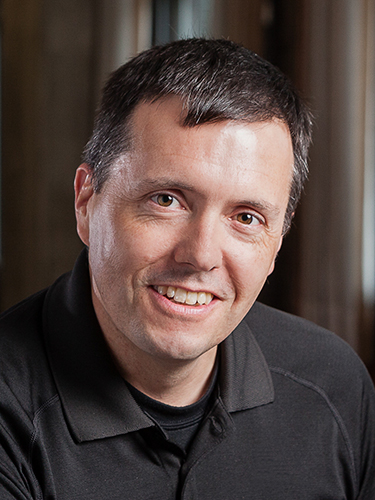
Gregory G. Smith is a Professor in the Department of Mathematics and Statistics at Queen's University, affiliated with the Faculty of Arts and Science. His research focuses on algebraic geometry, commutative algebra, and symbolic computation, with a particular interest in the interplay between positivity, convexity, and combinatorial structures. He holds a B.ScH from Queen's University, an MA from Brandeis University, and a PhD from the University of California, Berkeley. His research contributions include work on Hilbert schemes, toric varieties, and computational algebra, with publications in top-tier journals such as the Journal of the American Mathematical Society and Compositio Mathematica . He has received prestigious awards, including the Coxeter-James Prize (2012) and the André-Aisenstadt Prize (2007). Smith is also an editor of the Journal of Software for Algebra and Geometry . He has advised multiple graduate students, including Sasha Zotine (PhD 2024) and Benjamin Hersey (PhD 2021). His teaching spans undergraduate and graduate courses in algebra, geometry, and combinatorics, emphasizing rigorous mathematical reasoning and computational tools.
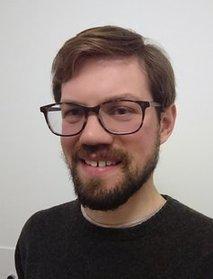
Robert Y. Lewis is a Lecturer in the Department of Computer Science at Brown University, specializing in formal methods, logic, and interactive theorem proving. His work bridges computer science and mathematics, focusing on the verification of mathematical proofs and program correctness. Education: PhD in Pure and Applied Logic (2018), Carnegie Mellon University MS in Pure and Applied Logic (2015), Carnegie Mellon University BA in Mathematics (2010), Rice University Research Interests: Lewis’s research spans formal verification, logic, type theory, and automated reasoning. He explores the application of logical tools like the Lean proof assistant in mathematics education and software verification. Teaching: At Brown, he teaches courses such as Introduction to Discrete Structures and Probability and Formal Proof and Verification . Prior to Brown, he taught Logic and Modeling at Vrije Universiteit Amsterdam and served as a teaching assistant at Carnegie Mellon University. Publications: His recent work includes advancements in formalizing mathematical structures (e.g., Witt vectors, Cap Set Problem), integrating proof assistants with computational tools (Lean-Mathematica interface), and developing educational resources for logic and formal methods. Contact: Email: robert_lewis@brown.edu Office: Center for Information Technology 203, Brown University
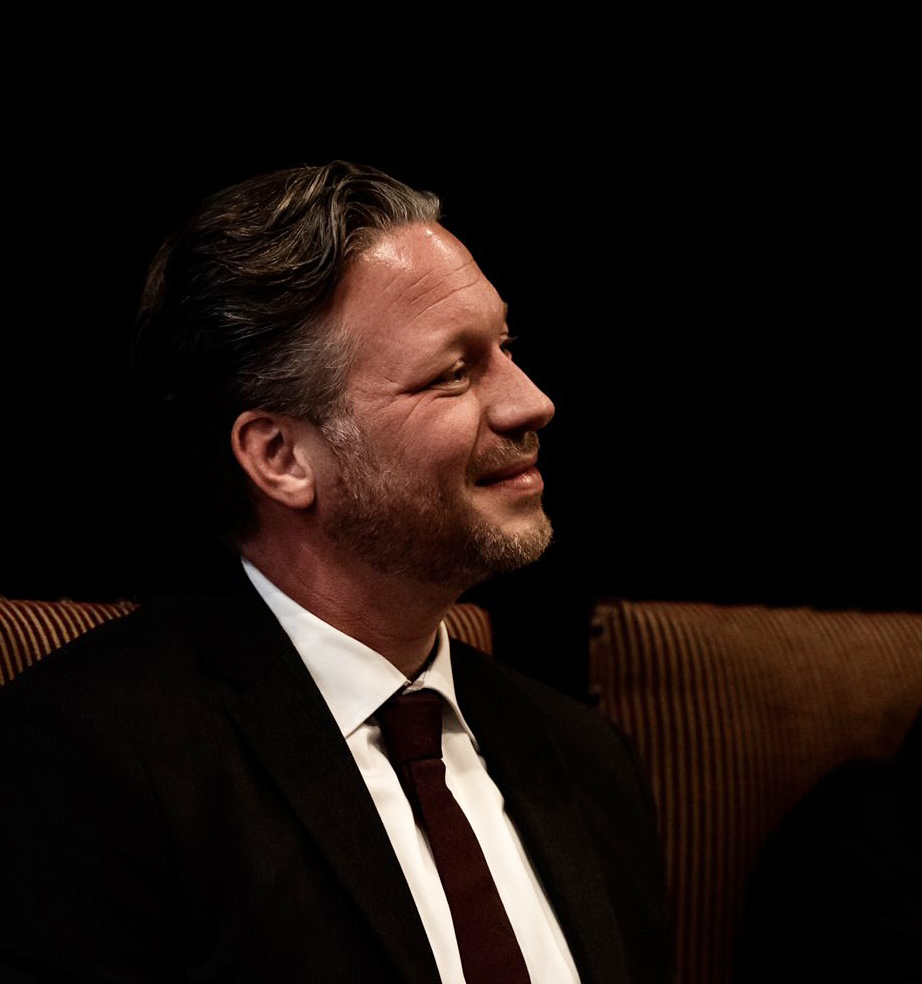
Martijn Froeling serves as an Assistant Professor at University Medical Center Utrecht, actively contributing to the Precision Imaging research group within the High Field division. His work bridges advanced MRI technology development with clinical applications targeting critical health domains including brain cancer, circulatory health, dementia, and musculoskeletal disorders. His academic foundation includes: Master's in Biomedical Engineering from Eindhoven University of Technology (July 2009) PhD in Diffusion Tensor Imaging of the human forearm from Amsterdam University Medical Center and Eindhoven University of Technology (October 2012) Dr. Froeling's research centers on pioneering quantitative MRI methodologies, with specialized expertise in Diffusion Tensor Imaging (DTI) across multiple organ systems (brain, peripheral nerves, muscle, kidney, heart). He drives innovation in 7T MRI hardware development—including specialized coils for multi-nuclei imaging—and conducts clinical studies focused on neuromuscular diseases. His QMRITools software platform for Mathematica enables sophisticated quantitative MRI analysis, directly supporting his mission to 'see the unseen' for advancing clinical diagnostics in cancer, cardiovascular disease, stroke, and MSK conditions. Analysis of his 2024-2025 publications reveals a cohesive research trajectory: DTI applications dominate clinical studies (hamstring injuries, fasciculation mapping), while parallel technical work advances ultra-high-field hardware (double-tuned coils for ²H/³¹P imaging). This dual focus on clinical impact and technological innovation demonstrates his commitment to translating engineering breakthroughs into tangible medical solutions. No scientific awards were documented in the provided materials. While the text confirms Dr. Froeling's role in supervising PhD work (evidenced by his PhD completion under prominent supervisors), no current students or specific grant funding details are explicitly mentioned in the source material. He operates within the High Field group at University Medical Center Utrecht, leading the Precision Imaging research initiative. This team specializes in developing cutting-edge MRI hardware (particularly for 7T systems), maintaining the QMRITools analysis platform, and executing clinical trials targeting neuromuscular pathologies alongside broader applications in oncology and cardiovascular medicine.
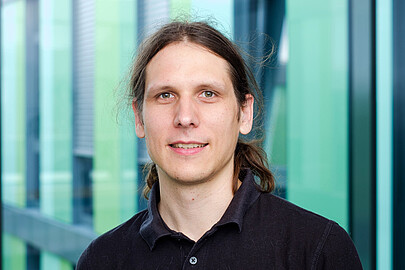
William J. Turkel is a Professor of History at The University of Western Ontario, Canada, and a member of the Royal Society of Canada's College of New Scholars. His research focuses on computational history, science and technology studies, and disability studies. He holds a PhD from MIT (2004) and leads the History Department's Fab Lab, equipped with advanced fabrication tools. Turkel's work includes reverse-engineering historical technologies, digital exhibit design, and mentoring over 20 students. He has authored books like Spark from the Deep and The Archive of Place , and his open-source textbook Digital Research Methods with Mathematica is widely used. Awards include the Western Award for Technology-Enhanced Teaching (2021) and SSHRC funding for NiCHE (2004–14). Education: PhD, MIT (2004) Research Interests: Computational methods, big history, modular synthesis, disability studies, and astrobiology. His lab explores tangible computing, 3D printing, and historical experimentation. Articles Overview: Recent work spans digital humanities tool development, historical computing analysis, and music-pattern recognition via machine learning. Key themes include bridging computational methods with historical inquiry. Awards: Royal Society membership (2018), Western University award (2021), and SSHRC leadership (2004–14). Advising & Grants: Supervised over 20 students and postdocs, including Devon Elliott and Ian Milligan. Collaborates with Tim Hitchcock, Edward Jones-Imhotep, and others on projects like MK ULTRA analysis and exoskeleton patent studies. Labs/Teams: The History Department Fab Lab includes 3D printers, CNC tools, and electronics prototyping. His lab designs interactive exhibits and tangible artifacts to explore historical phenomena.
Dr. Simon Christ is a Researcher at the Department of Computational Biology within the Institute of Cell Biology and Biophysics at Leibniz University Hannover's Faculty of Natural Sciences. His office is located in Building 4160, Room 110 at Herrenhäuser Str. 2, 30419 Hannover. He can be contacted via phone (+49 511 762 16174) or email (christ@cell.uni-hannover.de). Christ holds a Doctor rerum naturalium (PhD) from the University of Potsdam (2020) and a Master of Science from Humboldt University of Berlin (2014). His doctoral research focused on morphological transitions of vesicles under nonuniform conditions, while his master's thesis examined non-Markovian systems in statistical physics. His research focuses on computational approaches to biological systems, including: Development of reproducible scientific workflows and open-source tools Agent-based simulations of biological processes Numerical solutions of differential equations in biological contexts Computational modeling of membrane dynamics and vesicle behavior Research software engineering practices and tools He is proficient in multiple programming languages including Julia, C/C++, MATLAB, Mathematica, Python, and R, and is a certified instructor for The Carpentries. Christ's recent publications demonstrate a strong focus on research software engineering, computational biology methods, and biophysical modeling of cellular systems. His work frequently appears in computational biology, biophysics, and software engineering journals, with consistent contributions to open science practices and reproducible research methodologies. No specific awards or student advising relationships are mentioned in the available documentation. His current work appears to be conducted within the computational biology research group at Leibniz University Hannover, with collaborations extending to other institutions including the University of Potsdam and Max Planck Institute.
Unal Ufuktepe is an Adjunct Professor at the University of Missouri, located in 325 Math Science Bldg. His research focuses on mathematical biology, ecology, and dynamical systems, particularly in population dynamics models involving Allee effects and refuge mechanisms. He also explores computational tools like Mathematica for mathematical education and research. His research interests include predator-prey interactions, host-parasitoid dynamics, and discrete dynamical systems. He has extensively studied stability analysis, bifurcation theory, and the application of mathematical models to ecological systems. Recent work examines topics such as Wolbachia diffusion in mosquito populations and stability criteria in predator-prey systems with refuge strategies. He has also contributed to educational methodologies using Mathematica for visualizing discrete models and dynamical systems. Unal Ufuktepe has not been listed as having received scientific awards or grants in the provided materials. No information on lab affiliations or student advising is available.
Dr. William Paulsen is a Professor of Mathematics at Arkansas State University 's Beck College of Sciences & Mathematics in the Department of Mathematics & Statistics. His academic journey includes a B.A., M.A., and Ph.D. from Washington University in St. Louis (1985, 1987, 1990). His research spans Applied Mathematics , Fractal Dimensions , and Abstract Algebra , with notable contributions to structural dynamics and aperiodic tiling theories. Education B.A., Mathematics, Washington University - St. Louis, 1985 M.A., Mathematics, Washington University - St. Louis, 1987 Ph.D., Mathematics, Washington University - St. Louis, 1990 Research Interests Dr. Paulsen's work in Applied Mathematics focuses on eigenfrequency distributions in beam structures and fractal dimensions. In Abstract Algebra , he explores group presentations and Galois theory. His 2002 Geombinatorics paper on 3-coloring Penrose tilings demonstrates intersectional creativity in discrete geometry. Publications and Projects Recent studies include the 2014 Journal of Sound and Vibration work on Exterior Matrix Methods for eigenfrequencies and the 2002 Complex Variables analysis of polylogarithms. Earlier works (1990s) address structural engineering challenges and fractal dimension theory. His projects include tetration problem-solving and Abstract Algebra courseware development . Scientific Awards No scientific awards are mentioned in the provided texts. Advising and Collaborations No advisees or collaborative projects beyond co-authored works (e.g., with M. Manning and M. Franklin) are listed in the texts.
Ekaterina Shemyakova serves as Associate Chair in the Department of Mathematics and Statistics within the College of Natural Sciences and Mathematics at the University of Toledo. She maintains an active research profile with numerous publications spanning nearly two decades in specialized areas of mathematical physics and differential equations. Dr. Shemyakova's research interests focus on differential operators, Darboux transformations, partial differential equations, supermanifolds, and cluster algebras. Her work bridges pure mathematics with applications in mathematical physics, particularly exploring the algebraic and geometric structures underlying differential operators. She has made significant contributions to the theory of Darboux transformations, developing classification schemes and algorithms for various types of differential operators, including those on supermanifolds. Analysis of her publication record reveals consistent research productivity with a notable shift toward supergeometry and cluster algebras in recent years. Her work demonstrates a progression from classical differential operators to more sophisticated structures involving supersymmetry and algebraic combinatorics. The research shows strong connections between algebraic structures, geometric interpretations, and computational approaches to differential equations. Dr. Shemyakova has developed computational tools for working with linear partial differential operators, indicating her commitment to both theoretical development and practical implementation. Her publications appear in reputable journals such as Journal of Geometry and Physics, Selecta Mathematica, and Letters in Mathematical Physics, reflecting the quality and impact of her research. As Associate Chair, she contributes to departmental leadership while maintaining an active research program. Her work continues to explore the deep connections between algebraic structures, differential geometry, and mathematical physics, with recent publications indicating expanding interests in super cluster algebras and related combinatorial structures.
Andrej Lacković is a Senior Lecturer at Algebra University of Applied Sciences in Croatia. He holds a degree in Physics and Technology with Computer Science from the Faculty of Science and Mathematics in Zagreb and is currently pursuing a doctorate in Information and Communication Sciences at the Faculty of Humanities and Social Sciences in Zagreb. Faculty of Science and Mathematics, Zagreb (Physics) Faculty of Humanities and Social Sciences, Zagreb (Information and Communication Sciences, doctoral studies) His research interests focus on the intersection of computer science and education, with emphasis on information ethics, e-learning systems, and pedagogical methods for developing critical thinking skills. He has contributed to the development of study programs in Multimedia Engineering and Applied Computing. Andrej participated in the "Competitive Croatian Higher Education for Better Employability" project (2013-2015) aimed at implementing recognition systems for non-formal knowledge and skills in higher education. His recent publications address programming solutions in MS Excel, automated attendance systems, and ethical challenges in digital education.
Leszek Jaroszewicz, PhD with habilitation, is a Professor at the Military University of Technology in Warsaw, Poland, specifically affiliated with the Faculty of Advanced Technologies and Chemistry and the Institute of Applied Physics. As a corresponding member of the Polish Academy of Sciences (PAS), he has established himself as a leading researcher in photonics and optical fiber technology. His academic career spans several decades, with continuous research activity evidenced by publications through 2025. Professor Jaroszewicz's research primarily focuses on photonics technology applications for sensor devices, with particular expertise in hybrid waveguide transducers employing liquid crystalline materials. His work encompasses new technologies for manufacturing monocrystals and glasses (especially oxide types), theoretical studies of complex semiconducting structures for electromagnetic radiation detectors, advanced fiber optics technologies including photonic crystal fiber elements, materials for hydrogen storage, and polarization problems in waveguide structures for sensor construction. His research area is formally recognized as materials engineering (100% ME). Analysis of his recent publications reveals a strong trend toward practical applications of optical fiber technologies in sensing systems, particularly rotational seismology and refractive index sensing. His work increasingly integrates liquid crystal technologies with optical fibers, nanomaterials (like Fe 3 O 4 nanoparticles), and computational methods. The research spans fundamental physics of light propagation through applied engineering of sensor devices for diverse applications from seismic monitoring to food safety inspection. His significant recognition includes being elected as a Corresponding Member of the Polish Academy of Sciences, a prestigious honor in Polish academia. His bibliometric indicators demonstrate substantial scholarly impact with 373 publications, an h-index of 24 (Scopus) and 22 (Web of Science), total impact factor of 352.125, and a ministerial score of 8,412. Professor Jaroszewicz has supervised 13 promoted theses, indicating his active role in mentoring the next generation of researchers. His research has been supported by at least 10 projects and has resulted in 4 patents, demonstrating both academic and practical impact of his work. His research group appears to focus on optical instrumentation development, particularly for specialized sensing applications. The research environment led by Professor Jaroszewicz includes advanced laboratories for optical fiber technology, liquid crystal device fabrication, and sensor testing. His team appears to collaborate across disciplines, connecting physics, materials science, and engineering to develop innovative sensing solutions. Current work suggests ongoing development of fiber-optic rotational seismographs and other specialized optical sensors for both scientific and practical applications.
Knarik Tunyan is a Visiting Assistant Professor in the Department of Mathematics/Computer Science at Purchase College, State University of New York, within the School of Natural and Social Sciences. She contributes to undergraduate education through courses in Linear Algebra, Calculus, Differential Equations, and advanced topics in mathematics. Education: PhD in Technology, Tampere University of Technology, Finland MS in Mathematics, Yerevan State University, Armenia Her research integrates applied mathematics with computational science, focusing on Linear Algebra, Numerical Analysis, Linear Programming, and Computational Inverse Problems . She explores mathematical methods in signal and image processing, optimization, network theory, economics, and biostatistics. Recently, she has been investigating the use of technology in mathematics education, including 3D printing and software tools like Mathematica and OpenSCAD. The 15 most recent publications highlight a consistent trajectory in matrix computations, optimization algorithms, and interdisciplinary applications . Early work centered on pivot rules and interior-point methods, particularly their behavior on challenging problems like the Klee-Minty cube. Later contributions expanded into image compression using QkRk factorization, Bayesian metabolic modeling, and educational innovations involving STEAM and 3D visualization. The articles reflect a blend of theoretical rigor and real-world application, spanning fields from computational biology to educational technology. Scientific Contributions and Recognition: Active presenter at international conferences including ICTCM and WCGO Published in reputable journals such as SIAM Journal on Matrix Analysis and Applications , Journal of Theoretical Biology , and Inverse Problems and Imaging Contributions to algorithmic efficiency in least squares and optimization She advises on curriculum development and student learning, particularly in integrating technology into mathematical instruction. Though no formal students are listed, she mentors through senior seminars and research-oriented courses. She has not received explicitly mentioned awards or grants in the provided text. Her work is supported by institutional resources and collaborative networks in computational mathematics and STEM education. Dr. Tunyan is involved in academic outreach and technological experimentation, especially through her presentations on 3D printing and mathematical software. She maintains regular office hours and engages students through digital platforms like Starfish, emphasizing accessibility and active learning.
Florin Neacsu serves as an Associate Lecturer at Anglia Ruskin University within the Faculty of Health, Medicine and Social Care and School of Nursing in Chelmsford, specializing in biosciences, molecular sciences, and healthcare software development with emphasis on drug discovery and global medical policy implementation. His academic credentials include: PGCE in research in education (Anglia Ruskin University) PhD in Chemistry (Baylor University) MSc in Chemistry (University of Bucharest) BSc in Chemistry (University of Bucharest) Research focuses on drug discovery for cancers, HIV, dementia, and erectile dysfunction alongside healthcare software development and medical policy analysis. His work bridges wet-lab molecular science with in-silico modeling to address real-world healthcare challenges through computational and biochemical approaches. Recent publications demonstrate interdisciplinary convergence between analytical chemistry software engineering and food science, particularly in mass spectrometry simulation and aquaculture product quality assessment, reflecting his dual expertise in computational methods and biological systems analysis. He supervises undergraduate and postgraduate nursing projects while maintaining clinical experience in care homes and Covid-19 testing protocols. Professional affiliations include NS Technologies Ltd for healthcare software development and active engagement with clinical environments across the UK healthcare system.
Vladimir Grupcev is Associate Professor of Instruction in Mathematics & Statistics at USF's College of Arts and Sciences. Holding a PhD in Computer Science from USF, his research bridges mathematics, algorithms, and big data analysis. He develops computational methods for molecular simulation and spatial data processing. He teaches courses across multiple institutions including Intermediate Algebra, Business Calculus, and Analysis of Algorithms. His technical expertise spans programming languages (C/C++), mathematical software (Maple/Mathematica), and educational platforms (MyMathLab, Blackboard).
Dr. Raffi Enficiaud is a Researcher at the Max Planck Institute for Gravitational Physics (Albert Einstein Institute) in Potsdam, Germany. His work focuses on optimizing gravitational waveform generation tools for speed, robustness, and maintainability while enhancing computational efficiency for scientific users. Education: M.Sc. in Mathematical Morphology from Telecom SudParis Ph.D. in Mathematical Morphology from Paris School of Mines Raffi specializes in Gravitational Waves , Mathematical Morphology , and Software Engineering , with expertise in symbolic computation and translating complex mathematical models (e.g., Mathematica) into Python/C++ code. His research interests span Machine Learning , Computer Vision , and Symbolic Computation , informed by his academic and industry experience. At AEI, he develops and maintains the EOB gravitational waveforms generation package 'pySEOBNR' and tools for computational graph optimization. Prior roles include machine learning engineer at Reasonal (2020–2023), software architect at Pix4D (2018–2020), and leading the 'Software Workshop' at the Max Planck Institute for Intelligent Systems (2014–2018). Earlier roles involved computer vision research at DxO and INRIA. Contact: raffi.enficiaud@aei.mpg.de
Luis Rodrigo Izquierdo Millan is a Professor at the University of Burgos , Spain, with a research focus on evolutionary game theory , complex systems modeling , and computational economics . He holds a PhD from Manchester Metropolitan University, awarded for his thesis Advancing Learning and Evolutionary Game Theory with an Application to Social Dilemmas (2008) under supervision of Dr. Nick Gotts and Dr. Bruce Edmonds. Education: 7-year Master in Industrial Engineering (Extraordinary Graduation Prize), Bachelor in Business and Administration (9.5/10 average). Research: 4+ years at Macaulay Institute (Aberdeen), collaborations with Santa Fe Institute, University of Wisconsin-Madison, and European University Institute. Expertise: Combines evolutionary game theory , agent-based modeling , mathematical economics , and computational simulation to study social dilemmas and coordination problems. Technical Contributions: Co-developed open-access tools like ABED and EvoDyn-3s for evolutionary game dynamics analysis. His 2023-2025 publications demonstrate methodological innovations in evolutionary protocols (nBEPA1), cost allocation in energy communities, and stability analysis of strict equilibria. Key scientific awards include the Extraordinary Graduation Prize and EDAMBA Honorable Distinction for doctoral work.