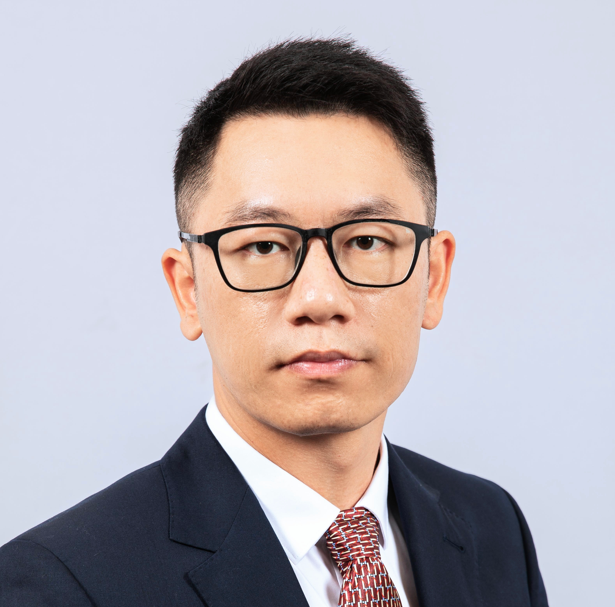
Qilin Li is a Lecturer in Computing at Curtin University, where he researches machine learning and computer vision applications for structural engineering. His work focuses on developing data-driven models for simulating physical processes in structural dynamics and health monitoring. Li integrates AI methodologies with engineering principles to improve infrastructure safety and reliability. His research interests include machine learning algorithms for structural analysis, computer vision-based monitoring systems, graph neural networks for physical simulations, and AI applications in safety engineering. He develops techniques for predicting structural responses to extreme events like explosions. Li's publications demonstrate innovation in combining computational mechanics with deep learning. His work on graph neural networks for blast fragmentation and transformer networks for structural segmentation advances predictive modeling for engineering applications.
Johann Gagnon-Bartsch is an Associate Professor in the Department of Statistics at the University of Michigan, Ann Arbor, and serves as Director of Undergraduate Programs and Associate Director for Undergraduate Programs. He is affiliated with the Michigan Institute for Data Science (MIDAS) and the Center for Computational Medicine and Bioinformatics. His research focuses on causal inference, machine learning, and nonparametric methods with applications in biological and social sciences. He holds a PhD in Statistics from UC Berkeley (2012), an MS in Statistics from UC Berkeley (2007), and a BS/BA in Math, Physics, and International Relations from Stanford University (2003). Education: PhD in Statistics, UC Berkeley, 2012 MS in Statistics, UC Berkeley, 2007 BS/BA in Math, Physics, and International Relations, Stanford University, 2003 Research Interests: His work spans high-throughput biological data analysis, particularly in addressing systematic errors via negative controls, and integrating experimental/observational data. Recent focuses include causal inference in education experiments, social media analytics for public opinion tracking, and reproducible research workflows. He develops methods to correct for unobserved confounders and laboratory variability in genomic datasets. Grants & Awards: MIDAS Reproducibility Challenge Winner (2020) Thomas R. Ten Have Award (2016) Evelyn Fix Prize (2013) Outstanding Graduate Student Instructor (2010) Teaching & Mentorship: Teaches courses in applied statistics and statistical learning. Mentors numerous PhD, master's, and undergraduate students in areas like genomic data analysis and causal inference. Active in curriculum development and student advising within the Statistics Department. Labs & Collaborations: Leads projects at MIDAS and collaborates with researchers in computational medicine, bioinformatics, and social data science. His lab develops open-source tools like the RUV package for batch effect correction and Docker-based reproducibility workflows.
Mrinmaya Sachan is an Assistant Professor in the Department of Computer Science at ETH Zürich, specializing in artificial intelligence, educational technology, and natural language processing. His research explores the intersection of AI and pedagogy, focusing on knowledge tracing, uncertainty quantification, and ethical implications of language models. Recent publications highlight his work on improving AI safety, detecting reasoning errors, and enhancing educational tools through machine learning. Key topics include arithmetic reasoning, causal analysis, and vision-language integration for physics problems. His projects often involve benchmarking AI systems in domains like legal reasoning (LEXam), math education (Mathtutorbench), and cognitive modeling of students. Collaborative efforts extend to multilingual dialogue systems, automated grading, and ethical AI frameworks.
Afonso S. Bandeira is a Professor of Mathematics at ETH Zurich with a joint appointment at the Institute for Operations Research (IFOR) and a courtesy affiliation with D-ITET. His research spans High Dimensional Probability , Random Matrices , and Theoretical Computer Science , focusing on mathematical frameworks for data analysis. Ph.D., Applied and Computational Mathematics, Princeton University (2015) M.S. and B.S. in Mathematics, University of Coimbra (2010, 2009) His work bridges Signal Processing , Machine Learning , and Mathematical Optimization , with publications on stochastic block models , random matrix bounds , and graph Laplacian inequalities . Recent trends include non-asymptotic analysis of random matrices and theoretical foundations of community detection in networks. Group members include Daniil Dmitriev, Konstantin Donhauser, Anastasia Kireeva, Kevin Lucca, Chiara Meroni, Gil Kur, Petar Nizic-Nikolac, and Almut Roedder. Contact: bandeira@math.ethz.ch .
Tal August is an Assistant Professor at the University of Illinois at Urbana-Champaign's Siebel School of Computing and Data Science. His research focuses on adapting language to improve communication between humans and technology, emphasizing personalized language systems for science, health, and legal domains. He holds a PhD from the University of Washington (Allen School of Computer Science and Engineering), advised by Katharina Reinecke and Noah Smith. Research Interests: Human-Computer Interaction (HCI) : Designing tools that bridge communication gaps through language adaptation. Natural Language Processing (NLP) : Developing AI systems for automatic language personalization. Science Communication : Studying how language affects knowledge sharing in technical domains. Interdisciplinary Collaboration : Breaking down barriers through tailored communication strategies. Awards : Honored on the List of Teachers Ranked as Excellent by Their Students (2025). Recognized for contributions to personalized language tools via grants from the Allen Institute for AI. Advising & Grants : Recruiting 1-2 PhD students for Fall 2025. Recent grant supported work on personalizing research literature searches for scholars. Courses Taught : CS 598 TAL - Language, Interfaces, and Communication (focuses on HCI/NLP intersections). Key Projects : Innovations include TermSight (simplifying legal contracts), Qlarify (expandable scientific summaries), and Semantic Reader (AI-augmented reading interfaces).
Elizabeth Tipton is a Professor of Statistics and Data Science at Northwestern University, affiliated with the Department of Education and Social Policy (by courtesy). She serves as Co-Director of the Statistics for Evidence-Based Policy and Practice (STEPP) Center and is an Institute for Policy Research (IPR) Fellow. Her work focuses on developing statistical methods for improving causal generalization in randomized trials and meta-analysis, with applications in education, psychology, and health sciences. Education: 2011: Ph.D. in Statistics, Northwestern University (Certificate in Education Science) 2005: M.A. in Sociology, University of Chicago 2001: B.A. in Mathematics, Transylvania University Research Interests: Elizabeth’s research emphasizes enhancing the generalizability of randomized trials and synthesizing evidence from meta-analyses. She develops methodologies for handling dependent effect sizes, propensity score techniques, and visualization tools (e.g., Meta-Analytic Rain Cloud plots) to aid decision-making. Her work bridges statistical rigor with practical applications in education policy, behavioral science, and health. Grants & Funding: Her research has been supported by the National Science Foundation, Institute of Education Sciences, Spencer Foundation, Raikes Foundation, and others. Labs & Collaborations: Co-Director of the STEPP Center, which focuses on methodological advancements for evidence-based policy. Active collaborations include projects on intervention design, heterogeneity analysis, and translational research.
Alexei Novikov is a Professor in the Department of Mathematics at Pennsylvania State University, affiliated with the Eberly College of Science. He holds a Ph.D. from Stanford University (1999). His research focuses on applied analysis, probability, stochastic processes, and their applications in fluid dynamics, imaging science, and materials modeling. Key areas include wave propagation in complex media, sparse signal recovery, and homogenization techniques for heterogeneous systems. His teaching includes advanced courses such as Functional Analysis (Math 503), Stochastic Calculus (Math 519), and Differential Equations (Math 251). He has led NSF-funded research on transport phenomena in heterogeneous media and contributed to algorithm development for imaging in complex environments. Notable works include studies on eddy viscosity in cellular flows, network approximation methods, and fractional kinetic processes. Novikov’s recent work emphasizes interdisciplinary applications, including neural network approaches for super-resolution imaging and stochastic models for knowledge diffusion. His publications span journals like Communications on Pure and Applied Mathematics , SIAM Journal on Mathematical Analysis , and Inverse Problems .
Professor LIM Ee Peng is a Full-time Faculty member at the School of Computing and Information Systems, Singapore Management University, holding the position of Director for the Artificial Intelligence & Data Science Cluster. He obtained his PhD in Computer Science from the University of Minnesota in 1994. His research focuses on Artificial Intelligence , Data Science , and Healthcare Technology , with notable contributions to multimodal learning systems , large language models , and ESG forecasting . Research Interests: Machine Learning and Deep Learning Natural Language Processing and Dialogue Systems Healthcare Technology and Behavioral Analysis Financial Technology and Risk Management Social Network Analysis and Job Market Modeling Recent work trends emphasize AI ethics (e.g., steering LLMs toward human-aligned behaviors), multimodal fusion (food image analysis, agent-generated content), and applied AI systems (health counseling chatbots, investment management tools). His research often bridges theoretical advancements with real-world applications in healthcare, finance, and education. As a mentor, he has advised students like TAN Shao Wei and led interdisciplinary projects funded by Singapore's National Research Foundation. His lab develops systems like FoodAI (smart food logging), JobSense (career exploration frameworks), and FoodBot (health interventions). Labs/Teams: Leads the Artificial Intelligence & Data Science Cluster at SMU, fostering collaborations between academia and industry partners.
Ragnar Freij-Hollanti is a Senior University Lecturer at the Department of Mathematics and Systems Analysis, Aalto University, Finland. He holds a PhD from Chalmers University of Technology, supervised by Professors Jeff Steif and Johan Wästlund. His research focuses on combinatorial and algebraic methods in coding theory, with applications to privacy and security in distributed systems. He also explores polytope and matroid theory, often linking abstract mathematics to practical problems in storage and computation. Education: PhD in Mathematics (Chalmers University of Technology), MSc in Mathematics (not explicitly stated but implied by career progression). Research Interests: Coding Theory and Cryptography Privacy-Preserving Distributed Systems Combinatorial Optimization and Matroid Theory Algebraic Geometry Applications Lattice-Based Cryptography Publications: Over 30 peer-reviewed articles, including recent work on secure distributed matrix multiplication, quantum PIR, and lattice coding. His research often bridges theory and practice, addressing challenges in distributed storage and computation security. Advising: Supervises BSc, MSc, and PhD theses in combinatorics and coding theory. Active in organizing seminars like the Algebra and Discrete Math seminar. Labs/Teams: Member of the Algebra, Number Theory, and Applications (ANTA) research group at Aalto University, focusing on applied algebra and cryptography.
Harlin Lee is an Assistant Professor at the University of North Carolina at Chapel Hill, affiliated with the School of Data Science and Society. His research spans multiple disciplines including Mathematics, Computer Science, and Computational Medicine. Prior to his current position, he was a postdoctoral researcher at UCLA Mathematics, advised by Andrea Bertozzi and Jacob G Foster. He holds a PhD in Electrical and Computer Engineering from Carnegie Mellon University (CMU), an MS in Machine Learning (CMU), and degrees from MIT (BS and MEng in EECS). Harlin Lee's education includes: PhD in Electrical and Computer Engineering, Carnegie Mellon University, 2021 MS in Machine Learning, Carnegie Mellon University, 2021 MEng in Electrical Engineering and Computer Science, MIT, 2017 BS in Electrical Engineering and Computer Science, MIT, 2016 His research interests focus on interdisciplinary applications of data science and machine learning, including: Graph-based methods in optimization and signal processing Healthcare data analysis, particularly pediatric sleep studies and medical imaging Statistical analysis and computational methods in social sciences Development of explainable AI systems and federated learning techniques His recent publications highlight contributions to graph theory, healthcare analytics, and machine learning applications. Key areas include methodological advancements in graph trend filtering, applications in drug repurposing, and innovations in pediatric sleep signal processing. His work bridges theoretical foundations with practical implementations in interdisciplinary domains. He has received several notable recognitions, including: Rising Stars in Data Science (2022) - University of Chicago Rising Stars in Computational and Data Sciences (2022) - UT Austin, Sandia National Labs, and Lawrence Livermore National Labs CMU ECE Outstanding Woman in Engineering (2021) UCLA Math Liggett Instructor Award (2023) CMU ECE Outstanding TA Award (2020) In advising, he has mentored students and postdocs during his postdoctoral tenure. While currently not accepting new PhD students, he contributes to the UNC Data Science PhD program. His research has been supported through academic collaborations and institutional funding at UCLA and CMU. He is part of the School of Data Science and Society at UNC, leading projects in computational medicine and machine learning applications. His work is conducted in collaboration with interdisciplinary teams across mathematics, computer science, and biomedical disciplines.
Bhuwan Dhingra is an Assistant Professor of Computer Science at Duke University's Trinity College of Arts & Sciences. He focuses on Natural Language Processing (NLP) , machine learning , and knowledge representation , with specific interests in question answering , robustness to adversarial inputs , and model calibration . 2020 : Ph.D. in Language Technologies from Carnegie Mellon University 2013 : Master's Thesis on Local Quadrature Reconstruction on Smooth Manifolds at IIT Kanpur His research includes temporal language models , adversarial robustness , and combating misinformation . He leads the ALTER-Math NSF-funded project (2024-2027) and collaborates on CC* Integration-Large (2025-2027) for distributed GPU systems. His 2025 work on adversarial perturbations and 2024 studies on table understanding in materials science highlight his focus on LLM reliability and structured data integration . Notable awards include the Amazon Research Award (2022), NSF Medium Grant (2022), and Google Research Gift (2021). He advises PhD students like Rich Stureborg and undergraduates such as Angikar Ghosal (now at Stanford PhD). Teaching graduate courses like Introduction to NLP and Advanced NLP , he emphasizes long-form QA and collaborative writing in NLP.
Austin R. Benson is an Assistant Professor of Computer Science at Cornell University , with field memberships in Applied Math and Data Science. His research develops computational frameworks for analyzing complex data to understand network connectivity and decision-making patterns. Research supported by the Army Research Office and National Science Foundation , including an NSF CAREER Award . Core areas: Higher-order Network Analysis , Hypergraph Clustering , Discrete Choice Modeling , and Graph Neural Networks . Key contributions: theoretical advancements in hypergraph properties , submodular optimization , and temporal network modeling . His 15 most recent publications focus on higher-order structures in networks, hypergraph learning, and discrete choice models. Awards include the Stanford ICME Gene Golub Doctoral Dissertation Award , KDD Best Paper (2019), and ASONAM Best Paper Runner-up (2019).
Jörg Siekmann is a Professor at the German Research Center for Artificial Intelligence (DFKI) , focusing on interdisciplinary research in computer science, cognitive technologies, and mathematics education. His work spans projects like Math-Bridge for technology-enhanced learning and SCALLOPS for secure agent-based computing. Research interests include: Resource-adaptive systems and cognitive processes Mathematical knowledge management and semantic web Educational technology and data mining Human-centered computing in retail environments Scientific contributions highlight collaborations in edited volumes such as Resource-Adaptive Cognitive Processes and tools like the Data Mining Tutor (DaMiT). His work emphasizes bridging gaps in European mathematics education through digital solutions.
Dorottya Demszky is an Assistant Professor in Education Data Science at Stanford University's Graduate School of Education, with a courtesy appointment in the Computer Science Department. She leads the EduNLP Lab, an interdisciplinary research group focused on developing natural language processing methods to support equitable and student-centered instruction. Her work bridges education, computer science, and linguistics to create interpretable and scalable educational measures. Dr. Demszky earned her PhD in Linguistics from Stanford University under Dan Jurafsky's supervision and completed her BA summa cum laude in Linguistics with a minor in Computer Science at Princeton University. Her educational background uniquely positions her at the intersection of language, technology, and education. Her research focuses on developing NLP tools for educational contexts, including systems that provide feedback on dialogic instructional practices, analyze representation in textbooks, and measure dialect features in student writing. She combines machine learning, natural language processing, and linguistics with practitioner input to develop tools that improve educational interventions, teacher professional development, and curriculum equity. Her recent work shows increasing sophistication in adapting NLP for noisy classroom environments and supporting multilingual learners. Dr. Demszky's publications demonstrate a clear trajectory from foundational NLP methods for education toward increasingly practical classroom applications. Her 2023-2025 work shows growing emphasis on real-world implementation, with multiple randomized controlled trials validating the impact of her tools on teaching practices and student outcomes. The research spans theoretical advances in NLP for education to practical tools deployed in classrooms. Best Dataset Prize at Learning at Scale (MathemaTikZ) IEDMS Publicly Available Educational Dataset Prize (NCTE classroom transcript dataset) Selected as a Leading Woman in AI at ASU GSV AIR Show NSF RAPID grant for understanding how instructional coaches integrate automated feedback $70k seed grant from Stanford HAI for adapting mathematics curricula $100k Gates Foundation grant for equitable speech recognition systems Dr. Demszky actively advises PhD students in the Learning Sciences and Technology Design program and has secured significant funding from the NSF, Gates Foundation, and Stanford HAI. Her lab's Practitioner Voices Summit brought together 60 teachers from 22 states to inform AI research for classrooms. She is particularly committed to ensuring educational technologies are developed with and for teachers, emphasizing social responsibility in edtech design. Her work with the Tarisznya Alapítvány (Knapsack Foundation) in Hungary demonstrates her long-standing commitment to educational equity for underprivileged children. The EduNLP Lab develops tools that gather evidence about effective teaching practices, develop validated algorithms through co-design with educators, and pilot solutions that teachers can immediately use. Current projects include CoTeach.AI, which helps teachers scaffold math curricula, and systems for analyzing classroom dialogue to improve teacher-student interactions. The lab emphasizes human connections first, using technology to enhance rather than replace the essential relationships in education.
Eli Tilevich is a Full Professor in the Department of Computer Science at Virginia Tech and Associate Department Head for Graduate Studies. His research focuses on systems aspects of software engineering, distributed systems, mobile/IoT applications, and energy-efficient software. He leads the Software Innovations Lab and has over 130 refereed publications. His work has been supported by federal grants and industry awards like Microsoft Research and IBM Faculty Awards. Education: Ph.D., Computer Science, Georgia Tech (2005) M.S., Information Systems, New York University (1999) B.A., Computer Science and Math, Pace University (1997) Research Interests: Automated software transformation Middleware and distributed systems Security and privacy in mobile systems Music informatics Computing education innovations His recent work includes advancements in edge computing, secure communication protocols, and educational platforms for secure programming. Over 30 students have graduated under his mentorship, many now in academia and industry leadership roles. Awards: Microsoft Research Software Engineering Innovation Foundation Award IBM Faculty Award Multiple best paper awards at ICDCS, ICWE, and SIGCSE Teaching spans courses like Programming Languages , Software Engineering Capstone , and Research Methods . He has served as General Chair for GPCE 2021, MOBILESoft 2019, and program chair for ManLang 2018.