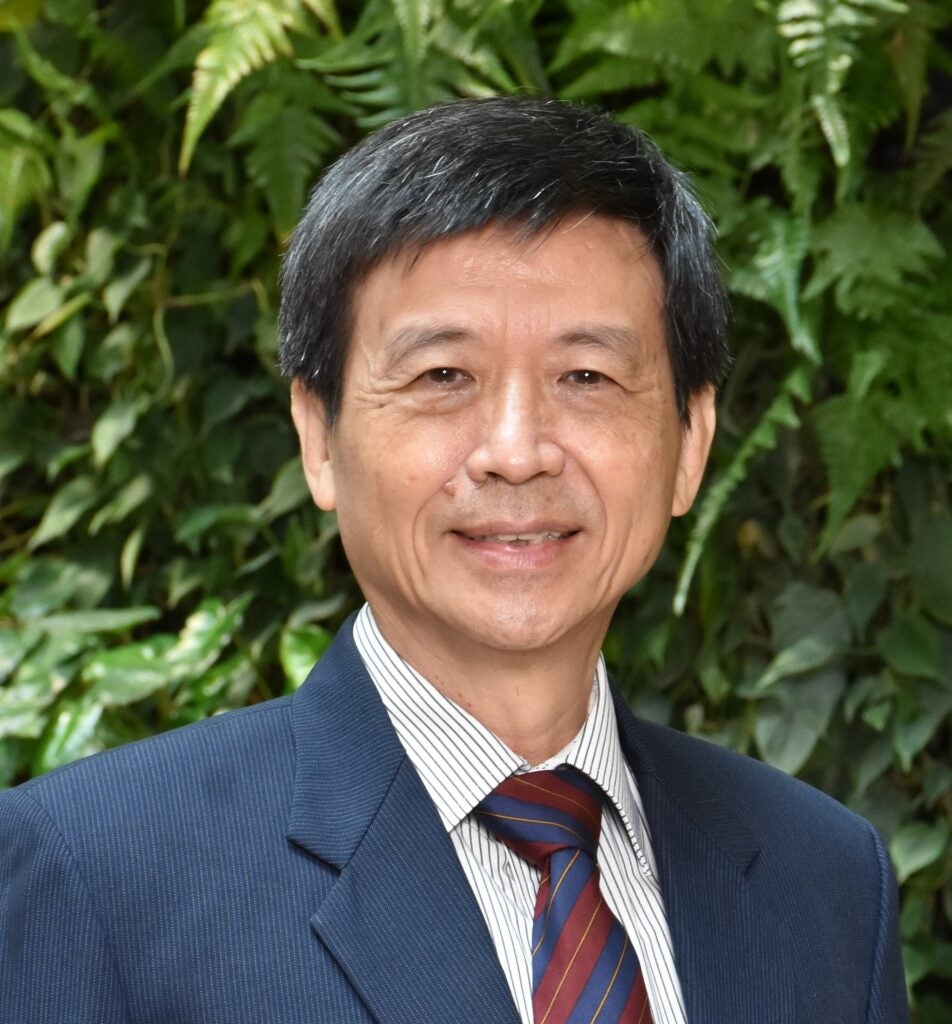
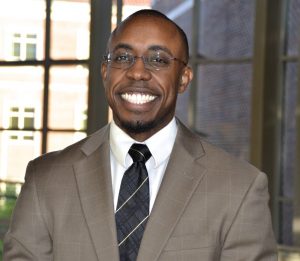
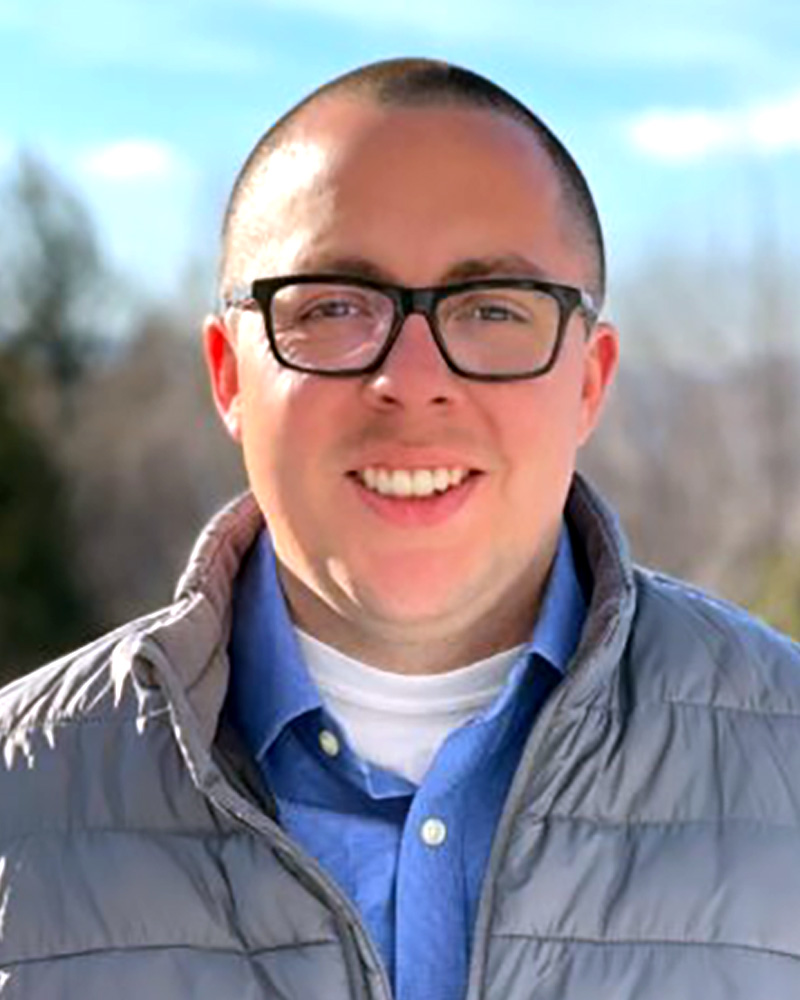
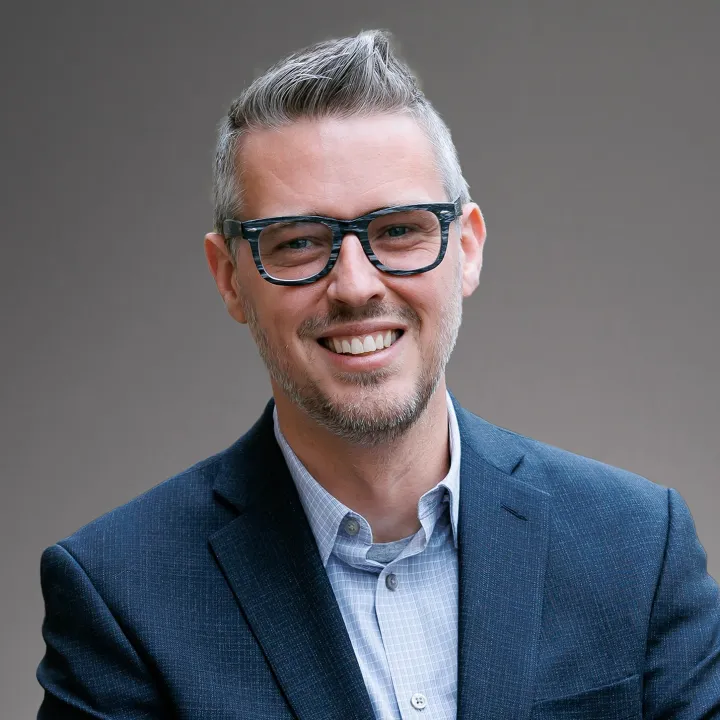
Zhenhong Li is a Lecturer in Robotics and Control at the University of Manchester, holding an EPSRC Fellowship in physical human-robot interaction. He earned his B.Eng. from Huazhong University of Science and Technology (2013), and M.Sc. and Ph.D. in Control Engineering from the University of Manchester (2014 and 2019). Before joining Manchester in 2023, he was a Research Fellow in Rehabilitation Robotics at the University of Leeds (2019–2023). His research focuses on control technologies for human-robot systems, with applications in healthcare and industry. Key areas include physical human-robot interaction for rehabilitation, brain-computer interfaces, and neuromusculoskeletal modeling. He leads the Neurorobotics Lab (NRL) at Manchester and collaborates with healthcare professionals, industries, and designers via EPSRC/STFC/Wellcome Trust funding. Notable achievements include the 2019 Best Paper Award for Unmanned Systems and the 2020 EPS International Academic Pump-priming Award. In 2025, he was elected as a Senior Member of the IEEE. He actively organizes conferences and special issues, including the 2025 IEEE UK Robotics Conference and a Frontiers special issue on intelligent rehabilitation technology. Dr. Li supervises PhD candidates in robotics and control, emphasizing interdisciplinary approaches to human-robot interaction. His lab develops cutting-edge technologies like assistive exoskeletons and adaptive control systems for healthcare and industrial applications.
LU Wen Feng is an Adjunct Associate Professor in the Department of Mechanical Engineering at the National University of Singapore (NUS), affiliated with the College of Design and Engineering. His research focuses on advanced manufacturing technologies, including additive manufacturing, robotics, and AI-driven systems. He explores sustainable design methodologies, smart manufacturing innovations, and bioprinting applications. Key areas include optimizing material processes, enhancing mechanical properties of printed materials, and developing autonomous robotic solutions for industrial tasks. Contact: mpelwf@nus.edu.sg , located at E3-02-07. Research Interests : His work bridges AI and manufacturing, emphasizing Knowledge graph integration for additive manufacturing, Autonomous robotic systems in industrial settings, Bioprinting for tissue repair with smart bioinks, Topology optimization for lightweight and sustainable structures, Material characterization and process engineering for 3D-printed composites. Recent Article Trends : LU Wen Feng's 2025 articles highlight advancements in AI-augmented manufacturing systems (e.g., MaViLa, AutoMEX) and sustainable design workflows. His 2024 studies address material anisotropy, corrosion behavior, and topology optimization strategies for lattice structures. These trends reflect his interdisciplinary approach to solving challenges in additive manufacturing, robotics, and biomedical applications. Awards : No scientific awards explicitly mentioned. Advising & Grants : No current graduate students or grants listed. His research likely integrates industry-academia collaborations given the focus on applied manufacturing technologies. Labs/Teams : Not explicitly detailed, but his work suggests involvement in advanced manufacturing labs and AI-robotics teams at NUS.
Dr. Darryl Dickerson is an Assistant Professor in the Department of Mechanical and Materials Engineering at Florida International University (FIU), part of the College of Engineering. His research focuses on mechanical characterization of biological interfaces, design of bioinspired materials, and advancing inclusive engineering education practices. He holds a Ph.D. (details not explicitly provided in text). Research Interests: Dr. Dickerson’s work bridges biomechanics and biomaterials engineering with social equity in education. Key areas include: Mechanical properties of biological interfaces (e.g., bone-cartilage junctions) Development of biomaterials for tissue repair using 3D printing and electrospinning Anti-marginalization strategies in engineering education, particularly for Black and Brown students Publications Trends: Recent work emphasizes dual themes: (1) Biomedical innovation through advanced material fabrication and (2) Inclusive pedagogy addressing systemic inequities in STEM education. Notable contributions include scaffold designs for osteochondral repair and frameworks for reducing microaggressions in team-based learning. Grants and Advising: No specific grants or advisees listed in the provided text. His work appears to be grant-funded through NIH/National Science Foundation pathways common in biomaterials and education research. Labs and Teams: While not explicitly stated, his research likely involves collaborations with FIU’s Center for Engineering and Computing’s diversity initiatives and biomaterials labs focusing on tissue engineering applications.
Mo Jiang is a Researcher in the Department of Chemical & Life Science Engineering at Virginia Commonwealth University's College of Engineering. His research focuses on advanced crystallization processes for energy storage materials and pharmaceutical manufacturing. He specializes in continuous manufacturing techniques such as slug-flow reactors, aiming to improve material uniformity, scalability, and process efficiency. His work bridges chemical engineering principles with practical applications in battery technology and drug substance development. Research Interests: Continuous crystallization and manufacturing systems Slug-flow synthesis of battery cathode materials Process optimization for pharmaceuticals and energy storage Scalable synthesis of uniform microcrystals His recent articles highlight advancements in low-cobalt/cobalt-free lithium-ion battery cathodes, pharmaceutical crystallization methods, and the application of computational fluid dynamics to enhance manufacturing processes. These studies emphasize improving material performance, reducing costs, and achieving sustainable production methods. While no formal academic awards are listed, his prolific publication record demonstrates expertise in interdisciplinary engineering solutions. He collaborates on projects involving process design, real-time monitoring, and the integration of advanced manufacturing technologies.
Scott Kemp is an Associate Professor at the Massachusetts Institute of Technology (MIT) within the Department of Nuclear Science and Engineering , where he also directs the Laboratory for Nuclear Security and Policy . His interdisciplinary research bridges physics, political science, and history to address challenges in nuclear security, energy policy, and critical infrastructure protection . Education: B.Sc. in Physics from University of California, Santa Barbara; Ph.D. in Public and International Affairs from Princeton University Research focuses on: Strategic implications of hypersonic and advanced conventional weapons Securing vulnerabilities in energy/water/gas infrastructure Technological tools for nuclear disarmament verification Decarbonization policy frameworks Scientific recognition includes: Fellow of the American Physical Society (2017) Sloan Research Fellowship in Physics (2016) NEC Corporation Award in Computation (2015) Fulbright Fellow (2003) As an academic advisor in MIT's Energy Studies Program , he mentors students in policy-science intersections while serving on the International Policy Lab and President’s Committee for Distinguished Fellowships .
Wenzel Jakob is an Associate Professor and leader of the Realistic Graphics Lab at EPFL's School of Computer and Communication Sciences , currently on sabbatical at the University of Tokyo until Fall 2025. His work bridges inverse graphics , physically based rendering , and compiler/systems research , with a focus on developing robust differentiable rendering frameworks. Key research themes include: Backpropagation through rendering algorithms for inverse problems Material appearance modeling and optical measurement systems Compiler design for differentiable rendering pipelines Manifold sampling techniques and light transport derivatives His group created Mitsuba renderer , Dr.Jit , and Instant Meshes (recipient of the SGP Software Award). Recent publications (2021–2024) explore volumetric rendering, SDF-based differentiable systems, and efficient Monte Carlo estimators. Awards include the ACM SIGGRAPH Significant Researcher Award , Eurographics Young Researcher Award , and ERC Starting Grant . Teaching roles (2016–2024) span Advanced Computer Graphics and Numerical Methods for Visual Computing courses at EPFL.
Thomas Rüde is Universitätsprofessor for Hydrogeology at RWTH Aachen University , Germany, where he leads the Hydrogeology group within the Faculty of Georesources and Materials Engineering. Holding the chair since 2005, he also serves as Managing Director of the Vereinigung Aachener Geowissenschaftler e.V. and has previously been Vice-President (2008-2014) and Executive Council member (2000-2008) of the International Mine Water Association (IMWA). Education 2004 – Privatdozent (Dr. rer. nat. habil.), University of Munich 1995 – Dr. rer. nat., University of Karlsruhe 1991 – Diplom-Geologe, University of Karlsruhe Research focus Professor Rüde’s work centres on understanding and modelling flow and reactive transport in complex aquifer systems . Key themes include: Contaminant hydrogeology – behaviour of geogenic arsenic and uranium in groundwater Groundwater protection and remediation – risk assessment and mitigation strategies Mine-water management – acid mine drainage, dewatering-well clogging, post-mining landscapes Tracer and hydraulic testing – field experiments to quantify subsurface heterogeneity Numerical modelling – high-performance simulation of multi-aquifer systems and karst His research spans Europe (Germany, Austria, Netherlands), Latin America (Mexico, Indonesia) and South-East Asia, frequently in close collaboration with local universities and industry partners. Publication trends Since 2010, Rüde has published extensively on geogenic contamination (As, U, F) in sedimentary and volcanic aquifers, mine-water impacts , and karst hydraulics . Recent work (2022-24) highlights advanced environmental tracers (gadolinium), transboundary groundwater issues, and the sustainable management of post-mining landscapes under climate change. Numerical models range from site-scale dewatering optimisation to catchment-scale coupled flow-transport simulations. Scientific awards & recognition Best Teaching Award 2010 – RWTH Aachen University Best Teaching Award 2012 – RWTH Aachen University Best Teaching Award 2014 – RWTH Aachen University Supervision & academic service Since 1998 he has taught hydrogeology through lectures, seminars, laboratory and field courses, and computer-based modelling labs. To date he has supervised: 13 PhD candidates 34 Diploma students 57 MSc students 63 BSc students He is Chairman of the Study Commission for the BSc programme in Georesources Management at RWTH Aachen, ensuring curriculum development and quality assurance. Laboratory & field infrastructure His group operates modern hydrochemical laboratories for trace-element analyses and maintains field stations for tracer experiments in Germany, Mexico and Indonesia. High-performance computing resources (in collaboration with the Jülich Supercomputing Centre) enable large-scale groundwater modelling and Monte-Carlo uncertainty assessments.
Professor Bing-Jie (Bruce) Ni is an Adjunct Professor at the University of Technology Sydney (UTS) within the School of Civil and Environmental Engineering and a full Professor at UNSW Sydney. He is an internationally recognised leader in environmental engineering, wastewater treatment, greenhouse-gas mitigation, microplastics fate, electrocatalysis and sustainable energy systems. Education PhD in Environmental Engineering, University of Science and Technology of China, Hefei (2005–2009) Research Interests Professor Ni’s research integrates process engineering, microbial biotechnology, materials science and mathematical modelling to develop sustainable technologies for high-efficiency pollutant removal, minimal carbon footprint and maximal energy recovery from wastewater. He is a global pioneer in: Modelling and control of nitrous oxide (N₂O) and methane (CH₄) emissions from wastewater systems, Micro- and nano-plastics ecotoxicity and mitigation in anaerobic digestion, Transforming sewage sludge into high-value liquid bio-energy (medium-chain fatty acids and long-chain alcohols), Designing cost-effective electrocatalysts from natural minerals for green hydrogen production and wastewater electrolysis. Research Output & Impact Over the last decade he has published 2 research books, 30 book chapters and >400 refereed journal papers , including 35 in Environmental Science & Technology and 85 in Water Research . His work has influenced global policy: the IPCC adopted his nitrous-oxide-emission model in 2019 to revise national greenhouse-gas inventories for the first time in 13 years. Awards & Recognition ARC Future Fellowship & ARC DECRA Fellowship Clarivate Analytics Highly Cited Researcher (Web of Science) Royal Society of Chemistry Highly Cited Researcher (2020–present) Mendeley Data Top 2 % Cited Researchers worldwide Listed among “Australia’s Most Innovative Engineers” (Engineers Australia, 2018) 50+ additional awards including Scopus Young Researcher Award, South Australian Water Awards, UQ Research Excellence Awards, and Outstanding Doctoral Dissertation Awards. Research Funding & Leadership He has secured ≈ AUD $10 million in competitive funding (six major ARC grants plus >20 government, university and industry projects). He serves as: Lead Guest Editor, Water Research Editorial Advisory Board, Environmental Science & Technology Associate Editor for Journal of Cleaner Production , Environmental Chemistry Letters , Environmental Research , Journal of Environmental Management Editorial Board member for five additional high-impact journals. Teaching & Supervision At UTS he teaches Renewable Energy Technologies , Environmental and Sanitation Engineering , Process Dynamics and Control , and Water and Wastewater Treatment . He is available to supervise Masters and PhD students in environmental biotechnology, process modelling and sustainable energy systems. Laboratory & Commercial Translation He heads active research teams at both UNSW and UTS and is the inventor of >10 granted patents , some of which are currently being commercialised to deliver real-world impacts in greenhouse-gas-neutral wastewater treatment and renewable energy production.
Niladri Banerjee is a Senior Lecturer in the Department of Physics at Imperial College London, serving as Research Representative of the Matter Community in Physics. His research focuses on atomic-precision growth of materials, advanced electronic and magnetic characterisation, and modelling to develop emergent quantum phases in low-dimensional systems including thin films and van der Waals materials. Education PhD, University of Cambridge Postdoctoral Research Associate, University of Cambridge Junior Research Fellow, Wolfson College, Cambridge Research Interests His work spans critical areas in quantum technology development: Quantum Materials: Engineering emergent quantum phases through atomic-precision synthesis of low-dimensional materials. Spintronics: Investigating spin-orbit coupling effects and triplet supercurrents in superconducting hybrid structures. Superconductivity: Developing superconducting switches, diodes, and proximity-effect devices for quantum computing. Nanomaterials: Characterising thin films and van der Waals heterostructures for next-generation electronic applications. Recent Publications His 2021-2025 publications demonstrate sustained leadership in superconducting spintronics and topological quantum materials. Key contributions include realising de Gennes' superconducting switch, roadmap development for quantum technologies, and flux-pinning mediated superconducting diodes. His work consistently bridges experimental synthesis with theoretical modelling to address challenges in quantum computing and neuromorphic technologies. Scientific Awards No scientific awards were mentioned in the provided materials. Advising and Grants Details regarding student advising and research grants were not specified in the available information. Labs and Teams As an active member of Imperial's Matter Community in Physics, Dr. Banerjee collaborates on advanced characterisation techniques and quantum device engineering, focusing on spin-orbit coupled materials and topological phenomena for quantum technology applications.
Lea Rees is Lady Wallis Budge Junior Research Fellow in Egyptology at University College, Oxford, and an Associate Member of the University’s Faculty of Asian and Middle Eastern Studies. She leads and collaborates on fieldwork at Dahshur with the German Archaeological Institute in Cairo and on conservation and publication in the tomb of Ramesses III (KV 11). Research interests span Egyptian settlement and landscape archaeology, cultural interactions, archaeological theory, and the history of Egyptology. She employs phenomenological, sociological, and archival perspectives to investigate ancient lived environments and their modern reception. Egyptian settlement archaeology Landscape biography and phenomenology Cross-cultural iconography (e.g., Bes in the Achaemenid Empire) Archaeological theory and spatial sociology Conservation and epigraphy in the Valley of the Kings Her recent publications concentrate on two major arenas: the Valley of the Kings , where multi-year conservation and documentation campaigns in KV 11 have yielded richly illustrated reports and new insights into Ramesside burial equipment; and Dahshur , where she interrogates long-term landscape transformations from Early Dynastic encampments to Old Kingdom pyramid towns and their subsequent deconstruction. Scientific recognition includes the competitive Lady Wallis Budge Junior Research Fellowship and ongoing collaboration with the German Archaeological Institute, the Ramesses III Conservation Project, and international scholarly networks. Current projects & teams : Post-doctoral project ‘Historicising phenomenology: A landscape biography of Dahshur’ at Oxford Field director, Dahshur excavations (German Archaeological Institute Cairo) Research collaborator, Ramesses III (KV 11) Publication and Conservation Project
Casey Rodriguez is an Assistant Professor in the Department of Mathematics at the University of North Carolina at Chapel Hill. His academic career includes prior roles as a CLE Moore Instructor and NSF Postdoctoral Scholar at MIT. He holds a Ph.D. in Mathematics from the University of Chicago, advised by Carlos E. Kenig, and advanced his research collaboration with Gigliola Staffilani during his postdoctoral tenure. Fields of Interest: Partial Differential Equations, Mathematical Physics, Continuum Mechanics Email: crodrig@email.unc.edu Research Focus: His work centers on theoretical and mathematical advancements in continuum mechanics, particularly non-classical models like Cosserat rods and gradient continua. These frameworks extend traditional elastic and viscoelastic theories to model complex phenomena such as fracture mechanics and multi-mode deformations in thin rods through geometric and analytical approaches. Scientific Awards: NSF Postdoctoral Scholar CLE Moore Instructor Grants: He serves as Principal Investigator on NSF grant DMS-2307562 and co-PI on NSF RTG grant DMS-2135998.
Professor Steve G Burrow is a faculty member at the School of Civil, Aerospace and Design Engineering at the University of Bristol. His research focuses on energy harvesting, vibration control, and environmental sensing, particularly in aerospace and glaciological contexts. Professor of Aircraft Systems Member of the Cabot Institute for the Environment Active in Dynamics and Control research themes His work in energy harvesting emphasizes electromagnetic transducers and nonlinear resonant structures, while environmental sensing involves deploying sensors under ice sheets to study glacial hydrology. Recent articles highlight inerter-based suspension systems, vibration absorber optimization, and broadband energy harvesting techniques. Collaborations span nonlinear mathematics, glaciology, and structural dynamics. No scientific awards were explicitly mentioned, but his research outputs demonstrate extensive contributions to power electronics and sustainable technologies.
Professor Heiko Spallek is Head of School and Dean at the University of Sydney’s Sydney Dental School, leading the school’s integration with the Faculty of Medicine and Health. He also serves as Academic Lead for Digital Health and Health Service Informatics at the faculty level. His research focuses on advancing dental informatics, teledentistry, and evidence-based practice, while advocating for improved oral health policy and public health initiatives. He holds roles including director at Community Connections Australia and membership in the Charles Perkins Centre. Education: DMD, Dr. med. dent., MSBA(CIS), FACD, FAIDH Leadership: Oversees Sydney Dental School’s academic and clinical programs, emphasizing interprofessional education and digital health innovation. Research interests include leveraging big data and machine learning in dentistry, improving access to oral healthcare through teledentistry, and addressing systemic issues in dental education and policy. He has led projects on laser dentistry applications, dental caries prevention, and healthcare workforce regulation. Notable contributions include the OpenWide conference series, the BigMouth dental data repository, and advocacy for equitable dental funding in Australia. Grants include initiatives on oral hygiene in aged care and analysis of healthcare advertising perceptions. Media engagements highlight his role in public discourse on dental access and policy, including commentary on Australia’s dental crisis and aged care reforms. He actively promotes interdisciplinary collaboration through platforms like the Dental Informatics Online Community. Labs/Teams: Directs the Sydney Dental School’s research programs in informatics and public health, collaborating with national and international networks such as the National Dental PBRN.
Aaron M. Dollar is the Frederick W. Beinecke Professor of Mechanical Engineering at Yale University, affiliated with the Yale Grab Lab. His research focuses on robotics, mechatronics, robotic grasping, and prosthetics, emphasizing adaptive mechanisms and human-robot interaction. He holds a PhD from Harvard University (2008) and degrees from UMass Amherst. Key research areas include dexterous manipulation, underactuated mechanisms, and assistive devices. His work bridges theory and practical applications, with contributions to prosthetic hands, robotic hands, and modular robotics systems. Recipient of prestigious awards: TR35 Innovator (2010), NSF CAREER Award (2010), DARPA Young Faculty Award (2013), and Air Force Young Investigator Award (2011). Developed the Yale MyoAdapt Hand, a single-actuator prosthetic with high functionality. Pioneered methods in real-to-sim transfer, modular lattice printing, and energy-aware robotic exploration. His lab, the Yale Grab Lab, explores robotics, prosthetics, and human motion analysis. Recent projects include autonomous calibration systems (ARC-Calib) and low-cost robotic hardware (RB5 Explorer).
Associate Professor Arnold Lining Ju is a biomedical engineer at the University of Sydney's School of Biomedical Engineering, affiliated with multiple institutes including the Heart Research Institute and Sydney Nano Institute. He holds academic positions in both the Faculty of Engineering and Faculty of Medicine & Health. Education: BSc from Peking University, PhD from Georgia Tech and Emory University (USA). Honors include Snow Fellowship, Heart Foundation Future Leader Fellowship, and multiple awards for cardiovascular research innovation. Research focuses on mechanobiology and biomechanics of thrombosis, developing microfluidic devices and organ-on-chip systems. Key projects include AI-driven single-cell nanotools, 3D biofabrication, and anti-thrombotic peptide design. Leads interdisciplinary teams and collaborates internationally with institutions like Harvard and University of Texas. Teaching roles include coordinating advanced cellular biomechanics courses and supervising PhD/Masters students in biomedical engineering and physiology. Over 50 peer-reviewed publications, with contributions to Nature Materials, Nature Communications, and other top journals.