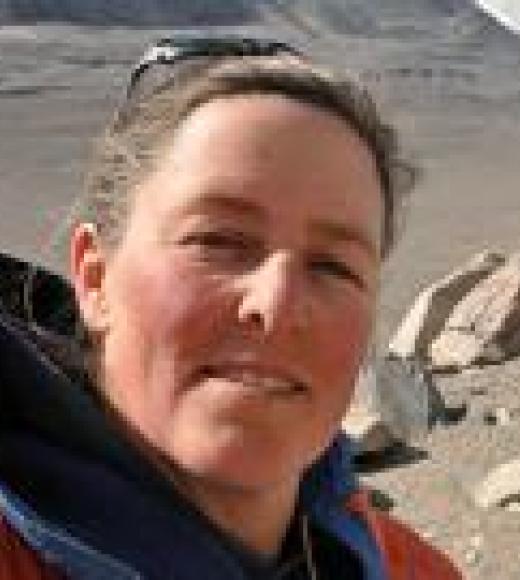
Dawn Y. Sumner is a Professor in the Department of Earth and Planetary Sciences at the University of California, Davis. Her research focuses on geobiology, paleobiology, and planetary science, particularly reconstructing ancient environments on Earth and Mars. She is a key member of NASA’s Mars Science Laboratory team, contributing to the Curiosity rover’s exploration of Gale Crater on Mars. Sumner’s work integrates field studies, lab analyses, and interdisciplinary approaches to understand microbial life’s role in shaping Earth’s history and potential habitability on other planets. Education: Ph.D., Massachusetts Institute of Technology (1995). Research interests include microbialite formation, Antarctic lake ecosystems, and the evolution of oxygenic photosynthesis. She investigates modern microbial communities in ice-covered lakes (e.g., Lake Vanda) to understand ancient environments and their biosignatures. Her scientific awards include the California Academy of Sciences Academy Fellow (2020) and Geological Society of America Fellow (2014). Sumner emphasizes inclusive education and supports student success in STEM through feminist research practices. Labs/Teams: W.M. Keck Center for Active Visualization in the Earth Sciences (KeckCAVES), Antarctic Lake Research Group.
Roger Boltshauser is a Full Professor and Deputy Head at the Department of Architecture, ETH Zurich. His practice and academic work emphasize tectonic building culture, proportion, and material experimentation, diverging from mainstream German-Swiss architectural trends. He combines teaching with active architectural practice, influencing younger generations at ETH and TU Wien. Key themes: Tectonic structures, grid-based order, social responsibility in architecture, critique of modernist canons Notable projects: Hochhaus H1 Zwhatt-Areal (2025), Masterplan Zoo Basel (2025), Centre for Dental Medicine Zurich (2025) His buildings prioritize mass and permanence , evident in projects like the Kopfholz School and Rauch House . Recent works at the EPFL Solar Biennale (2025) and Architecture of Memory exhibition (2025) explore sustainable design and cultural narratives. Boltshauser’s studio on Dubsstrasse exemplifies research into load-bearing structures and urban spatial relationships.
Paul D. Asimow is the Eleanor and John R. McMillan Professor of Geology and Geochemistry at the California Institute of Technology (Caltech), part of the Division of Geological and Planetary Sciences. He holds a B.A. from Harvard University (1991), an M.S. (1993), and a Ph.D. (1997) from Caltech. His career progression includes roles as Assistant Professor (1999–2005), Associate Professor (2005–2010), and Professor (2010–present), with the McMillan Professorship since 2016. Education: A.B. in Geology, Harvard University, 1991 M.S. in Geology, Caltech, 1993 Ph.D. in Geology, Caltech, 1997 Research Interests: Focuses on computational, experimental, and observational approaches to igneous petrology and mineral physics. Key areas include adiabatic mantle melting, water's role in mantle dynamics, high-pressure mineral physics, and processes at mid-ocean ridges. His research utilizes advanced facilities like the Lindhurst Laboratory of Experimental Geophysics and the alphaMELTS software package for thermodynamic modeling. Articles Overview: Recent work spans planetary crust formation, Martian petrogenesis, and high-pressure mineral behavior. Themes include experimental techniques, computational modeling, and cosmochemical studies of meteorites. Awards and Honors: James B. Macelwane Medal (AGU) Frank Wigglesworth Clarke Medal (Geochemical Society) Richard P. Feynman Prize for Teaching Excellence (Caltech) Fellow of the American Geophysical Union Fellow of the Mineralogical Society of America Grants and Labs: Received NSF funding for developing an interactive phase equilibria curriculum. Leads the Lindhurst Laboratory, focusing on shock-wave experiments and high-pressure mineral physics. Collaborates on software tools like alphaMELTS and MAGMASOURCE. Labs and Teams: Active in the Caltech Shock Wave Laboratory, advancing experimental methods for planetary material studies. Engages in interdisciplinary projects on Mars geology and terrestrial planet formation.
Marcos Cruz is Professor of Innovative Environments at The Bartlett School of Architecture, University College London (UCL), where he leads research in bio-integrated design. He runs Bio-ID with Dr. Brenda Parker, a multidisciplinary research platform investigating design driven by biotechnology, computation, materials, and fabrication. Previously, he served as Director of The Bartlett from 2010-2014 and founded the BiotA Lab (2014-2018). His academic career spans multiple institutions including University College London (where he ran MArch Unit 20 for 19 years), University of Westminster (2008-2010), UCLA (2010), and IAAC (2014-present). Professor Cruz holds a Licenciatura from ESAP Porto, a Masters with distinction from UCL, and a PhD from UCL (2007), sponsored by the Portuguese Foundation for Science and Technology. His doctoral research on 'Neoplasmatic Architecture' earned him the RIBA President's Research Award in 2008. He is a registered architect with both the Architects Registration Board (ARB) and the Portuguese Architecture Chamber. His primary research area is Bio-Integrated Design, which explores how biotechnology and computation can reshape our built environment in response to climate change. This work goes beyond using nature as inspiration; instead, it treats nature as the medium for a multi-layered design approach. His key research project, Poikilohydric Living Walls, investigates integrating growth systems directly on building facades using algae and mosses that can switch photosynthetic activity on and off without additional maintenance. Another significant research area is The Body in Architecture, which examines the relationship between human flesh and architectural flesh, proposing a 'thick embodied flesh' that creates truly inhabitable architectural interfaces. His recent publications demonstrate a strong progression toward integrating living systems directly into building materials and facades. The research spans from microbial to tectonic scales, with increasing focus on biomaterials, robotic fabrication, and sustainable design approaches that actively participate in urban ecosystems rather than merely responding to them. RIBA President's Research Award (2008) for 'Neoplasmatic Architecture' Multiple Best Unit awards at Bartlett Summer Show (awarded by Thom Mayne, Paul Finch, Richard Rogers, Claude Parent, and Ross Lovegrove) Work part of permanent collection at FRAC Orleans Exhibitions at Venice and São Paulo Biennales Professor Cruz has supervised numerous PhD students through UCL's Research-by-Design programme and currently directs the MArch/MSc in Bio-Integrated Design. His research has been supported by EPSRC and involves industrial partners including Laing O'Rourke, Pennine Stone Limited, and Amorim, with academic partners at UCL Biochemical Engineering, University of Coimbra, and IST Tomar. He co-founded MAM-ARCH London (formerly marcosandmarjan) in 2000, whose work has built buildings and pavilions, won international competitions including the Kunsthaus Graz, and been exhibited globally. His practice represents a significant bridge between architectural design and biological systems, positioning him at the forefront of bio-integrated architectural research.
Aleksandar Kostic is a Lecturer in the Department of Architecture and Built Environment at South East Technological University (SETU), where he also serves as Lead Researcher. He holds a PhD from University College Dublin, awarded in 2022, and is actively contributing to the academic and professional architecture community. PhD in Design Theory, University College Dublin (2022) His research lies at the intersection of philosophy and architectural design, with a strong focus on design theory, epistemology, ethics, and aesthetics. He explores fundamental questions such as aporia (intellectual impasses) in design, the influence of Platonic philosophy, and the ethical responsibilities of architects. His work emphasizes critical thinking and philosophical inquiry in architectural practice and education. The trends in his publications reveal a consistent engagement with philosophical concepts applied to architectural problems. From examining 'aporetic' design challenges to analyzing Plato’s views on expertise, his research bridges abstract thought and practical design. Recent works continue this trajectory, addressing ethical values, non-material aspects of design, and the role of contradiction in innovation. Nomination for MIES EU Award for Architecture (2009) Aleksandar Kostic advises PhD students and is actively involved in research dissemination through publications, peer-review, and conference organization. He serves on the steering committee of the All Ireland Architecture Research Group and is a member of the Centre for Platonic Studies at Trinity College Dublin and the Royal Institute of the Architects of Ireland. His peer-review activities include journals such as She JI and Building Material . He is a key member of the Architecture Research Group at SETU and collaborates across disciplines, particularly with philosophy. His upcoming activity includes organizing the 'Ethics in Architecture' conference in 2025, highlighting his leadership in integrating ethical discourse into architectural research.
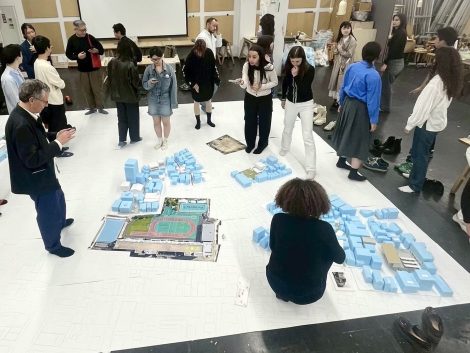
Keigo Kobayashi is an Associate Professor at Waseda University's Faculty of Science and Engineering, School of Creative Science and Engineering, Department of Architecture. He has served in this position since 2016, previously holding the rank of Assistant Professor from 2012 to 2016. His professional journey includes significant experience at the Office for Metropolitan Architecture (OMA) in Rotterdam, where he worked as a Senior Architect and Project Architect from 2007 to 2012. His educational background includes a Master of Architecture II from Harvard University's Graduate School of Design (2005), a Master of Architecture from Waseda University's Graduate School of Science and Engineering (2003), and a Bachelor's degree in Architecture from Waseda University's School of Science and Engineering (2002). Kobayashi's research focuses on architectural planning and city planning, with particular interests in food-related architecture, spatial behavior, and sustainable design. His work explores the intersection of architecture with everyday life, examining how spatial configurations influence human behavior and community formation. Recent research has investigated food systems in urban contexts, playful approaches to spatial design, and the relationship between architectural form and environmental performance. His publications demonstrate a strong focus on practical applications of architectural theory, with projects spanning from food truck design in Shodoshima to zero-energy housing solutions and innovative approaches to architectural education. His work shows a consistent interest in how architecture can respond to contemporary social challenges while maintaining theoretical rigor. Excellence in Concrete Construction Award 2019, American Concrete Institute (ACI), Qatar National Library / OMA Kobayashi actively contributes to architectural education through various committee memberships, including serving as Chief of the Subcommittee on Strategies for International Compatibility in Architectural Education at the Architectural Institute of Japan and leading the Caberra Accord Correspondence Subcommittee at the Japan Accreditation Board for Engineering Education. His teaching portfolio at Waseda University is extensive, covering architectural design studios from undergraduate to doctoral levels. He leads several research initiatives, including the Wakusei Project in Tosa, Kochi, NPO PLAT (Platform for Architectural Thinking), and the European Thinkbelt/McDonald's Radio University project which represents an innovative approach to architectural education and community engagement, particularly in contexts of migration and cultural exchange.
Prof. Dr. Johan Robertsson is a Full Professor of Applied Geophysics and Head of the Exploration and Environmental Geophysics (EEG) Group at ETH Zürich's Department of Earth and Planetary Sciences. He holds a MSc from Uppsala University (1991) and a PhD in Geophysics from Rice University (1994). Before joining ETH in 2012, he spent 15 years at Schlumberger in R&D roles, leading projects that revolutionized marine seismic data acquisition. His research focuses on wave propagation physics, seismic data inversion, and applications in exploration and environmental geophysics. He pioneered the use of Distributed Acoustic Sensing (DAS) for landslide monitoring and contributed to Mars seismology via the InSight mission. Education: MSc in Engineering Physics, Uppsala University (1991) PhD in Geophysics, Rice University (1994) Research Interests: Seismic wavefield modeling and inversion Planetary seismology (Mars, Moon) Acoustic metamaterials and wave control Environmental geohazard monitoring Marine seismic acquisition techniques His work on the Martian soil properties using InSight data and lunar exploration instrumentation (ALGEP) reflects his cross-disciplinary approach. He holds 90+ patents and has secured prestigious grants like the ERC Advanced Grant. Awards: EAGE Guido Bonarelli Award (2020) ERC Advanced Grant MATRIX (2017) EAGE Conrad Schlumberger Award (2018) Grants & Advising: Led the MATRIX ERC project advancing seismic imaging algorithms Advised over 20 PhD/MS students (names not listed) Secured Schlumberger's largest R&D project in marine seismic sampling His EEG Group operates cutting-edge labs for immersive wave experimentation and planetary geophysical instrumentation. Current initiatives include lunar subsurface exploration and acoustic invisibility experiments.
Professor Alex Copley holds the position of Professor of Tectonics at the Department of Earth Sciences, University of Cambridge. His research focuses on understanding Earth's crustal deformation, tectonic forces, and earthquake dynamics across scales from microcrystalline to continental. He employs integrated approaches combining field geology, geophysical data, numerical modeling, and petrological analysis. His work addresses key questions on earthquake controls, tectonic force origins, and crustal material properties, with global field projects spanning Asia, the Middle East, Europe, Africa, and South America. Research interests include: Earthquake mechanics and seismic hazard mitigation Continental tectonics and mountain belt evolution Crustal rheology and lithospheric dynamics Metamorphic petrology and continental collision processes Large-scale controls on critical mineral distributions Recent publications highlight studies on fault mechanics in Iran, Himalayan shortening, and the thermal evolution of mountain ranges. His work bridges fundamental geoscience with societal applications, including earthquake resilience and tectonic influences on resource formation. Affiliations include Bullard Laboratories and collaborations with global institutions. No formal awards are listed in the provided text, though his research has been published in high-impact journals like Nature and Geophysical Research Letters .
Prof. Dr. Hakkı Polat Gülkan is a Professor at Başkent University's Civil Engineering Department. With a PhD (1971) and Master's (1968) from the University of Illinois in Civil Engineering and a Bachelor's (1966) from METU, his career spans over five decades in earthquake engineering, structural dynamics, and disaster management. PhD: University of Illinois, Civil Engineering (1971) Master's: University of Illinois, Civil Engineering (1968) Bachelor's: Middle East Technical University, Civil Engineering (1966) His research focuses on seismic risk assessment, structural behavior under extreme loads, and disaster mitigation strategies. Key contributions include earthquake simulator development, ground motion analysis, and retrofitting techniques for masonry and reinforced concrete structures. He has published extensively on deformation limits, response spectra, and historical building preservation. Recent work includes 15+ articles from 2024-2012 analyzing Istanbul's seismic hazards, Marmara region dynamics, and post-earthquake structural integrity. Conference papers address Turkey's endemic building vulnerabilities and deformation thresholds for seismic isolation systems. Scientific Achievements: Elected to U.S. National Academy of Engineering (2023) As an active journal reviewer for 13+ publications (2023-2024), he contributes to advancing earthquake engineering discourse. His teaching portfolio includes advanced structural analysis, concrete mechanics, and seismic design courses.
Prof. Dr. Christian Mayer is a Professor in Physical Chemistry at the Faculty of Chemistry, University of Duisburg-Essen. He serves as Head of the working group focusing on origin of life research, nanocapsules, and NMR spectroscopy techniques. His research group is located at Universitätsstraße 5, D-45141 Essen, Germany, with contact information including phone number +49 201 183-2570. Prof. Mayer's research interests primarily focus on the origin of life in deep tectonic fault zones of the first continental fragments, where he collaborates with Prof. Dr. Ulrich Schreiber from the Faculty of Biology and Prof. Dr. Oliver Schmitz from Applied Analytical Chemistry. His work investigates how vesicle formation occurs in tectonic fault systems through cyclic phase transitions of carbon dioxide, creating ideal conditions for molecular evolution. He specializes in pulsed field gradient NMR (PFG-NMR), high-resolution NMR, and solid-state NMR techniques to characterize nanoscale systems including nanocapsules, vesicles, and microemulsions. His recent publication trends reveal a strong interdisciplinary focus spanning physical chemistry, prebiotic chemistry, and astrobiology. The articles demonstrate increasing integration of computational methods with experimental approaches, particularly in analyzing molecular structures and dynamics. His research has evolved from fundamental studies of nanocapsule systems to broader investigations of protocell formation mechanisms under early Earth conditions, with recent work extending to astrobiological contexts including potential life formation on Titan. Prof. Mayer has established significant collaborations across multiple disciplines, particularly with geologists and biologists, to investigate the physical chemical processes that could have led to the emergence of life. His work bridges fundamental physical chemistry with practical applications in nanomedicine, particularly in developing artificial oxygen carriers based on nanocapsule technology. His laboratory utilizes high-pressure facilities to simulate early Earth crust conditions, with a particular focus on supercritical CO 2 environments. The working group combines experimental approaches with theoretical modeling to understand vesicle formation processes and their implications for the origin of cellular life.
Reto Gieré is a Professor in the Department of Earth and Environmental Science at the University of Pennsylvania's School of Arts & Sciences. He holds editorial roles as Editor of the Journal of Petrology and Chief Editor of the European Journal of Mineralogy. His research focuses on environmental geochemistry, energy systems, mineralogical processes, and health impacts of pollutants. He has held academic positions at institutions including ETH Zürich, Purdue University, and the University of Basel. Education: PhD in Mineralogy and Petrology (ETH Zürich), Habilitation in Earth Sciences (University of Basel) Research Interests: Biogeochemistry, sustainable materials, atmospheric pollution, and global environmental change Key projects include investigations into tire-abrasion microplastics, charcoal sustainability in sub-Saharan Africa, and lead pollution dynamics in Philadelphia. He has received honors such as the Honorary Doctorate from Université de Haute-Alsace and Fellowships from major geological societies. Grants/Advising: Active in international projects like BIOCOMBUST (EU-funded biofuel research) Labs: Directs the Geochemistry Lab at UPenn, focusing on mineral-environment interactions
Geoffrey Cook is a Senior Lecturer at the Scripps Institution of Oceanography, UC San Diego, within the VC Marine Sciences school and Geosciences Research Division. He holds a PhD in Geology from Washington State University (2009), an M.S. from Boise State University (2002), and a B.A. from Franklin and Marshall College (2000). His research focuses on physical volcanology, including the volcanic evolution of large calderas, petrogenesis of magmas, and geoscience education. Notable projects include studies on the Otowi Member of the Bandelier Tuff and crustal assimilation processes in Iceland’s Fagradalsfjall Fires (2021). He emphasizes innovative teaching methods, such as active learning and experiential education, to address student misconceptions in geoscience. Dr. Cook has received multiple teaching awards, including the 2023 Scripps Outstanding Undergraduate Teaching Award and the 2018 UCSD Panhellenic Chapters Outstanding Faculty Award. His publications span volcanology, geochemistry, and educational pedagogy, with recent work in Nature (2024) and active learning strategies in STEM education. His academic profile reflects a commitment to both advancing geoscience research and improving undergraduate education through evidence-based practices.
Professor Balz Kamber is a renowned academic in the Faculty of Science at Queensland University of Technology (QUT), leading research in elemental and isotopic geochemistry paired with petrology. He holds the position of Professor in Petrology within the School of Earth & Atmospheric Sciences . His work focuses on Earth's differentiation into chemical spheres, with applications in climate science, planetary evolution, and resource exploration. Kamber has held prestigious roles, including Chair in Geology and Mineralogy at Trinity College Dublin and a Tier 1 Canada Research Chair at Laurentian University. Education: PhD (University of Bern, Switzerland), MSc (University of Bern) Professional Memberships: Royal Irish Academy (since 2018), European Association of Geochemistry Research interests include thermodynamic modeling of igneous processes, automated mineralogy, and the interplay between climate and geological history. His current projects address mantle dynamics, crustal evolution, and planetary weathering. Teaching focuses on Earth Materials, Petrology, and Climate Science at QUT. Notable achievements include editorship of Chemical Geology (since 2018) and contributions to understanding the Great Oxidation Event and Deccan Traps volcanism. His work bridges fundamental geochemistry with real-world challenges, such as climate change mitigation through enhanced rock weathering. Grants/Funding: Led the 23M Euro Irish Centre for Research in Applied Geosciences (2011–2018) Labs/Teams: Heads a dynamic research group advancing LA-ICP-MS methodologies and geochemical imaging
Professor Andrew Berry is an Associate Professor and Head of the Geochemistry Research Area at the Research School of Earth Sciences, Australian National University (ANU). He holds a D.Phil. from the University of Oxford and a B.Sc. (Hons) from the University of Sydney. His research focuses on experimental petrology, geochemical processes in high-temperature environments, and the use of synchrotron-based techniques like X-ray absorption spectroscopy (XAS) to study element speciation in melts and minerals. Key areas include mantle metasomatism, oxidation state analysis of metals (Fe, Ti, Cr), and the geochemistry of carbonatites and rare earth elements. Education: D.Phil. (University of Oxford, 1997), B.Sc. (University of Sydney, 1991). Employment: Senior Fellow/Associate Professor at ANU (2012–present), Senior Lecturer at Imperial College London (2005–2011), and Research Fellow/Postdoctoral roles at ANU (2000–2005). Research Interests: Experimental studies of melt connectivity, oxidation state controls on element partitioning, and applications of synchrotron techniques. Current projects include investigating Fe³+/Fe²+ ratios in MORB, Ti oxidation states in hibonite, and REE behavior in carbonatites. Scientific Awards: Humboldt Research Fellowship (Universität Frankfurt, 2005). Advising & Grants: Supervised numerous PhD projects on topics like mantle metasomatism and zircon oxy-barometry. Active in collaborative projects on critical metals and carbonate melt geochemistry. Labs/Teams: Leader of the Experimental Petrology group at ANU, contributing to facilities like the Australian Synchrotron.
Mohd Ahmad Syed is a Senior Lecturer in Geotechnical Engineering at the University of Manchester's Department of Civil Engineering and Management. His research focuses on climate change impacts on geotechnical infrastructure, resilient and sustainable infrastructure design, and earthquake engineering. He holds a PhD from the Indian Institute of Technology Bombay and has industry experience with firms like Consulting Engineering Services (I) Pvt. Ltd and Dar Al-Handasah Consultants. Education: BTech (Hons) in Civil Engineering, Indian Institute of Technology Kanpur (2001) MTech in Geotechnical Engineering, Indian Institute of Technology Kanpur (2003) PhD in Seismic Analyses of Waterfront Structures, Indian Institute of Technology Bombay (2009) Research Interests: Climate change modelling for geotechnical infrastructure resilience Development of sustainable construction materials (e.g., bagasse ash) Seismic risk analysis for dams and tunnels in West Africa Artificial soil weathering techniques for laboratory testing Coupled numerical methods for embankment stability under climate scenarios Editorial Activities: Assistant Editor, International Journal of Geomechanics (ASCE) Assistant Editor, Indian Geotechnical Journal (Springer) Key Achievements: Developed first-of-its-kind displacement-based S-curve for seismic earth pressure analysis Co-developed methodologies for post-liquefaction pile behavior and blast-loaded tunnels Guided 10 PhD/MSc students in geotechnical resilience and sustainability topics