Bryce Sadtler is Associate Professor of Chemistry at Washington University in St. Louis, leading research on inorganic nanostructures and catalytic transformations. His group develops advanced imaging techniques to study chemical reactions at the nanoscale and synthesizes metastable materials using solution-phase methods. Research Areas: Single-particle imaging of photocatalytic activity Growth of adaptive inorganic nanostructures Solution-phase synthesis of metastable semiconductor compounds His publications emphasize nanomaterial synthesis, surface reaction dynamics, and energy conversion mechanisms. Award recognition includes an NSF CAREER Award and Emerging Investigator designations for contributions to materials chemistry.
Professor Madeleine Du Toit is a Professor at the University of Wollongong (UoW), serving as Associate Dean for Equity, Diversity, and Inclusion in the Faculty of Engineering and Information Sciences since 2022. She joined UoW in 2014 and is also the Academic Program Director for Materials Engineering. Her academic background includes BEng, MEng, and PhD degrees in Metallurgical Engineering from the University of Pretoria, followed by an MEng in Welding Engineering from the University of the Witwatersrand. Roles: Professor, Associate Dean, Academic Program Director Affiliations: University of Wollongong, Weld Australia (Board Chair since 2023, Director since 2015) Certifications: International Welding Engineer (IWE), Certified Materials Professional (CMatP) Her research focuses on welding metallurgy of steels, aluminum alloys, and corrosion resistance. Notable projects include eliminating post-weld heat treatment for pipeline steels and developing novel braze repair techniques. She has secured funding for equipment upgrades and international collaborations, including with TU Delft. Teaching responsibilities include courses on materials in design, welding engineering, and engineering alloys. She has supervised multiple PhD students on topics like phase transformations in steels and hydrogen-assisted cracking. Awards: Harvey-Shacklock Gold Medal (2015, 2013, 2007), TMS Best Conference Manuscript (2019), SAIMM Gold/Silver Medals (1997) Fellowships: Engineers Australia, South African Academy of Engineering, Southern African Institute of Welding Leadership roles include chairing Weld Australia’s Board and Audit Committee, and serving on national councils for Materials Australia and the Australian Research Council.
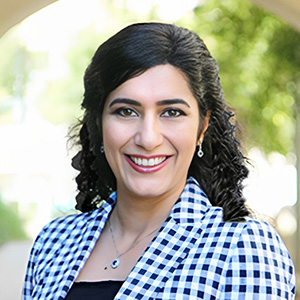
Dr. Sara Adibi is an Assistant Professor in the Department of Mechanical Engineering at San Diego State University (SDSU), affiliated with the College of Engineering. Her primary email is sadibi@sdsu.edu , and her website is https://sadibi.sdsu.edu . Her research focuses on advanced materials science, particularly metallic alloys, nanomaterials, and computational modeling of material behavior under extreme conditions. Her research interests include hydrogen embrittlement in steels, molecular dynamics simulations of nanoscale materials, and the development of interatomic potentials for predictive material modeling. She explores topics such as vacancy clustering in metals, mechanical properties of magnesium alloys for biomedical applications, and the design of high-entropy alloys using machine learning. Her work spans from fundamental atomic-level studies to practical applications in engineering materials. Notable trends in her publications include computational materials engineering (ICME), analysis of material failure mechanisms (e.g., spallation and cavitation), and the integration of machine learning for property prediction. Dr. Adibi has not listed any advising students or grants in the provided information, though her research portfolio suggests active involvement in materials-related projects. She is associated with SDSU's mechanical engineering department and contributes to the broader engineering and materials science communities through her publications and academic role.
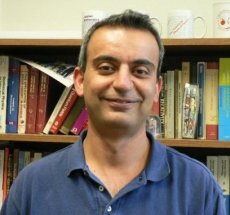
Mahdi Sanati is an Associate Professor in the Department of Physics and Astronomy at Texas Tech University, where he conducts theoretical and computational research in materials science. He holds a Ph.D. in Physics from the University of Cincinnati (1999). His educational background includes: Ph.D. in Physics, University of Cincinnati (1999) M.Sc. in Physics, University of Cincinnati (1995) B.Sc. in Physics, Shahid Behshti University, Tehran, Iran (1989) Sanati's research focuses on computational materials physics , employing first-principles electronic structure calculations , molecular dynamics , and Monte Carlo simulations to study bulk and surface properties of technologically relevant materials. His work spans structural materials, shape memory alloys, correlated electron systems, semiconductor defects, thermal properties, hydrogen trapping in FCC metals, and surface electronic emission. He emphasizes connecting theoretical models to real-world material applications. His publication record (1998-2024) reveals a sustained emphasis on surface phenomena and phase transformations, with recent work (2023-2024) investigating hydrogen outgassing mechanisms and surface morphology effects on electron emission. Key themes include defect engineering in semiconductors, phase stability of alloys, and thermal properties of nuclear materials like UO 2 . As a faculty member, Sanati advises graduate students and conducts research supported by external funding, though specific grant details are not provided in this source. His laboratory work centers on computational modeling rather than experimental setups.
Russ Noorossana is an Assistant Professor at the University of Central Oklahoma (UCO), specializing in Information Systems and Operations Management. He holds a Ph.D. from the University of Louisiana at Lafayette and has extensive experience in analytical problem-solving, data analysis, and Lean Six Sigma methodologies across diverse industries like healthcare, manufacturing, and petrochemicals. He has received notable awards including the Excellence in Teaching Award (2017-19) and Best Researcher Award (2011-14) from Iran University of Science and Technology. His research focuses on Supply Chain Quality Management, applications of Lean Six Sigma, and advanced quality improvement techniques. He has published extensively in journals like Quality and Reliability Engineering International and Journal of Quality Technology , with recent work emphasizing statistical process monitoring, multivariate analysis, and healthcare quality outcomes. His work integrates methods like wavelet transforms, fuzzy logic, and risk-adjusted models to address complex industrial and healthcare challenges. Prof. Noorossana serves as an Associate Editor for the Journal of Quality Technology and Quantitative Management and has held leadership roles in international conferences such as the 18th International Industrial Engineering Conference. His professional certifications include Six Sigma Black Belt and Quality Engineer from the American Society for Quality.
Ivan Oleynik is Professor of Physics at the University of South Florida, holding fellowships in the American Physical Society, American Vacuum Society, and AAAS. His research focuses on materials behavior under extreme conditions using advanced computational and experimental methods. Research explores high-pressure physics, shock compression, quantum molecular dynamics, warm dense matter, and materials for exoplanetary interiors. Recent work includes development of machine learning interatomic potentials and studies of carbon phase transitions under extreme pressures. Major honors include triple fellowship recognition from leading scientific societies. Current research involves collaborations at X-ray free electron laser facilities for in situ studies of material transformation dynamics.
Dr. Yongjia Xu is a Research Fellow at the Department of Engineering, School of Computing and Engineering, University of Huddersfield. He actively contributes to precision metrology through structured light technologies and serves as a core researcher for two EPSRC projects: The EPSRC Future Advanced Metrology Hub (EP/P006930/1) and A Multiscale Digital Twin-Driven Smart Manufacturing System (EP/T024844/1). PhD in Mechanical Engineering (University of Huddersfield, 2019) MSc in Instrument Science and Technology (Hebei University of Technology, 2014) BEng in Control Technology and Instrument (Hebei University of Technology, 2011) His research spans optical surface metrology , fringe projection , phase measuring deflectometry , and 3D optical measurement systems . Key expertise includes calibration algorithms , error compensation , and portable metrology for industrial applications. Recent publications highlight advancements in deep-learning-enabled 3D measurement , refraction error modeling , and digital twin frameworks for smart manufacturing. His work has been cited over 409 times (Scopus h-index: 12) and 375 times (Google Scholar h-index: 11). Awarded the 2019 Chinese Government Award for Outstanding Self-financed Students Abroad, he also serves as a peer reviewer for journals like Optics Express and PhotoniX . He is a member of Optica and SPIE.
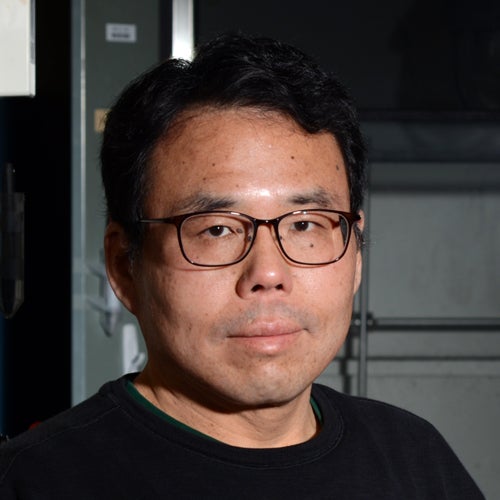
Dr. Sangwoo Lee is an experimental polymer scientist and engineer at Rensselaer Polytechnic Institute (RPI), serving as an Associate Professor in the Department of Chemical and Biological Engineering since 2021. He also holds an adjunct position at Seoul National University. His research focuses on polymer thermodynamics, self-assembly physics, and practical applications like polymer recycling. Lee earned a B.S. in Chemical Engineering from Seoul National University (2003), a Ph.D. from the University of Minnesota (2011), and completed a postdoctoral fellowship there (2011–2013). His work has been recognized with awards including the 2015 ACS Petroleum Research Fund Doctoral New Investigator Grant and the 2014 Cozzarelli Prize from PNAS. Education: B.S., Seoul National University (2003) Ph.D., University of Minnesota (2011) Postdoctoral Associate, University of Minnesota (2011–2013) Lee's research spans fundamental polymer science and applied material engineering. Key interests include block copolymer self-assembly, phase behavior modulation, and sustainable polymer recycling. His lab explores novel morphologies like Frank-Kasper phases and develops methods for controlled polymer degradation. Recent work addresses challenges in nanoscale phase separation and material toughness enhancement through rubber-toughened networks. Publications highlight advancements in understanding polytypism in block copolymers, superacid-mediated polystyrene degradation, and colloidal crystal formation. His studies bridge thermodynamic principles with practical material design, aiming to address global sustainability challenges through innovative polymer systems. Awards: 2015 ACS Doctoral New Investigator Grant 2014 PNAS Cozzarelli Prize 2013 Quadrant Award Finalist 2011 University of Minnesota Best Dissertation Award Lee advises students in polymer science and collaborates globally on material innovation. His Lee Research Group focuses on translating fundamental discoveries into real-world solutions, with ongoing projects on polymer upcycling and next-generation membrane technologies.
Dr. Dan Lewis is an Associate Professor in the Department of Materials Science and Engineering at Rensselaer Polytechnic Institute (RPI), part of the School of Engineering. His research focuses on microstructure science, mesoscopic modeling, and image-driven machine learning applied to materials design. He has held roles including Director of RPI’s Fuel Cell and Hydrogen Research Lab and oversees the Materials Day Camp for high school students. Lewis earned his B.S., M.S., and Ph.D. in Materials Science and Engineering from Lehigh University (1995–2001). Notable awards include the NSF CAREER Award (2011) for studying materials structure at high temperatures. His work bridges computational methods and experimental techniques, addressing challenges in advanced materials for energy systems and structural applications. He is affiliated with RPI’s Center for Computational Innovations (CCI), Center for Future Energy Systems (CFES), and CMDIS. Recent research includes studies on high-entropy alloys, oxidation-resistant coatings, and stochasticity in materials behavior. Education: Ph.D., M.S., B.S. in Materials Science from Lehigh University Affiliations: CCI, CFES, CMDIS Key Projects: NSF CAREER Award (2011), Machine Learning in Materials Design His research interests emphasize the interplay between microstructure, processing, and material performance, leveraging advanced imaging and computational tools. Recent publications highlight innovations in grain growth modeling, oxidation mechanisms, and AI-driven materials characterization.
Dr. Jia Mi is an Assistant Professor at Stevens Institute of Technology, affiliated with the Department of Civil, Environmental and Ocean Engineering within the Charles V. Schaefer, Jr. School of Engineering and Science. He leads the Advanced and Intelligent Energy Laboratory (AI-Energy Lab), focusing on sustainable energy solutions, particularly offshore renewable energy systems like wave and ocean energy. His work integrates multi-physics modeling, system-level control design, and experimental testing to enhance energy efficiency and applications such as desalination and marine carbon dioxide removal. Education: PhD (2024, Naval Architecture & Marine Engineering, University of Michigan), MS (2022, Mechanical Engineering, Virginia Tech), BS (2018, Automotive Engineering, Wuhan University of Technology). Experience: Advisory roles in international ocean energy conferences, leadership in organizations like INORE and UMERC, and industry internships. Research interests span offshore renewable energy, energy harvesting, robotics, and autonomous systems. His interdisciplinary approach bridges theoretical science and practical applications, addressing global energy challenges. Over 40 peer-reviewed publications and 9 patents highlight his contributions to energy and materials science. Awards: Rackham Predoctoral Fellowship (2023), ASME Rising Stars Award (2022), R&D 100 Award Finalist (2020), among others. He advises on grants focusing on marine energy technologies and collaborates on initiatives like the NSF Workshop for the Blue Economy. His lab explores innovations in energy systems for sustainable development.
Ashley Paz y Puente is an Assistant Professor in the Department of Mechanical and Materials Engineering at the University of Cincinnati since August 2016. She leads the Reaction and Transformation Engineering (RATE) Laboratory, focusing on metallic materials processing, phase transformations, and diffusion kinetics. Her research emphasizes Kirkendall effect-driven microtube fabrication, additive manufacturing of metallic scaffolds, and high-temperature alloy characterization using in situ X-ray tomography. Education: PhD (2016) in Materials Science and Engineering from Northwestern University; MS (2012) and BS (2011) in Materials Science and Mechanical Engineering from the University of Central Florida. Research interests span physical metallurgy, intermetallics, diffusion coatings, and shape memory alloys. She has secured over $1.4M in NSF grants, including a CAREER Award (2022–2027), exploring vacancy migration and Kirkendall pore evolution. Her work bridges fundamental materials science with applications in energy and biomedical systems. Teaching: Courses include MTEN6070/5071 – Phase Transformations. She has mentored undergraduate researchers and served on pedagogical innovation committees at Northwestern University. Awards: NSF Graduate Research Fellowship (2012), Barry M. Goldwater Scholarship (2008), and Summa Cum Laude (2011).
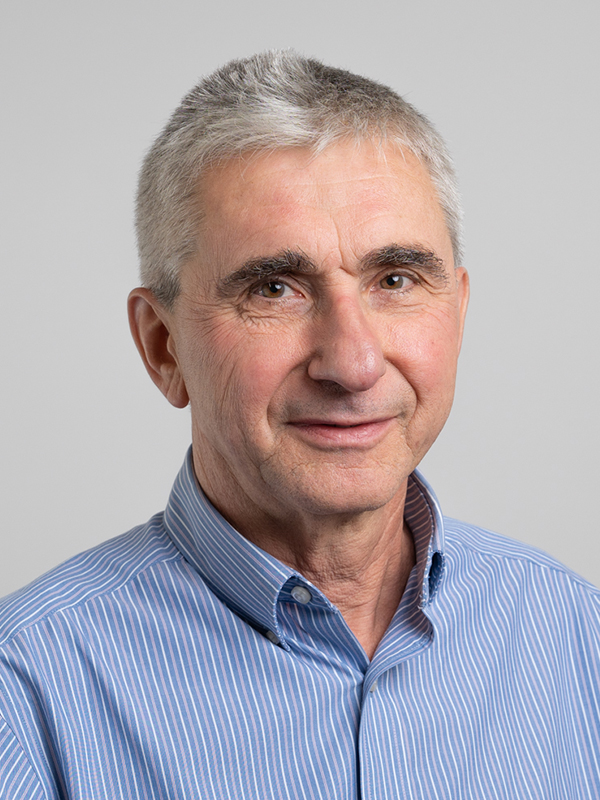
Dominique (Nick) Schryvers is a Professor at the Department of Physics of the University of Antwerp and has served as Dean of the Faculty of Science since October 2015. He received his licence degree in Physics from the University of Antwerp in 1981, his PhD in Physics from the same university in 1985, and his habilitation from the Free University of Brussels in 1991. Born: November 25, 1959 in Antwerp, Belgium Post-doctoral work: Lawrence Livermore National Laboratory and Lawrence Berkeley Laboratory, CA (1986-1987) Full Professor appointment: 2006 Dr. Schryvers' research focuses on advanced transmission electron microscopy techniques applied to phase transformations in alloys, with particular expertise in martensitic transformations, diffusional transformations, and precipitation mechanisms. His recent work has expanded into nanocrystalline metallic systems and in-situ nanomechanical testing, while also encompassing photographic materials, historic materials, geo- and cosmological materials, composites, and soft materials. With over 290 peer-reviewed publications, 4,280+ citations (excluding self-citations), and an h-index of 35, his research output demonstrates significant scholarly impact. He has presented his work at international venues over 70 times and authored 11 book chapters. Visiting Professor: University of Vienna (2009) Current position: Member of 'Program for High-level foreign experts' and Visiting Professor at Central South University, Changsha, China As an educator, Dr. Schryvers teaches experimental physics courses across all undergraduate levels and materials science/microscopy lectures for multiple curricula. He pioneered the Honours Programme at the Faculty of Science, demonstrating commitment to academic excellence and student development. His leadership as Dean since 2015 reflects institutional recognition of his administrative capabilities alongside his research and teaching excellence.
Dr. Shiyue Fang is Professor of Chemistry at Michigan Technological University, specializing in synthetic organic chemistry with applications in nucleic acid and peptide synthesis. His research group develops novel technologies for sensitive oligonucleotide synthesis, non-chromatographic purification methods, and monodisperse polyethylene glycol derivatives. Key innovations include advanced phosphoramidite chemistry for DNA/RNA synthesis and solid-phase techniques for biomolecule purification. Research bridges synthetic chemistry with biological applications, particularly in antisense drug development and epigenetic probes. Mechanochemical approaches enable novel organic transformations for pharmaceutical and materials science applications. Educational contributions include developing curriculum in advanced organic synthesis and mentoring graduate researchers in synthetic methodology development. Collaborative projects address fundamental questions in chemical biology through tailored molecular design and synthesis.
Jaakko Akola is a Professor in the Department of Physics, specializing in computational materials science. His research focuses on density functional theory (DFT) , nanocluster catalysis , and energy materials , with contributions to understanding heterogeneous nucleation, catalytic mechanisms, and surface chemistry. He has authored over 140 publications and contributed to datasets on crystal structure determinations. His work aligns with UN Sustainable Development Goals through advancements in clean energy and materials innovation. Research Interests: DFT modeling, nanocluster reactivity, CO oxidation catalysts, hydrogen evolution reactions, and alloy design. Activities: Reviewer for scientific journals, invited lecturer at institutions like NIMS Japan, and visiting scholar at Forschungszentrum Jülich. Collaborations: International partnerships in materials science and catalysis research.
Dr. Bayaner Arigong is an Assistant Professor in the Department of Electrical & Computer Engineering at Florida A&M University - Florida State University. He holds a Ph.D. in Computer Science and Engineering from the University of North Texas (2015), and M.Sc. and B.Sc. degrees in Electrical Engineering from China University of Geosciences, Wuhan (2008 and 2005). Prior to academia, he worked as an RF System Design Engineer at Infineon Technologies (2014–2017). Education: Ph.D., Computer Science and Engineering, University of North Texas, 2015 M.Sc., Electrical Engineering, China University of Geosciences, Wuhan, China, 2008 B.Sc., Electrical Engineering, China University of Geosciences, Wuhan, China, 2005 Research Interests: Beamforming Phased Array Antenna Integrated Passive Device Design Electromagnetic Cloaking & Metamaterials His recent work focuses on frequency-agile RF analog co-processors , 3D-printed reconfigurable components , and deep learning-enhanced monopulse receivers . Over 60 publications span topics like tunable Nolen matrices, VO₂-based smart materials, and IoT spectrum coexistence frameworks. He leads a research group actively recruiting students in RF systems, high-frequency circuits, and electromagnetic theory. Lab/Team: Active research group focused on RF circuit innovation and applied electromagnetic systems.