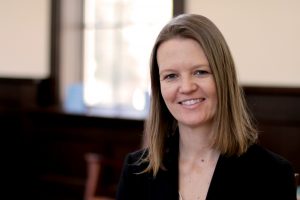
Courtney Rivard is an Assistant Professor in English & Comparative Literature at the University of North Carolina, Chapel Hill, with a secondary appointment at the School of Data Science & Society. She directs the Digital Literacy and Communications (DLC) Lab, focusing on digital humanities, critical game studies, and archival rhetorics. Her research bridges rhetoric, digital methods, and social justice, examining how archives and digital tools shape narratives around race, gender, and national identity. Dr. Rivard holds a Ph.D. from the University of California, Santa Cruz (2012). Her book Layered Lives (2022) combines archival and computational methods to analyze Depression-era life histories. She has secured grants from NEH, ACLS, and UNC initiatives, supporting projects like the Critical Gaming Initiative and oral history archives on PFAS contamination. Her teaching emphasizes digital literacy and public engagement, including courses on data rhetoric, game studies, and multimodal composition. The DLC Lab hosts the Greenlaw Gameroom, a game-based classroom funded by Lenovo, fostering critical pedagogies through play. Research Labs: Digital Literacy and Communications Lab, Greenlaw Gameroom Grants: NEH, ACLS Digital Extension Grant, UNC Arts & Humanities Fellowships Key Projects: Critical Gaming Initiative, Photogrammar collaboration, “Forever Chemicals” oral history archive
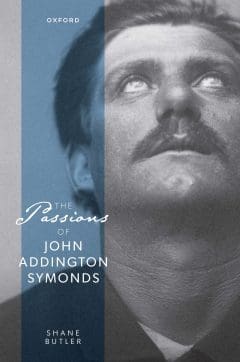
Shane Butler is the Nancy H. and Robert E. Hall Professor in the Humanities and Professor of Classics at Johns Hopkins University, where he also directs the Classics Research Lab and serves as Director of Graduate Studies. He holds a PhD from Columbia University (2000) and has taught at the University of Bristol, UCLA, and the University of Pennsylvania. His research spans Latin literature, classical reception, sensation studies, aesthetics, queer theory, and media history, focusing on the interplay between embodiment and art. Education: PhD in Classics from Columbia University (2000). Prior to Hopkins, he held faculty positions at the University of Bristol, UCLA, and UPenn. He has been a residential fellow at the American Academy in Rome, Villa I Tatti, the Getty Villa, and the MPIWG Berlin. Research focuses on Latin literature from antiquity to early modernity, classical reception theory, and the sensory dimensions of ancient aesthetics. Notable works include The Passions of John Addington Symonds (2022), The Ancient Phonograph (2015), and Sound and the Ancient Senses (2019). He co-edits the Classical Philology special issue on 'Philology Transfigured' and directs the John Addington Symonds Project. Awards include fellowships at leading institutions and editorial roles, including Associate Editor of the I Tatti Renaissance Library. His recent work explores queer philology and the intersection of sound studies with ancient literature.
Laurence Bertrand Dorléac is a Full Professor of Contemporary History (Art History) at Sciences Po Paris, affiliated with the Centre for History (CHSP). She serves as Chairperson of the Fondation Nationale des Sciences Politiques and leads the bilingual "Art and Society" seminar since 2004, publishing its newsletter. Research focuses on cultural history, art history, and political history of art Specializes in visual history, war representations, and material culture Active in editorial collaborations and international exhibitions Her recent work explores intersections of art with AI, environmental politics, and historical trauma. She supervises multiple HDR and PhD students in art history and cultural analysis. No explicit scientific awards mentioned, though her projects receive institutional support like Fondation de France. Her publications span monographs, exhibition catalogs, and interdisciplinary essays.
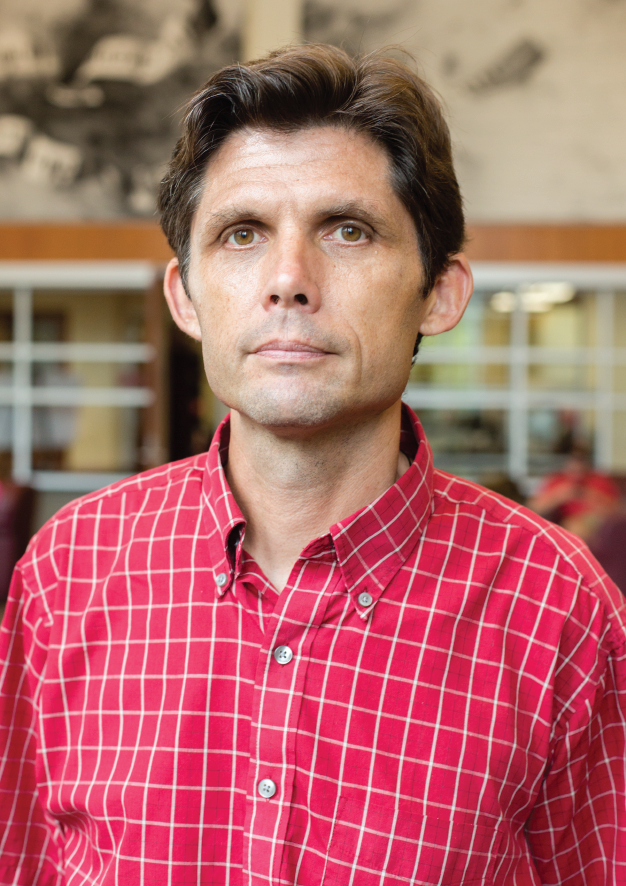
Nick Montfort is a Professor of Digital Media at Massachusetts Institute of Technology (MIT) and Professor II & Principal Investigator at the University of Bergen 's Center for Digital Narrative. He directs MIT's Trope Tank lab/studio and contributes to platform studies, critical code studies, and electronic literature. Ph.D. in Computer and Information Science from University of Pennsylvania (2007) M.A. in Creative Writing (Poetry) from Boston University (2001) S.M. in Media Arts and Sciences from MIT (1998) B.S./B.A. in Computer Science and Liberal Arts from University of Texas at Austin (1995) Montfort's research focuses on computational creativity and digital poetics , particularly through exploratory programming and constraint-based writing . He has developed over ten computer-generated print books and co-edited MIT Press volumes like The Future and The New Media Reader . His work bridges computer science and literary arts , emphasizing algorithmic expression and platform-specific creation. His recent computational works include All the Way for the Win (2025), written entirely in three-letter words, and collaborations like The Deletionist and Sea and Spar Between . Notable books cover interactive fiction ( Twisty Little Passages ), platform studies ( Racing the Beam ), and generative literature ( 10 PRINT ). He also co-edits the Hardcopy and Using Electricity book series. Montfort's academic contributions span digital narrative systems , creative code , and computer-generated literature . His 101 BASIC Poems and Output: An Anthology of Computer-Generated Text exemplify his focus on code as cultural artifact and algorithmic literary practice . He has presented at major conferences including ELO, C&C, and Digital Arts and Culture, addressing topics from minimalist computational poems to narrative modeling . Through collaborations with institutions like University of Bergen and MIT's Comparative Media Studies/Writing, Montfort explores digital storytelling , machine-generated poetry , and platform-specific creativity . His academic leadership includes directing the Trope Tank and co-founding Bad Quarto press.
Sandro Zanetti, Full Professor of General and Comparative Literature at the University of Zurich's Faculty of Arts and Humanities, specializes in avant-garde research, artistic production processes, and poetics of (im)probability. He studied German, History, and Philosophy at Basel, Freiburg, and Tübingen (1993-1999), earned his PhD in 2005 at Basel's SNSF project, and held positions including Junior Professor at Hildesheim (2008-2011) and DFG network head (2010-2014). Since 2011 at UZH, he progressed from Assistant to Full Professor (2022) and serves as Co-Dean of Studies since 2021. Current affiliations: Department of General and Comparative Literature (UZH), Center for Arts and Cultural Theory (ZKK), Literary Radio Zurich Former roles: ZGW Center (2010-2022), SNF project leader (2015-2019), Co-editor of History of the Present (2016-present) His research explores: Avant-garde genealogies and postwar literary modernity Time perception and aesthetic temporality Writing as cultural technique Interdisciplinary intersections with philosophy, media studies, and art Publications reveal trends in: 2022-2024: Dada historiography, AI-generated literature, Paul Celan's late works 2019-2021: Aesthetic theory, transactuality, Barthesian concepts 2014-2017: Improvisation networks, multilingualism, collaborative writing He co-founded interdisciplinary platforms and maintains editorial roles across 15 anthologies since 2004.
Jamie H. Ferguson is an Associate Professor in the Department of English at the University of Houston, with a cross-appointment to the Honors College. He specializes in Renaissance and early modern literature, focusing on intersections between biblical hermeneutics, literary poetics, and translation theory. Renaissance Literature Shakespeare Studies Biblical Translation Great Books Tradition His research explores how theological debates shaped vernacular literary production in Early Modern Europe, with particular attention to textual materiality and interconfessional dialogues. Ferguson's publication record spans Latin, Italian, French, Polish, and English contexts. Recent projects include the annotated translation of Joachim du Bellay's Deffence et illustration de la langue françoyse and a forthcoming book on European Biblical Poetics . He has received multiple Martha Gano Houstoun Research Grants and been recognized with Honors College lecture awards.
Kristen Cole serves as an Associate Professor in the Department of Communication Studies within San Jose State University's College of Social Sciences. Her academic work centers on critical interrogations of health communication systems, disability justice, and the socio-linguistic construction of personhood, with particular attention to marginalized communities navigating healthcare barriers and systemic inequities. Her research is anchored in two foundational inquiries: how individuals negotiate health/illness meanings under cultural constraints, and how communication assumptions shape human categorization. Methodologically grounded in critical/cultural studies, disability frameworks, feminist/queer theories, and autoethnography, her work examines pandemic-era health communication dynamics, citizenship language in immigration processes, and pedagogical innovations for inclusive classrooms. Personal experiences with chronic illness and ELL instruction directly inform her commitment to health justice and communicative equity. Analysis of her 15 most recent publications reveals persistent thematic engagement with disability studies and health communication, featuring methodologies like duoethnography and critical discourse analysis. Key trends include socio-emotional disablism during COVID-19, feminist disability pedagogy through participation menus, and neuroqueering communication theory. Her scholarship consistently exposes how communication practices reinforce or challenge power structures in healthcare, education, and political discourse. While specific grant details remain unlisted in available materials, her research directly addresses urgent contemporary issues: health inequality in pandemic response systems and language-based exclusion in citizenship processes. Her chronic illness narrative and ELL classroom experiences demonstrate profound personal investment in dismantling communication barriers, particularly regarding how vulnerability categorization affects healthcare access and how language determines political inclusion.
Brooke Erin Duffy is an Associate Professor in the Department of Communication at Cornell University, with affiliations in the College of Agriculture and Life Sciences (CALS), the Graduate Field of Feminist, Gender, and Sexuality Studies, and Media Studies. Her research investigates digital and social media industries, gender and identity dynamics, the gig economy’s impact on creative labor, and algorithmic governance in cultural production. She is a prominent voice in feminist media studies, blending academic rigor with public engagement through outlets like The Atlantic , Vox , and The New York Times . Education : Ph.D. in Communication (University of Pennsylvania, 2011), M.A. (University of Pennsylvania, 2008), B.A. in Communications (Penn State University, 2002) Her work highlights the gendered politics of digital labor , focusing on social media influencers, platform precarity, and the tension between authenticity and visibility. Recent research examines algorithmic systems, platform paternalism, and the visibility bind in creator economies. Duffy’s academic contributions include leadership in organizations like the American Influencer Council and Content Creator Scholar Network. She received multiple honors, including the 2021 Top Student-Led Paper award and the 2014 Lillian Lodge Kopenhaver Outstanding Woman Junior Scholar Award. Teaching : Courses on New Media & Society , Gender and Media , and Platform Labor and Precarity Public Impact : Regular commentary in global media and a 2024 contributor role at Forbes
Kimberly Stratton is an Associate Professor in the Department of Religion at Carleton University within the College of the Humanities. She holds a Ph.D. in the History of Religions in Late Antiquity from Columbia University (2002), following degrees from Barnard College and Harvard University. Her research focuses on religion, violence, and social identity in antiquity, ancient magic, and gender studies. She has authored Naming the Witch: Magic, Ideology, and Stereotype in the Ancient World (2007), which won the F. W. Beare Book Award, and co-edited volumes such as Daughters of Hecate: Women and Magic in Antiquity (2014). Her work examines intersections between religion, power, and identity in Greco-Roman, early Christian, and Rabbinic Jewish contexts. Recent projects include exploring violence and Exodus narratives in early religious identity formation, as seen in her 2017 article in History of Religions . She has presented widely on topics like Roman imperialism and apocalyptic literature at venues such as the Society of Biblical Literature. Her research highlights how ancient societies used religious discourse to construct social boundaries and authority. Awards include recognition from students and scholarly societies for her impactful contributions. Education: B.A. Barnard College (1991), M.T.S. Harvard (1995), Ph.D. Columbia (2002) Affiliations: Canadian Society of Biblical Studies, American Academy of Religion Office: 2A47 Paterson Hall | Email: kim.stratton@carleton.ca
Carl Wennerlind is a Professor of History at Barnard College, specializing in early modern European history with a focus on intellectual history and political economy. His research explores the historical development of monetary theory, credit systems, and the interplay between economic ideology and natural resource management. Specializes in 17th-18th century capitalist systems Examines money as a cultural and philosophical artifact Investigates Sweden's economic modernization efforts Currently researching Linnaean natural science link to capitalism His publications span journals like Journal of Political Economy , American Historical Review and edited volumes. Recent work examines material capitalism history (2024) and scarcity-climate crisis connections (2023). Key themes include financial revolution dynamics, economic semiotics, and natural knowledge's role in empire-building. Scientific awards include: Warren Samuels Prize (2012) History of Economics Society Best Article Prize (2006) European Society for the History of Economic Thought award (2006) Research funding includes NEH, ACLS, and Swedish foundations. Courses cover topics ranging from foundational European history surveys to specialized seminars on capitalism, money history, and political economy debates. Current projects include a monograph on Swedish political economy and a comprehensive history of capitalism discourse.
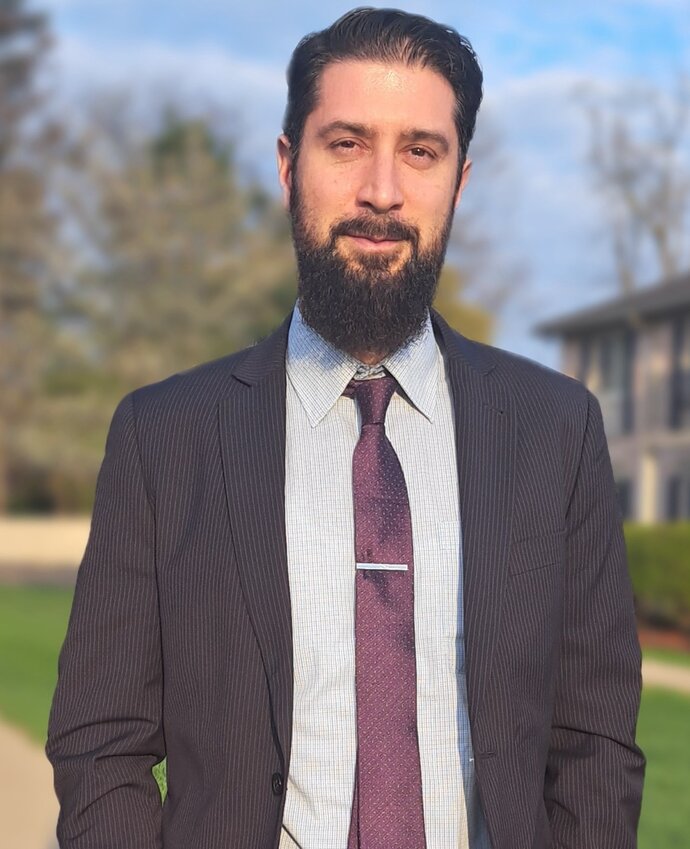
Sami Al Daghistani is an Associate Professor in Contemporary Islamic Studies at Lund University's Centre for Theology and Religious Studies, a Researcher at the Centre for Advanced Middle Eastern Studies (CMES), and holds associate appointments at Columbia University (Middle East Institute) and the Brooklyn Institute for Social Research. His work bridges Islamic economics, environmental ethics, legal philosophy, and intellectual history, emphasizing interdisciplinary methodologies and cross-cultural analysis. Ph.D. (2017) in Islamic Studies from Leiden University, co-supervised by Columbia University and WWU Münster Postdoctoral Fellow at Norwegian School of Theology (2020-2024) Visiting Researcher at Istanbul University and Swedish Research Institute in Istanbul His research focuses on decolonizing economic thought through Islamic traditions, integrating environmental ethics, moral philosophy, and legal theory. Recent publications analyze intersections between Islamic economic cosmology, pre-modern intellectual traditions, and contemporary societal challenges. Key projects include: SWEMENA (Swedish Middle East and North Africa Network), Critical Islamic Studies consortium (founded 2021), and GreenMENA. He has received the 31st World Book of the Year Award in Islamic Studies (2024) and Islamic Economics Research Award (2024). Academic roles span teaching at Lund University (Islamology courses), guest lectures at Istanbul Forum, and leadership in international research collaborations. His translations of Ibn Baṭṭūṭa and Ibn Ṭufayl into Slovenian demonstrate linguistic expertise and cultural bridge-building.
Adam Sabra is a Professor and King Abdul Aziz Ibn Saud Chair in Islamic Studies at the University of California, Santa Barbara (UCSB). He holds a Ph.D. from Princeton University (1998). His research focuses on pre-modern Middle Eastern history, particularly Egypt, with emphasis on medieval and early modern periods. Key areas include social/cultural history of Cairo, poverty/charity systems, legal history, and Islamic mysticism. Education: Ph.D. in History, Princeton University, 1998 Research Interests: Medieval Egyptian urban society and economy Sufi orders and spiritual lineages Legal and charitable institutions under Mamluk and Ottoman rule Families and social mobility in early modern Egypt Recent Scholarship Trends: Recent work examines aristocratic families in Ottoman Egypt (1500–1800) and integrates hagiography into social history analysis. His publications span topics like waqf systems, artisan-scholar networks, and gender dynamics in Sufi literature. Scientific Awards & Activities: Cleveland Bayard Dodge Distinguished Visiting Professorship at AUC (2014–15) Member, Institute for Advanced Study, Princeton (2012–13) National Endowment for the Humanities Fellow Advising & Grants: Advises graduate students Nicholas Liu and Ibrahim Mansour. His research has been supported by fellowships from NEH and the American Research Center in Egypt. Labs/Teams: Collaborates with scholars in Islamic studies through edited volumes and international research networks.
Martha Easton is an Associate Professor of Art History and Program Director of Museum Studies at Saint Joseph's University. She specializes in medieval art and architecture, with a focus on illuminated manuscripts, gender and hagiography, feminist theory, and medieval collecting practices. Easton is a founding member of the Material Collective, a collaborative dedicated to innovative approaches to visual culture, and has lectured extensively at institutions like the Met Cloisters. Education : PhD in Fine Arts (Institute of Fine Arts, New York University) with major fields in Early Christian and Medieval Art; minor in Japanese Art Certificate of Curatorial Studies (Institute of Fine Arts/The Metropolitan Museum of Art) MA in Fine Arts (Institute of Fine Arts, New York University) BA in History (Carleton College) Her research explores intersections of gender, medievalism, and the afterlife of medieval art in modern collections. She is currently writing a book on John Hays Hammond Jr., a scientist-collector who built Hammond Castle, and has published widely on feminist art history, medieval eroticism, and the Material Collective’s collaborative scholarship. Scientific Awards : Michael J. Morris Grant for Scholarly Research (2020-21) Teaching Innovation Grant (2020) Senior Research Fellowship, Center for the History of Collecting (The Frick Collection, 2015) Samuel H. Kress Foundation Travel Grant (1998) Andrew W. Mellon Foundation Fellowship (1996-97) Easton has taught at institutions including Seton Hall University, Bryn Mawr College, and New York University, and her work bridges medieval scholarship with modern curatorial practices and feminist reinterpretation of historical narratives.
William B Gartner serves as the Bertarelli Foundation Distinguished Professor of Family Entrepreneurship at Babson College's F.W. Olin Graduate School of Business, where he also directs research at the Bertarelli Institute for Family Entrepreneurship. Having joined Babson's faculty in 2017, Gartner brings over 40 years of experience studying entrepreneurial phenomena, with particular expertise in family entrepreneurship dynamics. He previously held distinguished chairs at the University of Southern California and Clemson University, establishing himself as a leading scholar in the field. Gartner earned his PhD, MBA, and BBA from the University of Washington, forming the foundation for his extensive research career. His academic journey began during entrepreneurship's early days in the late 1970s when he took one of the first entrepreneurship courses as an MBA student at the University of Washington, when only six students initially enrolled in the class. Gartner's research primarily explores how families act entrepreneurially, examining topics including entrepreneurial legacy, intergenerational knowledge transfer, and the transformation of family businesses across generations. His work bridges entrepreneurship theory with practical applications, particularly focusing on how entrepreneurial legacies can drive innovation in family businesses. He is particularly interested in the linguistic innovations entrepreneurs employ and how storytelling shapes entrepreneurial identity and practice. His scholarship has evolved to incorporate humanities perspectives, recognizing that literature, philosophy, and history provide valuable insights into entrepreneurial thinking and behavior. Analysis of Gartner's recent publications reveals a strong emphasis on family entrepreneurship as an ongoing process rather than a static state, with increasing attention to methodological innovation in entrepreneurship research. His work demonstrates growing interest in the role of narrative, visual methods, and qualitative approaches to understand complex entrepreneurial phenomena. The research shows consistent focus on family business succession as transformation rather than simple transfer, with increasing attention to adolescent entrepreneurial development and the influence of parenting styles. 2025 — Top 1% of Scholars in all subjects, Stanford/Elsevier's Top 2% Scientist Rankings 2024 — The FamCap25 – The Top FamilyEnterprise Academics, FAMILY CAPITAL MAGAZINE 2022 — Justin G. Longnecker Fellow, United States Association of Small Business and Entrepreneurship 2016 — Dedication to Entrepreneurship Award, Entrepreneurship Division, Academy of Management 2013 — Foundational Paper Award, Entrepreneurship Division, Academy of Management 2005 — International Award for Entrepreneurship and Small Business Research Gartner actively mentors doctoral students and early-career researchers, frequently collaborating on publications addressing complex family business dynamics. His editorial roles as Special Issue Editor for Entrepreneurship and Regional Development and Academy of Management Perspectives demonstrate his influence in shaping research agendas. He has secured significant research funding supporting studies on entrepreneurial legacy, family business succession, and adolescent entrepreneurial development, though specific grant amounts aren't detailed in the available materials. As Director of Research at the Bertarelli Institute for Family Entrepreneurship, Gartner leads initiatives connecting academic research with practical applications for family businesses. His work emphasizes the transformative potential of entrepreneurship within family contexts, challenging traditional notions of family business succession as mere transfer of ownership. Through workshops and seminars, he helps families explore how entrepreneurial legacies can lead to new innovations while preserving core values across generations.
Si Nae Park is an Associate Professor at Harvard University's Faculty of Arts and Sciences and Director of Graduate Studies for Regional Studies East Asia. Her research focuses on the interplay between cosmopolitan Literary Sinitic and vernacular Korean in premodern East Asia, examining genres like yadam (vernacular stories) and sosŏl ŏrokhae (fiction glossaries). Affiliation: Department of East Asian Languages and Civilizations, Harvard University Role: Director of Graduate Studies for Regional Studies East Asia Her work explores inscriptional ecologies, vernacular reading practices, and the materiality of texts in Chosŏn Korea. She has written on the Tongp’ae Naksong and the evolution of vocal reading practices. Publications include her monograph The Korean Vernacular Story (2020) and peer-reviewed articles on Confucian classics (2019), yadam heritage narratives (2021), and Chosŏn manuscript culture (2022). She co-organized a 2022 Harvard conference on Korean book history. Her current project, Within Earshot , investigates oral-aural dimensions of reading in Chosŏn Korea, analyzing how auditory practices shaped textual authority and literary production. She has contributed to translations of premodern Korean prose and Japanese studies on the Sinographic Cosmopolis.