Elisa Maria Petta is a Researcher at the Biological, Chemical and Pharmaceutical Sciences and Technologies school, specializing in environmental bioremediation using microbial solutions. Her work focuses on developing innovative biopolymer-supported biofilm systems for degrading persistent environmental contaminants. Research Interests: Dr. Petta's research explores microbial biofilm applications in environmental cleanup, particularly: Biodegradation of chlorinated pollutants like 1,2-DCA using immobilized microbial consortia Design and optimization of biopolymeric scaffolds for enhanced biofilm formation Aquifer bioremediation through biostimulation techniques Microbial community dynamics in contaminated environments Her recent publications (2022-2025) demonstrate a consistent focus on biofilm-engineered solutions for water and soil decontamination, with emphasis on practical applications for chlorinated solvent remediation and material-biofilm interactions.
Miodrag Hadžistević is a Full Professor at the Department of Production Engineering within the Faculty of Technical Sciences at the University of Novi Sad. His career spans over two decades, including roles as Assistant Professor (2005-2010) and Associate Professor (2010-2015) in the same department. Academic Timeline Full Professor (2015-present) Associate Professor (2010-2015) Assistant Professor (2005-2010) Administrative Roles Head of Department of Production Engineering (2012-2018) Head of Chair of Metrology, Quality, Equipment, Tools, and Ecological-Engineering Aspects (2018-2024) His research focuses on precision engineering, quality management, and manufacturing technologies. Key contributions include innovations in coordinate measuring machine accuracy, flatness error evaluation, and dental engineering applications. Publications span journals like Precision Engineering , Metalurgija , and Journal of Craniofacial Surgery . While no explicit awards are mentioned, his work demonstrates expertise in metrology, tool design, and ecological-engineering aspects. Recent articles reveal a strong emphasis on dimensional accuracy analysis, dental prosthetics fabrication, and advanced manufacturing methods. His work integrates CAD/CAE systems, Monte Carlo simulations for uncertainty evaluation, and rapid prototyping technologies. The research also explores material behavior in machining processes and corrosion protection techniques.
Fredrik Andersson is a Researcher at Mid Sweden University , affiliated with the Department of Natural Science, Design and Sustainable Development . He is a key member of the Eco Chemistry group , focusing on synthesis of semiochemicals and recyclable sequestrants for water purification from hazardous metals. Education: Licentiate degree (1999-2002) from Mid Sweden University/Royal Institute of Technology (KTH), supervised by Prof. Erik Hedenström Research Interests include: Chemical Ecology (insect pheromone synthesis) Organic Chemistry (chiral auxiliaries, asymmetric reactions) Environmental Chemistry (metal chelation, water purification) Sustainable Development (green chemicals from forest materials) Publication Trends highlight expertise in chemical ecology, pheromone synthesis, colloid chemistry, and sustainable chemical engineering. Collaborations with Lund University , SLU Alnarp , and Surface and Colloid Engineering group at Mid Sweden University demonstrate interdisciplinary work. Projects: BioRem Energy & Metal BioRem Fiber Foodtech (fermentation of forest materials) Green Pro (green chemicals from forest products) Methodology spans asymmetric synthesis, surfactant engineering, and field testing of bioactive compounds.
Jorge Velasco is a Postdoctoral Researcher at Aalto University's Department of Chemical and Metallurgical Engineering. His research focuses on catalysis and atomic layer deposition (ALD) processes, particularly in the context of carbon dioxide conversion and microchannel fabrication. His recent work explores catalyst development for CO 2 hydrogenation, conformality in ALD processes, and reaction engineering for hydrodenitrogenation applications. Collaborative publications highlight his expertise in computational modeling of gas transport mechanisms and catalyst characterization techniques. Key research trends include: Catalyst design for carbon capture and utilization ALD process optimization for microscale features Simulation of diffusion-reaction systems Contact details: Email: jorge.velasco@aalto.fi
Tapani Vuorinen serves as a Distinguished Professor in the Department of Bioproducts and Biosystems at Aalto University's School of Chemical Engineering. His research focuses on sustainable utilization of forest biomass, particularly wood chemistry and bark valorization, with strong cross-disciplinary collaborations through the CHEMARTS program connecting chemical engineering and design disciplines. His research interests center on wood chemistry , lignin valorization , and bark biorefining , with significant contributions to circular economy applications. Key areas include developing natural dyes from kraft lignin for textiles, creating water treatment coagulants from willow bark extracts, and engineering cellulose nanofibrils for advanced materials. His work bridges fundamental chemistry with practical applications in sustainable fashion, water treatment, and biomaterials. Professor Vuorinen's scientific contributions have been recognized with numerous awards including the Marcus Wallenberg Prize, Suomen valkoisen ruusun ritarimerkki, and TAPPI Research Committee Best Paper Award. His recent projects have garnered student awards such as the New European Bauhaus Rising Stars 2022 for waste valorization initiatives. He actively leads research in sustainable materials development through the CHEMARTS initiative, with notable outputs including the 'Magnificent Materials' book and 'Designs for a Cooler Planet' exhibition. His work demonstrates consistent funding support for bark biorefining projects and cross-disciplinary collaborations between chemical engineering and design fields, particularly in developing circular solutions from forest biomass waste streams.
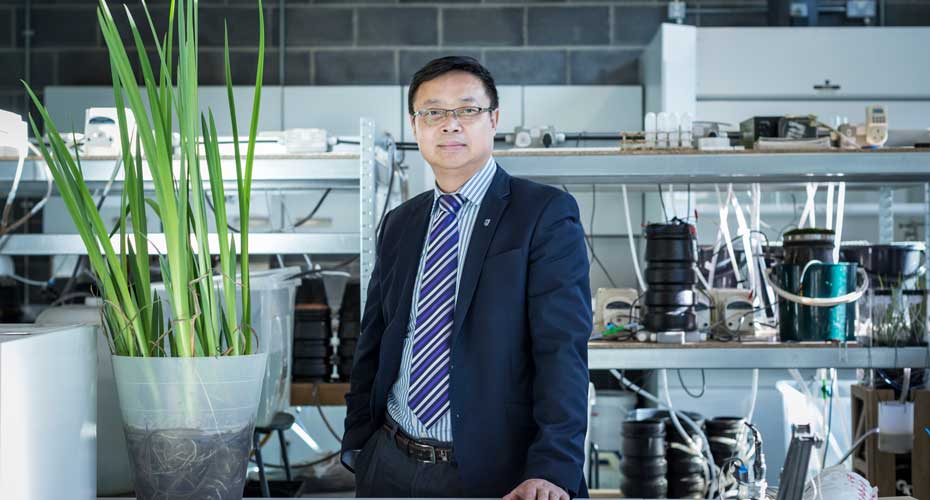
Professor Yaqian Zhao is a distinguished academic at University College Dublin's School of Civil Engineering, where he directs the Water and Effluent Laboratory. His innovative research integrates wastewater treatment with urban aesthetics, developing constructed wetlands that function as both environmental infrastructure and public recreational spaces. With over two decades of experience since joining UCD in 2004, he has established himself as a global leader in sustainable water treatment technologies. Dr. Zhao's research interests focus on creating environmentally integrated wastewater solutions. His pioneering work centers on using aluminum-rich 'cake' material from drinking water treatment as substrate for constructed wetlands, which simultaneously purify water and support biodiversity. He has expanded this research to develop wetlands that generate electricity through microbial activity, creating multifunctional systems that transform traditional wastewater infrastructure into community assets. His vision aims to make water treatment facilities aesthetically pleasing parks rather than isolated industrial sites. His publication record reveals a strong trajectory toward integrated water-energy solutions, with early work establishing the fundamentals of alum sludge-based wetlands and more recent research exploring the water-energy nexus through microbial fuel cells. The publications demonstrate consistent innovation in making wastewater treatment more sustainable, efficient, and community-oriented, with applications ranging from domestic wastewater to agricultural runoff. Fellow of the International Water Association Professor Zhao has hosted two major international conferences in Ireland and presented his work globally, including on Chinese CCTV. His research has practical applications across multiple sites, with more than 20 operational systems testing constructed wetland capacity, including installations at the UCD Lyons Research Farm. His current work focuses on integrating wetland systems directly into wastewater treatment tanks to create aesthetically pleasing, functional infrastructure that serves both environmental and community needs while generating small-scale electricity. Professor Zhao directs the Water and Effluent Laboratory at UCD, where his team develops technologies that transform wastewater treatment from purely functional infrastructure into community assets. His lab's current focus includes scaling up microbial fuel cell technology to generate practical electricity from wetland activity and implementing full-scale demonstrations of their integrated treatment systems.
Prof. Dr. Jürgen Evers is a distinguished Professor at the Department of Chemistry and Biochemistry, Ludwig-Maximilians-Universität München (LMU Munich) . His career spans over five decades, with pivotal contributions to high-pressure materials science , Zintl phases , and intermetallic compounds . He earned his doctorate in 1974 under Alfred Weiss and habilitated in 1982, focusing on pressure-temperature effects in disilicides and digermanides. Academic Timeline: Chemical laboratory technician (1958-1961), evening gymnasium (1962-1966), chemistry studies (Free University Berlin 1967-1968, LMU Munich 1968-1971), research at ETH Zurich (1972-1975), Heisenberg Fellowship (1984), Priv.-Doz. (1987), Associate Professor (1994), Cornell University research stay (1997). Research Focus: High-pressure synthesis and crystallography of Zintl phases (e.g., MSi 2 ), transformation of three- to four-connected networks in elements like silicon and nitrogen, and metallization under extreme conditions. His work on trivalent nitrogen networks under 5 Mbar pressure mirrors earlier Zintl phase discoveries in BaSi 2 . Scientific Awards: Recipient of the Heisenberg Fellowship (1984), reflecting his foundational role in high-pressure solid-state chemistry. Publications: Over 40 years, his 15 most recent articles (2007-2023) span molecular structures (mercury fulminate, hydrazoic acid), high-pressure phase transitions (cesium azide), reactive materials (ZrW 2 , HfW 2 ), and historical analyses (Wittelsbach Diamond, Czochralski Process). Collaborations with Thomas M. Klapötke and Gilbert Oehlinger dominate recent work. Advising: Mentored key researchers including Gerhard Sextl (Fraunhofer Institute), Bernd Sendlinger (University of Applied Management), and Gerhard Nuspl , contributing to structural studies in CeCu 2 -type compounds.
Rebecca Scott is an Associate Professor of Sociology at the University of Missouri, with affiliate faculty status in the Geography Department since January 1, 2020. Her appointment in Geography reflects the strong interdisciplinary connections between her sociological work and geographical approaches to environmental issues, particularly environmental justice and resource extraction in Appalachian regions. Dr. Scott earned her Ph.D. from the University of California-Santa Cruz in 2007. Her academic trajectory has focused on the complex intersections of environment, identity, and social inequality, with particular attention to how landscapes become sites where identities are formed and contested. Scott's research examines environmental inequality through critical lenses of gender, race, and class, with special emphasis on how these categories shape experiences of environmental change and resource extraction. Her work combines cultural studies, feminist theory, and environmental sociology to understand the relationships between people, places, and environmental transformation. She investigates how fossil fuel extraction reshapes social relations, identities, and communities, particularly in Appalachia where she has conducted extensive ethnographic research. Her publications reveal a consistent focus on environmental justice issues, with particular attention to mountaintop removal coal mining, fracking, and pipeline development. Scott analyzes how these extractive practices transform not only physical landscapes but also social identities and community structures, examining the intersections of environmental change with racialization, gender construction, and class formation. Dr. Scott's research has been supported by multiple System-Wide Research Board Grants from the University of Missouri, including funding for projects on fracking ('Unreal Estates: Fracking Nature, Property and Personhood,' 2018) and Appalachian identity ('Extracting Identities: Nature, Race, and Gender in the WV Coalfields,' 2009). She has also received a Summer Research Fellowship and Research Council Grant from the University of Missouri-Columbia in 2008, and was awarded the Feminist Studies Award in 2006 for her work on masculinity in mountaintop removal discourse. Currently, Scott is working on a book centered on fracking and the pipeline boom, with a particular focus on property as a technology of personhood and exploitation. This work extends her longstanding interest in how environmental changes reshape social relations and identities, examining the complex ways that property relations mediate experiences of extraction and environmental transformation.
Dr. Sampriti Mukherjee is an Assistant Professor in the Department of Molecular Genetics and Cell Biology at the University of Chicago. Her research focuses on understanding how bacteria decode and integrate self-generated and environmentally-derived stimuli to control transitions between individual and collective behaviors, particularly in the context of biofilm formation and bacterial pathogenesis. Dr. Mukherjee received her BS and MS in Microbiology from the University of Calcutta (2007 and 2009), followed by a PhD in Microbiology from Indiana University (2014). She completed her postdoctoral training in Molecular Biology at Princeton University in 2020. Her laboratory employs a multidisciplinary approach combining bacterial genetics, molecular biology, biochemistry, microfluidics, fluorescence microscopy, and genome-scale studies to investigate bacterial signal detection, relay, and integration mechanisms. Her research has significant implications for developing strategies to combat antibiotic-resistant infections by targeting bacterial communication systems rather than bacterial growth directly. The work has revealed novel mechanisms of bacterial communication, including the discovery of new quorum-sensing autoinducers and their receptors, the integration of photosensing with quorum sensing, and the regulation of biofilm development through combinatorial control of multiple signaling pathways. Dr. Mukherjee's research has been recognized with several prestigious awards: Searle Scholars Program (2022-2025) NIH Pathway to Independence Award (K99/R00, 2018-2023) Life Sciences Research Foundation Postdoctoral Fellowship (2016-2019) She currently leads multiple NIH-funded research projects as Principal Investigator, including R35GM150803 "Probing the role of sensory cues in the regulation of bacterial biofilm development" (2023-2028) and R00GM129424 "A New Quorum-Sensing Autoinducer Acts with the RhlR Receptor to Control Virulence and Biofilms in Pseudomonas Aeruginosa" (2018-2023), demonstrating her significant contributions to the field of bacterial signal transduction and pathogenesis. Dr. Mukherjee's lab is part of the vibrant research community in the Department of Molecular Genetics and Cell Biology at the University of Chicago, collaborating with researchers studying bacterial pathogenesis, signal transduction, and microbial communities to advance our understanding of bacterial collective behaviors and their implications for human health.
Vladimiros G. Papangelakis is a Professor at the University of Toronto's Faculty of Applied Science and Engineering, holding the Senior Industrial Research Chair in Water and Sustainable Extractive Metallurgy and leading the Aqueous Process Engineering and Chemistry Group. His work pioneers sustainable solutions for mineral processing through advanced aqueous chemistry and engineering. His educational foundation includes a Dipl. Eng. from the National Technical University of Athens and M.Eng./Ph.D. degrees from McGill University, complemented by Professional Engineer (P.Eng.) certification. Dipl. Eng., National Technical University of Athens M.Eng., McGill University Ph.D., McGill University Professor Papangelakis specializes in developing low-impact metallurgical processes, with research spanning hydrometallurgy, bio-hydrometallurgy, and electrolyte solution chemistry. His group focuses on critical areas including water recovery via forward osmosis/freeze crystallization, bioleaching of sulfidic wastes for metal recovery and environmental remediation, and rare earth element extraction from complex ores. Current projects target water capture from mining operations, tailings bioleaching, and ionic clay processing. Analysis of his 12 recent publications (2012-2018) reveals a cohesive research trajectory centered on sustainable extractive metallurgy, with dominant themes in water conservation technologies (35% of works), rare earth element processing (25%), and electrochemical monitoring of hydrometallurgical systems (20%). His work consistently integrates chemical modeling with experimental validation to address industry challenges in resource efficiency. His scientific contributions have been recognized through prestigious fellowships: Fellow of the Canadian Institute of Mining, Metallurgy and Petroleum (FCIM) Fellow of the Canadian Academy of Engineering (FCAE) Professor Papangelakis actively mentors graduate students, currently accepting MASc candidates for research in water purification and metal recovery technologies. His work is supported by industrial partnerships through the Senior Industrial Research Chair program, with recent grants focusing on sensor development for high-temperature processes and scale control in hydrometallurgical operations. He directs the Aqueous Process Engineering and Chemistry (APEC) group, which maintains strong industry collaborations to develop commercially viable solutions for water recycling, tailings remediation, and critical metal extraction, positioning the team at the forefront of sustainable mineral processing innovation.
Sara Karolak is a Lecturer at Université Paris Saclay, affiliated with the Laboratoire Écologie, Société et Évolution (IDEEV). She holds HDR (Habilitation to Direct Research) and is a member of the "Ecological Processes and human Impact" research team, focusing on environmental chemistry applications for public health. Her research centers on wastewater epidemiology for estimating community drug consumption and pesticide exposure. She develops HPLC-MS/MS methodologies for residue analysis in water systems, with additional expertise in syringe residue characterization and environmental factor impacts (e.g., temperature, pH) on monitoring accuracy. Analysis of her 2013-2021 publications reveals consistent leadership in international wastewater monitoring through projects like SCORE and ESCAPE. Her work spans tropical and urban environments, emphasizing method validation, inter-laboratory quality control, and cross-border drug consumption patterns. Scientific awards: None mentioned in source material. Dr. Karolak has contributed significantly to research supervision and collaborative initiatives: PhD Supervision: Co-supervised three doctoral candidates on wastewater contaminant analysis (Néfau 2010-2014, Bailly 2009-2013, Mullot 2005-2009). European Projects: Key participant in SCORE (wastewater drug monitoring until 2021) and ESCAPE (syringe residue analysis), advancing standardized epidemiological methodologies. She operates within IDEEV (UMR 9195), a CNRS-AgroParisTech-Université Paris Saclay joint laboratory dedicated to interdisciplinary research on human-environment interactions.
Maciej Staszak is a Researcher at the Department of Process Engineering , Faculty of Chemical Technology , Poznań University of Technology . He holds a PhD in Engineering (2001) and specializes in process modeling, reactor design, and computational fluid dynamics (CFD). His work spans chemical, environmental, and biomedical engineering, with a focus on adsorption kinetics, membrane technologies, and AI-driven simulations. Research Interests: Process Modeling Reactor and Heat Exchanger Design Finite Element/Volume Methods Bisphenol A Removal via Enzymatic Immobilization Microplastic Mitigation in Microencapsulation Photocatalytic Surfactant Degradation Scientific Collaboration: Staszak collaborates internationally with institutions such as CERENA (Portugal), Chemistry Technology Center of Catalonia (Spain), and Eurecat (Spain). He has co-authored 38 scientific articles, 20 book chapters, and 3 academic textbooks, including Fundamentals of Chemical Technology and Reactor Engineering (Parts I & II). Academic Contributions: His recent publications (2024–2023) highlight advancements in chitosan-based biomaterials for dentistry, microchannel thermofluid simulations, and machine learning applications for reaction kinetics. He serves as a WTCh eLearning Coordinator and contributes to interdisciplinary projects bridging chemical engineering with biomedical and environmental applications.
Jakub Zdarta is a Professor at the Poznań University of Technology , Faculty of Chemical Technology, Department of Chemical Technology. His research focuses on biocatalysis , enzyme immobilization , environmental biotechnology , and hybrid material synthesis . He has held positions since 2010 and currently teaches courses in Inorganic Chemical Technology and Advanced Biocatalytic Systems . PhD in Chemical Sciences (2017, Poznań University of Technology) Habilitation in Exact & Natural Sciences (2021, Poznań University of Technology) Engineer title in Chemical Technology (2013, Poznań University of Technology) Master's in Chemistry (2010, Adam Mickiewicz University in Poznań) His work investigates enzyme immobilization for micropollutant removal , biomass conversion , and composite material development . Recent publications highlight metal-organic frameworks , electrospun fibers , and graphene-based supports for biocatalytic systems . Scientific Awards include: Scholarship of the Minister of Science and Higher Education (2019) Prime Minister's Award (2022) Polish Academy of Sciences Award (2022) He supervises PhD students (Karolina Bachosz, Katarzyna Jankowska) and collaborates with institutions like DTU Bioengineering , University of Technology Sydney , and Tecnologico de Monterrey .
Dr. DSc, Eng. Joanna Zembrzuska is a Professor at the Faculty of Chemical Technology , Poznań University of Technology , specializing in Environmental Chemistry and Analytical Chemistry . She serves on editorial boards and coordinates international research projects, including Horizon 2020 collaborations. PhD in Chemical Sciences (2003), Poznań University of Technology Habilitation in Chemistry (2018), University of Łódź Her research focuses on elemental speciation analysis in water, biodegradation mechanisms , and environmental monitoring using LC-MS/MS and electromigration techniques . She investigates microplastic-herbicide interactions and develops green analytical methods with diatomaceous earth. Recent work includes Maillard reaction products in gluten-free bread and toxic element speciation in traditional medicines. Her publications span Food Chemistry , Science of the Total Environment , and Chemosphere . Contributed to 20+ collaborative projects with Aalborg University, Masdar Institute, and European institutions Active in scientific outreach through workshops for schools and University of the Third Age lectures
Agnieszka Zgoła-Grześkowiak is a Professor at Poznań University of Technology (PUT), affiliated with the Faculty of Chemical Technology and the Department of General and Analytical Chemistry. With a career spanning over two decades, she has become a leading figure in environmental and analytical chemistry. PhD (2003) and habilitation (2015) in chemical sciences Acting/Head of Department (2019-2020) Vice-Dean for Student Affairs Research Focus: High-performance liquid chromatography with mass spectrometry (HPLC-MS) for pollutant analysis Development of microextraction methods (LLME, SPME) Biodegradation of pharmaceuticals and endocrine disruptors Food chemistry (bioactive compounds in teas) Environmental monitoring and protection Recent Publications (2025): Highlight her work on biodegradation of tetracycline antibiotics, azole antifungals in water systems, antioxidant stability in nanoemulsions, and novel sorbents for environmental analysis. Academic Leadership: Served on PUT Senate, Council of the Faculty of Chemical Technology, and various academic committees. Currently Vice-Dean for Student Affairs. Education: Chemical Technician (1994), MSc (1999), PhD (2003), Habilitation (2015). Collaborations: Institute of Plant Genetics, Institute of Bioorganic Chemistry (PAS), Poznań University of Medical Sciences, Faculty of Wood Technology (PUT).