Prof. Bianca Maria Colosimo is a faculty member at Politecnico di Milano in the Department of Mechanical Engineering. Her research focuses on in-situ sensing and monitoring of metal additive manufacturing (AM) processes, particularly Laser Powder Bed Fusion. She develops statistical data mining techniques for defect detection and process control, integrating big data streams into quality assurance systems. Her work aims to advance smart AM technologies through real-time monitoring and digital twin methodologies. Key research interests include: Metal Additive Manufacturing Statistical Process Control Image Data Analysis Laser Powder Bed Fusion In-situ Monitoring Smart Manufacturing Systems Publications highlight her contributions to layerwise imaging , plume signature analysis , and spatial statistical modeling for AM processes. Contact: Department of Mechanical Engineering, Politecnico di Milano.
Professor Andreas Geiger leads the Autonomous Vision Group (AVG) at the University of Tübingen , heading the Department of Computer Science and serving as core faculty at the Tübingen AI Center . He is Principal Investigator in the ML in Science cluster of excellence and CRC Robust Vision , while coordinating the ELLIS PhD program . Develops machine learning models for computer vision, NLP, and robotics Focus on 2D/3D representations, geometry/material reconstruction, and robust AI Applications in autonomous vehicles, VR/AR, and document analysis His research has produced hundreds of publications with significant impact, including multiple best paper awards at top venues. The Scholar Inbox platform he co-created revolutionizes academic paper discovery, winning business model awards at Tübingen AI Center spinoff events. Key research areas include: Neural rendering and 3D scene understanding Self-driving perception and planning systems Simulation frameworks for autonomous validation Efficient reinforcement learning architectures Recent awards include: CVPR 2024 Best Paper Sage 10-Year Impact Award 2024 IEEE PAMI Young Researcher Award 2018 Active in CyberValley and ELLIS Institute Tübingen , he maintains strong industry collaborations through initiatives like the ML ⇌ Science Colaboratory . His group's work appears in journals like TPAMI and conferences including SIGGRAPH 2025.
Prof. Dr. André Uschmajew is a full professor and holds the Chair of Mathematical Data Science at the Institute of Mathematics, Faculty of Mathematics, Natural Sciences, and Materials Engineering, University of Augsburg, Germany. He has held prominent research and academic positions at institutions including the Max Planck Institute for Mathematics in the Sciences (Leipzig), University of Bonn, and EPF Lausanne. 2022–present: Chair of Mathematical Data Science, University of Augsburg 2017–2022: Research Group Leader, Max Planck Institute MiS Leipzig 2014–2017: Bonn Junior Fellow Professorship, University of Bonn 2013: Ph.D. in Mathematics, TU Berlin His research centers on the theoretical and computational aspects of low-rank tensor and matrix approximations, with deep connections to Riemannian optimization, functional analysis, and high-dimensional scientific computing. He investigates the geometry of low-rank varieties, convergence of alternating algorithms, and applications in data science and dynamical systems. His work combines rigorous mathematical analysis with algorithmic innovation. The recent publications (2023–2025) reflect a strong focus on optimization methods for low-rank structures, dynamical low-rank approximation for PDEs like the Vlasov-Poisson equation, randomized SVD, Sinkhorn-type algorithms with overrelaxation, and Kronecker product operator approximation. Key themes include convergence analysis, algorithmic acceleration, and applications in scientific computing and signal processing. Although no specific awards are listed, his publication record in top-tier journals such as Numerische Mathematik , SIAM Journal on Optimization , and Foundations of Computational Mathematics indicates significant recognition in applied mathematics and numerical analysis. He advises students and researchers in mathematical data science and numerical analysis, though specific advisees are not named. He teaches courses such as Kernel Methods and Linear Algebra II. He has collaborated with leading researchers including Bart Vandereycken, Daniel Kressner, and Wolfgang Hackbusch. His work is supported through institutional affiliations and likely research grants, though specific grants are not listed. He is actively involved in the development of numerical methods for high-dimensional problems, particularly using tensor networks and manifold optimization. He is affiliated with research teams at the University of Augsburg and previously led a group at the Max Planck Institute MiS Leipzig, focusing on mathematical aspects of data science and tensor methods.
Dr. Sarahjasmin Finkelmeyer is a Researcher at the Leibniz Institute of Photonic Technology (Leibniz-IPHT) , affiliated with the Work group Organic Thin Films and Interfaces under the Research Department Photonics and Quantum Detection . Her work focuses on the interfacial engineering of organic thin films and nanomaterials for optoelectronic and energy-related applications. Her research interests involve Electrochemical behavior of catalyst-coordinated graphene nanoribbons Stabilization of organic solar cells through amphiphilic additives Tuning optical properties via intermolecular interactions Defect-free Langmuir-Blodgett film fabrication Micro-optical devices from hybrid glasses Controlling frontier orbital energies in layered thin films Recent studies highlight her contributions to Hydrogen evolution reaction (HER) catalyst immobilization Morphology stabilization in polymer solar cells Thermal imprinting of ZIF-62 hybrid glasses Quantifying surface-to-bulk interactions in organic semiconductors She collaborates with researchers such as Martin Presselt, Ksenija Glusac, and Jordi Cabana across interdisciplinary projects bridging materials science, electrochemistry, and optical engineering. Her workgroup specializes in Langmuir-Blodgett techniques, spectroscopic analysis, and atomic force microscopy for thin film characterization.
Prof. Dr. Volker Bucher serves as a Professor at Hochschule Furtwangen University (HFU) at the Schwenningen campus, maintaining regular office hours on Wednesdays from 10:00 AM to 11:00 AM in room D 1.09. His direct contact email is volker.bucher@hs-furtwangen.de, reflecting his active engagement with the academic community. His research centers on biomedical engineering with emphasis on medical implant development and microsystem technology. Key focus areas include biopotential recording for ophthalmic applications, atomic layer deposition (ALD) for biocompatible coatings, and intraocular sensor design. His work bridges engineering and clinical medicine to advance diagnostic and therapeutic devices, particularly for vision correction and neural interfaces. Recent projects explore ciliary muscle biopotentials for presbyopia treatment and antibacterial hydrogel coatings for orthopedic implants. Analysis of his 2023-2025 publications reveals dominant trends in minimally invasive biopotential monitoring systems, especially wireless intraocular sensors for accommodation measurement. Parallel research advances surface engineering techniques like area-selective ALD and catalytic etching to improve electrode integration and longevity in active implants. His work consistently addresses critical challenges in medical device encapsulation, sterilization resilience, and biocompatibility. Prof. Bucher actively supervises student research in medical device engineering, though specific advisee names are not documented in available sources. His extensive publication record spanning over 25 years (1997-2025) indicates sustained grant funding for projects at the intersection of microfabrication, biomaterials, and ophthalmic/neural engineering, with recent work heavily concentrated on presbyopia correction technologies and implantable sensor systems.
Dr. Rebeca Gomez Castillo serves as Group Leader of the Time Resolved Spectroscopy research group within the Inorganic Spectroscopy department at the Max Planck Institute for Chemical Energy Conversion (MPI CEC) since 2024. Her work bridges ultrafast optical and X-ray spectroscopic methodologies to investigate dynamic processes in catalytic and energy conversion systems, with emphasis on plasmonic nanomaterials and metalloenzyme mechanisms. Her academic foundation includes: B.Sc in Chemistry from Complutense University of Madrid, Spain (2015) M.Sc from Ruhr University Bochum / MPI CEC, Germany (2016) Phil(Hons) in Chemistry from Ruhr University Bochum / MPI CEC, Germany (2017-2021) Gomez Castillo's research integrates time-resolved spectroscopy with computational modeling to unravel electronic and structural dynamics in inorganic systems. Key investigations span plasmon-induced hot carrier generation in gold nanoparticles, reaction mechanisms in iron-catalyzed amino functionalization, and electronic structure analysis of metalloenzyme intermediates like nitrogenase and methane monooxygenase. Her experimental approach leverages synchrotron radiation and free-electron laser facilities for sub-picosecond resolution. Recent publications reveal a cohesive trajectory toward elucidating energy conversion pathways through advanced spectroscopic interrogation of transient states. Her 2023-2025 work demonstrates particular innovation in correlating ultrafast photodynamics with catalytic function across nanomaterial and biological platforms, establishing foundational insights for renewable energy applications. Her scholarly recognition includes: NCCR MUST and Cluster of Excellence Fellowship (2021-2023) International Max Planck Research School Fellowship (2016-2021) UCr scholarship for young scientists, Krakow (2017) UCM ERASMUS internship fellowship (2015) Imperial College London-UROP fellowship (2013) She currently mentors PhD candidate Utkarsh Prakash while collaborating with visiting researchers like Christopher Kim. Her group maintains active partnerships with Swiss FEL and Paul Scherrer Institute for beamtime access, driving methodological advances in time-resolved X-ray techniques. Current projects focus on real-time observation of charge transfer processes in electrocatalytic systems and plasmonic energy conversion mechanisms.
Ron Wakkary is a prominent researcher and faculty member at Simon Fraser University's School of Interactive Arts and Technology, with a dual appointment at Eindhoven University of Technology in the Industrial Design department. His work bridges Human-Computer Interaction and Interaction Design, focusing on innovative approaches to design research and practice. Wakkary's research interests center around Human-Computer Interaction, Interaction Design, and Research through Design methodologies. He has pioneered work in More-than-human Design, exploring relationships between humans and non-human entities through design. His research in Material Speculation investigates how physical materials can inform critical inquiry, while his work on Sustainability examines ecological approaches to design practice. Wakkary also contributes significantly to Design Methods, particularly in domestic contexts and everyday design practices. Analysis of his recent publications reveals a strong trend toward More-than-human Design approaches, with increasing focus on backyard practices, biomaterials, and human-nonhuman relationships. His work has evolved from traditional HCI topics toward more speculative and materially engaged design research. Wakkary's publications consistently explore the philosophical dimensions of design while maintaining strong empirical grounding through Research through Design methodologies. 5 Honorable Mention Paper Awards 4 Best Paper Awards Wakkary maintains an extensive collaborative network, with frequent co-authorship with researchers like Erik Stolterman (59 collaborations), Audrey Desjardins (26), William Odom (25), and Doenja Oogjes (20). His advising appears to focus on advanced design research, with students like Lauren Thu, Elvia Vasconcelos, and Doenja Oogjes producing work on biomaterials, voice annotation, and collective design practices. His research has received significant attention with 3,035 total citations across 193 publications. Wakkary's work appears to be conducted through the Research through Design community, with strong connections to both the Simon Fraser University and Eindhoven University of Technology design research groups. His recent focus on backyard practices suggests a shift toward more localized, situated design research that moves beyond traditional institutional settings.
Anthony D'ALEO is a Senior Researcher at the Institut de Physique et Chimie des Matériaux de Strasbourg (IPCMS), University of Strasbourg, specializing in organic photonic materials. He completed his PhD at the University of Amsterdam under Prof. Luisa De Cola, followed by postdoctoral work at ENS Lyon and UC Berkeley with Prof. Kenneth N. Raymond. His career includes CNRS positions at CINaM (2009-2016), leading roles in the CNRS-Ewha International Research Center (2016-2017) and UMI 2B FUEL (2017-2019), and a leave period at startup KOALA Tech Inc. His research focuses on designing fluorescent π-conjugated organic molecules for applications in organic electronics, lasers, and bioimaging. Research Interests: Near-infrared (NIR) organic emitters Thermally activated delayed fluorescence (TADF) Hyperbolic metamaterials Photophysical characterization Organic laser dyes Epsilon-near-zero (ENZ) materials Publications demonstrate expertise in boron complexes, lanthanide sensitization, and molecular design for optoelectronic devices, with recent work on donor-acceptor architectures and nonlinear optical responses. Collaborations span institutions including UC Berkeley, CNRS-Ewha, and Ewha Womans University. Education: PhD in Chemistry, University of Amsterdam (2006) MSc in Chemistry, University of Bordeaux I
Maren Butte is a Professor of Theater and Performance Studies at the Institute for Media and Cultural Studies, Faculty of Arts and Humanities, Heinrich Heine University Düsseldorf, where she has taught and researched since 2016. Previously, she held research positions at the University of Bayreuth (2015), Freie University of Berlin (2011-2014), and University of Basel (2006-2009). Professor Butte completed her doctorate on audiovisual aesthetics of melodrama in 2014. Her academic journey demonstrates consistent interdisciplinary engagement with performance, media, and cultural studies, with particular attention to intersections between artistic practices and theoretical frameworks. She holds the title of apl. Professor (außerplanmäßiger Professor), a permanent academic position in the German system that sits outside the standard salary scale. Her research focuses on performative practices between the arts and between art and everyday (media) life, body techniques and digital technologies. Her teaching emphasizes theater history, theory, and aesthetics at the intersection with media cultural studies: communicative and affective processes (staging, representation, performance), body techniques and knowledge, ritual theories (theater anthropology and transculturality), choreography, gender and fashion studies, intermediality, and transmodal perception (sensory studies). Her scholarly output reveals evolving engagement with the ephemeral nature of performance, politics of visibility, and intersection of embodied practices with technological mediation. Recent work shows increasing attention to queer aesthetics, digital materialism, and politics of belonging in contemporary performance. Publications demonstrate sophisticated understanding of how affect operates as a medium in performance art and how artistic practices navigate disciplinary boundaries. Kuratoriumsmitglied: iDas (International Dance Artist Service NRW) Member: Gesellschaft für Theaterwissenschaft (GTW) Member: Gesellschaft für Medienwissenschaft (GfM) Member: International Federation for Theatre Research Reviewer for: DFG, DAAD, Tanzrecherche NRW Professor Butte regularly presents at international conferences and has delivered numerous invited lectures on topics including techno-aisthesis, contact zones of the body, digital materialism, and post-melodramatic experience. Her editorial work includes forthcoming volumes on choreographic procedures and obscene scenes in performative arts.
Lars Breuer is a Principal Investigator at the Collaborative Research Centre 1242 (CRC 1242) at the University of Duisburg-Essen, focusing on particle-induced excitations in the time domain. His work centers on interactions between highly charged ions and low-dimensional materials, particularly graphene, MoS2, and black phosphorus systems. Key Research Areas: Ion irradiation effects, ultrafast electronic response of 2D materials, charge exchange dynamics, and surface modification at atomic scales Techniques: Time-resolved spectroscopy, supersonic gas beam ion sources, sputtering analysis, and pump-probe experiments Recent publications highlight collaborations with Marika Schleberger's team and advancements in understanding nonequilibrium electron dynamics (2024) and ion-induced memory effects in 2D transistors (2023). His work bridges fundamental physics and applied material engineering through precise ion-beam manipulation. Notable contributions include: Developing ultrashort ion pulse generation for time-domain studies Characterizing defect-induced properties in Janus MoSSe structures Investigating metal-2D material interfaces for optoelectronic applications
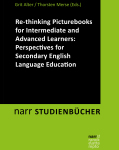
Thorsten Merse is Professor of English as a Foreign Language (EFL) Education at the University of Duisburg-Essen, focusing on Anglophone Literatures and Cultures. His research explores inter- and transcultural learning, cultural diversity, pedagogies of teaching literature, and digital education in EFL. He emphasizes LGBTIQ* diversity and Queer Theory in English language teaching, as well as teachers’ digital competences. He joined UDE in 2021 after positions at the University of Münster (2011–2016) and University of Munich (2016–2021), where he completed his PhD in 2017. PhD in English Education (LMU Munich, 2017) MA in English and Biology (WWU Münster) His research combines theoretical and conceptual frameworks, including meta-views on conducting EFL research. Recent work addresses queer pedagogies, global citizenship, and digital textualities. He co-edits publications such as Re-thinking Picturebooks for Intermediate and Advanced Learners (2023) and Global Citizenship in Foreign Language Education (2022). Articles highlight intersections of queer theory, digital education, and cultural diversity in ELT. Deutsche Gesellschaft für Fremdsprachenforschung (DGFF) Deutscher Anglistikverband (Beirat) International Association of Teachers of English as a Foreign Language (IATEFL) Merse supervises doctoral candidates like Lena Hertzel (Decolonizing Cultural Learning in EFL) and Albert Biel (Queer Teaching Processes in English). He coordinates interdisciplinary projects under the BMBF-funded Qualitätsoffensive Lehrerbildung and contributes to graduate school initiatives (GKQL). His lab work includes the EFL Lab (formerly SLZ), which integrates digital tools and queer pedagogies into language education.
Stephan Rinderknecht is a Professor for Mechatronic Systems in Mechanical Engineering at Technische Universität Darmstadt since 2009. His research focuses on Vehicle Systems Energy Systems Vibration Systems Robotics Finite Element Method (FEM) Multi-body Simulation (MBS) Hybrid and Electric Drives Rotor Dynamics Active Magnetic Bearings .
Valentin Deschaintre is a Researcher at Adobe Research in London, focusing on image and 3D/appearance asset understanding, generation, and authoring with emphasis on user control. He previously held academic roles at Imperial College London and Inria Sophia-Antipolis , where he earned his PhD under Adrien Bousseau and George Drettakis, collaborating with Optis (Ansys). His work bridges computer graphics, computer vision, and machine learning. His research interests span generative models , diffusion-based image manipulation , material appearance modeling , and 3D scene reconstruction . Recent publications like IntrinsicEdit (2025) and MaterialPicker (2025) highlight his work in intrinsic space editing and multi-modal material generation, often integrating user control mechanisms. Scientific Awards : French Computer Graphics Thesis Award (2020), UCA Academic Excellence Thesis Award (2020), Eurographics Junior Fellow (2024), Eurographics Young Researcher Award (2025). Internship Mentoring : He actively mentors PhD students in Adobe's internship program, including Michael Fischer (2024), Julia Guerrero-Viu (2023-2024), and Ruben Wiersma (2023).
Prof. Frank Balle is a Professor of Engineering of Functional Materials at the University of Freiburg, holding the Walter and Ingeborg Herrmann Chair for Power Ultrasonics. He currently serves as Dean of the Faculty of Engineering, following roles as Vice Dean and leader of the Bi-O-AKTOR project on biospheric multi-material systems. His academic journey includes professorships at TU Kaiserslautern and Graz University of Technology, alongside leadership in research groups and national/international initiatives. Education & Career: 2023: Dean of Faculty of Engineering 2018: Appointed W3 Professor at INATECH 2010: DFG Junior Research Group Leader 2009: PhD (summa cum laude) in Engineering 2004: Diploma in Mechanical/Process Engineering Research Interests: Focuses on hybrid material systems, ultrasonic engineering, functional materials, and sustainable lightweight construction. His work integrates biospheric principles into multi-material actuators and advanced manufacturing techniques. Active in interdisciplinary projects like the Bi-O-AKTOR initiative, emphasizing self-sufficient actuator systems. Awards & Recognition: 2024: Digital Education Innovation Fellowship 2021: National MINT Challenge Award for student support initiatives 2010: TMS Young Leader Awards Advising & Grants: Supervises doctoral researcher Karima Saddedine. Secured multiple professorship offers and led DFG-funded research groups. Active in educational grants like the 'SSE Compass' project. Labs & Teams: Leads the EFM research group at INATECH and coordinates the Bi-O-AKTOR project. Collaborates with Oak Ridge National Lab and international institutions via symposia and editorial roles in journals like Ultrasonics and Advanced Engineering Materials .
Prof. Dr. Stefan Voß is a Professor at the Institute of Information Systems within the Hamburg Business School (HBS) at the University of Hamburg. He serves on the HBS Dean's Office and focuses on logistics optimization, metaheuristics, and sustainable port operations. His work integrates AI, machine learning, and operations research to address challenges in transportation, supply chain management, and public infrastructure. Research Interests: Dr. Voß specializes in: Metaheuristic algorithms (e.g., fixed set search, GRASP, VNS) Optimization of port and maritime logistics (berth allocation, quay crane scheduling) AI applications in transportation (predictive analytics, emotion recognition) Sustainable operations (green port infrastructure, EV charging networks) Public transport efficiency (bus scheduling, delay prediction) Publications: Recent work emphasizes AI-driven logistics, robust optimization under uncertainty, and digital twin applications in ports. His 2025 studies explore domain-generalized emotion recognition and dynamic seaport automation. 2024 articles highlight multi-objective scheduling, EV fleet optimization, and sustainable container storage. Labs/Teams: Leads research at the Institute of Information Systems, collaborating on port sustainability projects (e.g., Port of Hamburg) and digital innovation in logistics systems.