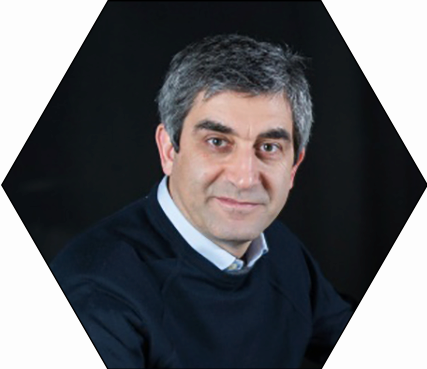
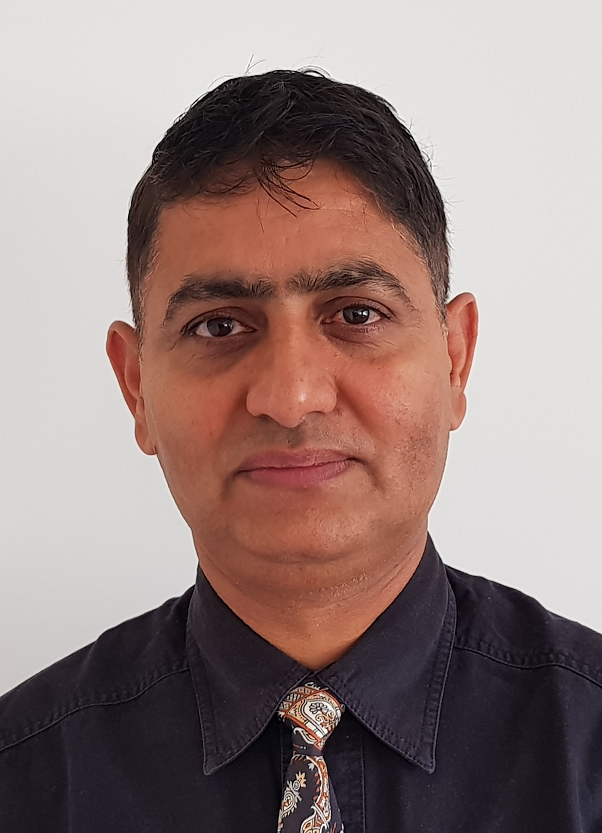
Professor Asterios Bakolas is affiliated with the Department of Materials Science and Engineering at the School of Chemical Engineering, National Technical University of Athens (NTUA). His research focuses on materials science, cultural heritage conservation, and sustainable construction technologies. Key areas include the development of compatible restoration mortars for historic structures, analysis of traditional building materials, and application of non-destructive testing (NDT) techniques for heritage assessment. He has contributed to projects involving Hagia Sophia, the Parthenon, and Cretan architectural heritage. Research interests span materials characterization, composite materials, and environmental impact assessment of construction materials. Notable work includes studies on polychromy in ancient art, weathering phenomena in historic buildings, and integration of AI for material property prediction. His interdisciplinary approach combines chemistry, civil engineering, and digital humanities to address challenges in conservation and sustainable building practices. No scientific awards are explicitly listed, but his extensive publications reflect recognition in academic circles. Advising and grants are not detailed here, though his involvement in restoration projects implies active collaboration with funding bodies. He is part of the School’s research groups focused on materials science and heritage preservation.
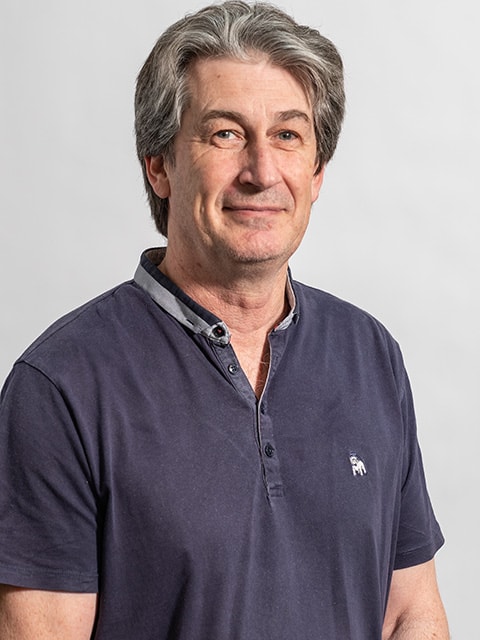
Dr. Joseph Dumpler is a Lecturer at the Department of Health Sciences and Technology at ETH Zürich, specializing in Sustainable Food Processing. He holds a PhD in Dairy Science and Technology from the Technical University of Munich, Weihenstephan, with a focus on UHT treatment of concentrated milk. His work emphasizes advancing food processing technologies, particularly in protein refinement, non-thermal methods, and membrane filtration. Educations: PhD in Dairy Science and Technology, Technical University of Munich, Weihenstephan (2017) MSc Food Engineering, Technical University of Munich, Weihenstephan His research interests include Natural Deep Eutectic Solvents (NADES) for plant protein extraction, microwave vacuum drying of dairy products, and membrane filtration optimization for microalgae and dairy systems. He has pioneered methods to refine rapeseed and pea proteins while minimizing antinutrients, and his work on microfiltration of milk products addresses emerging microbial risks. Key contributions span kinetic modeling of heat-induced protein aggregation, sustainable food processing , and non-thermal concentration techniques . His articles reflect a focus on bridging lab-scale innovations with industrial applications. Awards: J.T.M. Wouters Young Scientist Award Julius Maggi Research Award (2018) Best PhD Thesis Award from the Association of Dairy, Food and Biotechnologists (Weihenstephan) Dr. Dumpler collaborates with industry partners to translate research into scalable processes, such as NADES-based protein extraction and microwave drying systems. His current role at ETH Zürich’s Sustainable Food Processing Lab (Prof. Mathys) focuses on plant-based meat analogs and novel protein refining concepts .
David A. Muller serves as the Samuel B. Eckert Professor of Engineering in the School of Applied and Engineering Physics at Cornell University and co-directs the Kavli Institute at Cornell for Nanoscale Science. His research group focuses on developing quantitative electron microscopy methods to understand materials properties at the atomic scale, with particular emphasis on sustainable energy applications and quantum materials. Muller's laboratory utilizes some of the world's highest resolution electron microscopes housed in specially designed, environmentally isolated rooms. Muller received his undergraduate education at the University of Sydney and earned his Ph.D. in Physics from Cornell University in 1996. Between 1997 and 2003, he was a member of the technical staff at Bell Laboratories, where he applied his expertise in imaging single atoms and atomic-scale spectroscopy to determine the physical limits of transistor miniaturization. In 2003, he returned to Cornell as a faculty member, where he has since established himself as a leader in advanced electron microscopy techniques. Muller's research spans multiple frontiers in materials science, with particular focus on understanding how electronic-structure changes at the atomic scale control macroscopic behavior in diverse systems like turbine blades, fuel cells, and transistors. His current work emphasizes the physics of renewable energy materials, atomic-scale control of materials to create electronic phases that cannot exist in bulk, and developing hardware and algorithms for 'big data' acquisition from high-bandwidth pixelated electron microscope detectors. His group's work bridges theoretical physics and experimental techniques, requiring researchers who can think in both real and reciprocal space while considering both fundamental principles and practical applications. Analysis of Muller's recent publications reveals a strong trend toward advancing electron ptychography and 4D-STEM techniques for atomic-scale imaging. His group has pioneered methods for 3D atomic-scale metrology, strain mapping, and imaging of radiation-sensitive materials. The research spans applications from semiconductor technology to quantum materials and energy storage systems, demonstrating the versatility of his microscopy approaches across multiple scientific domains. Top 100 Young Innovator by Tech Review Magazine (2003) Burton Medal from Microscopy Society of America (2006) Ernst Ruska Prize of German Society for Electron Microscopy (2021) John Cowley Medal from International Federation of Societies for Microscopy (2023) Fellow of American Physical Society Fellow of American Association for the Advancement of Science Fellow of Microscopy Society of America Muller has mentored an extensive group of students and postdocs who have gone on to successful careers in academia and industry. His former students hold faculty positions at institutions including Rice University, University of Southern California, Seoul National University, Colorado School of Mines, and the University of Michigan, among others. His research has been supported by substantial grants, including a $22.5M NSF grant that accelerates materials discovery. The Muller lab maintains close collaborations with the Kavli Institute at Cornell and PARADIM (Platform for the Accelerated Realization, Analysis, and Discovery of Interface Materials). The Muller lab operates at the forefront of electron microscopy, housing specialized instrumentation including high-resolution transmission electron microscopes in environmentally isolated rooms. The group collaborates extensively with other research teams at Cornell and worldwide, focusing on understanding materials atom by atom. Current research directions include applying machine learning to electron microscopy data analysis, developing cryogenic techniques for studying low-melting-point materials, and exploring quantum phenomena in engineered materials systems.
F. Levent Degertekin is a Regents' Entrepreneur and the George W. Woodruff Chair in Mechanical Systems and Professor at the George W. Woodruff School of Mechanical Engineering at Georgia Institute of Technology. His office is located in Love Building, room 311B, and his contact email is levent.degertekin@me.gatech.edu. Dr. Degertekin's academic journey includes a Ph.D. in Electrical Engineering from Stanford University (1997), an M.S. in Electrical Engineering from Bilkent University, Turkey (1991), and a B.S. in Electrical Engineering from Middle East Technical University, Turkey (1989). Dr. Degertekin's research focuses on micromachined ultrasonic devices and systems for medical applications, particularly in intravascular ultrasound imaging, therapeutic ultrasound, and acousto-optical sensors for MRI. His work spans from fundamental research on novel transduction methods to complete catheter-based imaging systems close to commercialization. He has made significant contributions to capacitive micromachined ultrasonic transducers (CMUTs), developing diffraction grating based optomechanical sensing methods now commercialized by Silicon Audio, novel atomic force microscopy imaging probes, and micromachined ultrasonic ejector structures for cell transfection commercialized by OpenCell Technologies. His research integrates acoustics, optics, and their combinations for various medical applications, utilizing conventional microfabrication (MEMS) and integrated circuit technologies. The Degertekin lab exposes students to applied physics, electrical, mechanical and biomedical engineering, biology, and biomimetic systems, providing them with thorough theoretical and experimental education in acoustics and optics while learning interdisciplinary research. Dr. Degertekin's work has received significant media attention, including coverage in IEEE Spectrum, Wired Magazine, The New York Times, and Fox Business News, highlighting innovations such as handheld ultrasound probes, MRI safety sensors, and minimally invasive cardiac imaging technologies. IEEE Fellow for 'Contributions to micromachined ultrasonic and optomechanical transducers and systems,' 2022 IEEE UFFC Society Inaugural Carl Hellmuth Hertz Ultrasonic Achievement Award, 2014 George W. Woodruff School Outstanding Achievement in Commercialization and Entrepreneurship Award, 2024 National Science Foundation CAREER Award, 2004-2009 Whitaker Foundation Biomedical Engineering Research Grant Award, 2001 66 US and 6 International Patents Dr. Degertekin has mentored numerous students who have gone on to make significant contributions in the field. Several of his students have received IEEE Ultrasonics Symposium Best Student Paper Awards, including Jeff McLean (2003), Sheng-Yu Peng (2006), Rasim O. Guldiken (2005 and 2007), and Toby Xu (2014). His research has been supported by various grants including the NSF CAREER Award and Whitaker Foundation grant. His work has led to multiple commercial ventures including Silicon Audio and OpenCell Technologies. The Degertekin Group at Georgia Tech focuses on transducers and systems for medical imaging and sensing, with current projects including capacitive parametric transducers, acousto-optic sensors for MRI, novel transducer methods for focused ultrasound in the brain, microsystems for intravascular and intracardiac ultrasound imaging, and CMUT-on-CMOS systems for IVUS imaging.
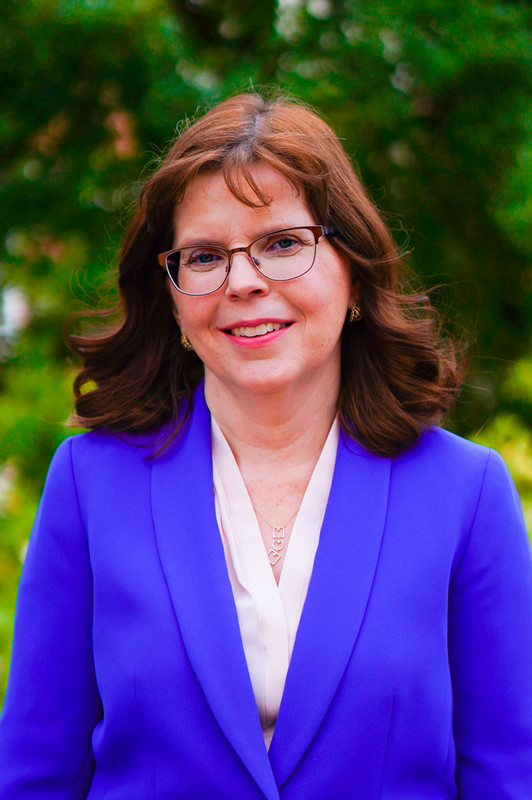
Virginia Davis is the Dr. Daniel F. and Josephine Breeden Professor in the Department of Chemical Engineering at Auburn University's College of Engineering. She holds a Ph.D. in Chemical and Biomolecular Engineering from Rice University, and M.S. and B.S. degrees in Chemical Engineering from Tulane University. Research Focus: Self-assembly of nanomaterials, rheology, lyotropic liquid crystals, additive manufacturing, polymers, nanocomposites, and biosensors Key Projects: USDA-funded agricultural outreach, NSF grant for MXene dispersion studies, Alabama STEM Council member Her recent publications explore cellulose nanocrystals, MXene 3D printing, and sustainable polymer recycling. Davis has received multiple honors including the Breeden Professorship, AIChE Fellowship, and Auburn University Faculty Awards for research and mentorship. Research Trends: Dominated by bio-based nanomaterials (cellulose nanocrystals, MXenes), with applications in additive manufacturing, environmental remediation (PFAS adsorption), biosensors (carbofuran detection, cancer biomarkers), and agricultural delivery systems. Scientific Awards Auburn University Faculty Awards (2023, 2025) AIChE Fellow (2023) Dr. Daniel F. and Josephine Breeden Professorship Davis leads outreach initiatives like the Tomorrow’s Community Innovators camp and collaborates with interdisciplinary teams on plastic recycling innovations. Her work emphasizes both fundamental material science and practical applications addressing environmental and agricultural challenges.
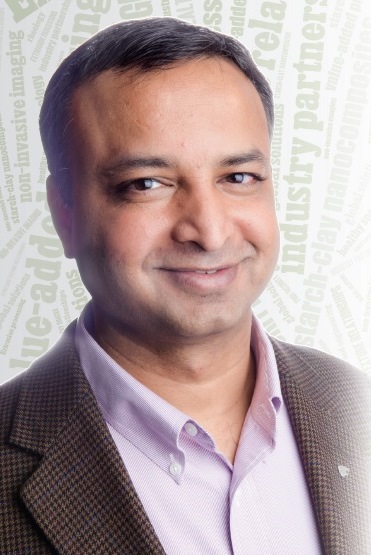
Dr. Sajid Alavi is a Professor in the Department of Grain Science and Industry at Kansas State University. He joined the faculty in 2002 after earning his Ph.D. in Food Science/Food Engineering from Cornell University (2002), M.S. in Agricultural and Biological Engineering from Penn State (1997), and B.S. in Agricultural Engineering from IIT (1995). His research focuses on extrusion processing in food, pet food, and feed applications, with expertise in rheology, food microstructure imaging, and process sustainability. He leads global projects in Africa, Brazil, India, and beyond, emphasizing sustainable food technologies and AI-driven processing innovations. Dr. Alavi is a recipient of the 2010 Young Research Scientist Award from the Cereals & Grains Association. He teaches GRSC 620 (Intro to Extrusion Processing) and GRSC 820 (Advanced Extrusion Processing), and has trained over 1,000 industry leaders through his renowned 'Extrusion Processing: Technology and Commercialization' short course. His work bridges food science and engineering, addressing challenges in plant-based meat analogs, nutrient bioavailability, and food aid product development. Key facilities associated with his work include the BIVAP Feed Quality Assurance Lab and Hal Ross Flour Mill. His research spans sensory analysis of meat alternatives, fiber utilization in pet food, and sustainability assessments of novel crops like intermediate wheatgrass. Recent studies explore insect protein in pet food, AI-driven extrusion optimization, and iron bioavailability in fortified foods. Dr. Alavi’s contributions span academic, industrial, and global food security domains, reflecting a commitment to innovative, scalable food solutions.
Pascale Trevisiol Okamura is an Associate Professor in Language Sciences and Language Teaching at Sorbonne Nouvelle University, affiliated with the DILTEC research team (EA 2288). Her primary role includes teaching language acquisition and foreign language didactics within the UFR of Literature, Linguistics, and Didactics (LLD). She co-heads the Master 2 program in Language Teaching (FLE/FLS) and holds administrative roles in departmental councils and educational committees. Education Background: Lecturer at Sorbonne Nouvelle University since 2015 Previously taught at Université de Poitiers (2010–2015) and Université Paris 8 (2007–2010) French teaching assistant at Hokkaido University, Japan Research Focus: Specializes in third language acquisition (L3), crosslinguistic influence, and the interface between language acquisition and didactics. Key themes include: Discourse construction in L3 French Input processing and initial language exposure Development of teaching materials for FLE Plurilingual practices among language teachers Current projects involve multilingualism in primary education, Tamil-speaking learners' L3 French acquisition, and reflexive training in research. Teaching & Supervision: Co-supervises doctoral research on topics such as L3 French acquisition in Chinese contexts, translinguistic discourse influences, and plurilingual teacher practices. Teaches advanced courses on language acquisition theories and FLE methodology. Labs/Teams: Member of the Second Language Acquisition Network (ReAL2) and part of the DILTEC team, focusing on language didactics and multilingualism research.
David Lillis is an Associate Professor in the School of Computer Science at University College Dublin (UCD). His research focuses on Natural Language Processing (NLP), Artificial Intelligence (AI), and their applications in legal and forensic contexts. He leads projects like CeADAR (Ireland’s Applied AI Center) and the Transpire project, collaborating with organizations such as Corlytics and the Department of Enterprise, Trade and Employment. He holds adjunct roles as a Guest Professor at Beijing University of Technology’s Data Mining and Security Lab and has been a Fulbright Scholar at the University of New Haven’s Cyber Forensics Research and Education Group. Education: B.A. (Hons) in Law and Accounting, University of Limerick Higher Diploma in Computer Science, UCD M.Sc., Ph.D. in Computer Science, UCD Professional Certificate in University Teaching & Learning, UCD Research Interests: Legal AI, digital forensics, machine learning, multi-agent systems, and information retrieval. Recent work includes NLP for regulatory analysis, crop yield prediction via neural networks, and AR-driven decision support systems. Grants & Projects: Principal Investigator: Transpire (AI Platform for Regulation) SFI Funded Investigator: CONSUS (Crop Optimization) PI: CeADAR Technology Centre Teaching roles include Deputy Programme Director for Software Engineering at Beijing-Dublin International College (BDIC) since 2014. Labs & Groups: UCD Forensics and Security Research Group, ML-Labs (SFI Centre for ML Training), and the Data Mining and Security Lab (BJUT).
Professor Vishnu Pareek is the John Curtin Distinguished Professor at Curtin University, leading the Western Australian School of Mines (WASM) within the Faculty of Science and Engineering. He has held academic roles including Dean of Engineering, Head of School, and various professorships since 2002. His research focuses on multiphase flow modeling, computational fluid dynamics, and reactor engineering, with applications in energy and chemical processes. He holds a BE (Hons) from MNIT, MTech from IIT Delhi, and a PhD from UNSW. Key research interests include LNG process modeling, erosion modeling, and granular flow dynamics. He has authored over 200 peer-reviewed publications, with recent work emphasizing structured packing design, biomass gasification, and additive manufacturing for process intensification. Notable projects include CFD-ANN hybrid models for fluidized beds and experimental studies on 3D-printed structured packings. His expertise spans industrial collaborations in LNG safety, fluid catalytic cracking, and biofuel production. Teaching areas include chemical engineering fundamentals and process systems engineering. He advises on energy policy and leads research teams in multiphase flow and reactor design.
Henrik Rasmus Andersen is a Professor at the Department of Environmental and Resource Engineering, Water Technology & Processes at the Technical University of Denmark (DTU). His research focuses on water treatment processes, particularly the occurrence, transformation, and removal of micropollutants like pharmaceuticals and hormones. Key Research Areas: Chemical analysis, bioassays, ozonation, biofilter optimization, by-product profiling, and advanced oxidation processes. Projects: Leads initiatives like BIZON (ozone technology for fish farms) and Sustainable Industrial Laundry Wastewater Treatment , emphasizing sustainable solutions. Collaborations: Works with institutions such as University of Copenhagen and industry partners on municipal and industrial wastewater challenges. Education: Master of Science in Environmental Chemistry from Copenhagen University (1998).
Sean McGinnis serves as a Professor of Practice and Director of the Green Engineering Program within the Department of Materials Science and Engineering at Virginia Tech's College of Engineering. His academic and professional endeavors focus on advancing sustainable engineering practices through education, research, and industry collaboration. Dr. McGinnis earned his educational qualifications from prestigious institutions: a B.S. in Chemical Engineering and Materials Science from the University of Minnesota, followed by a Ph.D. in Materials Science and Engineering from Stanford University. His research program is centered on Green Engineering principles, with specific expertise in Life Cycle Assessment, Sustainable Manufacturing Processes, Design for Environment, Carbon Footprint Analysis, Renewable Energy systems, and Interdisciplinary Education methodologies. He has pioneered courses such as Introduction to Green Engineering (ENGR 3124) and Environmental Life Cycle Analysis (ENGR 4134) that equip students with tools to evaluate environmental impacts across product lifecycles. His Earth Sustainability course (UCCS 2984) further extends this interdisciplinary approach to broader societal challenges. Analysis of his publication record reveals a consistent trajectory toward sustainable technology innovation, particularly in the life cycle assessment of nanomaterials and waste streams. Recent work examines circular economy models for nanowaste recycling, environmental implications of nanoparticle synthesis, and the development of optical systems that mitigate harmful blue light exposure while maintaining visual performance. This research bridges materials science, environmental engineering, and human health considerations. Professional recognition for Dr. McGinnis includes: LEED AP BD&C certification Life Cycle Assessment Certified Professional designation Johnson & Johnson Standards of Leadership Award (2003) In his leadership capacity as Director of the Green Engineering Program, Dr. McGinnis oversees curriculum development that integrates sustainability across engineering disciplines. He has published on educational methodologies for assessing interdisciplinary integration of green engineering knowledge and has organized introductory green engineering courses for undergraduates. His work extends to operational phase life cycle assessment of facilities and sustainable provision of food and water systems.
Reza Ghabcheloo is a Professor at Tampere University, affiliated with the Faculty of Engineering and Natural Sciences and the Department of Automation Technology and Mechanical Engineering. He leads the Robotics major and the international Automation Engineering program. His research focuses on autonomous mobile machines, robotics, control systems, and safety engineering, with specific interests in construction robotics, sensor fusion, and hydraulic systems. He co-leads the Autonomous Mobile Machines Group and is associated with the Robotics and Intelligent Machines Lab and the Innovative Hydraulics and Automation Lab. His research emphasizes developing autonomous systems for off-road machinery, safe control strategies, and energy-efficient automation. He has published extensively on topics such as reinforcement learning for crane control, radar-based perception, and safety architectures for autonomous systems. His work bridges robotics, control theory, and industrial automation, addressing challenges in heavy-duty machinery and real-world robotic applications. Research Group: Autonomous Mobile Machines Group Labs: Robotics and Intelligent Machines Lab, Innovative Hydraulics and Automation Lab Key Projects: Safety of automated off-road machinery, machine learning for autonomous loading, and trajectory optimization
Professor Graham Sander is a Professor of Hydrology at Loughborough University, affiliated with the School of Civil and Building Engineering. His research focuses on mathematical modeling of soil erosion, unsaturated soil flow, contaminant transport dynamics, and nonlinear diffusion-convection equations. He leads the NERC-funded project on multi-dimensional soil erosion and chemical transport, collaborating with Lancaster University’s Department of Environmental Science. His academic qualifications include a BSc (Hons) and PhD. Recent research emphasizes integrating particle size-selective models to predict sediment and contaminant delivery to water bodies, supported by lab and field experiments. He has also pioneered pseudospectral methods for infiltration modeling and explored flood risk management through nature-based solutions like leaky barriers. Key contributions include advancing understanding of rainfall-driven erosion dynamics, including splash effects and rock fragment coverage impacts. His work spans experimental hydrology, numerical simulation, and interdisciplinary approaches to environmental challenges. He co-edits hydrology journals and advocates for rigorous scientific communication in the field. Grants: NERC-funded soil erosion project, Australian Research Council project on unsaturated soil flow. Labs/Teams: Collaborator with Lancaster University’s Environmental Science Department.
Kaye Morgan is a Research Fellow at Monash University's School of Physics within the Faculty of Science. She holds a Hans Fischer Fellowship at the Technische Universität München (TUM), hosted by Prof. Franz Pfeiffer. Her research focuses on phase contrast X-ray imaging (PCXI), particularly its application in biomedical research and translation to compact imaging systems for clinical use. Educated at Monash University, she earned her PhD in 2011, followed by a Discovery Early Career Researcher Award (2012–2015) from the Australian Research Council. She is also a Veski Victorian Postgraduate Research Fellow, combining her roles at Monash with visits to TUM supported by her Hans Fischer Fellowship. Her research interests include developing PCXI methods for non-invasive imaging of soft tissues, such as lung and airway dynamics, and optimizing imaging techniques to minimize radiation exposure. Key projects include assessing cystic fibrosis treatments via airway surface hydration analysis and improving X-ray source accessibility for clinical applications. Notable achievements include pioneering single-grid phase imaging techniques and contributing to high-speed imaging of biological dynamics. Her work has been recognized with awards like the 2014 Tall Poppy Young Scientist Award and the 2011 Australian Synchrotron Thesis Medal. Morgan collaborates across disciplines, working with biomedical researchers to advance imaging technologies for respiratory health. Her publications span journals like Scientific Reports, Optics Letters, and the American Journal of Respiratory and Critical Care Medicine.
Edgar Hertwich is a Professor of Industrial Ecology at the Department of Energy and Process Engineering, Faculty of Engineering, Norwegian University of Science and Technology (NTNU). He is on partial leave from NTNU, serving as a Senior Researcher at the International Institute for Applied Systems Analysis (IIASA) in Austria and as a partner in the environmental data company XIO Sustainability Analytics. His work bridges academic research and practical applications for climate mitigation. Current affiliations: NTNU (Professor), IIASA (Senior Researcher), XIO Sustainability Analytics (Partner) Previous roles: Professor at Yale University (2015-2019), Fellow at Yale (2019-2022), Professor at NTNU (2003-2015) Hertwich's research focuses on industrial ecology, examining material flows in economic systems to advance climate protection and sustainable development. His work spans machinery, buildings, urban form, and food supply systems, employing life cycle analysis, cross-flow analysis, and economic modeling. He contributes to global policy frameworks like the UN's Circular Economy Action Plan and EU Climate Council reports. Recent projects include CIRCOMOD (Circular Economy Modeling for Climate Mitigation) and RAINFOREST (knowledge co-production for biodiversity). He has been recognized with NTNU's Prize for Research and Artistic Activity (2023) for his contributions. Scientific Awards NTNU's Prize for Research and Artistic Activity (2023) Editorial Roles Environmental Science & Technology Journal of Industrial Ecology Journal of Economic Structures As a thought leader in industrial ecology, Hertwich connects technical insights to policy, emphasizing material efficiency and resource allocation. His work influences EU climate strategies and global environmental assessments.