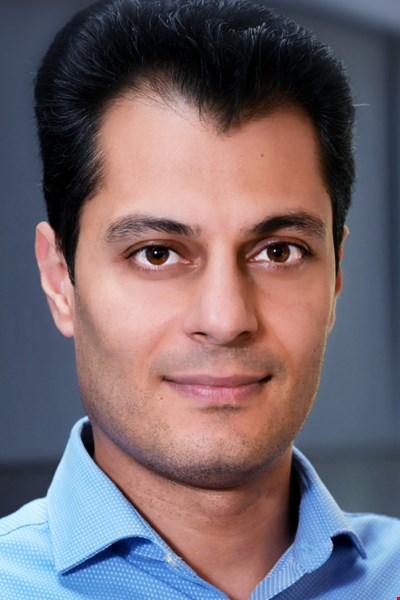
Dr. Esmaeel Esmaeeli is a Senior Lecturer in Civil and Environmental Engineering at Brunel University London, serving as Course Director for the MSc in Structural Engineering. His work focuses on sustainable structural retrofitting solutions, safety, and resilience of concrete and masonry structures. Brunel University London (Current: Senior Lecturer) Queen’s University Belfast (Postdoctoral Fellow, Horizon 2020 MSC Fellowship) University of Minho (PhD research on Hybrid Composite Plate) K. N. Toosi University (MSc research on seismic strengthening) His research spans advanced materials like Strain-Hardening Cementitious Composite (SHCC) and Carbon Fibre Reinforced Polymer (CFRP) for seismic retrofitting, computational modeling of FRP-concrete interfaces, and dynamic response under extreme loads. Recent work includes the SMArtPlate and Hybrid Composite Plate (HCP) systems. Scientific recognition includes the Horizon 2020 Marie Skłodowska-Curie Individual Fellowship and a Portuguese Foundation for Science and Technology (FCT) scholarship. He has advised on structural vulnerability assessments and leads teams in consultancy projects.
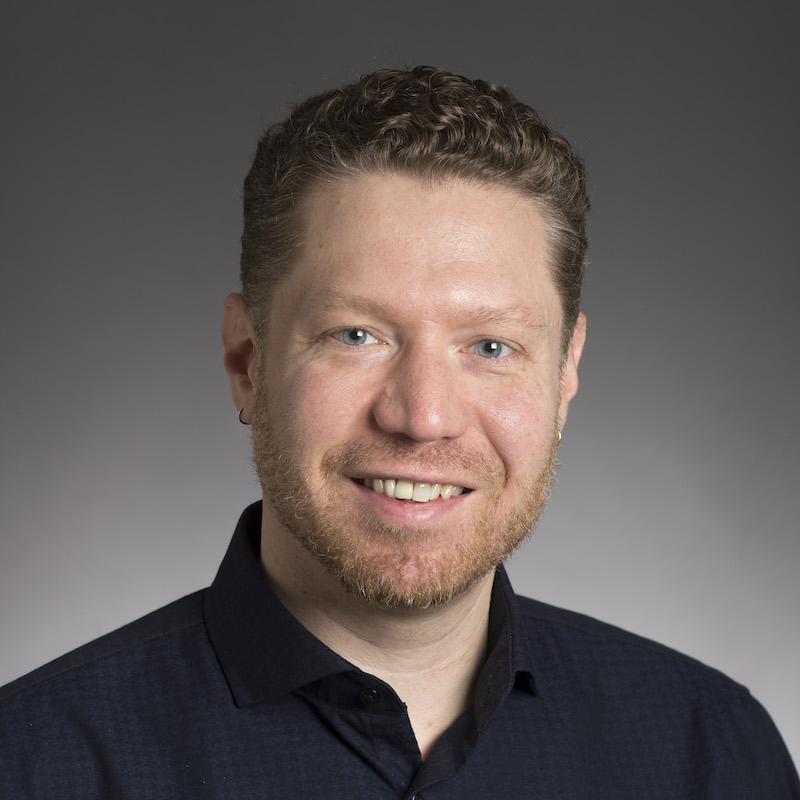
Jeremy J. Michalek is a Professor of Mechanical Engineering and Engineering and Public Policy at Carnegie Mellon University. He serves as Director of the Design Decisions Laboratory and co-Director of the Vehicle Electrification Group, with affiliations in multiple sustainability-focused institutes including the Center for Climate and Energy Decision-Making. Education: Ph.D. in Mechanical Engineering (University of Michigan, 2005) Research spans vehicle electrification , life cycle analysis , consumer behavior , and green design . His recent publications focus on battery economics, charging infrastructure impacts, and equity considerations in transportation technologies. Key awards include the NSF CAREER Award , ASME Best Paper Award , and George Tallman Ladd Research Award . Michalek's work has been featured in major media outlets including The New York Times , The Atlantic , and BBC , with policy briefings presented on Capitol Hill. Current research explores EV supply chains, climate resilience, and transportation equity.
Younes El Manzani serves as a Lecturer at the Higher Institute of Management (ISM-IAE) within the University of Versailles Saint-Quentin-en-Yvelines (UVSQ), France, with additional affiliation to Université Paris-Saclay. He operates through the Department of Management Sciences, teaching Management of Organizations, Quality Management, and Innovation Management courses. Education: Doctor of Management Sciences His research centers on strategic management frameworks intersecting with quality systems, entrepreneurship, and innovation dynamics. Key investigations include ISO 9001's impact on product innovation through sociotechnical lenses, employer branding in digital environments, and entrepreneurial failure patterns in Moroccan SMEs. Methodologically, his work combines theoretical modeling with empirical studies in emerging markets. Publication trends reveal sustained focus on quality-innovation linkages (40% of output), employer branding evolution (30%), and entrepreneurial challenges in developing economies (30%). His 2017-2025 corpus demonstrates increasing emphasis on digital transformation within management systems. Scientific Awards: None documented in source materials. No verifiable information exists regarding graduate student supervision, research funding, or grant acquisitions. Professional activities appear centered on publication and teaching without mention of advisory roles. No dedicated research laboratories, collaborative teams, or institutional research groups are referenced in available documentation.
Dr. Yusuf AYAN is a Lecturer in the Department of Mechatronics Engineering at Karabük University's Faculty of Technology, Turkey, since 2022. He holds a PhD (2022) and Master's degree (2017) in Manufacturing Engineering from Karabük University, alongside a BSc (2012) in Mechanical Engineering from Kocaeli University. Education: PhD, Manufacturing Engineering, Karabük University (2022) MSc, Manufacturing Engineering, Karabük University (2017) BSc, Mechanical Engineering, Kocaeli University (2012) His research focuses on Welding Technologies , Metallic Materials , and Additive Manufacturing , with over 103 citations and an h-index of 5. Notable projects include TÜBA/TÜBİTAK-funded research on wire arc additive manufacturing (2023-2025) and functionally graded material development (2020-2024). His publications span journals like Materials Chemistry and Physics , Journal of Materials Engineering and Performance , and Materials Today Communications , emphasizing WAAM process optimization, fatigue properties, and multi-material fabrication. Collaborators include Nizamettin Kahraman (24 joint works, 2018-2024) and researchers such as Kenan Kaan Yetil and Ercan Çağlar.
Peyman Karami is a Postdoctoral Researcher at the Laboratory of Biomechanical Orthopedics (LBO) within École Polytechnique Fédérale de Lausanne (EPFL)'s College of Engineering . Research focuses on adhesive hydrogels for cartilage repair and orthopedic applications Investigates biomimetic stimuli (hydrostatic pressure, temperature) in chondrocyte homeostasis Develops ligin-based multifunctional hydrogels for sustainable biomedical applications Expertise in mechanobiology and thermomechanical regulation of tissue-engineered constructs Scientific Contributions: Leads 15+ publications on hydrogel technologies for cartilage regeneration, thermomechanical stimulation effects, and lignin functionalization, including breakthrough work in NIR-light photocuring , malacic trachea repair , and biomimetic temperature gradients . Current Research Trends: Prioritizes injectable adhesive hydrogels , noninvasive tissue repair , and multi-functional biomaterials that couple mechanical and biochemical cues for enhanced regeneration.
Dr. Christian Jaeger is a Researcher at the Zurich University of Applied Sciences (ZHAW) School of Engineering, focusing on Machine Learning in Optimal Control for Industry. His work bridges engineering and computer science with applications in industrial automation and building systems. His research interests span Machine Learning , Optimal Control , Reinforcement Learning , Energy Management Systems , and Industrial Automation . Jaeger has led multiple research projects including a preliminary study on automated IBN heat pumps and a feasibility study on Reinforcement Learning Control for heating systems. His work demonstrates a clear trajectory from traditional manufacturing technology toward contemporary AI-driven control systems. Jaeger's publication record shows consistent output from 2005 to 2024, with recent focus on energy optimization in building control using reinforcement learning, 3D printing techniques, and model predictive control. His research demonstrates strong interdisciplinary connections between computer science, engineering, and practical industrial applications. His scientific contributions include publications in journals such as Applied Sciences and the Journal of the British Interplanetary Society, along with numerous conference proceedings from international events including EuroSun and the International Symposium on Nonlinear Theory and its Applications. At ZHAW, Jaeger has served as project leader for multiple completed research initiatives including adaptive energy management systems for buildings and automated heat pump systems. His work demonstrates strong industry connections with applications in building automation and industrial manufacturing processes.
Andrew F. Braham is a Professor in the Department of Civil Engineering at the University of Arkansas, College of Engineering. He holds a Ph.D. from the University of Illinois at Urbana-Champaign and is a licensed Professional Engineer (P.E.). His research focuses on asphalt emulsion technology, pavement maintenance and rehabilitation, and sustainability in civil engineering. Dr. Braham directs a comprehensive laboratory specializing in flexible pavement materials research and serves as Associate Director of the Southern Plains Transportation Center. Dr. Braham earned his Ph.D. from the University of Illinois at Urbana-Champaign (2008), M.S. (2002) and B.S. (2000) from the University of Wisconsin-Madison. Following his doctoral studies, he completed a Post-Doctoral Research Fellowship at Southeast University in Nanjing, China (2009-2010). His research interests center on asphalt emulsion technology, pavement maintenance and rehabilitation techniques, and sustainability applications in civil engineering. Dr. Braham has developed innovative testing methodologies for asphalt emulsion particle size analysis and has extensively studied cold in-place recycling and full-depth reclamation processes. His work bridges laboratory research with practical field applications, focusing on extending pavement life while reducing costs and environmental impacts. Analysis of Dr. Braham's recent publications reveals a strong focus on asphalt emulsion characterization, pavement preservation techniques, and sustainable infrastructure solutions. His research spans material science, transportation engineering, and environmental considerations, with particular emphasis on practical applications for state transportation agencies. The work demonstrates progression from fundamental material characterization to applied field implementation and economic analysis. Associate Director of Southern Plains Transportation Center (SPTC) (2023-present) Chair of TRB Committee AKN18 'Pavement Maintenance, Preservation, and Rehabilitation' (2025-present) Co-chair of AASHTO TSP-2 Emulsion Task Force Research Subcommittee (2023-present) Member of International Slurry Surfacing Association (ISSA) Sustainability Committee (2025-present) Dr. Braham has advised numerous graduate students through their doctoral and master's research, with many now working in transportation agencies and research institutions. His research has been funded by diverse sources including the Arkansas Department of Transportation, Federal Highway Administration, National Science Foundation, and various industry associations. He has developed and taught multiple courses on transportation infrastructure, sustainability in civil engineering, and pavement design. His laboratory capabilities include comprehensive testing for asphalt binder, asphalt emulsion, and asphalt mixture analysis. He also directs the TREAT Mobile Lab, which provides hands-on training for asphalt emulsion applications and pavement preservation techniques across the country.
Dr. Rachel Colls is an Associate Professor in the Department of Geography at Durham University and a Fellow of the Institute for Medical Humanities. Her research focuses on geographies of the body, feminist theories of embodiment, obesity critiques, consumption practices, and clothing. She has published extensively on bodily politics, fat activism, and public health discourses. PhD & MA in Geography (University of Sheffield) Her work interrogates the sociomaterialities of fat bodies, bodily governance through BMI metrics, and affective experiences in retail and educational spaces. Recent publications address air travel accessibility and feminist pedagogies. She supervises postgraduate students and collaborates on interdisciplinary projects concerning bodily rights and health policies. Key article trends include critical obesity studies, feminist interventions in human geography, and the politics of bodily representation across spatial contexts. She employs qualitative methodologies informed by Judith Butler, Elisabeth Grosz, and non-representational theory. Supervised: Rosie Haffenden (MRes)
Songbin Gong is an Associate Professor in the Department of Electrical and Computer Engineering at the University of Illinois at Urbana Champaign, where he has been a faculty member since August 2013. He was promoted from Assistant Professor to Associate Professor in August 2019 and holds the Intel Alumni Fellowship. His research is centered at the Micro and Nanotechnology Lab, where he leads the Integrated RF Microsystems research group. Professor Gong's research focuses on RF and microwave photonics, microwave acoustics, and Micro-Electro-Mechanical Systems, with particular expertise in lithium niobate-based devices. His work spans the development of acoustic resonators, filters, and transducers operating from VHF to Sub-THz frequencies. Recent publications demonstrate significant advances in high-frequency acoustic devices, including GHz resonators with high electromechanical coupling and low loss characteristics. His research has direct applications in 5G communications, wireless sensing, and imaging systems. Gong has established himself as a leader in the field of RF MEMS and acoustic devices, with numerous high-impact publications in top journals including IEEE Transactions on Microwave Theory and Techniques, Journal of Microelectromechanical Systems, and Optics Express. His work shows a clear progression toward higher frequency operation, improved device performance, and novel integration approaches for next-generation communication systems. Among his notable achievements is the development of thin-film lithium niobate devices that overcome traditional frequency limitations of MEMS resonators, enabling operation beyond 10 GHz. This work addresses critical challenges in 5G and future wireless technologies where conventional approaches face scaling limitations. IEEE Ultrasonics Early Career Investigator Award DARPA Young Faculty Award 2014 NASA Early Career Faculty Award 2017 Intel Alumni Fellow 2017-present Multiple Best Paper Awards at major conferences including International Ultrasonic Symposium and International Microwave Symposium Professor Gong actively mentors graduate and undergraduate students, with several of his PhD students achieving notable success, including Ruochen Lu who joined UT Austin as a tenure-track assistant professor. His research group has secured significant funding from agencies including DARPA and NASA, supporting cutting-edge work in RF microsystems. The group maintains strong industry connections, particularly with Intel, reflecting the practical relevance of their research to commercial communication technologies. The Gong Research Group leverages micro/nano electro mechanical systems (N/MEMS), integrated photonic, and compound semiconductor technologies to develop chip-scale hybrid microsystems for RF communication, sensing, and imaging applications. Their current work focuses on pushing the boundaries of acoustic device performance while maintaining compatibility with standard semiconductor manufacturing processes.
Prof. Dr. Clarissa Vierke is a specialist in Swahili Language and Literature at the University of Bayreuth , with a focus on literary connections across the Indian Ocean and African continent. She was awarded the German National Merit Foundation scholarship during her studies in African Languages, Social Anthropology, and Literatures in African Languages at Bayreuth and Leiden. Academic Degrees : Doctorate in African Studies (2010, Bayreuth), Studies in African Studies (1999-2005, Bayreuth/Leiden) Her research spans historical Swahili manuscripts (18th-19th century), contemporary poetry (hiphop, newspaper poetry), and aesthetic practices that examine how poetic form shapes lifeworlds. She leads the project Poetry as Aesthetic Practice (Madagascar/Tanzania) and contributes to manuscript studies and decolonial aesthetics . Recent publications include co-edited volumes on African Artistic Practices (2024), Decolonial Aesthetics (2023), and Travelling Texts (2020). She serves on editorial boards for journals like Matatu and Swahili Forum . Scientific Awards : Wissenschaftspreis (University of Bayreuth, 2012), Heinz-Maier-Leibnitz-Prize (DFG, 2012) Prof. Vierke is Chairperson of the Afrophone Caucus of the African Literature Association (2015–present) and organizes the annual Swahili Colloquium . Her work bridges precolonial and contemporary Swahili traditions, emphasizing textual mobility and multilingual contexts .
Hua Ge is a Professor in the Department of Building, Civil and Environmental Engineering at Concordia University's Faculty of Engineering and Computer Science. She holds a Tier II Concordia University Research Chair in High Performance Building Envelope for Climate Resilient Buildings and leads extensive research in building science and climate adaptation. Her research focuses on wind-driven rain analysis , hygrothermal performance of building envelopes , advanced building facades , innovative wood-frame construction , and low-energy buildings . Current work examines climate change impacts on wind-driven rain loads, urban micro-climate effects, climate-resilient building envelopes, dynamic facades, and low-carbon healthy buildings. Her methodology combines large-scale laboratory testing, field monitoring, and computational modeling. Her 15 most recent publications demonstrate strong trends in nature-based climate resilience solutions , overheating risk mitigation in educational buildings , advanced hygrothermal modeling of wood-frame systems , and carbon sequestration strategies for buildings. The work spans multiple sub-disciplines including computational fluid dynamics, life cycle assessment, stochastic modeling, and field validation studies across Canadian climates. Tier II Concordia University Research Chair (CURC) in High Performance Building Envelope for Climate Resilient Buildings Professional Engineers of Ontario American Society of Heating, Refrigerating and Air-conditioning Engineers ASHRAE TC4.4 Building materials and building envelope performance (Subcommittee Chair) Professor Ge has supervised 42 graduate students (26 PhD, 16 MASc), including current advisees working on nature-based solutions, climate-resilient envelopes, and building integrated photovoltaics. Her research is supported by Concordia University Research Chair funding and collaborative projects with institutions like BCIT. She directs activities at Concordia's Building Envelope Test Facility and contributes to national standards through ASHRAE.
Derek H. Kiernan-Johnson is a Teaching Professor at the University of Colorado Law School, specializing in Legal Writing , Appellate Advocacy , and Judicial Opinion Writing . He has taught courses on legal reasoning, document design, and narrative techniques in legal argumentation since joining the faculty in 2007. JD, University of Michigan Law School BA, Princeton University (Religion, Dramatic Performance, Music) His research explores intersections of narrative theory , visual rhetoric , and legal persuasion , with a focus on typography, historical legal contexts, and the performative aspects of law. Publications examine Bluebook overlaps, narrativity in legal writing, and rhetorical influence on judicial decisions. Notable scholarly contributions include analyses of Supreme Court indifference , craft whiskey regulation , and typographic storytelling in legal briefs. He has no listed scientific awards or student advisees in the provided materials. Professional background includes clerking for Justice Michael L. Bender of the Colorado Supreme Court and six years of legal practice at Caplan and Earnest, LLC, representing public-school clients in diverse legal settings.
Xiaodong Yan is an Assistant Professor in the Department of Materials Science and Engineering and an affiliated faculty member in the Department of Electrical and Computer Engineering at the University of Arizona . His research bridges materials science, nanoelectronics, and quantum computing, with a focus on developing novel quantum materials and devices for next-generation computing systems. Education : BS in Physics (Peking University, China), MS in Electrical Engineering (University of Notre Dame), PhD in Electrical and Computer Engineering (University of Southern California). Postdoctoral Training : Materials Science and Engineering, Northwestern University (2021-2023). Dr. Yan’s research explores the synthesis and physics of emerging quantum materials, particularly 2D materials and van der Waals heterostructures , to create advanced devices for neuromorphic computing , quantum sensing , and low-power electronics . His work spans nanofabrication, device characterization, and algorithm integration. His recent publications in Nature and Nature Electronics highlight breakthroughs in Moiré synaptic transistors with room-temperature neuromorphic functionality and reconfigurable heterojunction transistors for machine learning hardware. These studies emphasize 2D material integration , reconfigurable electronics , and bio-mimicking systems . Scientific Awards : MHI Ph.D. Scholar, Ming Hsieh Department of ECE at USC. Dr. Yan leads the Yan Research Group , which focuses on material and device solutions for neuromorphic computing and quantum sensing . The group actively recruits graduate and undergraduate researchers.
Dr. Alexander Heinemann is a Lecturer and curator at the University of Tübingen's Institute of Classical Archaeology. Previously, he held a lecturer position at Freiburg University (2006-2017) and participated in archaeological projects across Turkey, Greece, and Italy. His work centers on Roman state monuments, visual narratives, and classical reception studies. PhD in Classical Archaeology (Heidelberg, 2003) Magister Artium in Classical Archaeology (Heidelberg, 1999) Research focuses include Roman Imperial topography , Greek vase painting , and visual culture analysis . His monograph on Dionysian imagery and co-edited volumes on symposion culture and visual narration highlight interdisciplinary approaches. Recent publications analyze Roman imperial iconography, Hellenistic ivory art, and Dante's archaeological engagement. Key themes involve political symbolism , ritual practices , and artifact contextualization . Traveling Fellow, German Archaeological Institute (2004/5) Gerda Henkel Foundation Fellow (2003/4) Active in public outreach through exhibitions like 'Vom Trinken und Bechern' and collaborative editorial projects, he serves as co-founder of das Rollpodest platform for archaeological collections.
Omobolanle Ogunseiju is an Assistant Professor in the School of Building Construction at Georgia Institute of Technology . She holds a Ph.D. in Environmental Design and Planning from the Department of Building Construction at Virginia Tech. Education: Ph.D. in Environmental Design and Planning, Virginia Tech Current Role: Assistant Professor, Georgia Tech School of Building Construction Her research focuses on integrating wearable robotics and Artificial Intelligence (via digital twin , cyber-physical systems , and data sensing ) to improve construction workforce safety, health, and well-being . She explores ethical implications of automation in construction, particularly in human-technological dynamics. Key research trends include: Advancing smart communities through robotics and AI Exoskeleton evaluation for ergonomic risk reduction Mixed reality environments for construction education Data analytics for cognitive and physical risk assessment Professional identity development in construction engineering students Industry-academia alignment for sensing technology integration Scientific awards: Outstanding Doctoral Candidate, Myers-Lawson School of Construction Outstanding Doctoral Student, College of Architecture and Urban Studies at Virginia Tech Teaching philosophy emphasizes experiential learning , engagement techniques , and hierarchical assessments . She developed the Construction Cost Management course at Georgia Tech and will lead Construction Technology courses. Previously, she taught Smart Construction , Building Systems Technology , and Wireless Sensing in Construction Management at Virginia Tech.