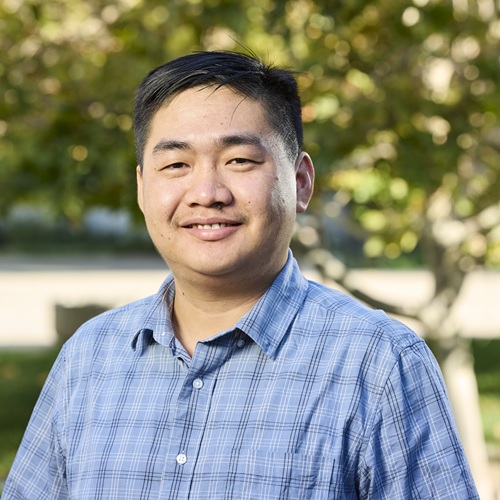
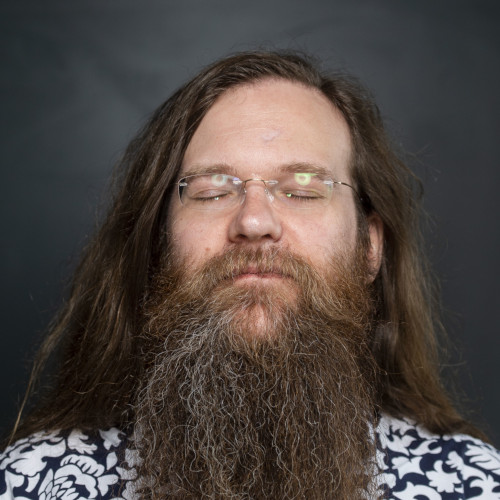
Professor Graeme Day is a faculty member at the University of Southampton , serving as Professor of Chemical Modelling in the Chemistry Department . His research focuses on computational methods for modeling organic molecular solids, with applications in pharmaceutical form screening, NMR crystallography, and functional materials discovery. BSc in Chemistry, Mathematics, and Computing Science from Saint Mary's University (1996) MSc in Theoretical Chemistry from the University of Oxford (1997) PhD from University College London (2003) His research interests center on crystal structure prediction , materials discovery , and computational chemistry . He has pioneered force field development, polymorphism studies, and AI/ML applications in materials design. Recent publications highlight advancements in reticular synthesis, energy landscape modeling, and machine-learned potentials for accurate predictions. The scientific awards he has received include: CCDC Chemical Crystallography Prize for Younger Scientists (2006) Molecular Graphics & Modelling Society Silver Jubilee Prize (2008) 2023 RSC Corday-Morgan Prize Graeme serves as Associate Editor for Chemical Science and sits on advisory boards for RSC journals. He teaches courses in physical chemistry , computational chemistry , and machine learning . Current projects like ERC Synergy Grant ADAM (2020-2027) integrate computational modeling with robotics for materials discovery.
M. Austin Creasy serves as an Associate Professor at Purdue Polytechnic Institute, Purdue University, and is an active member of the American Society for Engineering Education (ASEE) and the American Society of Mechanical Engineers (ASME). His expertise spans vibration and acoustic modeling and control, adaptive control systems, and engineering technology education innovation. His academic credentials include: Ph.D. in Mechanical Engineering, Virginia Tech, 2011 M.S. in Mechanical Engineering, Virginia Tech, 2006 B.S. in Mechanical Engineering, Virginia Tech, 2002 Dr. Creasy's research integrates mechanical engineering principles with biological systems and pedagogical innovation. He has developed deterministic models for biomolecular networks and droplet interface bilayers while pioneering adaptive control techniques for noise absorption in payload fairings and acoustic cavities. His educational research focuses on flipped classroom methodologies, graphical user interfaces for assignment feedback, and z-score assessment systems in mechanics and capstone courses, significantly advancing engineering technology pedagogy. Analysis of his 2006-2022 publications reveals an evolution from foundational vibration control research toward educational technology innovation. Recent work emphasizes data-driven assessment tools and industry-academia partnerships, while maintaining contributions to mechanical systems dynamics and biomolecular modeling. His scientific recognition includes: Purdue Polytechnic Research Award for 2024 (awarded January 2025) Purdue Polytechnic Research Award for 2023 (awarded January 2024) Dr. Creasy's collaborative projects like 'The Seamless Pathway' demonstrate active engagement with industry and community partners for workforce development. While specific graduate student advising details aren't provided, his extensive educational publications indicate significant mentorship contributions. Laboratory facilities and dedicated research teams aren't specified in available materials.
Mark French is a Professor in the Department of Mechanical Engineering Technology within Purdue University's Polytechnic Institute, where he has served since 2004 after transitioning from aerospace engineering and automotive industry careers. His work uniquely bridges industrial practice and academia through experimental mechanics and stringed instrument design. His educational background includes: B.S. in Aerospace and Ocean Engineering from Virginia Tech (1985) M.S. in Aerospace Engineering from the University of Dayton (1988) Ph.D. in Aerospace Engineering from the University of Dayton (1993) Prof. French's research centers on Experimental Mechanics , Noise and Vibration Analysis , and Stringed Instrument Design , where he innovates by merging traditional luthiery with modern engineering techniques like CNC machining and fractional calculus modeling. His work emphasizes practical applications in industrial support systems and guitar craftsmanship. His publication trend reveals a consistent focus on translating engineering principles to musical instrument design, particularly through American Lutherie journal articles that blend academic rigor with artisanal practice. Recent works emphasize CNC automation in luthiery, historical building methods, and mechanical impedance analysis. His honors include: Three College Awards for Outstanding Undergraduate Teaching (2008, 2014, 2018) 2018 University-level Murphy Teaching Award 2018 Purdue Book of Great Teachers 2010 Society for Experimental Mechanics Brewer Award 2024 Purdue MEP Lifetime Achievement Award for industry impact Through Purdue's TAP40 program, French has managed over 115 industry projects providing fee-free technical assistance to Indiana businesses, impacting hundreds of jobs with eight-figure economic benefits. He mentors students in the Guitar Lab while leading industry collaborations like the Gibson partnership. His YouTube channel (7.7M views) extends his educational reach globally. He directs the Purdue Guitar Lab, which has produced custom instruments including the 2025 Indianapolis Colts 'Win for Jim' tribute guitar. The lab's Gibson partnership and collaborations with local businesses like Freckles Graphics and Prime Body and Paint create experiential learning opportunities combining engineering technology with musical artistry.
Samuel DELEPOULLE is an Associate Professor (Maître de Conférences) at the University of the Littoral Opal Coast, France, holding an HDR (Habilitation à Diriger des Recherches) qualification for PhD supervision. His research centers on visual perception and image synthesis within computer graphics and interdisciplinary applications. His core research domains include: Visual Perception mechanisms in human-computer interaction Image Synthesis techniques for realistic rendering Computer Graphics algorithms for Monte Carlo rendering Machine Learning applications in noise reduction Neuroscience collaborations on action representation Computer Vision for biological imaging analysis Recent publications reveal dominant trends in deep learning architectures for rendering optimization, interdisciplinary neuroscience collaborations, and software development for video-microscopy. His work bridges technical computer graphics with cognitive science and biological applications, particularly through the IC research team. Scientific recognition: No specific awards documented in source materials As an HDR-qualified researcher, Delepoulle supervises doctoral candidates though no student names are publicly listed. His grant activity appears concentrated in computer graphics research with biological and neurological applications, evidenced by cross-disciplinary publications. He maintains active affiliation with the IC research team at University of the Littoral Opal Coast, focusing on image processing and computational perception systems.
Pierre-Alexandre Hébert is an Associate Professor at the University of the Littoral Opal Coast. His research spans interdisciplinary domains including dielectric material analysis , electronic waste recycling , and machine learning applications for environmental monitoring. Key research focus: Liquid Crystal recycling from E-waste using dielectric spectroscopy Contributions to phytoplankton detection via automated systems and clustering algorithms Collaborations across France, Turkey, Italy, and Ireland His recent publications (2021-2023) emphasize sustainable materials processing, particularly dielectric characterization of recycled liquid crystals for circular economy applications. Earlier work (2008-2018) showcases expertise in image processing , phytoplankton classification , and data clustering techniques. Collaborative projects include: JERICO NEXT (2018), ISyDMA'6 (2021), and SFGP (2022) conferences. Current affiliations involve laboratories at Université du Littoral Côte d’Opale (ULCO) and Université d’Artois (UA).
Christina Svetoslavova Stoycheva is an Assistant Professor at the Communication Equipment and Technologies Department of Technical University - Gabrovo. Her research focuses on cryptography, chaos theory, and control systems engineering, with recent work on image encryption, 3D scene reconstruction, and IoT applications in agriculture. Her publications highlight integration of chaotic synchronization with artificial neural networks for enhanced security, segmentation algorithms for computer vision, and adaptive control systems in electrohydraulic engineering. She explores applications in beehive monitoring and Raspberry Pi-based platforms. Her work spans international conferences and Bulgarian journals, reflecting expertise in secure communication, signal processing, and multi-agent systems. No awards or additional affiliations are documented in the provided materials.
Cihan Bayraktar is a Lecturer at Karabük University's Eskipazar Vocational School, specializing in Information Security Technology . He holds a PhD in Management Information Systems (2017-2022) and a Master’s in Business Administration (2014-2016), with a BA in Computer Education and Instructional Technologies (2002-2006). Research Interests include data management, cybersecurity, AI technologies, and smart manufacturing systems. His work focuses on applying machine learning to industrial processes, energy optimization, and secure machine-to-machine communication . Recent publications examine blockchain for factory security and automated ML in agricultural classification. Scientific Contributions feature 15+ publications, including 2025 studies on dry-wet wear analysis using ML models employee resignation prediction algorithms AI in graphic design agencies . He received the 97.Yıl En Başarılı Doktora Tez Ödülü in 2023. Bayraktar collaborates on projects like ANOMALYNET (TÜBA/TÜBİTAK funded, 2015-2018) and serves on editorial boards for journals like Gazi University Journal of Science . His current roles include Head of Department and Vice Director at Eskipazar Vocational School.
Erik Benson is an Assistant Professor at Karolinska Institutet and a SciLifeLab Fellow leading a research group focused on DNA nanotechnology. His work integrates computational design with evolutionary selection to develop functional nucleic acid structures for biomedical applications, including therapeutic delivery and molecular diagnostics. His research centers on evolving DNA/RNA sequences through high-throughput simulation and in vitro selection to optimize binding, tissue penetration, and cellular uptake. Key projects include DNA molecular printers for precise nano-patterning, reconfigurable nanodevices, and wireframe structures for enhanced drug delivery. The lab bridges biophysics, bioengineering, and computational biology to address challenges in nanomedicine. Recent publications demonstrate leadership in DNA nanostructure design, with breakthroughs in 2D/3D assembly, simulation methods (oxDNA), and therapeutic applications published in Science Robotics, ACS Nano, and Advanced Materials. The work emphasizes computational refinement coupled with experimental validation to advance functional nanodevices. He has received the following honor: SciLifeLab Fellow Benson advises multiple PhD and Master’s students and leads the 5-year EU-funded VOLUMINEX project (EIC Pathfinder Open grant) starting March 2025. This consortium with 5 European partners develops methods for 3D transcript mapping in tissues through sequencing and network reconstruction, securing major research funding for nanotechnology applications. His lab at Karolinska Institutet comprises PhD students Lisa Eichhorn and Jakub Palacka, postdoc Anjali Rajwar, and research assistant Johanna Rhodin. The team actively recruits Master’s students and postdocs for projects in DNA nanotechnology, with former members including Sandra Ly, Aakash Prakash, and Julia Dahl.
Gozde Unal is a Full Professor in the Department of Computer Engineering at Istanbul Technical University's Faculty of Computer and Informatics Engineering, where she also serves as director of the ITU Vision Lab and founding professor of the AI&Data Engineering Department. She previously held faculty positions at Sabancı University and conducted industry research at Siemens Corporate Research. Her educational background includes a PhD in Electrical and Computer Engineering with a Mathematics minor from North Carolina State University (2002), following postdoctoral work at Georgia Institute of Technology. Professor Unal's research pioneers intersections of Artificial Intelligence and Computer Vision, with significant contributions to medical imaging, 3D reconstruction, and architectural heritage preservation. Her work on diffusion models, adversarial point cloud attacks, and training-free segmentation demonstrates technical innovation while addressing real-world challenges in healthcare diagnostics and cultural conservation. The integration of multi-modal dynamics and evidential deep learning reflects her forward-looking approach to uncertainty quantification in AI systems. Analysis of her 2023-2025 publications reveals dominant trends in point cloud processing for historical reconstruction, medical image segmentation using Bayesian frameworks, and continual learning architectures. These works consistently bridge theoretical advances with applications in architectural heritage documentation and clinical diagnostics, particularly through novel diffusion model adaptations. Her scientific leadership has been recognized through prestigious awards: L’Oreal Turkey’s Female Scientist Award in Life Sciences (2010) Distinguished Young Scientist Award from TUBA (GEBIP) Marie Curie Alumni Association Career Award (2017) As technical program co-chair for MICCAI 2016 and MIDL 2019, she has shaped international discourse in medical image computing. Her lab direction indicates active graduate supervision, though specific student names aren't documented in the source material. The ITU Vision Lab under her leadership drives cutting-edge research in medical image analysis and 3D scene understanding, while her role in founding the ITU-AI Research Center establishes institutional frameworks for interdisciplinary AI innovation across the university.
Kartic Subr is an Associate Professor and Royal Society University Research Fellow at Heriot Watt University's School of Engineering and Physical Sciences, specifically within the Institute of Sensors, Signals & Systems. His research focuses on computer graphics, particularly Monte Carlo methods for image synthesis, stochastic sampling techniques, and advanced rendering algorithms. Before joining Heriot Watt in July 2014, he was a post-doctoral researcher at Disney Research in Edinburgh and held a Royal Society's Newton International Fellowship at University College London. Dr. Subr received his PhD in June 2008 from the University of California, Irvine under the guidance of Jim Arvo. His dissertation explored sampling decisions in Monte Carlo image synthesis. Prior to his PhD, he earned a Bachelor of Technology degree in Computer Science and Engineering from PESIT (Bangalore University, India) and worked for a year as a Telecommunications engineer at Hewlett Packard. Dr. Subr's research centers on improving the efficiency and accuracy of image synthesis through advanced sampling strategies. His work spans Monte Carlo integration techniques, frequency analysis of light fields, and novel approaches to rendering effects like depth of field and motion blur. He has made significant contributions to understanding the statistical properties of stochastic sampling patterns and their impact on integration error. His research bridges computer graphics, signal processing, and statistical methods to develop more efficient rendering algorithms. His most recent publications demonstrate a clear trajectory toward more sophisticated analysis of light transport and image formation. The 2013-2014 papers focus on error analysis of combined sampling strategies, Fourier analysis of stochastic methods, and efficient handling of 5D light fields. His work consistently addresses fundamental challenges in rendering while developing practical algorithms that balance computational efficiency with visual quality. Dr. Subr has received several prestigious awards for his research: Royal Society University Research Fellowship (2014) Newton International Fellowship (2010) Best Paper award at I3D 2011 for "Real-time rough refraction" Best-paper-honorable-mention at I3D 2012 Dr. Subr has supervised numerous research projects and collaborated extensively with institutions including Disney Research, INRIA-Grenoble, and University College London. His research has been supported by competitive fellowships from the Royal Society and has resulted in multiple publications at top-tier graphics and vision conferences. He actively seeks PhD students in the areas of stochastic sampling and signal processing, indicating ongoing research funding and project development. While specific lab information isn't detailed in the provided text, Dr. Subr's research appears to be conducted within the Institute of Sensors, Signals & Systems at Heriot Watt University, with strong connections to the broader computer graphics research community through collaborations with researchers at Disney Research, INRIA, and UCL.
Xiaoquan (William) Wen is Professor of Biostatistics in the University of Michigan School of Public Health , Department of Biostatistics. Since earning his PhD in Statistics from the University of Chicago in 2011, he has been a continuous member of the Michigan faculty and is an active contributor to the NIH GTEx Consortium and the Center for Statistical Genetics . Education PhD in Statistics, University of Chicago, 2011 Research Focus Wen’s methodological work lies at the intersection of Bayesian statistics , computational genomics , and probabilistic graphical models . He develops scalable algorithms for Bayesian model comparison and false discovery rate control , with particular emphasis on multi-tissue eQTL discovery , causal inference from high-dimensional omics data, and integrative analysis of genome, transcriptome, and proteome to dissect the molecular basis of complex human traits. Applied domains include functional genomics, pharmacogenomics, immunogenomics, and pediatric gene–environment interactions, where he translates statistical innovation into biologically meaningful insight. Publications Snapshot (2022–2025) Recent work spans large-scale GWAS meta-analyses, single-cell multi-omics, metabolome-wide Mendelian randomization, and robust replicability frameworks. Recurring themes are causal gene prioritization, fine-mapping, and rigorous statistical validation across diverse human tissues and disease contexts. Scientific Awards (no awards explicitly listed in provided text) Grant & Team Activity Wen is an ongoing NIH GTEx project investigator and contributes to the Michigan Center for Statistical Genetics . While explicit grant numbers are absent, his sustained publication stream and consortium involvement indicate active federal and collaborative funding. No advisees are named in the supplied material. Laboratory & Software He maintains an active GitHub repository releasing open-source tools such as BLIMP (Best Linear IMPutation), SLAT (gene- and pathway-level testing), and QuASAR (quantitative allele-specific analysis).
Dr. Vuthea Chheang is an Assistant Professor in the Department of Computer Science at San José State University, where he teaches courses including Introduction to Computer Graphics and Data Science Senior Project. Previously, he served as a Postdoctoral Research Staff at Lawrence Livermore National Laboratory and a Postdoctoral Researcher at the University of Delaware. Education: Doctor of Engineering, Department of Simulation and Graphics, Otto-von-Guericke University of Magdeburg, Germany (2018-2022) Master of Engineering in Computer Science, Chungbuk National University, South Korea (2016-2018) Bachelor of Science in Computer Science and Engineering, Royal University of Phnom Penh, Cambodia (2011-2015) Dr. Chheang's research focuses on extended reality (XR), human-computer interaction, and visualization . His work specifically targets interaction and visualization techniques , collaborative environments , and the development of XR applications for medical planning and training . His research bridges computer science with practical healthcare applications, creating immersive environments that enhance medical education, surgical planning, and rehabilitation. His work often integrates wearable sensor technology with virtual reality to create comprehensive training and therapeutic systems that respond to user movements and provide real-time feedback. Analysis of Dr. Chheang's recent publications reveals a strong focus on medical applications of virtual reality , particularly in surgical training, anatomy education, and rehabilitation. His work spans multiple disciplines including computer science, healthcare, and engineering, with a consistent thread of developing collaborative and immersive experiences. Recent trends show increasing integration of generative AI with virtual reality systems, as well as expanding applications in additive manufacturing inspection and wearable sensor integration . His research demonstrates a clear trajectory toward more sophisticated, multi-modal XR systems that address real-world challenges in medicine and engineering. Scientific Awards: 2nd Place -- Computing Research SLAM, Stepping into the Future of Digital Twins with eXtended reality (XR), Lawrence Livermore National Laboratory (2025) Best Paper Honorable Mention, Towards Anatomy Education with Generative AI-based Virtual Assistants in Immersive Virtual Reality Environments, IEEE International Conference on Artificial Intelligence & extended and Virtual Reality (AIxVR) (2024) Noteworthy Achievement Award, Lawrence Livermore National Laboratory (LLNL) (2024) Best Paper Award, Virtual Therapy Exergame for Upper Extremity Rehabilitation Using Smart Wearable Sensors, IEEE/ACM international conference on Connected Health (2023) Nominated for Post-doctoral Research Excellence Award, University of Delaware (2023) Dr. Chheang has been actively involved in research projects spanning multiple institutions including Lawrence Livermore National Laboratory, University of Delaware, and Otto-von-Guericke University. His work has received recognition through several competitive awards and has resulted in numerous peer-reviewed publications in top-tier conferences. While specific grant information isn't detailed in the provided materials, his research trajectory suggests involvement in interdisciplinary projects that likely involve funding from agencies supporting medical technology, computer science, and engineering research. His collaborative approach is evident in his work with medical professionals and engineers across multiple institutions. Dr. Chheang's research involves collaborations with medical institutions and national laboratories, particularly evident in his work at Lawrence Livermore National Laboratory and with surgical teams. His projects often involve interdisciplinary teams combining computer scientists, medical professionals, and engineers to develop XR applications for surgical planning, medical education, and rehabilitation. The Research Campus STIMULATE at Otto-von-Guericke University appears to have been a significant research environment during his doctoral studies, focusing on simulation and medical applications.
Jim McCann is an Associate Professor at the Robotics Institute of Carnegie Mellon University. He holds a PhD from Carnegie Mellon University (2010), advised by Nancy Pollard, and has held positions at Adobe Research and Disney Research Pittsburgh. His academic journey includes postdoctoral work and industry experience in game development before joining CMU's faculty in 2017. His research focuses on creativity support tools spanning real-time systems, textiles fabrication, machine knitting, and interactive design. Key themes include: Developing compilers and interfaces for machine knitting (e.g., 3D shape knitting, knitout semantics) Building accessible fabrication tools for textiles and soft objects Creating parameterized design spaces enhanced with machine learning Advancing physics-based animation and simulation tuning His publications demonstrate strong interdisciplinarity, with recent work emphasizing textiles computing (knitting compilers, fabric 3D printing), human-AI collaboration (design adjectives), and novel interfaces (infinity mirrors, RFID systems). Earlier contributions established foundations in gradient-domain editing, fluid control, and motion synthesis. He leads the Carnegie Mellon Textiles Lab and has advised 9+ graduate students on topics ranging from knit microstructures to robot design. His teaching includes courses on Algorithmic Textiles Design, Real-Time Graphics, and Game Programming.
Elena Carlotta Olivetti is a Fixed-term Assistant Professor at the Department of Management and Production Engineering (DIGEP) at Polytechnic University of Turin. She serves as an invited member of the College of Biomedical Engineering and the College of Chemical and Materials Engineering. Her educational background includes a Master's degree in Biomedical Engineering, and she is currently pursuing a PhD in Management, Production, and Design at the same institution. Dr. Olivetti's research focuses on the intersection of 3D graphics, biometrics, and medical applications. Her work primarily centers on 3D face analysis for medical applications, particularly in maxillofacial surgery. She applies machine learning techniques, including Deep Convolutional Neural Networks, to develop innovative solutions for facial recognition and prediction of surgical outcomes. Her research spans across virtual reality environments for stress assessment, biometric applications, and 3D modeling for medical diagnostics and surgery planning. Her recent publications demonstrate a strong trend toward interdisciplinary research combining computer science, neuroscience, and medical applications. She has made significant contributions to the field of 3D facial prediction for orthognathic surgeries and affective computing using EEG and machine learning in VR environments. Her work bridges the gap between engineering and medical sciences, creating practical applications for healthcare professionals. Dr. Olivetti serves as a PhD supervisor for Francesca Giada Antonaci in the Bioengineering and Medical-Surgical Sciences program. She is actively involved in teaching both at the Master's level (3D graphics solutions in biometric applications for Biomedical Engineering) and Bachelor's level (Industrial Technical Drawing for Chemical and Food Engineering). As a key member of the 3D LAB Research Group, she contributes to projects focused on human-computer interaction, 3D data acquisition and visualization, facial morphology analysis, and augmented reality applications in medical contexts. The lab works on developing innovative solutions for diagnostics, surgery planning, and medical software applications.
Hsu-chun Yen serves as a Professor at National Taiwan University with distinguished recognition as an Academician of Academia Sinica, Taiwan's premier scholarly institution. His academic profile reflects significant contributions to computer science through both theoretical and applied research. His research program integrates three interconnected domains: Automata theory and formal languages (theoretical foundations of computation) Graphics rendering and information visualization (practical systems for data representation) Formal verification (mathematical validation of system correctness) This triad demonstrates expertise bridging abstract computational models with real-world implementation challenges. His singular scientific honor is documented as: Academician of Academia Sinica Professional engagement is maintained through active institutional affiliation and digital presence without indication of advisory roles or external funding in the source material.