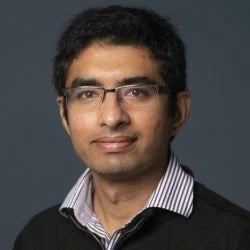
Dr. KN Sasidhar is a Researcher in the Department of Microstructure Physics and Alloy Design at Heinrich Heine University Düsseldorf. His work focuses on advanced materials science, particularly corrosion mechanisms, alloy design, and nanoscale structural analysis. He employs cutting-edge techniques like in situ synchrotron investigations and deep learning frameworks to study material behavior under extreme conditions. Current research emphasizes corrosion resistance in stainless steels, phase transformations during nitriding, and radiation effects on coatings. Key achievements include pioneering studies on nanoscale amorphization in metallic systems, data-centric approaches for materials discovery, and the development of predictive models for alloy performance. His work bridges experimental materials characterization with computational methods, addressing challenges in energy and aerospace applications. Publications span corrosion analysis, microstructural evolution under irradiation, and phase separation phenomena. Collaborative projects involve synchrotron facilities and interdisciplinary teams focusing on materials informatics. No formal awards or grants are explicitly listed in the provided texts, though his prolific publication record indicates active academic engagement.
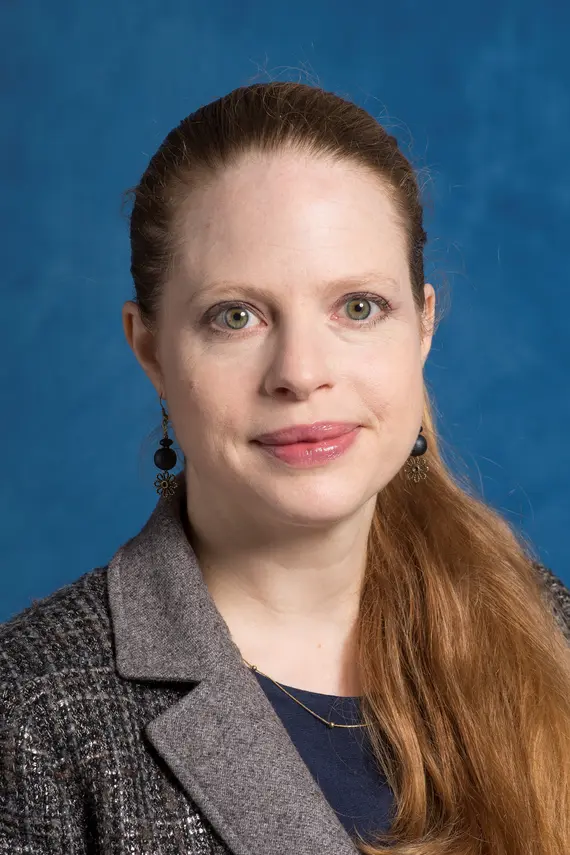
Dr. Kristin A. Persson is a Professor and Daniel M. Tellep Distinguished Professor in Engineering at the University of California, Berkeley's Department of Materials Science and Engineering. She leads the Persson Group at Lawrence Berkeley National Laboratory (LBNL), focusing on atomistic computational methods for energy materials. As director of the Materials Project, she pioneers high-throughput computing and data-driven approaches to accelerate material discovery for clean energy applications, including batteries, electrolytes, and photocatalysts. Her research spans lithium-ion and multivalent batteries, with a focus on electrolyte design, interfacial chemistry, and sustainable materials. Persson has directed the Materials Project since its inception, a global initiative to computationally predict material properties and provide open-access data. She holds affiliations with LBNL’s Energy Sciences Area and collaborates with industry and academia on projects like the Electrolyte Genome and piezoelectric materials databases. Key achievements include election to the National Academy of Engineering (2025), Royal Swedish Academy of Sciences (2024), and Fellowships from the AAAS (2022) and APS (2021). Her group’s work has produced over 200 publications, with recent highlights on disordered cathodes, ML-driven material predictions, and circular polymers. Persson advises a dynamic team of ~50 graduate students, postdocs, and staff, fostering interdisciplinary innovation in energy storage and materials informatics. Awards include DOE’s Distinguished Scientist Fellowship (2024), Cyril Stanley Smith Award (2022), and Web of Science Highly Cited Researcher recognition (2020). Her lab’s infrastructure supports projects from computational workflows to experimental collaborations, with a focus on translating theory into real-world energy solutions.
Dr. Vasant Honavar is a Professor of Computer Science and Informatics at Pennsylvania State University, holding the Edward Frymoyer Endowed Chair. He serves as Director of the Center for Artificial Intelligence Foundations and Scientific Applications and Associate Director of the Institute for Computational and Data Sciences. His expertise spans artificial intelligence, machine learning, causal inference, and bioinformatics. Honavar has led over $60M in research grants and mentored 36 PhD students, 30 MS students, and numerous undergraduates. He is a Fellow of the AAAS and recipient of NSF Director’s Awards. Education: Ph.D., Computer Science and Cognitive Science, University of Wisconsin–Madison (1990) M.S., Computer Science, University of Wisconsin–Madison (1989) M.S., Electrical and Computer Engineering, Drexel University (1984) B.E., Electronics Engineering, Bangalore University (1982) Research Interests: His work focuses on machine learning, causal inference, knowledge representation, health informatics, and algorithmic fairness. Notable contributions include scalable algorithms for big data analytics and predictive modeling, as well as computational infrastructure for interdisciplinary science. Awards: Fellow, AAAS (2018) ACM Distinguished Member NSF Director’s Award for Superior Accomplishment (2013) Edward Frymoyer Endowed Chair (2013) Leadership: Honavar co-founded the Penn State Center for Artificial Intelligence and led the NIH-funded Biomedical Data Sciences Ph.D. program. He is a Co-PI of the North East Big Data Innovation Hub and serves on editorial boards of journals like IEEE/ACM Transactions on Computational Biology and Bioinformatics. Lab & Teams: Directs the Artificial Intelligence Research Laboratory and the Center for Big Data Analytics and Discovery Informatics, fostering collaborations across computer science, life sciences, and health sciences.
David J. Crandall is the Luddy Professor of Computer Science at Indiana University's Luddy School of Informatics, Computing, and Engineering. He serves as Director of the Luddy Artificial Intelligence Center and leads the IU Computer Vision Lab. With joint appointments in Informatics, Cognitive Science, Data Science, and Statistics, his work spans computer vision, machine learning, and AI. He holds a Ph.D. from Cornell University and previously worked at Eastman Kodak Research Labs. His research focuses on developing statistical and machine learning methods to analyze visual information, including object recognition, human activity analysis in video, 3D reconstruction, social media mining, and computational studies of visual attention. Key applications include egocentric vision systems, social robotics for healthcare, and cross-disciplinary collaborations with developmental psychology. Recent publications demonstrate strong emphasis on egocentric video analysis (Ego4D), human-robot interaction (CHI/HRI), and explainable AI (IJCAI). Medical imaging, nanoscale security systems, and computational social science represent emerging interdisciplinary directions. His work consistently integrates deep learning with real-world applications in health, environmental monitoring, and cultural analytics. Tracy M. Sonneborn Award (2024) Distinguished Member of the ACM (2023) Luddy Professorship (2021) NSF CAREER Grant (2013) Trustees Teaching Award (2017) He has advised over 20 Ph.D. graduates, with current students working on computer vision, robotics, and AI ethics. Major grants include $20M for the NSF AI Institute on Engaged Learning, $4.4M for trusted AI research, and funding from NIH, Google, ONR, and NASA. He directs the Computer Vision Lab and collaborates with Selma Sabanović's robotics group on social agents for older adults.
Anil Madhavapeddy serves as Professor of Planetary Computing at the University of Cambridge's Department of Computer Science and Technology and directs the Cambridge Centre for Carbon Credits (4C). A Fellow of Pembroke College, he integrates systems research with environmental conservation through the Computer Laboratory's Environment and Energy Group. His career spans industry leadership (NetApp, Citrix, Intel), academic appointments (Cambridge, Imperial, UCLA), and entrepreneurial ventures (XenSource, Unikernel Systems, Docker). Madhavapeddy earned his PhD at Cambridge's Computer Laboratory in 2006. His research bridges computational systems and planetary-scale environmental challenges, with deep expertise in open-source development (OCaml, Xen, Docker, OpenBSD) and technology strategy advising for organizations including Zededa, Tezos Foundation, and Tarides. His work centers on environmental computing and climate informatics, leveraging distributed systems and functional programming to develop sensing infrastructure for conservation. Recent projects focus on carbon credit systems, AI-driven biodiversity monitoring, and sustainable computing architectures that minimize ecological footprints while maximizing analytical capability. Analysis of his 2025 publications reveals a concentrated effort on AI-integrated conservation tools, privacy-preserving carbon accounting, and energy-efficient computing. Key themes include spatial networking for ecological data, LLM-enhanced evidence retrieval in conservation science, and novel metrics for extinction risk assessment—demonstrating computational innovation applied to urgent planetary boundaries. No scientific awards were documented in the source material. Madhavapeddy advises multiple technology firms on strategic development while leading the Cambridge Centre for Carbon Credits, though specific grant funding details remain unreported. He actively contributes to the Environment and Energy Group at Cambridge's Computer Laboratory and directs the interdisciplinary Cambridge Centre for Carbon Credits (4C). His open-source leadership spans critical infrastructure projects including OCaml, Xen, and Docker, fostering collaborative development communities that underpin modern cloud and container technologies.
Professor Klavs F. Jensen is the Warren K. Lewis Professor of Chemical Engineering and Professor of Materials Science and Engineering at MIT. His research focuses on integrating automation, machine learning, and robotics to accelerate materials discovery and pharmaceutical synthesis. He leads the Jensen Research Group, pioneering automated reaction systems with online analytics and optimization algorithms. Education: MS in Chemical Engineering (Technical University of Denmark, 1976); PhD in Chemical Engineering (University of Wisconsin, 1980). Research Interests: Thermochemistry, electrochemistry, photochemistry, Bayesian optimization, high-throughput experimentation, and AI-driven synthesis planning. He collaborates with MIT’s Machine Learning for Pharmaceutical Discovery Consortium to develop algorithms for drug development and process chemistry. Awards: Member of National Academy of Sciences (2017), Member of National Academy of Engineering (2002), Fellow of the American Association for the Advancement of Science (2007), and Fellow of the National Academy of Inventors (2022). Grants & Labs: Editor-in-Chief of Reaction Chemistry and Engineering ; holds 63 US patents and over 490 journal articles. His lab’s innovations include ASKCOS (open-source synthesis planning software) and automated platforms for closed-loop molecular discovery.
Dr. Li Baowen is Chair Professor at Southern University of Science and Technology (SUSTech) with joint appointments in the Department of Physics and Department of Materials Science and Engineering. A pioneer in phononics and thermal metamaterials, he previously held endowed professorships at University of Colorado Boulder and UC Berkeley. His research focuses on controlling heat transfer at nano scales, developing thermal metamaterials like thermal cloaks, and applying complex networks to physical systems. Dr. Li has published over 400 papers including 3 in Reviews of Modern Physics and 30 in Physical Review Letters, with more than 34,800 citations (H-index 98). He is recognized with the Brillouin Medal from the International Phononics Society and is a Fellow of the American Physical Society. He founded research centers including the China-EU Joint Lab for Nanophononics at Tongji University. His current research explores quantum phononics, machine learning applications in thermal materials, phonon lasers, and quantum sensing technologies.
Mike Kirby is a Professor at the Kahlert School of Computing, University of Utah. He also holds adjunct professorships in the Department of Bioengineering and the Department of Mathematics. His current roles include leadership in scientific computing and informatics initiatives, including former directorships of the Utah Informatics Initiative (2019-2023) and the Multi-Scale Multidisciplinary Modeling of Electronic Materials (MSME) Collaborative Research Alliance (2016-2022). He has extensive experience in strategic research initiatives, including serving as Assistant Vice President for Research (2024-2025). Education: Dr. Kirby earned a PhD in Applied Mathematics (2002) and MS in Computer Science (2001) from Brown University, and a BS in Applied Mathematics and Computer Science from Florida State University (1997). Research Interests: Focus on large-scale scientific computing, physics-informed machine learning, computational science and engineering, high-order numerical methods, and visualization. His work bridges applied mathematics and computer science to address real-world engineering challenges. Publications: Over 150 peer-reviewed articles, including high-impact contributions in journals like Journal of Computational Physics and SIAM Journal on Scientific Computing . Recent work emphasizes machine learning for differential equations, topology optimization under uncertainty, and multi-fidelity modeling. Awards: Recognized for leadership in computational science and informatics, including contributions to University of Utah’s Clery Compliance Program. Advising & Grants: Supervised over 50 graduate students and postdocs. Secured funding from NSF, DOE, and industry partnerships, totaling millions in research grants. Active in interdisciplinary collaborations across engineering, materials science, and medicine. Labs/Teams: Scientific Computing and Imaging (SCI) Institute, Utah Informatics Initiative, and the Center for Multiscale Modeling of Electronic Materials (MSME).
Ananth Grama is the Samuel D. Conte Distinguished Professor of Computer Science and Associate Director of the Center for Science of Information at Purdue University. He holds a faculty position in the Department of Computer Science, College of Science. His research focuses on parallel computing, distributed systems, machine learning, and their applications in complex systems such as materials modeling and clinical analytics. He teaches advanced courses like CS525 (Parallel Computing) and CS314 (Numerical Methods). Research interests span parallel algorithms, fault-tolerant learning, quantum machine learning, and data-driven healthcare analytics. Recent work addresses fundamental limits of generative models, online learning under noisy conditions, and clinical outcome predictions. His projects include DOE-funded research on critical element recovery and NIH grants for hearing assessment technologies. Notable contributions include over 50 peer-reviewed publications since 2022, with recent papers appearing at ICLR, NeurIPS, and ICML. Current postdocs include Changlong Wu (collaborating with Wojciech Szpankowski) and Luopin Wang (with Nadia Atallah). He advises seven graduate students and oversees multidisciplinary research teams.
Assoc. Prof. Dr. Sema Alaçam Doğan has been affiliated with Istanbul Technical University since 2014, serving as an Associate Professor in the Department of Architecture . She has held administrative roles including Deputy Head of Department and Erasmus Coordinator. Education : PhD in Informatics in Architectural Design (2008-2014), MS in Informatics in Architectural Design (2005-2008), and BS in Architecture (1999-2005) from Istanbul Technical University. Her research explores Computational Design , Artificial Intelligence in Architecture , and Sustainable Material Innovation . She investigates digital tools for heritage preservation, daylight optimization in BIM, and cognitive development in architecture students. Recent publications analyze AI-assisted design literacy , machine learning for Sinan mosques , and environmental comfort in Harran houses . Her work integrates algorithmic frameworks with sustainable practices. Scientific awards include multiple ITU Publication and Performance Awards (2021-2024), FABFEST Prizes , and the 2024 Artemis Educator Award from NASA. Active projects like "Physical Computation in Architectural Drawing" and "Robotic Fabrication with Recycled Wind Turbine Blades" demonstrate her leadership in computational and sustainable research.
Prof. Dr. Mona Hess is a Full Professor and Chairholder of the Chair of Digital Heritage Technologies at Otto-Friedrich-Universität Bamberg , Germany. She directs the M.Sc. Digital Technologies in Heritage Conservation program and serves as Vice-Speaker at the Centre for Heritage Conservation Studies and Technologies (KDWT) . Her work bridges digital documentation, 3D imaging, and heritage conservation, with a focus on cultural landscapes, historic timber, and artifact preservation. Education : Dipl.-Ing. in Architecture (TUM), M.A. in Heritage Conservation (University of Bamberg), Ph.D. in 3D Imaging Metrology for Cultural Heritage (University College London, 2015) Her research spans 3D laser scanning, photogrammetry, SLAM-based recording , and digital twin environments , particularly for structural monitoring, museum artifacts, and historic gardens. She leads projects like VirScan3D (virtual laser scanner simulator) and 3DPetrie (UCL Petrie Museum 3D models) and collaborates on international initiatives such as the British Museum War Canoe digital repatriation. Recent publications emphasize automated defect analysis in timber, multi-modal imaging for ceiling art, and linked open data in heritage. She has contributed to CIPA ICOMOS as an expert member and will chair their Education and Dissemination Commission (2024). Scientific Awards : Fellow of the UK Higher Education Academy (2016), Associate Fellow of the Higher Education Academy (2014) She teaches courses in Digital Object Recording , 3D Spatial Data Modeling , and Science Communication , and organizes international summer schools on heritage monitoring. Her lab, the Chair of Digital Heritage Technologies , collaborates with institutions in Italy, Spain, and the UK, focusing on interdisciplinary innovation in heritage conservation.
Ahmed Hammad is an Associate Professor in the Department of Civil and Environmental Engineering at the University of Alberta's Faculty of Engineering, where he also serves as Director of Academic Integrity, ENG WIL, Co-op and Career Connections. With 25 years of industry experience as a Project Planning & Control Manager on global mega-projects (including Oil Sands, LNG, and Infrastructure across Canada, UAE, Australia, and Egypt), he brings extensive practical expertise to academia. Education: Doctorate of Philosophy, Construction Engineering & Management, University of Alberta (2009) Master of Science, Construction Engineering & Management, University of Alberta (1999) Master of Engineering, Construction Engineering and Management, Cairo University (1996) Bachelor of Science, Civil Engineering, Mansoura University (1989) Research Focus: Dr. Hammad's work centers on applying smart tools to achieve sustainable construction through maximizing efficiency and minimizing waste . His research employs Machine Learning , Multi-Criteria Decision Making , Knowledge-Based Decision Support Systems , and digital twin technologies to optimize project planning, resource allocation, and sustainable material selection. He investigates the integration of BIM and Augmented Reality to enhance construction processes while reducing environmental impact. Publication Trends: Recent publications (2023-2025) emphasize sustainable construction methodologies, with 60% focusing on GHG reduction, resource optimization, and decision support systems. Key themes include machine learning for labor estimation, TOPSIS/MCDM for sustainable material selection, and digital twins for production planning, reflecting his NSERC-funded projects on KBDSS and construction-oriented digital twins. Scientific Recognition: Best Paper Award at 8th International Conference on Industrial Engineering and Operations Management (2018) Best Paper Award at HBRC Green Smart Sustainable Buildings Conference (2024) Research Leadership: Dr. Hammad secures major industry-academic partnerships, including NSERC Mission Alliance Grants ($1.2M+) with 16 industry partners for GHG reduction projects and NSERC Alliance Grants with 9 partners for digital twin development. His completed projects include collaborations with the City of Edmonton and Alberta Ministry of Infrastructure on resource allocation models. Research Ecosystem: As leader of the Sustainable Construction Research Group (SCRG), he fosters industry-academia collaboration through regular workshops with construction firms and government agencies, focusing on translating research into practical tools for sustainable project delivery.
Mathias Funk is an Associate Professor in the Industrial Design department at Eindhoven University of Technology (TU/e), leading the Things Ecology lab. His research focuses on designing with data and systems behavior, particularly in IoT and medical technology contexts. He co-founded UXsuite GmbH and developed the OOCSI communication framework. With a PhD in Electrical Engineering from TU/e (2011), Funk has held academic roles since 2013, including postdoctoral positions in Electrical Engineering and Industrial Design. He teaches courses like 'Data-enabled design' and supervises projects on AI, data foundry, and OOCSI applications. His work bridges engineering and design, addressing sustainability and human values through systemic design approaches. Education: PhD in Electrical Engineering, TU/e (2011) Computer Science background from RWTH Aachen Postdoc at TU/e's Electrical Engineering and Industrial Design departments Research Interests: Data-driven design methodologies, IoT systems, medical technology innovation, sustainable design practices, and interactive systems for musical expression. Recent work emphasizes telemonitoring efficacy in heart failure care and federated learning applications. Awards: Best Paper Award (2014) Honorable Mention (2021) Grants/Projects: Leading initiatives like MEDICAID (medtech solutions), ACACIA (interpretable AI), and Data-Driven Servitizing in Professional Printing. Active in clinical workflow prototyping and cardiovascular disease detection projects. Lab Activities: Manages the Things Ecology lab, focusing on systemic design challenges in smart ecosystems. Collaborates internationally through spin-offs and visiting lectureships.
Dr. Igor V. Pivkin is a Full Professor at the Institute of Computing within the Faculty of Informatics at the Università della Svizzera italiana (USI) in Lugano, Switzerland. His academic journey includes degrees from Novosibirsk State University (B.Sc./M.Sc. Mathematics), Brown University (M.Sc. Computer Science and Ph.D. Applied Mathematics), and postdoctoral research at MIT's Department of Materials Science and Engineering. His research focuses on multiscale/multiphysics modeling , numerical methods , and large-scale simulations of biological and physical systems. Key areas include biophysics, cellular/molecular biomechanics, stochastic modeling, and coarse-grained molecular simulations. He leverages high-performance computing (HPC) and particle-based methods to address complex biological phenomena. His work spans diverse applications, from understanding cellular mechanosensitivity and biofilm engineering to modeling cancer cell behavior and red blood cell dynamics in the spleen. His contributions bridge computational science, biotechnology, and biomedical research. He has published extensively in top-tier journals, with recent work advancing automated biofilm analysis, deep learning for microbial classification, and systems biology approaches to metal bioleaching. His lab collaborates on interdisciplinary projects, emphasizing computational innovation for real-world biological challenges.
Professor Kunal Mankodiya is a faculty member in the Department of Electrical, Computer and Biomedical Engineering at the University of Rhode Island. He holds the rank of Professor and is affiliated with the College of Engineering. His research focuses on wearable technologies, smart textiles, and medical IoT systems, with notable contributions in neural engineering and body sensor networks. Education Ph.D., University of Luebeck, Germany (2010) M.S., Biomedical Engineering, University of Luebeck, Germany (2007) B.S., Biomedical Engineering, Saurashtra University & C.U. Shah College (2003) Postdoctoral Researcher, Carnegie Mellon University (2011-2014) Postdoctoral Researcher, University of Pittsburgh (2011) Research Interests Mankodiya’s work emphasizes innovative wearable sensor systems for healthcare applications, including smart textiles for medical monitoring and IoT-enabled telemedicine solutions. His research integrates electrical engineering, biomedical engineering, and computer science to address challenges in neurological disorders, neonatal care, and movement disorders. Grants & Awards 2017 NSF CAREER Award 2017 40 under 40 Award, Providence Business News Lead PI on grants totaling over $5M, including NSF CAREER and NIH-funded projects Labs & Teams Mankodiya leads the Smart Wearable and IoT Lab at URI, focusing on interdisciplinary research in healthcare technology. His team collaborates with clinical partners on projects like neonatal monitoring systems and Parkinson’s disease tele-assessment tools.