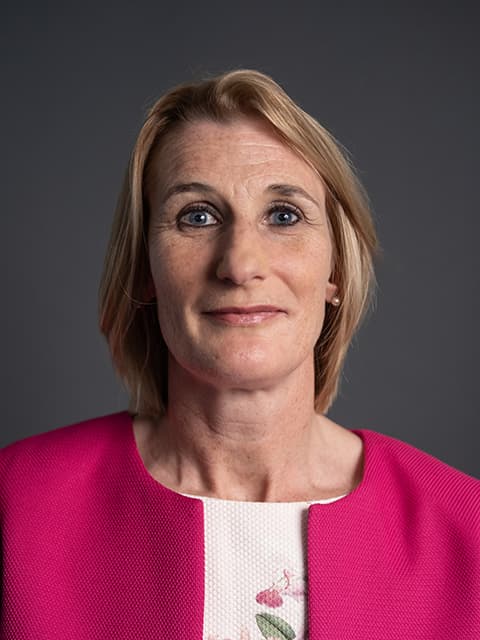
Edouard Hannezo is a Professor at the Institute of Science and Technology Austria (ISTA) since 2022, focusing on the application of theoretical physics to elucidate design principles of self-organization in biological systems. His research spans multiple scales, from cytoskeletal dynamics to tissue architecture, with key collaborations in developmental and cell biology. The Hannezo Group integrates solid/fluid mechanics, statistical physics, and soft materials engineering to address fundamental questions in morphogenesis. Current Research: Investigates stochastic branching in mammalian organs, active fluids in cytoskeletal organization, and fate selection during development. Key Contributions: Developed biophysical frameworks for intestinal organoid morphogenesis, branching morphogenesis, and mechanochemical feedback loops. Scientific Awards: EMBO Young Investigator Award (2019) ERC Starting Grant (2019) Wellcome Trust Fellowship (2015) Bettencourt-Schuller Young Researcher Prize (2014) Team: Leads a multidisciplinary team including PhD students (Zuzana Dunajova, Andreas Ehrmann, Kasumi Kishi) and postdocs (Oliver Drozdowski, Yuting Li), with technical support from image analyst Suyash Naik.
Professor Allan Rennie serves as Professor in Manufacturing Engineering at Lancaster University's School of Engineering and holds the administrative position of Associate Dean for Engagement within the Faculty of Science and Technology. With a career spanning over 30 years since initiating work in additive manufacturing during the mid-1990s, he has established himself as a leading figure in industrial applications of advanced manufacturing technologies across diverse sectors. His research expertise centers on Additive Manufacturing , Engineering Design , and Manufacturing Process Optimization , with current specializations including design for additive manufacturing (as co-leader of the UK's EPSRC DfAM Network), industrial digitalisation of manufacturing processes, and innovative tooling development using metallic and hybrid approaches. Rennie has significantly contributed to Engineering Education , particularly examining the integration of business and management principles into engineering curricula and analyzing the impacts of online/hybrid delivery modes on student engagement and graduate employability following the COVID-19 pandemic. Recent publication trends reveal Rennie's dual focus on practical manufacturing applications and scholarly analysis of technological evolution. His 2025 bibliometric study maps a decade of Design for Additive Manufacturing research, while his structural analysis of musical instruments demonstrates cross-disciplinary applications of manufacturing techniques. These works reflect his commitment to both advancing manufacturing technology and documenting its academic trajectory through rigorous analysis. Professor Rennie actively supervises PhD candidates including Jenny Roberts, Eunike Sembiring, and Joe Taylor while leading substantial research projects such as the EPSRC DfAM Network (2020-2023), Automating Design for Additive Manufacture with AI (2023-2024), and multiple Engineers in Business Competitions. His extensive grant portfolio spans industrial digitalization, sustainable manufacturing, and educational innovation, with notable projects including RENDER (powder recycling), TecHnology and EntrepreneUrship Education, and Production Capable Additive Manufacturing of Polymers. Rennie contributes to Lancaster's research ecosystem through affiliations with the Centre for Global Eco-innovation, Energy Lancaster initiative, and the Lancaster Product Development Unit. These platforms enable him to bridge academic research with industrial applications across multiple sectors, particularly supporting his work on sustainable manufacturing practices, technology commercialization, and industry engagement strategies that translate research into real-world impact.
Professor Jan Godsell serves as Dean of Loughborough Business School and holds the title of Professor of Operations and Supply Chain Strategy. Her dual career spans academia and industry, combining academic rigor with executive experience in global firms like Dyson and ICI/Zeneca Pharmaceuticals. She focuses on strategic supply chain alignment, circular economy transitions, and Industry 4.0 applications. Her research bridges operational excellence and strategic business goals, emphasizing sustainability, deglobalization risks, and innovation ecosystems. Advisory roles include the Made Smarter Expert Panel and Industrial Strategy Challenge Fund Advisory Group, reflecting her industry influence. Key research themes include circular economy frameworks, supply chain resilience, and the interplay between technology and sustainable practices. Recent work explores net-zero supply chains, food waste prevention, and geopolitical sourcing strategies. Awards and grants are not explicitly listed in the provided text, but her extensive advisory roles and leadership positions underscore her recognized expertise. Her career trajectory highlights a commitment to transforming academic insights into actionable industry strategies.
Norman J. Wagner holds the Unidel Robert L. Pigford Chair in Chemical & Biomolecular Engineering at the University of Delaware, with affiliations in Physics & Astronomy, Biomedical Engineering, and Biomechanics & Movement Science. He directs the Center for Neutron Science (CNS) and served as CBE Department Chair (2007–2012). His research focuses on rheology of complex fluids, colloids, polymers, and nanotechnology, with applications to space materials and biomedical systems. Education: B.S. from Carnegie Mellon (1984), Ph.D. in Chemical Engineering from Princeton (1988). Postdoctoral fellowships at Los Alamos National Lab and the University of Stuttgart (Germany). Visiting professorships at ETH Zurich (1997) and University of Rome (2004). Research spans shear thickening fluids, neutron scattering, and protein formulation stability. Key contributions include commercializing STF-based body armor and developing novel rheological instruments. Over 200 publications and patents highlight his work in soft matter physics and materials science. Notable awards: National Academy of Engineering membership (2015), Bingham Medal (2014), Siple Award (2002). Editorial roles include AIChE Journal (Soft Matter Section) and multiple international journals. Active in neutron science leadership, including Neutron Scattering Society of America. Labs/Teams: Center for Neutron Science, STF Technologies LLC (co-founded 2003). Current projects include lunar exploration materials, geopolymer cements, and biomedical fluid dynamics.
Rabin Bhattarai is an Associate Professor in the Department of Agricultural and Biological Engineering at the University of Illinois Urbana-Champaign. His research focuses on understanding climate change impacts on agricultural systems, water quality management, and extreme weather event analysis. He has collaborated on projects involving crop yield optimization, nitrate loss reduction, and the development of novel biochar-based nutrient capture systems. His work integrates modeling tools such as SWAT and DRAINMOD to assess subsurface drainage systems and their environmental impacts. Key contributions include a globally recognized water quality database for lakes and studies on extreme precipitation regimes in Illinois. Bhattarai's publications emphasize interdisciplinary approaches, combining hydrology, climate science, and engineering to address agricultural sustainability challenges. Recent research highlights include analyzing socially vulnerable communities' exposure to compound extreme heat and precipitation events in the Upper Midwest and evaluating probabilistic approaches for extreme weather prediction. His datasets, such as the Framework of Simulating Structural Sediment Perimeter Barriers, demonstrate commitment to practical applications in erosion control and environmental engineering. Research Strengths: Climate-Driven Agricultural Systems, Hydrological Modeling, Sustainable Nutrient Management Notable Projects: Cover Crop Decision Support Tool, DIRECT4AG Project Series
Kyle C Smith serves as Associate Professor in the Department of Mechanical Science and Engineering at the University of Illinois' Grainger College of Engineering, with a secondary appointment at the Beckman Institute for Advanced Science and Technology. His academic profile reflects a strong research focus at the intersection of electrochemical engineering and environmental technology development. Dr. Smith's research interests center on electrochemical systems for energy and water applications , with particular expertise in flow battery technology, desalination processes, and porous electrode engineering. His work bridges fundamental electrochemical principles with practical engineering solutions for sustainable technologies, as evidenced by his fingerprint analysis showing strong connections to flow battery systems (100%), desalination (92%), and redox flow batteries (89%). Analysis of his recent publications reveals a clear trajectory toward optimizing electrochemical systems for water treatment applications, with increasing focus on desalination technology since 2023. His work demonstrates consistent innovation in electrode design, flow field optimization, and energy efficiency improvement across electrochemical systems. Scientific recognition includes: ISE-Elsevier Prize for Applied Electrochemistry (2018), widely covered by 10+ news outlets and social media platforms His research has received significant media attention, with two major press features: 'New research helps eliminate dead zones in desalination technology and beyond' (January 2025) and 'Mechanical engineers lend fresh insight into battery-based desalination technology' (June 2023), indicating strong translational impact of his work. The research group maintains active collaboration networks spanning multiple institutions and countries as shown in the research network visualization. Dr. Smith's laboratory focuses on advanced electrochemical systems development, particularly investigating novel approaches to porous electrode design and flow management for applications in both energy storage and water treatment technologies. His recent work on tapered interdigitated channels and micro-interdigitated flow fields represents innovative engineering solutions to longstanding challenges in electrochemical reactor design.
Prof. Dr. Andreas Focks is a Professor of Environmental Systems Modelling and serves as the Director of the Research Center for Environmental Systems Research at the University of Osnabrück. He is affiliated with the Institute for Environmental Systems Research, where he leads research in environmental modeling and risk assessment of chemicals. His work spans multiple research groups focused on understanding complex interactions between environmental stressors and ecological systems. Dr. Focks' research focuses on the development and application of mechanistic effect models for risk assessment of chemicals and other environmental stressors. His primary areas of expertise include: Toxicokinetic-toxicodynamic (TKTD) models Equation-based or individual-based (IBM) population models Mathematical models to describe environmental behavior of chemicals Risk assessment frameworks for pesticides and other environmental stressors Chemical fate modeling in aquatic and terrestrial ecosystems His extensive publication record demonstrates a strong focus on improving environmental risk assessment methodologies through advanced modeling techniques. His recent work emphasizes the importance of temperature effects on toxicokinetics, development of more accurate prediction models for chemical impacts, and integration of multiple stressors in environmental risk assessment. Dr. Focks has made significant contributions to mechanistic effect modeling, particularly in pesticide risk assessment for both aquatic and terrestrial ecosystems. Dr. Focks has been actively involved in numerous European research initiatives aimed at advancing environmental risk assessment methodologies. His work has contributed to important policy discussions regarding chemical regulation and environmental protection in Europe, including collaborations with the European Food Safety Authority (EFSA) on Toxicokinetic/Toxicodynamic effect models for regulatory risk assessment.
Prof. Dr. Andrea Wichelhaus is a full professor and head of the Department of Orthodontics at the LMU University Hospital Munich. She holds a medical dentistry degree from the Universities of Cologne and Heidelberg (1985), a PhD (1987), and completed habilitation at the University of Ulm (1996). Her career includes roles as deputy director of the Department of Orthodontics at Ulm University (1990–1999) and professorships at the Universities of Basel (2008) and Munich (2008–present). She conducted research at Harvard University (1996). Research focuses on biomechanics, mechanobiology, and orthodontic materials. Key areas include orthodontic appliance design, force/moment analysis, and material testing. Awards include the 1995 Walter-Engel-Preis and the German Society of Orthodontics' best publication award. Publications span over 30 years, emphasizing clinical and biomechanical studies. Recent work explores NiTi alloys, CAD/CAM retainers, 3D-printed bonding trays, and robotic simulation systems (ROSS/HOSEA). Her textbook Kieferorthopädie - Therapie (2024) outlines advanced treatment concepts. Her team conducts interdisciplinary studies involving finite element analysis, in vitro testing, and clinical trials. Collaborations include biomechanical engineering and material science groups.
Monica Bellgran is a Professor of Industrial Production at the Royal Institute of Technology (KTH). Her research focuses on optimizing production systems for efficiency and sustainability, emphasizing lean production, circular economy principles, and Industry 4.0 applications. She explores challenges faced by SMEs in adopting advanced technologies and scaling production processes. Key research areas include green design methodologies, circular production frameworks, and the integration of digital tools in manufacturing. Bellgran has contributed to studies on environmental sustainability improvements in pharmaceutical production and the operationalization of circular economy concepts at factory levels. Her work spans collaborations with industries like automotive, pharmaceuticals, and hardware startups, addressing topics such as production localization, deviation management, and the role of advanced digital technologies in strategic decision-making. She emphasizes the importance of balancing operational effectiveness with environmental responsibility in industrial systems.
Rémy Jacquemond is a Postdoctoral Researcher at Eindhoven University of Technology's Department of Chemical Engineering and Chemistry, working within both the Membrane Materials and Processes Group and Electrochemical Materials and Systems Group. His research focuses on developing advanced materials for next-generation redox flow batteries, with particular emphasis on membrane technology and electrode engineering. His academic background includes: BSc in General Chemical Sciences from Institut Universitaire de Technologie (IUT), Montpellier, France MSc in Chemical Engineering with materials science specialization from Ecole Nationale Superieure de Chimie de Montpellier (ENSCM), France Second MSc in Nanoscience, Materials and Processes from Universitat Rovira I Virgili (URV), Tarragona, Spain PhD in Chemical Engineering and Chemistry from Eindhoven University of Technology (2023) His research centers on solving critical challenges in redox flow battery technology, particularly the development of ion exchange membranes stable in organic solvents and engineered porous electrodes. He pioneers the application of neutron radiography for in-situ diagnostics of battery operation and employs non-solvent induced phase separation techniques for precise electrode microstructure control. His work directly contributes to UN Sustainable Development Goals related to clean energy and responsible consumption. Analysis of his publication record reveals a strong trajectory in advanced battery diagnostics and materials engineering, with increasing focus on neutron-based visualization techniques and microstructure-controlled electrode fabrication. His 2024 Nature Communications paper on concentration distribution mapping represents a methodological breakthrough, while his consistent development of phase separation techniques for electrode engineering demonstrates systematic innovation in manufacturing approaches. He has received significant recognition for his contributions: Energy Technology Division Graduate Student Award sponsored by Bio-Logic for work on porous carbon electrodes As an active postdoctoral researcher, Jacquemond contributes to research supervision and project leadership within his groups. His current work focuses on membrane diagnostics and novel porous materials development, with emphasis on improving battery efficiency, longevity, and compatibility with organic electrolytes. He maintains strong industry and academic collaborations, evidenced by multiple co-authored publications with international research teams. He operates within Eindhoven University of Technology's cutting-edge research infrastructure, utilizing specialized facilities for membrane synthesis, electrode fabrication, and advanced characterization including neutron imaging capabilities through partnerships with major research facilities. His work bridges fundamental materials science with practical energy storage applications.
Sushanta Mitra is a Professor in the Department of Mechanical and Mechatronics Engineering and the Executive Director of the Waterloo Institute of Nanotechnology at the University of Waterloo. He holds cross-appointments in multiple research groups and leads the Micro-Nano Scale Transport Lab. His research focuses on nanotechnology, microfluidics, biosensors, and fluid dynamics, with applications in energy systems, biomedical engineering, and soft matter physics. Key research interests include liquid-liquid encapsulation, droplet dynamics, and advanced material characterization. His work spans interdisciplinary areas such as graphene physics, catalysis for fuel cells, and sensor development for medical diagnostics. He has pioneered techniques like magnetic manipulation of hydrogels and multilayer liquid encapsulation, with applications in drug delivery and environmental monitoring. Recent publications highlight innovations in biosensing platforms, including SERS-based systems for tuberculosis and glioma detection. His studies on soft interfaces, droplet adhesion, and magnetic actuation contribute to advancements in soft robotics and biomedical devices. Mitra’s lab emphasizes practical applications of nanotechnology to address global challenges in health, energy, and sustainability. No scientific awards are explicitly mentioned in the provided texts. His advising and grants involve collaborations in interdisciplinary projects, though specific details on grants or student advisement are not documented here. The Micro-Nano Scale Transport Lab serves as a hub for cutting-edge research in nanoscale transport phenomena and material science.
Samantha Islam is a Lecturer in Engineering for Net Zero at the Department of Mechanical, Aerospace and Civil Engineering, University of Manchester. Her work focuses on minimizing environmental and social impacts of industrial systems through resource efficiency and process optimization. She holds a PhD from the University of Cambridge, where she developed a 'traceability' tool for sustainable production systems, supported by Cambridge Trust and Commonwealth scholarships. Previous roles include postdoctoral research in biopolymer innovation (UKRI-funded) and research at the University of New South Wales and Monash University. Education: Bachelor of Science in Engineering, Bangladesh University of Engineering & Technology Master of Research, Monash University Doctor of Philosophy, University of Cambridge Research Interests Her research emphasizes industrial decarbonisation, circular economy frameworks, and sustainable materials. Key methodologies include Life Cycle Assessment (LCA), Material Flow Analysis (MFA), and mathematical optimization. Current projects explore bioplastics conversion and waste valorization in the UK context. Scientific Contributions Her 2024 article in Journal of Cleaner Production evaluates UK waste streams for bioplastics production, advancing circular economy strategies. Awards Cambridge Trust Scholarship Commonwealth Scholarship Teaching Teaches Manufacturing Systems (MECH 42071/62071) , integrating sustainability principles into engineering education. Professional Activities Contributions align with UN Sustainable Development Goals, particularly climate action (SDG 13) and responsible consumption (SDG 12).
Luis Novoa is an Associate Professor in the Department of Computer Information Systems and Business Analytics at James Madison University’s College of Business, where he also contributes to the MBA program. His academic journey includes a Ph.D. in Decision Sciences from The George Washington University (2016), an M.S. and B.S. in Industrial Engineering from Universidad de los Andes (2007 and 2005, respectively). He has held roles such as Assistant Professor at JMU since 2017, Visiting Assistant Professor at The George Washington University (2016–2017), and Instructor at Universidad de los Andes (2007–2011). His research focuses on business analysis, management science, and applied decision analysis under uncertainty, particularly in supply chain management, logistics, education, and healthcare. Notable work includes optimizing automated package sorting systems, developing educational tools like STRATA for operations research assessment, and Bayesian methods for academic motivation analysis in business analytics courses. Recent articles highlight contributions to bike-sharing system decision-making, supply chain curriculum alignment with industry practices, and stochastic optimization in energy systems. His awards include JMU College of Business Distinguished Teacher (2021–2022) and recognition for summer research excellence (2011). Dr. Novoa’s teaching and research emphasize practical applications of analytics, bridging academic theory with real-world challenges in business and public sectors. He has authored or co-authored over 15 peer-reviewed publications spanning operations research, education, and industry case studies.
Professor Roger Flanagan is a distinguished academic specializing in construction management with over two decades of research contributions. His work primarily focuses on international construction business, risk management, sustainable building practices, and whole life cost appraisal. Affiliated with the Chartered Institute of Building, London, he has authored numerous technical guides and publications that shape construction industry practices globally. Specializes in international construction business dynamics Expert in risk management and sustainable building practices Author of influential technical guides for the construction industry Research spans construction economics and supply chain management Flanagan's research interests center on the complexities of international construction projects, with particular emphasis on risk management, sustainable building practices, and whole life cost considerations. His work examines how contractors navigate international markets, manage project complexity, and implement sustainable practices. Recent publications address materials procurement in MSMEs, pre-construction planning complexity, and the integration of renewable energy in building projects, reflecting evolving industry challenges. Analysis of his 15 most recent publications reveals a consistent focus on construction management challenges with increasing emphasis on sustainability and international business dynamics. His work spans construction economics, risk management, sustainable building practices, and supply chain management, with particular attention to Korean and Middle Eastern construction markets. The research demonstrates methodological diversity, employing panel threshold regression, system dynamics, and empirical case studies to address complex construction industry problems. Professor Flanagan has made significant contributions through his authored guides for the Chartered Institute of Building, including the Guide to Quality Management in Construction (2021), Site Management and Production Guide (2020), and Code of Quality Management (2019). These practical resources translate academic research into industry applications, demonstrating his commitment to bridging theory and practice in construction management. His collaborative research extends across international boundaries, working with academics from institutions in Asia, Europe, and the Middle East. This global perspective enriches his understanding of diverse construction markets and practices, informing his research on international competitiveness, cross-cultural project management, and global supply chain dynamics. Professor Flanagan's work on construction sector futures, particularly his contributions to Vision 2020 initiatives, demonstrates leadership in anticipating industry trends and challenges. His research on information complexity, system dynamics applications, and decision support systems positions him at the forefront of addressing emerging challenges in digital construction and project management.
Dr. IMRAN Bashir is a Senior Lecturer in Instrumentation & Control Engineering at Teesside University's SCEDT Engineering Centre for Sustainable Engineering. He holds a PhD in Acoustics Metamaterials from an EU-FP7 funded project and has extensive postdoctoral experience across the University of Bath, Southampton, and Exeter. His research focuses on acoustic metamaterials, aeroengine acoustics, and condition monitoring. Education: PhD in Acoustics Metamaterials (EU-FP7 HOSANNA Project) MSc in Data Communication (University of Sheffield) BEng in Electrical Engineering (COMSATS University, Pakistan) His research interests span acoustic metamaterials, aeroengine acoustics, vibration control, and signal processing. He leads projects like the EU Horizon 2020 AERIALIST initiative for noise reduction in aeronautics. Current work includes smart bearing systems for aeroengines and condition monitoring for wave energy devices. Collaborations include multi-university projects on hydrogen production and sustainable engineering. He has published extensively in peer-reviewed journals and conferences, with a focus on battery diagnostics, acoustic modeling, and smart systems. As a Co-Investigator in the Hydrogen Production Life-Cycle project (2024–2026), he contributes to knowledge transfer for emerging energy markets. His interdisciplinary approach bridges engineering disciplines, emphasizing practical applications in aerospace, energy, and environmental acoustics.