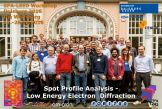
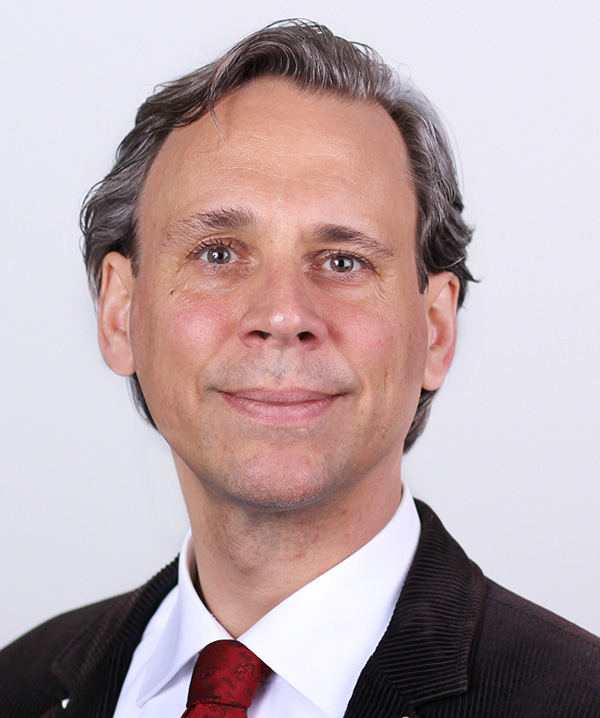
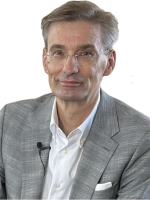
Prof. Dr. Michael Horn-von Hoegen is a full professor in the Faculty of Physics at the University of Duisburg-Essen , Germany. His research focuses on ultrafast structural dynamics , surface physics , and 2D materials , particularly using electron diffraction and plasmonic imaging techniques. He leads the Horn-von Hoegen Group , which plays a central role in the Collaborative Research Center CRC 1242 Non-Equilibrium Dynamics of Condensed Matter in the Time Domain , where his team investigates driven phase transitions and phonon systems with sub-femtosecond temporal resolution. Location: Office Window MF260, Faculty of Physics, Lotharstr. 1-21, 47057 Duisburg Contact: Tel. +49 (203) 379 1439 | Fax +49 (203) 379 1555 His research spans ultrafast electron diffraction of photo-induced phase transitions in atomic wires and topological materials , with recent breakthroughs on Kibble-Zurek dynamics in the Si(001) surface and chiral plasmon polaritons . The group’s 15 most recent publications (2025-2022) address phenomena such as negative thermal expansion in 2D materials , electron-phonon coupling in Pb/Si heterostructures , and quantum pathway analysis in Bismuth films . These works are categorized under disciplines like Condensed Matter Physics , Nanooptics , and Ultrafast Dynamics , with subfields including Ising Model Transitions , Plasmon Focusing , and Time-Resolved Diffraction . Prof. Horn-von Hoegen serves as DFG Liaison Officer for the University of Duisburg-Essen, providing guidance on Deutsche Forschungsgemeinschaft (DFG) proposals . His group has mentored notable researchers including Dr. Simon Sindermann (postdoc at IBM), Dr. Anja Hanisch-Blicharski (Leopoldina Fellow), Dr. Hichem Hattab (Leopoldina Fellowship), and Dr. Marin Petrovic (Humboldt Fellow). The group’s laboratory facilities include advanced ultrafast electron diffraction and photoemission microscopy systems, enabling studies of atomic-scale processes such as molecular dynamics simulations of laser-excited surfaces and domain wall motion in Si(553)-Au systems .
Magnus A. Rueping is a highly distinguished Professor of Chemistry at King Abdullah University of Science and Technology (KAUST) in Thuwal, Saudi Arabia. With an impressive h-index of 107 and over 35,502 citations from 430 documents, he stands as a leading figure in modern synthetic chemistry. His research group maintains active collaborations with 651 co-authors worldwide, reflecting his significant impact on the chemical sciences community. Professor Rueping's research spans multiple cutting-edge areas in organic chemistry and catalysis. His work primarily focuses on developing novel sustainable methodologies including photoredox catalysis, electrochemical synthesis, and mechanochemistry. He has made significant contributions to the fields of $$\text{C-H}$$ functionalization, late-stage modification of complex molecules, and sustainable chemical transformations. His research group explores the intersection of traditional organic synthesis with emerging technologies to create more efficient and environmentally friendly chemical processes, with particular emphasis on nickel catalysis and metal-organic frameworks. Analysis of Professor Rueping's recent publications (2023-2025) reveals a strong trend toward integrating multiple activation modes in single catalytic systems. His work increasingly combines photochemistry, electrochemistry, and mechanochemistry (particularly resonant acoustic mixing) to develop novel catalytic platforms that minimize waste and energy consumption. A notable research direction involves the application of copper nanoclusters and cerium-based metal-organic frameworks as heterogeneous photocatalysts for challenging organic transformations. His group has also pioneered methods for $$\text{C-Ge}$$ and $$\text{C-S}$$ bond formation with exceptional selectivity. Professor Rueping's research has attracted substantial funding and recognition, as evidenced by his high citation metrics and publication record in top-tier journals including Nature Communications, Journal of the American Chemical Society, and Angewandte Chemie. His work bridges fundamental chemical research with practical applications in pharmaceutical development and sustainable manufacturing. As a dedicated mentor, Professor Rueping has supervised numerous graduate students and postdoctoral researchers who contribute to his diverse research portfolio. His laboratory operates state-of-the-art facilities for advanced organic synthesis, photochemistry, electrochemistry, and materials characterization. Current research directions include developing new methodologies for late-stage functionalization of pharmaceutical compounds, creating sustainable approaches to chemical manufacturing, and engineering novel catalytic materials for energy applications. His group's recent expansion into diagnostic technologies (nanobody-based lateral flow assays) demonstrates the versatility and interdisciplinary nature of his research program.
Prof. Gabriele Schrag holds the Professorship of Microsensors and Actuators at the Technical University of Munich (TUM), within the TUM School of Computation, Information and Technology. Her research focuses on MEMS (Micro-Electro-Mechanical Systems), including microsensors, actuators, and their applications in acoustics, microfluidics, and bioengineering. She has pioneered work in virtual prototyping for system-level modeling to enhance device robustness and performance. Education: PhD (summa cum laude) from TUM on 'Modeling coupled effects in microsystems' Habilitation in sensor systems technology (2018) Acting head of the Chair of Technical Electrophysics (2018-2023) Research emphasizes acoustic MEMS transducers , electrohydrodynamic printing , and physics-based modeling . Notable projects include developing piezoelectric MEMS microphones with corrugated membranes and integrated micropump systems. Awards include the Bavarian Prize for Good Teaching (2021) and Eurosensors Fellow Award (2019). Her work bridges virtual prototyping with real-world applications , addressing challenges in miniaturization, energy efficiency, and sensor integration for medical and industrial systems.
Prof. Dr. Sebastian Schlücker is a full professor in the Department of Physical Chemistry at the University of Duisburg-Essen , where he leads the Molecular Biophotonics and Nanodiagnostics research group within the Faculty of Chemistry. He is actively engaged in research, teaching, and academic leadership, with a strong focus on advanced spectroscopic techniques for biomedical and analytical applications. His research interests lie at the intersection of nanophotonics, plasmonics, and bioanalytical chemistry . Key areas include surface-enhanced Raman spectroscopy (SERS) , single-particle spectroscopy , laser diagnostics , and the design of functionalized metal colloids for biosensing and tumor diagnostics. He emphasizes a theory-guided approach combining simulation and experiment to tailor nanoparticle properties. His recent publications (2023–2025) reflect a strong trend toward quantitative, label-free molecular diagnostics , point-of-care testing , and in situ monitoring of catalytic and biological processes . The work spans fundamental plasmonics to clinical applications, particularly in cancer detection and immunoassays using SERS nanotags. International Raman Innovation Prize He mentors students and researchers, supervises theses, and collaborates widely across disciplines. His group develops advanced instrumentation, including portable SERS readers , fs-laser laboratories , and automated nanoparticle synthesis systems (e.g., BONAPARTE robot). He teaches master’s courses such as NanoBioPhotonics and Optical Spectroscopy , and is involved in STEM outreach.
Anna C. Balazs is Distinguished Professor and John A. Swanson Chair of Engineering in the Department of Chemical Engineering at the University of Pittsburgh, with an adjunct appointment in Chemistry and visiting professorships at Scripps Research Institute, UT-Austin and Oxford University. In 2025 she receives the €10,000 Gutenberg Research Award from Johannes Gutenberg University Mainz (JGU) for her pioneering theoretical work on smart soft materials. She earned an A.B. in Physics from Bryn Mawr College (1975) and a Ph.D. in Materials Science from MIT (1981), followed by post-doctoral research at Brandeis, MIT and UMass. Research interests span theoretical and computational soft-matter physics, focusing on: Statistical-mechanical modelling of polymer blends and composites Self-oscillating and chemo-responsive hydrogels Active matter, enzyme-powered swimmers and self-propelling sheets Self-healing, shape-morphing and bio-inspired materials Computer simulation of colloidal and interfacial phenomena Recent publications (2023-2025) demonstrate a clear trend toward integrating chemistry, fluid mechanics and elasticity to create life-like, autonomous soft machines. Key contributions include: Harnessing enzyme pumps to drive macroscopic sheet locomotion Designing chemically communicating micro-post arrays Creating dissipative materials with programmable, hierarchical 3-D architectures Scientific awards include: Gutenberg Research Award 2025 Polymer Physics Prize, American Physical Society SF Boys-A. Rahman Award, Royal Society of Chemistry Langmuir Lectureship Award, American Chemical Society Election to the U.S. National Academy of Sciences (2021) She serves on the Advisory Board of the DOE-BES Materials Council and on editorial boards for Langmuir , Soft Matter and Polymer Reviews . Her group collaborates closely with experimental teams world-wide, including the DFG-NSF “Confine” partnership with JGU and the CoM2Life Cluster of Excellence initiative.
Professor Gernot Sieg holds the Chair of Industrial Organization with a focus on Infrastructure and Transport Economics at the University of Münster, leading the Institute of Transport Economics. He previously served as Director of the Institute of Economics at TU Braunschweig and has held visiting positions at institutions like the University of Southern California. His academic background includes a Dr. rer. pol. (1993–1999) and Habilitation (1993–1999). Prof. Sieg’s research focuses on transport markets, regulatory economics, and infrastructure policy. Notable projects include the CRC 1385 on Law and Literature, evaluating bicycle traffic optimization (Leezenflow), and analyzing aviation slot regulations. He advises the Federal Ministry for Digital and Transport’s Scientific Advisory Board. His research interests span transport infrastructure financing, traffic flow dynamics, and environmental policy. Recent work addresses vehicle value externalities, phantom jam costs, and the economic impact of speed limits. He teaches courses on competition regulation, transport economics, and industrial organization. Prof. Sieg frequently engages with public policy debates, contributing to media discussions on infrastructure rehabilitation, climate policy, and mobility transitions. His work bridges academic research with practical policy solutions, emphasizing sustainable and equitable transport systems.
Rainald Loehner is a Distinguished Professor of Fluid Dynamics at George Mason University's Center for Computational Fluid Dynamics. Since 2003, he has led the Center for Computational Fluid Dynamics at George Mason University. He is currently a Hans Fischer Senior Fellow at the Technical University of Munich's Institute for Advanced Study (TUM-IAS) for 2023, hosted by Professors Kai-Uwe Bletzinger and Roland Wüchner in the 'Adjoint-Based System Identification of Large-Scale Structures' Focus Group. Loehner received his Diplom Ingenieur (Maschinenbau) degree from the Technical University of Braunschweig, and his PhD and a DSc in civil engineering from the University College of Swansea, Wales. After teaching at Swansea for a year, he worked at the Naval Research Laboratory in Washington, DC, followed by a research professorship at George Washington University. He joined George Mason University as an associate professor and was promoted to full professor in 1995 and distinguished professor in 2004. With over 35 years of experience, Professor Loehner's research spans the complete pipeline of numerical solvers and simulation tools. His expertise includes pre-processing, grid generation, numerical methods, field solvers, parallel computing, adaptive mesh refinement, fluid-structure interaction, shape optimization, system identification, and computational crowd dynamics. His current work focuses on developing advanced field solvers for compressible and incompressible flows, acoustics, electromagnetic wave propagation, heat and mass transfer, structural mechanics, and fluid-structure interaction. Key application areas include blast mitigation, ship hydrodynamics, blood flow, contaminant transport, and pedestrian safety. Loehner's recent research output (2020-2024) shows a strong trend toward digital twin technology and adjoint-based methods for structural analysis and optimization. His publications focus on high-fidelity digital twins for detecting structural weaknesses, risk assessment in engineering systems, and optimization of sensor placement. His work bridges computational mechanics with machine learning approaches, particularly in system identification and inverse problems, demonstrating how computational methods can solve complex real-world engineering challenges. 2020: Ranked #15119 in the Stanford List of Most Influential Scientists of the World; #8 in Aerospace and Aeronautics 2010: Distinguished International Career Award, Argentine Association of Computational Mechanics 2008: Fellow, International Association for Computational Mechanics 2006: Associate Fellow, AIAA 2005: Honorary Professor, University of Wales Swansea 2005: Advisory Professor, Shanghai Jiao Tong University 2004: Distinguished Professor of Fluid Dynamics, George Mason University 1999: Computational Mechanics Achievements Award, Japan Society of Mechanical Engineering 1993: Doctor of Science in Civil Engineering, University College of Swansea 1979-1983: Studienstiftung des Deutschen Volkes (Top 1% of German Students) Professor Loehner has mentored numerous students through his work at George Mason University and has supervised research in computational fluid dynamics, structural mechanics, and related fields. His research has been supported by various grants from government agencies and industry partners, enabling the development of advanced simulation tools applied in aerodynamics, hydrodynamics, shock-structure interaction, and medical applications. His codes and methods have been widely adopted in industry and academia for applications ranging from aircraft and ship design to medical simulations and urban pathogen transmission modeling. Loehner leads the Center for Computational Fluid Dynamics at George Mason University, which focuses on developing cutting-edge computational methods for fluid dynamics and related multiphysics problems. The center works on strategic application areas including blast mitigation, ship hydrodynamics, blood flow simulation, and pedestrian movement modeling. As a TUM-IAS Fellow, he collaborates with the Chair of Computational Modeling and Simulation at TUM on adjoint-based system identification of large-scale structures, bringing together expertise in computational mechanics and digital twin technology to address complex engineering challenges.
Prof. Thomas Mussenbrock is a Full Professor (W3) of Applied Electrodynamics and Plasma Technology at Ruhr University Bochum, leading the Applied Electrodynamics and Plasma Technology department within the Faculty of Electrical Engineering and Information Technology. He holds a PhD from Ruhr University Bochum (2004) and habilitation (2009), previously serving as a professor at Brandenburg University of Technology (2016-2020). His research focuses on low-temperature plasmas, nanoelectronics, and plasma modeling, with applications in material processing and energy systems. Education: Bachelor's (1995) Bielefeld University of Applied Sciences Master's (1999) Ruhr University Bochum PhD (2004) Ruhr University Bochum Habilitation (2009) Ruhr University Bochum His research interests include plasma dynamics in atmospheric pressure jets, memristive devices for neuromorphic computing, and energy-efficient plasma processes. Recent work emphasizes CO₂ conversion via plasma jets, electron dynamics in capacitive discharges, and scalable plasma modeling techniques. He collaborates on projects like the TopING doctoral program and plasma catalysis initiatives. Publications span journals and conferences, with a focus on experimental and computational plasma physics. He advises on graduate studies and chairs faculty committees at Ruhr University Bochum.
Dr. Magdalena Schreter-Fleischhacker works at the Technical University of Munich within the Professorship of Simulation for Additive Manufacturing . Her research focuses on physics-based computational modeling of coupled liquid-powder-gas dynamics in metal additive manufacturing, including melt pool dynamics and powder-gas interactions . She specializes in multi-phase flow modeling using cut-element and diffuse interface methods with continuous/discontinuous Galerkin schemes . She also develops constitutive models for quasi-brittle materials like 3D printed concrete and rock, incorporating anisotropy , gradient-enhanced damage mechanics , and micropolar continua . Her computational work leverages matrix-free algorithms and parallel computing , with significant contributions to the deal.II finite element library . Research Interests Physics-based computational modeling of coupled liquid-powder-gas dynamics in additive manufacturing Multi-phase flow simulation using sharp/diffuse interface methods Advanced constitutive modeling for quasi-brittle materials (rock, soils, 3D printed concrete) High-performance computing and matrix-free algorithms Notable Contributions Development of consistent diffuse-interface models for melt-vapor dynamics Improvements to continuum surface flux models in additive manufacturing Formulation of gradient-enhanced damage-plasticity models for geological materials Principal contributor to the deal.II library (version 9.6) Supervised Student Projects Johannes Resch (2024): DG-based thermo-hydrodynamic melt pool simulations Julian Brotz (2024): DEM-FEM coupling for fluid-powder interaction Andreas Ritthaler (2024): Matrix-free cutDG formulation for complex flows Tinh Vo (2023): Laser modeling for melt pool simulations Scientific Awards ERC Starting Grant recipient
Jens von Wolfersdorf is a Professor at the University of Stuttgart's Faculty of Engineering, Department of Mechanical Engineering. His research focuses on advanced thermal management systems for high-speed aerospace applications, particularly in the areas of heat transfer, fluid dynamics, and combustion. He specializes in experimental and numerical methods for analyzing complex flows in rotating and stationary cooling channels, transpiration cooling for rocket engines, and turbulence modeling. His work integrates cutting-edge techniques such as thermochromic liquid crystal (TLC) measurements, particle image velocimetry (PIV), and computational fluid dynamics (CFD) to validate novel cooling configurations. Key projects include the COOREFLEX-Turbo initiative and contributions to the European ATLLAS-II program for high-speed vehicle materials. Recent studies emphasize rotational heat transfer effects in two-pass cooling channels, additive manufacturing of ribbed cooling structures, and validation of coupled FEM-CFD frameworks. His research addresses challenges in aerospace thermal protection, turbine blade cooling, and scramjet combustor efficiency. Publications span over 15 years, with a focus on transient heat transfer, flow visualization, and material characterization for transpiration-cooled systems. Collaborations involve experimental facilities for high-speed flows and advanced thermal measurement systems.
Dr. Pouyan Ahmadi is a Researcher in the Department of Hydrogeology at the Helmholtz Centre for Environmental Research - UFZ, focusing on computational fluid dynamics (CFD), microplastic transport, and multiphase flow in porous media. He holds a PhD in Hydrogeology (2023) and M.Sc. in Reservoir Engineering (2017) from institutions including UFZ and Shiraz University. His research addresses environmental challenges such as microplastic distribution in lakes and the hyporheic zone, supported by projects like the TRACER PhD college and Helmholtz International Research School. Education: 2024–current: Researcher, UFZ Hydrogeology 2019–2023: PhD in Hydrogeology, UFZ & University of Bayreuth 2017–2018: Reservoir Engineer, Shiraz University 2014–2017: M.Sc., Reservoir Engineering, Shiraz University Research interests span CFD modeling, microplastic fate, and rock-fluid interactions. His work contributes to initiatives like the Sonderforschungsbereich 1357 on microplastics, emphasizing interdisciplinary approaches to environmental sustainability.
Markus Schubert is Professor of Process Engineering at Dresden University of Technology's Faculty of Mechanical Science and Engineering, appointed in September 2022. Previously, he served as Group Leader for Fluid Process Engineering at Helmholtz-Zentrum Dresden-Rossendorf's Institute of Fluid Dynamics (2017-2022) and led the 'Mehrphasenreaktoren' group (2012-2016). His academic background includes: Doctorate (summa cum laude) in Mechanical Science and Engineering, Technische Universität Dresden (2007) Studies in Process Technology and Engineering, Technische Universität Dresden (1997-2003) Professor Schubert's research centers on multiphase flow phenomena and reactor innovation, with expertise spanning bubble column hydrodynamics, distillation tray efficiency, and advanced reactor systems including rotating and foam-based designs. His experimental and computational work addresses mass transfer optimization and flow pattern characterization in complex industrial processes. Analysis of his 2009-2023 publications reveals consistent focus on multiphase flow visualization and reactor design, particularly using X-ray tomography (ERC XFLOW project) and CFD modeling for distillation and bubble column systems. Key trends include the integration of advanced imaging techniques with process optimization for separation efficiency. His scientific recognition includes: ERC Grant for XFLOW project (Ultrafast X-ray tomography of turbulent bubble flows, 2013-2016) Professor Schubert has secured competitive research funding including the ERC grant and led international collaborations at institutions like Université Laval and UNSW. His work bridges fundamental hydrodynamics with industrial applications in chemical and process engineering. He currently leads process engineering research at TU Dresden, building on his leadership of the Fluid Process Engineering group at HZDR where he directed experimental facilities for multiphase flow characterization and reactor development.
Prof. Dr. rer. nat. Rainer Leupers is a faculty member at RWTH Aachen University, chairing the Department of Software for Systems on Silicon. His research focuses on embedded systems, hardware-software co-design, virtual prototyping, and security in computing-in-memory architectures. He has published extensively on RRAM accelerators, logic locking, and neuromorphic security. Chair of Software for Systems on Silicon Research in hardware security and deep learning accelerators Recent publications on cross-tool virtual frameworks and thermal side-channel attacks His work bridges system-level modeling with practical security implementations, emphasizing reliability and performance in heterogeneous computing environments. Key trends in his 2025-2023 articles include compute-in-memory optimization, neural network inference efficiency, and security vulnerabilities in emerging hardware. Awards and formal recognitions are not explicitly detailed in the provided materials. He has not directly mentioned advising students or research grants in the given text fragments. The chair's contact information includes an office at ICT Cube 1, Electrical Engineering, Aachen, with direct email and website links.
Prof. Dr. Andrea Wichelhaus is a full professor and head of the Department of Orthodontics at the LMU University Hospital Munich. She holds a medical dentistry degree from the Universities of Cologne and Heidelberg (1985), a PhD (1987), and completed habilitation at the University of Ulm (1996). Her career includes roles as deputy director of the Department of Orthodontics at Ulm University (1990–1999) and professorships at the Universities of Basel (2008) and Munich (2008–present). She conducted research at Harvard University (1996). Research focuses on biomechanics, mechanobiology, and orthodontic materials. Key areas include orthodontic appliance design, force/moment analysis, and material testing. Awards include the 1995 Walter-Engel-Preis and the German Society of Orthodontics' best publication award. Publications span over 30 years, emphasizing clinical and biomechanical studies. Recent work explores NiTi alloys, CAD/CAM retainers, 3D-printed bonding trays, and robotic simulation systems (ROSS/HOSEA). Her textbook Kieferorthopädie - Therapie (2024) outlines advanced treatment concepts. Her team conducts interdisciplinary studies involving finite element analysis, in vitro testing, and clinical trials. Collaborations include biomechanical engineering and material science groups.
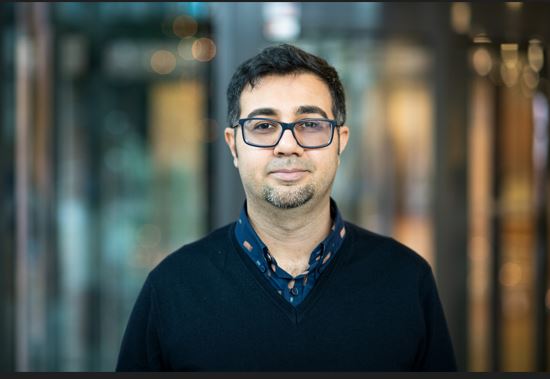
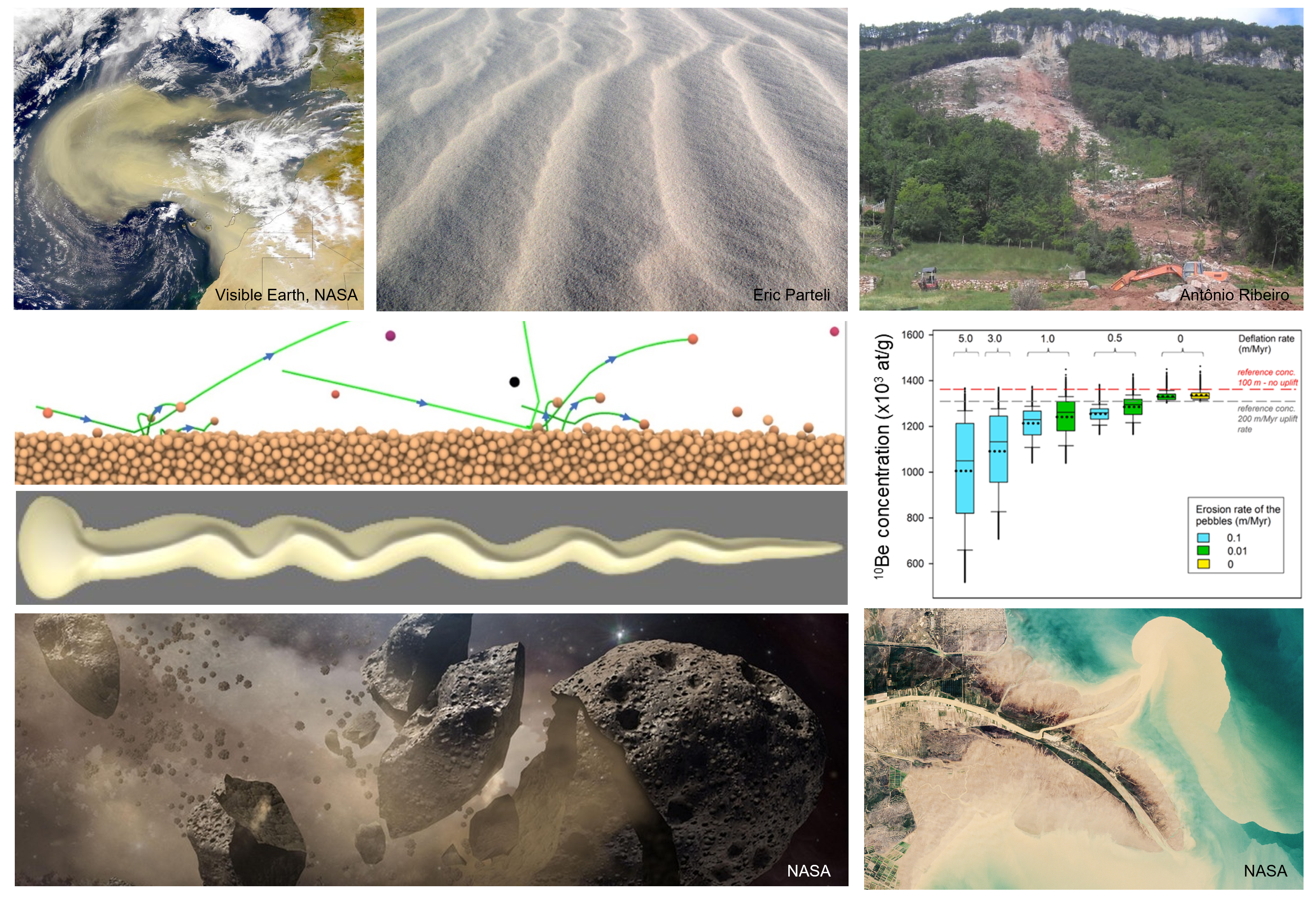
Dr. Eric Parteli is a Heisenberg Group Leader at the Faculty of Physics, University of Duisburg-Essen , with affiliations to the University of Cologne (Computational Geosciences) and The University of Alabama . He leads research on Earth surface particulate materials and their dynamics under wind, fluvial processes, and gravitational forces. Current and former students include PhD candidates, Master/Bachelor candidates, and research assistants like Cong Jiang , Maria Determann , Mateusz Kryger , and Joel Jankowiak . His group develops computational tools to model particle interactions and feedbacks with geomorphology, biosphere, and atmosphere across scales, with applications in climate science, planetary geophysics, and natural hazard risk assessment. Key research themes include aeolian processes , hydrological modeling , granular material behavior , and coupled Earth surface systems . No scientific awards are explicitly mentioned in the provided texts. His lab operates from Room MG 364 at the University of Duisburg-Essen and collaborates with the Computational Geosciences department at the University of Cologne. Recent publications highlight anomalous scaling in sand transport , angle of repose modeling , and regional hydrological systems in arid environments.