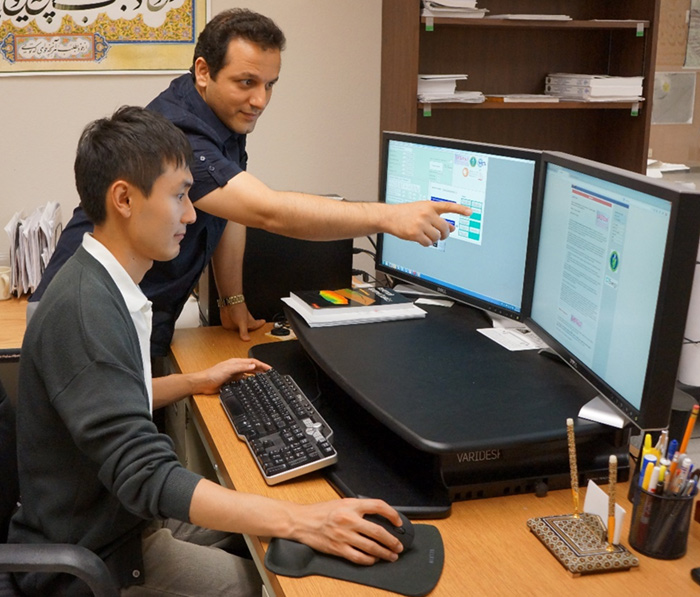
Seyyed A. Hosseini is a Research Professor at the Bureau of Economic Geology (BEG), Jackson School of Geosciences, University of Texas at Austin . His work focuses on subsurface fluid dynamics with applications to geological carbon storage (CO 2 sequestration) and underground hydrogen storage . Education: Ph.D. in Petroleum Engineering (University of Tulsa, 2008) M.S. in Biotechnology (Sharif University of Technology, 2005) B.S. in Chemical Engineering (University of Isfahan, 2002) Research Interests include: Multiphase fluid flow in porous media Pressure-pulse testing for CO 2 monitoring Reservoir engineering fundamentals Machine learning for subsurface energy projects Geomechanical impacts of fluid injection Environmental risk assessment for CO 2 and hydrogen storage Article Trends reveal his expertise in developing applied methodologies for CO 2 and hydrogen storage, emphasizing machine learning integration , 3D modeling , and fault leakage detection . Recent work explores deep learning workflows and microfluidic experiments for subsurface energy systems. Grants and Funding PI on a $1.5M DOE/NETL grant (2015) to study brine extraction for CO 2 storage pressure management Collaborative Initiatives include the SMART program for machine learning in CCS and partnerships with institutions in Mississippi, Texas, and the Gulf Coast . His research extends to laboratory experimentation following BEG's facility upgrades.
Dr. Qingshi Tu is an Assistant Professor in the Department of Wood Science at the University of British Columbia (UBC) Faculty of Forestry . His research focuses on integrating industrial ecology principles with computational modeling to advance sustainable bioeconomy development. Research Pillars: System-scale sustainability modeling using process simulation, statistics, and AI Environmental/economic/social impact assessment of bioenergy and bioproducts Interactions between bioeconomy, circular economy, and climate mitigation Technical Expertise: Life Cycle Assessment (LCA) Material Flow Analysis (MFA) Techno-economic Analysis (TEA) Machine Learning for sustainability Publication Scope: Dr. Tu has published 20+ articles in top journals like Journal of Industrial Ecology , Nature Communications , and ACS Nano , covering topics from nanomaterial synthesis to climate policy frameworks. His work emphasizes system-scale modeling of bioeconomy-climate interactions. Laboratory: Leads the Sustainable Bioeconomy Research Group , developing computational tools for evaluating emerging biotechnologies.
Sara Mana serves as Chairperson of the Department of Geological Sciences at Salem State University, where she teaches courses spanning Dynamic Earth (GLS 100), Volcanology (GLS 346), Field Geology II (GLS 485), and specialized topics like Geology in the Movies (GLS 108) and Forensic Microscopy (GLS 256). Her research integrates field geology with advanced analytical techniques to investigate active tectonic systems. Dr. Mana's research focuses on active tectonics and quantitative analysis in rift environments, particularly the East African Rift. She employs radiogenic isotope geochemistry , incompatible trace element analysis , and high-precision 40 Ar/ 39 Ar geochronology to study magma evolution, basin development, and deformation processes. Her work connects climate-tectonics interactions with ecosystem evolution, utilizing gas geochemistry and remote sensing for regional-scale analysis. Recent publications reveal persistent focus on East African Rift dynamics, with recurring themes of tephrochronology , rift-related magmatism , and paleoanthropological site correlation . Collaborative work spans Costa Rican volcanism, Appalachian metamorphism, and nuclear forensics, demonstrating interdisciplinary reach across geophysics, archaeology, and critical zone science. Dr. Mana has secured significant National Science Foundation funding: PI on $80,157 NSF award (2018-2021, extended to 2023 with $25,712 supplement) for the East African Rift Tephra Database project PI on $12,885 NSF sub-award for Miocene ecosystem research in Kenya External collaborator on $2,671,455 NSF Frontier Research project examining climate-tectonics interactions in the East African Rift She mentors undergraduates through senior research courses (GLS 500/501) and forensic geoscience internships (GLS 499), emphasizing field-based learning and analytical skill development.
Jonathan T. Fingerut serves as Professor and Chair of the Department of Biology at Saint Joseph's University in Philadelphia, where he also directs the Environmental Science and Sustainability Program. His research integrates hydrodynamics and behavioral ecology to investigate spatial distribution patterns of aquatic invertebrates, with dual focus on black fly larvae in stream ecosystems and invasive spotted wing drosophila in agricultural contexts. His academic foundation includes: BA in Biology (1994) from Cornell University PhD in Biology (2003) from the University of California, Los Angeles Dr. Fingerut's research program examines how flow environments shape invertebrate ecology through two primary avenues: (1) silk-mediated dispersal mechanisms in Simulium tribulatum larvae that enable habitat selection in turbulent streams, and (2) population dynamics of Drosophila suzukii affecting soft fruit crops. His work bridges fluid mechanics, entomology, and ecological theory to address fundamental questions about larval settlement while providing applied insights for invasive species management. Laboratory exercises developed in his biomechanics research demonstrate his commitment to innovative science education. Analysis of his 14 publications (2003-2015) reveals consistent emphasis on hydrodynamic-biological interactions across freshwater and marine systems. Key contributions include elucidating silk's role in larval dispersal, quantifying flow effects on invertebrate behavior, and developing novel methods for studying aquatic ecosystems. His collaborative approach—evident in partnerships with the McRobert lab on drosophila research—produces transdisciplinary insights spanning from molecular tagging techniques to ecosystem engineering. He leads an active research laboratory investigating silk production mechanisms in black flies and overwintering strategies of invasive drosophila. Current projects combine field observations with controlled experiments to understand how climate change may alter hydrodynamic constraints on aquatic invertebrates while developing sustainable management approaches for agricultural pests through population genetics studies.
Professor Alan McAlpine is a Professor at the University of Southampton's Institute of Sound and Vibration Research (ISVR), where he serves as the director of graduate school for engineering and physical sciences since 2020. He is a key member of the Rolls-Royce University Technology Centre in Propulsion Systems Noise and teaches Acoustics on the ISVR's Acoustical Engineering undergraduate and masters programmes, the only UK acoustics degree accredited by both the Institute of Mechanical Engineers and the Institute of Acoustics. His educational background includes: First-class honours in Mathematics from the University of Southampton (1993) PhD in Mathematics from the University of Bristol (1997) Professor McAlpine's research focuses on theoretical prediction methods for aircraft engine noise sources. His work primarily employs analytical and semi-analytical approaches to assess how design parameters affect noise levels. His key research areas include aeroacoustics, duct acoustics, nonlinear acoustics, aircraft engine installation acoustics, and hydrodynamic stability. His research has practical applications in reducing aircraft noise, particularly during critical phases like take-off. His recent publications reveal a concentrated research trajectory in duct acoustics and aircraft noise prediction, with particular emphasis on fan tone radiation mechanisms, sound propagation through engine ducts, and innovative acoustic liner development for noise reduction. His theoretical frameworks address critical challenges in modern aircraft design, especially regarding spectral broadening of turbine-tones and sound refraction effects caused by fuselage boundary layers. Professor McAlpine maintains significant external engagement: Council of European Aerospace Societies - Aeroacoustics Specialists Committee (2014-present) Institute of Acoustics Research Coordination Committee (2011-2020) Coordinator of the UK X-Noise Network in Aeroacoustics (2009-2015) As director of graduate school, Professor McAlpine supervises PhD students including Liam James Tope working on computational modeling. He has secured substantial research funding from EPSRC and the European Union for projects including 'High Frequency Sound Transmission in Flow Ducts,' 'X-Noise EV Project,' 'H2020 - ARTEM,' 'A McAlpine - Spectral Broadening in Aeroacoustics,' and several other EU-funded initiatives focused on aircraft noise reduction. Professor McAlpine works within the Rolls-Royce sponsored Propulsion Systems Noise group at the ISVR, collaborating with researchers like Dr. David Angland and Dr. Paul Murray. His theoretical work complements the institute's experimental capabilities, contributing to the development of quieter aircraft engine technologies through fundamental understanding of noise generation and propagation mechanisms.
Bill Sullivan is the Whipple-Coddington Associate Professor of Geology at Colby College, specializing in structural geology and tectonics. Colby College (2020–Present) Chair of the Geology Department (2015–2022; 2024–2025) Education: Ph.D. in Geology, University of Wyoming, 2007 M.S. in Geology, Virginia Tech, 2003 B.S. in Interdisciplinary Studies, Concord University, 2001 Dr. Sullivan’s research focuses on deformation mechanisms, strain localization, and the structural geology of western North America. He investigates fault processes at the brittle-viscous transition and microstructural evolution in tectonic settings. His publications span topics such as hydrothermal electrochemical gradients, strike-slip fault rheology, and transpressional deformation. These works often involve field studies in the Cheyenne belt, Klamath Mountains, and Great Basin. Scientific Awards: Whipple-Coddington Associate Professorship Dr. Sullivan has collaborated with undergraduate researchers and published extensively in journals like the Journal of Structural Geology and the Geological Society of America Bulletin .
Dr. Steve Witt is a Professor and Head of the International and Area Studies Library at the University of Illinois at Urbana-Champaign, where he also serves as Director of the Center for Global Studies. As a subject specialist for Global Studies and Japanese, he bridges library science with international academic collaboration. University of Illinois at Urbana-Champaign International and Area Studies Library Center for Global Studies European Union Center Center for East Asian and Pacific Studies His research examines global information networks through historical lenses, focusing on the Carnegie Endowment for International Peace's role in shaping internationalist thought through library collections. Current projects include analyzing Imperial Japan's contributions to early 20th-century internationalism and developing digital humanities methodologies to study the CEIP's curated book corpus. Publications highlight his expertise in privacy evolution within library associations, resource sharing for area studies, and sustainable library practices. He serves as editor for IFLA Journal , promoting translational research between theory and practice.
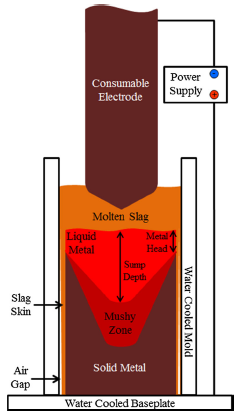
Dr. Matthew John M. Krane is a Professor in the Department of Materials Engineering at Purdue University and a member of the Purdue Center for Metal Casting Research. His work focuses on the design, development, and modeling of materials processes , particularly solidification and thermal processing of metal alloys, with strong emphasis on defect prevention and uncertainty quantification in numerical models. Current projects include grain-refined particle transport in DC casting , exergy optimization in copper smelting , and boron segregation in continuous casting . Past research includes through-process modeling of Al alloys , microsegregation studies , and laser hardening techniques . Scientific awards include an invited keynote lecture at the 2015 International Symposium on Liquid Metal Processing and Casting and multiple invited papers in high-impact journals.
Professor Nicholas Warren is a Chair in Sustainable Materials at the School of Chemical, Materials and Biological Engineering at the University of Sheffield. With a PhD from Sheffield and academic experience at Leeds University (2016-2024), his research integrates polymer chemistry with automation technologies. Education: University of Bristol (2005), University of Sheffield (PhD) Academic Positions: Postdoc at Sheffield (2005-2016), University Academic Fellow at Leeds (2016-2024), Associate Professor (2021-2024) Current Role: Chair in Sustainable Materials (2024-present) Research focuses on polymer science with flow chemistry , online monitoring , and artificial intelligence to advance sustainable materials. Key article trends include self-driving laboratories , multi-objective optimization , and nanostructured polymer systems . Scientific recognitions include: 2022 Macro Group UK Young Researchers Medal 2023 RSC Reaction Chemistry & Engineering Outstanding Early Career Paper Award Advisees span current and alumni PhD students like Dr Stephen Knox , Anna Morrell , and Dr Charlotte Pugsley . His team employs self-driving lab platforms that combine robotics, AI, and online analytics for accelerated materials discovery.
Dr Smitha Gopinath is a Lecturer in the School of Chemical, Materials and Biological Engineering at the University of Sheffield , where she leads research in sustainable engineering systems within the Sustainable Design Laboratory (SDL) . Education & Career Path PhD in Chemical Engineering, Imperial College London Post-doctoral researcher, Applied Mathematics and Plasma Physics Group, Los Alamos National Laboratory Research Focus Dr Gopinath’s interdisciplinary work centres on the design, calibration and operation of sustainable engineering systems . She develops high-fidelity models and large-scale optimisation algorithms tailored to energy and materials challenges. Core interests include: Thermo-mechanical energy conversion devices (heat pumps, organic Rankine cycles) Carbon-capture utilisation and storage (CCUS) via novel solvents and separation systems Power-grid expansion and operation for renewable integration and decarbonisation Methodologically, she integrates Integrated Molecular and Process Synthesis (IMPS) with Optimisation Accelerated by domain Knowledge (OAK) to co-design molecules, materials and flowsheets that meet stringent energy and environmental targets. Publication Landscape Across 2015–2025 her publications reveal a clear trajectory from fundamental thermodynamic measurements and molecular design toward rigorous optimisation of large-scale energy systems. Early work concentrated on CO₂ solubility and carbonation kinetics of steel slag, providing essential data for carbon-sequestration schemes. Subsequent papers introduced advanced optimisation frameworks—outer-approximation algorithms, exact reformulations and feasibility-based methods—applied to solvent-based CO₂ capture, organic Rankine cycle working-fluid selection and AC optimal power flow (ACOPF). Recent contributions benchmark global optimality certificates for ACOPF problems, underscoring her drive to bridge chemical process systems engineering with electrical power systems optimisation. Teaching & Mentoring Dr Gopinath teaches undergraduate modules: CPE440 (Particle Technology) CPE170 (Particle Technology) She actively invites prospective PhD students to join the Sustainable Design Laboratory, offering supervision on projects spanning sustainable process design, renewable energy systems and algorithmic optimisation. Laboratory & Collaborative Networks She directs the Sustainable Design Laboratory (SDL), a multidisciplinary team leveraging systems engineering, multi-scale modelling, process simulation and optimisation to re-imagine a sustainable chemical and energy industry. The SDL collaborates with international partners, including Los Alamos National Laboratory and leading researchers in applied mathematics and power systems engineering.
Haim H. Bau is the Richard H. & S. L. Gabel Professor of Mechanical Engineering at the University of Pennsylvania. His research bridges mechanical engineering, biomedical applications, and nanotechnology, focusing on microfluidics and molecular detection technologies. Key affiliations: School of Engineering and Applied Science, Department of Mechanical Engineering and Applied Mechanics Research Highlights: Active Control of Flow Patterns Carbon Nanopipettes for Cellular Probes Electrokinetics and Dielectrophoresis In Situ Electron Microscopy (Nanoaquarium) Magneto-Hydrodynamics (MHD) Lab-on-a-Chip for Point-of-Care Diagnostics Scientific Awards: Richard H. & S. L. Gabel Professorship Article Trends: Recent work emphasizes portable microfluidic diagnostics (e.g., SARS-CoV-2, HIV, Zika), CRISPR-enhanced mutation detection, and biophysical studies of microswimmers like C. elegans. Keywords include Molecular Diagnostics, Microfluidics, and Nanotechnology.
Christoph Dellago is a full Professor of Computational Physics at the Faculty of Physics of the University of Vienna, where he has been a faculty member since 2003. He currently serves as Director of the Erwin Schrödinger Institute for Mathematics and Physics, Head of the Computational and Soft Matter Physics Group, and Project lead of EuroCC Austria - National Competence Centre for Supercomputing. Previously, he served as Dean of the Faculty of Physics (2009-2012) and Coordinator of the Doctoral College Advanced Functional Materials (DCAFM). Full Professor, Faculty of Physics, University of Vienna (2003-present) Director, Erwin Schrödinger Institute for Mathematics and Physics (2017-present) Head, Computational Physics and Soft Matter Group (2024-present) Coordinator, Doctoral College Advanced Functional Materials (DCAFM) Austrian Representative, Council of CECAM Dellago received his PhD in Physics from the University of Vienna in 1996, followed by postdoctoral research at UC Berkeley as a Schrödinger Fellow of the Austrian Science Foundation. His research focuses on developing computational methods to study rare events in condensed matter systems, particularly transition path sampling methodology for simulating nucleation, chemical reactions, and biomolecular reorganizations. He has pioneered the application of machine learning to molecular structure recognition and potential energy surfaces. Recent work examines self-assembly of nanocrystals, biopolymer folding, aqueous interfaces, phase separation in alloys, thermo-polarization, cavitation, and freezing phenomena. Analysis of Dellago's recent publications (2023-2025) reveals a strong emphasis on machine learning applications in computational physics, particularly neural network potentials for simulating water interfaces, crystal defects, and phase transitions. His work bridges traditional statistical mechanics with modern computational techniques, creating powerful tools for studying complex dynamical processes that occur on timescales far beyond conventional molecular dynamics simulations. The publications demonstrate increasing integration of machine learning with rare event sampling methods, reflecting the cutting-edge direction of computational statistical mechanics. Förderpreis der Stiftung Futura zur Förderung junger Südtiroler im Ausland (1997) The Raymond and Beverly Sackler Prize in the Physical Sciences (2005) UNIVIE Teaching Award of the University of Vienna (2014) Dellago leads an active research group with multiple PhD students and postdocs, focusing on computational statistical mechanics. His group develops trajectory-based sampling methods and machine learning approaches for molecular simulation. He has secured significant funding through EuroCC Austria and various research platforms including the Research Platform Accelerating Photoreaction Discovery and the Research Platform Erwin Schrödinger International Institute for Mathematics and Physics. His research has been supported by numerous grants enabling advanced computational infrastructure for high-performance simulations. The Dellago Group operates within the Computational and Soft Matter Physics division at the University of Vienna, with strong connections to the Research Network Data Science. The group collaborates extensively with international research institutions and maintains close ties with the Erwin Schrödinger Institute, which Dellago directs. Their research environment combines theoretical physics, computational chemistry, and machine learning expertise to tackle fundamental questions in condensed matter physics and soft matter systems.
Dr. M Reza Kholghy is an Associate Professor and Canada Research Chair in Particle Technology and Combustion Engineering at Carleton University's Department of Mechanical and Aerospace Engineering. He directs the Energy and Particle Technology Laboratory (EPTL) where he focuses on sustainable industrial solutions. His academic credentials include a BASc in Aerospace Engineering from Sharif University of Technology, and MASc/PhD degrees in Mechanical Engineering from the University of Toronto, followed by postdoctoral work at ETH Zurich. Research interests center on: Industrial decarbonization through metal fuel combustion (aluminum/iron) and carbon management Hydrogen production via methane pyrolysis and metal-water reactions Advanced material synthesis including flame spray pyrolysis for catalytic films and alumina production Nanoparticle engineering with focus on soot formation dynamics and optical properties His publications predominantly explore nanoparticle synthesis mechanisms, soot formation modeling, and sustainable fuel technologies, with recent emphasis on hydrogen cogeneration and metal combustion. Experimental and computational approaches are equally represented across combustion diagnostics, reactor design, and molecular dynamics simulations. Major scientific recognitions include: Canada Research Chair (Tier 2) Vanier Canada Graduate Scholarship NSERC Postdoctoral Fellowship He leads the Energy and Particle Technology Laboratory with industry partnerships focused on sustainable technology development. The lab specializes in flame spray pyrolysis reactors, nanoparticle characterization (surface area, porosity, composition), and high-pressure reaction systems. Dr. Kholghy actively mentors students through capstone projects and research positions, though specific PhD/Master's advisees aren't named in available sources.
Sergio Alejandro Useche Hernandez is an active Assistant Professor specializing in transportation safety and traffic psychology, with 134 publications reflecting deep expertise in human behavioral factors within mobility systems. His research spans road safety compliance, sustainable transport adoption, and mental health impacts across diverse populations including cyclists, delivery workers, and public transport users. His primary research interests focus on the intersection of psychology and transportation engineering, particularly sensation seeking in vulnerable road users, gender disparities in mobility choices, and technology-induced distractions. He employs advanced methodologies including Structural Equation Modeling (SEM), cross-cultural surveys, and systematic literature reviews to investigate phenomena like e-scooter adoption barriers in developing countries and mental health outcomes among transport workers. Key contributions include the validated SSC scale for cyclist risk assessment and frameworks for evaluating sustainable mobility policies through interdisciplinary lenses. Analysis of his 15 most recent publications (2024-2026) reveals three dominant trends: (1) growing emphasis on digital distractions across transport modes (cycling, motorcycling, driving), (2) sophisticated gender-based analyses of mobility barriers and safety outcomes, and (3) methodological innovation through integrated theoretical frameworks like TPB-UTAUT. His work consistently bridges academic rigor with policy relevance, particularly regarding last-mile delivery risks and post-crash psychological recovery. While no specific scientific awards are documented in the source material, his extensive publication record in high-impact journals (e.g., Accident Analysis and Prevention , Transportation Research Part F ) demonstrates significant scholarly recognition. The absence of listed advisees suggests primary focus on independent or collaborative research rather than graduate supervision, though his faculty position implies potential mentoring activities. His work shows strong alignment with European mobility policy initiatives and cross-national studies spanning Spain, Australia, Latvia, and the Dominican Republic, indicating robust international collaboration networks.
Scott E. Parker is a Professor of Physics at the University of Colorado Boulder and a Fellow at both the Renewable and Sustainable Energy Institute (RASEI) and the Center for Integrated Plasma Studies (CIPS). His expertise lies in theoretical and computational plasma physics for magnetic fusion energy. Education: Ph.D. in Engineering Science, University of California, Berkeley B.S. in Nuclear Engineering and Mathematics, University of Wisconsin, Madison His research centers on plasma turbulence simulation using advanced computational methods. Key areas include gyrokinetic theory, tokamak edge physics, and quantum information science applications to plasma modeling. The group develops particle-based simulations in five-dimensional phase space to study transport in magnetically confined plasmas, utilizing massively parallel computing and scientific visualization. Analysis of his publications reveals consistent focus on numerical techniques for plasma turbulence, particularly trapped electron modes and zonal flows. His work bridges fundamental kinetic theory with practical fusion reactor challenges, demonstrating qualitative agreement with experimental transport observations in tokamaks. Awards: RASEI Fellow CIPS Fellow Professor Parker leads the Parker Research Group, mentoring graduate students in computational plasma physics. The group collaborates on extreme-scale computing projects for fusion energy research, though specific grant details are not provided in source materials. Their work is integral to advancing predictive capabilities for next-generation fusion devices. The research group maintains active projects in magnetic fusion energy, utilizing GEM simulations and multiscale kinetic methods to address edge turbulence and transport phenomena critical for reactor viability.