Alberto Milazzo is Full Professor of Aerospace Structures at University of Palermo's Engineering department. His research develops computational methods for aerospace structures, composite materials, and fracture mechanics. Teaching responsibilities include Aerospace Construction, Aerospace Structures, and Materials courses. Research advances numerical methods for structural analysis including discontinuous Galerkin formulations, boundary element techniques, and homogenization approaches for complex materials. Published work demonstrates applications in UAV design, morphing structures, and hydrogen storage systems for sustainable aviation. Recent projects involve European collaborations on multiscale analysis of aircraft structures.
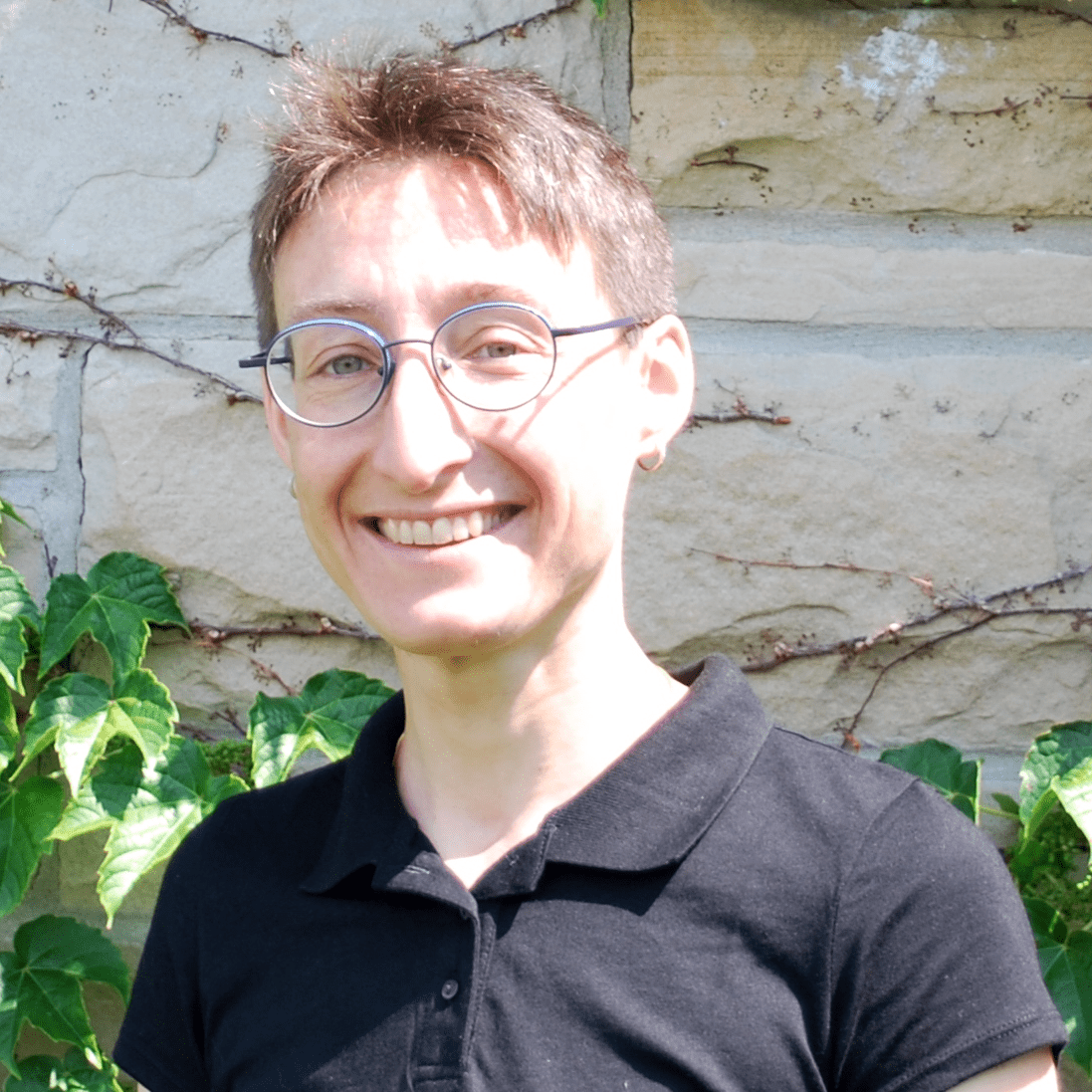
Walter Stanley is an Associate Professor at the University of Limerick, affiliated with the School of Engineering and the Bernal Institute. His research focuses on composite materials, mechanical characterization, manufacturing processes, and liquid composite moulding. He specializes in advanced materials for aerospace and engineering applications, with a particular emphasis on interlaminar toughness, hydrothermal conditioning effects, and additive manufacturing techniques. His work contributes to UN Sustainable Development Goals related to affordable and clean energy, industry innovation, and climate action through material science advancements. Key areas of exploration include thermoplastic-reinforced composites, benzoxazine resins, and laser-based powder bed fusion for metallic components. Stanley has published extensively on topics such as cure shrinkage in epoxy resins, interfacial fracture mechanics in composite joints, and the mechanical performance of thermoplastic-thermoset hybrid systems. His research integrates experimental analysis with computational modeling to address challenges in composite manufacturing and durability under extreme conditions. Notable collaborations include studies on post-processed stainless steel components and the development of novel testing methods for composite materials. His work bridges fundamental material science with industrial applications, emphasizing practical solutions for aerospace and structural engineering sectors.
Edward Cazalas serves as Assistant Professor in the Civil & Environmental Engineering Department within the University of Utah's College of Engineering. His primary academic appointment began August 2018 following a brief Visiting Assistant Professor role (May-July 2018). He directs the CAZ-RAD research group focused on radiation detection, nuclear security, and radiation effects. His research spans radiation detector development, quantum materials response to radiation, neutron spectrometry, and radiation effects on microelectronics. Key projects include quantum dot radiation response studies, neutron spectrometer development, and FLASH radiotherapy dosimetry. His group operates three specialized laboratories: East Lab (radiation detection electronics), West Lab (reactor-adjacent irradiation testing), and Computational Lab (modeling/simulation). Analysis of his recent publications reveals strong emphasis on quantum materials for radiation detection (perovskite-graphene devices), neutron detection alternatives to helium-3, and radiation effects in nanoscale systems. His work bridges fundamental physics with practical applications in nuclear security, reactor technology, and medical physics. Best Student Paper Award (ANS Radiation Protection Division, 2021) Cazalas has secured over $800,000 in external funding from DOE, DoD, and NIH for radiation effects research, including NNSA Consortium grants and STTR awards with InnoSys Inc. He advises multiple PhD and MS students, with recent graduates including Teancum Quist, Codey Olson, and Jesse Snow. His group maintains strong industry and national laboratory collaborations while operating within the University of Utah's TRIGA Reactor facility and Nanofab Labs. The CAZ-RAD group recently completed major infrastructure projects including installation of a pre-WWII steel shielding cave and PuBe neutron irradiation facility. Current initiatives focus on quantum dot radiation response, radiation-hardened stepper motors, and electron/photon emulation machines.
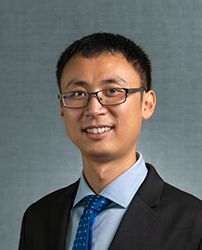
Xinchen Ni is an Assistant Professor in the Department of Mechanical Engineering at The University of Texas at Dallas (UT Dallas), affiliated with the Erik Jonsson School of Engineering and Computer Science. His research focuses on mechanics, programmable materials, soft robotics, and machine learning applications in materials science. Education : PhD in Mechanical Engineering, Massachusetts Institute of Technology (2020) SM (Master's) in Mechanical Engineering, MIT (2014) BS in Mechanical Engineering, Fudan University (2012) Research Interests : Ni explores advanced composites, bioresorbable materials, and soft robotics with applications in medical devices and wearable technology. His work integrates machine learning for materials analysis and combines experimental techniques like synchrotron X-ray tomography with computational modeling to study fracture mechanics and dynamic material behavior. Key Themes in Articles : Recent publications emphasize programmable shape-morphing materials, self-powered drug delivery systems, and wireless sensor networks for biomedical applications. His work bridges materials science, robotics, and medical engineering, with a focus on adaptive systems and smart materials. Awards and Recognition : Details pending explicit mention in text. Lab and Collaborations : He leads the Ni Research Group, focusing on interdisciplinary projects in soft robotics, bio-integrated electronics, and advanced materials. Collaborations span institutions like MIT and Johns Hopkins University.
Brandon Stark is a Research Assistant Professor in the Mechanical Engineering department at the University of California, Merced. His work focuses on advancing unmanned aerial systems (UAS) for remote sensing applications in agriculture, environmental monitoring, and cyber-physical systems. He leads research in optimizing UAS operations for precision agriculture, water resource management, and infrastructure inspection, with a strong emphasis on system integration and risk mitigation. His research interests span drone technology, fractional-order control systems, and the development of rigorous protocols for safe UAS operations. His lab website highlights ongoing projects in aerial imaging systems, SWIR spectroscopy, and human factors in UAS piloting. Stark has contributed to over 30 peer-reviewed articles since 2010, with a focus on practical applications of UAS in real-world scenarios. Stark's work bridges mechanical engineering principles with applied environmental science, addressing challenges such as crop water stress quantification, pipeline leak detection, and photovoltaic system optimization. His research also explores interdisciplinary areas like neurorobotics and biomedical signal processing, demonstrating a commitment to innovative cross-disciplinary approaches.
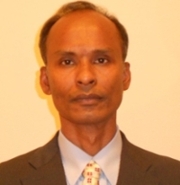
Dr. Vijaya Chalivendra is Professor and Graduate Program Director in Mechanical Engineering at the University of Massachusetts Dartmouth. He holds PhD (URI), MS, and BS (Sri Venkateswara University) degrees in Mechanical Engineering. His research focuses on experimental mechanics of composite materials, fracture behavior, damage sensing, and high-strain rate characterization. Funded projects include NSF and ONR grants totaling over $2.5M for work on additive manufacturing composites, marine sensing technologies, and interdisciplinary materials research. Dr. Chalivendra has published 70+ journal articles, graduated 16 MS students, and trained 33 undergraduates. His work on damage-sensing composites enables structural health monitoring applications. Recent publications explore machine learning approaches for composite fracture prediction and 3D printing parameter effects. He serves as Technical Associate Editor for Experimental Mechanics journal and has held visiting positions at California Institute of Technology.
Matthew Bandelt is an Associate Professor in the Civil and Environmental Engineering department at New Jersey Institute of Technology. His research focuses on advanced concrete materials, seismic performance of structures, recycled aggregate systems, and sustainable construction practices. He leads projects funded by the National Science Foundation and U.S. Department of Transportation, including studies on ductile concrete materials and large-scale 3D printing facilities. His work emphasizes durability, life-cycle environmental impacts, and innovative repair technologies. Notable contributions include mesoscale corrosion modeling, plastic hinge mechanics, and low-carbon concrete mixtures. Bandelt collaborates on federal grants addressing infrastructure resilience and has been featured in media discussions about New Jersey's bridge safety. Research Interests: High-Performance Fiber-Reinforced Cementitious Composites (HPFRCC) Seismic Design and Structural Performance Recycled Aggregate Concrete Systems Concrete Durability and Aging Sustainable Construction Materials Grants and Projects: CAREER Grant (NSF): System-level seismic performance for ductile concrete structures DOT Planning for Large-Scale 3D Printing in Civil Infrastructure Durability of Low-Carbon Concrete Mixtures Interactive Decision Support Systems for Tunneling Projects Media Engagement: Commented on post-earthquake bridge inspections, rapid repair systems, and student engineering competitions. Labs/Teams: Leads NJIT teams advancing concrete material innovation and structural resilience solutions.
Alam Shah is an Associate Professor in the Department of Mechanical and Industrial Engineering at Texas A&M University-Kingsville. His research focuses on composite materials for armor systems, fatigue/fracture mechanics, and structural design. He holds a Ph.D. from Louisiana State University (2005) and has extensive academic credentials including M.S. degrees from South Dakota School of Mines & Technology and Bangladesh University of Engineering & Technology. His work emphasizes numerical analysis, ballistic impact behavior, and renewable energy applications. Research interests include multi-scale modeling of composites, additive manufacturing, and renewable energy systems. Recent studies explore advanced hybrid composite armors, ceramic armor systems, and composite overwrapped pressure vessels. His publications (2020-2024) highlight computational modeling of material behavior under ballistic and impact loads, emphasizing failure mechanisms and structural integrity. Publications trends reveal a focus on composite armor systems, material layer interactions, and numerical simulation techniques. His work bridges theoretical models with practical applications in defense engineering and structural safety. Grants and advising details are not explicitly stated in provided materials.
Isabelle Villemure is a Full Professor in the Department of Mechanical Engineering at Polytechnique Montréal and Director of Engineering Studies in the Directorate of Academic Affairs and Student Experience. Her research focuses on the mechanical regulation of bone tissue growth, with applications in pediatric musculoskeletal pathologies. She leads the Pediatric Mechanobiology Laboratory (LMP) and is a member of the Institute of Biomedical Engineering. Dr. Villemure holds a B.Eng. from Polytechnique Montréal, an M.Sc.A. from the University of British Columbia, a Ph.D. from Université de Montréal, and a Postdoc from the University of Calgary. Her expertise spans biomedical engineering, biomechanics, and finite element modeling. Her research integrates three core areas: experimental tissue mechanics, mechanotransduction studies, and implant design for growth modulation. Key projects include developing origami-inspired metamaterials for tissue engineering and investigating distraction osteogenesis techniques. She has supervised over 28 graduate students, contributing to advancements in spinal biomechanics, bone regeneration, and surgical device innovation. Notable grants include a $1.65M award for mentorship programs (2020) and TransMedTech Institute support (2017). Her work has been featured in Materials & Design , Spine Deformity , and Scientific Reports , among others.
Ronaldo Borja is a Professor of Civil and Environmental Engineering at Stanford University, affiliated with the School of Engineering. He holds editorial roles at Acta Geotechnica and the International Journal for Numerical and Analytical Methods in Geomechanics . His research focuses on computational mechanics, geomechanics, and geosciences, particularly in strain localization, coupled hydromechanical processes, and finite element modeling of geological materials. He earned his PhD from Stanford University in 1984. Education: PhD, Stanford University (1984). Research interests include: computational poromechanics, shale mechanics, fluid-structure interaction, and anisotropic plasticity. He has authored textbooks such as Plasticity Modeling & Computation (Springer, 2013) and edited volumes on multiscale geomechanics. His work bridges microscale characterization (e.g., nanoindentation of shale) with macroscale phenomena like landslide dynamics and fault rupture modeling. Key awards include the 2016 ASCE Maurice A. Biot Medal. He teaches courses like CEE 101C (Geotechnical Engineering), CEE 281 (Finite Elements), and advanced doctoral courses in computational plasticity. Lab activities include projects on shale deformation, pore-scale modeling, and multiphase poromechanics. His research emphasizes multiscale approaches, combining experimental data with numerical simulations to address challenges in energy and geohazard mitigation.
Dr. Chloé Arson is a Professor in the Department of Earth and Atmospheric Sciences at Cornell University and an adjunct faculty member at Georgia Tech’s School of Civil and Environmental Engineering. She holds a Ph.D. in geomechanics from École Nationale des Ponts et Chaussées (2009) and has held academic roles at Texas A&M (2009–2012) and Georgia Tech (2012–2023) before joining Cornell in 2023. Research: Her work focuses on damage and healing in rock mechanics, AI-driven subsurface exploration, and bio-inspired geotechnical systems. Key areas include computational modeling of porous media, geothermal energy systems, and climate change mitigation through poromechanics. Her lab develops tools like the Burrowing Robot with Integrated Sensor System (BRISS) and investigates slime mold network dynamics for infrastructure adaptation. Teaching: Teaches mechanics-focused courses at Cornell and Georgia Tech, including 'Modern Structures,' 'Theoretical Geomechanics,' and 'Finite Element Method for Porous Media.' Awards: 2023 Susan G. and Christopher D. Pappas Professorship 2021 NSF BRITE Award 2016 NSF CAREER Award Service: Editorial roles in Scientific Reports and Open Geomechanics , leadership in ASCE committees, and director of the CEE Gateways to France program fostering Franco-American collaborations. Labs/Teams: Leads the Arson Lab at Cornell, focusing on computational geomechanics, AI integration, and bio-inspired engineering solutions.
Lindon Roberts is a Lecturer in the School of Mathematics and Statistics at the University of Sydney . He holds a DPhil (Doctor of Philosophy) from the University of Oxford and previously served as an MSI Fellow at the Australian National University. His research focuses on numerical optimization, including nonconvex, derivative-free, and stochastic optimization, with applications in machine learning. He currently teaches courses such as MATH2070 (Optimization and Financial Mathematics) and FMAT3888 (Projects in Financial Mathematics). Education & Professional Background: PhD (DPhil) in Mathematics, University of Oxford MSI Fellow, Australian National University Research Interests: Numerical optimization techniques Derivative-free and stochastic optimization methods Algorithm design for machine learning applications Nonconvex optimization challenges His work bridges theoretical optimization and practical implementation, particularly in imaging and data-driven fields. Funding & Grants: 2024: 'Robust Derivative-Free Algorithms for Complex Optimisation Problems' (Australian Research Council DECRA) 2022: 'Theory and Algorithms for Numerical Optimisation' (University of Sydney Faculty Startup) Key Research Trends in Publications: Recent articles emphasize optimization algorithms for imaging (e.g., X-ray and neutron beam techniques) and bilevel learning frameworks. His work on inexact hypergradients and scalable subspace methods highlights advancements in handling complex optimization landscapes.
Dr. Ravindra Duddu is an Associate Professor of Civil and Environmental Engineering and Mechanical Engineering, and an Assistant Professor of Earth & Environmental Sciences at Vanderbilt University's School of Engineering. He joined Vanderbilt in 2012 after postdoctoral research at Columbia University and the University of Texas at Austin. His research focuses on computational solid mechanics, multi-scale/multi-physics fracture mechanics, and constitutive modeling. He develops advanced numerical methods like phase-field fracture models, extended finite element methods, and parallel computing frameworks to study ice mechanics, material degradation, and geophysical processes. Education: Ph.D. in Civil Engineering, Northwestern University M.S. in Civil Engineering, Northwestern University B.Tech. in Civil Engineering, Indian Institute of Technology Madras Research Interests: Dr. Duddu’s work bridges computational mechanics and geoscience, with emphases on: (1) multi-scale modeling of quasi-brittle materials (e.g., ice, ceramics) under thermal-mechanical stresses; (2) microstructure evolution in superalloys for aerospace applications; and (3) computational glaciology, including ice shelf calving and hydraulic fracture. His methods leverage C++, FORTRAN, and commercial FEA tools like ABAQUS. Key Projects: ADVISER: Cloud-based simulation environment for geoscience Phase-field modeling of ice cliff stability and supraglacial lake drainage CNN-based surrogate models for composite material optimization Grants & Outreach: Recipient of NSF CAREER Award (2019) for ice shelf modeling and educational outreach. Active in interdisciplinary initiatives like CryoCommunity, promoting equity/diversity in polar sciences.
Dr. Madhav Nepal is a Senior Lecturer at the School of Architecture & Built Environment, Faculty of Engineering at Queensland University of Technology (QUT). He holds a Ph.D. in Civil Engineering from the University of British Columbia and has extensive academic qualifications in construction engineering and project management. His research focuses on Building Information Modelling (BIM), sustainable construction practices, project lifecycle management, and infrastructure asset management. Dr. Nepal has supervised numerous postgraduate research projects, including work on BIM implementation, power plant risk assessment, and e-tendering readiness in construction. Education: Ph.D., Civil Engineering (Project & Construction Management), University of British Columbia (2011) M.Sc., Building (Project Management), National University of Singapore (2004) M.Eng., Civil Engineering (Construction Engineering & Management), Asian Institute of Technology (2001) His research interests span BIM integration in construction workflows, ICT applications for sustainability, and risk modeling in large infrastructure projects. Recent work emphasizes machine learning applications for urban sustainability and ontology-based risk management in public-private partnerships. Dr. Nepal actively contributes to teaching units like Project Management Principles (BEN610/PMN610) and Managing Project Cost (BEB113). His publications highlight innovations in BIM adoption frameworks, cost overrun risk assessment methodologies, and safety inspection technologies using mobile computing. Supervision highlights include doctoral work on BIM-GIS infrastructure frameworks and cost overrun modeling in power plants. He has collaborated on interdisciplinary projects addressing nonconformity in construction supply chains and smart building technologies for UAE prisons.
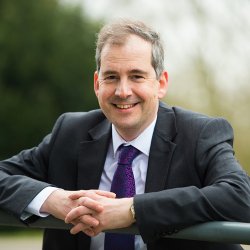
Professor Paul Smith is a leading academic in composite materials at the University of Surrey, holding roles such as Executive Dean of the Faculty of Engineering and Physical Sciences. He earned his first engineering degree and PhD from the University of Cambridge. His research focuses on composite material behavior, fracture mechanics, and infrastructure asset management, particularly cast iron pipelines. Collaborations include long-term work with Thames Water on water infrastructure. Key awards include Fellowship of the Institute of Materials, Minerals and Mining (FIMMM) and Chartered Engineer (CEng) status. Research interests span composite materials' mechanical properties, damage modeling, and sustainable materials. His work bridges theoretical and applied engineering, contributing to both academic advancements and industry applications. Recent studies address structural supercapacitors, energy-absorbing materials, and lifecycle assessments of composites.


/prod01/production-cdn-pxl/media/umassdartmouth/college-of-engineering/mne-dept/faculty-staff-students/Vijay-Recent-photo_2025_1-Chalivendra.jpg)