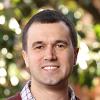
Ceri Hammond is a Senior Lecturer and Reader in Catalysis at Imperial College London's Department of Chemical Engineering, Faculty of Engineering. He leads the Hammond Lab, focusing on catalytic processes, biomedical engineering, and sustainable chemistry. His research integrates materials design, in situ spectroscopy, and reaction engineering. Key areas include biomass upgrading, C1 chemistry, and nanotechnology-driven cancer therapies. Education: PhD from Cardiff Catalysis Institute under Prof. Graham J. Hutchings. Postdoctoral work at ETH Zürich and Stanford University. Affiliations: Hammond Lab, Institute for Molecular Science and Engineering. Funding: Royal Society, Leverhulme Trust, RSC, EPSRC, and industry partners. Research Interests: Catalysis: Development of heterogeneous catalysts for biomass conversion, CO 2 methanation, and C1 chemistry. Innovations in catalyst stability and process intensification. Bio-medical Engineering: Nanoparticle-based targeted cancer therapies, leveraging expertise in nanotechnology. Publications: Over 50 peer-reviewed articles, with notable work on Sn-Beta catalysts, methane oxidation, and photocatalytic fluorination. Recent trends emphasize sustainable catalytic processes and biomedical applications. Awards: Harrison-Meldola Memorial Award, Royal Society University Research Fellowship. Lab Team: 1 PI, 2 PDRA, 7 PhD students, and undergraduate researchers. Labs/Teams: Hammond Lab at Imperial's South Kensington Campus, collaborating with multidisciplinary groups like the Institute for Molecular Science and Engineering.
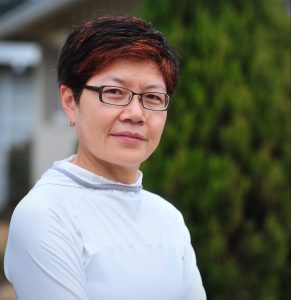
Professor Jun Huang is a faculty member in the School of Chemical and Biomolecular Engineering at the University of Sydney, where he holds the rank of Professor and is Director of the Laboratory for Catalysis Engineering. He is also a Domain Leader for Materials at the nanoscale at Sydney Nano Institute and a member of several interdisciplinary institutes, including the China Studies Centre and Sydney Institute of Agriculture. His research focuses on catalysis engineering, with an emphasis on developing sustainable processes for renewable fuels, pollutant treatment, and greenhouse gas mitigation. Huang has held prestigious awards such as the Australia Research Council Future Fellowship (2022) and the Sydney Accelerator Fellowship (2018). Education: Huang earned his PhD from the University of Stuttgart (2008) and completed postdoctoral research at Georgia Institute of Technology and ETH Zurich. He joined the University of Sydney in 2010 as a Lecturer, advancing to Senior Lecturer, Associate Professor, and Professor. Research Interests: Huang's work centers on catalyst design for green chemical processes, including biomass conversion to biofuels, wastewater treatment, and CO2 utilization. He emphasizes sustainable manufacturing and environmental impact reduction through innovative catalytic systems. Current Projects: These include catalytic transformation of hydrocarbons/CO2/biomass, nano-catalysts for renewable energy, and advanced NMR spectroscopy for catalysis analysis. Collaborative projects involve anti-cancer therapies and drug pharmacology studies. Awards: Over 15 awards, including the 2021 ACS Sustainable Chemistry & Engineering Lectureship and 2017 Vice-Chancellor’s Research Excellence Award. Teaching: Huang instructs courses such as CHNG2801 (Conservation Processes), CHNG3802 (Industrial Systems), and advanced chemical engineering topics. He supervises PhD/Master students in catalysis and sustainable engineering. Labs/Teams: Leads the Catalysis Engineering Lab and collaborates with Sydney Nano Institute on nanomaterials research.
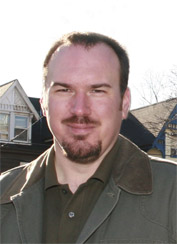
Eralp Demir is a Post-Doctoral Researcher at the Department of Engineering Science, University of Oxford. His research focuses on materials mechanics, crystal plasticity, and finite element methods. He holds a PhD from RWTH Aachen University and has conducted research at institutions including Carnegie Mellon University, Max Planck Institute, and Cornell University. His current work involves developing the OXFORD-UMAT framework for fusion energy materials in collaboration with UKAEA. He specializes in in-house finite element code development and commercial software integration (e.g., Abaqus, MSC Marc). His expertise spans computational materials modeling, microstructural analysis, and experimental validation using techniques like 3D XRD. Education: PhD in Engineering Science, RWTH Aachen University Advanced Studies at Carnegie Mellon University (Mechanical Engineering), Cornell University (MAE), and others Research Interests: Crystal plasticity modeling, fusion energy materials, finite element method development, microstructural mechanics, and additive manufacturing. His work bridges computational simulations with experimental techniques to understand material behavior under extreme conditions. Labs/Teams: Collaborates with the Tarleton Research Group at Oxford and UKAEA on fusion energy projects. Active in developing open-source tools for material modeling.
Professor Frederic Coulon holds the position of Professor of Environmental Chemistry and Microbiology at the Cranfield Water Science Institute, part of Cranfield University's School of Management. His work focuses on transdisciplinary environmental science, including soil and water chemistry, bioremediation, wastewater treatment, and risk assessment. He leads research on microbial interactions in engineered systems, biodegradation of petroleum hydrocarbons, and emerging contaminants. His professional interests span soil and water chemistry, fate of chemicals in environmental systems, hazardous waste site remediation, and policy-influencing research. Key collaborators include BBSRC, NERC, Defra, and the European Commission. He has advised on contaminated land management and developed solutions for pragmatic risk-based remediation strategies. Research activities include microbial adaptations in cold environments, environmental monitoring technologies, and anaerobic digestion optimization. Over 200 peer-reviewed articles highlight his contributions to environmental engineering and science, with a focus on bioremediation, bioaerosol risk assessment, and sustainable waste management. Current projects address challenges in low-carbon remediation, landfill mining, and antimicrobial resistance in agricultural environments. He supervises multiple PhD students and collaborates internationally on initiatives like the UK-India vWa project and the REGENERATIS program for metallurgical site regeneration.
Gary Koenig is Associate Professor of Chemical Engineering at the University of Virginia. His research program focuses on advanced materials for energy storage systems, particularly lithium-ion batteries and flow batteries. He holds a PhD from University of Wisconsin-Madison and completed postdoctoral research at Argonne National Laboratory. His group develops novel electrode architectures, including thick sintered electrodes and all-active-material designs, to improve battery energy density and rate capability. Research spans materials synthesis, electrochemical characterization, and transport modeling to overcome limitations in current energy storage technologies. Honors include the NSF CAREER Award (2017) and Fulbright Research Fellowship (2020). Recent publications examine electrode processing techniques, lithium extraction methods, and transport phenomena in battery systems. His work demonstrates innovations in electrode design that enable higher energy densities while maintaining cycling stability. He has taught courses including Applied Statistics, Chemical Reaction Engineering, and Energy Technology Options.
Jane Howe is an Associate Professor at the University of Toronto with joint appointments in the Department of Materials Science & Engineering and the Department of Chemical Engineering and Applied Chemistry. Her research focuses on in situ microscopy techniques, advanced materials characterization, and energy storage systems. Dr. Howe holds nine US patents related to electron microscopy and materials development, and has been recognized with two R&D 100 Awards for innovations in lithium battery technology and nano-structured carbon materials. Before joining UofT, Jane worked as a Senior Applications Scientist at Hitachi High-Technologies (2012–2017) and served as a Staff Scientist and Principal Investigator at Oak Ridge National Laboratory (2001–2012). She earned her Ph.D. in Ceramic Science from Alfred University in 2001, followed by a postdoctoral fellowship at ORNL. Her expertise spans materials processing, corrosion science, and advanced electron microscopy techniques, including in situ TEM and correlative microscopy. Her research portfolio includes over 100 peer-reviewed publications, with recent work emphasizing nanomaterials for energy storage, corrosion-resistant coatings for nuclear fuel containers, and Bayesian optimization of carbon nanolattices. Jane’s lab also explores microbial interactions in anaerobic cultures and novel catalysts for CO₂ hydrogenation, reflecting her interdisciplinary approach to materials science challenges. Education: Ph.D. in Ceramic Science, Alfred University (2001) Postdoctoral Fellowship, Oak Ridge National Laboratory (2001–2008) Key Awards: R&D 100 Award (2020s): Lithium Battery Technology R&D 100 Award (2020s): Nano-Structured Carbon Materials Grants & Collaborations: Active in Canada’s nuclear fuel container materials research and US-Canada cross-border microscopy partnerships.
Professor Timothy P. Bender is a distinguished faculty member at the University of Toronto, holding a primary appointment in the Department of Chemical Engineering and Applied Chemistry with cross-appointments in the Department of Chemistry and the Department of Materials Science and Engineering. His research laboratory focuses on developing novel organic electronic materials for applications in sustainable energy technologies, particularly organic solar cells and light-emitting devices. Professor Bender earned his B.Sc. and Ph.D. from Carleton University before joining the University of Toronto faculty in 2006. Prior to his academic appointment, he was a research staff member at the Xerox Research Centre of Canada from 2000-2006, where he filed over 65 US patents and published numerous peer-reviewed papers. His industrial research experience provides valuable perspective on the commercialization pathway for academic discoveries. Professor Bender's research program centers on the design, synthesis, and engineering of new materials for organic electronic devices, particularly organic photovoltaics (OPVs) and organic light-emitting diodes (OLEDs). His group has made significant contributions to the understanding and application of boron subphthalocyanines (BsubPcs) and silicon phthalocyanines (SiPcs), establishing methodologies for tailoring their chemical structure to optimize device performance. The Bender Lab employs a comprehensive 'applied chemistry-device continuum' approach, integrating computational modeling, synthetic chemistry, physical characterization, and device engineering to establish molecular structure-property relationships. Their research spans fundamental chemistry to applied device engineering, with strong emphasis on sustainability considerations throughout the materials development process. Analysis of Professor Bender's recent publications reveals a strong focus on developing BsubPcs as triplet harvesting materials in organic photovoltaics, engineering silicon phthalocyanines for enhanced electron transport, and exploring halogen bonding to control solid-state arrangements of these materials. His work demonstrates how molecular engineering can overcome traditional limitations in organic electronic materials, particularly regarding solubility, charge transport, and environmental stability. The research shows consistent progression toward higher efficiency devices with improved longevity. 2008 Professor Diran Basmadjian Teacher of the Year Award from the Department of Chemical Engineering and Applied Chemistry Corporate Special Recognition Award from Xerox Corporation for photoreceptor technology that enabled 'life of machine' parts Professor Bender actively mentors a diverse team of highly qualified personnel (HQP), including undergraduate students, graduate students, and post-doctoral fellows. His laboratory fosters cross-disciplinary collaboration between chemists, materials scientists, and chemical engineers, allowing students to engage with the complete research cycle from molecular design to environmental testing. He has secured funding from NSERC, SABIC Corporation, and other sources to support his research program, which maintains strong industrial partnerships with companies including SABIC Corporation, Siltech Corporation, and Xerox Corporation. His research bridges fundamental academic discoveries with practical commercial applications in the growing field of organic electronics. The Bender Laboratory maintains comprehensive infrastructure for organic synthesis, materials characterization, and device fabrication. Their facilities enable complete development cycles from molecular design to environmental testing of organic electronic devices. The lab's 'applied chemistry-device continuum' approach ensures that fundamental discoveries are rapidly translated into practical device applications, with particular emphasis on sustainability considerations throughout the materials development process. Current research directions include accelerated materials development, sustainable chemical processes, and life cycle analysis of organic electronic devices in real-world environments.
Michael Kleemann is an Associate Professor at the Faculty of Engineering Technology within KU Leuven , affiliated with the Department of Electrical Engineering (ESAT) . His research focuses on Power System Protection , Wireless Power Transfer , and Renewable Energy Integration , with a particular emphasis on inverter-based grid dynamics and fault analysis. Key Research Areas : Power system protection algorithms, capacitive wireless power transfer, fault location methods in medium voltage cables, and grid stability with high renewable penetration. Notable Projects : Lead projects on Protection of Future Distribution Grids (2021-2025), Capacitive Wireless Power Transfer (2020-2024), and Flux 50 ICON (2024-2026) for low-voltage DC grid protection. Publication Trends : Recent work explores capacitive wireless power transfer materials and control systems (2024-2025), fault detection algorithms for inverter-dominated grids (2023-2025), and machine learning applications in voltage regulation for photovoltaic-rich networks (2024). Teaching : Courses include Power System Protection (JPI322), Power Electronics (JPI0L8/JPI318), and Capacitive Wireless Transfer topics in graduate seminars.
Jeffrey T. Glass is a Professor of Electrical and Computer Engineering and Hogg Family Director of Engineering Management & Entrepreneurship at Duke University's Pratt School of Engineering. He holds the Hogg Family endowed chair in Engineering Management and Entrepreneurship. Previously, he served as Co-Director of The Institute for the Integration of Management and Engineering at Case Western Reserve University and held roles at Kobe Steel USA Inc. and North Carolina State University. Education: Bachelor of Science in Engineering (B.S.E.), Johns Hopkins University, 1981 Master of Science in Engineering (M.Sc.Eng.), Johns Hopkins University, 1983 Ph.D. in Materials Science and Engineering, University of Virginia, 1986 M.B.A., Duke University's Fuqua School of Business (Global Executive Program), 1999 Research Interests: His work focuses on electronic materials, miniature mass spectrometry, energy conversion/storage, and waste treatment systems. Key projects include developing nanomaterials (e.g., carbon nanotubes, graphene), advanced sensors, and applications like smart toilets and photoelectrochemical energy devices. His lab, the J.T. Glass Nanomaterials and Thin Films Lab, explores carbon nanostructures for supercapacitors, field emitters, and neural stimulation electrodes. Awards: Stansell Family Distinguished Research Award (2015) Highly Cited Researcher (2001) National Science Foundation Presidential Young Investigator Award Maurice Holland Award (2004) Grants & Advising: Glass has secured over $97M in research funding, advising numerous students and leading interdisciplinary initiatives. He consults for materials-related companies and serves on technical advisory boards. His innovation management work bridges business and technology, with courses like EGRMGMT 572. Labs & Teams: Leads the Nanomaterials and Thin Films Lab, collaborating on coded aperture mass spectrometers, supercapacitors, and waste disinfection systems. Teams include engineers, materials scientists, and industry partners.
Dr. Xi Yu is a Lecturer in Chemical Engineering at the University of Southampton, affiliated with the Faculty of Engineering and the Environment. He holds a Bachelor's from Tianjin University and a Ph.D. from the University of Sheffield. His research focuses on low carbon fuels, granulation techniques, and computational fluid dynamics. He has supervised PhD students such as Jerin Jacob and is currently accepting new PhD applicants in these areas. Dr. Yu's educational background includes degrees in Chemical Engineering and prior academic roles at Aston University and the Energy and Bioproducts Research Institute (EBRI). His work spans bioenergy systems, particle technology, and multi-physics modeling. Key research projects include advancements in biomass gasification, biofuel production, and sustainable energy systems. His publications emphasize computational modeling, fluid dynamics, and biomass utilization. Recent articles explore topics like absorption chiller systems, fluidization validation, and bio-oil aging strategies. He contributes to teaching modules such as CHEG3000 and CHEG3004, reflecting his commitment to both research and education.
Dr. Michael Stevens is a Senior Lecturer at University of New South Wales (UNSW) Canberra , where he focuses on advanced manufacturing and biomedical device control systems . His work bridges digital manufacturing for SMEs with smart artificial heart technologies , emphasizing industry collaboration and translational research. Specializes in physiological control systems for rotary blood pumps Develops unobtrusive fall detection systems for dementia patients Leads international projects on total artificial heart development Education : B.Eng (Medical - First Class Honours), Queensland University of Technology (2010) PhD in Physiological Control for Biventricular Assist Devices, University of Queensland (2014) Research Trends show consistent focus on: Machine learning for biomedical diagnostics (2018–2025) mmWave radar and thermal sensors in patient monitoring (2021–2024) Computational fluid dynamics in artificial heart modeling (2016–2024) Physiological control algorithms for rotary blood pumps (2011–2025) Scientific Awards : UNSW Scientia Education Award (2021) for contextual teaching Heart Foundation Runner-up for "Smart Artificial Hearts" pitch (2021) ARC PGC Supervisor Award (2017) for mentoring Grants & Supervision : Holds over $6 million in competitive funding including MRFF and ARC grants. Currently supervises 4 PhD students while maintaining industry partnerships with VitalCare and BiVACOR. Labs & Facilities : Works across UNSW Engineering labs and Graduate School of Biomedical Engineering platforms, including mock circulation loops and high-performance computing clusters for CFD simulations.
Christopher J. Stein is an Associate Professor of Theoretical Chemistry at the Technical University of Munich (TUM), part of the TUM School of Natural Sciences. His research focuses on theoretical (electro-)catalysis, developing electronic-structure models and solvation/embedding methods to understand and optimize catalytic processes. He leads the Stein Group, which integrates computational chemistry with high-throughput simulations to advance energy materials and battery technologies. His work emphasizes realistic modeling of catalyst behavior under operational conditions and has contributed to advancements in quantum embedding and automated reaction mechanism exploration. Education and Career: Earned his PhD in Theoretical Chemistry, with postdoctoral research at Caltech (2017-2020). Became an Associate Professor at TU Munich in 2023. He previously held roles at Karlsruhe Institute of Technology and contributed to projects like the BIG-MAP Materials Acceleration Platform. Research Interests: Theoretical chemistry, electrochemical interfaces, battery materials, high-throughput computational methods, and machine learning integration. His group explores topics like solid electrolyte interphases, charge transfer mechanisms, and automated workflows for materials discovery. Awards: While no explicit awards are listed, his contributions to materials acceleration platforms and theoretical catalysis have been widely recognized in the field. His work has been featured in journals like Journal of Chemical Physics , Chemical Science , and Angewandte Chemie . Labs/Teams: Leads the Stein Group at TUM, collaborating with institutions like the Munich Data Science Institute and MIRMI. His lab focuses on computational tools for accelerating energy material development, including quantum embedding and cloud-based simulations.
Benjamin E. R. Snyder is an Assistant Professor of Chemistry at the University of Illinois within the Department of Chemistry in the College of Liberal Arts & Sciences. He holds a B.S. in Chemistry and B.A. in Mathematics from the University of Rochester (2012), a Ph.D. from Stanford University (2018), and completed a postdoctoral fellowship at UC Berkeley (2019–2022). Research Focus: Inorganic, physical, and materials chemistry , emphasizing porous materials like zeolites and metal-organic frameworks for catalysis, CO₂ conversion, and toxic ion remediation. Key Techniques: Advanced spectroscopies (UV-vis-NIR, FT-IR, Raman, EPR), materials synthesis, and density functional theory calculations. Notable Awards: Arnold O. Beckman Postdoctoral Fellowship (2019–2022), NSF Graduate Research Fellowship (2014–2016), and 2024 ACS PRF grant. Advising & Labs: The Snyder Group includes postdoctoral researchers, graduate students, and undergraduates working on cutting-edge projects. Recent news highlights include student accolades (e.g., Sayantani’s PPG-MRL Award) and group expansions. Labs/Teams: Active in the Snyder Group , fostering interdisciplinary collaboration and emphasizing work-life balance.
Martin Saunders is an Associate Professor and leader of the Physical Science Electron Microscopy Platform at the University of Western Australia's Centre for Microscopy, Characterisation & Analysis (CMCA). He holds leadership roles in national microscopy consortia, including Microscopy Australia and the National Imaging Facility. His academic career spans over 20 years, with roles as Deputy Director and Acting Director of CMCA, and President of the Australian Microscopy and Microanalysis Society (AMMS). Saunders earned a PhD in Physics from the University of Bath (UK) and postdoctoral experience at institutions including the University of Bristol and the US Naval Postgraduate School. His research focuses on advanced electron microscopy techniques, including TEM, STEM, EELS, and tomography, applied across physical, biological, and geo sciences. Education: PhD in Physics (University of Bath, 1994), BSc in Applied Physics (University of Bath, 1990). Research interests include structural and chemical analysis of nanomaterials, biominerals, and geological samples. He collaborates globally, contributing to high-impact journals like Nature and Advanced Materials . Saunders has secured over $25M in grants from ARC, NHMRC, and NCRIS, funding cutting-edge microscopy infrastructure. Awards: Inaugural AMMS Fellow (2025), Life Membership (AMMS), Fellow of the UK Institute of Physics (2012). Teaching: Coordinates materials characterization courses for biomedical engineering and nanotechnology programs. Provides training in electron microscopy for researchers and postgraduates. Labs/Infrastructure: Manages state-of-the-art facilities including FEI Titan G2 80-200 TEM/STEM and DualBeam FIB-SEM systems at CMCA.
Prof. Andrew Zhang is a Professor at the School of Electrical and Data Engineering, University of Technology Sydney (UTS). He leads the UTS Radio Sensing and Pattern Analysis (RaSPA) Lab and serves as Technical Director of the UTS-TPG Network Sensing Lab. His research focuses on integrated sensing and communications (ISAC), wireless signal processing, and autonomous vehicular networks. He holds a PhD from the Australian National University and has over 15 years of industry experience, including roles at CSIRO and ZTE Corp. Education: B.S. (Xi’an Jiaotong University), M.Sc. (Nanjing University of Posts and Telecommunications), Ph.D. (Australian National University). Research Interests: ISAC, radio sensing, machine learning for communications, and 6G waveform design. Key projects include developing perceptive mobile networks and flood/storm sensing via ISAC. Publications: Over 290 papers, 5 patents, and notable works on ISAC frameworks, joint communication-sensing systems, and mmWave technologies. Recent trends emphasize ISAC, 6G waveforms, and IoT integration with federated learning. Awards: CSIRO Chairman’s Medal, Australian Engineering Innovation Award, and multiple best paper awards. Active in IEEE leadership roles, including Editor-in-Chief of ISAC-Focus. Grants: ~$8M in research funding. Advises on ISAC-ETI initiatives and collaborates with industry partners like TPG Telecom. Labs: RaSPA Lab (radio sensing analytics) and UTS-TPG Lab (ISAC industrial solutions).