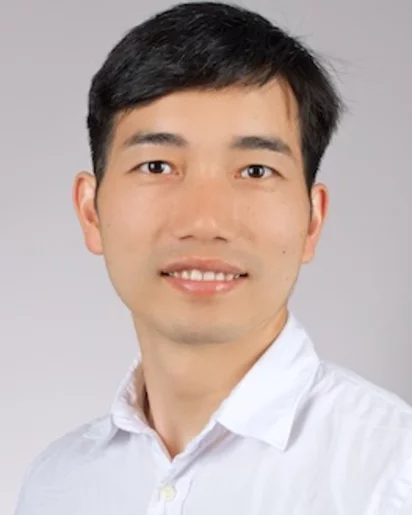
Wenjuan Zhu is an Associate Professor in the Department of Electrical and Computer Engineering, Materials Science and Engineering, and the Micro and Nanotechnology Lab at the University of Illinois at Urbana-Champaign. She holds the W.J. "Jerry" Sanders III - Advanced Micro Devices Inc. Scholar distinction and serves as Associate Head for Graduate Programs. Her research focuses on nanotechnology, ferroelectric materials, and semiconductor devices, particularly in 2D materials and their applications in electronics and reconfigurable logic circuits. Key research areas include van der Waals heterostructures, ferroelectric transistors, and high-temperature electronics. She has received prestigious awards such as the DARPA Young Faculty Award (2020), IBM Faculty Award (2018), and NSF CAREER Award (2017). Her work bridges fundamental materials science with device engineering, advancing next-generation electronic systems. Notable contributions include non-volatile reconfigurable transistors, wafer-scale MoTe₂ growth, and ferroelectric field-effect transistors. Her research emphasizes scalable synthesis methods and industrial applicability of 2D materials. Collaborations span global institutions, reflecting her impact in nanoelectronics and materials innovation.
Ramez M. Hajj is an Assistant Professor in the Department of Civil and Environmental Engineering at the University of Illinois at Urbana-Champaign (UIUC). He holds affiliations with the Grainger College of Engineering and has served in multiple academic and professional roles, including editorial board memberships and leadership in organizations like the Transportation Research Board. His research focuses on asphalt materials and flexible pavements, spanning molecular-level investigations to large-scale infrastructure applications, with particular emphasis on viscoelasticity, composites, and machine learning. Education: Bachelor of Science in Civil Engineering with a minor in Engineering Science and Mechanics, Virginia Tech (2014) Master of Science in Civil Engineering, University of Texas at Austin (2016) Doctor of Philosophy in Civil Engineering, University of Texas at Austin (2019) Research Interests: Asphalt binder rheology and chemistry Computational modeling of infrastructure materials Pavement design, maintenance, and recycling Application of AI and machine learning in materials engineering Self-healing asphalt technologies Sustainable infrastructure solutions Publications: His work spans over 50 peer-reviewed articles, emphasizing innovations in asphalt material science and infrastructure resilience. Recent research highlights include AI-driven predictive models for asphalt properties and novel methods for evaluating pavement performance using ultrasonic techniques. Awards and Honors: Outstanding Reviewer awards from leading journals (2021–2022) Teaching excellence recognitions from the Center for Innovation in Teaching and Learning Illinois-Indiana Sea Grant Faculty Fellowship Grants and Funding: Research is supported by agencies such as IDOT, USDA, MnDOT, and industry partners. Projects include developing self-healing asphalt capsules and optimizing pavement design algorithms. Labs and Teams: Leads research initiatives in advanced material characterization and AI-driven infrastructure solutions within UIUC’s Civil and Environmental Engineering department.
Rémy Jacquemond is a Postdoctoral Researcher at Eindhoven University of Technology's Department of Chemical Engineering and Chemistry, working within both the Membrane Materials and Processes Group and Electrochemical Materials and Systems Group. His research focuses on developing advanced materials for next-generation redox flow batteries, with particular emphasis on membrane technology and electrode engineering. His academic background includes: BSc in General Chemical Sciences from Institut Universitaire de Technologie (IUT), Montpellier, France MSc in Chemical Engineering with materials science specialization from Ecole Nationale Superieure de Chimie de Montpellier (ENSCM), France Second MSc in Nanoscience, Materials and Processes from Universitat Rovira I Virgili (URV), Tarragona, Spain PhD in Chemical Engineering and Chemistry from Eindhoven University of Technology (2023) His research centers on solving critical challenges in redox flow battery technology, particularly the development of ion exchange membranes stable in organic solvents and engineered porous electrodes. He pioneers the application of neutron radiography for in-situ diagnostics of battery operation and employs non-solvent induced phase separation techniques for precise electrode microstructure control. His work directly contributes to UN Sustainable Development Goals related to clean energy and responsible consumption. Analysis of his publication record reveals a strong trajectory in advanced battery diagnostics and materials engineering, with increasing focus on neutron-based visualization techniques and microstructure-controlled electrode fabrication. His 2024 Nature Communications paper on concentration distribution mapping represents a methodological breakthrough, while his consistent development of phase separation techniques for electrode engineering demonstrates systematic innovation in manufacturing approaches. He has received significant recognition for his contributions: Energy Technology Division Graduate Student Award sponsored by Bio-Logic for work on porous carbon electrodes As an active postdoctoral researcher, Jacquemond contributes to research supervision and project leadership within his groups. His current work focuses on membrane diagnostics and novel porous materials development, with emphasis on improving battery efficiency, longevity, and compatibility with organic electrolytes. He maintains strong industry and academic collaborations, evidenced by multiple co-authored publications with international research teams. He operates within Eindhoven University of Technology's cutting-edge research infrastructure, utilizing specialized facilities for membrane synthesis, electrode fabrication, and advanced characterization including neutron imaging capabilities through partnerships with major research facilities. His work bridges fundamental materials science with practical energy storage applications.
Abdelhamid Sayari is a Full Professor in the Department of Chemistry and Biomolecular Sciences at the University of Ottawa , leading a research program focused on porous materials and CO₂ capture. His work bridges inorganic chemistry, materials science, and environmental catalysis, with an emphasis on designing stable and efficient adsorbents for greenhouse gas mitigation. His research interests include: Functionalization of mesoporous silica and hybrid materials Heterogeneous catalysis for organic synthesis and environmental remediation CO₂ capture via amine-functionalized adsorbents Gas separation technologies Hydrothermal stability of materials Recent studies highlight advancements in amine-stabilized CO₂ adsorbents, humidity-dependent adsorption mechanisms, and theoretical modeling of reaction pathways. His work addresses critical challenges in mitigating greenhouse gases while advancing sustainable materials design. Despite no listed awards, his contributions to CO₂ capture technology are widely recognized in the field. He leads a research team focused on translating material innovations into practical solutions for environmental challenges.
Nicholas Borotto is an Assistant Professor in the Department of Chemistry at the University of Nevada, Reno (UNR), within the College of Science. His research focuses on advancing mass spectrometry techniques for analyzing biomolecules, particularly proteins, by integrating methods like chemical derivatization, laser irradiation, ion mobility, and radical chemistry. His lab develops tools to study protein three-dimensional structures, post-translational modifications, and the acidic proteome. Education Postdoctoral Scholar (2016-2019), University of Michigan Ph.D., Chemistry (2016), University of Massachusetts B.S., Biochemistry (2007), Northeastern University Research Interests Borotto’s work bridges chemistry and biology, addressing both biochemical questions and methodological advancements in mass spectrometry. Current projects include: 1. Equipping a carbon monoxide laser for IRMPD studies in unconventional pressure regimes. 2. Developing photocaged probes for in vivo protein structure analysis. 3. Applying free-radical initiated peptide sequencing (FRIPS) to complex anion mixtures. Publications His recent work emphasizes trapped-ion mobility spectrometry, protein footprinting, and radical-driven peptide sequencing. Publications highlight innovations in protein conformation analysis, ion mobility separations, and gas-phase chemistry. Labs & Teams The Borotto Lab, part of UNR’s Department of Chemistry, focuses on bioanalytical mass spectrometry. The lab combines instrumentation development with biochemical applications, offering students training in analytical chemistry, proteomics, and biophysical methods.
Javier Vela is a University Professor and Associate Chair of the Department of Chemistry at Iowa State University, where he also serves as a faculty scientist with the Ames National Laboratory. His research program focuses on the synthesis and characterization of nanostructured materials with applications in energy conversion, chemical catalysis, and fluorescence imaging, with over one hundred peer-reviewed publications and patents to his name. Dr. Vela received his educational training at prestigious institutions: B.S. (with Honors) in Chemistry from UNAM (2001) M.S. in Chemistry from University of Rochester (2003) Ph.D. in Chemistry from University of Rochester (2005) Following his doctoral studies, he completed postdoctoral research at the University of Chicago and Los Alamos National Laboratory before joining Iowa State University in 2009, where he received tenure in 2015, became a full professor in 2019, and was named University Professor in 2020. Dr. Vela's research program centers on the development of novel nanomaterials, particularly focusing on: Synthesis of nanostructured materials for energy applications Development of inorganic compounds for chemical catalysis Design of fluorescent materials for imaging applications Surface chemistry and structural characterization of nanocrystals Lead-free semiconductor materials for sustainable technologies Advanced solid-state NMR techniques for nanomaterial characterization His group employs a range of advanced techniques including solid-state NMR spectroscopy, dynamic nuclear polarization, and computational methods to understand nanomaterial structure-property relationships at the atomic level. Analysis of Dr. Vela's recent publication record reveals a strong focus on advanced materials characterization techniques, particularly solid-state NMR applications to nanomaterials. His work spans multiple disciplines including materials science, analytical chemistry, and environmental chemistry, with particular emphasis on sustainable energy solutions and advanced characterization methods. A significant portion of his recent work addresses challenges in nitrate reduction for sustainable ammonia production and the development of lead-free semiconductor alternatives through innovative synthesis approaches. Dr. Vela has received numerous prestigious awards and honors: Fulbright Scholar in Italy (2024) ACS Fellow (2021) John D. Corbett Endowed Professor (2020-2023) AAAS Fellow (2018) NSF CAREER Award (2013) Multiple LAS awards including Cassling Innovator (2018) and Early Achievement in Research (2014) ACS Midwest Stanley C. Israel Award (2014) As an educator and mentor, Dr. Vela has directed twenty doctoral and four master's theses while successfully mentoring numerous undergraduate researchers, including three NSF graduate research fellowship awardees. His research has been supported by significant funding including the NSF CAREER Award and various other grants that have enabled his group to investigate nanostructured materials for energy conversion, chemical catalysis, and fluorescence imaging applications. His service to the chemical community includes serving as Councilor for the Ames local section of the American Chemical Society, Program Chair for the Midwest Regional Meeting in 2018, and Treasurer of the Division of Inorganic Chemistry. Dr. Vela leads an active research group focused on inorganic and materials chemistry, with strong connections to the Ames National Laboratory where he has been a faculty scientist since 2010. His group collaborates extensively with researchers across disciplines to address challenges in sustainable energy and advanced materials development, maintaining an active presence in the scientific community through publications, conference presentations, and editorial board service for journals including ACS Energy Letters, Chemistry of Materials, and ACS Applied Engineering Materials.
Stefania Doppiu serves as Group Leader of the Solid-state Chemical Reactions Area Thermal Energy Storage research group at CIC energiGUNE, a specialized research center focused on energy storage technologies. With extensive international experience gained through European research centers, universities, and private industry, she has established herself as a prominent researcher in advanced materials for thermal applications. Her research expertise spans Material Science with special focus on advanced processing methods for novel functional materials, particularly thermal energy storage and hydrogen storage materials. Her technical capabilities include synthesis, structural and thermodynamic characterization of metastable materials, mechanochemical processes, heterogeneous phase chemical reactions, and self-sustaining reactions. Key research interests include synthesis of nanostructured materials and composites by solid state reactions, structural characterization of materials, and catalyzing reaction kinetics for technical applications. Doppiu's publication record demonstrates consistent contributions to thermal energy storage research from 2013 through 2022, with recent work focusing on thermochemical energy storage systems, phase change materials characterization, and novel material development for high-temperature applications. Her research shows particular strength in cobalt-nickel oxide systems, lithium-based compounds for solar applications, and organic phase change materials. Her scientific recognition includes prestigious awards: Individual Fellowship (IF) MARIE SKLODOWSKA-CURIE ACTIONS Horizon 2020 research and innovation programme (SOLSTORE project, GA: 752520) Graduate fellowship funded by National Consortium of Materials Science and Technology (INSTM) As an active researcher, Doppiu has presented at international conferences including Enerstock 2021 (as Chairlady) and Materials for Energy 2013, demonstrating leadership in the thermal energy storage community. Her collaborative work spans multiple institutions, with frequent co-authorship with Elena Palomo del Barrio and other researchers at CIC energiGUNE.
Satish Nagarajaiah is a tenured Professor at Rice University with joint appointments in the Civil & Environmental Engineering Department , Mechanical Engineering Department , and affiliation with Materials Science and Nano-Engineering . His research spans structural dynamics , earthquake engineering , seismic isolation , and adaptive stiffness systems , with significant contributions to negative stiffness , smart tuned mass dampers , and strain sensing using nanomaterials . Joint appointments across Civil, Mechanical, and Materials Science departments Developed 3D-BASIS software for nonlinear dynamic analysis of base-isolated structures Recipient of NSF CAREER Award , ASCE Moissieff Award , and multiple ASCE medals Research Interests include: Nonlinear dynamic analysis of seismic systems Adaptive passive stiffness and control mechanisms Machine learning and computer vision for sparse structural identification Nanocomposite-based strain sensing (contact/noncontact) Development of smart skins and optical sensors for structural health monitoring Scientific Awards include: NSF CAREER Award (1998-1999) ASCE Moissieff Award (2015) Raymond C. Reese Research Prize (2017) Nathan M. Newmark Medal (2020) George W. Housner Medal (2025) Fellow, U.S. National Academy of Inventors (2019) Distinguished Member, ASCE (2021) Editorial Leadership includes Senior Editor of Mechanical Systems and Signal Processing (Elsevier, 2017-2019, 2024-present), Editor of Structural Control and Health Monitoring (Wiley, 2008-2022, 2024-present), and Editor-in-Chief of Structural Monitoring and Maintenance (Techno-Press, 2014-2024).
Dr. Ludo Ausiello is a Senior Lecturer in Electronics at the University of Portsmouth, affiliated with the School of Electrical and Mechanical Engineering and the Faculty of Technology. His roles include membership in the Portsmouth AI and Data Science Centre and the Portsmouth Centre for Advanced Materials and Manufacturing. He holds a Fellowship of the Higher Education Academy and is a member of the Institute of Acoustics. Education: Integrated Master’s in Electronic Engineering (University of Bologna), European PhD in Audio Engineering, and PGCert in Higher Education (2019). Professional training includes Fonoprint Studios (Bologna) and industry experience at Maserati, Magneti Marelli, and Harman. Research interests focus on audio engineering, signal processing, electro-acoustics, and innovative manufacturing. Recent work includes developing affordable measurement ecosystems for musical acoustics, optimizing soundboard designs via least-squares analysis, and applying AI to room acoustics prediction. His studies span topics like wood elasticity, loudspeaker design, and vocal fatigue in educational spaces. Awards: Fellowship of the Higher Education Academy (2019). Teaching and advising: Taught analog and digital oscillator design at the University of Bologna and contributed to curriculum development at Solent University. Active in mentoring students through collaborative industry projects. Labs/Teams: Engaged with interdisciplinary teams at Portsmouth, focusing on advanced materials and AI-driven acoustic solutions.
Igor Jankovic is an Associate Professor in the Department of Civil, Structural and Environmental Engineering at the University at Buffalo's School of Engineering and Applied Sciences. His research focuses on groundwater flow and contaminant transport in heterogeneous aquifers, with particular emphasis on the impact of aquifer heterogeneity on solute movement and transport modeling. Education: PhD in Civil Engineering, University of Minnesota (1997) MS in Civil Engineering, University of Minnesota (1993) BS in Civil Engineering, University of Split, Croatia (1990) His work addresses critical issues in groundwater hydrology including: Advective transport mechanisms in heterogeneous media Breakthrough curve prediction and analysis Effective hydraulic conductivity modeling Upscaling of flow and transport parameters Application of the Analytic Element Method (AEM) for complex aquifer simulations Comparison of transport models (CTRW, MRMT) in heterogeneous environments Research trends in his publications reveal a focus on: Three-dimensional heterogeneous aquifer modeling Non-Fickian and anomalous transport behavior Impact of spatial variability on contaminant migration Development of numerical algorithms for large-scale groundwater simulations Validation of stochastic transport theories against field experiments (e.g., MADE and Borden aquifers) Interaction between physical and chemical heterogeneity in reactive transport
Len Gelman is a Professor and Chair in Signal Processing and Condition Monitoring at the University of Huddersfield's Department of Engineering within the School of Computing and Engineering. He also serves as Director of the Centre for Efficiency and Performance Engineering. His research focuses on advanced signal processing techniques for fault diagnosis in electromechanical systems, vibration analysis, and predictive maintenance. He is actively involved in PhD supervision and has authored over 100 publications, achieving 1499 citations and an h-index of 21. Key research areas include digital twin technology, nonlinear spectral analysis, and machine learning for industrial diagnostics. His work addresses challenges in non-stationary signal processing, motor current signature analysis, and condition monitoring under varying operating conditions. Collaborations include interdisciplinary projects with the Centre for Efficiency and Performance Engineering. Recent studies highlight innovations in fault diagnosis frameworks for rotating machinery, conveyor belt systems, and wind turbines. His contributions bridge theoretical advancements with practical industrial applications, emphasizing explainable AI and adaptive diagnostics. Gelman's research has been presented at major conferences like the World Congress on Engineering and published in specialized journals. Education: Not explicitly stated in the provided text. Awards: High citation count and h-index reflect his significant academic impact. Grants/Advising: Supervised 2 PhD projects; accepting new students in diagnostic engineering and condition monitoring. Labs/Teams: Leads the Centre for Efficiency and Performance Engineering and collaborates with the Department of Engineering's research groups.
Shawn Chester is an Associate Professor in the Department of Mechanical and Industrial Engineering at New Jersey Institute of Technology (NJIT). His research focuses on advanced materials science and mechanical engineering, particularly in polymer degradation, coupled thermo-mechanical systems, and biomaterials. He has secured federal grants from the National Science Foundation for projects like 'Damage Evolution in Polymeric Materials' and 'Smart Polymeric Gels'. Key research areas include finite element analysis, large deformation mechanics, and sustainable materials development. His work integrates experimental and computational methods to study material behavior under environmental and mechanical stresses. Recent projects include investigating photo-degradation of polymers, mycelium-based materials, and viscoelasticity in rubber composites. Media coverage highlights his contributions to sustainable materials and translational research initiatives at NJIT.
Prof. Robert Schlögl is a leading researcher in heterogeneous catalysis and electrochemistry, serving as Director of the Fritz Haber Institute of the Max Planck Society since 1994 and Founding Director of the Max Planck Institute for Chemical Energy Conversion (MPI CEC) since 2011. He holds honorary professorships at TU Berlin, Humboldt-Universität Berlin, and the University of Duisburg-Essen. His work focuses on catalytic materials for energy storage (e.g., CO₂ conversion, hydrogen production), with contributions to methane oxidation, water splitting, and electrochemical systems. Schlögl has led national initiatives like the Carbon2Chem project and serves on key advisory boards, including the German National Academy of Sciences Leopoldina. His accolades include the 2017 ENI Award for Energy Transition and the 2019 Ipatieff Lectureship. Research teams under his leadership utilize advanced tools like operando X-ray spectroscopy and microreactors to study catalyst dynamics. Ongoing projects address sustainable hydrogen technologies and CO₂ utilization. Education: Diplom (1979), Dr. rer. nat. (1982) from Ludwig-Maximilians-Universität München, followed by postdoctoral research at Cambridge and Switzerland. Key roles include leadership in the Helmholtz Association and the German Catalysis Society. His labs at the Fritz Haber Institute and MPI CEC host interdisciplinary collaborations in catalytic innovation.
Iñigo Bretos is a CSIC Researcher at the Materials Science Institute of Madrid (ICMM-CSIC). He holds a BSc from the Universidad de Navarra (2001) and a PhD from the Universidad Autónoma de Madrid (2006). After postdoctoral work at RWTH Aachen University, he joined ICMM in 2009, becoming a CSIC Researcher in 2022. His research focuses on low-temperature synthesis and integration of multifunctional materials like ferroelectrics, piezoelectrics, and superconductors, with applications in electronics, energy, and environmental remediation. He emphasizes sustainable methods, including aqueous routes and lead-free materials. Education: BSc Chemistry (2001), PhD (2006) Roles: Coordinator of 'Toca la Ciencia', Teacher in postgraduate courses, Organizer of 'Young Scientist Meetings' His research interests span functional material synthesis, flexible electronics, and energy-efficient processing. Recent publications (2020–2025) highlight advancements in BiFeO3 thin films, photochemical methods, and low-temperature integration strategies for electronic systems. He has led projects (EXPLORA, ComFuturo) and collaborated with industry (BASF SE). His work appears in Advanced Materials , Journal of the American Chemical Society , and others. Outreach efforts include media appearances and science communication initiatives like 'La Radiante Vida de Marie Curie'. Labs: Thin Film Preparation, Low-Temperature Processing, Ceramic Synthesis, Functional Characterization, Magnetoelectric Analysis, and Piezoresponse Force Microscopy.
Jinghui Luo is a Research Professor and Principal Investigator at the Paul Scherrer Institute's Laboratory for Multiscale Bioimaging in Switzerland. Her research focuses on neurodegenerative diseases, particularly amyloid protein aggregation mechanisms. Luo's team investigates amyloid oligomers using nanopore engineering, cryo-electron microscopy, and single-molecule techniques to understand their role in Alzheimer's and Parkinson's diseases. Key research areas include α-synuclein phase separation, tau protein dynamics, and metal ion interactions with amyloid proteins. Her recent work demonstrates strong emphasis on protein oligomer characterization, liquid-liquid phase separation phenomena, and developing innovative trapping methods for single-molecule analysis. Publications consistently integrate structural biology with biophysical approaches. Luo has received prestigious awards including the NIH Director's Early Independence Award and Siebel Scholarship. She currently mentors six graduate students and postdoctoral researchers in her laboratory.