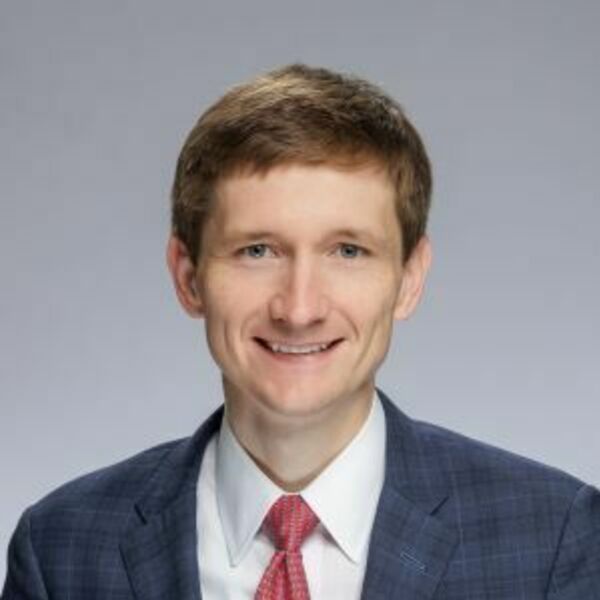
David C. Parkes is the George F. Colony Professor of Computer Science and John A. Paulson Dean at Harvard University's School of Engineering and Applied Sciences. His research in economics and computation spans multi-agent systems, market design, and AI safety. He leads the Economics and Computer Science Research Group and contributes to Harvard's Data Science Initiative. Research focuses on algorithmic game theory, differentiable economics, and multi-agent AI systems. Recent work develops deep learning methods for auction design and analyzes risks in advanced AI systems. Current projects include transformer architectures for combinatorial optimization and platform equilibrium modeling. Honors include election as AAAS Fellow (2022). He currently supervises doctoral students in multi-agent systems, algorithmic economics, and machine learning applications.
Yoshio Okamoto is a Professor at the Department of Computer and Network Engineering, Graduate School of Informatics and Engineering, at The University of Electro-Communications in Tokyo, Japan. He has held this position since April 2017, after serving as an Associate Professor at the same institution from April 2012 to March 2017. Prior to his appointment at the University of Electro-Communications, he held academic positions at Tokyo Institute of Technology, Japan Advanced Institute of Science and Technology, and Toyohashi University of Technology. His educational background includes: Bachelor of Systems Science from The University of Tokyo (1999) Master of Systems Science from The University of Tokyo (2001) Doctor of Theoretical Science from ETH Zurich (2005) Professor Okamoto's research spans several interconnected areas in theoretical computer science and discrete mathematics. His primary interests include Discrete and Computational Geometry, Graph Algorithms, Combinatorial Optimization and Polyhedral Combinatorics, Discrete Mathematics and Combinatorics, and Game Theory. His work often explores the interplay between these fields, developing theoretical foundations with practical algorithmic implications. He has made significant contributions to understanding the structural properties of geometric and combinatorial objects, as well as designing efficient algorithms for related problems. His recent publications demonstrate a continued focus on fundamental problems in discrete mathematics and theoretical computer science, with increasing applications in quantum computing, fair division, and reconfiguration problems. His work often appears in top-tier journals such as ACM Transactions on Algorithms, Algorithmica, and Theoretical Computer Science, reflecting his standing in the theoretical computer science community. Professor Okamoto has received several prestigious awards recognizing his contributions to the field: IPSJ-CS Outstanding Achievement and Contribution Award (January 2024) Research Award from The Operations Research Society of Japan (September 2020) Best Review Paper Award (with colleagues) from Japan Society for Software and Technology (September 2014) Research Encourage Award from The Operations Research Society of Japan (September 2012) 8th EATCS/LA Presentation Award (February 2010) Editors' Choice 2003 from Discrete Applied Mathematics (September 2004) As an educator, Professor Okamoto has taught numerous courses at The University of Electro-Communications since 2012, including Discrete Mathematics, Graphs and Networks, Discrete Mathematical Engineering, and Foundations of Discrete Optimization. He has served as an editor for multiple prestigious journals including Graphs and Combinatorics (Managing Editor since 2020), Acta Informatica, Journal of Computational Geometry, and Journal of Graph Algorithms and Applications. His extensive service on program committees for major conferences in theoretical computer science demonstrates his active engagement with the research community. Professor Okamoto leads a research laboratory at The University of Electro-Communications, where his team explores fundamental questions in discrete mathematics and theoretical computer science. The lab maintains strong connections with researchers worldwide, as evidenced by his numerous international collaborations. His research has been supported through various channels, including Japan Society for the Promotion of Science grants, and he has served as a reviewer for international funding agencies including the Swiss National Science Foundation and The Netherlands Organization for Scientific Research.
Itai Feigenbaum is an Associate Professor in the Department of Computer Science at Lehman College and the Computer Science Program at the Graduate Center, both part of the City University of New York (CUNY) system. His academic career focuses on bridging theoretical computer science with practical applications in economic and social systems. Dr. Feigenbaum's educational background includes: Ph.D. in Operations Research from Columbia University (2016) M.Sc. in Operations Research from Columbia University (2012) B.Sc. in Mathematics from Rutgers University-New Brunswick (2011), with minors in Computer Science and Operations Research His research spans multiple interconnected domains at the intersection of computer science, economics, and operations research. Dr. Feigenbaum specializes in algorithmic game theory and mechanism design , developing theoretically sound yet practically applicable solutions to complex allocation problems. His work in causal inference has produced significant contributions to understanding the theoretical foundations of causal discovery algorithms. In combinatorial optimization , he has tackled challenging problems in kidney exchange and school choice systems, creating algorithms that balance efficiency, fairness, and strategic considerations. His recent work increasingly integrates machine learning techniques with traditional optimization approaches, particularly in the causal inference space. Analysis of Dr. Feigenbaum's publication record reveals a consistent focus on strategic decision-making in constrained environments. His work demonstrates a progression from theoretical foundations in mechanism design to increasingly complex real-world applications, particularly in healthcare (kidney exchange) and education (school choice). The recent emphasis on causal inference represents a natural extension of his expertise in algorithmic decision-making under uncertainty. His publications appear in top venues across computer science, operations research, and economics, reflecting the interdisciplinary nature of his contributions. Dr. Feigenbaum has established productive collaborations with researchers across multiple institutions, particularly with colleagues at Columbia University (where he completed his PhD under Jay Sethuraman) and various AI research labs. His work on causal inference has involved collaborations with researchers from major tech companies, as evidenced by publications like the Salesforce CausalAI Library framework.
Robert C. Green II, Ph.D., is an Associate Professor in the Department of Computer Science at Bowling Green State University. He focuses on solving computational problems through software development and teaching. Education: B.S. in Computer Science & Applied Mathematics (2005) from Geneva College, M.S. in Computer Science with Operations Research focus (2007) from Bowling Green, and Ph.D. in Engineering (2012) from the University of Toledo. His research spans Computational Intelligence, High-Performance Computing (HPC), and Data Analytics, with interdisciplinary applications in kidney transplantation, cloud computing, and energy systems. Recent work emphasizes improving kidney transplant practices via data-driven HLA matching algorithms, simulation, and optimization. Analysis of his publications reveals key subfields: HLA-based immunogenicity modeling, predictive analytics for medical and technical systems, generative models for imbalanced datasets, and software engineering for cloud/web platforms. His work bridges computational methods with real-world challenges in healthcare and energy. Dr. Green's methodological expertise includes HPC, Monte Carlo simulations, and machine learning for reliability assessment in power systems, with a growing focus on equitable healthcare solutions.
Omar El Housni is Assistant Professor at Cornell Tech and Cornell University's School of Operations Research and Information Engineering. His research develops robust optimization methods for dynamic decision-making in revenue management and matching platforms. Key research areas include assortment customization under uncertainty, approximation algorithms for matching problems, and probabilistic analysis of affine policies. His NSF-supported work applies to retail, ridesharing, and digital marketplace operations. Honors include the INFORMS Nicholson Prize (2020) and Amazon Inventor Award. He currently supervises five PhD students in optimization and machine learning applications.
Albert Wagelmans is a Professor of Econometrics (Management Science) at the Department of Econometrics, Erasmus School of Economics (ESE), Erasmus University Rotterdam. He is affiliated with ERIM (Erasmus Research Institute of Management) and focuses on Logistics & Information Systems. His research emphasizes optimization methods for production, public transport, and healthcare planning, with notable contributions to supply chain coordination, inventory management, and healthcare logistics. He has held leadership roles, including Director of the Econometric Institute (2006–2014), Vice-President of EURO (2016–2020), and currently serves as President of the Dutch OR Society (NGB). Wagelmans co-founded the Erasmus Center for Optimization in Public Transport (ECOPT) and the Erasmus Center for Healthcare Logistics (EHCL), collaborating with organizations like NS Dutch Railways, Schiphol Group, and the Dutch Transplant Foundation (NTS). His research interests span optimization techniques applied to real-world problems, including healthcare logistics systems, public transport efficiency, and inventory management under uncertainty. Notable projects include the ESCH-R initiative for circular healthcare systems and mobile screening strategies for disease eradication. Wagelmans has advised over 15 PhD students and received awards for teaching excellence. His work has been published in top journals like Operations Research , Transportation Science , and Production and Operations Management .
Mariagiovanna Baccara is a Full Professor of Economics at the Olin School of Business, Washington University in St. Louis. She holds affiliated faculty status in the Department of Economics at Washington University’s School of Arts & Sciences. Previously, she served as Associate Professor (2013–2021) and Assistant Professor (2010–2012) at Washington University, and Assistant Professor at NYU Stern School of Business (2002–2010). She earned her Ph.D. and M.A. in Economics from Princeton University (2003) and a B.A. in Economics from the University of Trieste (Summa cum Laude). Her research focuses on game theory, market design, social networks, and industrial organization. Key areas include group formation, dynamic matching, information leakage in organizations, intellectual property rights, and asset pricing. She has published in top journals like the American Economic Review, Review of Economic Studies, and Theoretical Economics. Recent work explores peer selection dynamics, optimal matching algorithms, and experimental behavioral economics. Baccara has received prestigious awards, including the Society for Advancements of Economic Theory Fellowship (2022) and the European Economic Association Young Economist Award (2005). She serves on editorial boards for journals such as Theoretical Economics and the American Economic Journal: Microeconomics. Active in academic leadership, she chairs the Tenured Faculty at Olin and directs the MBA programs. Her teaching spans MBA, PhD, and undergraduate levels, covering managerial economics, game theory, industrial organization, and applied problem-solving. She advises numerous PhD students, many of whom now hold academic and industry roles. Baccara also engages in outreach, co-authoring 'Finding the Balance between Research and Teaching' in a crowdsourced economics handbook.
Christine Herlihy holds the academic rank of Adjunct Associate Professor in the Department of Computer Science at the University of Maryland. She is also a PhD Candidate advised by John Dickerson, located in IRB 2108. Her research focuses on algorithmic fairness, health informatics, and natural language processing with applications in socially consequential domains like public health and agriculture. She explores optimization techniques such as restless bandits and develops tools for scientific model augmentation, including a Julia package named SemanticModels.jl. Education: Christine is pursuing her PhD in Computer Science at the University of Maryland under the guidance of John Dickerson. Earlier academic qualifications are not detailed in the provided information. Research Interests: Christine’s work bridges computer science and societal impact. She investigates how AI systems can improve health literacy through personalized smartphone applications and ensure fairness in algorithmic decision-making. Her studies also address challenges in clinical NLP, resource allocation for small farmers, and longitudinal analysis of LLM data contamination. She advocates for transparent and equitable algorithmic frameworks in domains ranging from healthcare to policy evaluation. Advising & Grants: Christine is advised by John Dickerson in her doctoral studies. No grants or independently advised students are explicitly listed in the provided materials.
Bissan Ghaddar is an Adjunct Associate Professor affiliated with Western University's Ivey Business School. Her research focuses on optimization techniques applied to energy systems, transportation networks, and artificial intelligence. She explores challenges in robust optimization, polynomial programming, and edge computing resource management. Her work bridges theoretical advancements with practical applications in smart cities and sustainability. Research interests include operations research, network design, and machine learning-driven decision-making. Key areas of contribution include autonomous vehicle routing, community energy storage optimization, and latency-aware edge computing frameworks. Her interdisciplinary approach integrates mathematical rigor with real-world systems engineering. Recent publications emphasize robust optimization models for electric vehicle routing and power systems, as well as AI-driven algorithm selection in branch-and-bound methods. She has pioneered frameworks for crowd-sourced delivery systems and smart infrastructure standardization in emerging economies. While no specific grants or awards are listed in the provided materials, her active research portfolio indicates significant contributions to both academic and applied domains. Collaborative projects involve cross-disciplinary teams addressing challenges at the intersection of mathematics, engineering, and business strategy.
Marie-Louise Lackner is a Research Fellow (PostDoc Researcher) in the Department of Databases and Artificial Intelligence at Technische Universität Wien. She holds Diplom-Ingenieur and Dr. techn. degrees and actively contributes to the CD Laboratory for Artificial Intelligence and Optimization for Planning and Scheduling (2017–2025). Her research focuses on Artificial Intelligence and Optimization , with emphasis on industrial scheduling, constraint programming, and algorithm design. Key domains include: Industrial oven scheduling and production leveling Metaheuristics (simulated annealing, large neighborhood search) Multi-objective optimization in manufacturing systems Combinatorial mathematics and discrete structures Her publications demonstrate a strong trajectory in applied optimization , with recent work concentrating on energy-efficient scheduling algorithms for electronic manufacturing, while earlier research explored permutation patterns and social choice theory. Methodologies consistently integrate theoretical computer science with industrial problem-solving. She supervises graduate researchers, including P. Malik's work on memetic algorithms for production leveling. Grant involvement includes the CD Laboratory project focused on AI-driven planning systems. Lackner is affiliated with the CD Laboratory for Artificial Intelligence and Optimization, conducting applied research in industrial scheduling systems within TU Wien's Databases and AI group.
Jie He is a PreDoc Researcher at the Department of Cyber-Physical Systems, Technische Universität Wien. His research spans computational social choice, algorithmic game theory, and formal methods in robotics and IoT systems. He works on multidisciplinary problems involving complexity analysis, fair division, and preference modeling. Current projects: EdgeAI (2022–2025), TAIGER (2023–2027), ADEX (2020–2024) Key collaborations: Research with R. Grosu, E. Bartocci, D. Nickovic Research interests focus on computational aspects of collective decision-making , including fair division, matching problems, and preference modeling. He works on both theoretical foundations (e.g., parameterized complexity) and practical applications (e.g., robotic-IoT systems). His publication history reveals deep expertise in computational complexity of social choice problems, with recent work on 3D stable roommates , fair division in graph-structured settings , and preference modeling through Euclidean and Manhattan geometries. As an advisor, he supervised diploma theses on: Optimization strategies for 5G transceivers Dynamic object detection in multi-agent systems His work appears in top conferences like ACM/IEEE DAC, ICSE, and various computational social choice venues.
Anne-Marie George is an Associate Professor at the University of Oslo, affiliated with the Scientific Computing and Machine Learning department. Her research focuses on handling user preferences through modeling, elicitation, inference, and fairness in group decision-making systems. Academic Rank: Associate Professor Department: Scientific Computing and Machine Learning Email: annemage@ifi.uio.no Her work spans computational social choice, preference learning, and algorithmic fairness, with recent publications addressing dynamic resource allocation, robust recourse in binary problems, and fair voting procedures. Collaborations with researchers like Christos Dimitrakakis highlight interdisciplinary efforts in AI ethics and decision theory. Recent trends in her publications include: Dynamic allocation fairness Preference-based decision systems Explainable AI for resource distribution Ontology engineering applications Robustness in allocation algorithms Multiwinner voting optimization
Andrew Ferdowsian is an Assistant Professor at the University of Notre Dame. His research focuses on applied market design, addressing problems in public housing allocation and labor market mechanisms. He employs operations research and industrial organization techniques to improve marketplace efficiency and policy outcomes. Education: Ph.D., Princeton University, 2023 Research interests include designing robust market mechanisms under incomplete information, analyzing transient matching dynamics in congested systems, and exploring endogenous supply in centralized allocation systems. His work bridges theoretical models with real-world applications in public policy and urban planning. His recent articles examine dynamic public housing policies, learning in congested markets, and decentralized matching frameworks. These studies highlight interdisciplinary approaches combining economics, computer science, and operations research. Grants/Advising: No grants or advisees explicitly listed in the provided text. Labs/Teams: No specific lab affiliations or collaborative teams mentioned.
Maciej H. Kotowski is the Gilbert F. Schaefer Associate Professor of Economics at the University of Notre Dame. His research focuses on microeconomic theory with specialization in game theory, mechanism design, auctions, and matching markets. He develops theoretical frameworks for multiperiod resource allocation and examines real-world applications including gun violence economics. Teaching responsibilities include graduate courses in Microeconomic Theory and Contract Theory, along with undergraduate market design. Recent publications analyze production networks through property rights frameworks and develop robust solutions for dynamic matching problems.
Dr. William Pettersson is a Researcher at the School of Computing Science, University of Glasgow, focusing on optimization and algorithmic research. He leads projects like the EPSRC-funded IP-MATCH initiative, addressing resource allocation challenges such as kidney exchange and student-doctor hospital placement systems. His work bridges theoretical contributions (e.g., integer programming, graph decomposition) and practical software development, including the Regina topology tool and kep_solver for kidney exchange analysis. Prior to Glasgow, he specialized in parallel algorithms and combinatorial topology in Australia. Key Projects: IP-MATCH (EPSRC), Regina software, kidney exchange optimization Research Themes: Combinatorial optimization, parameterized complexity, high performance computing Publications span graph theory, operations research, and algorithm design, with notable contributions to kidney exchange program modeling and spatial correlation analysis. Active collaboration with Prof. David Manlove and international teams in healthcare and computational topology.