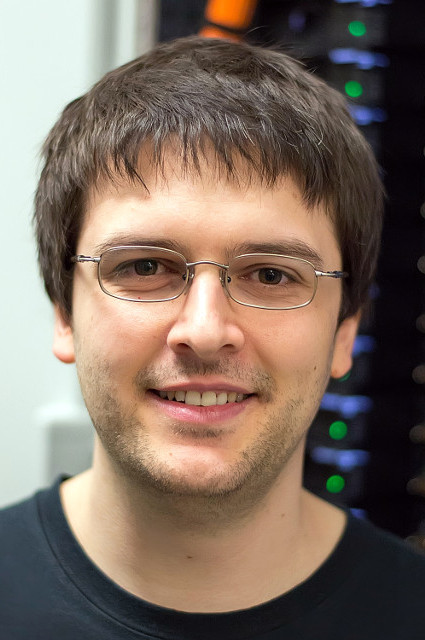
Phillip B Gibbons is a researcher at Carnegie Mellon University (CMU) recognized for his foundational contributions to streaming algorithms, large-scale data analytics, and database systems. His work, alongside Noga Alon, Yossi Matias, and Mario Szegedy, revolutionized the processing of massive datasets through randomized "synopses" or "sketches" that enable efficient memory usage and approximate answers. Research Interests: Gibbons' research focuses on algorithmic frameworks for handling streaming data, with applications spanning databases, network monitoring, internet usage analytics, and machine learning. His work laid the groundwork for modern big data analysis techniques. Scientific Awards: 2019 ACM Paris Kanellakis Theory and Practice Award for pioneering streaming algorithms 2006 ACM Fellow for contributions to parallel computing, databases, and sensor networks
Julian König is a Professor and Group Leader at the University of Würzburg, specializing in RNA biology and its connections to ageing and age-related diseases. His interdisciplinary research combines functional genomics and high-throughput methodologies to investigate RNA regulation, modifications, and quality control mechanisms. Education PhD in Biology, Philipps University Marburg (2008), summa cum laude Diploma in Biology, Ludwig Maximilians University, Munich (1997-2003) Research Focus Dr. König's lab deciphers the molecular code of RNA modifications (e.g., m6A) and their roles in gene expression, dosage compensation, and disease. Key projects include unraveling splicing regulation in ageing, dissecting m6A dynamics, and identifying RNA quality control pathways linked to neurodegeneration and cancer. His team employs advanced technologies such as iCLIP, in vitro iCLIP, miCLIP2, and massively parallel reporter assays to map protein-RNA interactions and regulatory elements. Their work has revealed critical insights into RNA-binding protein networks and their implications in conditions like CART-19 therapy resistance in B-ALL leukemia. Scientific Recognition Human Frontier Science Program (HFSP) Long-term Fellowship (2009) IMPRS PhD Fellowship (2004) Research Journey Prof. König's career spans positions at the Institute of Molecular Biology (IMB, Mainz, 2013-2023), postdoctoral work at the LMB (Cambridge, UK) and University College London (2008-2013), and early training at the Max Planck Institute for Terrestrial Microbiology (2003-2008).
Prof. Dr. Michael Kuhn is a Professor in the Faculty of Computer Science at Otto von Guericke University Magdeburg since 2020, leading the Parallel Computing and I/O Group. His work bridges theoretical parallel computing concepts with practical high-performance computing implementations. His academic journey includes: Bachelor's degree in Computer Science from Heidelberg University (2007) Master's degree in Computer Science from Heidelberg University (2009) Doctorate from Hamburg University (2015) with dissertation on "Dynamically Adaptable I/O Semantics for High Performance Computing" Prof. Kuhn's research tackles critical challenges in modern computing infrastructure where systems scale to millions of processor cores. He investigates fundamental improvements to storage architectures, I/O interfaces, and programming models that enable efficient data processing at exascale levels. His development of the JULEA storage framework provides dynamically adaptable solutions for high-performance computing environments, addressing the growing mismatch between computational power and data movement capabilities. As faculty public relations officer, he maintains the Faculty of Computer Science's digital presence while actively teaching courses that equip students with practical parallel programming skills. His group's work demonstrates how breaking computational problems into parallelizable components—like the matrix processing example reducing runtime to a quarter—enables scientific breakthroughs requiring massive computational resources. The Parallel Computing and I/O Group serves as a hub for advancing storage technologies and parallel processing methodologies, with applications spanning scientific computing, big data analytics, and next-generation supercomputer architectures.
Andrew J Sharp is a Professor in the Department of Genetics and Genomic Sciences at the Icahn School of Medicine at Mount Sinai. He serves as Co-Director of the Graduate Program in Genetics and Genomic Sciences and directs two graduate courses: BSR2400 Translational Genomics and BSR4401 Genetics and Genomics Journal Club. Professor Sharp leads the Sharp lab, an integrated research environment combining experimental and bioinformatic approaches to study the human genome and disease through a 'reverse genetics' strategy. His research focuses on structural variation, epigenetics (particularly DNA methylation), gene expression, and tandem repeat DNA, with applications to understanding mental retardation syndromes, autism, schizophrenia, diabetes, epilepsy, multiple sclerosis, Alzheimer's disease, and neural tube defects. His research has led to significant discoveries, including identifying genetic syndromes accounting for approximately 2% of mental retardation cases worldwide and discovering the most common genetic risk factor for epilepsy. His work has been published in top journals including Nature Genetics and The New England Journal of Medicine . Professor Sharp's publication record shows a strong focus on genomic technologies and their application to human disease, with recent work emphasizing tandem repeat variation, phenome-wide association studies, and epigenetic mechanisms in neurodegenerative disorders. His notable awards include: 2009 Young Investigator Award for Outstanding Science from the European Society of Human Genetics 2006 Trainee Award (postdoctoral) from the American Society of Human Genetics 2002 Trainee Award (predoctoral) from the American Society of Human Genetics Professor Sharp welcomes students interested in human genetics and genomics research, offering a diverse environment for gaining exposure to innovative research areas. His lab provides opportunities for both experimental and computational research in human genome studies, with a focus on translating genomic discoveries into understanding human disease mechanisms.
Professor Andrew Schumann is a faculty member at the University of Information Technology and Management in Rzeszow, Poland. With 202 publications and 1,143 citations, he has established himself as a significant interdisciplinary researcher working at the intersection of philosophy, logic, history, and unconventional computing. His academic expertise spans: Analytical Philosophy Philosophy of Language Ontology and Ancient Philosophy Philosophy of Religion Artificial Intelligence and Unconventional Computing History of Logic across civilizations Professor Schumann's research focuses on examining logical structures across different civilizations and historical periods, from ancient Mesopotamian divination practices to Judaic hermeneutics and Buddhist logic. He is particularly known for his work on unconventional computing models inspired by biological systems, especially slime mold (Physarum polycephalum), which he studies as a natural computing substrate capable of implementing logical operations and solving complex problems. His recent publications (2023-2025) demonstrate a continued exploration of ancient logical systems and their relevance to modern computational paradigms. His work spans diverse areas including: Historical analysis of logical traditions (Judaic, Mesopotamian, Buddhist, Greek) Unconventional computing models based on biological systems Cultural diffusion of philosophical and religious ideas Comparative studies of logical systems across civilizations Applications of ancient logical structures to modern computational problems Professor Schumann has received significant scholarly attention with 58,434 reads of his publications, indicating broad interest in his interdisciplinary approach. His work bridges humanities and computational sciences in innovative ways that challenge traditional disciplinary boundaries. His international collaborations include researchers from institutions worldwide, reflecting the global relevance of his research topics. With publications spanning multiple languages and cultural contexts, Professor Schumann contributes to a truly cross-cultural understanding of logic and its applications.
Yann André LeCun is the Jacob T. Schwartz Professor of Computer Science, Data Science, Neural Science, and Electrical and Computer Engineering at New York University, and serves as Chief AI Scientist at Meta. He holds appointments across multiple NYU institutions including the Courant Institute of Mathematical Sciences, the Center for Data Science, the Center for Neural Science, and the Tandon School of Engineering. LeCun leads the CILVR Lab (Computational Intelligence, Learning, Vision, Robotics) at NYU and is a key figure in Meta's FAIR (Fundamental AI Research) organization. LeCun's research spans machine learning, deep learning, computer vision, robotics, and computational neuroscience. He pioneered convolutional neural networks in the 1980s-90s, which became foundational to modern AI. His recent work focuses on self-supervised learning, energy-based models, and developing architectures for predictive world models that could enable machines to understand and interact with the physical world. LeCun advocates for open-source AI development through projects like Meta's Llama language models. His publication record shows consistent high-impact contributions since the 1980s, with recent work emphasizing self-supervised learning approaches like Joint Embedding Predictive Architectures (JEPA). The 15 most recent publications reveal a strong focus on representation learning, world models, and efficient learning paradigms that reduce reliance on massive labeled datasets. ACM Turing Award (2018) Princess of Asturias Award for Technical and Scientific Research (2022) Member of US National Academy of Engineering (2017) Member of US National Academy of Sciences (2021) Foreign Member of Académie des Sciences, France (2022) Queen Elizabeth Prize for Engineering (2025) VinFuture Grand Prize (2024) LeCun has advised approximately 30 PhD students who now lead AI research at major institutions worldwide. His lab has received significant funding from both government agencies and industry partners to advance fundamental AI research. The CILVR Lab fosters interdisciplinary collaboration across computer science, neuroscience, and engineering disciplines to tackle core challenges in artificial intelligence. LeCun actively engages with policymakers on AI governance, advocating for open research and targeted regulation. His work on open-source AI models represents a strategic approach to democratizing AI development while maintaining safety through community scrutiny. LeCun continues to push the boundaries of what machines can learn and understand about the physical world.
Sung-Eui Yoon is a Professor at the Department of Computer Science, Korea Advanced Institute of Science and Technology (KAIST), where he leads the Scalable Graphics, Vision, & Robotics Lab (SGVR Lab). He also holds affiliations with KAIST AI, KAIST Robotics Program, and CS Robotics. His academic career spans over 15 years at KAIST, where he has established himself as a leading researcher in graphics, vision, and robotics. Dr. Yoon received his Ph.D. from the Department of Computer Science at the University of North Carolina at Chapel Hill under the advisory of Dr. Dinesh Manocha, completed a postdoc at Lawrence Livermore National Lab, and earned his B.S. and M.S. from the Department of Computer Science at Seoul National University. His academic lineage traces back to Carl Friedrich Gauss through a distinguished line of mathematicians and computer scientists. His research spans scalable graphics, vision, robotics, and AI problems, with a particular focus on real-time rendering, collision detection, motion planning, and image retrieval. Dr. Yoon's work bridges theoretical foundations with practical applications, resulting in numerous publications, tutorials, and workshops at major conferences including SIGGRAPH, ICRA, and CVPR. His publications demonstrate a consistent focus on scalability and efficiency in graphics and robotics systems, with recent work emphasizing deep learning applications in image search and advanced motion planning algorithms for robotics. His research has evolved from foundational work in massive model rendering to cutting-edge applications in robotics and AI. Among his notable recognitions are the Outstanding Paper Award at ICRA 2023, Outstanding Navigation Award Finalist at ICRA 2022, Next-Generation Scientist Award (IT category) in 2019, and Technical Innovation Award from KAIST in 2018. Dr. Yoon has advised 4 Ph.D. students at KAIST between 2007-2014 and has secured numerous research grants supporting his lab's work. He has also authored influential books including "Rendering" (2018) and "Real-Time Massive Model Rendering" (2008). His teaching portfolio includes graduate courses on Web-Scale Image Retrieval, Motion Planning, and Graduate-level Computer Graphics, as well as undergraduate courses in Computer Graphics and Data Structures.