Maria Mercedes Solla Carracelas is a Researcher affiliated with the School of Forest Engineering at the University of Vigo. Her work focuses on geotechnologies and structural assessment of historical masonry structures using advanced imaging techniques. PhD: Completed in 2010 at University of Vigo Research Group: TF1 Applied Geotechnologies Campus: Pontevedra Her research emphasizes the application of ground-penetrating radar (GPR) for non-destructive evaluation of heritage sites, particularly historic bridges in Galicia, Spain. She contributes to interdisciplinary studies combining geodetic engineering, photogrammetry, and cultural preservation. Scientific Awards: Ramón y Cajal Fellowship
Dr. Amar Khennane serves as a Senior Lecturer at the University of New South Wales (UNSW) Canberra campus within the School of Engineering and Information Technology. His academic career spans multiple institutions including previous appointments as Maitre de Conferences in Tizi-Ouzou, Algeria, Research Associate in Newcastle, Australia, and Lecturer/Senior Lecturer at the University of Southern Queensland (USQ). His research interests focus on sustainable construction materials, particularly bio-cementitious materials, composite materials, timber engineering, reinforced concrete, and hybrid structures. Dr. Khennane has published extensively in these fields with 47 peer-reviewed journal papers, 33 conference papers, 6 other publications, and 2 books including the widely recognized "Introduction to Finite Element Analysis Using MATLAB (R) and Abaqus" (2013). His recent work emphasizes recycling timber waste into geopolymer cement composites, sustainable wood-geopolymer masonry units, and fire response of timber structures. His scholarly output shows a clear trend toward sustainable construction materials and advanced structural analysis techniques, with significant contributions in finite element modeling, seismic performance evaluation, and fire resistance of composite structures. The majority of his recent publications (2020-2024) focus on developing sustainable building materials using recycled components and analyzing structural behavior under various loading conditions. Dr. Khennane actively contributes to engineering education through teaching courses in Structural Analysis, Finite Element Method, Reinforced Concrete, and Stress/Strain Analysis. His educational background includes authoring textbooks that bridge theoretical concepts with practical computational tools like MATLAB and Abaqus.
Mark Taylor is an Associate Professor at the School of Architecture and affiliated with the Center for Latin American and Caribbean Studies at the University of Illinois . His work focuses on post-disaster reconstruction, sustainable building materials, and community-centered architectural design in Haiti. Key Research Areas Disaster Recovery Architecture Laminated Bamboo Construction Midwifery Education Infrastructure Passive House Design Taylor's scholarship emphasizes innovative construction sequences and thermal comfort systems in seismic zones. His recent projects include Kay Fanm Yo (Women's House) in Léogâne, Haiti, a response to the 2010 earthquake. Awards include the AIA Central Illinois Outstanding Educator (2011). Invited talks covered topics like sustainable design processes (Solar Decathlon) and post-disaster recovery strategies.
Yuxiang Chen is an Associate Professor in the Department of Civil and Environmental Engineering at the University of Alberta. His research focuses on high-performance buildings, net-zero energy systems, and sustainable construction practices. He integrates advanced modeling techniques, renewable energy solutions, and intelligent design strategies to optimize building performance in cold climates. PhD, Building Engineering (2013), Concordia University MASc, Building Engineering (2008), Concordia University BEng, Building Engineering (2006), Concordia University Dr. Chen’s work emphasizes modular construction, thermal energy storage, and data-driven modeling for building systems. He explores the use of robotics in construction, thermal resistance of masonry walls, and energy-efficient community greenhouses tailored for cold regions. His recent publications highlight trends in building thermal dynamics, with a focus on resistor-capacitor (RC) models, hybrid heating systems, and snow accumulation impacts on solar panels. He also contributes to cold-climate energy management and smart home integration.
Brandon Clifford is an Associate Professor of Architecture at MIT , specializing in integrating ancient construction techniques with contemporary architectural innovation. He is the director and co-founder of Matter Design, a studio known for speculative projects that bridge historical methods and futuristic visions. His research, termed 'projective archaeology,' merges ancient wisdom with imaginative futures, challenging conventional architectural practices through concepts like cyclopean masonry and megalithic sculpture. Clifford holds a Master of Architecture from Princeton University and a Bachelor of Science in Architecture from Georgia Tech . He has held distinguished visiting roles, including the John G. Williams Distinguished Visiting Professor at the University of Arkansas and the LeFevre Fellow at The Ohio State University . His work emphasizes cultural significance, sustainability, and material innovation , exemplified by projects like ' Walking Assembly ' and ' Cyclopean Cannibalism '. These projects explore craneless construction methods, cyclopean masonry revival, and the ethical reuse of materials. He has authored ' The Cannibal’s Cookbook ', which intertwines ancient myths with modern architectural practices. Clifford’s accolades include the American Academy in Rome Prize , TED Fellowship , and Architectural League Prize . His research frequently bridges theory and practice, advocating for architecture that transcends temporal boundaries to address contemporary challenges through ancient ingenuity.
Davide Bigoni is a Professor of Solid and Structural Mechanics at the Department of Civil, Environmental & Mechanical Engineering, University of Trento, Italy. He leads the Solid and Structural Mechanics Group and the Instabilities Lab, focusing on advanced topics in nonlinear mechanics, material instability, and metamaterials. Research Interests: His work spans bifurcation theory, elastic instabilities, shear band formation, configurational forces, and applications in biomechanics and metamaterial design. Key areas include tensile buckling, structural interfaces, and serpentine locomotion mechanics. Grants & Funding: He coordinates major grants including the ERC Advanced Grant 'Beyond hyperelasticity' (€2.47M) and previously led the 'Instabilities and nonlocal multiscale modelling' project. His research also involves collaborations with institutions like Harvard University and the University of Liverpool. Publications & Recognition: Author of the textbook Nonlinear Solid Mechanics: Bifurcation Theory and Material Instability , he has published extensively in journals like Proceedings of the Royal Society A and Journal of the Mechanics and Physics of Solids . Notable awards include the Euromech Fellow distinction. Labs & Teams: The Instabilities Lab explores mechanical systems through experimental and theoretical approaches, with projects on elastic energy release, structural interfaces, and novel material behaviors.
Demetrios M. Cotsovos is an Associate Professor at the School of Energy, Geoscience, Infrastructure and Society, Heriot-Watt University. His research focuses on structural concrete behavior under static and dynamic loads, including seismic, impact, and blast scenarios. He holds a PhD from Imperial College London (2005 Unwin Award) and has extensive experience in numerical modeling, experimental testing, and structural assessment. Education: PhD in Civil and Environmental Engineering (Imperial College London), MSc in Structural Design and Analysis (National Technical University of Athens), BEng in Civil Engineering (University of Patras). Research interests include: constitutive modeling of structural materials, nonlinear finite element analysis, fiber-reinforced concrete performance, and seismic design methodologies. Notable contributions involve developing FE tools for predicting structural responses under high-rate loading and investigating the impact of steel fibers and infill walls on structural integrity. He manages specialized equipment such as drop-test rigs and high-capacity load frames (up to 3000kN). Awards include the 2005 Unwin Award for doctoral research. His work aligns with UN Sustainable Development Goals related to resilient infrastructure and climate action. Collaborations include projects on railway infrastructure dynamics and litigation support for structural integrity assessments. He has supervised multiple research projects and contributed to international conferences, producing over 70 peer-reviewed publications.
Dr. Kevin Briggs is an Associate Professor in Geomechanics and RAEng/HS2 Ltd Senior Research Fellow at the University of Southampton. His work focuses on geotechnical engineering challenges, particularly the impact of climate change on transportation infrastructure, mudstone properties, and infrastructure deterioration. He is affiliated with the Infrastructure Group within the Faculty of Engineering and the Environment. Research interests include: Extreme weather and climate change effects on transportation earthworks Ageing infrastructure deterioration mechanisms Engineering properties of Jurassic and Triassic mudstones Glacial/periglacial weathering impacts on ground stability Recent work emphasizes climate-driven porewater pressure analysis, Bayesian slope failure prediction, and material behavior in historic structures. His research bridges geotechnical engineering with environmental science to enhance infrastructure resilience. Notable achievements include the 2018 EPSRC RISE award and 2023 Shropshire Geological Society Honorary Membership. He actively supervises PhD candidates focusing on geotechnical asset management and climate adaptation strategies. Current projects involve HS2-funded geotechnical research and collaborative studies on transportation earthwork deterioration. His interdisciplinary approach integrates geomechanics with remote sensing technologies like InSAR for infrastructure monitoring.
Dr. Prasad Rao Rangaraju is a Professor of Civil Engineering at Clemson University's Glenn Department of Civil Engineering. His research focuses on sustainable materials engineering, decarbonization of cement production, and concrete durability. He holds a B.Tech from Jawaharlal Nehru Technical University (India), an M.S. from Iowa State University, and a Ph.D. from Purdue University. Professional affiliations include the American Society of Civil Engineers, American Concrete Institute, and Transportation Research Board. His work emphasizes eco-friendly material innovations like geopolymer alternatives, recycled glass utilization, and additive manufacturing with cementitious materials. He teaches courses on sustainable construction, advanced concrete technology, and materials characterization techniques. Key research contributions include developing rapid testing methods for alkali-silica reactivity, optimizing ternary blends for durability, and advancing full-depth reclamation techniques for pavements. His lab explores cutting-edge solutions for infrastructure rehabilitation and low-carbon construction practices.
Dr. Edvard P.G. Bruun is an Assistant Professor in the School of Civil and Environmental Engineering at Georgia Tech, specializing in robotic automation for assembling and disassembling large-scale building components. His research develops computational methods for geometrically complex structures requiring robotic fabrication. Education includes: PhD in Civil and Environmental Engineering, Princeton University (2024) MASc in Civil Engineering, University of Toronto (2017) BASc in Civil Engineering, University of Toronto (2015) Research focuses on leveraging cooperative multi-robot systems for construction automation and material circularity. Current projects include scaffold-free robotic assembly techniques, reusable timber structures, and digital workflows for masonry vaulting. Recent publications demonstrate innovations in robotic construction methods and financial risk modeling, with applications spanning sustainable architecture and structural engineering. Scientific awards: Charlotte Elizabeth Procter Fellowship (2023) O.H. Ammann Research Fellowship (2023) Architect Magazine R+D Award (2021) Princeton Catalysis Initiative Award (2020) NSERC Alexander Graham Bell Scholarship (2019) Leads the Bruun Automation Research Lab and supervises graduate students including Chisung Kim. Secured funding from NSF, ASCE, and institutional grants for projects on robotic fabrication and sustainable construction.
Professor Fabio Tosti is a Professor of Civil Engineering and Director of the Faringdon Research Centre at the University of West London , School of Computing and Engineering. He holds a PhD and MSc from Roma Tre University, Italy, and has been a key figure in advancing Ground Penetrating Radar (GPR) and non-destructive testing (NDT) in civil and environmental engineering. PhD in Civil Engineering, Roma Tre University (2014) MSc in Road Transportation and Infrastructures, Roma Tre University (2010) His research centers on non-destructive evaluation of civil infrastructure using GPR, microwave tomography, and remote sensing (e.g., InSAR). He has led projects within the COST Action TU1208 and co-convener of GPR sessions at the EGU General Assembly . He teaches across BEng, MEng, and MSc programs in civil and environmental engineering. The articles listed span from 2020 to 2025, showcasing a consistent focus on infrastructure and environmental monitoring. Key research trends include bridge and runway deformation monitoring using satellite radar (InSAR), tree root and trunk assessment via GPR, data fusion of multi-sensor systems, and advanced signal processing techniques like reverse-time migration and joint inversion. His work bridges geophysics, civil engineering, and environmental science, with applications in transportation, urban forestry, and heritage conservation. Notable scientific recognition includes the GI Division Outstanding ECS Award Lecture at EGU 2017. Prof. Tosti actively supervises research, collaborates internationally, and contributes to editorial boards, including as Assistant to Editors for Advances in Transportation Studies . He has led and participated in numerous European and Italian research projects, demonstrating sustained funding and leadership. His work often involves interdisciplinary teams, including researchers from Italy, the UK, and the Netherlands. He is a recognized expert in transport infrastructure health monitoring , with a strong emphasis on smart, non-invasive methods for roads, railways, bridges, and airport runways. His lab and research group focus on developing integrated sensing systems combining GPR, InSAR, LiDAR, and machine learning for real-world engineering challenges.
Dr. Bagi Katalin is a Professor at the Department of Structural Mechanics, Faculty of Civil Engineering, Budapest University of Technology and Economics. Her research focuses on micromechanics of granular materials, discrete element modeling, and the structural analysis of masonry and Gothic-era constructions. Micromechanics of granular materials Discrete element modeling Mechanics of masonry structures Statics of Gothic masonry structures Computational mechanics Structural analysis She has received prestigious research grants and scholarships, including multiple Bolyai János Research Grants from the Hungarian Academy of Sciences and the Korányi Civil Engineering Scholarship. Her teaching portfolio spans advanced mechanics and structural engineering courses in both Hungarian and English. Hungarian Academy of Sciences, Bolyai János Research Grant (1998-2001) Hungarian Academy of Sciences, Széchenyi István Scholarship (2002-2005) Hungarian Academy of Sciences, Bolyai János Research Grant (2005-2008) Dr. Imre Korányi Civil Engineering Scholarship (1991-1992) CEEPUS Scholarship (2002) Dr. Bagi has supervised PhD students such as Lengyel Gábor, Szakály Ferenc, and Forgács Tamás, and has held visiting researcher positions at institutions like Cornell University and Technical University of Wien.
Jakov Oreb is a Doctoral Assistant and Lecturer at École Polytechnique Fédérale de Lausanne (EPFL), affiliated with the Earthquake Engineering and Structural Dynamics Laboratory (EESD) within the School of Architecture, Civil and Environmental Engineering (ENAC) and the Institute of Civil Engineering (IIC). He is concurrently pursuing his doctoral studies in the Doctoral Program in Civil and Environmental Engineering (EDCE). His research focuses on earthquake engineering, structural dynamics, and the preservation of historical construction techniques, particularly stone masonry. His work bridges modern seismic safety standards with traditional building practices, contributing to sustainable and resilient infrastructure development. Jakov is actively involved in teaching, delivering courses such as Stone masonry: Past, present, and future and Projeter ensemble ENAC , emphasizing collaborative design and engineering education. He has no listed scientific awards at this time. As a doctoral assistant and educator, Jakov contributes to both research supervision and academic instruction, though no formal advisees are listed. He is based at the EESD laboratory in office GC B2 514 at EPFL.
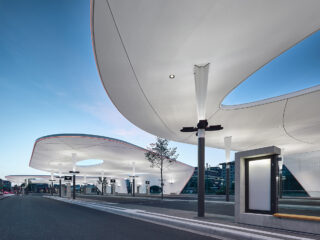
Prof. Dr.-Ing. Stephan Engelsmann is Professor of Structural Design and Structural Mechanics in the Department of Architecture at the State Academy of Fine Arts Stuttgart since 2002 and Deputy Chairman of the Architecture Study Commission. He also serves as President of the Baden-Württemberg Chamber of Engineers since 2014 and co-founded Engelsmann Peters GmbH Consulting Engineers in 2006. His career uniquely bridges academic excellence and professional engineering practice across multiple disciplines. His educational journey includes: Civil Engineering degree from Technical University of Munich (Dipl.-Ing., 1991) Research assistant at University of Stuttgart (1993-1998), earning Dr.-Ing. with dissertation on 'Integral concrete bridges' Architecture studies at University of Bath, UK (1998-1999), completing Master of Arts in Architectural Design with dissertation 'Rethinking the urban bridge as public space' Prof. Engelsmann's research focuses on the creative intersection of structural engineering and architectural design, where he emphasizes that 'constructive design is a controlled interaction between reason and emotion.' His work spans structural theory, innovative construction methods, and the integration of artistic expression with technical precision. He specializes in lightweight structures, bridge design, and the use of advanced materials including plastics, glass, and concrete, with particular emphasis on sustainable building practices and resource efficiency. His recent publications reveal a strong focus on innovative structural solutions for public infrastructure, particularly gridshell structures for shopping centers, elegant bridge designs, and sustainable construction methods. His work consistently explores the potential of unconventional materials and construction techniques, demonstrating how aesthetic considerations can be seamlessly integrated with structural efficiency in projects ranging from bus stations to cultural buildings. His numerous awards reflect excellence across engineering and architectural design disciplines: Multiple Hugo Häring Auszeichnungen (2020) for library and military facility projects Staatspreis Baukultur Baden-Württemberg (2020, 2016) German Design Gold Winner (2018) Preis des Deutschen Ingenieurbaus (2016) Iconic Design Award (2016) Red Dot Award (2015) Elias-Holl-Preis (1986) Throughout his career, Prof. Engelsmann has guided numerous student projects that bridge theory and practice, from the AKA seesaw (2011) to the UC°A Mobile climate adaptation project (2023). His teaching methodology emphasizes hands-on learning, with students developing and constructing innovative structures using materials ranging from traditional wood to advanced plastics. He has secured significant funding from organizations including the Baden-Württemberg Foundation to support research in sustainable construction and climate-adaptive architecture. Prof. Engelsmann leads the 'Class for Structural Design and Structural Engineering' at the State Academy of Fine Arts Stuttgart, where he and his team explore the boundaries between architecture and engineering. His consulting firm, Engelsmann Peters GmbH, works on sophisticated structural projects worldwide. Current research focuses include pneumatic structures for sun protection systems, experimental clay construction, and innovative approaches to urban climate adaptation through structural design, continuing his decades-long commitment to merging artistic expression with engineering precision.
Andrea Penna is a Full Professor at the Department of Civil Engineering and Architecture within the Faculty of Engineering at the University of Pavia . His research focuses on structural and seismic engineering, particularly in masonry structures and the consolidation of historic buildings. Structural Engineering Seismic Engineering Masonry Structures Modeling and Analysis of Seismic Behavior Consolidation of Historic Buildings Static and Dynamic Testing