
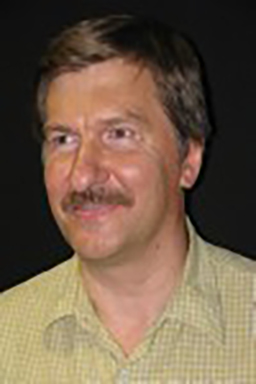
Dr. Yuri Rostovtsev is a Professor at the University of North Texas, specializing in quantum optics and atomic physics. He holds a Ph.D. from the Russian Academy of Sciences (1991). His office is located in GAB 525I and he can be contacted at (940) 565-3281. Research Interests: Dr. Rostovtsev's research focuses on quantum coherence phenomena, electromagnetically induced transparency, and matter-field interactions. His work spans theoretical and experimental investigations in quantum optics, including studies of quantum refraction, biophotons, and ultrafast processes in atomic and molecular systems. Recent Publications: His recent articles explore advanced quantum phenomena including single-photon interactions with atoms, quantum state engineering, plasmonic structures, and ultrafast dynamics in molecular systems. These publications demonstrate a consistent focus on quantum coherence effects and light-matter interactions at the quantum level. Scientific Awards: No awards mentioned in the provided text. Advising and Labs: No information available about students or research laboratories.
جستجوی استاد راهنمای دانشگاهی
برای مسیر پژوهشیتان، استاد راهنما، استاد دانشگاه و پژوهشگر مناسب را پیدا کنید و با آنها ارتباط بگیرید.
نمایش ۱-۱۵ از ۸۲ استاد راهنما
اطلاعات پروفایلها از صفحات عمومی دانشگاهها گرفته شده و ممکن است بهروز نباشد.
- Plasma Physics
- Space Physics
- Nonlinear Dynamics
- +۳ مورد دیگر
Mark Koepke is the Robert C. Byrd Professor of Physics at West Virginia University, affiliated with the College of Arts & Sciences. He specializes in plasma physics, with a focus on space plasma processes, nonlinear dynamics, and dusty plasma phenomena. His research bridges laboratory experiments and space/astrophysical systems, addressing plasma wave instabilities, fusion energy, and plasma-material interactions. Research Interests: His work investigates plasma instabilities in space and laboratory settings, including velocity-shear-driven instabilities, stationary inertial Alfven waves, and nonlinear dynamics. He explores applications in fusion energy, atmospheric pressure plasmas, and granular charging in industrial systems. His experiments utilize devices like the WVU Q-machine and collaborate with facilities such as the DIII-D National Fusion Facility and SLAC. Key Contributions: His studies validate theoretical models of space plasma dynamics, with applications to auroral ionospheres and magnetic confinement fusion. He has pioneered techniques like the magnetically insulated baffled probe for plasma diagnostics and contributed to understanding ion-cyclotron waves and periodic pulling phenomena in driven oscillators. Awards and Honors: Recipient of prestigious fellowships from the Institute of Physics (UK), American Physical Society, and Japanese Society for the Promotion of Science. He has held visiting positions at institutions like Oxford and Imperial College London, and chaired committees for organizations like the American Physical Society and the DOE. Advising and Collaborations: Collaborates globally on projects involving plasma diagnostics, fusion energy, and astrophysical plasma analogues. His work integrates experimental, computational, and theoretical approaches, with contributions to both fundamental plasma physics and applied technologies like plasma-based material processing. Labs/Teams: Leads experimental plasma physics research at WVU, using the Q-machine and other devices. Collaborates with international teams at facilities like UCLA’s Large Plasma Device, SLAC, and the National Energy Technology Laboratory.
Prof. Eli Jerby is a faculty member at the School of Electrical Engineering , Tel Aviv University. His research focuses on microwave-matter interactions , particularly localized microwave heating (LMH) for industrial applications, fireball and plasmoid generation, and microwave-based technologies in additive manufacturing. University: Tel Aviv University School: School of Electrical Engineering Jerby’s research interests span: Microwave Drilling: Silent, dust-free drilling in concrete, ceramics, and bones. Fireball Dynamics: Laboratory-scale simulation of ball lightning. Additive Manufacturing: Microwave-assisted 3D printing of metal powders. Plasma Generation: Ejection of plasmoids from molten materials. His publications highlight trends in microwave heating for material processing, including concrete cutting, basalt melting, and thermite ignition. Articles emphasize LMH mechanisms, thermal instabilities, and nanoparticle formation. Key subfields include microwave safety , dielectric absorption , and solid-state applicators . Jerby’s scientific work has been featured globally, including in Science , Nature Physics , and Physical Review Letters . He holds patents for microwave drills and heating systems, with applications in construction and materials science. He mentors research students like Yoav Shoshani and collaborates on projects involving microwave-driven plasmas and thermite ignition . His lab explores microwave-DC synergy and the bubble-marble effect for underwater applications.
- Astrophysics
- Galaxy Evolution
- Radio Astronomy
- +۳ مورد دیگر
Andrew J. Baker is a Distinguished Professor in the Astrophysics group within the Department of Physics and Astronomy at Rutgers, The State University of New Jersey. He also holds an extraordinary professorship at the University of the Western Cape since 2022. His research focuses on galaxy evolution using radio, millimeter, and submillimeter observations of interstellar matter, with a particular emphasis on dusty star-forming galaxies and the growth of supermassive black holes. He leads the LADUMA HI survey with MeerKAT and has contributed to major projects like the Atacama Cosmology Telescope (ACT) and ALMA studies. Key roles include advising undergraduate astrophysics majors and serving as a faculty member in Rutgers' graduate program. He has advised numerous PhD and Master’s students, including Cristian Garcia-Vanegas, Christopher Henry, and Derek Zapata. Baker’s awards include the 2024 American Astronomical Society Fellowship, Radcliffe Institute Fellowship, and SAS Award for Distinguished Contributions to Undergraduate Education. His work spans gravitational lensing studies, molecular gas dynamics, and HI surveys, with recent publications on Einstein Cross systems and megamaser discoveries.
Joanne Dawsonمشاهده پروفایل
دانشیار
Dr. Joanne Dawson is an Associate Professor at Macquarie University's School of Mathematical and Physical Sciences and a Research Scientist at CSIRO Space & Astronomy. She holds a BSc (First Class Honours) from University College London and a PhD from Nagoya University. Previously, she was an ARC DECRA Fellow, Bolton Fellow at CASS, and ARC Super Science Fellow at the University of Tasmania, joining Macquarie in 2014. Her research focuses on radio astronomical studies of the interstellar medium (ISM), including: Evolution of ISM in Milky Way/nearby galaxies Molecular cloud formation mechanisms 'Dark ISM' bridging atomic/molecular regimes SPLASH and GASKAP survey leadership Radio spectral line tracers correlated with IR/optical data Her recent publications (2023-2025) predominantly explore observational astrophysics, characterized by: High-energy transients and radio emissions Galactic-scale molecular spectroscopy Interstellar turbulence and cloud dynamics Innovative radio telescope methodologies Awards include: Vice-Chancellor’s Educational Leader Award (2022, team) She currently supervises 2 PhD and 3 MRes students, having completed supervision of 6 MRes and 3 PhD students. Key grants include ARC Discovery and CSIRO projects studying star formation, galactic structure, and radio astronomy instrumentation. She directs HDR for the Astrophysics and Space Technologies Research Centre, serves as MAPS MRes Programme Director, and leads research teams for SPLASH and GASKAP surveys utilizing Australia Telescope National Facility resources.
Sara Issaounمشاهده پروفایل
پژوهشگر ارشد
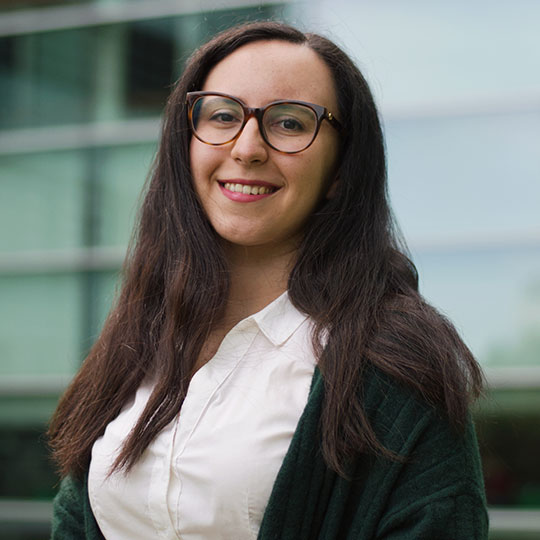
Sara Issaoun is an observational astronomer and NASA Einstein Fellow at the Harvard & Smithsonian Center for Astrophysics, where she also serves as a Systems Engineer for the Event Horizon Telescope (EHT) collaboration. Her research focuses on the collection, calibration, and imaging of millimeter-wave radio observations of supermassive black holes. PhD in Astrophysics from Radboud University (2021) MSc in Physics and Astronomy from Radboud University (2017) BSc in Physics from McGill University (2015) Research Focus Dr. Issaoun studies how supermassive black holes generate the highest energy processes in the Universe, ejecting jets of plasma that affect galaxy environments. She utilizes global networks of radio telescopes to image and study the immediate surroundings of supermassive black holes at the centers of our Galaxy and the galaxy M87. Her work aims to expand millimeter-wave radio imaging capabilities and forge connections between black hole shadow images and physics observed across the electromagnetic spectrum. Publication Trends Dr. Issaoun's recent work with the EHT collaboration demonstrates significant advances in black hole imaging, particularly in studying magnetic field structures around Sagittarius A*, long-term observations confirming the persistence of black hole shadows, and multi-wavelength analysis of gamma-ray outbursts from M87's powerful jet. Her research spans observational astronomy, theoretical physics, and advanced imaging techniques. Awards NASA Einstein Fellowship Collaborative Efforts As a key member of the international EHT collaboration, Dr. Issaoun contributes to one of astronomy's most ambitious projects, which operates a virtual observatory using telescopes spanning from Greenland to the South Pole. Her work integrates data from the Center for Astrophysics' Submillimeter Array and Greenland Telescope with other global facilities.

- Computation and Data
- Observation
- Stars and Planets
- +۴ مورد دیگر
Athol J Kemball is a Professor in the Department of Astronomy at the University of Illinois at Urbana-Champaign, within the College of Liberal Arts & Sciences. He also holds affiliations with the National Center for Supercomputing Applications (NCSA) as a Professor and is a faculty affiliate of the Computational Science and Engineering program. Kemball is a member of the Center for Extreme-Scale Computation at NCSA/IACAT and leads the Kemball Research Group, which focuses on applying advanced computing to problems in observational astronomy. Dr. Kemball earned his Ph.D. in Physics in 1993. His educational background has provided the foundation for his interdisciplinary work at the intersection of computational science and astrophysics. Kemball's research lies at the intersection of advanced computing and astrophysics, with specific focus areas including: The theory of interferometry Astrophysical masers Late-type, evolved stars Gravitational lensing His work leverages extreme-scale computer systems to transform observational astronomy, enabling new scientific inquiries that were previously impossible. The exponential growth in computing capability has profoundly influenced his approaches to data-and compute-intensive scientific questions. An analysis of Kemball's recent publications shows a strong focus on applying computational methods to astronomical observations. His work spans from exoplanet detection using Bayesian methods to studying gravitational lensing and maser polarization. The research demonstrates a consistent theme of using advanced computing to extract maximum scientific value from observational data, particularly in the areas of interferometry and polarization studies. Among his notable recognition: Blue Waters Professor Named to the "List of Teachers Ranked as Excellent" four times since 2010 Kemball has been actively involved in teaching, offering courses such as Introduction to Astrophysics, Observational Astronomy, Scientific Writing for Astronomy, and Astronomical Techniques. His research group has participated in significant projects including the Square Kilometer Array Technology Development Project, specifically in the Calibration and Processing Group, addressing petascale computing challenges for radio astronomy. The Kemball Research Group focuses on applying high-performance computing to observational astronomy problems, particularly in interferometry, maser studies, and gravitational lensing. The group collaborates with the Center for Extreme-Scale Computation at NCSA/IACAT and contributes to advancing computational methods for next-generation astronomical facilities.
Roles and Affiliations: Dale Gary is a Distinguished Professor and Director of the Center for Solar-Terrestrial Research at New Jersey Institute of Technology (NJIT). He leads the Expanded Owens Valley Solar Array (EOVSA), a major community facility for solar and space weather research. His work focuses on solar flare physics, radio emission mechanisms, and space weather forecasting. Affiliations: Center for Solar-Terrestrial Research, NJIT Physics Department Research Infrastructure: EOVSA, OVRO-LWA Array, and AtLAST telescope development Education & Career Highlights: Gary has been a leader in solar radio astronomy for over 40 years, with extensive NSF and NASA grants. He was named Fellow of the American Astronomical Society in 2025. Research Interests: His work spans solar flares, magnetic field dynamics, and particle acceleration processes. Key areas include: Radio emission mechanisms (coherent bursts, gyroresonance) CME-driven shock waves and type IV radio bursts Coronal plasma diagnostics via microwave imaging Space weather impacts on Earth's ionosphere Grant & Project Highlights: NSF-funded EOVSA facility upgrades ($2.4M, 2023–2026) NASA studies on solar flare transport processes ($1.5M, 2022–2025) Multi-wavelength microwave imaging projects Awards & Recognition: Fellow of the American Astronomical Society (2025) Over 45 h-index with 8,174 citations Labs & Collaborations: Active in international collaborations including the AtLAST submillimeter telescope project and OVRO-LWA solar monitoring system. Directs NJIT's solar cyberinfrastructure initiatives.

Jarryd Plaمشاهده پروفایل
دانشیار
Associate Professor Jarryd Pla is an experimental physicist and electrical engineer at the University of New South Wales, specializing in quantum information processing and quantum technologies. He holds a PhD in Electrical Engineering from UNSW (2013) and a first-class honors BEng in Photonic Engineering (2009). Current ARC Future Fellow Former Bragg Gold Medal recipient His research focuses on: Spin-based quantum computation in silicon Superconducting quantum circuits Quantum-noise-limited microwave amplifiers Hybrid quantum systems for quantum memory Quantum sensing and spectroscopy Recent publications highlight: Room-temperature maser amplifiers Kinetic inductance parametric amplifiers Coherent control of donor spins Quantum-limited electron spin resonance Scientific Awards: ARC Future Fellowship (2024-2028) Bragg Gold Medal His grants include: ARC DECRA (2019-2022): Superconducting hybrid quantum technologies ARC Discovery Project (2021-2024): Quantum sensing with semiconductor devices ARC Future Fellowship (2024-2028): Room-temperature diamond-based microwave detection

David Forrest Phillips serves as a Researcher at the Harvard-Smithsonian Center for Astrophysics (CfA) in Cambridge, Massachusetts, where he contributes to cutting-edge research within the Walsworth group's Maser laboratory. His work focuses on advancing atomic clock technology and applying these precision instruments to test fundamental symmetries of nature, aligning with CfA's mission to expand astronomical and astrophysical knowledge. His research spans critical domains of modern physics: Atomic Physics Precision Measurement Fundamental Symmetries Quantum Optics Dr. Phillips maintains an active research presence at the CfA's Perkins building (Office P153) with mailing address 60 Garden Street MS59, Cambridge, MA 02138. He can be contacted via email at dphil@cfa.harvard.edu or by phone at Lab: (617) 496-8967, Office: (617) 496-7828, Fax: (617) 496-7690.
Albert Zijlstra is Professor of Astrophysics at the University of Manchester's Department of Physics and Astronomy. He directs research on stellar evolution, planetary nebulae, and space dust using facilities like VLT and ALMA. Previously, he served as Director of Jodrell Bank Centre for Astrophysics (2010-2015). His research examines mass loss in evolved stars, circumstellar matter, and nearby galaxies through infrared/radio observations. Recent publications focus on nebula structures, stellar binaries, and chemical abundances. He maintains collaborations with international observatories and holds visiting positions at the University of Hong Kong.

- Astronomy
- Astrophysics
- Plasma Physics
- +۶ مورد دیگر
Dr. Irena Vorgul is a Lecturer and Senior Laboratory Demonstrator at the School of Physics and Astronomy , University of St Andrews, with a secondary appointment as Associate Lecturer in Mathematics at the International Education & Lifelong Learning Institute. Her research bridges astrophysics, planetary science, and plasma physics. Research Interests : Vorgul specializes in plasma processes in exoplanetary and brown dwarf atmospheres , lightning modeling , radio emissions , and cyclotron maser instabilities . Her work combines theoretical modeling, computational simulations, and comparative studies with Solar System data. Publications reveal a focus on exoplanet climatology , electron beam dynamics , and time-dependent magnetic field effects . She employs advanced numerical methods like 3D Particle-in-Cell (PiC) code simulations.

Roger Blandford is the Luke Blossom Professor in the School of Humanities and Sciences at Stanford University, where he also serves as Professor of Physics and Particle Physics and Astrophysics. He joined Stanford in 2003 from Caltech to become the founding Director of the Kavli Institute for Particle Astrophysics and Cosmology (KIPAC), a position that established him as a central figure in Stanford's astrophysics community. His work bridges theoretical physics and observational astronomy, with significant contributions to our understanding of high-energy astrophysical phenomena. Professor Blandford's research spans a remarkable breadth of astrophysical phenomena, with particular focus on black hole physics, neutron star systems, and cosmological structures. His investigations into relativistic jets, gravitational lensing, and cosmic ray acceleration have provided fundamental insights into extreme astrophysical environments. More recently, his work has expanded into interdisciplinary areas including the potential astrophysical origins of biological homochirality, demonstrating his ability to connect cosmic phenomena with questions of life's fundamental properties. His theoretical frameworks have become standard references in multiple subfields of astrophysics. Blandford's publication record reveals a consistent trajectory of high-impact research across decades, with recent work showing increasing interdisciplinary reach. His 2019-2022 publications demonstrate continued leadership in black hole physics and relativistic phenomena while expanding into biophysics and cosmology. Notably, his work on the chiral puzzle of life represents an innovative bridge between astrophysics and biology. His collaborations span observational, theoretical, and experimental approaches, often bringing together diverse expertise to tackle fundamental questions in astrophysics. Luke Blossom Professorship at Stanford University Chair of the National Academy of Sciences Decadal Survey of Astronomy and Astrophysics (2008-2010) Co-author of the influential textbook 'Modern Classical Physics' Founding Director of the Kavli Institute for Particle Astrophysics and Cosmology Professor Blandford maintains an active mentoring role at Stanford, serving as Doctoral Dissertation Reader for Bryen Irving, Postdoctoral Faculty Sponsor for Dylan Jow and Navin Sridhar, Orals Evaluator for Anthony Flores, and Doctoral Dissertation Co-Advisor for Andrew Sullivan. His teaching portfolio includes advanced courses in General Relativity, Cosmology and Extragalactic Astrophysics, and Special Topics in Astrophysics focusing on Extreme Astrophysics. His academic leadership extends to significant contributions to major collaborative projects including the Fermi Gamma-ray Space Telescope mission and the Large Synoptic Survey Telescope initiative. As the founding Director of KIPAC, Blandford established one of the world's leading centers for particle astrophysics and cosmology research. The institute brings together physicists, astrophysicists, and cosmologists to tackle fundamental questions about the universe's structure and evolution. His leadership helped shape KIPAC's research directions across cosmic structure, extreme astrophysics, physics of the universe, and stellar/interstellar/planetary astrophysics, creating a vibrant interdisciplinary research environment that continues to produce groundbreaking results.
Michael Elsdonمشاهده پروفایل
پژوهشگر
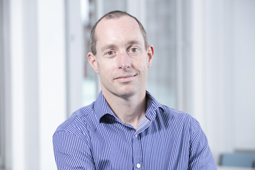
Michael Elsdon is a Researcher at Northumbria University , where he has been since 2008. He earned his PhD in Engineering from Northumbria in 2005 and holds professional distinctions including Fellow of the Higher Education Academy (FHEA), Chartered Engineer (CEng), and Member of the Institution of Engineering and Technology (MIET). PhD in Engineering (2005), Northumbria University Fellow of HEA (2005), Chartered Engineer (IET, 1998) His research bridges Microwave Engineering and Pedagogy . In microwave engineering, he focuses on antenna design , microwave imaging , and concealed object detection , with applications in breast cancer detection and nanocomposite analysis . In pedagogy, he investigates technology-enhanced learning and its impact on student engagement. His publications highlight trends in microwave holography , nanocomposite characterization , and solar-integrated antenna systems . Notable awards include FHEA and CEng recognition. While no formal student advisement details are available, his work spans collaborations with institutions like Newcastle University Medical School and IET.
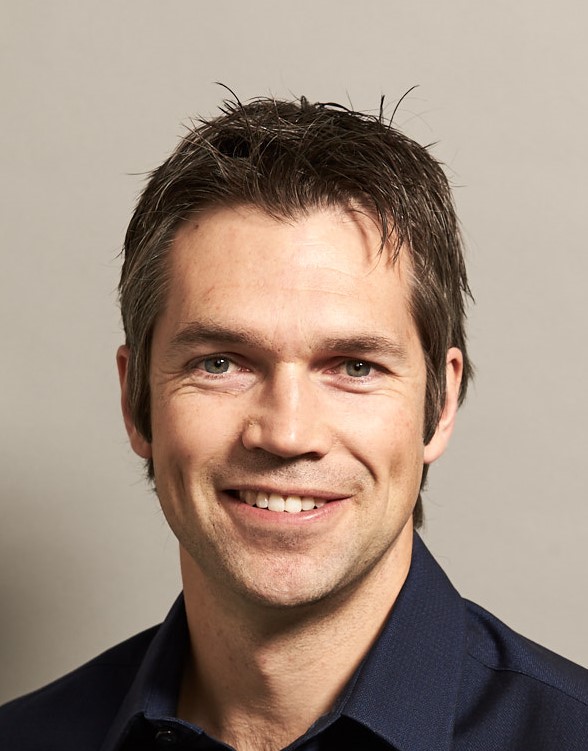
Arne Lauchtمشاهده پروفایل
دانشیار
Arne Laucht is a Scientia Associate Professor for Quantum Engineering at the University of New South Wales (UNSW) in the School of Electrical Engineering & Telecommunication. He is also the Program Manager at the ARC Centre of Excellence for Quantum Computation and Communication Technology (CQC2T). His research focuses on quantum computing, spin-based qubits in silicon, donor atoms, SiMOS quantum dots, and color centers in diamond/silicon carbide. Education: PhD (summa cum laude) in Quantum Optics from Technical University of Munich (2010), supervised by Prof Jonathan Finley. Research Interests: Quantum engineering, spin qubits in silicon, nanoscale device engineering, diamond vacancy centers, and quantum photonics. He explores ultra-long coherence times, quantum gate operations, and scalable qubit architectures. Publications Trends: Recent work emphasizes silicon-based spin qubits, quantum dot arrays, global field control, and room-temperature solid-state devices. Key topics include entanglement, Bell inequality violations, and fault-tolerant protocols. Labs & Collaborations: Leads the Ultra-Low Temperature Optics (ULTO) Lab, enabling cryogenic optical measurements. Collaborates with groups at UNSW, Macquarie University, and the University of Melbourne on diamond color centers and quantum materials.