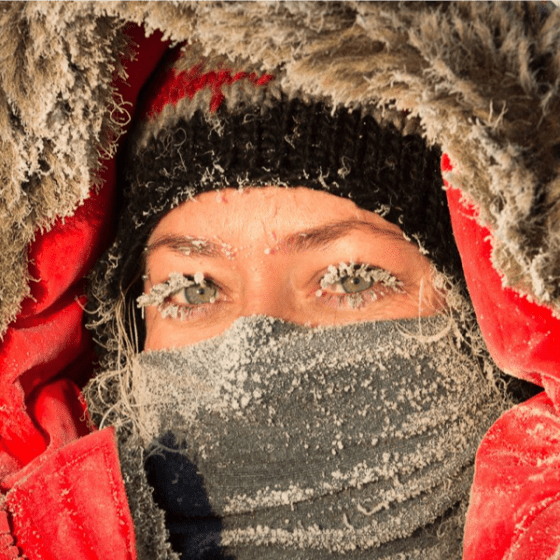
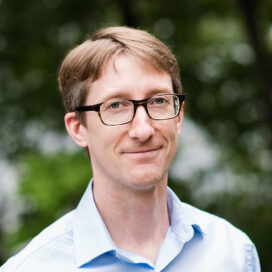
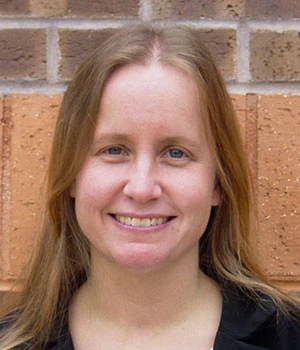
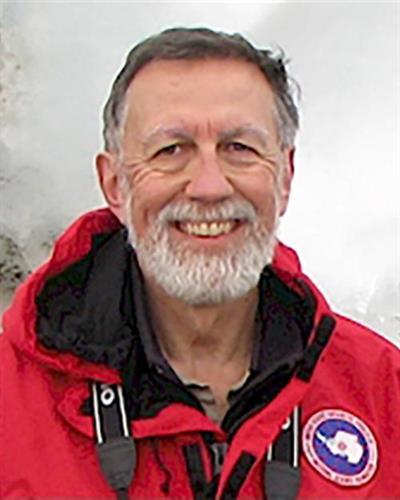
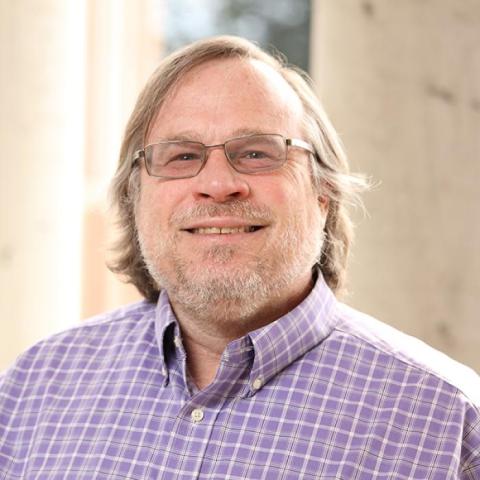
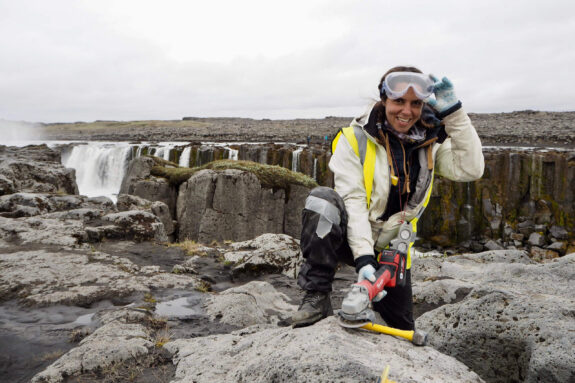
Britney Schmidt is Associate Professor in Earth and Atmospheric Sciences and Astronomy at Cornell University, where she leads the Planetary Habitability and Technology Lab. She develops robotic tools like the Icefin underwater vehicle to study Earth's ice shelves and glaciers, providing insights into climate change and analogs for ocean worlds like Europa. Her research bridges glaciology, planetary science, and astrobiology. Research focuses on ocean world habitability, ice-ocean interactions, and Antarctic climate systems. Fieldwork includes extensive campaigns in Antarctica and the Arctic using robotic explorers. Recent publications explore Europa's habitability, Thwaites Glacier dynamics, microbial communities in hypersaline environments, and planetary analog studies. Technical developments include novel instrumentation for under-ice exploration. Awarded the 2024 Blavatnik National Award for groundbreaking research. Leads multiple international collaborations including NASA's Europa Clipper mission and Thwaites Glacier projects.
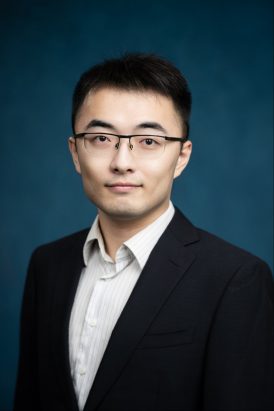
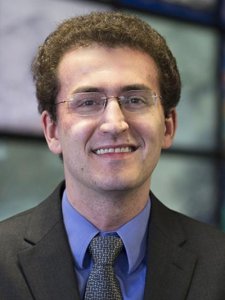
Hang Lu is an Associate Professor in the Department of Communication and Media at the University of Michigan's College of Literature, Science, and the Arts. He specializes in science, health, environmental, and risk communication (ComSHER), with a focus on media psychology. His research explores audience responses to media messages about sensitive topics and strategies to enhance message effectiveness. Lu holds a Ph.D. in Communication from Cornell University (2018), along with advanced degrees from Cornell, Marquette University, and Central South University in China. He directs the Media and Risk (MaR) Lab and previously served as a postdoctoral fellow at the Annenberg Public Policy Center. His research spans four main areas: 1) emotion dynamics in media responses, 2) predictors of information behaviors, 3) media effects on stigmatization, and 4) AI applications in sensitive domains. He has published in journals like Journal of Communication , Risk Analysis , and Public Understanding of Science , earning multiple top paper awards. As Vice Chair of the Environmental Communication Division at the International Communication Association, Lu contributes to interdisciplinary dialogue. His work addresses critical societal issues such as climate change communication, vaccination hesitancy, and emerging technology ethics.
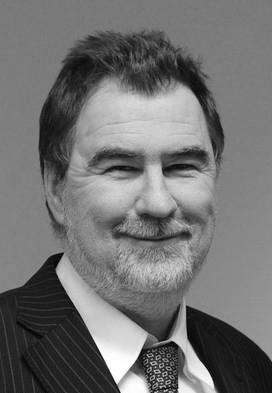
David Al-Attar is a Professor at the University of Cambridge's Department of Earth Sciences, actively involved in theoretical and computational geophysics research. He serves as a supervisor within the Cambridge NERC Doctoral Landscape Awards (Training Partnerships) program, particularly in the CREATES initiative focusing on climate and environmental science. Education: While specific educational details aren't provided in the text, his extensive publication record and professorial position at Cambridge indicate advanced training in geophysics and applied mathematics. Research Interests: Professor Al-Attar's work spans several interconnected areas within geophysics. His primary focus includes theoretical and computational problems in geophysics, with particular emphasis on continuum mechanics as applied to Earth systems. He develops new physical and mathematical theories for understanding Earth processes, including rigorous function space methods for inverse problems and uncertainty quantification. His sea level change research aims to constrain ice sheet evolution during the last glacial period to better understand modern contributions to sea level rise. Additionally, he investigates solid Earth dynamics including seismic free oscillations, body tides, and Earth rotation, contributing to our understanding of deep Earth structure and mantle dynamics. Research Themes: His publications demonstrate expertise in adjoint methods, glacial isostatic adjustment, mantle viscosity, planetary seismology, and computational methods for geophysical problems. Recent work emphasizes 3-D Earth modeling, sensitivity analysis, and the integration of satellite observations with theoretical models. Current Projects: Potential projects for students include inverse problems related to deglacial sea level change with focus on uncertainty quantification, modern sea level monitoring using satellite data, and solid Earth dynamics particularly regarding outer core viscosity in tidal and rotational dynamics. Contact: He can be reached at da380@cam.ac.uk for research inquiries and collaboration opportunities.
Oliver Shorttle is a Professor of Natural Philosophy at the University of Cambridge, holding a joint position between the Department of Earth Sciences and the Institute of Astronomy. His research focuses on planetary evolution, extrasolar planets, and geochemical cycling, integrating geological and astronomical perspectives. He explores topics such as exoplanet habitability, volcanic processes on distant worlds, and the role of volatiles in planetary systems. Education and Career: Shorttle earned his undergraduate degree in Natural Sciences from Cambridge, followed by a PhD in Earth Sciences. He held postdoctoral positions at Caltech and as a JSPS fellow in Japan before returning to Cambridge as faculty. Research Themes: His work spans planetary chemistry, magma dynamics, and the interplay between planetary interiors and atmospheres. Key projects include analyzing protoplanetary disks, simulating volcanic activity on exoplanets, and investigating phosphorus’s role in prebiotic chemistry. Collaborations: Leads the Planetary Chemistry group, collaborating across disciplines at Cambridge and internationally. Current projects involve modeling exoplanet atmospheres, studying mantle melting processes, and developing geochemical methods to probe planetary formation. Labs/Teams: Directs the Planetary Chemistry research group, fostering interdisciplinary research between geology and astronomy. Active in fieldwork, lab analysis, and computational modeling.
Steven Loheide is a Professor in the Department of Civil & Environmental Engineering at the University of Wisconsin-Madison. His work bridges hydrogeology, ecohydrology, and environmental engineering with a focus on groundwater-dependent ecosystems. PhD (2006), Stanford University MS (2001), Indiana University BS (1999), University of Northern Iowa Loheide's research examines hydroecology , vegetative water use , and stream-aquifer interactions , particularly in the context of climate change , urban greening , and managed aquifer recharge . His recent publications highlight interdisciplinary approaches combining remote sensing , hydrologic modeling , and ecosystem services analysis . Key trends in his 15 most recent publications (2023-2025) span: groundwater-forest interactions during drought, urban ecohydrology impacts on energy balance, MAR design for multi-benefit ecosystems, and tree sway monitoring as ecohydrologic stress indicators. 2022 - Distinguished Professorship of Water Resources Engineering 2021 - Harvey Spangler Award for Innovative Teaching 2018 - Vilas Faculty Mid-Career Investigator Award 2014 - Fulbright Scholar (Argentina) 2010 - NSF CAREER Award Loheide teaches courses in groundwater hydraulics , ecohydrology , and hydroscience , advising graduate students through master's research , pre-dissertation , and thesis projects.
Taylor Perron is the Cecil and Ida Green Professor of Earth, Atmospheric and Planetary Sciences at Massachusetts Institute of Technology (MIT), where he also serves as the EAPS Undergraduate Officer. His research program at MIT spans multiple interdisciplinary areas within Earth and planetary sciences, with strong connections to the MIT-WHOI Joint Program in Oceanography/Applied Ocean Science and Engineering. Dr. Perron's academic background includes an AB in Earth and Planetary Sciences and Archaeology from Harvard University (1999) and a PhD from the University of California, Berkeley (2006), followed by postdoctoral work at Harvard. His leadership roles at MIT have included serving as chair of the Program in Geology, Geochemistry, and Geobiology, and as Associate Department Head for Education. His research focuses on three interconnected areas: Landscape Evolution, Planetary Surfaces, and the Human Landscape. Within Landscape Evolution, he investigates dynamic river networks, climate-landscape interactions, grain-scale sediment transport mechanics, and the connections between landscape evolution and biological diversification. His Planetary Surfaces research examines river systems on Mars and Titan, using spacecraft data to understand extraterrestrial hydrological processes. The Human Landscape component explores archaeological applications of geomorphology, particularly in the Amazon basin. Analysis of his recent publications reveals a strong emphasis on comparative planetary hydrology, with significant work on Earth, Mars, and Titan. His research increasingly integrates field observations, mathematical modeling, and remote sensing to address questions about landscape evolution across different planetary environments and timescales, with growing attention to anthropogenic impacts on Earth's surface processes. Scientific Awards & Honors: MacArthur Fellowship (2021) James B. Macelwane Medal, American Geophysical Union (2014) Fellow, American Geophysical Union (2014) Editorial Committee Member, Annual Review of Earth & Planetary Sciences (2017-present) Dr. Perron has established a productive research group that collaborates across disciplines and institutions, including significant partnerships with WHOI, NASA missions, and archaeological teams. His work bridges fundamental questions about planetary evolution with practical implications for understanding climate change impacts on Earth's surface systems.
Professor Patrice Rey is a faculty member at the School of Geosciences, The University of Sydney. He holds the rank of Professor and specializes in geodynamics, tectonics, and landscape evolution. With an international career spanning 12 institutions across three continents, his research focuses on continental rifting, mantle dynamics, metamorphic processes, and the interplay between climate and tectonics. Notable projects include studies on Australia’s geological history, the formation of precious opal, and the dynamics of early Earth geodynamics. His work bridges field geology, numerical modeling, and geophysical analysis. Key research themes include gravitational collapse in cratons, the role of isostasy in fold belt evolution, and the impact of dynamic topography on sedimentary systems. He has contributed to interdisciplinary projects such as the Perseverance Mars mission, highlighting connections between Earth’s geology and Martian surface processes. Recent publications emphasize continental crust evolution, landscape dynamics, and the integration of virtual reality tools in geological education. He leads research teams funded by grants like the Australian Research Council (DP22 and LP20 projects), focusing on mineral systems and Proterozoic rift basins. His media presence includes BBC documentaries and NOVA series, showcasing his expertise in continental evolution and planetary geology.
David Mohrig is a Professor in the Department of Earth and Planetary Sciences at the Jackson School of Geosciences, University of Texas at Austin, holding the Peter T. Flawn Centennial Chair in Geology. His research focuses on sedimentary deposits, transport processes, and the evolution of terrestrial and submarine landscapes. He employs laboratory experiments, field studies, and remote sensing to investigate channel formation, sediment dynamics, and subsurface deposits. Research Interests: Sedimentary Geology and Stratigraphy Geomorphology of Rivers, Deltas, and Coastlines Submarine Channels and Sediment-Gravity Currents Basin Analysis and Seismic Interpretation Key Contributions: Mohrig’s work integrates experimental methods with field observations to understand sediment transport mechanisms and their preservation in geological records. His research group has advanced understanding of fluvial and submarine processes, including deltaic deposits on Mars and coastal dynamics on Earth. Advising & Grants: Mohrig has advised numerous doctoral, master’s, and undergraduate students. He acknowledges support from grants like the IHS Markit Educational Grant for geoscience software. His lab facilities include state-of-the-art flumes and wind tunnels for sediment dynamics studies. Labs/Teams: The Mohrig Research Group uses specialized facilities such as the Deep Tank and 2D Wind Tunnel to simulate sediment transport and depositional processes. Collaborations span geology, engineering, and planetary science.
Lindsay McHenry is Professor and Department Chair of Geosciences at the University of Wisconsin-Milwaukee. She holds a Ph.D. from Rutgers University, an M.S. from Dartmouth College, and a B.S. from Dartmouth College. Her research focuses on using volcanic ash composition to correlate archaeological sites in East Africa and identifying terrestrial analogues for Martian surface minerals. Her research interests include tephrostratigraphy for human evolution studies, Mars geology analogs, sulfate mineral formation processes, and paleolimnology of saline-alkaline systems. Recent publications demonstrate strong focus on Martian analog studies using terrestrial environments (Iceland, East African lakes), mineral mapping with remote sensing/ML techniques, and paleolake reconstruction. Work increasingly incorporates drone technology and machine learning for planetary exploration applications.
Samuel Kounaves is a Professor of Chemistry at Tufts University and a Visiting Professor at Imperial College London's Department of Earth Science & Engineering. His research focuses on planetary chemical analysis and astrobiology, particularly the search for life on Mars and icy moons like Enceladus and Europa. He led the Wet Chemistry Lab (WCL) on NASA's Phoenix Mars Lander, discovering perchlorate in Martian soil, a finding revolutionizing understanding of Mars' habitability. His work also includes studying oxychlorine chemistry's effects on biomarkers and developing in-situ analytical instruments for extraterrestrial exploration. Education: DSc (PhD) in Chemistry, Université de Genève (1985) MS and BS in Chemistry, California State University, San Diego (1978, 1975) Research Interests: Planetary geochemistry, astrobiology, Mars habitability, oxychlorine chemistry, and development of analytical instruments for space missions. His team investigates how biomarkers degrade under Martian conditions and designs sensors for detecting life on icy ocean worlds. Recent Contributions: Key publications include studies on perchlorate's role in Mars' chemistry, microbial survival in extreme environments, and mission concepts for Enceladus exploration. He has received awards such as the Kavli Foundation Award and NASA Achievement Awards for his Phoenix mission leadership. Grants & Funding: Major NASA grants for oxychlorine research, sensor development (e.g., MICA), and studies on Mars' organic matter preservation. Awards: Fellowships from the Geological Society, Royal Society of Chemistry, and AAAS, alongside NASA recognitions.
Kevin K. Lehmann is the William R. Kenan, Jr., Professor of Chemistry at the University of Virginia, within the Department of Chemistry in the College of Arts & Sciences. He is a leading researcher in molecular spectroscopy, with a focus on ultrasensitive detection methods such as cavity ring-down spectroscopy (CRDS) and double-resonance techniques. His educational background includes a B.S. from Cook College, Rutgers University (1977), a Ph.D. from Harvard University (1983), and a Junior Fellowship at the Harvard Society of Fellows. Lehmann's research is centered on advancing trace gas sensing using optical methods, particularly CRDS with high-reflectivity cavities and telecom-grade lasers. His group has pioneered Doppler-free two-photon CRDS and sub-Doppler double-resonance spectroscopy using frequency combs, enabling high-precision measurement of molecular transitions in gases like methane and nitrous oxide. These methods have applications in atmospheric science, planetary exploration (e.g., Mars missions), and combustion diagnostics. He also investigates meta-science questions around the reproducibility of spectroscopic data. The recent publications highlight a strong trend in high-resolution, quantum-limited spectroscopic techniques applied to small polyatomic molecules. There is a clear focus on enhancing selectivity and sensitivity through nonlinear optical effects, cavity enhancement, and advanced detection schemes. Applications span environmental monitoring, astrochemistry, and fundamental molecular physics. Fellow of the Optical Society, 2011 W.R. Kenan Professor of Chemistry, 2009 Earle K. Plyler Award in Molecular Spectroscopy, 2003 Thomas A. Edison Patent Award, 2002 Fellow of the American Physical Society, 1995 Lehmann has advised numerous graduate students and postdoctoral researchers, and his lab has been supported by grants from agencies involved in space exploration, environmental science, and fundamental physics. His work has led to commercial instrumentation through Tiger Optics, Inc. He maintains strong international collaborations, particularly with researchers in Sweden on methane spectroscopy. While specific grant details are not listed, the scope and impact of his research suggest sustained funding from NSF, NASA, and DOE. His laboratory focuses on optical cavity-based sensors and high-resolution spectroscopy setups, integrating frequency combs, narrow-linewidth lasers, and cryogenic pre-concentration systems for trace analysis. The team combines experimental innovation with theoretical modeling to interpret complex spectra and improve measurement fidelity.
Steven Greybush is an Associate Professor in the Department of Meteorology and Atmospheric Science at Pennsylvania State University, College of Earth and Mineral Sciences. He is based in University Park, PA, and his research bridges atmospheric science, climate modeling, and interdisciplinary applications. He leads and contributes to major research initiatives involving AI-enhanced weather forecasting, planetary meteorology, and climate impacts on water and health systems. His research interests include Atmospheric Science , Climate Modeling , Data Assimilation , Planetary Meteorology (especially Mars) , Lake-Effect Snowbands , Tropical Cyclones , and Climate-Health Interactions . His work applies advanced techniques such as the Ensemble Kalman Filter (EnKF), Local Ensemble Transform Kalman Filter (LETKF), and AI-driven models to improve predictions of weather and climate phenomena. His recent publications (2021–2025) reveal a strong trend in integrating satellite and radar data into numerical models, enhancing forecasts of convection, hurricanes, and snowstorms. He also explores Martian atmospheric dynamics and the impact of climate variability on public health in Africa. His work is supported by major grants from NASA and NSF, including a $1.23 million NASA grant to improve AI satellite weather forecasting and an NSF grant for AI-powered weather pattern understanding. $1.23 million NASA grant for AI satellite weather forecasting NSF grant for AI-powered weather pattern understanding Penn State part of $6.6M consortium to improve weather forecasting Reducing Uncertainty in River System Forecasts to Maximize Nuclear and Hydro Generation Greybush collaborates with interdisciplinary teams and participates in field campaigns such as IMPACTS (Investigation of Microphysics and Precipitation for Atlantic Coast-Threatening Snowstorms). He advises or co-advises graduate students and researchers, though specific advisees are not listed. His work is published in top journals including Journal of Geophysical Research , Monthly Weather Review , JAMA Network Open , and PNAS .
Gaia Stucky de Quay is an Assistant Professor of Earth and Planetary Sciences at the Massachusetts Institute of Technology (MIT), appointed to the Department of Earth, Atmospheric and Planetary Sciences (EAPS) in 2023. She holds the Peter Puster (1995) and Paula Waschbusch (1994) Career Development Professorship, effective January 1, 2025. Her research investigates the driving forces behind the formation, evolution, and decay of planetary surfaces across the solar system, with particular focus on Mars and Earth analogs. Dr. Stucky de Quay's research interests span planetary surface processes including fluvial systems, lakes & hydrology, volcanic terrains, glaciated landforms, icy satellites, uplift & dynamic support, climate-land links, and landscape evolution. She employs a multi-faceted approach combining theoretical studies, field work, remote sensing, and laboratory analyses to quantify the interactions between fluvial erosion, climate, and tectonics across various spatial and temporal scales. Her work seeks to understand whether Mars had conditions suitable for life by examining ancient river systems and lake formations. Her publication record demonstrates expertise in Martian paleoclimate studies, with significant contributions to understanding precipitation constraints from paleolakes on Mars and the persistence of climate-driven runoff in Mars' history. She also conducts important research on Earth's post-glacial landscape evolution, particularly in Iceland, which serves as an analog for understanding Martian surface processes. Early Career Grant, British Society for Geomorphology (2020) Ralph Brown Expedition Award, Royal Geographical Society (2020) Dr. Stucky de Quay's research bridges Earth and planetary sciences, with implications for understanding both planetary habitability and natural hazards on Earth. Her lab investigates volcanic islands as accessible analogs for Martian terrain, examining how climate shapes landscapes over geological time. She is building a research group focused on planetary analog studies that transfers knowledge between different planetary bodies while integrating multiple techniques from field work to computational analysis.
Ralf Jaumann is a Professor at the Free University of Berlin within the Institute of Geological Sciences, Department of Planetary Sciences and Remote Sensing . He serves as Deputy Director of the Institute of Planetary Research and previously led the Planetary Geology Department at the German Aerospace Center (DLR) in Berlin-Adlershof until January 2020. As Principal Investigator of the High Resolution Stereo Camera (HRSC) on ESA's Mars Express mission (2013-2021), he has significantly contributed to Mars geology studies. Co-PI of Mastcam-Z on NASA's Mars 2020 mission Co-I on instruments for Rosetta , Cassini , Dawn , and ExoMars missions Coordinated global Mars color mosaics and long-term surface change detection using HRSC data His research focuses on planetary geology , remote sensing , and space mission instrumentation , particularly analyzing geological processes on Mars, asteroids, and icy satellites. Recent publications examine spectral properties of asteroid regolith, Martian aeolian processes, and hydration dynamics on the Moon. Despite his extensive involvement in mission operations, no specific student advisement records or scientific awards are mentioned in the provided data. Jaumann teaches Planetary Exploration: Space Missions and Planetologie Literaturseminar at the graduate level.
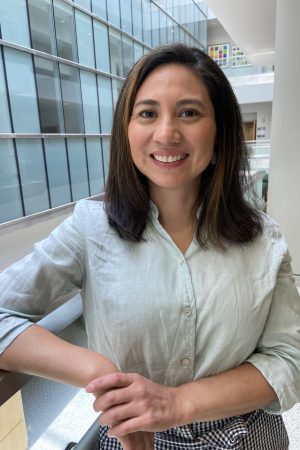
Carmen Serrata is an Assistant Professor of Higher Education at the University of North Carolina at Charlotte (UNC Charlotte), affiliated with the Cato College of Education’s Department of Educational Leadership. Her work focuses on equity in higher education, particularly for marginalized student populations such as first-generation, low-income, and Latinx students. She explores themes like college access, immigration/citizenship intersections, and family influence on educational pathways. Dr. Serrata holds a Ph.D. in Educational Administration from the University of Texas at Austin, an M.Ed. from the University of Texas at San Antonio, a B.B.A. in Marketing from Texas A&M University-Corpus Christi, and an A.A. in Spanish from Del Mar College. She teaches courses on equity, access, and educational leadership in master’s and doctoral programs. Her research, supported by grants like the John M. Belk Endowment, examines community college transfer pathways, rural student experiences, and Latinx students’ educational trajectories. Notable publications include studies on transfer student perceptions, rural Latina values, and family roles in college readiness. Awarded the Postdoctoral Research Fellowship at UNC Charlotte (2021–2023) and the LatinxEd Fellowship (2022), her work bridges scholarship and practice through service in local/state education initiatives. She advises graduate students, serves on dissertation committees, and advocates for equitable education policies.