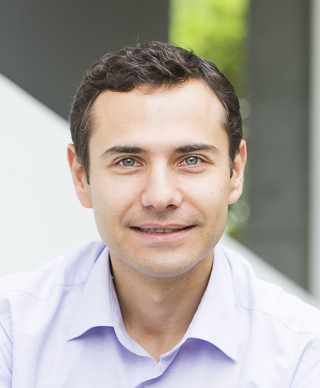
Professor Valentyn Panchenko is a leading academic in Economics at the UNSW Business School, specializing in advanced econometric methodologies and financial modeling. Holding a PhD from the University of Amsterdam and an MPhil from the Tinbergen Institute, his research bridges theoretical econometrics with real-world financial applications, emphasizing big data analysis, network structures, and dependence modeling in economic systems. His expertise spans financial econometrics, time series analysis, non-parametric statistics, and agent-based economic simulations. He focuses on Granger causality, model evaluation, structural economic modeling, and bounded rationality with heterogeneous agents. His work has secured significant grants including ARC Discovery Projects and DECRA fellowships, enabling cutting-edge research on market dynamics and economic interactions. Professor Panchenko's publications appear in top-tier journals like the Journal of Econometric Theory, AEJ: Micro, Journal of Economic Dynamics & Control, and Journal of Banking & Finance. His methodological contributions include novel approaches to copula-based forecasting, nonlinear causality testing, and evolutionary learning models in strategic economic environments. While specific student advising details aren't provided, his research leadership demonstrates sustained impact across econometric theory, financial markets, and experimental economics.
Paolo Colla is an Associate Professor of Finance at Bocconi University and serves as Director of the International Economics and Finance B.Sc. Program. His research focuses on asymmetric information in financial markets, corporate financing strategies, and market fragmentation. He has published extensively in leading journals such as the Journal of Finance and Review of Financial Studies. Key topics include price manipulation in FX markets, debt structure dynamics, and the impact of legal frameworks on financial instruments. His work bridges theoretical finance with practical applications, addressing issues like sovereign debt pricing and regulatory policy implications. Teaching responsibilities include courses on financial modeling, derivatives, and institutional finance. His research has explored diverse themes, including the dissemination of short-sellers' information and strategic trading behaviors in fragmented markets. Despite no explicit mention of awards or grants, his prolific publication record underscores his scholarly contributions to corporate finance and financial markets.
Dr. Vikram Nanda is the O.P. Jindal Distinguished Chair Professor of Finance at the Naveen Jindal School of Management, University of Texas at Dallas. He holds a PhD in Finance from the University of Chicago, MBA from Yale University, and a Bachelor of Technology from Indian Institute of Technology Kanpur. His research focuses on corporate finance, financial institutions, and behavioral finance, with emphasis on topics like hedge fund strategies, managerial overconfidence, and corruption's economic impacts. Key research highlights include studies on multi-market trading (best paper award), litigation risk effects on contracting, and cryptocurrency bubble detection. He has served on editorial boards for Journal of Financial Research and Financial Letters , and contributed to non-academic publications like Barron’s . His work spans 30+ years across top-tier institutions including USC, University of Michigan, and Georgia Tech. Current research explores AI's role in investment management, gender diversity in executive roles, and legal frameworks affecting corporate behavior. Awards include Smith Breeden Prize nominations and Q-Group research grants. Educations: PhD (Chicago), MBA (Yale), B.Tech (IIT Kanpur) Affiliations: Financial Intermediation Research Society, European Finance Association Labs/Teams: Behavioral Finance Research Group, Corporate Governance Initiative He advises on strategic financial decisions and has authored/coauthored over 50 publications. Recent work examines environmental, social, and governance (ESG) investment strategies and the impact of trade secret laws on financial opacity.
Alex Shestopaloff is a Lecturer in Statistics at Queen Mary University of London (QMUL), affiliated with the School of Mathematical Sciences. Previously, he was a Research Fellow at the Alan Turing Institute (2017–2020) and a Junior Research Fellow at Campion Hall, Oxford. He holds a PhD in Statistics from the University of Toronto (2016), supervised by Radford M. Neal. His research focuses on developing efficient MCMC methods, high-dimensional time series analysis, network science, and applications in financial market microstructure. Education: PhD in Statistics, University of Toronto (2016) Supervisor: Radford M. Neal Research Interests: Bayesian online learning in non-stationary environments Limit order book modeling and trading strategies Graph clustering and network analysis Statistical methods for high-dimensional data Algorithmic trading and cryptocurrency markets His recent work spans financial engineering, machine learning, and statistical methodologies. Notable contributions include cluster-based trading strategies (ClusterLOB), generalized Bayesian filtering frameworks, and scalable graph analysis techniques. Collaborations with industry partners (e.g., Wise Plc) highlight applied research in financial systems. Advising & Alumni: Current advisees include Yichi Zhang (Oxford), Maria Fernanda Pintado (QMUL), and Dave Lui (Oxford) Alumni: Gerardo Duran-Martin (Postdoc at Oxford-Man Institute), Claudio Bellani (Citadel Securities) Labs/Teams: Leads interdisciplinary projects at QMUL and collaborates with the Alan Turing Institute on financial and network science initiatives.
Assoc. Prof. Zehra Eksi-Altay holds a position at the Institute for Statistics and Mathematics at Vienna University of Economics and Business (WU). Her research focuses on financial mathematics, stochastic modeling, and partial information control problems in finance. She has expertise in credit risk modeling, derivatives pricing, and commodity markets. Eksi-Altay has a PhD in Financial Mathematics (2011) and completed her Habilitation in 2017. She has advised one doctoral thesis and has published extensively in top-tier journals like Quantitative Finance and Journal of Computational and Applied Mathematics . Her work bridges theoretical advancements with practical applications in areas such as regime-switching models, optimal portfolio strategies, and liquidity analysis. Education: BSc, MSc (2005), PhD (2011) Habilitation: 2017 Key Research Themes: Partial Information Models, Stochastic Control, Credit Risk, Algorithmic Trading Her recent work explores regime-switching affine term structures, optimal trading strategies under uncertainty, and dark pool liquidity analysis. Eksi-Altay has received one academic prize, though its specific name is not detailed in the provided text. Her contributions span both theoretical developments and applied finance, often collaborating with institutions like WU’s Institute for Statistics and Mathematics.
Professor Ian Marsh is a Professor of Finance at Bayes Business School, University of London. He has held this position since 1998 with a temporary leave at the Bank of England between 2001–2003. His research focuses on credit risk transfer markets, foreign exchange dynamics, and macroeconomic exchange rate modelling. He holds a B.Sc. from Sheffield, an M.Sc. from Birkbeck, and a PhD in Economics from Strathclyde. Marsh's research explores three core areas: macroeconomic exchange rate models, FX/equity market microstructure, and credit derivatives. His work on short-selling bans in the UK won the 2011 INQUIRE Prize. He has supervised over 10 PhD students, including Jason Cen and Kwabena Duffuor, focusing on topics like international finance and microstructure analysis. Key publications include the 2012 Handbook of Exchange Rates and influential studies on central bank interventions and credit default swaps. His work is published in top journals like the Journal of Financial Economics and Journal of International Money and Finance . Marsh serves on editorial boards including the Journal of Banking and Finance , and consults for institutions like the Bank of Finland on credit risk innovations. His media engagements include BBC and Financial Times commentary on financial market policies.
Viral V. Acharya is the C.V. Starr Professor of Economics in the Department of Finance at New York University Stern School of Business. He is a Research Associate at the National Bureau of Economic Research (NBER), a Research Affiliate at the Center for Economic Policy Research (CEPR), and a Research Associate at the European Corporate Governance Institute (ECGI). He previously served as Deputy Governor of the Reserve Bank of India (2017–2019), with responsibilities in monetary policy, financial markets, and financial stability. He is currently Director of Doctoral Education at NYU Stern (2025–), Advisor to the NYU Stern Henry Kaufman Initiative on Financial History (2023–2026), and a Scientific Advisor to the Sveriges Riksbank (2024–). He is also a member of the Climate-related Financial Risk Advisory Committee (CFRAC) of the Financial Stability Oversight Council (2023–2026), the Bellagio Group, and the Financial Advisory Roundtable of the Federal Reserve Bank of New York. Education: B.Tech. in Computer Science and Engineering, Indian Institute of Technology, Mumbai (1995) Ph.D. in Finance, New York University Stern School of Business (2001) His research focuses on systemic risk, financial regulation, sovereign and financial linkages, credit and liquidity risk, and the macroeconomic implications of financial frictions. He has also recently explored risks related to pandemics and climate change. His recent publications examine commercial real estate exposure in banks, spillover risks from non-banks, U.S. Treasury market dynamics, and industrial policy in India. The body of work consistently emphasizes financial stability, regulatory design, and the interaction between public policy and financial markets. Scientific Awards: Alexandre Lamfalussy Senior Research Fellowship, Bank for International Settlements (2017) Inaugural Banque de France – Toulouse School of Economics Junior Prize (2011) Senior Houblon-Norman Research Fellowship, Bank of England (2008) Clarivate Analytics Highly Cited Researcher (2020–2022) Acharya has held numerous editorial and leadership roles, including Editor of the Journal of Law, Finance and Accounting (2014–2016, 2020–), member of the Editorial Committee of the Annual Review of Financial Economics (2022–), Board Member of the American Finance Association (2024–), and Director of the Western Finance Association (2012–2015). He has served as an Academic Advisor to multiple Federal Reserve Banks and international institutions including the IMF, World Bank, and BIS. He advises on financial policy globally and is a frequent commentator in major media outlets. He is not known to advise specific students, but his leadership in doctoral education at NYU Stern underscores his role in mentoring the next generation of finance scholars. He is affiliated with research centers and policy initiatives focused on financial history, climate risk, and financial stability.
John Miller is a Professor of Economics and Social Science at Carnegie Mellon University (CMU) and a Research Professor at the Santa Fe Institute. His work focuses on complex adaptive systems, computational modeling, and social dynamics. He holds a Ph.D. in Economics from the University of Michigan (1988) and has held academic positions since 1990. Miller’s research explores emergent patterns in social systems through agent-based models, experimental economics, and nonlinear dynamics. His research interests span complex adaptive systems, game theory, auction markets, and behavioral economics. Notable contributions include foundational work on computational social science, the Standing Ovation Problem, and cooperative behavior analysis. Miller has authored influential books such as Complex Adaptive Systems: An Introduction to Computational Models of Social Life and A Crude Look at the Whole . He has received awards including the Elliot Dunlap Smith Award for Teaching Excellence and has led initiatives like the Open Learning Initiative. Miller’s academic leadership roles include Director of Graduate Studies at CMU and Faculty Director of the Omidyar Fellows Program at Santa Fe Institute. His work bridges economics, computer science, and interdisciplinary complexity research.
Prof. Michael HALLING is a Full Professor in Sustainable Finance at the University of Luxembourg's Faculty of Law, Economics and Finance, Department of Finance. His work focuses on sustainable finance, corporate finance dynamics, climate risk assessment, and financial regulation. He holds the prestigious Chair in Sustainable Finance and has published extensively on topics like MiFID II compliance, mutual fund fee structures, and post-pandemic market recovery. Contact: michael.halling@uni.lu Research Interests : Prof. HALLING’s research bridges theoretical finance with practical applications, emphasizing sustainable investment practices, corporate debt management, and regulatory frameworks. Key themes include: Climate risk modeling using public news sentiment analysis Impact of behavioral preferences on corporate investment decisions Automated compliance systems for financial institutions Market dynamics during crises (e.g., pandemic effects on capital access) Recent Publications Trends : Recent works analyze MiFID II regulatory impacts (2024), stochastic modeling of corporate investment (2023), and firm-specific climate risk quantification. His 2020 studies explored pandemic-driven shifts in corporate financing strategies. Awards : No awards explicitly mentioned in the provided texts. Grants & Advising : No student advisees or grant details provided in available data. Labs/Teams : No specific research group affiliations listed.
Ke Xu is an Assistant Professor at the Department of Finance, Faculty of Business and Economics, University of Victoria. His research bridges finance, econometrics, and cryptocurrency, focusing on market microstructure, high-frequency trading, and price discovery mechanisms. He has extensively studied Bitcoin ETFs, fractional cointegration models, and machine learning applications in financial markets. Key Research Areas: Market Microstructure High-Frequency Trading Cryptocurrency Dynamics Price Discovery Machine Learning in Finance Financial Econometrics Article Trends: Xu’s work spans empirical analyses of Bitcoin ETFs, volatility modeling (e.g., affine GARCH), and algorithmic trading strategies. His recent papers explore mini flash crashes using machine learning, regulatory impacts on market quality, and sustainable crypto portfolios.
Oliver Linton is the Chair of the Faculty and Professor of Political Economy at the University of Cambridge's Faculty of Economics. He coordinates the Empirical Analysis of Financial Markets theme at the Janeway Institute and holds a position at Trinity College. His research primarily focuses on econometric theory and empirical finance , with applications in market microstructure, asset pricing, and volatility modeling. His research interests span: Development of novel econometric methods for high-dimensional and dynamic data Analysis of financial market behavior, including liquidity and trading patterns Applications in policy-relevant contexts such as quantitative easing and pandemic forecasting Linton's recent publications demonstrate a strong focus on: Advanced time-series methodologies (e.g., GARCH, nonparametric regression) Financial market microstructure and high-frequency trading Economic impact analysis of major events (e.g., Brexit, COVID-19) He has received prestigious awards including: Humboldt Research Award (2015) Thousand Talents Plan recognition from Renmin University of China (2016) Linton actively advises doctoral students, with current supervisees including Xinyi Su, Zhaocheng Zhang, and Kilian Bachmair. He secured significant funding such as the European Commission FP7 grant for Nonparametric and Semiparametric Methods in Economics and Finance (2011–2014).
Professor Georgios Sermpinis is a faculty member in Accounting & Finance at the Adam Smith Business School, University of Glasgow. He joined the institution in 2011, bringing expertise in machine learning, financial trading, forecasting, econometrics, and financial risk management. Degrees from National Kapodistrian University of Athens and Liverpool John Moores University Former roles at University of Bedfordshire and Liverpool John Moores University Consultancy for major banks including Goldman Sachs and BNP Paribas Research Interests: Focus on machine learning applications in finance, including portfolio optimization, cryptocurrency markets, and risk modeling. His work integrates AI with traditional financial theories, emphasizing sustainability and behavioral aspects. Scientific Awards: Acanto Research Grant (2017) Santander & University of Oviedo Grant (2017) Mobility Grant, Universidad de La Laguna (2017) University of Oviedo Grant (2014) Early Career Research Grant, University of Bedfordshire (2010) Students: Supervised PhD candidates include Feng Xin and Sun Longguang, focusing on ESG investment and financial markets. Editorial Roles: Senior Editor of Decision Support Systems, Associate Editor of Information Systems and Operational Research, and Guest Editor for journals like Quantitative Finance.
Marti G. Subrahmanyam is the Charles E. Merrill Professor of Finance, Economics and International Business at the Leonard N. Stern School of Business, New York University , and a Global Network Professor of Finance at NYU Shanghai . He holds a PhD in Finance and Economics (MIT, 1974) , a post-graduate diploma from the Indian Institute of Management, Ahmedabad (1969) , and a B.Tech. in Mechanical Engineering from IIT Madras (1967) , where he has also served as a visiting professor. His career spans over five decades, with editorial roles at top journals like Journal of Finance and Review of Financial Studies . Research Focus : Derivatives markets, corporate finance, fixed income, market microstructure, ESG investing, and quantitative easing. Academic Leadership : Founded NYU Stern and NYU Shanghai Undergraduate Honors Programs, served on over 85 doctoral committees, chaired 35. Scientific Awards : New York University Distinguished Teaching Medal (2003) Anneliese Maier Award (2016) - First economist to receive this honor Distinguished Alumnus Awards from IIT Madras (2004) and IIM Ahmedabad (2011)
Dr. Hossein Jahanshahloo is an Associate Professor of Financial Technology at Alliance Manchester Business School, The University of Manchester. Previously, he served as an Assistant Professor of Finance at Cardiff Business School (University of Cardiff). He holds a PhD in Finance from Leeds University Business School, alongside MSc and BSc degrees in Finance and Computer Software Engineering. His research focuses on Blockchain Technology, Cryptocurrencies, Market Microstructure, and Algorithmic Trading. He created the Cardiff University Bitcoin Database (CUBiD), which provides accessible cryptocurrency network data to academics and practitioners. His work contributes to UN Sustainable Development Goals related to innovation and infrastructure. He currently serves as an associate editor at the Journal of Research in International Business and Finance and holds a visiting researcher position at Technical University of Munich. His recent publications explore Bitcoin arbitrage dynamics, cryptocurrency market efficiency, and banking acquisition failures. Jahanshahloo advises PhD students and collaborates internationally on projects involving blockchain applications and financial technology innovations.
Jim Gatheral is a Presidential Professor of Mathematics at Baruch College, City University of New York (CUNY), where he leads the Financial Engineering MS Program. He holds a Ph.D. in Theoretical Physics from Cambridge University (1983), advised by John C. Taylor, and a B.Sc. in Mathematics and Natural Philosophy from the University of Glasgow (1979). Research Focus: His work centers on volatility modeling, market impact dynamics, optimal execution strategies, and stochastic volatility frameworks. Key contributions include rough volatility theory, affine forward variance models, and advancements in Heston and SABR models. He authored The Volatility Surface: A Practitioner’s Guide (2006), a seminal text in quantitative finance. Professional Contributions: Gatheral has published extensively in journals like Quantitative Finance , Finance and Stochastics , and SIAM Journal on Financial Mathematics . He co-developed the arbitrage-free SVI volatility surface parameterization and contributed to market impact models under perfect competition. His work integrates theoretical physics insights with financial engineering. Engagement: He delivers presentations globally, including at the SIAM Financial Mathematics and Engineering Conference (2019) and Bloomberg Quant Seminars. His research bridges academia and industry, addressing practical challenges in derivatives pricing and risk management.