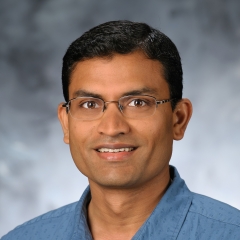
Yogananda Isukapalli is a Teaching Professor and Vice Chair in the Computer Engineering Program at the Electrical and Computer Engineering Department , University of California, Santa Barbara . He joined the faculty in Winter 2017 after a career as a staff scientist at Broadcom (2010–2017), where he designed Wi-Fi chips (11n/11ac/11ax) and worked on underwater wireless communication models during a postdoctoral stint at Scripps Institution of Oceanography (2009–2010). His PhD in Communication Theory and Systems from UC San Diego (2009) forms the basis of his expertise in wireless systems and digital design .
John Folkesson is an Associate Professor at the Department of Robotics, Perception and Learning at KTH Royal Institute of Technology. His research focuses on mobile robotics, underwater autonomous vehicles (AUVs), and Simultaneous Localization and Mapping (SLAM), particularly addressing challenges in dynamic underwater environments. He leads the AUV group within the Swedish Maritime Robotics Centre (SMaRC2.0) and supervises multiple PhD projects, including those funded by Ocean Infinity and Vinnova. Folkesson has pioneered work on sonar-based SLAM, bathymetric mapping, and autonomous underwater navigation without human intervention. He teaches courses such as Probabilistic Graphical Models (DD2420) and Applied Estimation (EL2320). Recent projects include developing neural rendering techniques for sidescan SLAM and automatic launch systems for AUVs in collaboration with Purdue University and SAAB. His research emphasizes long-term autonomy, environmental ambiguity, and sensor data interpretation in unstructured underwater scenarios. Education: PhD in Robotics (2005, KTH Royal Institute of Technology) Recent Funding: 2024 projects include ALARS (Vinnova), WASP WARA-PS, and industrial collaborations. Research Interests Folkesson's work spans underwater robotics, SLAM algorithms, and sensor fusion. Key areas include: Underwater SLAM and sonar modeling Bathymetric reconstruction using neural networks Autonomous decision-making in AUV missions Real-time terrain modeling and localization Articles Trends Recent publications emphasize neural networks for SLAM optimization, sonar data processing, and autonomous underwater systems. Themes include real-time bathymetric mapping, sensor fusion in dynamic environments, and neural rendering techniques for improving navigation accuracy. Folkesson's work bridges theory and practice, with applications in marine robotics and industrial surveys. Advising & Grants PhD supervision: AUV perception (2024), SLAM with Ocean Infinity, event-response AUV systems. Collaborations: Purdue University, SAAB, Ocean Infinity. Course responsibilities: Over 10 advanced robotics and engineering courses at KTH. Labs & Teams Lead of SMaRC2.0, KTH's official research center for maritime robotics. Active in developing AUV systems for long-duration missions, including ice-covered and deep-sea exploration.
Mahmoud El-Sakka is an Associate Professor at the Department of Computer Science, University of Western Ontario since 1999. Previously, he was a faculty member at the University of Waterloo (1997–1999). He holds a B.Sc. and M.Sc. from Alexandria University (Egypt) and a Ph.D. in Systems Design Engineering from the University of Waterloo. His research focuses on medical imaging, image processing, and computer-aided diagnostics. He has served as Chair of the graduate program (2002–2007) and undergraduate program (2017–present) in Computer Science at Western Ontario. El-Sakka is a Senior Member of the IEEE and a licensed Professional Engineer in Ontario. His work spans grants from NSERC, internal university funding, and industry collaborations. Major research areas include image compression, segmentation, and medical applications like vascular analysis and echocardiography. He has led over 20 funded projects since 1999, emphasizing interdisciplinary approaches in healthcare technology. Academic contributions include advisory roles in summer programs, thesis evaluations, and conference participation. His service includes roles as Pro-Chancellor at convocations and involvement in equipment purchasing committees. Collaborations include consulting with NCR Canada and VRP Web Technology.
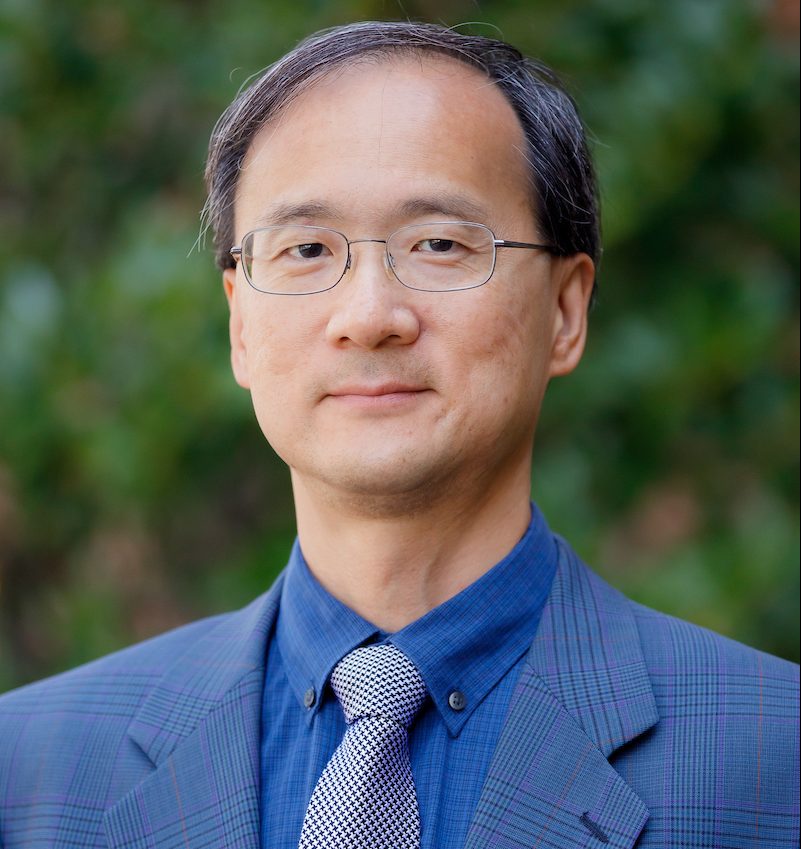
Dr. Patrick Kung serves as Associate Professor and Associate Department Head for Undergraduate Programs in the Department of Electrical and Computer Engineering at the University of Alabama's College of Engineering. His research spans nanotechnology, quantum computing, and terahertz photonics with significant contributions to metamaterials and optical systems. Research Focus: Dr. Kung specializes in terahertz spectroscopy, polarization-sensitive imaging, and nanoscale material engineering. His work integrates machine learning with optical systems for applications in underwater imaging, quantum networking, and biodegradable polymers. Recent projects include $1 million Department of Energy funding for quantum networking research (2024) and development of materials for slowing light propagation. Publication Trends: His recent publications (2022-2025) demonstrate a clear trajectory toward multimodal sensing systems combining terahertz technology, polarization control, and AI-driven image processing. Key themes include underwater object recognition using single-photon LiDAR, compact drone-compatible imaging platforms, and cryogenic photonic components for quantum applications. The work consistently bridges fundamental nanophotonics with practical engineering solutions. Department of Energy Funding ($1 Million for Quantum Networking Research, 2024) Dr. Kung actively mentors students in EPA-funded water disinfection projects using UV-LED technology and collaborates with industry partners through the Southeast Executives-on-Roster program. His laboratory work focuses on nanowire-based thin films and metamaterial absorbers, with applications in environmental monitoring and quantum communication hardware.
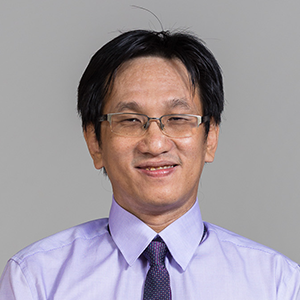
Anthony TUNG Kum Hoe is a Professor in the Department of Computer Science at the National University of Singapore (NUS), where he has established himself as a leading researcher in database systems and data mining. He is also affiliated with the NUS Graduate School for Integrative Sciences and Engineering and serves as a SINGA supervisor. His educational background includes a Ph.D. in Computer Science from Simon Fraser University (2001), an M.Sc. in Information Systems & Computer Science from NUS (1998), and a B.Sc. with 2nd Class Upper Honours in Information Systems & Computer Science from NUS (1997). Professor Tung's research spans several interconnected areas within database systems and data mining. His primary focus is on developing efficient methods for indexing and searching complex data structures including time series, trajectories, trees, graphs, and high-dimensional objects. He has pioneered work in visual query processing, keyword search, and ranking systems. His GENIE (Generic Inverted Index) and LAMP (semi-Lazy Mining Paradigm) projects represent significant contributions to big data analytics, particularly in handling the 'variety' aspect of big data by providing unified frameworks for processing diverse data structures while preserving semantic meaning. His research bridges theoretical database concepts with practical applications in visual data mining, collaborative analytics, and just-in-time model construction. His recent publications reveal a clear evolution from traditional database research toward more complex analytics on diverse data types. While maintaining his core expertise in database indexing and query processing, his work has expanded to incorporate machine learning techniques, particularly in areas like nearest neighbor search, anomaly detection, and predictive analytics. There's a noticeable trend toward interdisciplinary applications, with publications spanning computer vision, natural language processing, transportation systems, and social computing. His research group consistently publishes in top-tier venues including SIGMOD, VLDB, ICDE, and KDD, demonstrating both theoretical rigor and practical relevance. 2005 Best Paper Award for 'Indexing DNA Sequences Using q-grams' 2007 Invited panel speaker on 'Advice for a successful database researcher career in Asia' at SIGMOD 2010 Guest Lecturer for VLDB Database School 2012 VLDB 2012 Research PC Co-chairs 2015 10 Years Best Paper Award, DASFAA 2015 Invited to SIGMOD 2008 and SIGKDD 2008 Program Committees Professor Tung has supervised numerous PhD students and research associates throughout his career, including notable researchers like Zhang Zhenjie (recipient of the 2007 President Graduate Fellowship) and Wang Nan (published in SIGMOD'08). His research group has been consistently productive, with students publishing in top conferences including SIGMOD, ICDE, and VLDB. His professional service is extensive, having served as PC Chair for COMAD'06, Research PC Co-chair for VLDB 2012, and on program committees for virtually all major database and data mining conferences over the past two decades. His research has been supported by various grants that have enabled significant contributions to database technology. His GENIE and LAMP projects represent a cohesive research direction focused on developing systematic approaches to big data analytics. GENIE provides a unified platform for storage and retrieval of big data with various structures, while LAMP introduces a novel paradigm for predictive analytics that combines the strengths of lazy and eager learning approaches. These projects have evolved to incorporate GPU acceleration and parallel processing capabilities, reflecting his commitment to addressing real-world scalability challenges in data-intensive applications.
Yuan-Fang Li is an Associate Professor in the Department of Data Science & AI at Monash University's Faculty of Information Technology. He also serves as Associate Dean International. His research focuses on knowledge graphs, natural language processing, multimodality, and graph representation learning. He holds a PhD from National University of Singapore (2006) and a Bachelor of Computing (Honours) from the same institution (2002). Affiliations: Monash University (since 201?), National University of Singapore (PhD 2002-2006) Key Projects: Leading research on neuro-symbolic systems (HARNESS project), large-scale multimodal knowledge management, and maritime knowledge graphs Teaching: Taught courses including FIT4002, FIT4004, and supervised over 20 PhD students Research interests include complex question answering over knowledge graphs, knowledge extraction from text/images, and structural/temporal graph learning. He has published 152+ works with notable contributions to scene graph generation, event extraction, and LLM-based reasoning. Key awards include the 2020 Best Student Paper Award and 2017 Kurzweil Prize. Grants: ARC Discovery Projects, industry collaborations (e.g., Outotec Oy) Labs/Teams: Active in Monash's Data Science & AI research groups, leading neuro-symbolic AI initiatives
Saleh Javadi is a Senior Lecturer at the Department of Mathematics and Natural Sciences at Blekinge Institute of Technology (BTH) in Karlskrona, Sweden. He is actively engaged in research and teaching within the field of systems engineering. His educational background includes: B.Sc. in Electrical-Control Engineering from Amirkabir University of Technology (2009) M.Sc. in Electrical, Electronic and Systems Engineering from The National University of Malaysia (2013) Ph.D. in Systems Engineering from Blekinge Institute of Technology (BTH) (2021) Saleh Javadi's research focuses on signal processing, machine learning, and computer vision , with applications spanning remote sensing, intelligent transportation systems, and AI-driven industrial optimization. His work bridges theoretical advancements with practical implementations, particularly in SAR imagery analysis, drone-based agricultural monitoring, and traffic surveillance systems. His recent publications demonstrate a strong focus on remote sensing technologies, particularly Synthetic Aperture Radar (SAR) image processing and analysis. There's a clear trend toward applying machine learning techniques to solve complex problems in aerial and satellite imagery, traffic monitoring, and agricultural applications. His research shows interdisciplinary connections between computer vision, signal processing, and practical engineering applications. Saleh Javadi has received significant recognition for his innovative work: Innovator of the Year award (SKAPA – Innovation Prize in Memory of Alfred Nobel) in Blekinge for innovative efforts in optimizing and reducing energy consumption in industries by using artificial intelligence ÅForsk Entrepreneur's prize at the Swedish Innovation Council Day – Swedish Incubators & Science Park's annual conference in May 2019 Dr. Javadi is involved in practical applications of his research through projects such as "Artificiell intelligens AI kan reducera ogräsfrön i utsäde" (ongoing) and "Bekämpa Renkavle med hjälp av drönare och Artificiell Intelligens (AI)" (completed). His work demonstrates a strong commitment to translating academic research into real-world solutions that address industrial and environmental challenges. His research appears to be conducted within a collaborative framework, working with colleagues on drone technology, SAR image analysis, and AI applications across multiple domains including agriculture, maritime monitoring, and transportation systems.
Andreas Weber is an Associate Professor at the University of Twente's Digital Society Institute , specializing in the Knowledge, Transformation & Society (KiTeS) research group . His work examines the long-term historical and global relationship between Science, Technology, and Society , with particular focus on colonial histories of natural history, chemistry, and sustainability , as well as computational technologies for contextualizing digitized archives . He leads the HAICu project (2023–2029) on digital cultural heritage and coordinates STS PhD training for the Netherlands Graduate Research School (2019–2024). MA & PhD in History (2005 & 2012), Leiden University Assistant Professor (2017–2023), University of Twente Andreas' research integrates digital humanities with colonial science history , emphasizing global histories of minerals , digital humanism , and AI's societal context . His 15 most recent publications (2016–2025) explore topics like colonial bias in natural history collections , FAIR data implementation , and semantic annotation of handwritten archives , spanning disciplines from history of science to computer science and museum studies . He has received 7 scientific awards , including multiple Best Teacher Awards (2020–2023) and the IEEE eScience Best Poster Award (2018). Andreas supervises PhD and postdoctoral projects while engaging in media commentary on colonial heritage issues and co-organizing international conferences like Hydrogen Pasts and Futures (2024).
Yannis Theodoridis is a Professor at the Department of Informatics, University of Piraeus, leading the Information Systems Laboratory (InfoLab). He specializes in spatiotemporal databases, mobility analytics, and maritime data science. His research focuses on trajectory analysis, location-based services, and big data frameworks for transportation and maritime surveillance. Key projects include the MOD (Moving Objects Databases) initiative, the ARGOS framework for real-time trajectory prediction, and contributions to the HERMES trajectory database engine. He has advised 7 PhD students and co-authored numerous papers in IEEE and ACM venues. His work addresses challenges like vessel collision risk assessment, urban mobility optimization, and maritime event detection. He serves on the editorial board of the International Journal of Data Warehousing and Mining and contributes to conferences like PCI and ECML PKDD. His labs emphasize interdisciplinary approaches to mobility data science, integrating machine learning with domain-specific analytics.
Bogdan Iancu is a University Lecturer in the Department of Information Technology at the Faculty of Science and Engineering, Åbo Akademi University. He holds a PhD and Docent qualification in Computer Science, with extensive expertise in artificial intelligence and computer vision applications, particularly in the maritime domain. His academic career spans numerous research projects and publications that bridge theoretical AI concepts with practical industry applications. Dr. Iancu's research focuses on AI applications in maritime technology, with special emphasis on object detection systems, security challenges in AI models, and sustainable technological solutions. He has developed benchmark datasets like ABOships and ABOships-PLUS that have become valuable resources for researchers in maritime computer vision. His work addresses critical challenges including adversarial attacks on object detection systems, as evidenced by his 2025 publication on TOG Adversarial Attacks in YOLO Models. The analysis of his recent publications reveals a clear progression from foundational dataset creation to advanced security analysis and neurosymbolic approaches that combine neural networks with symbolic reasoning. His research shows increasing sophistication in addressing real-world challenges in maritime AI systems, with particular attention to robustness, security, and practical implementation. Dr. Iancu actively participates in numerous research projects including EDISS (Engineering of Data-intensive Intelligent Software Systems), SMARTER (Sea4Value Smart Terminals), and DECATRIP (Decarbonizing Transport Corridors). These projects involve collaboration with industry partners across Finland and Europe, focusing on applying AI to solve real-world challenges in maritime transport, digitalization, and sustainability. He has contributed to the academic community through teaching courses in Artificial Intelligence, Data Science, and Graph Algorithms, and through active participation in the Finnish Artificial Intelligence Society. His work aligns with UN Sustainable Development Goals, particularly those related to industry innovation, infrastructure, and climate action through projects like DECATRIP that focus on decarbonizing transport corridors.
Luyang Zhao is an incoming tenure-track Assistant Professor in the Department of Electrical and Computer Engineering at Clemson University (starting August 2025). He earned his PhD in Computer Science and double undergraduate degrees in Computer Science and Mathematics from Dartmouth College and the University of Minnesota respectively. Academic Affiliation : Clemson University (Assistant Professor) Education : PhD in Computer Science (Dartmouth College), BS in Computer Science & Mathematics (University of Minnesota) His research focuses on Robotics , particularly soft robotics, modular systems, and bio-inspired designs. Key areas include: Large Language Models for robotic design automation Modular tensegrity systems for self-assembling structures Swarm coordination strategies Multi-environment adaptability (land/aquatic/aerial) Simulation tool integration for design optimization Recent publications highlight his work on SoftSnap modular platforms, LLM-driven swarm intelligence, and bioinspired dolphin robots. He received the Neukom Outstanding Graduate Research Prize for his contributions. Industry Experience : Research internships at Amazon Robotics and TuSimple Mentorship : Advised 6+ graduate/undergraduate researchers Open-Source Contributions : Developed SoftSnap platform for rapid prototyping Academic Service : Workshop co-organization (IROS 2023), peer reviewing (RA-L, ICRA, IROS, RoboSoft, BioRob)
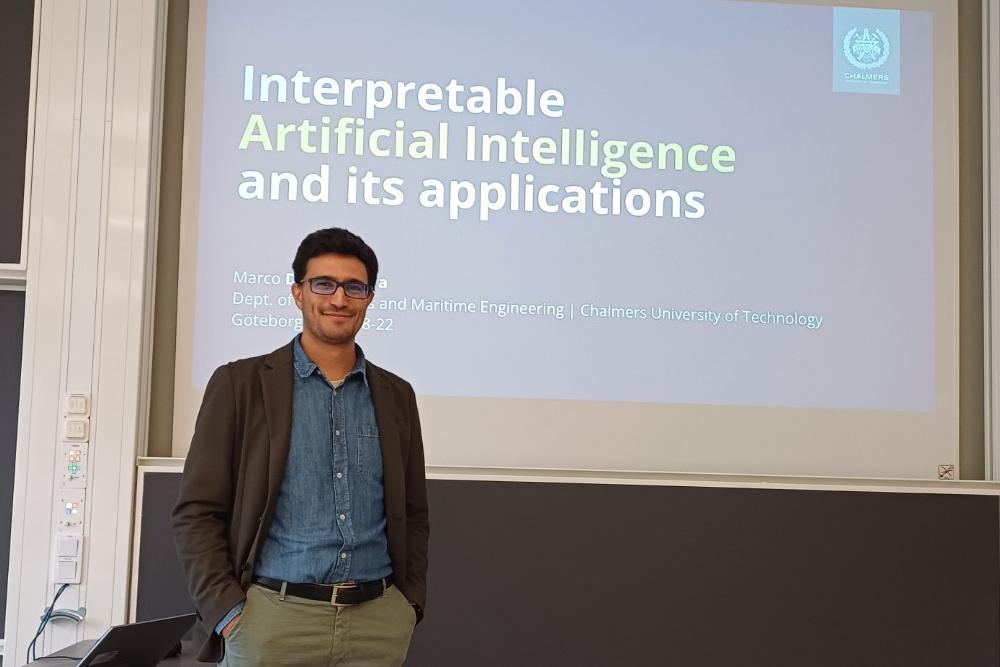
Marco L. Della Vedova is a Senior Lecturer in Applied Artificial Intelligence at Chalmers University of Technology, Sweden. He works in the Vehicle Engineering and Autonomous Systems division within the Department of Mechanics and Maritime Sciences, as part of Prof. Mattias Wahde's research group. Since 2025, he has served as Director of the Data Science and AI master's programme (MPDSC) at Chalmers, where he teaches courses including Introduction to Artificial Intelligence and Digitalization in Sports. Dr. Della Vedova earned his academic foundation at the University of Pavia, Italy, where he completed his BSc (2006), MSc (2009), and PhD (2013) in Computer Engineering. His doctoral research focused on "Real-Time Physical Systems and Electric Load Scheduling" under Prof. Tullio Facchinetti. During his PhD studies, he spent a year at U.C. Berkeley hosted by Prof. Francesco Borrelli at the Model Based Predictive and Distributed Control Lab. His research spans multiple AI domains with a strong emphasis on interpretability. Dr. Della Vedova develops interpretable methods for conversational AI, naturalness evaluation of forests using canopy height models, and geospatial applications. His work bridges theoretical AI with practical societal benefits, particularly in environmental monitoring, transportation systems, and orienteering. He has previously contributed to cloud computing, hate speech detection, and cyber-physical energy systems, demonstrating his interdisciplinary approach to AI research. Dr. Della Vedova's publication record reveals a consistent trajectory of impactful research across multiple domains of artificial intelligence. His recent work shows a strong focus on interpretability in AI systems, with significant contributions to natural language processing, geospatial analysis, and causal inference. The research demonstrates both theoretical depth and practical applications, particularly in environmental monitoring and social media analysis. His methodology often combines traditional machine learning approaches with novel interpretability techniques, creating bridges between complex AI systems and human understanding. Dr. Della Vedova has received several prestigious recognitions for his work: Best PhD thesis award from the Order of the Engineers of Bergamo (2013) Italian champion of Il Cervellone (2012) Top Italian performer in IEEEXtreme 6.0 programming competition (148th overall globally, 2012) Premio Arturo Schena award from Fondazione Credito Valtellinese (2010) With over 50 students supervised through bachelor's and master's theses, Dr. Della Vedova has established himself as a dedicated mentor in the AI community. His current PhD students include Minerva Suvanto working on interpretable NLP and Vivien Lacorre developing AI for railway infrastructure inspection. His supervision spans diverse topics from forest naturalness evaluation to hate speech detection and transportation optimization. Beyond formal supervision, he actively contributes to educational initiatives including serving as Director of Chalmers' Data Science and AI master's program and developing innovative teaching methods that connect theoretical concepts with real-world applications. Dr. Della Vedova is deeply embedded in both academic and professional communities. He leads the Applied Artificial Intelligence research group at Chalmers while maintaining strong connections with European research networks through projects like the ERASMUS+ EUrienteering initiative. His interdisciplinary approach is reflected in collaborations across computer science, environmental science, and social sciences. Notably, he applies his AI expertise to orienteering both as a researcher developing localization methods and as a licensed Event Advisor for the International Orienteering Federation, demonstrating how his professional and personal interests converge in innovative ways.
Dr Lounis Chermak is a Lecturer in Computer Vision and Autonomous Systems at the Centre for Electronic Warfare, Information and Cyber, part of Cranfield Defence and Security at Cranfield University, UK. He leads the Joint Autonomy Lab and is actively involved in research and education in autonomous systems with applications in defence and space. Research Interests: His work focuses on situational awareness in autonomous platforms, with core expertise in computer vision, sensor fusion, artificial intelligence, robotics, and navigation. He investigates perception, decision-making, and mobility across aerial, ground, maritime, and space systems, developing robust solutions for challenging environments including low visibility and extreme illumination. The recent publications reflect a strong trend in autonomous navigation, particularly for space and defence applications, using advanced computer vision techniques such as thermal stereo odometry, HDR imaging, stixel-based scene understanding, and lightweight 3D descriptors. Research also extends to cybersecurity of autonomous systems, including impersonation attack detection and optical countermeasures. Scientific Awards: No scientific awards mentioned in the provided text. Advising and Grants: Dr Chermak leads research activities supported by postdoctoral researchers, PhD, and MSc students. His work is funded and applied in collaboration with major clients including aerospace organizations (ESA, UK Space Agency, Thales Alenia Space), defence agencies (MoD, DSTL, BAE Systems, MBDA), and technology companies (Samsung, Astroscale). He supervises research students in robotics and autonomous systems across civilian and defence domains. Labs and Teams: He leads the Joint Autonomy Laboratory, a 200 m² indoor facility equipped with drone netting, motion capture systems, virtual reality test benches, UAV and ground robot fleets, electric vehicles, and multiple sensors for vision, ranging, and motion. This lab supports both educational and cutting-edge research in autonomous systems.
Yuta Sugiura is an Associate Professor in the Department of Information and Computer Science at Keio University's Faculty of Science and Technology. His research focuses on innovative human-computer interaction techniques, particularly in wearable computing, tangible interfaces, and novel input methods. Previously, he worked as a postdoctoral researcher at the National Institute of Advanced Industrial Science. Dr. Sugiura's research interests span Human-Computer Interaction, Wearable Computing, Augmented Reality, Tangible User Interfaces, Gesture Recognition, Ubiquitous Computing, Haptics, and Virtual Reality. His work often explores how everyday objects and environments can become interactive surfaces, with notable projects including the iRing (intelligent ring), SenSkin (skin as interface), and EarHover (mid-air gesture recognition for hearables). He has developed numerous novel interaction techniques that leverage physical properties of materials and human physiology for input and output. His recent publications indicate a strong focus on hearable computing, medical applications of HCI, edible interfaces, and novel authentication methods. The research shows a consistent pattern of exploring unconventional interaction surfaces and leveraging subtle physical phenomena for input sensing. His work has significant implications for healthcare applications, particularly in neurological disorder screening and rehabilitation. Best Paper Award Dr. Sugiura has advised numerous students who have gone on to publish significant work in top-tier HCI venues. His research has been supported by various grants enabling the development of novel interaction techniques and systems. He maintains strong collaborations with researchers across Japan and internationally, particularly in the fields of wearable computing and medical applications of HCI. His laboratory appears to focus on lifestyle computing, developing interfaces that integrate seamlessly into daily activities. Current projects include exploring edible displays, adaptive ear interfaces, and novel authentication methods using wearable devices. Future work seems to be heading toward more medical applications of HCI, particularly in neurological assessment and rehabilitation.
Annette Stahl is a Professor at the Department of Engineering Cybernetics, NTNU, and an Onsager Fellow. She leads the Robot Vision Group and oversees the AILARON project, funded by the Research Council of Norway. Her expertise spans robotic vision, control theory, and autonomous systems. She holds a PhD in Applied Mathematics (Computer Vision) from Heidelberg University. Her research focuses on underwater robotics, autonomous vehicles, and aquaculture monitoring, with applications in fish health analysis and marine environmental sensing. Stahl has supervised numerous PhD and master’s students, including projects on autonomous ships (SFI AutoShip), underwater SLAM (AROS), and plankton identification. She collaborates with industry partners like Zebop AS and SINTEF Ocean. Notable projects include the robotic microplankton sniffer-dog and AI-driven fish welfare monitoring. Her work is published in top journals/conferences like IEEE Access and MIC Journal. She actively contributes to datasets like the VAROS Synthetic Underwater Data Set.