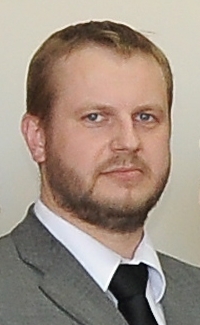
Dr. Mareike Pampus is a Researcher in Human Geography at Martin Luther University Halle-Wittenberg's Faculty of Natural Sciences III, specializing in post-mining landscapes, climate justice, and Indian Ocean connectivity. She contributes to interdisciplinary research on environmental restoration and structural change, particularly in Central Germany's mining regions. Education: MA in Social and Cultural Anthropology (Halle-Wittenberg, 2012-2014), BA in Ethnology (Leipzig, 2010-2012), and BA in Social Sciences/Philosophy (Leipzig, 2008-2012) Her research examines human-environment interactions through ethnographic studies of land rehabilitation, solar energy projects, and colonial heritage reinterpretation. Key themes include more-than-human geographies, temporal ecologies, and sustainability governance. Recent publications analyze solar land acquisition in Brandenburg and post-mining restoration ethics, while her 2021 PhD dissertation explored heritage dynamics in Penang's port city. She collaborates with the Climate Justice Research Centre and contributes to transnational energy transition research. Scientific Awards: Suggested for John A. Lent Prize (AAS Malaysia/Singapore/Brunei Studies Group) Pampus co-organizes panels on transoceanic food connections and participates in international conferences on rural geographies and the Anthropocene. She also contributes to public discourse through podcasts on water issues in mining regions.
Komninos Andreas is an Assistant Professor in the Computer Engineering & Informatics Department at the University of Patras, specializing in Mobile and Pervasive Computing, Internet of Things, and Human-Computer Interaction. His research spans intelligent environments, context awareness, and virtual reality applications. His research focuses on mobile text entry systems, psycho-cognitive modeling of human behavior, and accessibility for visually impaired users. Key areas include large language model applications for text entry evaluation, pseudo-haptic feedback in VR, and spatial multimodal alerts for industrial environments. He develops simulation tools like RoboType for realistic text entry evaluations and open-source cognitive models. Notable achievements include a Best Paper Award at the ACM Greek SIGCHI Chapter (2023) for VR text entry research. He serves as co-general chair for EICS'26 and holds leadership roles in MobileHCI'24 and UbiComp/ISWC'24 as Workshops & Tutorials Chair and Student Competition Chair respectively. Best Paper Award at ACM Greek SIGCHI Chapter (2023) Co-General Chair for EICS'26 Workshops & Tutorials Chair for MobileHCI'24 Student Competition Chair for UbiComp/ISWC'24 His publications demonstrate strong emphasis on empirical validation of text entry systems, with recent work integrating LLMs for affective phrase generation and psycho-cognitive modeling. He actively promotes open data practices in HCI research and has contributed to digital twin systems for environmental education and maritime industry applications.
Assoc. Prof. Dr. Gintautas Tamulevičius serves as Director of the Institute of Data Science and Digital Technologies at Vilnius University. His primary affiliation is with the Image and Signal Analysis Group, where he contributes as a Senior Researcher and Chief Researcher in projects. Doctor of Science in Technology (2008) Pedagogical Title: Associate Professor (2014, Vilnius Gediminas Technical University) Active in IEEE Computer Society and Signal Processing Society Dr. Tamulevičius specializes in speech signal processing, with research spanning three core domains: Speech Modeling : Autoregressive/linear prediction, nonlinear fractal modeling, non-parametric approaches Recognition Systems : Deep learning-based methods, Hidden Markov models, Wave-U-Net architectures Quality Assessment : Voice phonation evaluation, vocal fold condition analysis using acoustic methods His publication trends show strong focus on: Deep learning applications for speech processing 2D feature space analysis for recognition tasks Fractal dimension-based emotion classification Language preservation through technological development Human-centered AI applications Biomedical signal processing As an educator, he has taught: Digital Signal Processing (VGTU 2012–present) Speech Signal Processing (VGTU 2008–present) Data Visualization (VGTU 2015) User Interface Design (VU 2018–present) Audio Signal Processing (VU 2020–present) His editorial contributions include reviewing for: Informatica IEEE Access Neurocomputing Baltic Journal of Modern Computing Nonlinear Analysis: Modeling and Control IEEE Journal of Biomedical and Health Informatics International Journal of Applied Mathematics and Computer Sciences He has supervised doctoral research including: Daniel Zakševski (2023–2027): Deep learning models for speech enhancement Monika Danilovaitė (2020–2026): Voice quality assessment methods Tatjana Liogienė (2012–2016): Multistage speech emotion classification
Artikis Alexandros is a Professor at the Department of Maritime Studies within the School of Shipping and Industry at the University of Piraeus. He is based in Piraeus, Greece, and can be reached via email at a.artikis@unipi.gr or by phone at +30 210 4142539. His academic work spans Cognitive Object informatics, Shipping and Transportation systems, and broader Information sciences, with a focus on teaching and research. As a faculty member, he contributes to maritime education and research initiatives. His office hours are documented under the university's staff portal, though specific timeframes are not detailed in the provided information. The Department of Maritime Studies emphasizes interdisciplinary approaches, aligning with his interests in informatics applications for shipping. His research trajectory integrates technological advancements in maritime domains, and his affiliations with the University of Piraeus highlight his commitment to academic and industry collaboration. No scientific awards or publications are explicitly mentioned in the scraped data.
Isabel Teresa Martín Mateos serves as an Associate Professor in the Department of Industrial Engineering at the University of La Laguna, actively contributing to the LDF-TECNOMAR research group with expertise in fluid dynamics and marine engineering applications. Her academic foundation includes a 1997 PhD from the University of La Laguna, where her doctoral thesis "Application of a new observational technique to the study of solar gravitational modes" was supervised by Dr. Pere Lluis Pallé Manzano, reflecting early work in solar physics before her transition to engineering disciplines. Dr. Martín Mateos' research integrates Mechanical and Industrial Engineering principles to address challenges in marine renewable energy and fluid systems, leveraging the LDF-TECNOMAR group's focus on advanced fluid dynamics modeling for sustainable maritime solutions. She plays a pivotal role in the Official Doctoral Program in Industrial Engineering, Informatics, and Environmental Engineering, mentoring doctoral candidates while advancing collaborative projects in marine technology. Contact: itmartin@ull.es
Dr. Sadaf Hina is a Lecturer in Cybersecurity at the School of Science, Engineering and Environment (SSEE), University of Salford, Manchester, UK. She serves as the Programme Leader for the BSc Computer Science with Cybersecurity and holds significant research leadership roles as REF 2029 Co-Lead for People, Culture and Environment. Dr. Hina is an active member of the IoT Research and Innovation Lab (IRIL) and contributes to the Informatics Research Centre at the university. Her research interests span the critical intersection of artificial intelligence and cybersecurity, with specific expertise in IoT/IIoT security, zero-trust architectures, threat modeling in cyber-physical systems, and AI-aided security optimization. Over the past five years, her publication record shows consistent output in high-impact journals, with a notable increase in 2023-2025 focusing on cutting-edge applications of deep learning and vision transformers for security challenges. Her work demonstrates strong connections between theoretical security frameworks and practical industrial applications, particularly in critical infrastructure sectors. Dr. Hina has received significant professional recognition including: Fellow of the Higher Education Academy (FHEA, 2024) Advance HE Aurora Leadership Development Program certification (2025) REF Co-Lead roles for both People, Culture and Environment (2025) and Contributions to Knowledge and Understanding (2023) Editorial position for Applied Sciences journal (2024) Membership in professional organizations including IEEE (since 2014) and British Computer Society As a dedicated educator, Dr. Hina teaches Information Security, Information Security Management, Network Penetration Testing, Security and Privacy in IoT, and Fundamentals of Cybersecurity. She actively supervises BSc final year projects, MSc dissertations, and three PhD candidates working on AI-aided cybersecurity solutions. Her leadership extends to serving as Faculty Advisor for Women in Cybersecurity (WiCyS) and participation in cross-institutional mentoring programs, demonstrating commitment to developing the next generation of cybersecurity professionals.
Dr. Stella Parisi serves as a Lecturer in the MSc in Strategic Product Design Programme at the International Hellenic University, teaching Human Factors and Ergonomics since 2021 and HCI, Design and User Experience since 2024. Her educational qualifications include: Ph.D. in Ergonomics, National Technical University of Athens MSc in Strategic Product Design, International Hellenic University BSc in Applied Informatics, University of Macedonia Research Interests: Dr. Parisi's work centers on human factors and ergonomics, with applications in maritime transportation and critical infrastructure protection. She utilizes qualitative research for knowledge elicitation and investigates cognitive aspects in interaction design. She is actively engaged in research as a post-doctoral researcher at CERTH (Centre for Research and Technology Hellas), contributing to national and European R&D projects. Her professional memberships comprise: ACM SIGCHI HFES Europe Interaction Design Foundation No scientific awards were specified in the provided text. In her role as a lecturer, she mentors students in the MSc programme, though no specific advisees are listed. Her research activities are conducted in collaboration with CERTH.
W. Andy Knight is a distinguished Professor of International Relations in the Political Science Department at the University of Alberta, Faculty of Arts. He is a Fellow of the Royal Society of Canada (FRSC) and was awarded the University of Alberta's highest honor - the University of Alberta Distinguished Professor in 2021. Knight also served as the 2021-22 Fulbright Distinguished Chair in International and Area Studies at Yale University. Previously, he was the Director of the Institute of International Relations at the University of the West Indies, Trinidad & Tobago, and co-founder of the Diplomatic Academy of the Caribbean. Professor Knight's educational background includes a PhD, MA, and Hons BA. His academic journey has led him to become a globally recognized scholar in international relations, with numerous leadership roles including past Chair of the Political Science Department at the University of Alberta. Professor Knight's research focuses on International Relations, International Organization, United Nations System, Global Governance and Multilateralism, Global Security, Human Rights, Responsibility to Protect (R2P), Small Island States, Sub-Altern Peoples, and Terrorism. His work examines critical issues such as global health governance, global health security, Children and war, Piracy in the Horn of Africa, Hegemony, Democracy and Good Governance, and the vulnerabilities and resiliency of small island developing states (SIDS). His current research at Yale University tackles the issue of Summative Global Governance in an intermestic era. Professor Knight's recent scholarly output demonstrates a clear trend toward examining global security challenges through interdisciplinary lenses, with particular attention to health security, regional governance in Africa and the Caribbean, and the evolving nature of international cooperation in the 21st century. His work increasingly bridges traditional international relations theory with practical policy applications, especially in the areas of pandemic response and health diplomacy. Fellow of the Royal Society of Canada (FRSC) University of Alberta Distinguished Professor (2021) Fulbright Distinguished Chair in International and Area Studies at Yale University (2021-22) Harry Jerome Trailblazer by the Black Business and Professional Association of Canada Named by Venture Magazine among Alberta's top 50 most influential people Professor Knight has served as Co-editor in Chief of both African Security journal and International Journal. He has supervised numerous graduate students and currently welcomes honours undergraduate, MA, and PhD students interested in multilateralism, regionalism, hegemonic transition, small and subaltern states, Statelessness, children and armed conflict, R2P, extremism, counter-terrorism, female suicide terrorism, human security, human rights and human dignity. His service includes appointments on the Board of Governors of the International Development Research Centre (IDRC) from 2007-2011 and advisory roles with the World Economic Forum's Global Agenda Council on the Welfare of Children. Professor Knight leads significant research initiatives including his current work on Summative Global Governance at Yale University. He is deeply involved with the Caribbean Journal of International Relations and Diplomacy, which he helped establish during his time at the University of the West Indies. His collaborative work spans multiple institutions and disciplines, reflecting his commitment to interdisciplinary approaches to global challenges.