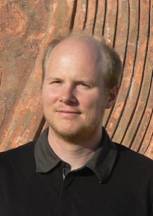
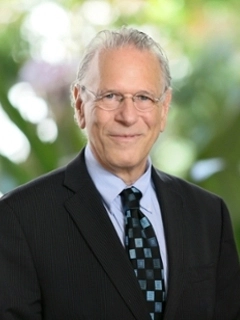
Dr. Marcel Dettling is a Group Lead in Data Analysis and Statistics at the ZHAW School of Engineering , focusing on predictive analytics, applied statistics, and complex data analysis. He also serves as a Lecturer at ETH Zurich , teaching advanced statistical methods. Education : PhD in Mathematics (2000-2004), ETH Zurich Postdoc in Applied Statistics (2004-2006), Johns Hopkins University His research spans predictive analytics (regression, classification, time series), data mining, and applications in health economics, transportation safety, social sciences , and business analytics . Recent work includes pharmaceutical cost group analysis for Swiss healthcare and predictive maintenance for marine vessels. Selected publications highlight his expertise in flight trajectory modeling , deep learning error mitigation , and statistical frameworks for rehabilitation finance . His projects address diverse fields like crowdworking in nursing, energy optimization for shipping, and customer behavior prediction.
Yang (Gilbert) Ye is an Assistant Professor in the Department of Civil and Environmental Engineering at Northeastern University, joining in January 2025. His research focuses on human-AI/robot teaming, automation in engineering, and assistive technologies, with a particular emphasis on human-centric robotics and sensorimotor processes. He holds a PhD in Civil Engineering from the University of Florida (2024), advised by Dr. Eric Jing Du. **Affiliations**: Member of ASCE, IEEE, and HFES. His work integrates VR/AR, robotics (e.g., drones, exoskeletons), and AI to enhance civil engineering workflows and workforce training. He leads the Ye Lab, actively recruiting PhD students and postdocs with coding experience (Python/C++/C#) and backgrounds in engineering or computer science. **Key Research Themes**: Human-robot interaction, construction automation, exoskeleton training, and delayed feedback mitigation in teleoperation. Over 20 peer-reviewed publications in journals like ASCE JoCEN, IEEE Access, and Advanced Engineering Informatics. **Lab Opportunities**: PhD/postdoc applicants require strong academic records (GPA ≥3.5) and coding skills. Undergrad/master students can apply for thesis/research roles. Funding covers tuition, insurance, and stipends.
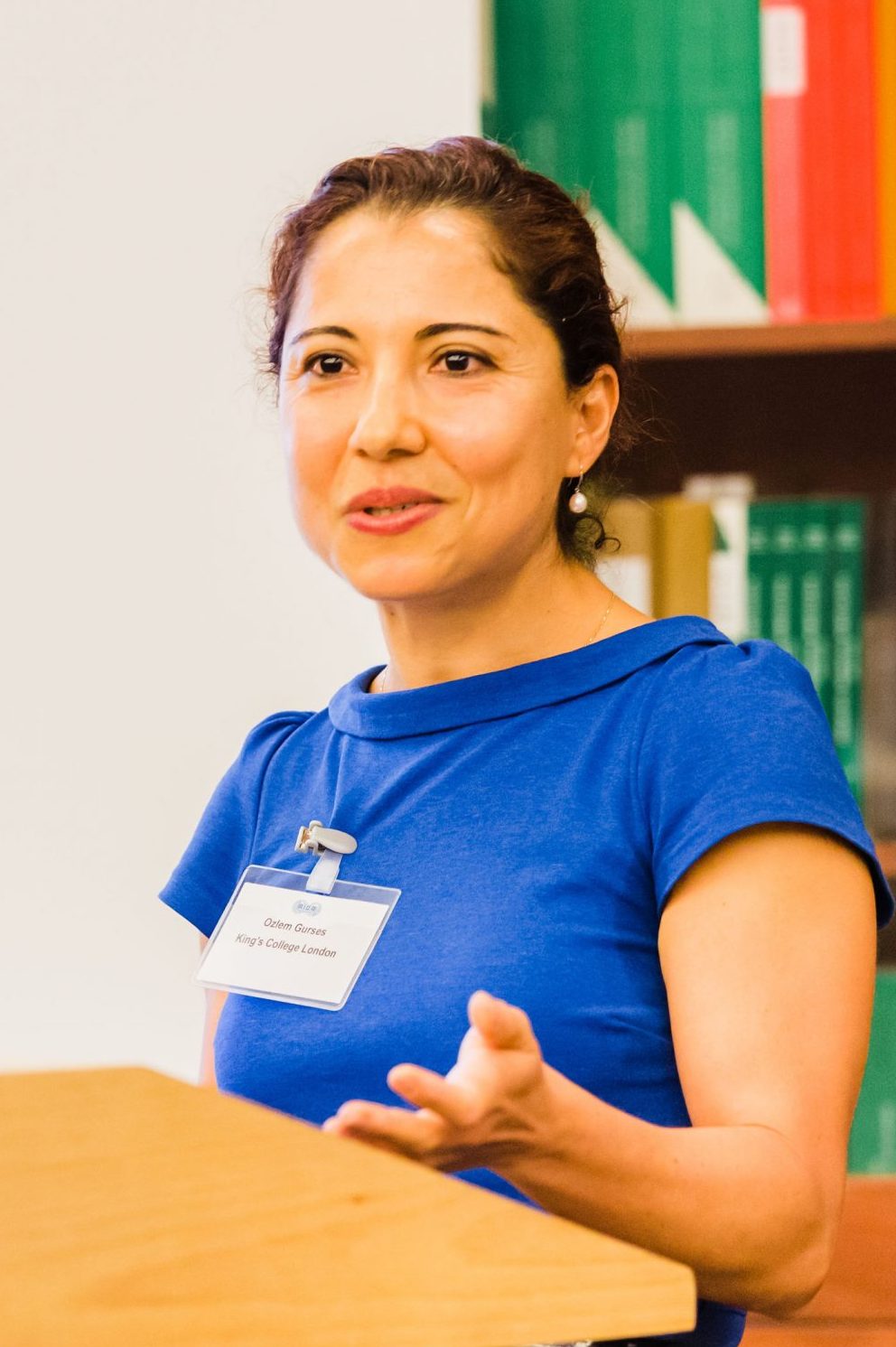
Özlem Gürses is Professor of Commercial Law at The Dickson Poon School of Law, King's College London. She previously taught at Norwich and Southampton Law Schools and holds law degrees from the University of Istanbul, an LLM in Maritime Law (with distinction) from the University of Southampton, and a PhD in Law from the same institution. She is a leading scholar in insurance and reinsurance law, with a focus on marine, compulsory, and emerging risk insurance. Her research interests include: Insurance and reinsurance law Marine and non-marine insurance Compulsory motor vehicle insurance Insurance of offshore installations and commercial risks Artificial intelligence in insurance contracts Her recent publications analyze business interruption insurance during the pandemic, public-private partnerships in reinsurance, subrogation immunity, and the legal treatment of emerging risks. She is the sole author of key texts such as The Law of Compulsory Motor Vehicle Insurance (2019), Marine Insurance Law (3rd ed, 2023), and Reinsuring Clauses (2nd ed, 2025), and has edited major reference works including the Edward Elgar Research Handbook on Marine Insurance Law (2024). She is actively involved in the legal academic community: Member of the Presidential Council, International Insurance Law Association (AIDA) Chair, Reinsurance Working Party of AIDA Vice-Chair, British Insurance Law Association Committee Professor Gürses teaches insurance law at both undergraduate and postgraduate levels and currently supervises four PhD students. She also lectures internationally in Germany, Singapore, China, Greece, and Italy. She has organized academic conferences and participates in research on the intersection of law, technology, and sustainability.
Markus A. Denzel is a Full Professor and Head of the Chair of Social and Economic History at the University of Leipzig since 2002. He also holds a Contract Professorship in Economic History at the Free University of Bolzano since 2000. He served as Dean (2005-2008) and Dean of Studies (2003-2005) at the Faculty of History, Arts and Oriental Studies in Leipzig. His research focuses on Economic History , Financial Systems , and Medieval/Early Modern Commercial Practices , with a particular emphasis on payment systems, merchant networks, and trade integration across Europe and its colonies. His work spans from the 13th century to the early 20th century , analyzing historical financial instruments like bills of exchange, marine insurance, and cashless transactions. 2009 : The Merchant Family in "Oberdeutsche Hochfinanz" 2008 : Latin America's cashless payments system 2007 : Munich's pre-modern financial systems 2006 : Marine insurance in the Mediterranean 2005 : Italian merchants in late Byzantium He received the Heinz Maier-Leibniz Prize (1998) for outstanding contributions to research in economic history.
Dr. Daniel Allen is a Lecturer in Human Geography at Keele University's School of Life Sciences, specializing in human-animal relations. An IUCN/SSC otter specialist, his research on otter conservation and dog theft informs policy and advocacy. He led an Environment Agency project on otter predation perceptions and founded the 'Pet Theft Reform' campaign, influencing UK legislation (Pet Abduction Act 2024). His research examines human-animal bonds, including dog theft impacts and mental health benefits. Current projects include 'No pets! Young people’s transitions to campus living,' funded by the Society for Companion Animals Studies. Teaching includes modules on Nature Conservation, Space and Society, More-than-human Geographies, and Animals and Society. He supervises PhD student Emma Randall on eco-therapy. Awards include the Daily Mirror’s Peoples Pet Awards Special Recognition (2021) and the PM’s Points of Light Award (2022). Publications emphasize spatial justice, animal advocacy, and policy impacts, with recent work on pet theft trends and human-animal bonds in crises.
Finn Arnesen (born 1962) is a Professor and Head of Department at the Scandinavian Institute of Maritime Law within the Faculty of Law at the University of Oslo. He has been affiliated with the Faculty of Law since 1989, progressing from research fellow to associate professor and becoming a full professor in 1998. Arnesen also serves as Chairman of the Board of Finanstilsynet (Financial Supervisory Authority of Norway) since March 2018 and is a member of the Market Council. Graduated in law in 1989 Defended doctoral thesis "State governance and EEA legal barriers" in 1996 Research assistant at Nordic Institute of Maritime Law (1987) Research assistant at Department of Criminal Law and Criminology (1988-89) Professor Arnesen specializes in EU law, EEA law, administrative law, international law, law of obligations, legal sources, and public procurement. His research focuses on general EU and EEA law, procurement law, and legal issues arising at the intersection between EEA law and Norwegian law. His work spans petroleum law, maritime law, and energy law, with particular attention to how European legal frameworks interact with Norwegian domestic legislation. Analysis of Arnesen's recent scholarly output reveals consistent engagement with the EEA Agreement's implementation and interpretation. His publications demonstrate expertise in treaty law, legal integration challenges, and the practical implications of European law for Norwegian sectors including fisheries, energy, and public procurement. The research shows particular focus on territorial application, legal homogeneity, and the relationship between European legal frameworks and national implementation. Arnesen has held significant professional positions including: acting Judge at the Supreme Court (2011-2012), member of the Public Procurement Complaints Board (2015-2023), and lawyer at Thommessen law firm (2002-2003). He has chaired important committees including those producing NOU 2005:13 on nominee registration of shares and NOU 2020:9 on incorrect application of National Insurance Act requirements in the EEA area. Professor Arnesen leads research projects including "The European Dimension of Norwegian Law (EURNOR)" and "Public Procurement of Critical Societal Functions and Effects on Societal Security and Emergency Preparedness (ProCritS)." He is affiliated with multiple research groups including the Labor Law Group, Research Group for International Law, and Market, Innovation and Competition (MIK) group.
Professor Özlem Gürses is a Professor of Commercial Law at King’s College London, specializing in insurance and reinsurance law. She concurrently serves as a Senior Fellow at the Melbourne Law Masters program at the University of Melbourne. Her academic journey includes undergraduate and postgraduate degrees from the University of Istanbul, followed by an LLM in Maritime Law and a PhD in Reinsurance Law from the University of Southampton. Her research focuses on marine insurance, motor vehicle insurance, and reinsurance clauses, with notable publications such as Marine Insurance Law (2023) and The Law of Compulsory Motor Vehicle Insurance (2019). She actively contributes to academic discourse through international conferences and edited volumes like the forthcoming Edward Elgar Research Handbook on Marine Insurance Law (2024). Prof. Gürses holds leadership roles in professional organizations, including membership in the Presidential Council of the International Insurance Law Association (AIDA) and chairing its Reinsurance Working Party. She also participates in the British Insurance Law Association (BILA) Committee, demonstrating her influence in shaping insurance legal frameworks globally.
Arthur A. Crais, Jr. is an Adjunct Professor of Law at the College of Law, Loyola University New Orleans. A native of New Orleans with 33 years of maritime litigation experience at Shell Oil Company, he specializes in admiralty law and serves as Chair of the Maritime Law Journal's Advisory Board. His educational background includes: Tulane University (undergraduate studies) University of Hamburg (international studies) Tulane School of Law (Juris Doctor) Professor Crais's research focuses on critical maritime legal domains including marine pollution liability, marine insurance frameworks, and international regulatory mechanisms for maritime disasters. His expertise bridges practical industry experience with academic scholarship in evolving maritime legal standards. He maintains active professional engagement as an arbitrator for the Louisiana State Bar Association's Attorney Fee Dispute Program and holds admission to practice before all Louisiana state/federal courts, U.S. District Courts for Eastern/Southern Texas, Fifth Circuit Court of Appeals, and U.S. Supreme Court. His teaching portfolio includes specialized courses: Marine Pollution Marine Insurance Rights, Remedies and Damages in a Maritime Disaster Seminar on Academic Legal Writing International Law of the Sea
Jürgen Groeneveld is a researcher at the Department of Ecological Modelling at the Helmholtz Centre for Environmental Research (UFZ) in Leipzig, Germany. His work focuses on agent-based modelling of ecological and socio-environmental systems, with a particular emphasis on pollinator conservation, climate change impacts, and biodiversity digital twins. He contributes to the BioDT Project and collaborates on initiatives like the BEEHAVE and BEE-STEWARD models for honeybee and bumblebee dynamics. His research integrates computational methods with ecological theory to address challenges in sustainable land use and environmental policy. Key projects include modeling land use transformations, analyzing the effects of pesticides on pollinators, and exploring risk-sharing mechanisms for smallholder farmers. Groeneveld has published extensively on topics such as metapopulation dynamics, forest fragmentation, and the application of standardized protocols (e.g., ODD) for simulation models. His work bridges theoretical ecology with practical applications, aiming to inform conservation strategies and climate adaptation policies. He participates in interdisciplinary collaborations across the UFZ’s research units, including the 'Smart Models / Monitoring' group. His contributions span publications in journals like Ecological Modelling, Ecosphere, and Nature, reflecting his expertise in both ecological and computational methodologies.
Professor Ozlem Gürses is a Professor of Commercial Law at King’s College London, specializing in insurance and reinsurance law. She concurrently serves as Visiting Professor at the Centre for Maritime Law (CML) at NUS Law, where she conducts seminars on marine insurance developments. Her academic career includes teaching roles at Norwich and Southampton Law Schools. Bachelor’s/Master’s in Law from University of Istanbul LLM in Maritime Law from University of Southampton PhD in Reinsurance Law from University of Southampton Her research focuses on marine insurance, compulsory motor vehicle insurance, and reinsurance clauses, reflected in major publications like Marine Insurance Law (2023) and Edward Elgar Research Handbook on Marine Insurance Law (2024). She actively contributes to legal communities through roles in the International Insurance Law Association (AIDA) and British Insurance Law Association (BILA), including chairing AIDA’s Reinsurance Working Party. Her recent academic activities include a public seminar on ‘Insurance and Marine Insurance Law – Recent Developments’ at NUS Law on 1 February 2024.
Steven G. Ullmann serves as a Professor at the University of Miami's Miami Herbert Business School within the Department of Health Sector Management and Policy. He holds significant leadership positions including Academic Director of the Health Executive MBA and MD/MBA Program and Director of the Center for Health Management and Policy. His academic work bridges business administration with public health challenges, particularly through his extensive research on environmental health impacts. Dr. Ullmann's research interests center on Health Services Administration, Public Health, Economics, Gerontology, and Epidemiology . His work demonstrates a consistent focus on the intersection of environmental factors and healthcare systems, with particular emphasis on the human health effects of Florida red tide blooms. His research examines how environmental exposures translate to healthcare utilization patterns, particularly among vulnerable populations like older adults. Analysis of his publication record reveals a strong trend toward interdisciplinary research connecting environmental science, public health, and healthcare management. His work on Florida red tide effects spans epidemiological investigations, policy analysis, risk communication, and economic impact assessments. More recently, his research has expanded to healthcare management topics including patient satisfaction, physician incentives, and access to rehabilitative care under the Affordable Care Act. Dr. Ullmann has demonstrated leadership in directing research centers and academic programs focused on health management. His role as Director of the Center for Health Management and Policy indicates his commitment to translating research into practical healthcare solutions. His work on physician incentives using behavioral economics principles shows his ability to apply business school expertise to clinical settings.
Carlo Fezzi is an Associate Professor at the Department of Economics and Management, University of Trento. His research focuses on econometrics, environmental economics, and climate change impacts, particularly in policy design and integrated modeling. Teaches Applied Econometrics and Econometrics for Behavioral and Applied Economics and Mathematics programs. Leads workshops in the Market Analysis Laboratory (G3-2), emphasizing data-driven market understanding. Fezzi’s research integrates econometric methods with environmental policy, addressing biodiversity, climate adaptation, and energy economics. Recent work explores land use optimization under climate change, electricity demand forecasting, and coral reef valuation. His publications span topics like carbon trading, agro-environmental modeling, and non-market valuation techniques. Fezzi’s 15 most recent articles highlight trends in econometric applications to environmental challenges, including climate policy, energy demand modeling, and biodiversity conservation. His methodologies combine linear/nonlinear models, neural networks, and spatial analysis to address global issues like food security, carbon emissions, and ecosystem resilience.
Dr. Paul Leahy is a Lecturer in Wind Energy Engineering at University College Cork (UCC) and a funded investigator in the SFI MaREI Centre for Energy, Climate, and Marine Research. He leads research on wind energy, circular economy applications for decommissioned turbine blades, and climate change impacts. His work includes the Re-Wind project, a transdisciplinary initiative funded by SFI, NSF, and Northern Ireland's Department for the Economy. He co-supervises six PhD students and has examined over 20 theses globally. Education: BE Electrical Engineering (1995), PhD Electrical Engineering (2001), Postgraduate Certificate in Teaching & Learning in Higher Education (2018). Research & Awards: Research focuses on wind energy forecasting, energy storage, and greenhouse gas emissions. Notable awards include the Environmental Research Letters' 2013 Highlight and an ISI Highly Cited Paper (2012). He contributed to IPCC Special Reports on climate change mitigation and co-edits Renewable & Sustainable Energy Reviews. Grants & Projects: Secured €320,000 for Re-Wind and led multiple EU, EPA, and industry-funded projects. Current research includes lifecycle assessments of repurposed turbine blades and hydrogen production via offshore wind. Teaching & Outreach: Coordinates modules like NE6003 Wind Energy Engineering and contributes to energy systems education. Engages in public lectures and policy initiatives like Energy Cork Cluster leadership. Labs & Teams: Collaborates with multidisciplinary teams on infrastructure repurposing (e.g., BladeBridges) and climate adaptation strategies for agriculture and peatlands.
Montserrat Cachero Vinuesa is a Full Professor in the Department of Economics, Quantitative Methods and Economic History at Pablo de Olavide University in Spain. She specializes in Economic History and Institutions, with a particular focus on applying network analysis to historical research. Her work bridges the fields of economic history, early modern studies, and digital humanities. Her research interests center on the application of network theory to historical contexts, particularly examining merchant networks in the Atlantic world during the early modern period. She investigates how social and economic networks facilitated trade, colonization, and cultural exchange between Europe and the Americas. Her work spans multiple dimensions including gender dynamics in commerce, book trade networks, risk management in pre-industrial trade, and the institutional frameworks that enabled transatlantic economic integration. Her scholarly output demonstrates a consistent trajectory of applying network analysis to historical questions, with increasing methodological sophistication over time. Recent work has focused on gender dimensions of commercial networks, particularly women's roles in the book trade, alongside continued exploration of Basque merchant networks, Atlantic trade routes, and colonial economic structures. Her research combines traditional archival methods with innovative network visualization and analysis techniques. Dr. Cachero Vinuesa is the creator of RedLab, an academic space dedicated to the application of network analysis to historical research. This initiative reflects her commitment to methodological innovation and interdisciplinary collaboration. She is actively involved in doctoral education through the History and Humanistic Studies program at her institution, with emphasis on European, American, and geographical approaches to historical research.
Angelo Corallo is an Associate Professor at the Department of Experimental Medicine, University of Salento, specializing in technologies and methodologies for collaborative processes in industrial systems. His research spans Digital Business Ecosystems , Cybersecurity , and Collaborative Product Design , focusing on the interplay between technology and organizational dynamics. He leads interdisciplinary research divisions in Open Networked Business Management , Learning and Innovation , and Collaborative Product Design . Research Interests : Corallo's work integrates Information and Communication Technologies (ICT) with Business Management, particularly in Digital Twins for healthcare and manufacturing Knowledge Modeling and Ontology Engineering Industry 4.0 and Smart Manufacturing Agri-Food Sustainability through digitalization Scientific Contributions : His recent articles explore trends in Cybersecurity for Industrial IoT Metaverse Applications in business models Traceability Systems in food supply chains Collagen-Based Biomaterials from aquaponics