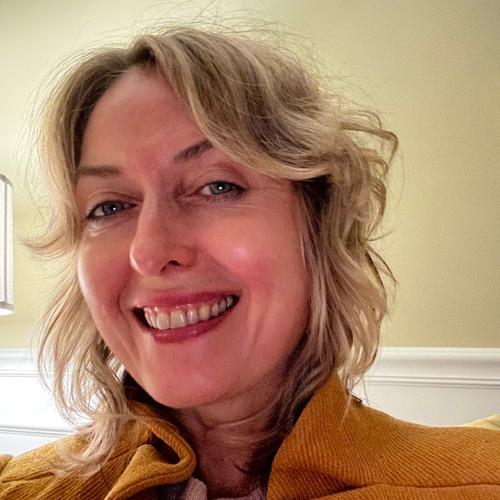
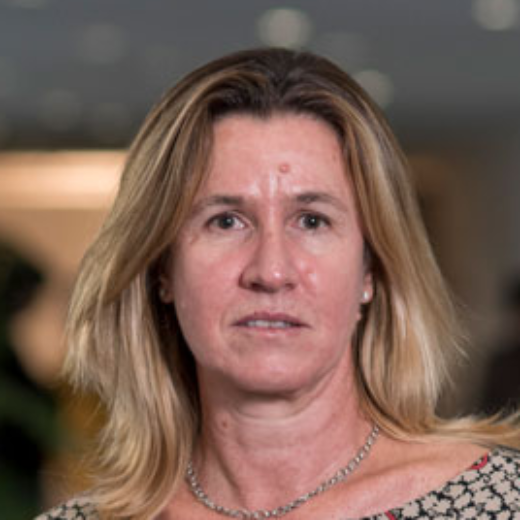
Rachel F. Moran is a Professor of Law and Director of the Education Law Program at Texas A&M University School of Law. Her work focuses on civil rights, education law, and legal policy affecting Latino communities. She has contributed extensively to constitutional and property law scholarship. Expertise: Civil Rights, Education Law and Policy, Latino Legal Policy Institutional Roles: Director of Education Law Program (Texas A&M University School of Law) Rachel's research explores intersections between race, immigration, and political representation, with a focus on marginalized communities' legal rights. Her work also addresses challenges in legal education stemming from privatization, polarization, and technological change. Recent articles like The Perennial Eclipse (2024) and A Perfect Storm for Legal Education (2023) demonstrate her cross-cutting analysis of societal forces impacting law and education. These publications span topics including property law's influence on education equity and structural challenges in legal pedagogy. Notable Honors: Fellow, Hagler Institute (2021–Present) Albert Nelson Marquis Lifetime Achievement Award (2018) Hispanic Business Magazine's 100 Most Influential Hispanics (2011) Distinguished Teaching Award, UC Berkeley (pre-2021)
Inela Selimovic is an Associate Professor of Spanish and Portuguese at Wellesley College. Her research and teaching center on 20th-21st century Latin American literature and cinema , with a focus on Argentine women filmmakers , gender politics , cultural memory , and affect theory . Education: B.A., Sewanee: The University of the South M.A. and Ph.D., University of Kentucky Research Interests explore intersections of affect and emotion in Latin American cinema , particularly works by Albertina Carri , Lucrecia Martel , and Paula Markovitch . Her studies highlight political dissent , multisensorial storytelling , and marginalized communities in Argentine contexts. Article Trends demonstrate a trajectory from 2007 to 2023 , emphasizing intermediality , gendered trauma , and post-dictatorship narratives . Collaborative projects with scholars across UK , Holland , and Latin America expand her interdisciplinary impact. Service Roles include: Chair, International Study Committee (2020-2021, 2024-2025) Casa Cervantes Faculty Advisor/Director (2019-2021) Albright Faculty Research Affiliate (2025-2026) Contributor to Fulbright Committee (2020-present) Human Rights Projects have engaged organizations like the United Nations Security Council and ICTY , influencing her interdisciplinary research on memory and marginality .
Catherine M. Brooks is a Professor at Creighton University School of Law, where she has served since joining the faculty in 1990 as an Associate Professor and earning tenure and promotion to full Professor by 1995. She designs and develops family law courses and innovative skills curricula for child advocacy, client counseling, and cultural competence, directing the certificate program in family law studies while coaching student teams to regional and national finalist positions in legal competitions. Her commitment extends beyond graduation as law alumni routinely consult her on complex family law matters including adoption, juvenile delinquency, and custody disputes. Her academic credentials include a BA ( in cursu honorum , summa cum laude ) and MA from Fordham University (1977), and a JD from the University of Virginia (1980). She holds membership in prestigious honor societies Phi Beta Kappa, Alpha Sigma Nu, and Phi Delta Phi, and is licensed by the American Bar Association, Pennsylvania Bar (state and federal), and Omaha Bar Association. Brooks' research centers on the legal treatment of vulnerable populations, with rigorous scholarship addressing justice rights of Native American children, equal access rights for children of LGBTQ+ parents, dignity rights of maltreated minors, and minors' refusal of medical treatment. She integrates social justice frameworks into legal pedagogy, emphasizing culturally competent lawyering and systemic reform for marginalized groups. Her work bridges theoretical analysis with practical application, notably through mediation advocacy and child welfare policy critiques. Publication trends reveal sustained focus on family law and children's rights since the 1990s, evolving from foundational juvenile court manuals to contemporary analyses of bankruptcy practice and bioethics. Recurring themes include inter-jurisdictional adoption conflicts, child sexual abuse in custody cases, and due process in institutional governance. Recent works prioritize skill-building resources for practitioners, reflecting her dedication to translating academic rigor into real-world legal solutions. Her accolades encompass professional recognition and academic honors: Ten Outstanding Young Omahans (1994) Phi Beta Kappa membership Alpha Sigma Nu membership Phi Delta Phi membership Brooks actively mentors students through skills competitions and alumnus consultations while securing nearly $500,000 in federal grants for a legal clinic and African American law student scholarships. She provides pro bono support to child welfare agencies and serves on the Creighton Inn of Court to guide new lawyers. Her grant work specifically targets equity in legal education and clinic-based child advocacy. She leads critical institutional initiatives as Chair of the University Committee on Rank & Tenure, creating comprehensive web resources (https://www.creighton.edu/provost/tenure-and-promotion), workshops for evaluators, and revisions to the Faculty Handbook. Previously, she created the Children's Rights Clinic at Seton Hall Law School and served as Assistant Deputy Public Defender in New Jersey, representing children in abuse cases for the Law Guardian Program.
Prof. Gonul Demez is a full Professor at Akdeniz University's Faculty of Letters, Department of Applied Sociology. She holds a doctorate in Communication Sciences from Marmara University and specializes in sociology, gender studies, and media. Her research examines patriarchy, probation systems, and cultural representations of the body. Education: Ph.D. in Communication Sciences, Marmara University (2004) M.A. in General Sociology, Mimar Sinan Fine Arts University (1998) B.A. in Sociology, Mimar Sinan Fine Arts University (1993) Research Focus: Demez investigates the intersection of power, gender, and social control. Her work spans media representations of masculinity, sociological analysis of probation in Turkey, and the medicalization of the body. Key themes include patriarchal structures, criminogenic rehabilitation, and cultural hegemony in popular media. Publications: Her 15 most recent articles (2012–2025) reveal a strong emphasis on gender dynamics in Turkish society, criminal justice reform, and cultural studies. Trends include ethnographic studies of marginalized groups (e.g., probationers, waste collectors) and critical analyses of media narratives. Grants & Advising: She has led multiple TUBITAK projects on substance abuse socio-dynamics and violence against women. Currently advising 10+ graduate students on topics like urban segregation, gender representations in media, and patriarchal structures.
Massimo Crotti is an Associate Professor at the College of Architecture and Design , Department of Architecture and Design (DAD) , Polytechnic University of Turin. His expertise spans Alpine architecture , public spaces , and landscape integration , with a focus on sustainable development aligned to SDGs like Climate Action and Sustainable Cities . Research Interests : Alpine Space Regeneration Public Space Design Rural Community Infrastructure Disaster Recovery Architecture Cultural Heritage Integration Research Trends : His recent work analyzes ordinary public spaces, rural regeneration, and climate-resilient architecture, with case studies in Turin, Ischia, and Alpine villages. Publications emphasize infrastructure networks for Southern European communities and pedestrian urbanism . Scientific Awards : Menzione d'Onore al Premio Gubbio 2021 for Lou Pourtoun Cultural Center Teaching & Collaborations : He leads courses on Adaptive Public Spaces and Architecture for Sustainability . Collaborates with PROARCH (since 2018) and contributes to ARCHALP (since 2019). Supervises PhD student Ilaria Tonti (thesis: Post-Earthquake Temporality).
Dr Eleanor Wilkinson is an Interdisciplinary Senior Research Fellow in the Faculty of Social Sciences at the University of Sheffield and co-director of the Sheffield Gender Research Network. Previously Associate Professor of Human Geography at the University of Southampton, she held prestigious fellowships including ESRC Future Research Leader and British Academy Postdoctoral Fellow, with visiting positions at Örebro University and University of Sydney. Her academic background includes a BA in English and American Studies, an MA in Gender Studies, and a PhD in Human Geography. As a feminist cultural and social geographer, Wilkinson investigates the political life of emotions and affect in intimate life, power structures, and ideological norms. Her research examines how normative ideals of the 'good life' falter and how new affective relationalities challenge power. Current projects include a monograph on the feminist politics of loneliness and a European study on LGBTQ+ youth wellbeing during crises and anti-gender populism, emphasizing how disaffection and ambivalence can foster social transformation. Her publication record reveals consistent focus on feminist and queer geographies, with recurring themes of housing precarity, loneliness, and social transformation. Articles bridge cultural, social, and political geography with gender studies and affect theory, particularly analyzing austerity's impact on domestic life for marginalized groups through intersectional frameworks. Scientific recognition includes: ESRC Future Research Leader Fellowship British Academy Postdoctoral Fellowship ESRC Impact Acceleration Award Wilkinson actively supervises doctoral students and mentors postdocs in feminist/queer geographies, critical loneliness studies, and participatory methodologies. Her grant portfolio features an ESRC-funded project (2015-2019) on austerity's slow violence in housing and an ESRC Impact Acceleration award for collaborative work with the Young Women’s Trust on young women's housing experiences. Through leadership in the Sheffield Gender Research Network and the European 'LGBTQ+ youth wellbeing' project, she cultivates interdisciplinary collaboration on gender, sexuality, and social justice.
Maurizio Ramanzin is a Full Professor at the University of Padova , affiliated with the School of Animal Science and Department of Agronomy, Animals, Food and Natural Resources (DAFNAE) . His research focuses on Agricultural Sustainability , Environmental Impact Assessment , and Precision Livestock Farming . Academic Field : AGR/19 Email : maurizio.ramanzin@unipd.it Address : Agripolis - Viale dell'università, 16 - Legnaro (Padova) – ITALY His work explores the interactions between livestock systems and ecosystem services in mountainous regions, with emphasis on: Grazing Management and biodiversity conservation Life Cycle Assessment (LCA) of dairy and beef systems Climate Change Adaptation in Alpine ungulates Animal Welfare in small-scale farms Technological Tools (GPS, NIRS) for monitoring grazing behavior Key trends in his recent publications include: Quantifying environmental drivers of wolf predation on livestock Developing low-cost biologging systems for dairy cows Analyzing social-ecological trade-offs in mountain agriculture Assessing microbial dynamics in alpine soils
Ilaria Riccioni is an Associate Professor of General Sociology at the Faculty of Education , Free University of Bozen-Bolzano. She earned her PhD in Social Theory and Research from Sapienza University in Rome and has been a tenured academic since 2007. Her work bridges sociological theory with applied research in multicultural contexts. Education: PhD in Social Theory and Research, Sapienza University, Rome. Research Focus: Sociological theory, avant-garde art as critique, multicultural coexistence, and institutional roles in education and social dynamics. Her recent publications analyze theatre's role in mediating social boundaries, art's relationship with capitalist markets, and methodologies for integrating qualitative research with artistic expression. As President of the ISA's Research Committee RC37 (Sociology of the Arts), she leads global discourse on art's sociological implications. Scientific Leadership: President of RC37 (ISA), 2025–. Teaching: Courses include Epistemology of Educational and Social Sciences and Fundamentals of General Sociology. Her empirical studies focus on South Tyrol's trilingual society, examining how artistic practices foster cohesion across cultural divides and redefine public spheres in digital globalization.
Hanna Mattila serves as Visiting Professor at Aalto University's Department of Built Environment and Associate Professor at Aalborg University's Department of Architecture, Design, and Media Technology, leading the Academy of Finland-funded TRANAPLAN research consortium on democratic planning transformations. Her expertise spans planning theory, urban design, land use systems, and regional development with emphasis on Finnish and international contexts. Her research critically examines communicative and agonistic planning theories, strategic policy rationalities, and governance of marginalized regions through interdisciplinary lenses integrating political science, sociology, and ethics. Current work addresses populism's impact on urban processes, sustainable transformation frameworks, and superdiversity challenges in city development, reflecting deep engagement with democratic theory and spatial justice. Recent publications (2022-2025) reveal consistent focus on democratic planning innovations, analyzing legitimacy structures in strategic policy, agonistic practices in peripheral regions, and ethical dimensions of urban transformation. Her scholarship demonstrates strong Finnish contextual grounding while contributing to global debates on deliberative governance, planning theory evolution, and equitable spatial development through high-impact journal articles and book reviews. Hanna Mattila's scientific recognition includes: Aalto University School of Engineering Award for Best Doctoral Dissertation 2017 Vuoden kaupunkikirjoitus 2003 -palkinto from Yhdyskuntasuunnittelun seura and Alue- ja ympäristötutkimuksen seura She directs the Academy of Finland-funded TRANAPLAN consortium exploring democratic planning anatomies while contributing to Aalto's Planning and Transportation research group. Her collaborative publications indicate extensive international partnerships, though specific student advisement details remain unreported in source materials. Active within Aalto's Planning and Transportation research ecosystem, Mattila drives the TRANAPLAN project through cross-institutional collaboration with Finnish and global scholars, evidenced by co-authored works on regional governance, planning theory, and urban transformation frameworks.
Michael H. Morris is Professor of the Practice at the University of Notre Dame , serving within the Keough School of Global Affairs and its McKenna Center for Human Development and Global Business . He is an internationally recognized scholar and educator in entrepreneurship, with a special focus on social entrepreneurship and poverty alleviation. Education : Morris earned his PhD in marketing from Virginia Tech in 1983, laying the foundation for his lifelong academic and applied work in entrepreneurship. His research interests span a wide range of entrepreneurship-related areas, including new venture creation , social entrepreneurship , entrepreneurship and poverty , entrepreneurial marketing , opportunity recognition , and resourcing strategies . He is particularly known for his work on entrepreneurship education and experiential learning , having built three university entrepreneurship programs ranked among the top 10 in the U.S. His recent publications reveal a consistent focus on entrepreneurship as a response to poverty , racial identity and entrepreneurship , and the structural challenges faced by disadvantaged entrepreneurs . These works collectively contribute to a growing body of knowledge on inclusive entrepreneurship and the systemic barriers faced by marginalized communities. Awards and Recognition : Max S. Wortman, Jr. Award for Lifetime Achievement in Entrepreneurship Academy of Management Dedication to Entrepreneurship Award Leavey Award from the Freedoms Foundation 2021 Legacy Award from the Global Consortium of Entrepreneurship Centers USASBE Entrepreneurship Educator of the Year (2012) Fortune Small Business Top 20 Entrepreneurship Professor Fulbright Scholar Community Engagement and Programs : Morris has founded and directs several impactful initiatives: Global Partnership for Poverty and Entrepreneurship – a consortium for scholars and practitioners Urban Poverty and Business Initiative – supports low-income urban entrepreneurs Entrepreneurship Empowerment in South Africa Program – student engagement in Cape Town South Bend Entrepreneurship and Adversity Program – over 400 graduates He also leads The Experiential Classroom , a global clinic for entrepreneurship educators, and has served as President of the United States Association for Small Business and Entrepreneurship (USASBE) .
Mira Edmonds serves as Clinical Assistant Professor of Law and Director of the Juvenile Justice Clinic at the University of Michigan School of Law, with additional appointments in the Pediatric Advocacy Clinic and Civil-Criminal Litigation Clinic. Her work centers on holistic advocacy and community lawyering within public interest legal frameworks. Her academic credentials include: Brown University, BA, magna cum laude Harvard University, JD Edmonds' research and practice focus on systemic inequities in criminal justice systems, specifically indigent defense, decarceration strategies, and prisoner reentry challenges. She simultaneously addresses housing justice through analysis of the affordable housing crisis, tenants' rights enforcement, and homelessness prevention frameworks. Her interdisciplinary approach bridges legal theory with community-based advocacy to dismantle structural barriers faced by marginalized populations. Recent scholarship reveals consistent thematic concentration on criminal record relief mechanisms, narrative deconstruction of 'violent offender' labels, and healthcare access restoration for formerly incarcerated individuals. These works demonstrate empirical rigor through survey methodologies while advocating for policy shifts toward restorative justice models. Her professional recognition includes: 2025 Teaching Award from Michigan Law students Friedman Fellowship at The George Washington University Law School Through clinical supervision in juvenile justice, pediatric advocacy, and civil-criminal litigation contexts, Edmonds mentors law students in direct representation of vulnerable clients while navigating complex intersections of housing instability, criminal legal involvement, and healthcare access. Her clinics operate as interdisciplinary incubators for innovative public interest lawyering methodologies. She leads the Juvenile Justice Clinic as its director while maintaining active roles in the Pediatric Advocacy Clinic and Civil-Criminal Litigation Clinic, fostering collaborative teams that integrate legal services with social work frameworks to address clients' multifaceted needs within systemic inequity contexts.
Sabrina Ebbersmeyer is a Professor of Philosophy and Head of the Philosophy Section at the Department of Communication, University of Copenhagen. She specializes in Renaissance and modern philosophy with a focus on feminist history of philosophy, women philosophers, and emotion theory. Her work bridges historical scholarship with contemporary philosophical concerns about gender and knowledge production. Professor Ebbersmeyer's educational background includes: Postdoctoral thesis (Habilitation) in Philosophy, LMU Munich (2008) PhD (Dr. phil.) in Philosophy, Hildesheim University (1999) Diploma in Cultural and Educational Studies, Hildesheim University (1993) Her research primarily focuses on Renaissance and modern philosophy, with special interest in the philosophy of mind regarding emotions and cognition (examining thinkers from Plato and Aristotle through Ficino, Telesio, Descartes, Elizabeth of Bohemia, and Leibniz). She has made significant contributions to recovering women philosophers' works, particularly Christine de Pizan, Isotta Nogarola, Arcangela Tarabotti, Birgitte Thott, and Elizabeth of Bohemia. Currently, she researches female intellectuals in the Enlightenment, Birgitte Thott's moral philosophy, and the feminist potential of Stoic thought. Her recent publications reveal a consistent focus on recovering women's philosophical contributions within the European intellectual tradition. The articles demonstrate interdisciplinary approaches combining history of philosophy, gender studies, and intellectual history. A significant trend is the examination of how women philosophers engaged with classical traditions while developing original thought, particularly in emotion theory and moral philosophy. Her work shows how these historical insights can inform contemporary philosophical discussions about gender, knowledge, and rationality. Scientific awards: Einar Hansen's Research Foundation: Prize for Outstanding Humanistic Research (2023) Professor Ebbersmeyer leads two major research projects: "Women in the Nordic Enlightenment (WHENCE)" funded by the European Research Council (2024-2028), and "How to be Happy in Times of Turmoil?" funded by the Augustinus Foundation (2023-2024). She has established the Center for Interdisciplinary Research on Women in the History of Philosophy (INSPIRE) and co-founded the CEMES research group "Thinking the European Republic of Letters." She also directs the Women-mentoring-women-in-philosophy program for female employees and students in philosophy. She serves on the scientific committee of "Rivista di storia della filosofia" (2018-) and the international advisory board of "Rivista di filosofia" (2023-2028). Previously, she served as president of the European Society for Early Modern Philosophy (2019-2022) and was a member of the board of the Network for Women and Non-Binary in Philosophy (2017-2019).
Dr. Choolwe Muzyamba is an Assistant Professor at University College Utrecht , Utrecht University. Her research spans political economy, decoloniality, global health, and climate justice, with a focus on disability, race, maternal health, HIV, and participatory methodologies. PhD in Global Health (Maastricht University, 2018) MSc (cum laude) in Political Economy (LSE, 2015) Her work integrates community mobilization, participatory action research (PAR), and health promotion to address systemic inequities. Recent publications highlight intersections of disability inclusion, colonial frameworks, and climate resilience in African contexts. She has secured grants from WHO, CODESRIA, Erasmus+, and Horizon for projects on climate adaptation, gender equity, and participatory education. $25,000 WHO Grant (2024) for disability-inclusive climate research in Zimbabwe $76,000 Erasmus+ Grant (2022) for curriculum decolonization Dr. Muzyamba teaches courses in political economy, international political economy, and sexual reproductive health. Her methodological expertise includes qualitative inquiry and community-engaged learning.
Ariel Mosley serves as an Assistant Professor in the Psychology Department at the University of California Davis, where she leads the Mosley Lab focused on intergroup perceptions of cultural appropriation, stigma, and intersectionality. Her research examines how social categorization and identity structure judgments of intergroup inequalities through experimental design, mediation analyses, and meta-analyses. Her educational background includes a Doctor of Philosophy in Psychology (2020) and Masters of Arts in Psychology (2016) from the University of Kansas, and a Bachelor of Arts in Psychology with a Philosophy minor (2014) from California State University Sacramento. As an undergraduate, she was a Ronald E. McNair Scholar, Sally Casanova Scholar, and Leadership Alliance Scholar. Professor Mosley's research investigates three core questions: how group-based biases influence responses to cultural appropriation; how intersectional stereotypes affect diverse individuals' experiences; and how marginalized groups adapt to discrimination. She combines social cognition, intergroup relations, and racial inequality frameworks to evaluate inequality from both target and perceiver perspectives. Her work spans social identity, objectification, dehumanization, structural racism in healthcare/law, and intersectional stigma. Analysis of her recent publications reveals consistent focus on cultural appropriation mechanisms, moral evaluations of intergroup interactions, and intersectional approaches to understanding bias. Her work increasingly integrates legal and policy implications while maintaining strong methodological rigor through experimental and meta-analytic approaches. University of California Davis Center for Multicultural Perspectives Faculty Scholar (2022-present) National Science Foundation Graduate Research Fellowship (2016) National Science Foundation Graduate Opportunities Worldwide Fellowship (2018) International Society of Political Psychology Award (2022) Multiple awards from SPSSI, SSPC, and SSPSP (2017-2022) Professor Mosley actively mentors undergraduate research assistants through her Mosley Lab, where students participate in all research phases from conception to dissemination. Her lab has produced multiple conference presentations and co-authored publications. She has secured significant grant funding including NSF fellowships and institutional support through UC Davis's multicultural research center. Her teaching portfolio includes Social Psychology, Psychology of Law, and specialized courses on cultural appropriation and racism. The Mosley Lab maintains an active research program with undergraduate scholars and graduate affiliates investigating intergroup relations, social cognition, and diversity issues. The lab emphasizes community-based research and recently presented at the Society for Personality & Social Psychology Annual Convention, with plans to attend the 2026 Chicago conference. Professor Mosley's work bridges academic research and community engagement through public science communication initiatives.
Stephanie Soileau is an Assistant Professor of Practice in the Arts at the University of Chicago , where she teaches creative writing and explores themes of environmental collapse and cultural identity. Her work bridges fiction, folklore, and ecological critique, focusing on Louisiana's socio-environmental complexities. Education : MFA, Iowa Writers' Workshop Soileau's research examines solastalgia —the psychic distress of environmental transformation—and interrogates how myths, historical fiction, and regional narratives shape human relationships with contested spaces. Her forthcoming novel Should the Waters Take Us (2026) traces generational trauma through the lens of the Deepwater Horizon oil spill. Her recent publications span short stories and op-eds that analyze Louisiana's oil economy, climate crises, and marginalized communities. These works frequently appear in prestigious outlets such as Granta , Zoetrope: All-Story , and The New York Times , with several honored in Best American Short Stories . Scientific Awards : Wallace Stegner Fellowship (Stanford University), Camargo Foundation Fellowship, National Endowment for the Arts Fellowship, Fine Arts Work Center Fellowship Soileau mentors students in fiction workshops , nonfiction , and digital literature , supporting diverse projects like narrative video games and spiritual essays. Her teaching emphasizes eclectic research , regional authenticity , and experimentation across genres.