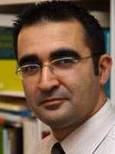
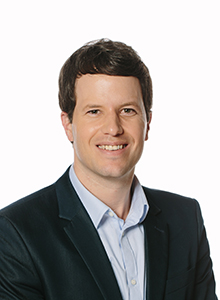
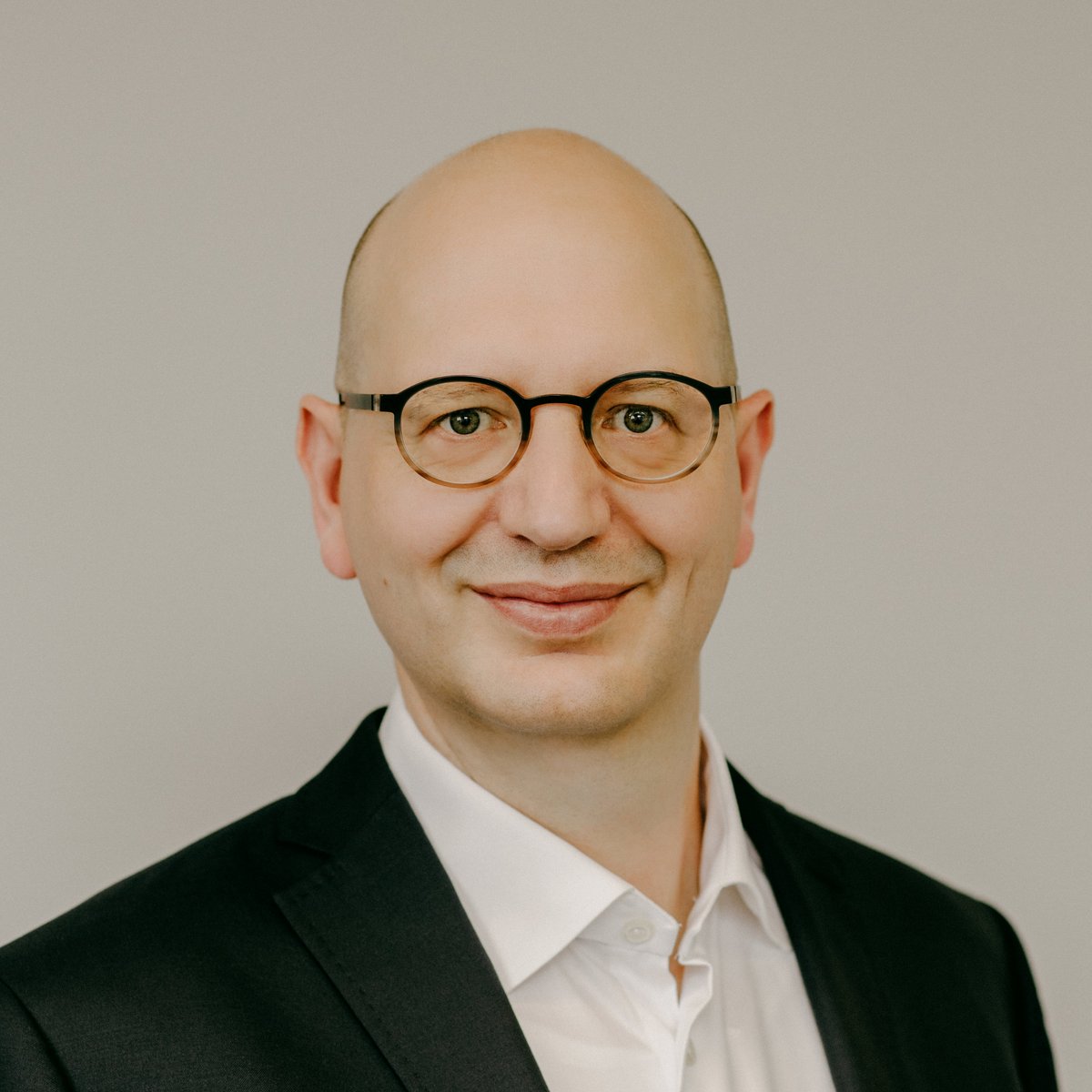
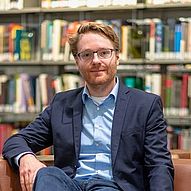
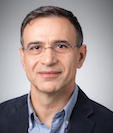
Dr. Ismail White is a Professor of Politics and Public Affairs at Princeton University, specializing in American politics with a focus on Black political behavior, public opinion, and racial inequality. He holds a B.A. from Southern University and a Ph.D. from the University of Michigan. Education: B.A., Political Science, Southern University Ph.D., Political Science, University of Michigan His research explores how racial group norms shape Black political unity, voter turnout mechanisms, and the impact of racial cues in campaigns. He has authored seminal works like Steadfast Democrats , analyzing the persistence of Black party loyalty, and conducted field experiments on racial priming effects. Dr. White’s work spans interdisciplinary themes, including survey methodology, voting rights, and policy implications of racial identity. Awards from APSA, MPSA, and NCBPS recognize his contributions. He currently serves on the American National Election Study board and directs survey research at the Joint Center for Political and Economic Studies. Scientific Awards: American Political Science Association Midwest Political Science Association National Conference of Black Political Scientists
Joris M. Mooij is a Professor of Mathematical Statistics at the Korteweg-De Vries Institute of the University of Amsterdam, Netherlands. His research focuses on causality, spanning causal modeling, discovery, and inference with applications in biology, medicine, fairness, and business analytics. He combines mathematical modeling with statistical and algorithmic approaches in his work. Dr. Mooij received his PhD with honors from Radboud University Nijmegen in 2007, focusing on approximate inference in graphical models. After postdoctoral work at the Max Planck Institute for Biological Cybernetics in Tübingen, Germany, he obtained an NWO VENI grant in 2011 for further postdoctoral research at Radboud University. He became Assistant Professor at the University of Amsterdam's Informatics Institute in 2013, was promoted to Associate Professor in 2017, and became a full Professor of Mathematical Statistics in 2020. Dr. Mooij's research centers on causal inference, with particular expertise in structural causal models, cyclic causal systems, and causal discovery algorithms. His work addresses fundamental questions about when causal relationships can be identified from observational data and how to develop robust causal discovery methods that work in complex real-world settings with latent variables, cycles, and selection bias. He has made significant contributions to understanding the limitations of existing causal discovery approaches and developing new methods that overcome these limitations. His research group organizes the Amsterdam Causality Meeting series and develops theoretical frameworks for causal modeling that encompass both acyclic and cyclic systems. Dr. Mooij has collaborated extensively on applications of causal methods in biological systems, including protein signaling networks and gene expression data. The group's recent work explores performative predictions, causal domain adaptation, and robust causal discovery methods that account for selection bias and missing data. Dr. Mooij has received numerous awards for his research, including: Best paper award at UAI for "Establishing Markov equivalence in cyclic directed graphs" IEEE Geoscience and Remote Sensing Society 2011 Letters Prize Paper Award ICML Test of Time Honorable Mention Best student paper award at UAI 2010 He has secured competitive research funding through an NWO VENI grant, NWO VIDI grant, and an ERC Starting Grant, which supported the establishment of his research group consisting of 3 PhD students and 3 postdocs focused entirely on causality. Dr. Mooij has supervised several PhD students, including Tineke Blom, whose work on "Causality and Independence in Perfectly Adapted Dynamical Systems" significantly influenced his thinking about causality in complex systems. He has co-taught the MasterMath course on Causality and published lecture notes titled "A Mathematical Introduction to Causality." His research continues to push the boundaries of causal inference methodology and its applications across diverse scientific domains.
Victoria C. Ramenzoni is an Assistant Professor in Marine Policy and Social Science at Rutgers University, leading the Coastal Communities Adaptation Lab. Her research focuses on socioecological systems, adaptation strategies, and environmental policy, with fieldwork in the U.S., Cuba, and Indonesia. She investigates how households adapt to environmental and socioeconomic uncertainty, emphasizing resource governance and nutritional health. Ramenzoni has secured grants from the NSF and NOAA, including a 2021 Coast and People grant studying climate adaptation in Northeast U.S. marginalized communities. She previously served as Executive Secretary of the Interagency Working Group on Ocean Social Sciences (IOSSWG) and contributed to NOAA’s socioeconomic indicator frameworks. Her work bridges anthropology, ecology, and policy to address climate change impacts on coastal livelihoods. Her research spans multiple regions: in the Northeast U.S., she examines commercial fishing adaptations during the pandemic and urban development pressures. In Cuba, she collaborates with Universidad de La Habana on dietary health and hurricane resilience in Yaguajay. In Indonesia, her studies in Flores and Kalimantan explore overfishing, peatland degradation, and traditional ecological knowledge. She employs ethnographic methods, nutritional assessments, and institutional analyses to evaluate long-term adaptation pathways. Ramenzoni’s grants include a National Academies-funded study on offshore extractive activities’ impacts in the Gulf of Mexico and a Texas Commission-backed project on socioecological indicators. She advocates for co-governance models and has published extensively on adaptation frameworks, socioecological monitoring, and the paradoxes of development in oil-dependent regions.
Professor Peta Mitchell is a leading scholar in digital media and geographies at Queensland University of Technology (QUT), where she holds a Professorship in the School of Communication and the Digital Media Research Centre (DMRC). She leads the Urban Media and Digital Geographies Research Group and serves as Director of Research Training for QUT's Faculty of Creative Industries, Education, and Social Justice. In 2023, Professor Mitchell was appointed to serve a three-year term on the Australian Research Council's College of Experts, recognizing her significant contributions to research in digital media and geographies. Professor Mitchell earned her Doctor of Philosophy from the University of Queensland. Her academic journey has established her as a prominent voice in the interdisciplinary field bridging geography, media studies, and digital culture. She has received prestigious fellowships including a Vice Chancellor's Research Fellowship from QUT (2014-2018) and a visiting fellowship from the Institute for Advanced Studies in the Humanities at the University of Edinburgh (2009). Professor Mitchell's research explores the complex connections among space, place, society, and the digital. Her work focuses on digital and media geographies, everyday digital and data cultures, digital inclusion, and network contagion. She has made significant contributions to understanding how digital technologies reshape our relationship with space and place, particularly in urban environments. Her research examines how location-aware technologies influence social dynamics, cultural practices, and power relations, with particular attention to issues of inclusion, privacy, and justice in digital contexts. Professor Mitchell has investigated how digital media practices shape experiences of belonging, particularly among marginalized communities, and how geospatial data is produced, circulated, and contested in contemporary society. Her extensive publication record reveals a trajectory of increasingly interdisciplinary work that bridges humanities, social sciences, and spatial sciences. Recent publications show a growing focus on the intersection of digital technologies with environmental concerns, multispecies justice, and urban governance. Professor Mitchell's work has evolved to address emerging challenges related to generative AI, smart city technologies, and the ethical implications of location-aware applications. Her research consistently engages with questions of power, equity, and social justice in digital spaces, making significant contributions to both theoretical frameworks and practical applications in the field. Vice Chancellor's Research Fellowship, Queensland University of Technology (2014-2018) Faculty research fellowship, Centre for Critical and Cultural Studies, University of Queensland Visiting fellowship, Institute for Advanced Studies in the Humanities (IASH), University of Edinburgh (2009) Professor Mitchell has successfully supervised numerous doctoral students whose research explores diverse aspects of digital media and geographies. Her current and former students have investigated topics including smart urban governance, digital privacy, diaspora media practices, digital inclusion, and the cultural dimensions of location-based technologies. She has secured substantial research funding through competitive grants, including multiple ARC Discovery and Linkage Projects. Her current projects include "Generative AI and the Future of Academic Writing and Publishing" (2025-2028) and "Promoting Low-Income Parents' Digital Media Literacies" (2025-2028), demonstrating her ongoing commitment to addressing pressing contemporary issues at the intersection of technology, society, and space. As leader of the Urban Media and Digital Geographies Research Group within QUT's Digital Media Research Centre, Professor Mitchell fosters interdisciplinary collaboration among researchers examining how digital technologies reshape urban spaces and social relations. Her research group brings together scholars from geography, communication, design, computer science, and the humanities to investigate the spatial dimensions of digital culture. The group's work has particular relevance for understanding the implications of smart city technologies, location-aware applications, and digital inclusion initiatives in contemporary urban contexts.
Ann-Dorte Pedholt Christensen is a Professor of Sociology at Aalborg University’s Department of Sociology and Social Work, affiliated with The Faculty of Social Sciences and Humanities. She leads research initiatives within CASTOR (sociological/criminological research on social differentiation) and MIX (Center for Displacement, Migration and Integration). Her research focuses on gender and masculinity studies through an intersectional lens, examining how gender interacts with class, ethnicity, generation, and migration. Key themes include citizenship, social movements, identity formation, military masculinities, and everyday life practices. She employs qualitative methods, notably the biographical narrative approach, collaborating with artists and municipal archives to bridge academic and public spheres. Christensen has coordinated AAU’s PhD program in Sociology and Social Work, served as head of the CASTOR research group, and contributed to editorial boards of international journals. Her work addresses UN SDGs related to gender equality and social inclusion. Recent projects include studies on migrant narratives (MultiAalborg), military family dynamics, and the evolving constructions of masculinity in Nordic contexts. Her publications span journals like Armed Forces and Society and Childhood , with book chapters in Palgrave handbooks. She actively engages in public discourse through media commentary and museum collaborations, addressing topics like gender equality backlash and refugee integration.
Rauf Ceylan is a full Professor of Contemporary Islamic Studies at the University of Osnabrück's Institute for Islamic Theology since 2009, with a specific appointment confirmed in the 2019/2020 academic year. He is also a member of the Institute for Migration Research and Intercultural Studies (IMIS) since 2011 and serves on the Council for Migration (RfM eV). His academic leadership extends to roles as Deputy Director of the Institute for Islamic Theology and membership in the University Senate since 2014. His educational background includes: Diploma in Social and Cultural Sciences from University of Applied Sciences Dusseldorf (2000) Doctorate in Sociology (Dr. rer. soc.) with magna cum laude from Ruhr University Bochum (2006) Doctorate in Religious Education (Dr. phil.) with summa cum laude from University of Vechta (2014) Ceylan's research focuses on the sociological aspects of Islam in Germany, particularly examining Turkish Muslim communities in the diaspora. His work spans contemporary Islamic studies, mosque dynamics, the role of imams, Islamic organizations, religion and migration, urban development, and religious extremism. He approaches these topics through both religious studies and sociological lenses, creating a distinctive interdisciplinary perspective on Islam in Western societies. His extensive publication record reveals consistent themes across decades of scholarship, with particular emphasis on the institutional development of Islam in Germany, the professionalization of Muslim community organizations, and the challenges of radicalization prevention. His recent work shows increasing focus on the academization of Islamic studies, financial sustainability of Muslim communities, and the experiences of specific religious minorities like Alevi communities within the German context. Ceylan serves on numerous advisory boards including the Scientific Advisory Board of the Federal Agency for Civic Education (since September 2023), and has held leadership positions in organizations like the Avicenna Scholarship Foundation. His expertise is frequently sought for policy consultation with various governmental bodies including the Federal Ministry for Family, Senior Citizens, Women and Youth. He has secured significant third-party funding for research projects, most notably serving as project leader until September 2021 for the consortium project 'Radical Islam versus radical Anti-Islam' funded by the Federal Ministry of Education and Research with 224,000 euros for the Osnabrück site. His research portfolio includes numerous projects on radicalization processes, Islamic welfare provision, and the structural development of Islamic theology as an academic discipline in Germany. Ceylan is actively involved in mentoring through the Avicenna Scholarship Foundation and serves on the board of the Future Forum Islam at the Federal Agency for Civic Education. His work bridges academia and practical community engagement, particularly through his leadership in establishing counseling centers for Salafism prevention in Hannover.
Dr. Gordon Hodson is a Distinguished Professor of Psychology at Brock University, Canada. He specializes in intergroup relations, prejudice, and dehumanization, with a focus on linking human-animal relations to broader systems of oppression. His work bridges academia and advocacy, exploring how ideologies like social dominance underpin both speciesism and ethnic prejudice. Education: Ph.D. (Psychology) from Western University (formerly University of Western Ontario). Research Interests: His studies examine intergroup contact's role in reducing bias, the psychological roots of prejudice, and the cognitive mechanisms underlying dehumanization. Key areas include: Intergroup contact theory Prejudice dynamics Human-animal relations Political radicalization Publications & Awards: Authored/edited over 150 peer-reviewed articles and books, including Why We Love and Exploit Animals . Honors include the SPSSI Gordon Allport Award (2019) and the APA Division 34 award (2016). Lab & Team: Leads the Brock Intergroup Attitudes Scholarship (BIAS) Lab, training students in prejudice research. Collaborates internationally on projects addressing speciesism, climate change, and pandemic risks linked to meat consumption. Grants & Future Work: Active in securing funding for research on intergroup contact generalization effects and policy implications of dehumanization. Current projects include longitudinal studies on prejudice trends and interventions to enhance cognitive liberalization.
Dr. George Chalhoub is a Lecturer (Assistant Professor) in Human-Computer Interaction at the UCL Interaction Centre (UCLIC), Department of Computer Science, University College London (UCL). He is also an Associate Member at the Department of Computer Science, University of Oxford, and a 2024–2025 Berkman Klein Fellow at the Berkman Klein Center for Internet & Society, Harvard Law School, Harvard University. His multidisciplinary research bridges cybersecurity, privacy, and human-centered computing, focusing on real-world technology use. DPhil in Cyber Security, University of Oxford (supported by Information Commissioner’s Office) MSc in Computer Science, University of Southampton (supported by Lloyd’s Register) BS in Computer Science, Lebanese American University His research centers on the security, privacy, and safety of digital technologies through a user-centered lens. Key areas include AI-powered systems (e.g., LLMs, smart assistants), emerging technologies in the wild (e.g., smart homes, IoT), embedded devices (e.g., routers), marginalized communities, data workers in AI, and online content creators. His work integrates UX principles to improve data protection in healthcare (e.g., NHS records) and children’s apps, with implications for GDPR compliance and responsible AI innovation. The analysis of his recent publications reveals a consistent focus on empirical studies of user experience in security and privacy, particularly in smart homes and data-intensive applications. His work spans design interventions, ethical frameworks, and policy-relevant findings, published in top venues like CHI, CSCW, SOUPS, and IJHCS. Themes include consent design, communal privacy, vulnerability patching, and developer support for privacy. UK Global Talent Visa recipient, UK Research and Innovation 2024–2025 Berkman Klein Fellow, Harvard University Dr. Chalhoub has advised on research projects related to secure networking by design and responsible AI (e.g., EWADA, RoboTIPS). He has received grant support from the Information Commissioner’s Office for his doctoral work. He is available for consultancy, collaborative research, grant assessment, and supervision of research degrees. His professional experience includes internships at Microsoft Research (Calc Intelligence) and Nokia Bell Labs (Social Dynamics), contributing to projects in AI and social computing. He is affiliated with research groups including the Human-Centered Computing group at Oxford, the UCL Interaction Centre (UCLIC), and the Berkman Klein Center at Harvard. His work is supported by tools and frameworks developed in collaboration with interdisciplinary teams focused on cybersecurity ethics, data governance, and platform accountability.
Ramón Spaaij is a Professor in the College of Sport, Health and Engineering at Victoria University and holds a Professorial Chair in Sociology of Sport at the University of Amsterdam. He leads the Sport in Society Research Program at IHES and was previously a Senior Research Fellow at La Trobe University, where he served as Deputy Director of the La Trobe Refugee Research Centre. His educational background includes an MA from Leiden University and a PhD from the University of Amsterdam. Spaaij’s research centers on social cohesion, conflict, and social change through two primary lenses: the sociology of sport and the sociology of terrorism. He investigates how sport influences diversity, inclusion, and community belonging, particularly through initiatives like sport for development and youth engagement. Simultaneously, he conducts internationally recognized research on violent extremism, with a focus on lone wolf terrorism, radicalization pathways, and counterterrorism strategies. His recent publications reveal a strong interdisciplinary focus, bridging sociology, criminology, and sport studies. The articles demonstrate recurring themes in both sport-related social dynamics and terrorism studies, with consistent attention to identity, exclusion, and structural violence. He frequently collaborates with scholars across disciplines and countries, contributing to handbooks, journals, and policy-oriented research. Victorian Department of Health and Human Services (2015): Sport integrity analysis DST Group – VU Industry Postdoctoral Research Fellowship (2015–2018): Online/offline radicalization Australian Research Council Linkage Project (2014–2017): Managing diversity in junior sport Youth & Identity Grant, Utrecht University (2013–2015): Youth violence in football National Institute of Justice, USA (2012–2015): Lone wolf terrorism prevention He has completed supervision of 5 Honours, 11 Masters, and 1 PhD student, and currently mentors 5 PhD, 4 Master’s, 1 Honours student, and 2 postdoctoral fellows. He is affiliated with several professional associations including the International Sociological Association and the Australian Sociological Association. Spaaij is also a frequent contributor to international media on topics related to sport and extremism.
Dr. Ekaterina Rashkova-Gerbrands is an Associate Professor of Comparative Politics at the Public Governance and Management unit within the School of Governance at Utrecht University. She also serves as the LEG Faculty co-director of the PPE College Utrecht since Spring 2024, managing curriculum development and strategic positioning of this interdisciplinary program. Her academic background includes: PhD in Political Science from the University of Pittsburgh (2010) Master in Political Economy and Public Policy from Washington University in St. Louis Bachelor in Economics from Washington University in St. Louis Dr. Rashkova-Gerbrands specializes in electoral and party systems, political representation, and the strategic behavior of political actors. Her research examines how institutions shape political decisions and outcomes, with particular focus on party system development, electoral regulation, and representation of marginalized groups. She has developed significant expertise in gender politics and immigrant integration within both established and new democracies, with special attention to Central and Eastern Europe. Her recent scholarly work demonstrates a consistent trajectory examining institutional effects on political behavior, with increasing attention to transnational dynamics such as diaspora politics and the representation of non-citizen residents. Her publications span top political science journals with emphasis on comparative European politics, particularly focusing on Southeastern Europe and post-communist transitions. Notable awards and recognitions: UniCredit and Universities Foundation Best CEE PhD Thesis Award (2011) EURIAS Junior Fellowship Grant (2015-2016) Swarovski Research Foundation award for "Women in High Politics" project (2015) Dr. Rashkova-Gerbrands has served as editor of European Political Science journal from 2015 to 2022 and has been an active peer reviewer for numerous prestigious journals including European Political Science Review, West European Politics, and Politics & Gender. She has supervised multiple PhD students focusing on comparative party politics and representation, and has secured competitive research funding for projects examining electoral systems in Central and Eastern Europe and gender politics in Southeastern Europe. She is currently leading research on "the party abroad," investigating connections between national political parties and their diaspora communities, while also examining the effects of the Covid-19 pandemic on party system development and electoral accountability.
Justen O'Connor is an Associate Professor in the School of Curriculum, Teaching and Inclusive Education at Monash University’s Faculty of Education. He also serves as Associate Dean (Staffing and Strategy), demonstrating leadership in academic administration. His research focuses on transforming health and physical education (HPE) to be more inclusive, equitable, and socially meaningful, with strong emphasis on informal sport, social ecology, and systems thinking. His research interests include: Transforming teaching and learning in HPE Equity, diversity, and inclusion in sport and education Mental well-being in community sport settings Curriculum, pedagogy, and assessment in HPE Informal and alternative sport participation Social-ecological drivers of physical activity Rasch modeling and scale development for research measurement Justen’s recent publications reflect a consistent focus on inclusion, informal sport, curriculum futures, and socio-ecological systems in physical activity contexts. His work often involves mixed-methods research, collaboration with industry and academic partners, and real-world impact through policy and program evaluation. He has received several prestigious awards recognizing his contributions: Dean’s Award for Excellence in Social and Economic Impact (2022) Vice Chancellor's Excellence Award for Diversity and Inclusion (2021) Best Paper Award in Physical Education and Sport Pedagogy (2018) Finalist for Most Outstanding Paper, Journal of Curriculum Studies in Health and Physical Education (2021) Justen supervises Honours, Masters, and PhD students in areas aligned with his research. He is actively involved in securing competitive grants, including funding from the Australian Research Council. His teaching includes EDF2171 (Motor Control and Skill Acquisition) and EDF4171 (Advanced Sport and Exercise Science). He also engages in public outreach as a keynote speaker and media contributor, promoting accessible research in HPE.
Prof. Dr. Christian Breunig is a Professor of Comparative Politics at the Department of Politics and Public Administration, University of Konstanz, and serves on the Board of the Cluster of Excellence "The Politics of Inequality." He previously held academic positions as Associate Professor at the University of Toronto and Postdoctoral Researcher at the Max-Planck Institute for the Study of Societies. His research focuses on political representation, public policy in advanced democracies, and comparative political economy. Projects: Political elites and inequality (2019-2025) Conditional Responsiveness in France/Germany (2016-2020) Comparative Agendas Project (2014) Key research areas: Political methodology Legislative dynamics Policy institutionalization Public opinion estimation Redistribution preferences His recent work analyzes: Political misrepresentation of marginalized groups Redistribution mechanisms in pension systems Legislative bargaining behaviors Policy venue creation dynamics Public opinion estimation accuracy Awarded three American Political Science Association prizes, he has conducted comparative studies across Germany, Belgium, Canada, Switzerland, and the Netherlands, with methodological innovations in legislative ideology measurement.
Benjamin Kohlmann serves as Professor of English Literature and Culture at the University of Regensburg, where he has held a full professorship since November 2020. Previously, he was Assistant/Associate Professor at the University of Freiburg (2011-2019) and held visiting positions at Columbia University, Cambridge University, UC Davis, and Queen Mary University of London. An elected member of Academia Europaea and the International Association of University Professors of English, Kohlmann maintains an active international research profile with current visiting fellowships at Clare Hall, Cambridge (2024-25). Education Habilitation in English Literature, University of Freiburg (2011-2017) PhD in English Literature, Lincoln College, University of Oxford (2007-2010) MA in Philosophy/English Literature, University of Freiburg and Yale University (2004-2007) Undergraduate Studies in Philosophy/English Literature, University of Freiburg (2001-2004) Research Focus Professor Kohlmann specializes in British literature and culture from 1860 to the present, with particular expertise in the relationship between literature and politics. His scholarship explores the literary and cultural histories of socialism and communism, politicized modernism of the interwar years, the prehistory of the welfare state (c.1860-1940), literary histories of populism, and global approaches to literature. His theoretical work examines how literature conceptualizes political structures and revolutionary events, bridging historical analysis with contemporary theoretical concerns. Publication Trends Kohlmann's research trajectory reveals a consistent engagement with literature's political dimensions across historical periods. Early work focused on modernist political aesthetics, particularly in the 1930s, as seen in his monograph Committed Styles (2014). Recent scholarship demonstrates increasing attention to global revolutionary narratives and the bildungsroman as political form, culminating in his British Literature and the Life of Institutions (2021) and the forthcoming Revolutionary Subjects . His most recent publications show sophisticated integration of theoretical frameworks with historical analysis, particularly in examining how literature processes revolutionary events and conceptualizes institutional frameworks. The 2023-2025 publications reveal heightened focus on contemporary political formations while maintaining historical depth. Scientific Recognition Heisenberg Programme grant from German Research Foundation (2020-2025) Heinz Maier-Leibnitz Prize (2018) Feodor Lynen Fellowship from Alexander von Humboldt Foundation Elected Life Member of Clare Hall, University of Cambridge Member of Academia Europaea Academic Leadership Professor Kohlmann has supervised numerous PhD theses including Nikolina Hatton's award-winning work on decommodified things in 18th-19th century novels and current projects examining democratic essay forms and literary histories of collective resistance. He serves on editorial boards for Critical Quarterly and CUSP , co-edits the Oxford UP book series "Literature and Politics," and has organized multiple international conferences on literature and political thought. His research leadership includes directing the "Writing Collectivity" research group at Regensburg and coordinating international collaborations through the Heisenberg grant. Research Environment At Regensburg, Kohlmann contributes to a vibrant research environment within the Department of English and American Studies, collaborating on interdisciplinary projects examining literature's relationship to political economy and social structures. His "Thinking Revolution" project connects with global scholarly networks through visiting fellowships at Cambridge and other institutions. The department's research focus on British literary history benefits from Kohlmann's leadership in organizing international conferences and securing substantial research funding, creating a dynamic environment for graduate students and junior researchers working at the intersection of literature and political thought.
Dr. Reza Samavi is an Associate Professor at Toronto Metropolitan University's Department of Electrical, Computer, and Biomedical Engineering, Faculty of Engineering & Architectural Science. He is also a Faculty Affiliate with the Vector Institute for Artificial Intelligence and directs the Trustworthy AI Research Lab (TAILab). Previously, he served as Assistant Professor and eHealth Graduate Program Coordinator at McMaster University's Department of Computing and Software (2014-2020). Holding a PhD in Computer Science (University of Toronto, 2013), his academic journey bridges industry experience with rigorous scholarly contributions. His research lies at the critical intersection of Trustworthy AI , Machine Learning Security , and Medical Informatics . He investigates Safety & Security of ML Algorithms Privacy-Preserving AI Systems Transparency Frameworks for Medical AI Blockchain-enabled Privacy Auditing Game Theory for Model Robustness Optimization-based Anonymization Techniques The TAILab research group under his leadership has produced groundbreaking work in Uncertainty Quantification for Neural Networks Robustness Against Adversarial Attacks Medical Image Analysis Clinical Decision Support Systems Emergency Medicine Predictive Modeling His recent projects focus on enhancing migrant youth mental health through LLM-based conversation agents and developing certified robustness guarantees for ensemble networks. Dr. Samavi's scholarly excellence is recognized through Privacy Technologies Research Award (IBM) Privacy By Design Research Award (Ontario IPC) Bridging Divides Emerging Research Grant (TMU) NSERC PGS-D Recipient (Co-supervised student) SOSCIP Accelerator Grant He has secured major funding from NSERC , SOSCIP , MITACS , HHS , and IDEaS programs. As a dedicated educator, Dr. Samavi teaches graduate courses in Secure Machine Learning and Software Testing while mentoring 15+ graduate students across PhD , MASc , and MEng programs. His lab has presented at premier venues including AAAI , IJCAI , and IEEE Transactions while maintaining active collaborations with institutions like Harvard, ETH Zurich, and the University of Waterloo.
Lianne Lefsrud serves as Associate Professor and Risk, Innovation, and Sustainability Chair (RISC) in the Department of Chemical and Materials Engineering at the University of Alberta's Faculty of Engineering. Her interdisciplinary research bridges engineering, social sciences, and policy to transform risk management practices across energy, mining, construction, and railroading industries, directly influencing regulations, building codes, and industry operations for sustainable development. Her academic credentials include: BSc in Civil Engineering (Cooperative Program), University of Alberta (1994) MSc in Interdisciplinary Civil & Environmental Engineering and Sociology, University of Alberta (1996) PhD in Strategic Management and Organization, Alberta School of Business (2014) Dr. Lefsrud's research centers on risk management frameworks for sustainability challenges. She examines hazard identification, social license to operate, and technology adoption drivers in high-hazard industries, with emphasis on prospective risk assessment (e.g., hydrogen infrastructure design) and retrospective analysis (e.g., microplastic pollution impacts). Her work integrates circular economy principles into energy systems while addressing unintended consequences across UN Sustainable Development Goals. Recent publications (2024-2025) demonstrate heavy focus on machine learning applications for rail and construction safety, hydrogen infrastructure risk analysis, and science denial mitigation. Key patterns show cross-industry adaptation of AI for incident prediction, regulatory gap analysis for emerging energy systems, and socio-technical approaches to reconcile sustainability goals with operational realities. Scientific recognition includes: Erb Post-Doctoral Fellowship (University of Michigan) Dow Sustainability Research Fellowship (Ross School of Business) Dr. Lefsrud mentors graduate students through industry-integrated projects like her Sustainable Design course where teams generated patents and city solutions. Her research secures Alberta Innovates funding with 1:4 industrial-to-federal matching, collaborating with Suncor, Transport Canada, and Canadian Standards Association. Grants target practical implementations including railcar inspection systems and hydrogen safety protocols. She co-founded Insight Risk Systems and leads the Lefsrud Lab, prioritizing inclusive teams with under-represented groups (women, Indigenous, LGBTQ2S+, neurodiverse) to tackle 'wicked problems' in sustainability. The lab leverages interdisciplinary partnerships across engineering, computer science, psychology, and environmental sociology for real-world risk management solutions.