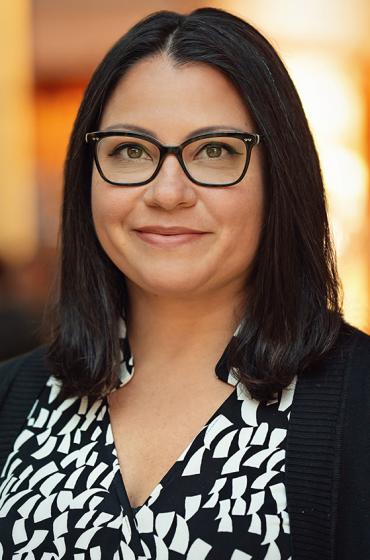
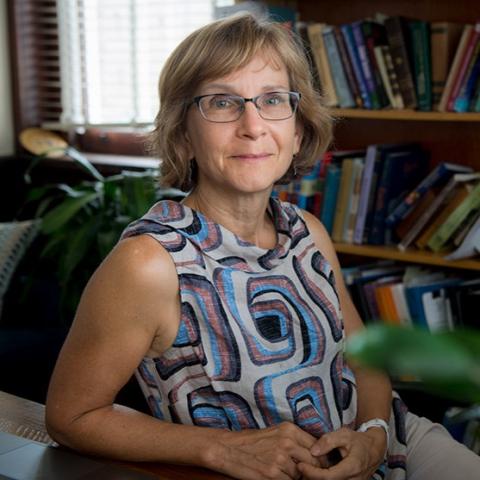
Tamar Kodish is an Assistant Professor in Clinical Psychology and Neuroscience at the University of Colorado. Her research focuses on improving access to mental health services for marginalized youth, particularly youth of color, addressing disparities in depression, anxiety, and suicide prevention. She holds a PhD from the University of California Los Angeles (2022). Her work employs implementation science frameworks to study mental health service delivery in healthcare, educational, and digital contexts. Current projects include a text-messaging intervention pilot for college students of color, in collaboration with UCLA’s ALACRITY Center. Future directions emphasize school-based suicide prevention, peer support models, and engagement strategies for underserved youth. Research themes include racial/ethnic disparities in mental health care, digital mental health innovation, and culturally responsive interventions. Methodological strengths lie in mixed methods and community partnerships. No scientific awards are explicitly listed, though her work aligns with equity-focused initiatives. Advising and grants are not detailed in the provided text.
Geoffrey Cohen is the James G. March Professor of Organizational Studies in Education and Business, and Professor of Psychology at Stanford University's Graduate School of Education. He holds a courtesy appointment in Organizational Behavior at the Graduate School of Business. His research focuses on identity, belonging, and interventions to address social inequities in education, healthcare, and workplace settings. Cohen earned his Ph.D. in Psychology from Stanford University (1998) and a B.A. in Psychology from Cornell University. Education: Ph.D., Stanford University, Psychology (1998) Bachelor of Arts, Cornell University, Psychology Research Interests: Cohen investigates how identity threats and belonging shape behavior, particularly for marginalized groups. His work emphasizes scalable interventions to improve academic outcomes, reduce disciplinary disparities, and foster inclusive environments. He is author of Belonging: The Science of Creating Connection and Bridging Divides (2022), which explores belonging's role in education, healthcare, and societal contexts. Key Contributions: Cohen's interventions, such as social-belonging exercises and self-affirmation techniques, have demonstrated long-term impacts on academic success, mental health, and social cohesion. His studies span disciplines including education, medicine, and public health, with findings published in top journals like Science Advances and Journal of Personality and Social Psychology . Grants & Teaching: Cohen teaches courses on social psychology, intervention design, and belonging. He mentors doctoral students and postdocs investigating identity processes and scalable solutions to social problems. His lab collaborates with schools and healthcare systems to implement evidence-based strategies. Labs/Teams: Cohen leads a research group at Stanford's Graduate School of Education, affiliated with the Institute for Human-Centered Artificial Intelligence (HAI) and the Wu Tsai Human Performance Alliance. His work bridges theory and practice, aiming to create real-world impact through psychologically informed interventions.
Briana Last is an Assistant Professor in the Department of Psychology at Stony Brook University, specializing in Clinical Psychology. She holds a PhD from the University of Pennsylvania (2022) and focuses on improving mental health service accessibility and quality through interdisciplinary research. Her research emphasizes three core domains: social determinants of mental health, implementation strategies for service improvement, and structural factors influencing clinician decision-making. She employs mixed methods and community-based participatory approaches, prioritizing marginalized populations affected by systemic inequities. Key interests include behavioral health workforce development, policy analysis, and dismantling barriers to equitable mental healthcare. Her lab, the Mental Healthcare for All Lab, collaborates with governments, agencies, and clinicians to translate research into actionable policies. Notable projects address clinician burnout interventions, public mental health system gaps, and anti-transgender policy impacts. Recent work critiques scientifically unfounded bans on gender-affirming care and evaluates federal loan repayment programs for mental health workforce retention. Publications span topics like AI chatbots in mental health, state policy effects on LGBTQ+ populations, and trauma therapy implementation. Her work highlights how clinician work conditions directly shape patient care quality, advocating for systemic changes to enhance both provider well-being and patient outcomes.
Professor Brendan Choat is a leading plant physiologist and Professor at the Hawkesbury Institute for the Environment, Western Sydney University. With a distinguished career in plant hydraulics and water relations research, he has established himself as a global expert in understanding how plants respond to drought stress. His work spans both natural ecosystems and agricultural systems, with particular emphasis on Australian native forests and crop species. Choat's research focuses on the intricate relationship between plant water transport systems and environmental stressors, particularly drought. His work examines how the xylem tissue functions as a hydraulic system that must balance water delivery to leaves while avoiding cavitation (embolism) that can lead to plant mortality. His groundbreaking research has demonstrated that many woody plant species operate close to their physiological safety margins with respect to drought, making them vulnerable to future climate changes. His laboratory employs cutting-edge non-invasive imaging techniques, including X-ray Micro Computed Tomography (microCT) and Magnetic Resonance Imaging (MRI), to directly visualize xylem function in living plants. This approach has allowed his team to address fundamental questions about how cavitation forms and spreads through plant vascular systems during drought stress. Analysis of Professor Choat's extensive publication record reveals a consistent focus on plant drought responses, with particular emphasis on Eucalyptus species and mangrove ecosystems. His research has increasingly incorporated large-scale monitoring approaches, remote sensing data, and trait databases to understand vegetation responses to climate extremes across broader spatial scales. Clarivate Highly Cited Researcher (2018-2024) ARC Future Fellowship (2013) Humboldt Fellowship for Experienced Researchers (2010) Thomson Reuters Citation and Innovation Award (2015) Professor Choat leads multiple significant research projects examining tree dieback in Australian forests, particularly focusing on Eucalyptus species. His work with citizen scientists through the 'Dead Tree Detective' project has provided valuable data on drought impacts across diverse forest biomes. He maintains active collaborations with researchers across Australia and internationally, contributing to large-scale initiatives like the AusTraits plant trait database. His research has direct implications for forest management, conservation strategies, and predicting ecosystem responses to climate change.
Dr. Amy Damashek serves as Professor in the Department of Psychology at Western Michigan University, teaching undergraduate and graduate courses while mentoring Clinical Psychology doctoral students. She chairs the department's Diversity, Equity, and Inclusion Committee and maintains an active research program focused on vulnerable populations. Education: Ph.D. in Psychology, University of Missouri-Columbia (2007) Postdoctoral Fellowship, University of Oklahoma Health Sciences Center (2009) Research Focus: Her work centers on preventing child maltreatment and unintentional injuries among at-risk youth, with specialized expertise in infant sleep-related deaths and health disparities . She develops culturally responsive parenting interventions for low-income and Spanish-speaking families, emphasizing community-based solutions through home visiting programs. Publication Trends: Recent work (2020-2023) demonstrates consistent focus on pandemic adaptation of family services, safe sleep practices in marginalized communities, and digital intervention strategies. Her mixed-methods approach bridges clinical psychology with public health, prioritizing implementation in real-world settings. Scientific Recognition: Fellow of the American Psychological Association Former President of APA Division 37 (Society for Child and Family Policy and Practice) Grants & Mentoring: Secured federal funding for child injury prevention in underserved communities. Mentors Clinical Psychology doctoral students with emphasis on culturally competent practice, accepting new graduate students for Fall 2025. Her federally funded work directly informs evidence-based home visiting protocols. Research Ecosystem: Collaborates extensively with community health workers, home visiting agencies, and pediatric care providers to implement and evaluate interventions addressing structural barriers in family support systems.
Professor Daniel McCarthy is a Professor in Criminology at the University of Surrey's Department of Sociology, serving as Co-Director of the Centre for Criminology and Director of Impact. He holds a BSc, MSc, and PhD. His research focuses on policing, inter-agency collaboration, and the impact of incarceration on families, particularly mothers of incarcerated youth. He explores cross-national public attitudes toward policing and punishment, including death penalty perspectives. Research interests include penal legitimacy, prisoner-family relationships, and the societal effects of imprisonment. His work emphasizes marginalized populations, such as women in prisons and families of incarcerated individuals. He has supervised PhD students on topics like prison-family dynamics and youth justice systems. McCarthy’s publications span academic books, articles, and policy-oriented research, with recent work addressing food policies in women’s prisons and post-release desistance. Teaching includes courses on youth crime, criminal investigation, and law-society relations at both undergraduate and master’s levels. He collaborates with initiatives like the Doing Porridge project, which amplifies women’s voices in criminal justice contexts. His research bridges theoretical criminology with practical policy implications, emphasizing equity and systemic reform.
Trevor Goodyear is an Assistant Professor at the University of British Columbia (UBC) Faculty of Applied Science, School of Nursing. His research explores substance use, mental health, and health equity among marginalized populations, particularly 2S/LGBTQ+ youth and people who inject drugs. Education: MSN, MPH, PhD Research Interests: Harm reduction, LGBTQ+ health, mental health, public health, health equity, social determinants of health His recent work examines harm reduction strategies, structural vulnerabilities, and health narratives in urban drug scenes. Publications analyze cannabis use, overdose prevention, conversion practices, and the intersection of gender identity with substance use. His research employs qualitative methods like photovoice and narrative analysis to center marginalized voices. Key trends in his articles include the role of stigma in healthcare, policy implications of substance use research, and the impact of the COVID-19 pandemic on mental health disparities. He advocates for evidence-informed policies and community-driven interventions to address systemic inequities.
Chelsey R. Carter is an Assistant Professor of Public Health in the Department of Social and Behavioral Sciences at Yale School of Public Health with a secondary appointment in the Department of Anthropology. A Black feminist anthropologist of medicine, public health, and race from St. Louis, Missouri, Dr. Carter's interdisciplinary work bridges public health, anthropology, and critical race studies to address health inequities, particularly focusing on neurodegenerative diseases like ALS in Black communities. Dr. Carter received her BA in Anthropology from Emory University (2012), followed by an MPH and PhD from Washington University in St. Louis (2021), and completed a Presidential Postdoctoral Fellowship at Princeton University (2022). Her educational background reflects her commitment to both anthropological theory and public health practice. Her research examines the relationship between social determinants of health (particularly anti-Black racism, socioeconomic status, and gender) and neurodegenerative diseases such as amyotrophic lateral sclerosis (ALS) and motor neuron diseases. Dr. Carter employs ethnographic research and qualitative methodologies to investigate how embodied inequality impacts diagnosis, treatment, and engagement in clinical trials for Black individuals with ALS. She also leads research on precision medicine and genomic research in Black communities through The Black Genome Project and studies caregiving among persons impacted by ALS. Her scholarship has been funded by the National Science Foundation, the Andrew Mellon Foundation, and the Wenner Gren Foundation. Analysis of Dr. Carter's recent publication trends reveals a strong focus on health equity, particularly examining how systemic racism manifests in medical settings and contributes to health disparities. Her work spans multiple domains including neurodegenerative diseases, HIV/AIDS care, genomics, and mental health, with consistent attention to intersectional approaches that consider race, gender, and socioeconomic status. A notable pattern in her scholarship is the use of qualitative and mixed methods to center the lived experiences of marginalized communities, challenging dominant biomedical paradigms through a Black feminist lens. Principal's Development Fund Visiting Scholar (2024) Distinguished Teaching Award from Yale School of Public Health (2023) Funding from the National Science Foundation Support from the Andrew Mellon Foundation Wenner Gren Foundation grant Dr. Carter actively mentors students and has developed innovative teaching approaches, including her course 'Biomedical Justice: Public Health Critiques and Praxis,' which encourages students to bring their full selves into the classroom. Her research has been supported by significant grants that enable community-engaged work addressing health disparities. She emphasizes the importance of community partnerships in her research, ensuring that academic work serves and is accountable to the communities being studied. Dr. Carter is Founder and Director of The LEITH (Lived Experiences Igniting Transformations in Health) Lab, which addresses Black invisibility and misdiagnosis for rare neurodegenerative and genetic diseases. The lab brings together persons and caregivers impacted by rare diseases, researchers, clinical providers, educators, students, and activists to develop more humanizing and critical approaches in the rare neurodegenerative field. The LEITH Lab's vision centers on advancing anti-racist research, fostering awareness through education, creating palliative networks for support, and developing a pipeline of health equity scholars.
Bridget Goosby is a Professor of Sociology at the University of Texas at Austin, affiliated with the College of Liberal Arts and serving as co-director of the LifeHD Health Disparities Research Lab with Dr. Jacob Cheadle. Her work bridges biosociology and health disparities research, focusing on how social marginalization and racism manifest in biological pathways affecting health outcomes. Education : Ph.D. from Pennsylvania State University Contact : bgoosby@prc.utexas.edu Her research integrates biometric and mixed-methods approaches to examine: Dynamic biosocial pathways linking racism to health risks Sympathetic arousal responses in natural settings Epigenetic profiles associated with socioeconomic and racial disparities Recent projects include a Spencer Foundation-funded national study on Black women faculty's health and professional navigation. Prior research has been supported by the National Institute of Child Health and Human Development (NICHD). Scientific recognition includes lifetime membership in AAAS for her contributions to understanding discrimination's biosocial health impacts. Her work appears in journals like Proceedings of the National Academy of Sciences and Annual Review of Sociology . She teaches undergraduate courses on Race, Ethnicity, and Health (UGS 302) across multiple semesters, emphasizing experiential learning through synchronous and asynchronous formats.
Turkka Keinonen is a Professor of Industrial Design at Aalto University School of Arts, Design and Architecture, serving as Vice Dean of Research and Head of Doctoral Education. His career spans academic leadership, industry roles in Finnish technology sectors (shipbuilding, medical equipment), and a visiting associate professorship at National University of Singapore. He specializes in human-centered design, product concept design, and ethical considerations in design. Keinonen’s research emphasizes public sector innovation, digital service development, and the intersection of technology with societal needs. His work bridges theory and practice, focusing on how design can foster equity, civic engagement, and sustainability. Recent projects explore libraries as digital innovation hubs, smart home technologies’ ethical implications, and volunteer-based IT services. He has authored influential books including Mobile Usability (2003), Product Concept Design (2006), and Designers, Users and Justice (2017), alongside over 100 publications. Keinonen’s research trends reflect a shift toward relational design in public sectors, emphasizing stakeholder collaboration and systemic change. His articles analyze digital literacy initiatives, quasi-public service models, and design’s role in mediating technological control. He advocates for ethical frameworks that prioritize user autonomy and societal justice in design processes. Labs/Teams: Active in Aalto’s design innovation networks, particularly in public service design and human-centered design methodologies. Collaborates with industry partners (e.g., Nokia Research Center) and Nordic institutions on applied design research.
Sara Shostak is a Professor of Sociology and Health: Science, Society & Policy at Brandeis University, where she also serves as the inaugural director of the Vic '63 and Bobbi Samuels '63 Center for Community Partnerships and Civic Transformation (COMPACT). Her work bridges sociology, public health, and environmental studies, focusing on health inequalities, urban agriculture, and community partnerships. She holds affiliations across multiple departments including the Heller School for Social Policy and Management, Women’s, Gender, and Sexuality Studies, and Environmental Studies. Shostak earned a Ph.D. from the University of California, San Francisco, an M.P.H. from UCLA, and a B.A. from Reed College. Her research emphasizes interdisciplinary approaches to understanding how social structures and environmental factors shape health outcomes, particularly through projects involving marginalized communities and stakeholders like farmers, healthcare providers, and policymakers. Her research interests include medical sociology, science and technology studies, environmental racism, and food justice. She has pioneered studies on urban agriculture’s role in addressing health inequities and explored ethical dimensions of genetic testing in epilepsy families. Her work often integrates community engagement and participatory methods to ensure research impacts policy and practice. Awarded the Eliot Freidson Outstanding Publication Award and the Robert K. Merton Book Award, Shostak has secured grants from the National Science Foundation, Robert Wood Johnson Foundation, and Merck Family Fund. Her teaching innovations have been recognized with the Michael L. Walzer '56 Award for Teaching. She leads COMPACT to foster civic engagement and partnerships between Brandeis and local communities, emphasizing transformative change through collective action.
Deborah Rivas-Drake is the Stephanie J. Rowley Collegiate Professor in the Marsal Family School of Education and a Professor of Psychology in the College of Literature, Science, and the Arts at the University of Michigan. Her research focuses on how educational, familial, and community contexts shape adolescents’ racial and ethnic identity, socioemotional well-being, and civic engagement. She co-directs the Contexts of Academic + Socioemotional Adjustment (CASA) Lab, emphasizing practices that disrupt racism and xenophobia. Her work is funded by NSF, Spencer Foundation, and W.T. Grant Foundation. She has authored/co-authored influential books like Below the Surface: Talking with Teens about Race, Ethnicity, and Identity , which won major awards. She holds leadership roles in SRCD and SRA committees, advocating for equity in education and youth development. Her research highlights the role of ethnic-racial socialization, discrimination, and intergroup contact in youth outcomes. She collaborates with educators and policymakers to translate research into practical tools for schools and families. Key contributions include frameworks for equity-focused social-emotional learning (SEL), strategies for undocumented families, and interventions to foster civic responsibility. Her grants include initiatives like the 'INVITE: Inclusive and Innovative Intelligent Technologies for Education' project and measures of equity-based SEL practices. Rivas-Drake’s awards reflect her impact on developmental science and policy. She bridges academia with community engagement, advising school districts and organizations like CASEL and Sesame Workshop. Her work underscores intersectionality, emphasizing how race, class, and immigration status interact to shape youth experiences. The CASA Lab’s interdisciplinary approach addresses systemic inequities through rigorous research and actionable solutions.
Professor Gabriel Kuperminc is a faculty member at Georgia State University’s College of Arts & Sciences, Department of Psychology, with a secondary appointment in the School of Public Health. He serves as Chair of the Community Psychology Program and a member of the Developmental Psychology Program. His research focuses on resilience in adolescence, community-based prevention programs, and cultural factors influencing health and development. He collaborates with non-profits to evaluate youth programs and has expertise in mentoring interventions, substance abuse prevention, and immigrant youth studies. Education: Ph.D., University of Virginia, 1994. Research interests include understanding how cultural contexts shape youth development and health behaviors. His work emphasizes collaboration with marginalized communities, including immigrant families and organizations addressing systemic inequities. Notable projects include studies on group mentoring effectiveness (funded by DOJ), photovoice methodologies for trauma recovery, and interventions targeting acculturative stress among Latino youth. Key affiliations include the Center for Latin American and Latino Studies, Center for Human Rights and Democracy, and Center for Research on School Safety. Since 2009, he leads a Maymester Study Abroad Program on Human Rights in Argentina. Grants and collaborations include DOJ-funded research on juvenile justice system interventions and CDC evaluations of public health programs. He directs the Social Ecology and Adolescent Development Lab, focusing on youth resilience and community health interventions.
Cynthia Ebinger is a Professor in the Department of Earth and Environmental Sciences at Tulane University, affiliated with the School of Science & Engineering. She holds the Marshall-Heape Chair and previously served at the University of Rochester and as an Adjunct Professor at Royal Holloway, University of London. Her research focuses on geophysics, rift systems, seismic monitoring, volcanoes, and plate tectonics in West Africa and East Africa, particularly the Turkana Depression and East African Rift. She has conducted fieldwork in Ecuador, Peru, Kenya, Uganda, Ethiopia, and Australia. Education : Ph.D., MIT/WHOI, Joint Program in Oceanography, Marine Geology & Geophysics (1988) M.A., MIT, Geophysics (1986) B.S., Duke University, Geology (1982) Research Interests : Dr. Ebinger investigates continental rifting mechanisms, magmatic processes, seismic anisotropy, and volcanic systems. Her work integrates geophysical methods (e.g., InSAR, receiver functions) to study deformation in regions like the East African Rift and Gulf of Mexico passive margin. She emphasizes understanding crustal dynamics, lithosphere modification, and the interplay between tectonics and surface processes. Publications : Her recent work addresses rift linkage mechanics, crustal anisotropy variations, and volcanic deformation (e.g., Nyiragongo eruption). Key themes include seismic imaging of rift zones, subsidence patterns in coastal Louisiana, and mantle lithosphere interactions. Awards : American Geophysical Union Distinguished Lecturer (2023-2024) NASEM Jefferson Science Fellow (2022-2023) Woollard Award (2021) Tulane Honors Professor of the Year (2021) Grants & Collaborations : Leads projects funded by NSF and international collaborations, focusing on Turkana Depression geodynamics, Gulf of Mexico subsidence, and volcanic monitoring in East Africa. Active in education initiatives to strengthen quantitative geophysics training. Labs/Teams : Core member of the Tulane Earth Sciences group and collaborates with global networks (e.g., Project TRAILS in East Africa). Engages in field-based research and satellite geodesy applications.
Steve Loughnan is a Professor of Psychology at the University of Edinburgh's School of Philosophy, Psychology and Language Sciences. His research focuses on dehumanization, objectification, and human-animal relations, exploring how societal and psychological factors influence moral judgments and behaviors. He teaches undergraduate courses on social psychology, experimental/applied social psychology, and social class, and supervises PhD students in related fields. Research interests include: Dehumanization of social and ethnic outgroups Psychological impacts of objectification on women and marginalized groups Moral psychology of meat consumption and animal treatment Effects of economic inequality on societal attitudes Anthropomorphism in human-AI and human-pet relationships His publications analyze topics like the psychological mechanisms behind meat consumption paradoxes, the role of dehumanization in conflict scenarios, and the ethical implications of AI romance. He has received no explicitly listed awards but has been widely cited in social psychology domains. Teaching includes year-long programs on social psychology principles, experimental research methods, and social class analysis. Office hours are held weekly to support students. His work bridges theoretical social psychology with applied issues in global inequality, environmental ethics, and veterinary mental health.