Simon Lindgren is a Professor of Sociology and Director of DIGSUM (Digital Societies and Media) at Umeå University's Department of Sociology. His research focuses on politics, power, and resistance in the context of digital technologies, employing methods like critical discourse analysis, computational text analysis, and social network analysis. He leads interdisciplinary research on social dimensions of digital technology, including AI ethics, algorithmic governance, and digital activism. Key research areas include algorithmic politics, social media mobilization, critical AI studies, and data activism. Lindgren has directed projects such as 'Programmable Politics,' exploring algorithmic automation in civil society, and '#NeverForget vs. #NeverHappened,' analyzing Holocaust commemoration on social media. His work bridges sociology with computational methods, emphasizing the sociotechnical implications of digital tools. Recent publications address bot activity in progressive movements, class dynamics in AI research, and mental health discourse on Instagram. Lindgren has secured grants for AI ethics projects and co-authored works like the Handbook of Critical Studies of Artificial Intelligence . His research further explores digital care for aging populations and misinformation during emergencies. Lindgren coordinates the 'AI and Society' research group and has advised numerous collaborative projects at Umeå University. His work frequently intersects with policy analysis, aiming to inform governance of emerging digital technologies while critiquing techno-solutionist approaches.
Nick Salter is an Assistant Professor in the Department of Mathematics at the University of Notre Dame, part of the College of Science. He holds a Ph.D. from the University of Chicago (2017) and a B.A. from Reed College (2011). His research focuses on the interplay between geometry/topology, geometric group theory, and complex algebraic geometry, particularly exploring monodromy groups in relation to mapping class groups, surface bundles, and moduli spaces of Riemann surfaces and Abelian differentials. He is supported by an NSF CAREER grant and previously held an NSF postdoctoral fellowship. Salter's educational background includes: Ph.D. in Mathematics, University of Chicago, 2017 B.A. in Mathematics, Reed College, 2011 His research interests are centered around: Monodromy groups and their applications in algebraic geometry and topology Mapping class groups, braid groups, and their connections to moduli spaces Surface bundles, configuration spaces, and their topological and geometric properties Geometric group theory and its interplay with low-dimensional topology Salter’s recent publications emphasize the study of monodromy in diverse contexts, including algebraic geometry (e.g., quintic plane curves, cyclic covers), topology (surface bundles, configuration spaces), and geometric group theory (mapping class groups, braid groups). His work bridges abstract algebraic structures with concrete geometric phenomena, often revealing deep connections between seemingly disparate areas. Notable recognition includes: NSF CAREER Grant (DMS-2338485) NSF Postdoctoral Fellowship (2017–2020) In addition to research, Salter has organized thematic programs, including a 2025 program on 'Discrete groups in topology and algebraic geometry' at the Center for Mathematics at Notre Dame, and a Math Circles Institute (July 2025). His NSF grants support his exploration of monodromy and related structures. He collaborates with researchers like Aaron Calderon and Pablo Portilla Cuadrado, and contributes to initiatives such as the Riverbend Community Math Center’s outreach programs.
Fangzhou Jin is an Assistant Professor at the School of Mathematical Sciences, Tongji University. His research focuses on advanced topics in Algebraic Geometry , particularly in Motivic Homotopy Theory , Algebraic K-theory , and Real Algebraic Geometry . He has extensive experience in collaborative mathematical research, having worked with prominent mathematicians such as Frédéric Déglise, Enlin Yang, and Marc Levine. Education : Ph.D. in Mathematics (2016, École Normale Supérieure de Lyon), M.Sc. in Pure Mathematics (2012, Université Paris-Diderot), Diploma of ENS (2013) His work bridges Algebraic Cycles with Étale Cohomology , exploring Weight Structures in mixed motives and Chern Classes in motivic contexts. Jin has contributed to the theory of Trace Maps and Local Terms in motivic homotopy, as well as the study of Flat Cohomology and Real Schemes . Key trends in his publications include: 2025: Cohomology of singular varieties via real cycle class maps 2024: Trace maps and local terms in motivic homotopy 2023: Moving lemmas in homotopy colevel theory 2022: Quadratic conductors, perverse homotopy, and pro-Chern classes 2021: Rational motivic homotopy and Künneth formulas 2020: Gersten complexes and real flat cohomology 2018: Algebraic G-theory in motivic categories 2016: Borel-Moore homology and weight structures Scientific Awards & Grants : Fundamental Research Funds for Central Universities (2021-2025) National Natural Science Foundation of China Grants 12101455 (2022-2024), 12471014 (2025-2028) National Key R&D Program of China 2021YFA1001400 (2022-2026) DFG Priority Programme SPP 1786 & ERC Project QUADAG (2018-2020) Advising & Teaching : Jin has supervised exercise classes and seminars at multiple institutions, including Universität Duisburg-Essen and Tongji University. His teaching spans Algebraic Topology , Étale Cohomology , and Algebraic Geometry . Labs & Collaborations : Active in international collaborations, he is a key member of the Algebraic Geometry and Ramification Seminar at Tongji University and has participated in DFG Research Training Group 2553 during his postdoctoral period.
Miriam Kuzbary is an Assistant Professor of Mathematics at Amherst College, specializing in geometric topology and knot theory. She holds a PhD from Rice University and has held postdoctoral positions supported by the NSF. Her research explores intersections between group theory and topology, particularly in low-dimensional spaces and knot concordance. She is actively involved in organizing conferences like the Five College Geometry Topology Seminar and the Links in Dimensions 3 and 4 Conference at ICERM. Kuzbary is also committed to inclusive pedagogy, adhering to Federico Ardila’s axioms, and has received multiple teaching awards, including the Class of 1934 CIOS Honor Roll. She has advised numerous students on research projects, blending topology with interdisciplinary applications like textile structures and music theory. Educations: PhD (Rice University), MA (Rice University), BS (University of Texas at Dallas). Affiliations: Organizer of ICERM’s 2025 conference, co-founder of Atlanta Undergraduate Research Seminar. Research Interests: Focuses on link concordance, mapping class groups, and applications of topology to art/music. Utilizes Heegaard Floer homology and gauge theory. Recent work includes studies on knitted materials and Torelli group metrics. Awards: NSF Postdoctoral Fellowship, AAUW Dissertation Fellowship, NSF GRFP.
Jeffrey F. Brock is the Zhao and Ji Professor of Mathematics and Dean of the School of Engineering & Applied Science at Yale University. He also serves as the inaugural Dean of Science in Yale's Faculty of Arts and Sciences. His research focuses on low-dimensional geometry and topology, particularly hyperbolic geometry and its applications to data science. He has held leadership roles including Chair of Brown University's Mathematics Department (2013–2017) and founding Director of Brown’s Data Science Initiative (2016). Roles: Dean of Engineering, Mathematics Professor Key Affiliations: Yale University, Brown University Education: B.S. from Yale University, Ph.D. in Mathematics from U.C. Berkeley (under Curtis McMullen). Postdoctoral positions at Stanford and University of Chicago. Extensive academic leadership experience, including administrative roles at both Brown and Yale. Research Interests: Hyperbolic 3-manifolds, Teichmüller theory, geometric structures in data science. Notable contributions include geometric classification of hyperbolic 3-manifolds (with R. Canary and Y. Minsky) and advancing topological methods for analyzing complex data sets. Publications: Over 40 peer-reviewed articles, including foundational work on the ending lamination conjecture and Weil-Petersson geometry. Recent work applies geometric methods to machine learning and medical imaging. Awards: John Simon Guggenheim Fellowship (2008), Fellow of the American Mathematical Society (2017). Labs/Initiatives: Brown’s Data Science Initiative, geometric and topological data analysis projects.
Pedro Schilling De Carvalho is a Lecturer in Law at University College London's Faculty of Laws, specializing in Financial and Environmental Law. He holds a PhD in Law and Finance from the University of Cambridge, where he received a Cambridge International Scholarship, as well as an LLM in Commercial Law from Cambridge (supported by a Chevening Scholarship) and a LLB from the University of São Paulo, Brazil. His academic journey includes positions at: University of Cambridge (Research Affiliate, Judge Business School and Lauterpacht Centre for International Law) London School of Economics (Guest Lecturer) University of Edinburgh (Early Career Fellow in Financial Law and Regulation) Max Planck Institute for Comparative and International Private Law (Visiting Fellow) Harvard Law School (Visiting Fellow) Pedro's research focuses on financial regulation, corporate finance, environmental law, international economic law, and sustainable finance. His work explores regulatory diffusion in sustainable finance, international financial governance in multipolar contexts, and the intersection of corporate governance with environmental and social concerns. He has published in peer-reviewed journals such as the Journal of Financial Regulation and has been cited by institutions including the International Monetary Fund. His recent publications demonstrate a strong focus on sustainable finance frameworks, regulatory coordination across jurisdictions, and the evolving landscape of financial technology regulation globally. His work spans theoretical analysis of corporate governance models alongside practical regulatory frameworks for emerging financial technologies and sustainable investment. Pedro has received several prestigious awards and recognitions: Cambridge International Scholarship Chevening Scholarship Max Planck Institute & Cambridge Scholarship Certified peer-reviewer by the Equitable Growth, Finance and Institutions Global Practice He has actively contributed to policy development through written evidence to the UK Parliament Committee on the Future Relationship with the European Union, consultancy work for the World Bank Group's Legal Vice Presidency, the Green Climate Fund, and the Bill & Melinda Gates Foundation. His professional activities include being Co-Director of the UCL Centre of Law and the Environment, academic member of the European Corporate Governance Network, and member of the Leadership of the Commission on Arbitration and ADR at the International Chamber of Commerce. Pedro has extensive experience as both a transactional and dispute resolution lawyer, having worked with prominent law firms and served as Chief of Staff at the Commercial Law Chamber of the São Paulo Supreme Court.
Dr Davoud Cheraghi Home is a Reader (Associate Professor) in Pure Mathematics at Imperial College London, affiliated with the Pure Analysis and PDEs and Geometry research groups. His research focuses on complex analysis and dynamical systems, particularly holomorphic maps, rigidity phenomena, and small divisors problems, bridging analysis, geometry, and combinatorics. He has organized numerous conferences and workshops, including events at Imperial College and the School of Mathematics in Tehran. Dr Cheraghi teaches advanced courses in geometric complex analysis, analysis, and dynamical systems at Imperial College, as well as at the University of Warwick and Stony Brook University. He has mentored PhD students and postdoctoral researchers, contributing significantly to the field through his publications and collaborations. His research interests encompass geometric analysis (quasi-conformal mappings, elliptic PDEs), renormalization operators, and low-dimensional analytic dynamics. Notable publications include studies on irrationally indifferent attractors, Siegel polynomials, and combinatorial rigidity. Dr Cheraghi’s work is supported by extensive teaching and mentorship activities, reflecting his commitment to advancing both research and education in pure mathematics.
Nathalie Wahl is a Professor at the Department of Mathematical Sciences, University of Copenhagen, and serves as the Center Director for the Copenhagen Centre for Geometry and Topology (GeoTop). Her research focuses on algebraic topology, particularly mapping class groups of surfaces and 3-manifolds, homological stability, topological field theory, and loop spaces. PhD from Oxford University (2001) Current leadership of GeoTop (since 2020) Her recent work explores homological stability across automorphism groups, string topology, and structured algebras. Key collaborations include Allen Hatcher, Craig Westerland, and Nancy Hingston. She has received prestigious awards such as the ERC Consolidator Grant and the Young Elite Researcher Award. ERC Consolidator Grant (2018-2023) Female Research Leader Scholarship (2009-2013) Marie Curie European Fellowship (2003-2004)
Kede Ma is an Associate Professor in the Department of Computer Science at City University of Hong Kong (CityUHK). He received his B.E. from the University of Science and Technology of China (USTC) in 2012, and MASc and Ph.D. degrees from the University of Waterloo in 2014 and 2017, respectively. From 2018 to 2019, he was a Research Associate with the Howard Hughes Medical Institute and New York University. Prof. Ma has been named to the Highly Cited Researchers list by Clarivate Analytics in 2024 and currently serves on the editorial boards of IEEE Transactions on Image Processing, IEEE Transactions on Information Forensics and Security, and IEEE Signal Processing Letters. Prof. Ma leads the Multimedia Analytics (MA) Laboratory, an interdisciplinary research group focused on computational vision, computational modeling of human visual perception, perceptual multimedia signal processing, quality assessment, and multimedia forensics. His research spans computational photography, high dynamic range imaging and rendering, omnidirectional video analysis, camera processing pipeline design, and artificial intelligence safety in multimedia systems. His work integrates machine learning techniques including reinforcement learning, generative modeling, self-supervised learning, and continual learning for multimedia signal processing applications. His recent publications demonstrate a strong focus on image quality assessment, deep learning for multimedia processing, and multimedia forensics. His work bridges theoretical computer vision principles with practical applications in multimedia systems. The research trends show increasing integration of foundation models with specialized multimedia processing tasks, particularly in quality assessment and security applications. Highly Cited Researchers list by Clarivate Analytics (2024) Best Paper Award at IEEE International Conference on Virtual Reality and Visualization (2021) Best Paper Runner-Up at International Joint Conference on Artificial Intelligence Workshop (2021) Top 10% Award at IEEE International Conference on Image Processing (2015) Finalist for the Governor General's Gold Medal, University of Waterloo (2017) Spotlight presentation at NeurIPS (2022) Highlight paper at ICCV (2025) Oral presentation at ICLR (2025) Prof. Ma advises numerous PhD students and postdoctoral fellows in the MA Laboratory. His research is supported by various grants enabling work in multimedia analytics, image processing, and computer vision. The laboratory maintains active collaborations with researchers at institutions including SUSTech, ZJU, and HIT. Current projects focus on advancing image quality assessment methodologies, developing more robust deep learning techniques for multimedia forensics, and exploring new approaches to HDR imaging and omnidirectional video processing. The Multimedia Analytics Laboratory maintains a strong focus on both theoretical foundations and practical applications of multimedia processing. Current research directions include integrating large language models with image quality assessment, developing more robust deepfake detection methods, and advancing techniques for continual learning in multimedia applications. The lab emphasizes rigorous evaluation methodologies and maintains multiple datasets for multimedia quality assessment research.
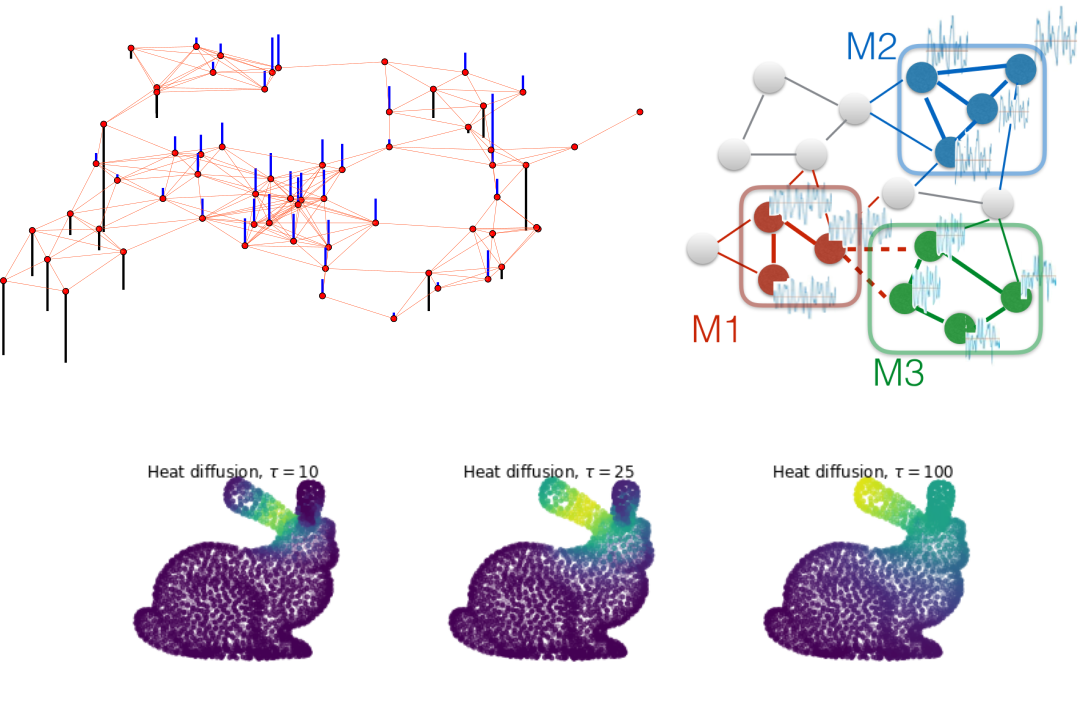
Benjamin Ricaud is an Associate Professor and Group Leader in Machine Learning at UiT The Arctic University of Norway's Department of Physics and Technology. His core affiliations include membership in the Machine Learning Group, Visual Intelligence center, and co-directorship of the Digital Technology Innovation Lab focused on Arctic-region tech startups. He also co-chairs the annual Northern Light Deep Learning conference. Ricaud's research spans: Fundamental ML : Graph signal processing, explainable AI, and generative models Applications : Microfossil classification, medical diagnostics (retinal aging), drug analysis, and climate data interpretation Emerging domains : Self-supervised learning and biological data analysis using Raman spectroscopy His recent publications (2020-2025) cluster in three domains: Graph ML methodologies (35%) Biomedical/biological applications (40%) Geoscience/climate informatics (25%) with consistent focus on interpretability and real-world data challenges. Teaching includes Image Processing (FYS-2010), Pattern Recognition (FYS-3012), and Machine Learning (FYS-2021). He leads outreach initiatives developing AI exhibits for Tromsø Science Centre.
Eun Jeong Cha is an Associate Professor in the Department of Civil and Environmental Engineering at the University of Illinois at Urbana-Champaign. She holds a Ph.D. (2012) and M.S. (2009) from Georgia Institute of Technology, and a B.S. (2006) from Seoul National University. Her research focuses on risk-informed decision-making for infrastructure resilience under natural hazards, including hurricane risk assessment under climate change, interdependent infrastructure systems analysis, and seismic risk mitigation. Education: Ph.D. in Civil Engineering, Georgia Tech (2012) M.S. in Civil Engineering, Georgia Tech (2009) B.S. in Architectural Engineering, Seoul National University (2006) Her research interests span structural reliability, disaster risk management, and the integration of climate change impacts into infrastructure design. Key areas include hurricane risk modeling, interdependent infrastructure recovery, and socially-aware retrofit prioritization. She has received awards such as the ASCE/EMI Probabilistic Methods Committee Student Paper Award (2012) and is a Fellow of the Next Generation of Hazards and Disasters Researchers (2015). Dr. Cha leads the R4 Group, advancing methodologies for resilient infrastructure systems. She actively contributes to professional societies like ASCE, serving on committees for load combinations and climate adaptation. Her work bridges engineering, risk analysis, and policy to enhance community resilience against extreme events.
Chris Woodward is a Distinguished Professor and Chair of the Department of Mathematics at Rutgers University (New Brunswick). He maintains an active research program in symplectic and algebraic geometry, Lie theory, gauge theory, and mathematical physics. Woodward serves as an associate editor for Selecta Mathematica and organizes the Rutgers symplectic seminar, which focuses on current developments in symplectic geometry. Woodward's research primarily centers on symplectic geometry with particular emphasis on Floer theory, mirror symmetry, and connections to mathematical physics. His work bridges geometric analysis with algebraic structures, exploring deep connections between symplectic topology and quantum field theory. He has made significant contributions to understanding the mathematical structures underlying string theory through rigorous geometric frameworks, with recent work focusing on immersed Lagrangians, tropical geometry applications, and quantum cohomology. Analysis of Woodward's recent publications reveals a cohesive research trajectory with increasing sophistication in handling complex geometric structures. His work consistently explores the connections between symplectic geometry, algebraic geometry, and mathematical physics, demonstrating how techniques from one field can solve problems in another. Recent papers show particular innovation in extending Floer theory to immersed settings and developing connections between tropical geometry and symplectic topology. Woodward has advised numerous graduate students who have secured positions at Stanford University, Pennsylvania State University, Yale University, and Columbia University His undergraduate research mentorship program has produced students who continued to top graduate programs He has mentored junior faculty members including Matt Leingang (now at NYU), Eduardo Gonzalez (now at University of Massachusetts Boston), and Yuhan Sun (now at Imperial College) Woodward leads the Rutgers symplectic geometry research group and has organized significant workshops including the Recent Developments in Lagrangian Floer theory workshop at the Simons Center for Geometry and Physics (held in March 2022 after pandemic delay) and is co-organizing a workshop at Harvard's CMSA in Fall 2026 with Denis Auroux and Jonny Evans. His research group maintains strong connections with international symplectic geometry communities.
Anuj Pathania serves as an Assistant Professor in the Parallel Computing Systems (PCS) group within the Informatics Institute at the University of Amsterdam's Faculty of Science. His research pioneers sustainable computing systems operating under severe power, thermal, and reliability constraints, with significant contributions to energy-efficient hardware design and embedded systems. Education: PhD in Computer Science (2018), Karlsruhe Institute of Technology MSc in Computer Science (2012), National University of Singapore B.Tech in Computer Science (2009), Maharaja Agrasen Institute of Technology Pathania's research centers on low-power design and sustainable systems for constrained environments, with particular expertise in thermal management of 3D-stacked architectures and energy-efficient machine learning inference . His work bridges electronic design automation with real-world reliability challenges, developing novel power budgeting techniques like T-TSP that incorporate transient temperature effects ignored by conventional methods. Current projects include EU-funded initiatives on energy labeling for digital services, addressing ecological impacts through technological, behavioral, and legal frameworks. His publication trajectory reveals a strategic evolution toward zero-waste computing , with recent work (2023-2025) focusing on hardware-software co-design for edge AI, energy modeling across computing continua, and parameter-efficient neural adaptation. Key themes include thermal-aware scheduling for S-NUCA many-cores, cooperative processor utilization in heterogeneous systems, and sustainability metrics for digital services. Scientific Recognition: Best Paper Award Nomination at IEEE Computer Society Annual Symposium on VLSI 2023 for 3D-TTP power budgeting technique Pathania actively mentors 4 PhD students (Ehsan Aghapour, Saeedeh Baneshi, Sudam Wasala, Yixian Shen) and has successfully supervised 5 Master's theses (including Cum Laude defenses by Joris op ten Berg and Jurre Wolff). His research is supported by major grants including Energy Labels for Ecologically Sustainable Digital Services (2023-2024) and Towards Zero-Waste Computing (2021-2025), developing simulation frameworks like HotSniper and CoMeT for thermal analysis. The PCS group maintains strong industry collaborations with ARM and NVIDIA, particularly through tools like ARM-CO-UP for heterogeneous processor utilization.
Florian Naef is an Assistant Professor in the School of Mathematics at Trinity College Dublin. His research spans topological and algebraic structures with applications to mathematical physics, including string topology, Poisson geometry, and homotopy theory. Publications emphasize formality theorems, torsion invariants, and quantization methods. Recurring themes include loop spaces, deformation quantization, and connections between differential geometry and algebraic topology.
Luo Mai is an Assistant Professor at the University of Edinburgh's School of Informatics , with an upcoming promotion to Associate Professor (UK Reader) in August 2025. He leads the Large-Scale Machine Learning Systems Group and co-leads the UK EPSRC Centre for Doctoral Training in Machine Learning Systems and an ARIA Project on Scaling AI Compute by 1000X . PhD in Computer Science (Imperial College London, 2018) MRes in Advanced Computing (Imperial College London, 2012) His research focuses on the intersection of computer systems , machine learning , and data management . Key contributions include award-winning systems like WaferLLM (wafer-scale LLM inference), Tenplex (elastic ML), and ServerlessLLM (serverless LLM serving), published at top venues (OSDI, SOSP, ICML, NeurIPS, JMLR). Recent publications demonstrate trends in GPU-based distributed systems , LLM optimization , and adaptive machine learning . His team has developed groundbreaking open-source projects including TensorLayer , TorchOpt , and ServerlessLLM . Awarded Microsoft Research StarTrack Scholar (2024) , secured ARIA grant (2024) with Imperial College & Cambridge University, and received Google Fellowship during PhD (2012-2016). As an educator, he designed Edinburgh's popular Machine Learning Systems course (150+ students). His group supervises multiple PhD students including Yao Fu (recognized as 2024 Rising Star in ML & Systems) and Leyang Xue .