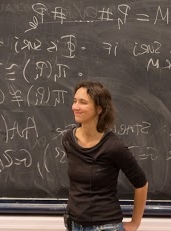
Nathalie Wahl is a Professor at the Department of Mathematical Sciences, University of Copenhagen, and serves as the Center Director for the Copenhagen Centre for Geometry and Topology (GeoTop). Her research focuses on algebraic topology, particularly mapping class groups of surfaces and 3-manifolds, homological stability, topological field theory, and loop spaces. PhD from Oxford University (2001) Current leadership of GeoTop (since 2020) Her recent work explores homological stability across automorphism groups, string topology, and structured algebras. Key collaborations include Allen Hatcher, Craig Westerland, and Nancy Hingston. She has received prestigious awards such as the ERC Consolidator Grant and the Young Elite Researcher Award. ERC Consolidator Grant (2018-2023) Female Research Leader Scholarship (2009-2013) Marie Curie European Fellowship (2003-2004)
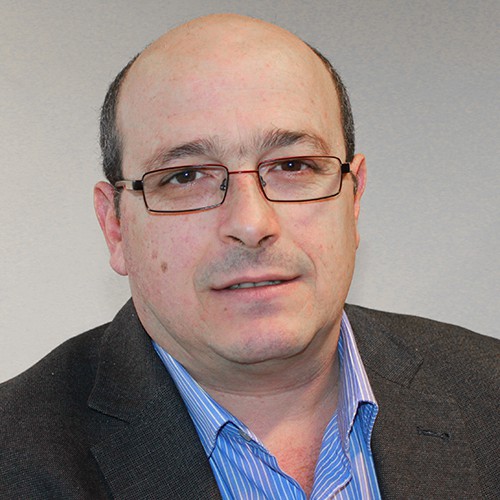
Jørgen Ellegaard Andersen is a Professor and Center Director at the Department of Mathematics and Computer Science, University of Southern Denmark (SDU), and holds the D-IAS Chair at the Danish Institute for Advanced Study (DIAS). He is also a Distinguished Visiting Professor at the California Institute of Technology since 2013, reflecting his international stature in mathematical sciences. University: University of Southern Denmark School: Faculty of Science Department: Department of Mathematics and Computer Science Position: Professor, Center Director, D-IAS Chair Andersen earned his DPhil in Mathematics from the University of Oxford in 1992, with a thesis on Jones-Witten theory and the Thurston Compactification of Teichmüller space. His research lies at the intersection of quantum theory and geometry, focusing on quantum topology, geometric quantization of moduli spaces, topological quantum field theory, low-dimensional geometry, and applications to RNA and protein folding. His work combines deep mathematical rigor with potential applications in quantum computing and biophysics. The trends in his recent publications show a consistent focus on quantization of moduli spaces, topological recursion, mapping class group representations, and quantum Chern-Simons theory. His work often bridges pure mathematics and theoretical physics, with increasing attention to computational and applied aspects in quantum technologies. ERC Synergy Grant ReNewQuantum (EUR 10m, Principal Investigator) Distinguished Visiting Professor, Caltech Andersen leads major research projects such as ReNewQuantum and TopQC2X, securing significant funding from the EU and Danish agencies. He actively supervises PhD students and collaborates with leading mathematicians worldwide, including Maxim Kontsevich and Bertrand Eynard. His work is frequently highlighted in the media for its potential impact on quantum computing and Danish industry. He is a central figure in the Quantum Mathematics center at SDU and collaborates with institutions like MSRI and the University of Hamburg. His research group is part of international networks focused on geometric and topological methods in quantum theory.
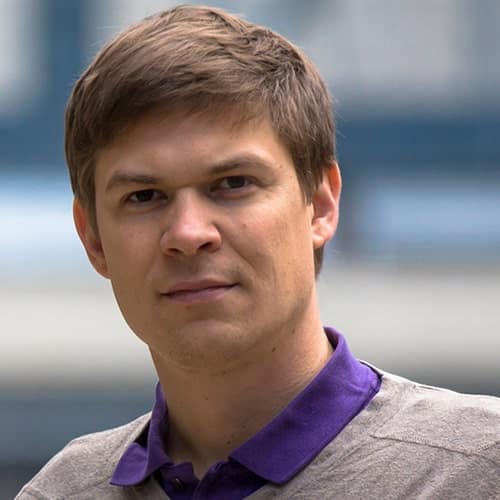
Fabian Haiden is an Associate Professor in the Department of Mathematics and Computer Science at the University of Southern Denmark, affiliated with the Quantum Mathematics research group. His academic work focuses on advanced topics in algebraic geometry, category theory, and mathematical physics. He holds a prestigious Sapere Aude Research Leader Grant (2023), enabling him to lead a research group exploring categorical structures in geometry. Research interests include derived categories, Calabi-Yau categories, stability conditions, and their applications to Teichmüller theory, spectral networks, and geometric topology. His recent work bridges algebraic structures with dynamical systems, such as pseudo-Anosov autoequivalences and iterated logarithms in gradient flows. Key Projects: Leading the Emergent Geometry of Categories project (2024–2028), funded by the Danish Ministry of Higher Education and Research. Grants & Awards: Sapere Aude Research Leader Grant (DKK 6.192.000). Publications span journals like Advances in Mathematics , Duke Mathematical Journal , and Communications in Mathematical Physics , reflecting his expertise in algebraic structures, geometric categorification, and stability phenomena. His research often intersects with topological and physical systems, such as knot polynomials and quantum topology.
Ivan Adriyanov Nikolov is an Assistant Professor at the Department of Architecture, Design and Media Technology within Aalborg University's Technical Faculty of IT and Design. He specializes in Computer Graphics, Computer Vision, and Augmented Reality, with a focus on 3D reconstruction techniques like Structure-from-Motion (SfM). His work bridges academic research and industrial applications, particularly in wind turbine blade inspection and educational technology. His educational background includes contributions to computer science education through innovative teaching methods. He has led projects like 'Drone Application for Pioneering Reporting in Wind Turbine Blade Inspection' (2017–2019) and 'Leading Edge Roughness - Wind Turbine Blades' (2015–2019), advancing drone-based inspection and 3D modeling for wind energy sectors. Research interests include synthetic data generation, environmental monitoring datasets (e.g., BrackishMOT, DigiWeather), and improving VR/AR user experiences. He has developed tools for dynamic lighting in pixel art games and multimodal guardian systems in VR. His datasets, such as Sewer Defect Point Clouds and Wind Turbine Blade SfM Reconstructions, are publicly available for academic use. He actively contributes to educational innovation, such as flipped classroom strategies to boost programming class engagement. His interdisciplinary approach spans computer graphics, AI-driven NPC interactions, and collaborative mixed-reality games for trust-building. Labs/Teams: Member of the Computer Graphics Group and Visual Analysis and Perception team at Aalborg University. Collaborates with industry partners on drone technology and environmental surveillance systems.
William Elbæk Mistegård is an Assistant Professor in the Department of Mathematics and Computer Science at the University of Southern Denmark (SDU), where he conducts research in Quantum Mathematics. His work bridges pure mathematics and mathematical physics, with a focus on quantum invariants and topological structures. Research Interests: His primary research areas include resurgence analysis, asymptotic expansions of quantum invariants, low-dimensional topology, and the mathematical foundations of quantum field theory. He investigates invariants of 3-manifolds such as Seifert fibered spaces and mapping tori, leveraging tools from representation theory and complex analysis. The analysis of his publications reveals a consistent focus on the resurgence properties of Witten-Reshetikhin-Turaev invariants, particularly in topological contexts involving mapping class groups, fixed point sets, and integral structures. His work contributes to the deeper understanding of quantum invariants through asymptotic and analytic methods. Scientific Contributions: Co-authored significant journal articles in top mathematical journals. Active contributor to the theoretical development of quantum topology. Grants and Projects: Currently participating in the Danish Research Council-funded project Strengthening Denmark's Quantum Technology Position: SDU's Master's Degree Programme in Quantum Computing (2025–2027), which aims to advance quantum education and research in Denmark. No formal students are listed, but his role in this educational initiative suggests mentorship and curriculum development. Laboratories and Teams: While no dedicated lab is mentioned, he is part of a research network in quantum mathematics at SDU, collaborating with prominent mathematicians such as Jørgen Ellegaard Andersen. His work is supported through institutional and national research frameworks.
Ivo Alexander Hendriks serves as an Associate Professor at the Novo Nordisk Foundation Center for Protein Research (CPR), part of the University of Copenhagen. He is affiliated with the Nielsen Group and maintains an active research profile with numerous recent publications in high-impact journals including Nature, Molecular Cell, and Nature Structural and Molecular Biology. Dr. Hendriks' research primarily focuses on protein post-translational modifications and their roles in cellular regulation. His work spans several interconnected areas including SUMO biology, chromatin dynamics, DNA repair mechanisms, and advanced mass spectrometry techniques. His laboratory investigates how protein modifications such as SUMOylation and citrullination regulate fundamental cellular processes, with implications for understanding cancer biology, autoimmune diseases, and genome maintenance. Analysis of Dr. Hendriks' recent publication record reveals a strong emphasis on developing and applying cutting-edge proteomics methodologies to map protein modifications with site-specific resolution. His work demonstrates how these modifications regulate DNA repair pathways, chromatin organization, and cellular responses to genotoxic stress, contributing significantly to our understanding of molecular mechanisms underlying genome stability. As an Associate Professor, Dr. Hendriks participates in academic mentoring and likely supervises graduate students and postdoctoral researchers. His extensive collaborative network, evident from his multi-author publications with international researchers, suggests active engagement in the global scientific community. Dr. Hendriks operates within the Nielsen Group at the Novo Nordisk Foundation Center for Protein Research, a world-class facility equipped with state-of-the-art mass spectrometry and molecular biology technologies. His laboratory environment fosters interdisciplinary research that bridges biochemistry, molecular biology, and proteomics to address fundamental questions in cellular regulation.
Robert Wayne Burklund serves as an Associate Professor in the Department of Mathematical Sciences at the University of Copenhagen, actively contributing to the Algebra & Geometry (AG) and GeoTop research groups. His academic profile centers on foundational mathematical research with institutional affiliation confirmed through university channels and ORCID registration (0000-0001-5936-5256). Burklund's research spans Algebraic Topology, Homotopy Theory, Algebraic Geometry, K-theory, Topology, and Geometry. His work critically examines spectral sequences, quiver representations, high-dimensional manifold classification, and algebraic K-theory structures. Key methodological approaches include stable homotopy computations, differential graded algebra techniques, and geometric topology frameworks. Recent publications demonstrate consistent output in premier journals including Inventiones Mathematicae and Advances in Mathematics. His 2022-2025 work reveals strong thematic continuity in algebraic topology foundations, particularly Adams spectral sequence mechanics and high-dimensional geometric problems. Notable contributions include resolving differential computations in homotopy groups and advancing the high-dimensional geography problem. While departmental records confirm supervision of past postdocs and PhD students, specific advisee names remain unlisted in available documentation. Burklund maintains active research engagement through ongoing publications and institutional collaborations, with no indication of reduced academic activity.
Prof. Yamir Moreno is a Professor of Physics at the Department of Theoretical Physics, Faculty of Sciences, University of Zaragoza, where he also serves as Director of the Institute for Biocomputation and Physics of Complex Systems (BIFI) and leads the Complex Systems and Networks Lab (COSNET). He holds international affiliations as Research Director at CENTAI Institute (Turin, Italy) and External Professor at the Complexity Science Hub Vienna (Austria), and was previously a Principal Scientist and Area Coordinator at the ISI Foundation. PhD in Physics, University of Zaragoza (Summa Cum Laude, 2000) Ramón y Cajal Fellow (2005-2010) First-class Fellow, ISI Foundation Fellow, American Physical Society (2021) Fellow, Network Science Society (2022) His research focuses on complex systems , network science , epidemic modeling , and social dynamics . He investigates disease dynamics, diffusion processes, nonlinear systems, and higher-order network structures using tools from physics, mathematics, and data science. His work bridges theoretical foundations with real-world applications in public health, urban systems, and social behavior. Recent publications highlight trends in multilayer and higher-order networks , digital twins of cities , epidemic modeling with behavioral feedback , and social contagion in complex systems . His research integrates data-driven modeling, machine learning, and network theory to study urban resilience, information spread, and collective behavior. Complex Systems Society’s Senior Scientific Award (2019) Highly Cited Researcher (Web of Science, 2019) Service Award, Complex Systems Society (2022) Editor-in-Chief, Journal of Complex Networks Editor, PLoS Computational Biology, Chaos, Solitons & Fractals, Proceedings of the Royal Society A Divisional Associate Editor, Physical Review Letters (2014-2020) Prof. Moreno has supervised 23 PhD theses and over 30 master’s theses. He has led multiple EU-funded projects and has served on advisory boards for the EU Future and Emerging Technologies and the WHO Collaborative Center on Complexity Sciences for Health Systems. His collaborative network spans institutions in Europe, Latin America, and North America. He leads the Complex Systems and Networks Lab (COSNET) at BIFI, a multidisciplinary team focused on network theory, computational epidemiology, and social dynamics. The lab develops models for epidemic forecasting, urban resilience, and collective behavior using high-performance computing and data analytics.
Thomas Pock is a Professor of Computer Science at Graz University of Technology, holding the AIT Stiftungsprofessur for Mobile Computer Vision. He is affiliated with the Institute for Computer Graphics and Vision (ICG) within the Faculty of Computer Science and serves as a principal scientist at the Austrian Institute of Technology (AIT), Center for Vision, Automation & Control. He leads the Vision, Learning and Optimization (VLO) research group, which focuses on mathematical modeling and optimization in computer vision. His research interests lie at the intersection of computer vision, image processing, and mathematical optimization. Specifically, he develops mathematical models for computer vision and efficient convex and non-smooth optimization algorithms , particularly for mobile scenarios. His recent work increasingly integrates variational methods with deep learning, especially in solving inverse problems in imaging such as medical reconstruction and deblurring. The trends in his recent publications show a strong emphasis on deep learning for inverse problems , variational networks , and learned optimization . His group explores how to combine classical mathematical models with data-driven deep learning approaches to achieve stable, interpretable, and high-performance solutions in image reconstruction and processing. His scientific achievements have been recognized with several prestigious awards: START Prize, Austrian Science Fund (FWF), 2013 German Pattern Recognition Award, DAGM, 2013 ERC Starting Grant, European Research Council, 2014 Thomas Pock actively mentors students and leads a research group of 10 PhD students and 2 postdocs. He has secured significant research grants, including the ERC Starting Grant, which supports his foundational work. He is also engaged in scientific communication, giving invited talks at international venues such as SIAM and co-organizing the IMAGINE One World seminar series to foster global collaboration in imaging and inverse problems. He leads the Vision, Learning and Optimization (VLO) group at the Institute for Computer Graphics and Vision. The group develops mathematical models and efficient algorithms for computer vision and image processing, with a focus on mobile applications. The team includes multiple PhD students and postdoctoral researchers and has produced notable software and publications in top venues.
Peter Wessel Hansen serves as an Archivist and Guest Researcher at the SAXO-Institute within the Faculty of Humanities at the University of Copenhagen. His scholarly work focuses on poverty systems, complaint cultures, and urban dynamics in early modern Denmark, particularly examining social stratification and honor systems in 18th-century Copenhagen through micro-analytical approaches. Hansen's research interests converge at the intersection of cultural history, social history, and urban studies, with emphasis on how marginalized groups navigated autocratic systems. As co-Principal Investigator of the Copenhagen Complains project, he investigates complaint mechanisms as tools for shaping urban order in eighteenth-century Europe, analyzing how citizens used petitions to influence governance without formal representation. His methodology combines archival analysis with life-writing studies to reconstruct social experiences. Recent publications demonstrate consistent thematic focus on complaint culture as a lens for understanding social agency, with recurring exploration of poverty narratives, bodily materiality, and urban governance. This body of work reveals sophisticated analysis of how ordinary citizens negotiated power structures through documented grievances, contributing significantly to historical sociology and urban studies. Hansen actively collaborates within research networks, notably with U. Langen and L. V. Perner on the Copenhagen Complains initiative. His work integrates historical complaint records with spatial analysis to map social interactions in premodern Copenhagen, revealing patterns of citizen-state negotiation that reshape understanding of urban development in autocratic contexts.