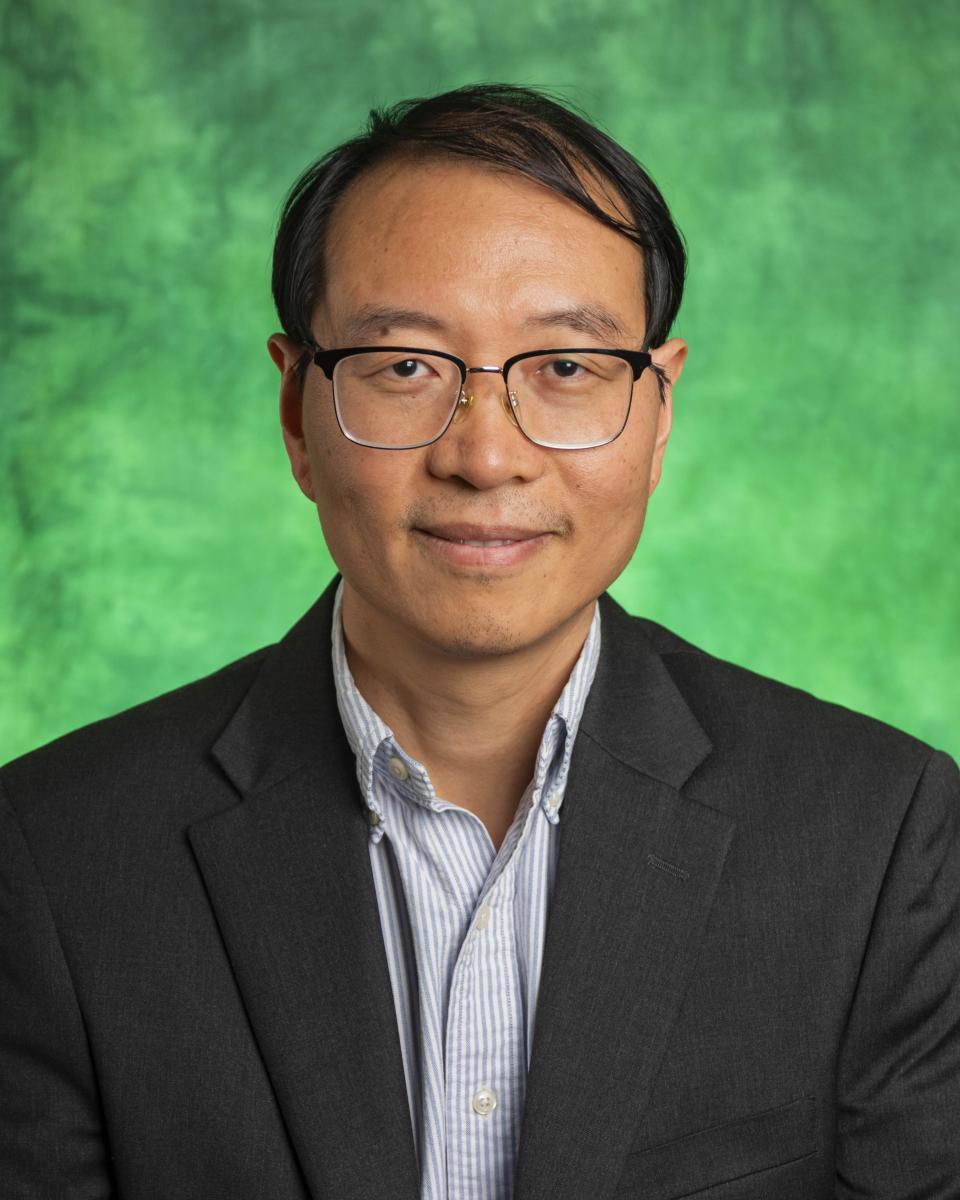
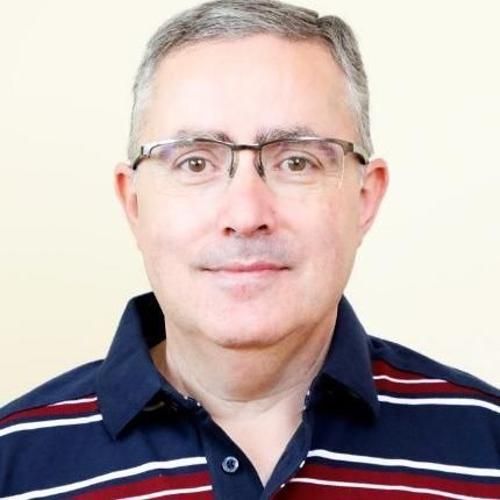
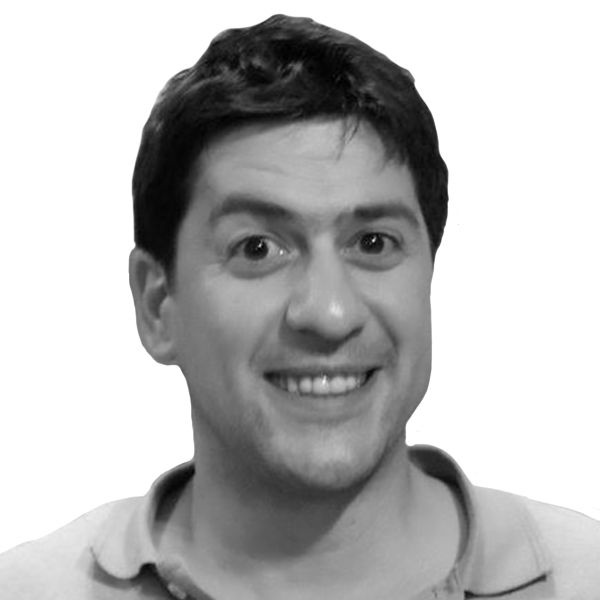
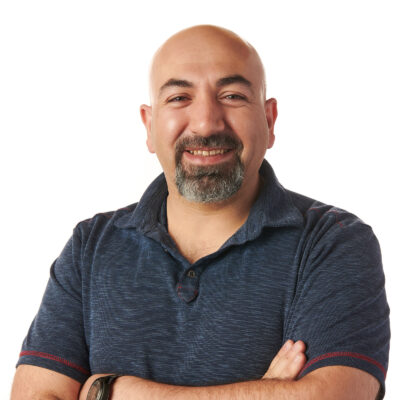
Benjamin Reed is an Assistant Professor in Computer Engineering at San José State University (SJSU) since 2018, currently on sabbatical during Fall 2024 and Spring 2025. His research spans distributed systems, cloud computing, operating systems, big data, and network storage. Research concentrations include: Distributed coordination systems (ZooKeeper) Lock-free transaction processing MapReduce optimization techniques Disconnected network services Educational tools for systems programming Recent publications focus on distributed storage consistency, educational technology for programming courses, and security protocols for disconnected networks. Earlier industry work includes contributions to ZooKeeper coordination system development at Yahoo! Research and distributed storage systems at Facebook. Significant projects: Directs the SJSU Systems Group researching wildfire storage systems and disconnected data distribution Leads the SJSU ICPC programming competition team Co-founded TECHcellence program creating CS pathways for underrepresented students Developed CodeVal educational tool for programming assignments
Omar Abdul Wahab is an Assistant Professor at the Department of Computer Engineering and Software Engineering, Polytechnique Montréal. He holds a PhD in Information Systems Engineering from Concordia University (2017) and completed postdoctoral research at École de technologie supérieure (2017-2018) in collaboration with Rogers and Ericsson. PhD: Concordia University, Montréal, Canada Master's: Lebanese American University, Beirut, Lebanon Bachelor's: Lebanese University, Tripoli, Lebanon His research focuses on Cybersecurity , Artificial Intelligence , and Internet of Things , with expertise in cloud computing security , federated learning , and game-theoretic security models . He has developed frameworks for threat intelligence coalitions , IoT intrusion detection , and trust-aware client selection in distributed systems. His recent publications emphasize federated learning security , IoT anomaly detection , and trust modeling in collaborative environments. Current supervised students include PhD candidates Sarhad Arisdakessian and Osama Wehbi, and Master's student Ranim Rahali.
Dr. Maolin Tang is a Senior Lecturer in the School of Computer Science at Queensland University of Technology (QUT). He holds a PhD in Engineering from Edith Cowan University, a Master of Engineering in Computer Science from Chongqing University, and a Bachelor of Engineering in Computer Software from Huazhong University of Science and Technology. His research focuses on Big Data Cloud Computing, Energy-Efficient Data Centres, QoS-Aware Web Service Composition, and SaaS Optimization in the Cloud. Dr. Tang’s work addresses challenges such as MapReduce computation in dynamic cloud environments, energy efficiency in data centres, and composite service optimization. He has supervised numerous PhD students and published extensively in top-tier journals like IEEE Transactions on Industrial Electronics and Expert Systems with Applications. His research combines evolutionary computation techniques, genetic algorithms, and optimization strategies to solve complex computational problems. Education : PhD (Engineering), Edith Cowan University Master of Engineering (Computer Science), Chongqing University Bachelor of Engineering (Computer Software), Huazhong University of Science and Technology Dr. Tang’s research interests emphasize energy-efficient data centre management, cloud resource provisioning, and the application of computational intelligence to real-world challenges. His work on MapReduce in cloud computing aims to improve scalability and QoS guarantees, while his energy-efficient frameworks reduce operational costs and environmental impact. He is actively involved in supervising PhD students and collaborating on projects funded by initiatives like CRC for Smart Services. His publications span topics such as virtual machine placement optimization, SaaS deployment, and algorithmic approaches to dynamic resource management. Dr. Tang teaches advanced courses in algorithms and computational complexity at both undergraduate and postgraduate levels.
Dr. Kewei Sha is an Associate Professor at the University of North Texas (UNT) in the College of Information. Previously, he held positions as Associate Professor and Department Chair at Oklahoma City University (OCU) and the University of Houston-Clear Lake (UHCL). He earned a Ph.D. and M.S. from Wayne State University and a B.S. from East China University of Science and Technology. His research focuses on Data Analytics, Edge Computing, Security and Privacy, Blockchain, and IoT, with over $5M secured in research grants from NSF, NASA, and other institutions. He has published over 70 peer-reviewed papers and serves as an Associate Editor for IEEE IoT Journal, Smart Health, and Computing. Dr. Sha has received awards including the UHCL President’s Outstanding Research Award and IEEE Outstanding Leadership Award, and holds senior membership in ACM and IEEE. He chairs conferences like IEEE MOST 2024 and ACM/IEEE SEC 2023. His recent work includes securing NSF funding for edge-based multi-robot systems and NSF Noyce Scholarships for STEM teacher training. Key projects involve EdgeBrain for edge video analytics and ElasticEdge for live video processing. He has pioneered frameworks for data governance, secure cloud storage, and disaster rescue UAV systems. Dr. Sha also develops educational tools like AR therapy systems for autistic children and network forensics labs for teaching institutions.
Milana Grbić is an Assistant Professor at the Department of Computer and Information Sciences within the Faculty of Science and Mathematics at the University of Banja Luka, Bosnia and Herzegovina. Her academic career spans over a decade, having progressed from Assistant (2013-2017) to Senior Assistant (2017-2020) before becoming Associate Professor in 2020. She teaches diverse courses including Programming Basics, Object-Oriented Programming, Compiler Construction, Bioinformatics, and Introduction to Data Exploration. Dr. Grbić earned her Doctor of Science in Computer Science from the University of Belgrade in 2020, following a Master's degree in Mathematics from the same institution in 2016 and her undergraduate studies in Mathematics and Computer Science from the University of Banja Luka in 2012. Her educational background provides a strong foundation for her interdisciplinary research. Her research focuses on the intersection of computer science, mathematics, and biology, with particular emphasis on bioinformatics, computational biology, and graph theory applications. She develops algorithms for analyzing protein-protein interaction networks, solves complex optimization problems including Roman domination in graphs, and applies machine learning techniques to biological data. Her work bridges theoretical computer science with practical biological applications, creating computational tools that advance our understanding of complex biological systems. Her publication record demonstrates consistent productivity with significant contributions across multiple domains. Her recent work shows a clear trend toward increasingly sophisticated applications of computational methods in biological contexts, particularly in the analysis of protein interaction networks and intrinsically disordered proteins. She has published in high-impact journals across computer science, mathematics, and bioinformatics domains, with several papers appearing in journals with impact factors above 4.0. Mathematical Institute of the Serbian Academy of Sciences and Arts (SASA) Belgrade award for best doctoral thesis in computer science (2020) Active reviewer for Journal of Big Data (2022) and Engineering Applications of Artificial Intelligence (2023) Member of International Society for Biocuration (since 2016) and Serbian Society for Bioinformatics and Computational Biology (since 2018) Dr. Grbić has successfully mentored numerous students through diploma thesis projects and actively participates in international research collaborations. She serves as principal investigator for multiple national research projects including "Analysis of Biological Networks Using Machine Learning Methods" (2024-2025) and has coordinated support for COST Action CA21160 "Non-globular proteins in the era of Machine Learning" in Bosnia and Herzegovina. Her research team collaborates extensively with international partners through various COST Actions focusing on non-globular proteins and computational biology. Her laboratory work centers on developing computational methods for biological network analysis, with particular focus on protein-protein interaction networks and intrinsically disordered proteins. She leads a research team that combines expertise in computer science, mathematics, and biology to tackle complex problems in bioinformatics, participating regularly in international workshops and training schools across Europe.
Dr. Greg Speegle serves as a Professor in the Department of Computer Science at Baylor University, where he teaches core courses including CSI 3335 (Introduction to Database Design) and CSI 5335 (Advanced Database) within the Online Master's in Computer Science program. His expertise anchors the program's database curriculum and contributes significantly to its academic rigor. His educational foundation includes a Ph.D. in Computer Science from The University of Texas at Austin (1990) and a Bachelor of Science from Baylor University (1984), establishing deep institutional and academic roots. Dr. Speegle's research centers on database systems and big data analysis, with specialized focus on automatic integration of big data tools and query processing optimization. He leads two major initiatives: CT³ (Central Texas Computational Thinking, Coding and Tinkering), which trains public-school teachers to become certified computer science educators, and the development of a general parallelization theory to advance automated computation beyond MapReduce limitations. This dual focus bridges theoretical computer science with practical educational and industrial applications. Analysis of his 2018-2025 publications reveals dominant research trajectories in distributed systems (particularly automated code parallelization), deep learning applications for biometric identification in agriculture, and innovative online regression techniques for streaming data. His work consistently addresses scalability challenges in data processing while expanding computational thinking education through teacher training initiatives. While specific grant details remain undisclosed, his CT³ project demonstrates active engagement in K-12 computer science education reform. No information is available regarding student advising or laboratory facilities in the provided materials.
Mohsen Lesani is an Associate Professor at the Computer Science and Engineering Department of University of California, Santa Cruz . He obtained his PhD from UCLA , MS in Artificial Intelligence from Sharif University of Technology , and BS in Software Engineering from University of Tehran . His research focuses on reliability and security of software systems , particularly concurrent and distributed systems , with recent work on secure replicated systems and distributed machine learning . NSF CAREER Award (2020) DARPA Young Faculty Award (2022) SIGPLAN Research Highlight (2019) Distinguished Paper Award at OOPSLA 2018 Best Paper Award at ISSRE 2015 His recent publications tackle challenges in automated synthesis of distributed protocols , heterogeneous replication , secure blockchain transactions , and verified RDMA-based data types . He advises PhD students Xiao Li , Eric Chan , Javad Saber-Latibari , and Tejas Mane in the Safe and Secure Software (S3) lab . He has taught courses on Distributed Systems , Parallel Programming , and Compiler Design .
Francisco Charte Ojeda is a Titular de Universidad (Associate Professor) at the University of Jaén, Spain, working in the Department of Computer Science within the Faculty of Experimental Sciences. He is affiliated with the Andalusian Inter-University Institute in Data Science and Computational Intelligence and leads research in the Intelligent Systems and Data Mining group. His academic journey includes earning a doctorate from the University of Granada with a thesis on hybrid flexible computing methods for multilabel classification. His research interests span machine learning with particular emphasis on multilabel classification, autoencoders, feature learning, time series forecasting, and dimensionality reduction. Professor Charte Ojeda has developed several R packages including mldr, mldr.datasets, ruta, and predtoolsTS that have become valuable tools in the machine learning community. His work often focuses on solving practical challenges in data science through innovative algorithmic approaches and software implementations. Analysis of his recent publications reveals a strong focus on autoencoder architectures, multilabel learning techniques, and time series forecasting methods. His research demonstrates a consistent pattern of developing practical software tools alongside theoretical contributions, bridging the gap between academic research and real-world applications. The trend shows increasing emphasis on explainable AI, ensemble methods, and efficient implementations for big data environments. Professor Charte Ojeda has been involved in multiple research projects funded by Spanish national grants (PID2019-107793GB-I00/AEI, TIN2015-68854-R). His collaborative network includes prominent researchers in the field such as Antonio J. Rivera, Francisco Herrera, and María J. del Jesús. He maintains an active presence in academic communities through his personal website (fcharte.com), GitHub repositories, and contributions to open-source software. His educational contributions include textbooks on programming languages, operating systems, and computational tools, reflecting his commitment to both research and teaching excellence.
George Km is a Professor of Computer Science at Oklahoma State University, affiliated with the Department of Computer Science since 1994. He holds a Ph.D. in Mathematics from Stony Brook University. His research focuses on quantum computing, big data analytics, social media analysis, and algorithm design. He has led numerous grants, including projects on quantum sensor data prediction, big data education, and Hadoop optimization. Notable contributions include work on quantum circuit algorithms, predictive analytics using Twitter data, and entropy-based veracity models. Teaching responsibilities include courses such as Formal Language Theory, Quantum Algorithms, and Numerical Methods. He has designed advanced special topics courses in quantum computing and big data. His work integrates theoretical concepts with practical applications in finance, healthcare, and social networks. Grants funded by the National Science Foundation (CISE) and industry partners demonstrate his impact in computational science and education. Publications span quantum automata, machine learning for financial modeling, and data reduction techniques. His research emphasizes interdisciplinary approaches, addressing challenges in algorithmic efficiency, data veracity, and computational infrastructure optimization. He advises on graduate courses and contributes to curriculum development in emerging technologies.
N Park is an Associate Professor of Computer Science at Oklahoma State University, where he has been affiliated since 2004. His research focuses on blockchain technology, distributed computing systems, cybersecurity, and performance modeling of decentralized networks. He has contributed extensively to the development of blockchain protocols, including innovative models for NFT chains, hybrid chains, and real-time blockchain systems. His work often addresses scalability, security, and efficiency through queueing theory and distributed systems design. Key research areas include blockchain consensus mechanisms (e.g., PoS and PoW comparisons), IoT security for drones, and optimization of systems like Hyperledger Fabric and Ethereum. He has published over 139 scholarly works, with notable contributions to blockchain interoperability, transaction prioritization, and on-off chain data management. His recent projects include ReBAS (a redactable blockchain for IoT drones) and performance models for NFT chains. In teaching, he instructs courses such as Computer Organization and Architecture, Operating Systems, and advanced topics in computer systems. He has also advised doctoral and master's students through dissertation and thesis courses. His grant-funded work includes the GenCyber Cowboy Teacher Cybersecurity Academy (2023–2025), highlighting his commitment to cybersecurity education. Dr. Park collaborates widely, with co-authors from academia and industry. His interdisciplinary approach bridges theoretical computer science with practical applications in distributed systems, making him a leading figure in blockchain and systems research.
Ata Turk is a Lecturer in the Department of Electrical and Computer Engineering at Boston University, with an affiliation as Adjunct Faculty. He holds a Ph.D. from Bilkent University, awarded in 2012. His research focuses on cloud architecture, high-performance computing (HPC), and interdisciplinary applications such as medical informatics. Key interests include optimizing cloud resource management, diagnosing performance variations in HPC systems via machine learning, and developing scalable distributed systems. His research outputs span cloud software discovery, distributed caching strategies, and medical imaging analysis using MRI. He has contributed to frameworks like Praxi for cloud software detection and D3N for multi-layer caching. Recent work integrates machine learning for real-time diagnostics in HPC environments and explores edge-based sampling techniques for large-scale graph analysis. Dr. Turk’s publications emphasize practical solutions for cloud security, workload management in data centers, and parallel processing techniques. Notable areas include optimizing MapReduce task scheduling and improving load balancing in space plasma simulations. His work intersects system architecture, distributed computing, and healthcare informatics, reflecting a commitment to bridging theoretical research with applied technology.
François Goasdoué is a Professor at ENSSAT in Lannion, affiliated with the IRISA laboratory. His research focuses on knowledge base management systems, particularly in the context of Semantic Web technologies and W3C standards. His work examines reasoning mechanisms for managing RDF knowledge bases queried by conjunctive SPARQL queries. Recent research addresses optimization techniques and scaling solutions using massively parallel MapReduce infrastructures. No information is available regarding education history, students advised, research grants, or scientific awards.
Mustapha Lebbah is an Associate Professor (Maître de Conférences HDR) at Université Sorbonne Paris Nord, affiliated with the Computer Science Laboratory of Paris North (LIPN). As a permanent member of the 'Artificial Learning and Applications' research team, he specializes in developing machine learning systems for processing and visualizing complex, high-dimensional data. His primary research investigates scalable unsupervised learning methods using distributed computing paradigms like MapReduce. Current work addresses challenges in clustering heterogeneous data types (categorical, binary, sequential) and developing topological models for massive dataset visualization. Research bridges theoretical machine learning with practical applications in data science platforms.
Dr. Gagangeet Aujla is an Associate Professor in the Department of Computer Science at Durham University and a Fellow of Durham Energy Institute. With over a decade of academic experience, he previously held research positions at Newcastle University, Thapar University (India), and University of Klagenfurt (Austria). His academic journey includes a PhD from Thapar University and undergraduate degrees from Punjab Technical University. His research interests span Edge-Cloud Computing, Blockchain Technology, Software-Defined Networking, Sustainable Computing, Internet of Things, Smart Grid Systems, and Machine Learning . A central theme of his work focuses on data-driven applications including smart cities, smart grids, healthcare systems, and transportation systems with emphasis on energy efficiency, resilience, security, privacy, and intelligence. Dr. Aujla's research has resulted in numerous high-impact publications across leading venues including IEEE Transactions, Elsevier journals, and major conferences like IEEE INFOCOM and GLOBECOM. His work demonstrates strong trends in sustainable computing, blockchain applications across domains, and software-defined networking solutions for smart environments. IEEE TCSC Award for Excellence in Scalable Computing (ECR) 2022 IEEE TEMS TC on Blockchain Early-Career Award (Runner-up) 2022 2018 IEEE TCSC Outstanding PhD Dissertation Award 2021 IEEE Systems Journal Best Paper Award TIET Best Paper Award Dr. Aujla leads multiple significant research projects funded by EPSRC, UKRI, and international agencies totaling over £23 million, including the National Edge AI Hub for Real Data (£10.2M) and CHEDDAR communications hub projects. He currently supervises four postgraduate students and has served as Area Editor for Ad hoc Networks and Associate Editor for multiple prestigious journals. His work extends to organizing major workshops like BlockSecSDN and BlockCPS at IEEE conferences worldwide.
Ali Hadi is an Associate Professor and Program Director of Computer and Digital Forensics at Champlain College, USA, where he also serves as Research Director at the Leahy Center for Digital Forensics & Cybersecurity. He holds a PhD in Computer Information Systems and over 20 professional certifications. His expertise spans digital forensics, incident response, malware analysis, and cybersecurity risk management. Dr. Hadi is also the Co-Founder and CTO of Cyber 5W. Education: PhD and MSc in Computer Information Systems from the University of Banking and Financial Sciences, and BSc in Computer Science from The Arab Academy for Banking and Financial Sciences. Research Interests: Digital forensics innovations, adversary simulation, IoT cybersecurity, and banking efficiency analysis. His work combines technical prowess with real-world applications, such as IoT research recognized by the National Computer Forensics Institute (NCFI). Publications: Focuses on cybersecurity, digital forensics, and operations research in banking and construction sectors. Notable areas include botnet detection, data exfiltration prevention, and lean manufacturing in off-site construction. Awards: NCFI acknowledgment for IoT research contributions. Leadership & Outreach: Advises on cybersecurity practices for government and private sectors, delivers technical training, and contributes to advancing forensic education through the Leahy Center.