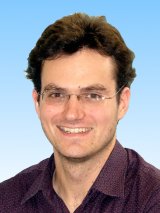
Grégoire Ithier is a Senior Lecturer in Physics at the Department of Physics, Royal Holloway, University of London. His research focuses on quantum engineering, decoherence, thermalization, mesoscopic physics, and random matrix theory. He leads the 'TypDyn' project exploring typical dynamics of embedded quantum systems, and co-leads the Leverhulme Trust-funded 'Generation and detection of quantum signals' initiative. His work bridges theoretical and experimental domains, including superconducting circuits and cryogenic microwave engineering. Ithier's research tools include advanced numerical methods (e.g., exact diagonalization) and statistical techniques (e.g., random matrix theory). Key Projects: TypDyn: Studies typical dynamics in embedded quantum systems (2015–present) QSimFP: Quantum simulators for fundamental physics (2020–2024) A new statistical theory of disordered quantum systems (2020–2024) His experimental work involves superconducting qubits, Josephson devices, and nano-superfluidic cavities. Grants include STFC and Leverhulme Trust funding. Recent publications address quantum thermalization, many-body systems, and random Hamiltonian analysis.
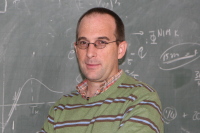
Jan von Delft is a Professor (chair) at Ludwig-Maximilians-University (LMU) Munich, working in the Faculty of Physics within the Chair of Theoretical Solid State Physics. His research group consists of postdocs, PhD students, and master's students working on various aspects of strongly correlated electron systems, with physical space located at Theresienstr. 37 (Room A420) in Munich. von Delft's research focuses on correlated electron and spin systems, with particular interest in dynamical and transport properties, quantum impurity models, Hund metals, unconventional superconductors, quantum magnets, and quantum criticality. His methodological expertise includes many-body field theory, parquet formalism (FRG), DMFT, and tensor networks (NRG, DMRG, PEPS, XTRG, etc.). His work bridges theoretical concepts with computational approaches to understand complex quantum phenomena in condensed matter systems. He has developed a distinctive emphasis on real-frequency calculations and numerical methods for studying quantum critical phenomena. Analysis of von Delft's recent publications reveals a strong focus on developing and applying advanced computational methods to study strongly correlated electron systems. His group has made significant contributions to numerical renormalization group techniques, tensor network methods, and the parquet formalism for calculating real-frequency correlation functions. His research shows increasing sophistication in handling quantum criticality, particularly in heavy-fermion systems, and exploring unconventional superconductivity mechanisms. Notably, his group has developed specialized computational libraries like KeldyshQFT to make these advanced methods more accessible to the broader physics community. von Delft actively mentors a substantial research group consisting of one postdoc (Markus Scheb), eleven PhD students (Anxiang Ge, Sasha Kovalska, Mathias Pelz, Marc Ritter, Nepomuk Ritz, Changkai Zhang, Markus Frankenbacher, Felipe Picoli, Simone Fodera, Ming Huang), and two master's students (Ester Pages, Gianluca Grosso). His detailed Style Guide for scientific communication demonstrates his commitment to high-quality research presentation. The group appears well-funded with ongoing research activities spanning theoretical development, computational implementation, and physical interpretation of complex quantum phenomena.
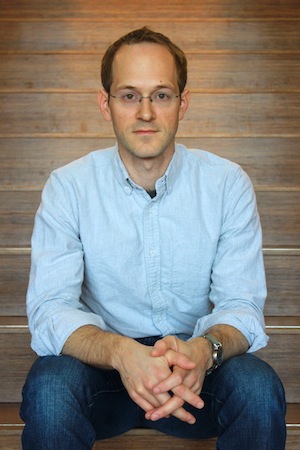
Andrew Childs is a Professor at the University of Maryland, affiliated with the Department of Computer Science and the Institute for Advanced Computer Studies (UMIACS). He serves as Director of the NSF Quantum Leap Challenge Institute for Robust Quantum Simulation (RQS) and is a Fellow at the Joint Center for Quantum Information and Computer Science (QuICS). His research focuses on quantum algorithms for simulating physical systems, algebraic problems, and quantum walk protocols, with applications in quantum computing and computational complexity. University of Maryland Institute for Advanced Computer Studies (UMIACS) Joint Center for Quantum Information and Computer Science (QuICS) NSF Quantum Leap Challenge Institute for Robust Quantum Simulation Childs' research spans quantum simulation, quantum Fourier transform, phase estimation, and Hamiltonian dynamics. He has developed techniques to reduce quantum computational resources for simulating quantum systems and explored limitations of quantum computers through hidden subgroup problems and non-unitary dynamics. His publications cover diverse areas including quantum walk optimization, Hamiltonian simulation methods, and applications to cryptography and condensed matter physics. Recent works address spatial search algorithms, product formulas for commutators, and quantum routing protocols. As an educator, Childs has taught courses on quantum algorithms and information processing at both the University of Maryland and University of Waterloo, with lecture notes and materials spanning multiple years. Contact: amchilds@umd.edu | Office: ATL 3359 | Affiliated with University of Maryland's quantum research institutes.
Alexey Gorshkov is an Adjunct Professor at the University of Maryland (UMD) affiliated with the Joint Quantum Institute (JQI) and the Quantum Information and Computer Science Laboratory (QuICS). His primary academic role is in theoretical physics, focusing on quantum optics, quantum information science, and condensed matter physics. He leads a research group exploring quantum magnetism with alkaline-earth atoms, driven-dissipative systems, topological matter, and strongly interacting photons. His work bridges AMO (atomic, molecular, and optical) systems with high-energy and condensed matter physics, emphasizing quantum simulation and novel quantum technologies like precise clocks and quantum computers. Education details are not explicitly listed, but his research collaborations with institutions like JQI and UMD suggest advanced academic training in theoretical physics. His research interests revolve around understanding and controlling quantum many-body systems, particularly in far-from-equilibrium scenarios, entanglement dynamics, and dissipation effects. He has contributed to studies on Rydberg atoms, quantum routing protocols, and error mitigation in quantum simulators. Recent articles highlight his work on quantum protocols for verifying speedups, time-independent information flow, and entanglement dynamics. His group's achievements include demonstrating one-dimensional anyons and developing methods for correlated noise estimation with quantum sensors. Awards and grants are not explicitly mentioned in the provided text, but his prolific publication record indicates sustained research impact. Labs and teams associated with him include the JQI and QuICS, where he collaborates on experimental and theoretical projects. Graduate student and postdoc positions are available in his group, focusing on areas like quantum magnetism and topological systems. His work often involves close ties with experimental groups, emphasizing practical applications of theoretical breakthroughs.
Thomas Faulkner is an Associate Professor in the Department of Physics at the University of Illinois at Urbana-Champaign, where he has been a faculty member since 2014. His research bridges condensed matter physics, high energy physics, and quantum information science through the framework of holographic duality (AdS/CFT correspondence), exploring connections between quantum field theories and gravitational theories. Dr. Faulkner received his BSc in Physics from the University of Melbourne in 2003 and his PhD from MIT in 2009 under Hong Liu and Krishna Rajagopal. He held postdoctoral positions at the Kavli Institute for Theoretical Physics (2009-2012) and the Institute for Advanced Study in Princeton (2012-2013) before joining the Illinois faculty. His primary research focuses on three interconnected areas: entanglement entropy as a tool to study quantum phases and gravity; string-inspired models of strongly correlated phenomena including non-Fermi liquids and quantum criticality; and holographic approaches to QCD under extreme conditions. His work leverages theoretical tools from both condensed matter and string theory communities to address fundamental questions in quantum gravity and many-body physics. Dr. Faulkner's publication record shows an evolving research trajectory from early work on strange metal transport and QCD applications toward increasingly sophisticated investigations of entanglement structure, quantum information aspects of holography, and fundamental constraints on quantum field theories. His recent work demonstrates deep connections between quantum information theory, gravitational physics, and condensed matter phenomena. DOE Early Career Award (2018) DARPA Young Faculty Award (2015) Dr. Faulkner has taught a comprehensive range of physics courses from undergraduate College Physics to advanced graduate-level field theory courses. His research program receives significant external funding, supporting his investigations into the quantum structure of spacetime and its connections to condensed matter phenomena. He participates in a vibrant research ecosystem exploring the quantum information foundations of spacetime geometry, contributing to collaborative efforts that are reshaping our understanding of the relationship between quantum mechanics and gravity.
Aram Harrow is a Professor of Physics at the Massachusetts Institute of Technology (MIT) , affiliated with the MIT Center for Theoretical Physics and MIT Center for Quantum Engineering . He focuses on quantum information science and quantum algorithms , with additional interests in representation theory and optimization . His recent work explores quantum computing applications in chemical physics and statistical mechanics . Undergraduate and graduate degrees in Physics at MIT Faculty positions: MIT (2013-present), University of Washington (2010-12), University of Bristol (2005-10) Research Interests: His work bridges quantum information theory and many-body physics , including: Quantum algorithm design for chemistry and optimization Quantum circuit complexity and t-designs Entanglement dynamics in quantum systems Quantum-classical hybrid computing models Key Publications: Recent articles demonstrate quantum speedups for biomolecular free energy calculations , Hamiltonian simulation , and jet clustering algorithms . His research combines quantum complexity theory with practical implementations on near-term quantum devices. Scientific Awards: 2023 Simons Investigator 2018 APS Bennett Award 2017 IEEE Best Paper Award 2016 Kavli Frontiers Fellow Mentorship: He advises current PhD students Shankar Balasubramanian , Angus Lowe , and Norah Tan , with 12 former advisees including Anand Natarajan and Saeed Mehraban . His 2026 recruitment seeks one new graduate student.
Prof. Dr. Barbara Kraus is the Chair of Quantum Algorithms and Applications at the Technical University of Munich (TUM), affiliated with the TUM School of Natural Sciences. She previously held academic positions at the University of Innsbruck, where she founded her research group in 2010. Education : Physics and Mathematics at the University of Innsbruck; Post-doctoral work at MPI for Quantum Optics and University of Geneva. Her research focuses on foundational problems in quantum information theory, particularly entanglement in multipartite systems, quantum simulation, and verification of quantum processors. She develops theoretical tools for quantum many-body systems and explores applications in quantum computing, emphasizing error characterization and experimental validation. Recent publications highlight advancements in Hamiltonian learning, symmetry-resolved entanglement detection, and multipartite state transformations. Her work bridges theoretical quantum physics with practical implementations, including Rydberg platforms and quantum metrology. Key Awards : START Prize (2010), Ignaz L. Lieben Award (2013), Boltzmann Prize (2011), Südtiroler Sparkasse Research Prize (2019). She supervises doctoral students and postdocs in quantum information theory, with a focus on stabilizer states, quantum networks, and entanglement measures. Her courses at TUM include Quantum Information , Quantum Algorithms , and workshops on entanglement manipulation.
Prof. Catherine O'Sullivan is a Professor of Particulate Soil Mechanics at Imperial College London's Department of Civil and Environmental Engineering, part of the Faculty of Engineering. She leads the Geotechnics Section and serves as Editor-in-Chief of the ASCE Journal of Geotechnical and Geoenvironmental Engineering. Her research focuses on particulate soil mechanics, employing Discrete Element Modelling (DEM) and micro-CT imaging to study sand behavior, reservoir sandstones, and internal erosion. Notable recognitions include the 2016 Shamsher Prakash Research Award and the 2021 President’s Teaching Innovation Award. Education : PhD in Civil Engineering, University of California, Berkeley (2002) MEngSc in Civil Engineering, University College Cork (Ireland) BEng (Civil Engineering), University College Cork (Ireland) Research Interests : Prof. O'Sullivan's work integrates computational and experimental methods to explore granular material behavior. Key areas include DEM validation, μCT analysis, and pore network modeling. Her group collaborates across disciplines, involving physicists and mechanical engineers alongside civil engineers. Awards & Recognition : 2015 Geotechnique Lecture Student Choice Supervision Award (nominated twice) 2023 Alert Geomechanics Special Lecture Advising & Grants : She supports PhD and postdoctoral researchers through Imperial scholarships and fellowships. Her students often explore particulate soil behavior, with many securing prestigious awards. Labs & Teams : Leads the Geotechnics Section at Imperial, fostering interdisciplinary research in geomechanics and computational modeling.
Alexandra Gade is a University Distinguished Professor at the Department of Physics and Astronomy in the College of Natural Science , Michigan State University (MSU). She serves as the FRIB Scientific Director and has held leadership roles at both the National Superconducting Cyclotron Laboratory (NSCL) and FRIB. Her research focuses on the structure of exotic nuclei using radioactive isotope beams , with expertise in Coulomb excitation and nucleon knockout reactions . Education: Ph.D. in Physics (Dr. rer. nat.), University of Köln (2002) Diploma thesis, University of Köln (1998) Vordiplom, University of Köln (1995) Her nuclear structure research investigates how neutron-proton asymmetry alters nuclear properties like deformation, excitation patterns, and shell closures. She employs advanced experimental techniques at NSCL/FRIB, including the S800 spectrograph and GRETINA/SeGA gamma-ray detectors , to study exotic nuclei across the nuclear chart. Key projects include proton/neutron removal reactions and intermediate-energy Coulomb excitation , providing insights into nuclear deformation , collective modes , and single-particle orbit modifications . Recent scientific contributions focus on high-profile FRIB experiments , triaxial nuclear shapes , and shell evolution near drip lines . Her work bridges experimental observations with nuclear theory , particularly in refining shell model calculations and reaction models for exotic systems. Scientific Awards: 2023-24 Research Leadership Award (MSU) 2020 AAAS Fellow 2018 William J. Beal Outstanding Faculty Award (MSU) 2017 NatSci Outstanding Faculty Award (MSU) 2015 Zdzislaw Szymanski Prize 2014 GENCO Membership Award (GSI) 2013 APS Fellow 2010 Thomas H. Osgood Excellence in Teaching Award (MSU) 2008 Alfred P. Sloan Fellow 2008 DOE Outstanding Junior Investigator Her research group has trained numerous PhD students and postdoctoral researchers , many of whom hold academic or national laboratory positions. Collaborations include nuclear theorists , instrumentation experts , and international facilities like CERN, Argonne, and Lawrence Livermore National Laboratory.
Mikaela Iacobelli is an Associate Professor in the Department of Mathematics at ETH Zürich. During the 2024-25 academic year, she was a von Neumann Fellow at the Institute for Advanced Study in Princeton. Previously, she held faculty positions at Durham University and a research fellowship at the University of Cambridge. Her educational background includes: PhD in Mathematics from Sapienza University of Rome and École Polytechnique in Paris (2015) Master's degree from Sapienza University of Rome (2012) Bachelor's degree from Sapienza University of Rome (2009) Mikaela's research lies at the interface of analysis, kinetic theory, and statistical mechanics. She studies partial differential equations that model the collective behavior of many-particle systems, with a focus on Vlasov-type plasmas and gravitational dynamics. Her current projects range from quasineutral and singular-limit problems for Vlasov-type systems to quantization of measures, ultrafast diffusion, and gradient-flow structures that link microscopic particle models to macroscopic fluid descriptions. She makes extensive use of PDEs techniques, optimal transport, probability, calculus of variations, and Riemannian geometry in her work. Her recent publications demonstrate a strong focus on Vlasov-type equations, particularly examining quasineutral limits, stability properties, and connections to other physical systems like Euler equations and magnetohydrodynamics. She has made significant contributions to understanding Landau damping, quantization problems on manifolds, and the mathematical foundations of plasma physics. Her notable scientific awards include: SNSF Starting Grant (Swiss ERC) Challenges and Breakthroughs in the Mathematics of Plasmas (2025-2030) von Neumann Fellow at the Institute for Advanced Study, Princeton (2024-2025) Invited speaker at the International Congress of Mathematical Physics (2021) CO-PI of the Germaine de Staël Funding Program for French-Swiss cooperation (2021-2023) L'Oréal prize for Women in Science (2015) Mikaela actively mentors postdocs, PhD, Master's, and Bachelor's students. Her current mentees include postdocs Dennis Chemnitz, Rishabh Gvalani, Stefano Rossi, and Simon Becker, as well as PhD students Thérèse Moerschell, Ata Deniz Aydin, and Antoine Gagnebin. She has served as PI for the Starting Research Grant from the University of Rome Sapienza and is currently the PI for the SNSF Starting Grant. She co-organizes several academic seminars including the Zurich Colloquium in Mathematics, the PDE and Mathematical Physics seminar at ETH Zürich and UZH, and the Analysis Seminar. She also serves on various committees including as Chair of the European Mathematical Society Committee for Women in Mathematics.
Prof. Dr. Martin Kronbichler is a faculty member at the Faculty of Mathematics , Ruhr University Bochum , leading the Numerics group. His research focuses on higher-order finite element methods, multigrid techniques, and high-performance computing for complex fluid and solid mechanics problems. Key Research Areas: Higher-order finite element methods, iterative solvers, multigrid algorithms, exascale mathematical software, and computational fluid dynamics. Notable Projects: EU-funded dealii-X (exascale digital twins), BMBF PDExa (optimized PDE solvers for exascale), and DFG grants for cut-discontinuous Galerkin methods and geometric multigrid. Publications Trends: Recent works emphasize matrix-free operators for hyperelasticity, diffuse-interface models for additive manufacturing, and multigrid smoothers for higher-order elements. Scientific Awards: Recipient of the Humboldt Research Award for his contributions to numerical methods and HPC. Team: Collaborates with researchers like Dr. Shubham Kumar Goswami, Dr. Richard Schussnig, and Natalia Nebulishvili.
Hank Childs is a Professor in the School of Computer and Data Sciences at the University of Oregon, specializing in scientific visualization and high-performance computing. He leads the Research Group on Computing and Data Understanding at eXtreme Scale (CDUX) and has held leadership roles including Interim Executive Director of the School of Computer and Data Sciences. His educational background includes a Ph.D. (2006) and B.S. (1999) in Computer Science from the University of California at Davis. Prior to academia, he worked for 14 years at Lawrence Livermore and Lawrence Berkeley National Laboratories, where he served as architect of the VisIt open-source visualization tool. Research interests center on visualizing extreme-scale scientific datasets from supercomputers, with a focus on in situ visualization for cosmology, seismology, and fluid dynamics. He has pioneered projects like VTK-m and Ascent, and his work explores power-performance tradeoffs and data-parallel algorithms for GPUs. Recent publications emphasize scalable visualization techniques for exascale computing, with 15 notable works from 2021-2020 covering particle advection, in situ triggering, and power-aware frameworks. His research has been honored with multiple best paper awards at IEEE LDAV, EGPGV, and SC conferences. DOE Early Career Award (2012) University of Oregon Faculty Excellence Award (2018) 4+ million dollars in research funding since 2013 5 Best Paper awards in 2021 alone As an educator, he received four consecutive CIS Best Teacher Awards (2014-2019). He has served as Associate Editor for IEEE Transactions journals and organized numerous visualization workshops including Dagstuhl seminars and Shonan workshops.
Sean Carroll serves as the Homewood Professor of Natural Philosophy at Johns Hopkins University and holds External Faculty status at the Santa Fe Institute. His research bridges cosmology, quantum mechanics, and philosophy, focusing on foundational questions about spacetime emergence, quantum interpretation, and complexity across cosmic scales. Carroll earned his Ph.D. from Harvard University in 1993. His academic trajectory reflects deep engagement with theoretical physics and philosophical inquiry, culminating in his current named professorship at Johns Hopkins. Carroll's research centers on the intersection of physics and philosophy, with significant contributions to quantum foundations, cosmology, and the nature of emergence. He is a leading proponent of the many-worlds interpretation of quantum mechanics and has pioneered work on the thermodynamic arrow of time, quantum decoherence, and the fine-tuning of initial cosmic conditions. His recent investigations explore discretized quantum systems, holographic principles in gravity, and the philosophical implications of quantum gravity. Analysis of his 2022-2025 publications reveals a pronounced shift toward computational approaches in quantum gravity, with increasing emphasis on finite-dimensional Hilbert spaces and GPU-accelerated modeling. His work consistently integrates quantum information theory with cosmological questions, particularly examining how spacetime geometry emerges from quantum entanglement and how complexity evolves in closed systems. Carroll's scientific recognition includes: National Science Foundation Fellowship NASA Fellowship Sloan Research Fellowship Packard Fellowship Fellow of the American Physical Society American Institute of Physics Award Fellow of the Royal Society Guggenheim Fellowship Fellow of the American Association for the Advancement of Science His research has been sustained through major fellowships from NSF, NASA, Sloan, and Packard foundations, enabling interdisciplinary collaborations across physics and philosophy. Carroll actively mentors graduate students at Johns Hopkins and contributes to public discourse through his popular science books (including the Biggest Ideas in the Universe series) and the weekly Mindscape podcast. As Fractal Faculty at the Santa Fe Institute, Carroll participates in cross-disciplinary research on complex systems, exploring how emergent phenomena arise from fundamental physical laws. His work bridges theoretical physics with broader questions about complexity in biological, cognitive, and social systems.
Daniela Kraft is a Professor of Experimental Physics at the Huygens-Kamerlingh Onnes Laboratory , part of the Leiden Institute of Physics (LION) at Leiden University. She obtained her Ph.D. cum laude from Utrecht University and completed postdoctoral research at New York University's Center for Soft Matter Research with a Rubicon grant. Her research bridges self-assembly in soft and biological matter , including colloidal particles , lipid membranes , and active systems . Key awards include the NWO Athena Prize (2019) , ERC Starting Grant , VENI/VIDI fellowships , and the Biophysical Journal Paper of the Year (2017) . She has published extensively in journals like Nature Communications , ACS Nano , and Physical Review Letters , with recent work on membrane-deforming colloids , non-additive interactions , and anisotropic microswimmers . Research Focus : Self-organization principles in biological and synthetic systems, colloidal model systems, and non-equilibrium physics. Labs : Leads the Kraft Lab at Leiden University. Education : Ph.D. in Physics (Utrecht University), Postdoc in Soft Matter Physics (NYU).
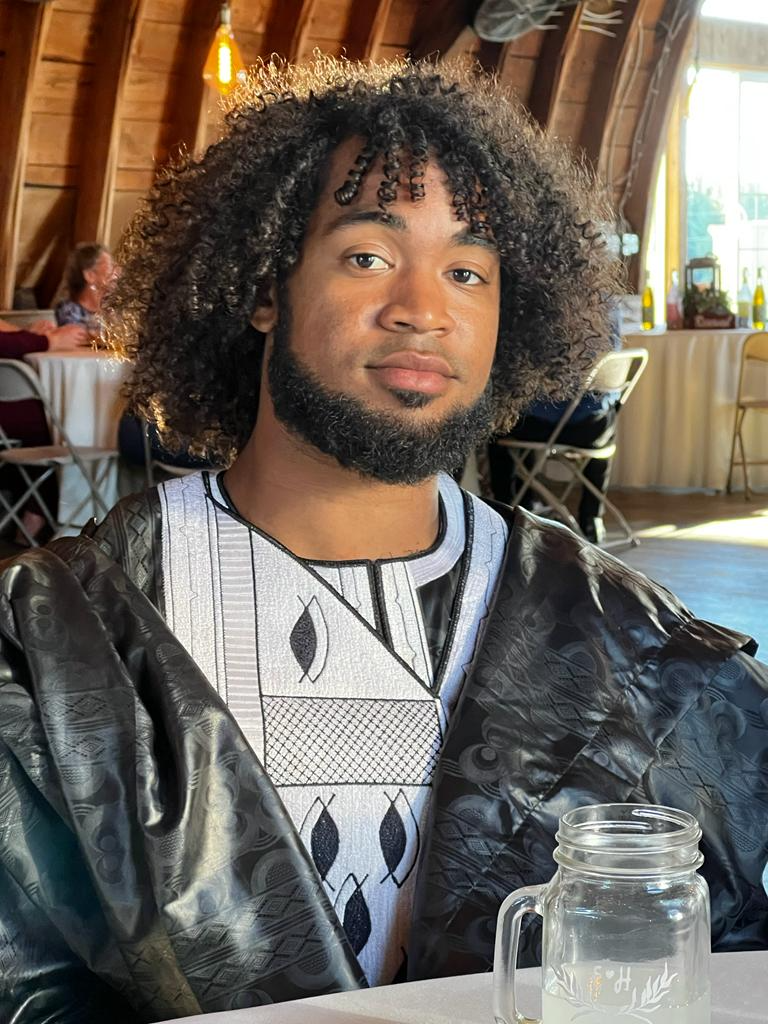
Olumakinde Adesijibomi Ogunnaike is a President’s Postdoctoral Fellow at the Department of Physics, University of California, Berkeley. His research focuses on the quantum theory of strongly interacting and open systems, particularly symmetry, entanglement dynamics, and emergent properties in quantum systems. He actively bridges physics with poetry and philosophy, and is dedicated to mentoring underrepresented students in STEM. Education: PhD in Physics (MIT), MSc in Philosophy of Physics (Oxford), BSc in Physics and Mathematics (Harvard). Ogunnaike investigates quantum systems where fundamental particles exhibit unintuitive collective behaviors due to quantum correlations. His work spans topics like composite atom formation, measurement-induced phase transitions, and symmetry’s role in entanglement spread. He also explores interdisciplinary intersections, notably through the Poetry of Science project. His recent publications address quantum many-body stability, hydrodynamics, and graphene-based material properties. These works emphasize symmetry, long-range interactions, and measurement effects, reflecting both theoretical rigor and interdisciplinary curiosity. Award: President’s Postdoctoral Fellowship (UC Berkeley). Ogunnaike has organized MIT’s Directed Reading Program, co-founded National Society of Black Physicists chapters, and taught courses in general relativity and introductory laboratory physics. His outreach efforts highlight his commitment to inclusive education and community engagement.