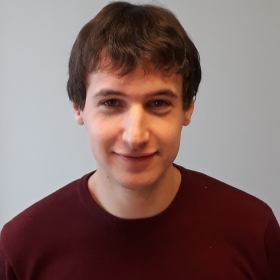
Do Lee is a Researcher at the COPPER Center within the Yale School of Medicine at Yale University. She holds a B.S. in Elementary Education from the University of Maryland, College Park, and an MPH in Biostatistics from George Washington University. Her research focuses on addressing racial and socio-economic disparities in cancer care to advance equitable healthcare. She contributes to interdisciplinary efforts in health equity, biostatistics, and public health, leveraging her expertise to improve patient outcomes through data-driven strategies. Affiliated with both the COPPER Center and the Department of Internal Medicine, her work integrates statistical methodologies with clinical and translational research. While no awards are explicitly noted, her contributions to health disparities research reflect a commitment to impactful translational science. Her scholarly publications span neuromorphic computing, artificial synapse electronics, and efficient machine learning techniques, demonstrating a blend of computational innovation and applied health research. Collaborations likely bridge engineering and medical domains to address complex healthcare challenges.
Maude JIMENEZ is a Professor at the University of Lille, affiliated with the National School of Chemistry of Lille and the Materials and Transformations Unit (UMET, CNRS UMR 8207). She leads the C7-microprobe room and is a team leader within the 'Processes at Interfaces and Materials Hygiene' and 'Recycling and Functionalization Processes (PReF)' research groups. Her work bridges materials science, polymer engineering, and industrial applications in fire safety and hygiene. Her research focuses on advanced functional materials, particularly fire-retardant coatings , anti-fouling surfaces , and biomimetic designs . She specializes in plasma-based surface treatments, self-stratifying coatings, and nanocomposite development for applications in construction, food processing, and medical devices. Her interdisciplinary approach integrates polymer chemistry, materials engineering, and process optimization. The trends in her recent publications highlight a strong emphasis on sustainable and eco-efficient materials , including fluorine-free hydrophobic coatings, self-healing systems, and bio-based intumescent paints. She frequently investigates industrial fouling and cleaning mechanisms, particularly in the food sector, and develops innovative solutions to enhance fire resistance in polymers and composites. She has supervised numerous PhD theses, many co-directed with colleagues such as Serge Bourbigot, Mathilde Casetta, and Yannick Coffinier. Her research has been supported through ANR, ERC, and Interreg projects, and has led to several patents, particularly in plasma-treated fireproof materials. She also contributes to national and international scientific seminars and conferences, especially in fire science and surface engineering. She leads a dynamic research team and collaborates extensively within UMET and with external partners in industry and academia. Her lab is equipped with advanced facilities including electron microscopy, plasma platforms, and fire testing systems.
Dr. Steve Kerrison is a Senior Lecturer in Cybersecurity at James Cook University (Singapore Campus). He holds a PhD and MEng in Computer Science from the University of Bristol, and certifications including CISSP and CCSP. His expertise spans IoT cybersecurity, embedded systems, and energy-efficient computing. Education: PhD in Computer Science, University of Bristol (2010-2015) MEng in Computer Systems Engineering, University of Bristol (2005-2009) CISSP and CCSP certifications (ISC)² Research Interests: Focuses on IoT cybersecurity, PKI for IoT, energy-efficient computing, and Industry 4.0. Collaborations include EU-funded projects (ENTRA, ICT-Energy) and Singapore’s National Cybersecurity R&D Program. Teaching: Specializes in open-source tools and community-driven cybersecurity education. Formerly a Senior Research Associate at Bristol and CTO at MICROSEC, a Singapore-based IoT security startup.
Matthew Marcello is an Associate Professor in the Department of Biology at Pace University's Dyson College of Arts and Sciences, New York City. His research and teaching focus on molecular and reproductive biology, utilizing the model organism C. elegans to investigate the molecular basis of sperm-egg interactions. He also conducts innovative biology education research, particularly in course-based undergraduate research experiences (CUREs) and STEM engagement for underrepresented students. Education: Ph.D. in Biochemistry and Molecular Biology, Johns Hopkins University (2010) B.S. in Molecular Biology and Microbiology, University of Central Florida (2003) Dr. Marcello's research spans molecular mechanisms of fertilization, sperm membrane proteins, and transcriptomic responses in C. elegans , as well as pedagogical strategies to enhance undergraduate biology education. His work integrates both basic science and educational innovation. The recent publications highlight a strong trend in reproductive molecular biology and genetics, with increasing emphasis on systems-level analyses such as transcriptomics and protein interactomes. Simultaneously, his educational research explores effective frameworks for integrating authentic research into core undergraduate curricula, especially for underrepresented populations. Scientific Awards and Honors: Pace University Kenan Award for Teaching Excellence (2022) Pace University Kenan Award for Faculty Development (2015) National Academies Education Fellow in the Life Sciences (2011) American Society of Andrology Outstanding Trainee Investigator Award (2011) Dr. Marcello advises undergraduate and master’s-level researchers in the Marcello Lab, many of whom have advanced to graduate and professional programs in medicine, dentistry, veterinary science, and biomedical research. He has contributed to significant grants and curriculum development projects, particularly in CURE implementation and STEM diversity initiatives. His professional service includes membership in the Society for the Study of Reproduction, Genetics Society of America, and American Society of Andrology. He is actively involved in mentoring and community outreach through youth sports and literacy programs such as SFX Youth Sports, Brooklyn Book Bodega, and 78 Youth Sports, demonstrating a commitment to education beyond the university setting.
Mikhail Tamm is a Senior Research Fellow at Tallinn University's School of Digital Technologies, where he applies statistical physics and complex network theories to human-generated data. His academic journey includes positions as Associate Professor at Moscow State University and Higher School of Economics, Lecturer at Moscow Physical Technical Institute, and postdoctoral research at Université Paris-Sud. He holds a PhD in Physics from Moscow State University (2002), supervised by Igor Erukhimovich. Research interests focus on interdisciplinary applications of physics methodologies: Statistical physics approaches to social/cultural data analysis Complex network theory for transport patterns and psycholinguistics Dimensional reduction techniques for human activity patterns Modeling abrupt transitions in social systems Publication analysis reveals consistent focus on network science applications across physics, biology, and cultural studies, with recent emphasis on hyperbolic networks, language coexistence models, and computational cultural analytics. Methodological innovations in statistical mechanics form the core of his interdisciplinary work. Current research projects include: Principal Investigator: 'Learning Processes in Language Dynamics' (Estonian Research Council, 2024-2025) Team member: 'Cultural Data Analytics Open Lab' (Tallinn University, 2024-2027) Team member: 'Learning Processes in Language Dynamics' (PRG1059, 2021-2025) Previous projects include the EU-funded 'Cultural Data Analytics' (2019-2024) and 'Kinokroonika Exploration Project' (2021-2022).
Dr. Richard Secco is a Professor in the Department of Earth Sciences at Western University. He specializes in Mineral Physics and Materials Science , focusing on high-pressure and high/low-temperature effects on solids and liquids. His research applies to planetary core dynamics (e.g., Earth, Mercury, Mars, Ganymede) and materials engineering. Education: Ph.D., Western University (1988). Laboratory facilities include BGS 0127 and BGS 0132. He uses large-volume presses (e.g., 200-3000 ton cubic/multi-anvil) to study electrical and thermal properties under extreme conditions. Recent work includes studies on Fe-Si-S alloys, planetary core heat flow, and carbonate calibration devices. Key collaborations involve researchers like W. Yong (co-author on many publications) and students such as Berrada, Littleton, and Orole. His work bridges fundamental physics with planetary science, contributing to understanding core convection, dynamo generation, and extraterrestrial material behavior. Publications span journals like Earth and Planetary Science Letters , Geophysical Research Letters , and Crystals . He has developed software tools (e.g., Rho) for resistivity analysis and pioneered techniques for low-temperature experiments in multi-anvil presses.
Derek Anderson is a Professor in the Department of Electrical Engineering and Computer Science at the University of Missouri, within the College of Engineering. He is a core faculty member of the MU Institute for Data Science & Informatics and leads the Mizzou INformation and Data FUsion Laboratory (MINDFUL). His research spans artificial intelligence, machine learning, information fusion, computer vision, and remote sensing, with applications in defense, healthcare, and humanitarian technology. Education: PhD, University of Missouri MS, University of Missouri BS, Wichita State University Anderson's research focuses on foundational AI challenges, particularly explainable AI (XAI) and the use of simulated data to train robust models under uncertainty. He investigates how AI systems make decisions and how to communicate those decisions clearly to humans, especially in high-stakes environments like medical imaging and autonomous vehicles. His work leverages tools like Unreal Engine and Infinite Studio to generate photorealistic and multispectral synthetic data, enabling broader and more diverse training sets than real-world data alone can provide. His recent publications and projects highlight trends in generative AI limitations , AI ethics , infrared sensor innovation , and AI for humanitarian demining . These works collectively emphasize transparency, robustness, and societal benefit in AI development. Scientific Awards and Leadership: Program Co-Chair, three national AI conferences (2023) Member, IEEE USA AI Committee Member, IEEE CIS Industry & Government (I&GA) Committee Member, IEEE Vertical on Societal Implications of AI Anderson is deeply committed to mentoring the next generation of AI scientists. He advises undergraduate, master’s, and PhD students, many of whom engage in hands-on research from their first year. His lab has secured approximately $29 million in funding across 25 projects from agencies like the U.S. Army ERDC and the National Science Foundation. He has published over 190 articles and is a sought-after leader in the AI research community. His lab, MINDFUL, focuses on information fusion and AI under uncertainty, with active projects in drone-based sensing, material design, and geospatial analytics. The team uses simulation as a core methodology to advance AI trustworthiness and performance across diverse domains.
John-Thones Amenyo is an Assistant Professor in the Department of Mathematics & Computer Science at York College, City University of New York (CUNY), where he has served full-time since September 2008. He also held adjunct positions at the same institution from 2000 to 2008. He holds a PhD in Electrical Engineering from Columbia University and a BS in Electrical Engineering & Computer Science from MIT. PhD, Electrical Engineering, Columbia University MPhil, Electrical Engineering, Columbia University MS, Electrical Engineering & Computer Science, Columbia University BS, Electrical Engineering & Computer Science, MIT His research focuses on parallel and distributed computing, cellular automata, cognitive robotics, UAV drone systems for public health (especially malaria vector control), neuro-architectures, and educational technologies using Computer Algebra Systems. He has pioneered projects like MedizDroids and KOM for mosquito control and developed models such as CR/SARAMA for conscious robotics. His work bridges computer science, engineering, public health, and education. The most recent publications highlight trends in digital twins for enterprise automation, UAV-based landscape engineering, and serious games for STEM education. His articles span topics from neuronal CDMA to end-user parallel programming, reflecting a deep integration of biological inspiration with computational systems. York College - CUNY, Bridging the Gap Seminar (2015) CETL Title III STEP Grant (2007–2008) NSF Graduate Research Assistantship at Columbia (1986–1991) MIT UROP Awards (1977–1979, 1978) Bell Labs LUPT Grant (1981–1982) Dr. Amenyo has mentored numerous undergraduate researchers through programs like LSAMP and the York College Summer Research Program, guiding projects in biosensors, AI for healthcare, and drone technologies. He has secured grants from PSC-CUNY and NSF I-Corps, and has contributed to curriculum development, including modernizing CS/ISM programs and coordinating Math 119 on Computer Algebra Systems. He actively serves on college committees, advises student clubs like the Video Game Development Association, and organizes grant workshops. He leads research in intelligent systems for public health, including the MedizDroids project for mosquito control and innovations in wildfire prevention. His lab supports student-driven projects in robotics, IoT, and health informatics, fostering innovation in both academic and societal contexts.
Daniel J. Graham is a Professor of Psychological Science at Hobart & William Smith Colleges (HWS), where he has been a faculty member since 2012. He is affiliated with the Department of Psychological Science within the School of Humanities and Sciences, contributing to interdisciplinary research and teaching in vision science, brain networks, and neuroaesthetics. Graham holds a Ph.D. in Psychology and an M.S. in Physics from Cornell University, and a B.A. in Physics from Middlebury College, reflecting his strong foundation in both the natural and cognitive sciences. Ph.D. in Psychology, Cornell University M.S. in Physics, Cornell University B.A. in Physics, Middlebury College His research integrates computational, behavioral, and theoretical approaches to understand how the brain processes visual information, particularly in natural scenes, art, and faces. He is a leading proponent of the 'internet metaphor' for brain function, proposing that neural communication operates similarly to packet-switched networks. His work emphasizes efficiency, statistical regularities, and network dynamics in cortical and whole-brain systems. Key research themes include efficient coding, neuroaesthetics, and models of neural communication. The most recent publications reveal a strong trend toward interdisciplinary synthesis, combining neuroscience, computer science, and psychology. His work increasingly explores machine learning models to predict human affective responses to visual stimuli, critiques of dominant theoretical frameworks like the free energy principle, and educational innovation in perception teaching. The research spans from foundational vision science to philosophical reflections on brain function. Scientific Awards and Recognition: Winner, Outstanding Student Presentation Award at MAA MathFest (2021) Invited speaker at numerous national and international conferences, including the Redwood Neuroscience Institute and the Bernstein Conference Media coverage of PNAS work in Nature , NPR , BBC , and IEEE Spectrum Teaching and Advising: Graham mentors numerous undergraduate students, many of whom co-author his publications. He has developed innovative lab courses involving electrophysiology, perceptual experiments, and creative demonstrations. He teaches core courses such as Introduction to Psychology, Sensation and Perception, and advanced seminars on art and neuroscience. His teaching philosophy emphasizes critical thinking, interdisciplinary reasoning, and active student participation. Research Labs and Collaborations: Graham collaborates closely with Prof. Yan Hao (HWS Mathematics) on modeling neural communication. His research group involves students in computational modeling, data analysis, and experimental design. He is involved in conferences and workshops focused on the mathematics of neuroscience and AI, reflecting his commitment to cross-disciplinary science.
Ramon Canal Corretger is a Full Professor in the Department of Computer Architecture at the Faculty of Informatics of Barcelona (FIB), Universitat Politècnica de Catalunya (UPC). He previously served as Vice Dean of Postgraduate Studies at FIB and leads the VirtuOS (Virtualization and Operating Systems) research group. His work bridges computer architecture, hardware security, and system-level reliability. Doctorate from UPC, co-supervised at the University of Wisconsin-Madison Sabbaticals at Harvard University (2006–2007) and the University of Cyprus (2019–2020) Active leadership in EU-funded projects such as Vitamin-V (Horizon Europe) His research focuses on microarchitecture, processor and memory design, reliability under variability, and security at the hardware-software interface. He explores low-power multicore architectures, virtualization optimizations, and secure RISC-V-based systems. His recent work integrates AI for intrusion detection and privacy-preserving federated learning in fog computing environments. The most recent publications demonstrate a strong trend toward security, reliability, and trustworthy computing , particularly in RISC-V ecosystems and cloud/edge infrastructures. There is increasing emphasis on hardware-software co-design , attack detection via performance monitoring , and energy-efficient secure accelerators using emerging technologies like neuromorphic and photonic computing. Scientific Awards: HiPEAC Paper Awards (2017, 2010) IEEE Senior Member (2016) Fulbright Award (2006) IBM Faculty Award (2000) Best Student Paper at HPCA-6 (2000) Multiple teaching excellence recognitions from UPC and AQU Catalunya First Prize in Epson Foundation Rosina Ribalta Award (2001) He has advised several PhD students including Manish Rana, Zoran Jaksic, and Shrikanth Ganapathy, many of whom received honors such as the Intel Doctoral Student Programme recognition. His research is supported by competitive grants from the Spanish government, EU Horizon programs, and industry collaborations. He is actively involved in the design of secure, reliable, and efficient computing systems for future cloud and embedded applications. He leads the VirtuOS research group, which focuses on virtualization, operating systems, and hardware-software interface optimization. The group contributes to open-source RISC-V initiatives and participates in large-scale European R&D projects targeting trustworthy computing infrastructures.
Tom Braeckevelt is a Research Fellow at Ghent University, Belgium, working within the computational materials science group led by Prof. Veronique Van Speybroeck. Based at Tech Lane Ghent Science Park (Technologiepark 46, Zwijnaarde), he collaborates extensively with experimental teams including Prof. Johan Hofkens (photophysics) and Prof. Sara Bals (electron microscopy), bridging theoretical modeling with advanced characterization techniques to solve stability challenges in next-generation photovoltaics. Education: PhD in Materials Science, Ghent University (2018). Dissertation: Designing 2D hybrid organic-inorganic perovskites for game-changing photovoltaics , supervised by Prof. Veronique Van Speybroeck and Dr. Kurt Lejaeghere. His research centers on perovskite stability mechanisms through multiscale computational modeling (DFT, machine learning potentials, molecular dynamics) integrated with experimental validation (TEM, GIWAXS, spectroscopy). Key focus areas include phase transition kinetics, strain engineering, doping strategies, and interfacial design for cesium lead halide perovskites. This work addresses critical barriers to commercial solar cell deployment, particularly ambient-condition stability and efficiency retention. From 2019-2025, Dr. Braeckevelt co-authored 13 high-impact publications including Science (2019), Nature Communications (2022), and ACS Nano (2025), demonstrating progression from fundamental phase transition studies to machine learning-enhanced stability solutions. Recent work expands into covalent organic frameworks and rare-event sampling algorithms, reflecting methodological diversification while maintaining photovoltaic applications as the core driver. No scientific awards or fellowships were documented in the source materials. Supported by institutional research grants at Ghent University, Dr. Braeckevelt has presented findings at 8+ international conferences including PSCO19 (Lausanne), ICAMM (Rennes), and DFT2022 (Brussels). His invited talk at the 2025 Eindhoven Psiflow workshop highlights growing recognition in machine learning for perovskites. No student supervision roles were indicated in current position. He operates within Ghent's integrated materials research ecosystem, contributing to cross-disciplinary projects that combine computational prediction with nanoscale characterization to accelerate renewable energy technology development.
Matthew Blaschko is a Senior Lecturer BOF at KU Leuven, affiliated with the Department of Electrical Engineering (ESAT) within the Faculty of Engineering Sciences. He directs the KU Leuven ELLIS unit and serves as a fellow in the ELLIS Health program, part of the European Laboratory for Learning and Intelligent Systems. As a Core PI in the Flanders AI Research Program, he leads work packages for Decision Support Systems and Medical Imaging. He is also a member of the KU Leuven Institute for Artificial Intelligence and co-leads the working group on Machine Learning and Data Science. Habilitation (HDR) from École Normale Supérieure de Cachan Newton International Fellow at University of Oxford Dr. rer. nat. from Max Planck Institutes Tübingen (awarded by Technische Universität Berlin) M.S. from University of Massachusetts Amherst B.S. from Columbia University Blaschko's research focuses on machine learning, computer vision, and medical image analysis, with particular expertise in uncertainty quantification in deep neural networks and trustworthy AI for healthcare applications. His work bridges theoretical foundations with practical implementations, developing methods for calibration, uncertainty estimation, and efficient model deployment. He has made significant contributions to neural network architectures, loss functions, and evaluation metrics for medical imaging tasks, with applications spanning Alzheimer's disease research, surgical phase recognition, and ophthalmic image analysis. His recent publications reveal a strong emphasis on calibration methods, uncertainty quantification, and medical applications of AI. The research spans diverse areas including Alzheimer's disease analysis, Bayesian optimization, novel view synthesis, knowledge extraction from text, and surgical phase recognition. Many papers focus on improving model reliability and safety for healthcare applications, reflecting his commitment to developing trustworthy AI systems that can be deployed in clinical settings. Best Student Paper Award, ECCV 2008 Université Paris-Saclay STIC Doctoral School Best Scientific Contribution Award Best paper award, CVPR 2008 Best paper award, Benelearn 2014 Blaschko actively mentors numerous PhD and MSc students, with current advisees working on topics ranging from uncertainty in deep neural networks to medical image analysis and AI for healthcare. He leads multiple significant research projects including 'onzekerheid in diepe neurale netwerken' (2025-2029), 'Trustworthy AI for Medical Image Analysis and Computer Vision' (2025), and 'Van metingen naar biomarkers in medische beeldanalyse' (2024-2028). His research is supported by the Flanders AI Research Program and other substantial funding sources. As director of the KU Leuven ELLIS unit and a key member of the KU Leuven Institute for Artificial Intelligence, Blaschko leads a vibrant research team focused on machine learning and data science. His laboratory develops cutting-edge AI technologies with practical applications, particularly in healthcare. Technology from his research has been incorporated into MONA, software for ophthalmic image analysis, demonstrating the real-world impact of his work.
Bin Ren is an Assistant Professor in the Department of Computer Science at the College of William & Mary, where he has been a faculty member since Fall 2016. He holds a Ph.D. in Computer Science and Engineering from The Ohio State University (2014) and was a postdoctoral research associate at Pacific Northwest National Laboratory from 2014 to 2016. Research Interests: His work centers on high-performance computing, compiler techniques, and machine learning systems, with a focus on enabling real-time and energy-efficient deep neural network execution on mobile and edge devices. He explores compiler optimizations, DNN pruning, neural architecture search, and GPU memory management to improve system performance and efficiency. Publication Trends: His recent publications (2023–2025) reveal a strong focus on compiler-aware deep learning systems, mobile and edge AI, and performance optimization across heterogeneous platforms. Key themes include DNN acceleration, memory efficiency, real-time inference, and hardware-software co-design. His work frequently appears in top-tier venues such as ASPLOS, SC, CVPR, and PLDI. Scientific Awards: NSF CAREER Award, 2021 Best Paper Award, SC 2020 Best Student Paper Nomination, SC 2020 Jeffress Trust Award, 2020 ISLPED Design Contest First Place, 2020 Student Cluster Reproducibility Challenge Paper, SC 2019 Best Paper Award, CGO 2013 SIGPLAN Research Highlights, 2013 Advising and Grants: Bin Ren has advised numerous Ph.D. and master’s students, many of whom have co-authored influential papers. His research has been supported by competitive grants, including the NSF CAREER Award. He actively mentors students in areas of parallel computing, compiler design, and machine learning systems. He has also received funding from the Jeffress Trust Awards and other sources to support interdisciplinary research. Professional Service: He has served in leadership roles such as Program Co-Chair for PPoPP'25 and HIPS'21, Track Co-Chair for ICPP'24 and HiPC'24, and Artifact Evaluation Co-Chair for PPoPP'24 and ALENEX'25. He is a frequent reviewer for top journals and conferences including TPDS, TACO, NeurIPS, and SC. Teaching: He teaches courses such as CS304 (Computer Organization) and CS642 (Compiler Techniques for High Performance Computing), contributing to both undergraduate and graduate education in systems and programming. Lab and Team: His research group focuses on system-software co-design for efficient AI deployment. Collaborators include researchers from institutions like Pacific Northwest National Laboratory and The Ohio State University. His team works on real-world applications in healthcare, autonomous systems, and scientific computing.
Tristan Kraft is a Researcher at the Chair of Quantum Algorithms and Applications, led by Prof. Barbara Kraus, within the Department of Physics at the Technical University of Munich (TUM). Based at James-Franck-Str. 1 in Garching bei München, he holds a doctorate (Dr. rer. nat.) from the University of Siegen and contributes to cutting-edge research in quantum information science. His academic background includes: Dissertation (2020): 'Aspects of quantum resources: coherence, measurements, and network correlations' at the University of Siegen, Germany. Dr. Kraft's research centers on Quantum Information Theory with emphasis on quantum device verification, foundations of quantum mechanics, and quantum network protocols. His work bridges theoretical frameworks with practical applications in quantum computing, particularly exploring resource theories and measurement incompatibility. Recent publications demonstrate deep engagement with quantum many-body systems and dissipation dynamics. Analysis of his 2022-2025 publications reveals consistent focus on quantum information processing frontiers. Key trends include quantum network transformations using LOCC protocols, characterization of quantum resources in many-body systems, and foundational studies of incompatible measurements. His collaborative work with international teams addresses verification challenges in quantum devices and entanglement distribution. Dr. Kraft has supervised student theses within TUM's quantum research ecosystem, though specific advisees are not named in available records. He actively collaborates within Prof. Kraus' chair, contributing to projects involving quantum simulation and algorithm development. As a core member of the Chair of Quantum Algorithms and Applications, he participates in TUM's quantum research infrastructure alongside PostDocs like David Gunn and graduate researchers. The group maintains strong industry and academic partnerships focused on advancing quantum computing applications.
Dr. Altuğ Başol serves as an Assistant Professor in Mechanical Engineering at Özyeğin University's Faculty of Engineering in Istanbul, Turkey. His academic career bridges advanced computational techniques with practical industrial applications in fluid dynamics and thermal engineering. Education: PhD in Mechanical Engineering, ETH Zurich, Switzerland (2013) MSc in Mechanical Engineering, Boğaziçi University, Turkey (2007) BSc in Chemical Engineering, Boğaziçi University, Turkey (2004) Dr. Başol's research program centers on computational fluid dynamics with specialization in parallel programming and GPU-accelerated computing. His work develops application-specific numerical tools for industrial process optimization, with particular focus on turbomachinery design. He has extensive industry collaboration experience, having worked with leading turbine and compressor manufacturers during his postdoctoral research at ETH Zurich to improve machinery performance and reliability. His research emphasizes harnessing modern multi-core and many-core hardware architectures for engineering simulations. Current Research Projects: Wind comfort assessment of Özyeğin University Campus (TUBITAK 1001 project) Development of Furnace Design and Analysis Software with graphics-accelerated Monte Carlo Ray Tracing Joint research project with Ford Otosan on heavy commercial vehicle under-hood thermal modeling Teaching: Thermodynamics (ME 202) Numerical Analysis (Math 214) Computational Methods for Engineers (ME 418/518) Computational Fluid Dynamics (ME 419/519) Dr. Başol actively recruits graduate students with strong backgrounds in thermal/flow modeling and programming languages including C, C++, and Fortran for research positions that provide hands-on experience with industrial-scale engineering problems.