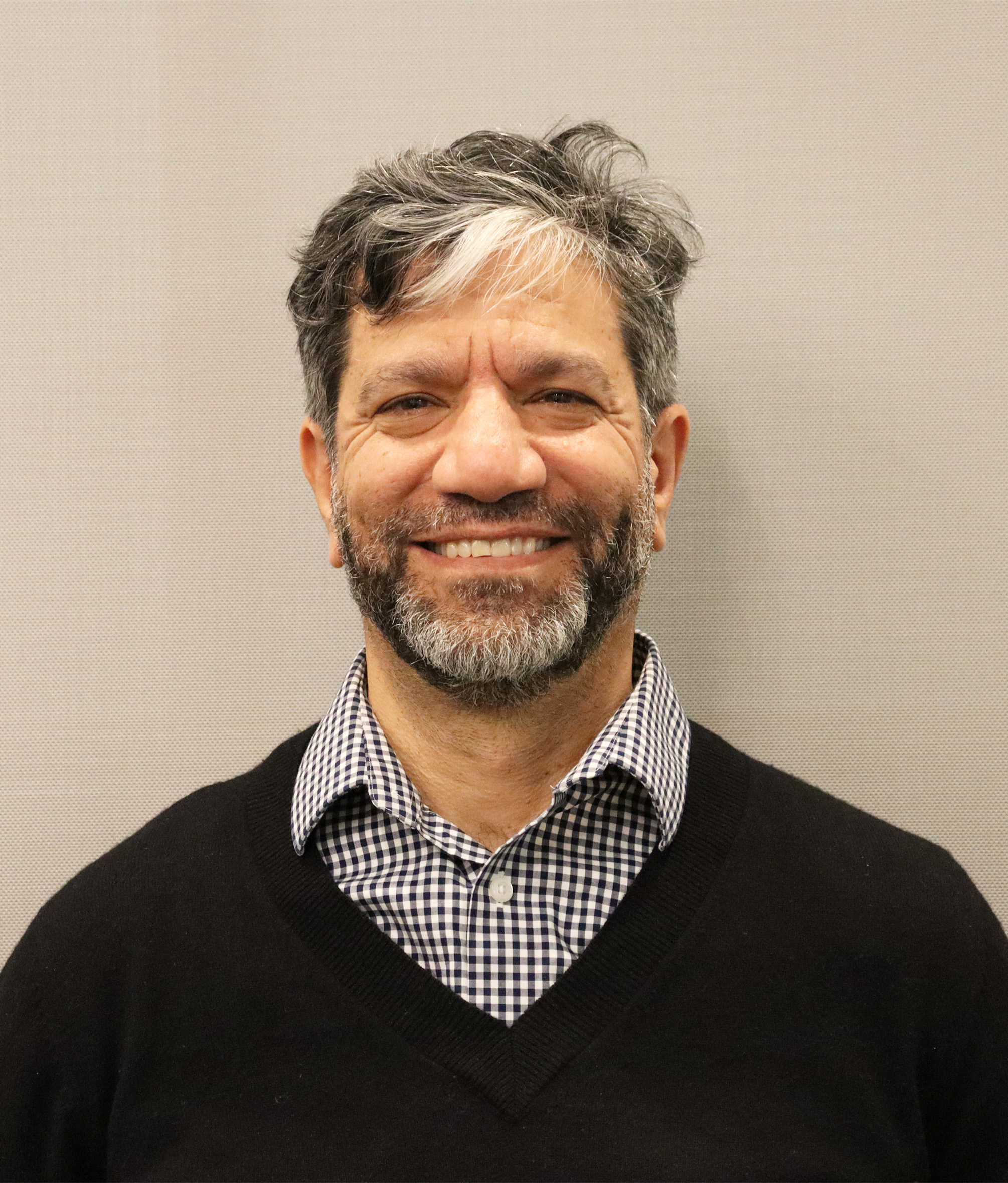
Walid A. Saleh is a Professor of Islamic Studies at the University of Toronto , holding appointments in both the Near and Middle Eastern Civilizations department and the Department for the Study of Religion . His scholarship focuses on the Qur’an , Quranic exegesis (Tafsir), Islamic apocalyptic literature , and Biblical reception in Islam . PhD from Yale University (2001) Recipient of Mellon New Directions Fellowship (2014) and Konrad Adenauer Fellow (2017) Editor of the Routledge Qur’an Series His research analyzes Quranic chronology , manuscript traditions , and Islamic intellectual history . Recent publications examine periodization in Sunni tafsir, late Ottoman book culture, and the reception of al-Bayḍāwī's Anwar al-tanzīl . Articles explore topics from Quranic death narratives to medieval Islamic cosmology . Key article themes: Quranic identity formation , Islamic manuscript studies , exegetical methodology He has edited critical texts like al-Biqa`i's Bible treatise and serves on editorial boards for the Journal of the American Academy of Religion and Journal of Qur'anic Studies . His teaching includes advanced courses in Arabic paleography and Quranic hermeneutics .
John H. Arnold is Professor of Medieval History at the University of Cambridge and Fellow of King's College. Educated at the University of York (BA History, D.Phil Medieval Studies), his academic career includes positions at University of East Anglia and Birkbeck, University of London before joining Cambridge in 2016. He holds editorial roles at Cultural and Social History, Past & Present, and directs publication series at both York Medieval Press and Cambridge University Press. Arnold's research centers on medieval religious culture, particularly lay belief, heresy, inquisition, and the history of gender. His monograph 'The Making of Lay Religion in Southern France' (2024) exemplifies this focus. Current projects investigate the social history of confession and the repression of usury. Analysis of Arnold's 15 most recent publications reveals consistent engagement with medieval religious dissent and belief systems. Key themes include: reinterpretations of heresy trials (2019), sensory dimensions of faith (2018), historiographic debates about Catharism (2016), and methodological examinations of archival sources (2022). His work frequently employs theoretical frameworks from sociology and philosophy to reinterpret medieval religious conflict. Arnold maintains active research networks through editorial leadership and supervision. His Cambridge Studies in Medieval Life and Thought series promotes innovative scholarship in medieval history.
Andrew Ollett is an Associate Professor and Director of Graduate Studies in the Department of South Asian Languages and Civilizations at the University of Chicago , where he has taught since 2019. His research focuses on the literary and intellectual traditions of South and Southeast Asia, particularly through works in Sanskrit, Prakrit, Apabhramsha, and Kannada from the first millennium CE. Co-founder and editor of NESAR (New Explorations in South Asia Research) Director of NEH-funded edition/translation of the Kavirājamārga (earliest Kannada literary manual) Expert in Prakrit and Kannada literary traditions His work explores the 'question of language'—examining how language choice shaped cultural production and change in premodern India. Current projects include a monograph on context-sensitivity in Indian language theories and a study of manuscript technology's impact on early South Asian knowledge communities. He has authored The Mirror of Ornaments (Naples: Unior Press, 2025) and Language of the Snakes (UC Press, 2017), and co-authored Lilavai (Harvard, 2021). Recent publications include interdisciplinary studies on: Sanskrit-Prakrit campū genre reevaluation Pragmatics in Mīmāṁsā interpretive concepts Manuscript literacy's influence on literary forms Historical linguistics of Middle Indic syllable reduction Philosophy of language in Śālikanātha and Kumārila Bhaṭṭa Awarded the NEH 'Scholarly Editions and Translations' grant , he teaches classical South Asian literature courses covering Sanskrit, Prakrit, and Tamil traditions. He maintains digital resources including a Prakrit Digital Texts Project and Mīmāṁsādigdarśinī digital text repository, and actively contributes to open-access scholarship.
Lucia Binotti is a Professor of Spanish and Digital Humanities at the University of North Carolina at Chapel Hill (UNC-CH), with dual affiliations in the Department of Romance Studies and interdisciplinary Digital Humanities initiatives. She serves as Graduate Advisor for Hispanic Linguistics and Director of the Honors Study Abroad Program in Rome. Her work bridges traditional philology with cutting-edge digital scholarship, emphasizing immersive learning experiences through virtual reality (VR) and augmented reality (AR) technologies. Binotti holds a Ph.D. from UC Santa Barbara (1990), an MA (1985), and a BA (1984) in Romance Philology from the Università degli Studi di Pisa. Her research focuses on linguistic identity, cultural heritage preservation, and innovative educational platforms like Amirabilia—the world’s first experiential learning platform. Notable projects include nXimena (healthcare training for Latinx abuse survivors) and Entiendelo (a linguistic/cultural navigation app for Latinx communities). Her scholarly interests span Early Modern Spanish literature, digital humanities applications, and the intersection of technology with social justice. She has directed grants totaling over $500K for projects involving AR/VR integration in education, including collaborations with the UNC Health Science Library and NCSU’s DELTA initiative. Recent awards include the John K. Walsh Award (2010) and Digital Innovation Fellow status (2014). Grants & Leadership: CFE-Lenovo Technology Grants (2018–2019) for AR/VR expansion iLRN 2020 International Co-Chair XR Faculty Learning Community Leader (UNC) Teaching: Courses span from introductory Hispanic literature to advanced topics like medieval intellectual history and digital humanities methodologies. Binotti’s work emphasizes ‘place, presence, and perspective’ in Cyber-Humanities education, particularly addressing marginalized communities through technology-driven solutions.
Dr. Hannah Zdansky is an Assistant Professor of English at Belmont Abbey College, specializing in medieval languages, literatures, and manuscript studies. Her research focuses on cross-cultural connections in medieval Britain and Ireland, particularly exploring multilingualism, religion in literature, and medieval reading practices. She holds a B.A. from Baylor University, an M.A. from the National University of Ireland, Galway, and a Ph.D. from the University of Notre Dame. Her expertise spans Old and Middle English, French, Irish, Welsh, and Latin, with a methodological focus on digital humanities and the history of the book. Dr. Zdansky’s work examines how medieval literary and material cultures were shaped by multicultural interactions, including studies on medieval manuscripts, the role of women in literary production, and the intersection of religion with secular narratives. Her recent scholarly engagements include presentations on topics like the transnational dimensions of medieval texts, the interplay between sacred and secular themes in works such as Gui o Bharbhuic , and comparative analyses of Welsh and English manuscript traditions. Her publications span peer-reviewed articles, encyclopedia entries, and book reviews, reflecting her commitment to interdisciplinary medieval studies. Dr. Zdansky teaches a wide range of courses, from Old English Language and Literature to Irish History, emphasizing close textual analysis and historical context. She has advised numerous students through independent studies and thesis work, fostering academic rigor and intellectual curiosity in her classroom.
Andreas Winkler is an Assistant Professor in the Department of Near & Middle Eastern Civilizations at the University of Toronto's Faculty of Arts and Science. Prior to his current appointment, he held teaching and research positions at the University of California, Berkeley; Freie Universität Berlin; University of Oxford; and University of Warsaw. His office is located at 4 Bancroft Avenue, Room 421, Toronto, ON, M5S 1C1, with contact email andreas.winkler@utoronto.ca and phone 416-865-2513. Education: PhD, Uppsala University Winkler specializes in the history and philology of Greco-Roman and Late Antique Egypt, with expertise in Demotic and Coptic manuscripts. His research examines the history of science—particularly astral sciences—alongside social history, religious practices, and onomastics across Egyptian history. He integrates written evidence with material culture and art, focusing on interdisciplinary analysis of ancient texts and artifacts. His methodological approach combines philological rigor with historical contextualization to explore cultural transitions in ancient Egypt. Analysis of Winkler's 13 publications from 2022-2025 reveals dominant themes in ancient Egyptian astronomy, astrology, and magic, with recurring focus on Demotic/Coptic manuscripts. His work bridges philology and social history, examining topics like horoscopes, zodiacs, marriage practices, and temple economies. Publications span major academic presses including Brill, De Gruyter, and University of Chicago Press, demonstrating consistent contributions to understanding scientific traditions and daily life in Roman and Late Antique Egypt.
Clinton E. Arnold is a Research Professor of New Testament and former Dean of Talbot School of Theology at Biola University. He specializes in New Testament studies, particularly the letters of Paul and the Acts of the Apostles, with a focus on historical and cultural contexts. Arnold is renowned for editing the Zondervan Illustrated Bible Backgrounds Commentary and authoring works like Powers of Darkness and The Colossian Syncretism . He holds a Ph.D. from the University of Aberdeen and has published extensively in journals such as New Testament Studies and Journal for the Study of the New Testament . Education: Ph.D., University of Aberdeen; M.Div., Talbot Theological Seminary; B.A., Biola University. His research interests include early Christian practices, spiritual warfare, and biblical exegesis. He served as President of the Evangelical Theological Society (2011) and contributes to translation oversight for the ESV. Arnold’s work bridges academic rigor and pastoral application, emphasizing the relevance of biblical scholarship for contemporary faith communities. He has led Talbot’s extension programs in Kyiv and New York and advocates for the inerrancy of Scripture. His writings often address theological challenges in modern contexts, such as mental health, biblical authority, and missional theology. Awards include leadership roles in major theological societies and recognition for editorial contributions to biblical resources. His legacy includes shaping evangelical scholarship through commentaries, teaching, and mentoring future theologians.
Professor Alan Sangster is Chair in Accounting History at the University of Aberdeen's Business School, where he is actively engaged in research, teaching, and supervision of PhD students. His work centers on the historical evolution of accounting systems, particularly double-entry bookkeeping, and the pedagogical aspects of accounting education. University: University of Aberdeen School: Business School Position: Chair in Accounting History Email: alan.sangster@abdn.ac.uk Alan Sangster holds a BA in Business Studies, MSc in Operational Research, PhD in Accounting Education, and is a Chartered Accountant (CA). His academic journey reflects a deep commitment to understanding the historical roots of modern accounting practices. His research interests encompass Accounting History , Business History , and Accounting Education , with a focus on medieval and Renaissance accounting systems, the work of Luca Pacioli, digital methodologies in historical research, and ethical issues in accounting scholarship. He advocates for rigorous historical methodology and critical reassessment of established narratives. The 15 most recent publications highlight a sustained and influential research trajectory in accounting history, with a strong emphasis on the origins and diffusion of double-entry bookkeeping, digital transformation of archival research, and critical reflections on historiography. His work bridges historical analysis with contemporary pedagogical and ethical concerns in accounting. Professor Sangster has received numerous accolades recognizing his exceptional contributions: 2022: Outstanding Accounting Educator Award (American Accounting Association) 2022: Outstanding Contribution to Accounting & Finance Education Award (British Accounting & Finance Association) 2021: Barbara D. Merino Award for Excellence in Accounting History Publication 2015: Hourglass Award (Academy of Accounting Historians) 2014: Premio Enrique Fernández Peña de Historia de la Contabilidad 2013: Life-Time Achievement Award (British Accounting and Finance Association) He serves as Editor-in-Chief of Accounting Education (Routledge), Deputy Chair of the BAFA Accounting History SIG, and Trustee of The Academy of Accounting Historians. These roles underscore his leadership and influence in shaping the field globally. Although no specific students or grants are mentioned, his active supervision of PhDs and extensive publication record indicate a vibrant research program. He is not associated with any lab or team in the provided text, but his collaborative publications suggest active academic networks.
C. Michael Sampson is an Associate Professor in the Department of Classics at the Faculty of Arts , University of Manitoba . Holding a PhD in Classical Studies (2009) from the University of Michigan, an MA in Classics (2003) from Dalhousie University, and a BA (First Class Honours) in Classics and Early Modern Studies (2001) from the University of King's College, Sampson is a broadly trained philologist specializing in Greek and Latin literature with a focus on poetry, and a papyrologist working on fragmentary texts from Egypt. Research interests: Greek/Latin literature, papyrology, reception studies, Hellenistic literature Current project: The Books of Karanis (interdisciplinary study of Greek literary culture in Egypt) Awards: SSHRC Insight Grant (2021-2025), SSHRC Connections Grant (2020-2022), Community Engagement Award (2018) Editorial roles: Digital Corpus of Literary Papyri, Pylon: Editions and Studies of Ancient Texts Teaching: Courses on Ancient Greek culture, Roman comedy, Euripides, and Archaic poetry
William H. Nienhauser, Jr. is the Halls-Bascom Professor of Classical Chinese Literature in the Department of Asian Languages and Cultures at the University of Wisconsin–Madison, College of Letters and Science. He is a leading authority on early Chinese literature, historiography, and poetry, with a particular focus on Sima Qian’s Shiji and the poetry of Du Fu. He has held visiting and research positions in China, Japan, Germany, and Taiwan, and remains academically active, including a 2018 appointment as Visiting Professor at Nankai University. His research interests include early traditional Chinese fiction, historiography, chuanqi and zhiguai tales, and the application of modern Western critical theories to Chinese literary texts. He is deeply engaged in the translation and annotation of classical works, especially the Shiji , often in collaboration with graduate students. His scholarship bridges philology, literary theory, and historical contextualization, contributing significantly to the global understanding of pre-modern Chinese literature. Nienhauser’s publications reveal a sustained focus on textual analysis, narrative structure, and the interplay between history and literature. His work spans from early Shijing poetry to Tang dynasty fiction, with a strong emphasis on Sima Qian’s historiographical methods and legacy. He has also contributed foundational reference works and critical editions, shaping the field of Chinese literary studies. His scientific awards reflect the international recognition of his scholarship: Woodrow Wilson Fellowship ACLS Fellowship NEH Fellowship Fulbright-Hayes Fellowship Japan Foundation Fellowship German Research Foundation Fellowship Alexander von Humboldt Foundation Fellowship Humboldt Foundation Lifetime Achievement Award (2003) Nienhauser has advised numerous graduate students in collaborative research projects, particularly on the Shiji and Du Fu. He has secured major fellowships and grants from prestigious organizations including the NEH, ACLS, Fulbright-Hayes, and the Humboldt Foundation, enabling extended research and translation work. His editorial roles, especially as a founding editor of Chinese Literature: Essays, Articles, Reviews (CLEAR), have been instrumental in advancing the field. While no formal lab or research center is mentioned, Nienhauser leads a major international collaborative translation project on the Shiji , involving scholars and students across institutions. His seminars and graduate courses foster a close-knit research community focused on classical Chinese texts.
Professor Eva Haverkamp-Rott holds the Chair of Medieval Jewish History and Culture at Ludwig-Maximilians-Universität München (LMU Munich) since 2009. Her work uniquely bridges Medieval History and Jewish Studies, focusing on Jewish life in Europe from the 4th to 16th centuries, with geographic emphasis on the Holy Roman Empire, Italy, France, England, and the Byzantine Empire. PhD in Medieval History (University of Konstanz, 1999) Master in Jewish Studies and Medieval/Modern History (University of Cologne, 1994) Her research explores Jewish-Christian-Muslim interactions, medieval economic systems, numismatics, and the historiography of Jewish persecution during the Crusades. She specializes in analyzing Hebrew chronicles and Latin texts to reconstruct interfaith dynamics. Her recent publications focus on global medieval history, Jewish tombstone symbolism, and economic exchanges between religious groups. She has contributed significantly to understanding Jewish roles in medieval coinage and trade. 2020: Prize for Good Teaching (Bavarian Ministry of Science and Arts) 2006: The Historical Book Prize for 'Hebrew Accounts of the Persecution of the Jews during the First Crusade' 2005: Jon Gillum Teaching Award, Radcliffe Institute Fellowship 2004: Ryskamp Research Fellowship, NEH Fellowship 2000: District of Konstanz Prize for promotion of young scientists Professor Haverkamp-Rott has led interdisciplinary projects like the Regensburg archaeological excavations and co-edited cultural guides. Her work emphasizes contextualizing Jewish experiences within broader European historical frameworks.
Aqsa Ijaz is an Assistant Professor (Teaching Stream) at the Department of Language Studies and teaches the popular course Being Human in South Asia in the Department of Historical Studies at the University of Toronto Mississauga. She is a literary scholar specializing in Persianate literatures and multilingualism, with a focus on classical Persian poetry reception in South Asia. Education: PhD in Islamic Studies (McGill University), MPhil in Translation Studies (G.C. University, Pakistan), BA Hons in English Literature and Philosophy (minor in French). Her research explores the transcultural and temporal resonance of Nizami Ganjavi's Khusrau u Shirin across Persian, Urdu, and Punjabi traditions. She is the architect of the Global Past Research Initiative and serves on the editorial board of The Marginalia Review of Books . Key publications include her monograph Shaping the Language of Love and annotated translations of the 18th-century Persian history The Gift of the Generous and the French graphic novel Majnun and Laila: Songs from Beyond the Grave . Her work intersects premodern manuscript studies, oral performances, lithographs, and modern graphic novels. She teaches Introductory Persian , Urdu , and Punjabi courses while actively translating and performing as a cellist.
Jennifer J. Baker is an Associate Professor in the Department of English at New York University's College of Arts and Science. Holding a Ph.D. in English from the University of Pennsylvania (2000), her academic focus spans 18th- and 19th-century American literary, cultural, and intellectual history. Key research areas include literature and science, environmental literature, transatlantic Romanticism, and Civil War literature. She is currently working on a reception history of Herman Melville’s Moby-Dick , examining its rise to canonical status through Cold War politics and academic culture. Education: Ph.D. in English, University of Pennsylvania (2000) Her upcoming book American Romanticism and the Evolutionary Idea (Stanford UP, 2026) investigates how evolutionary theories intersected with Romantic concepts in 19th-century American literature. Previous publications include Securing the Commonwealth: Debt, Speculation, and Writing in the Making of Early America (Johns Hopkins UP, 2006). Recent research includes articles on Herman Melville, Emerson, Nathaniel Hawthorne, and Judith Sargent Murray, reflecting her interdisciplinary approach combining literary analysis with financial history, scientific thought, and cultural studies. Faculty Fellowship, NYU Center for the Humanities (2014-15) Heyman Prize, Yale University (2004) Morse Fellowship, Yale University (2005) Andrew W. Mellon Dissertation Fellowship (1997-98) She serves on the Board of the Melville Society Cultural Project and has held academic appointments at Yale University and the McNeil Center for Early American Studies.
Dr. Grzegorz Kotłowski serves as an Assistant Professor at the University of Gdańsk's Faculty of Languages within the Institute of Classical and Slavonic Studies, Division of Classical Philology. He concurrently holds the significant administrative position of Deputy Dean for Students Affairs at the Faculty of Languages, demonstrating dual expertise in academic scholarship and institutional leadership. His research centers on Classical Philology with intense specialization in Latin epigraphy, particularly the documentation and analysis of Neo-Latin inscriptions in historical churches of Gdańsk (notably St. Mary's Church) and Warmia (Frombork Cathedral). Dr. Kotłowski's work bridges philological rigor with historical contextualization, examining epitaphs, sepulchral plates, and commemorative texts from the early modern period to reconstruct social hierarchies, religious practices, and cultural identities within Gdańsk's multicultural urban landscape. His methodological contributions extend to digital approaches in Neo-Latin studies, addressing data acquisition and dataset creation challenges. Recent publications (2020-2022) reveal a highly focused epigraphic output, with over twenty articles detailing specific monuments while collectively forming a comprehensive corpus of Gdańsk's Latin funerary heritage. His collaborative multi-volume series with Elżbieta Starek— Łacińskie inskrypcje w kościołach Gdańska (covering Mariacka Basilica, Śródmieście, and Oliwa) and Łacińskie inskrypcje w kościołach Warmii (Frombork)—establishes foundational references for regional epigraphic studies. No scientific awards are documented in available sources. Administrative responsibilities as Deputy Dean for Students Affairs indicate active engagement in academic governance, though specific advising roles or grant funding remain unreported in current materials. The absence of laboratory or team descriptions suggests individual or small-collaboration research models centered on archival and field-based epigraphy.
Professor Daniel Grimley (FBA) is the Head of the Humanities Division at the University of Oxford and a faculty member in the Faculty of Music . His academic leadership includes oversight of research, teaching, and equality initiatives across Oxford’s humanities disciplines. University: University of Oxford Role: Head of Humanities Division Academic Rank: Professor Grimley’s research focuses on Nordic music traditions , nationalism , and ecocriticism , exploring intersections of music, landscape, and cultural identity. His work often examines composers like Sibelius, Delius, and Vaughan Williams through ecological and philosophical lenses. Recent publications highlight themes of musical modernism , biographical analysis , and national identity . His 2025 article on Delius, Mahler, and Nietzsche bridges musicology with ecocritical theory, while his 2023 studies investigate Sibelius’s use of silence and Nielsen’s dreamlike compositions. Scientific Awards: Fellow of the British Academy (FBA) Grimley’s advocacy for music departments and his editorial contributions to volumes on Sibelius and Grieg underscore his commitment to preserving and analyzing musical heritage. He has no listed students but influences academic governance through his divisional leadership.