

Jörg F. Löffler is a Full Professor of Metal Physics and Technology at the Department of Materials, ETH Zürich , where he has been since 2003. He previously served as Chairman of the Department (2010–2013) and holds Adjunct Professor positions at Tohoku University (Japan) and a Visiting Faculty role at Caltech. His research focuses on bulk metallic glasses , metallic biomaterials , and magnetic materials , combining synthesis, characterization, and applications in biomedical and structural contexts. Educations : Studied Physics and Materials Science at Saarland University (Germany), earned his doctorate at ETH Zurich and Paul Scherrer Institute on magnetism and neutron scattering (1997). Research Trends : Recent work explores additive manufacturing (e.g., laser powder bed fusion), biodegradable magnesium alloys for implants, and magneto-structural coupling in metallic glasses. Collaborative efforts integrate in situ analysis with computational modeling. Scientific Awards : International Magnesium Science and Technology Award (2023) MRS Fellow (2021) DGM 'Breakthrough' Prize (2016) Masing Memorial Prize (2005) ETH Zurich Medal (1998) Alexander von Humboldt Fellowship (1998-2001) Löffler advises the Department of Materials Science and Engineering at UC Davis and serves on editorial boards. His group at ETH Zürich investigates advanced metallic materials using synchrotron radiation and neutron scattering facilities.
جستوجوی استاد و پژوهشگر
استاد راهنما، استاد دانشگاه یا پژوهشگر مناسب برای مسیر پژوهشیتان را پیدا کنید و با او ارتباط بگیرید.
نمایش ۶۱-۷۵ از ۲۵٬۰۱۷ استاد راهنما
اطلاعات این پروفایلها از صفحات عمومی دانشگاهها جمعآوری شده و ممکن است بهروز نباشد.
Yonatan Biskمشاهده پروفایل
استادیار
Yonatan Bisk is an Assistant Professor at Carnegie Mellon University within the Language Technologies Institute (with courtesy appointment in Robotics Institute). His research bridges Natural Language Processing , Robotics , and Embodied AI , focusing on language grounding, theory of mind, and multimodal interaction. Education : Ph.D. in Computer Science from University of Illinois at Urbana-Champaign Postdoctoral Experience : USC ISI, University of Washington, Allen Institute for AI Industry Appointments : Microsoft Research, Meta AI His research emphasizes embodied language systems and social intelligence in AI . Recent projects include WebArena for autonomous agents, SOTOPIA for social reasoning, and HomeRobot for open-vocabulary manipulation. He leads the REAL Center (Robotics, Embodied AI, and Learning) to foster interdisciplinary collaboration. Key scientific awards include selection for the DARPA ISAT Study Group (2024). He teaches courses like "Talking to Robots" and "Multimodal Machine Learning" while serving as area chair/editor across NLP, Robotics, and ML communities.
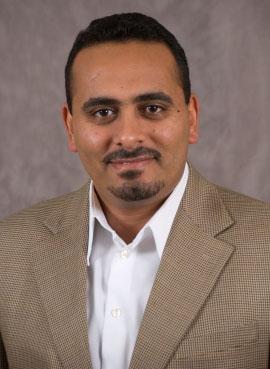
Professor Nagi Gebraeel serves as the Georgia Power Early Career Professor in the H. Milton Stewart School of Industrial and Systems Engineering at Georgia Institute of Technology, where his research integrates predictive analytics, machine learning, and optimization for industrial IoT applications. His work focuses on real-time equipment diagnostics, prognostics, and operational decision-making in critical infrastructure systems. Education: Ph.D. in Industrial Engineering (2003), Purdue University M.S. in Industrial Engineering (1998), Purdue University Research Focus: Dr. Gebraeel develops statistical learning algorithms for IoT-enabled maintenance, repair, and operations (MRO), with emphasis on federated learning frameworks for distributed fault diagnosis and cybersecurity protection against Industrial Control System (ICS) attacks. His research spans manufacturing, power generation, and deep space habitats through NASA's HOME Space Technology Research Institute, where he pioneers self-aware habitat systems. Recent work addresses data heterogeneity in high-consequence industrial environments using causal-informed analytics. Publication Trends: His 2024-2025 publications demonstrate a strong trajectory toward distributionally robust optimization for maintenance logistics, federated learning architectures for distributed fault diagnosis, and prognostics for complex systems like offshore wind farms and industrial robots. Key themes include handling imbalanced data in fault diagnosis, state-space representations for interdependent systems, and cybersecurity integration in manufacturing networks. Awards and Recognition: NSF CAREER Award (2007) SAE Aircraft Electrical Power System Recognition Award (2008) SAE Materials Modeling and Testing Recognition Award (2006) IEEE-AUTOTESTCON Certificate (2006) Fellow of the Institute of Industrial and Systems Engineers Advising and Funding: Dr. Gebraeel mentors doctoral students including Michael Ibrahim (2025 IISE Best Student Paper winner), Heraldo Rozas (now Assistant Professor at University of Chile), Ayush Mohanty, and Nazal Mohamed. He secured a $500,000 NSF grant in August 2025 for AI-driven cybersecurity in distributed manufacturing networks and leads NASA-funded research on deep space habitat systems. His work bridges academic research with industry applications through Georgia Tech's Strategic Energy Institute collaborations. Research Infrastructure: He directs the Analytics and Prognostics Systems laboratory at Georgia Tech's Manufacturing Institute and leads the Predictive Analytics and Intelligent Systems (PAIS) research group. Previously, he served as associate director of Georgia Tech's Strategic Energy Institute (2014-2019), fostering data science applications in energy systems.
Stefano NASINIمشاهده پروفایل
دانشیار
Stefano NASINI is an Associate Professor at the University of Lille 3, specializing in Quantitative Methods within the Economics and Mathematics Sciences. He holds a HDR (Habilitation à Diriger des Recherches) from the University of Lille 3 (2021), a Ph.D. in Statistics and Operations Research from the Polytechnic University of Catalonia (2015), and a Master in Statistics (2011). His research focuses on optimization, complex networks, statistical inference, and microeconomic applications. He has held academic positions including a post-doctoral role at IESE Business School (2014–2016) and a visiting researcher role at the University of Lisbon (2014). His work spans scheduling optimization, network analysis, financial contagion modeling, and energy system planning. Key contributions include specialized algorithms for large-scale optimization problems and frameworks for decentralized portfolio management. He is a member of the LEM research group and teaches courses in optimization, econometrics, and social network analysis at the Grande École and MSc levels. Publications highlight interdisciplinary applications, including network-based diffusion models, multi-market financial strategies, and dynamic choice analysis. His research bridges theoretical advancements in operations research with practical challenges in economics, energy, and transportation systems. No scientific awards are explicitly listed in the provided materials. His advising roles and grants are not detailed here, but his extensive publication record reflects active collaboration within academic and applied domains.

Timothy Abram is a Professor of Nuclear Fuel Technology at the University of Manchester, holding the Westinghouse Chair since 2008. He leads the U-Battery HTGR project and serves as Visiting Senior Research Fellow at NNL. His expertise spans nuclear fuels (MOX, ATF, TRISO) and reactor systems (gas-cooled, VHTR), with roles in IAEA, UK Government advisory boards, and the UK Nuclear Regulator’s committee. He directs the Rolls-Royce University Technology Centre for Nuclear Science and Engineering. Education: BSc and PhD (details unspecified). Research focuses on advanced nuclear fuels, thermal conductivity, and sustainable energy solutions, contributing to UN SDGs. Projects include molten salt reactor research (Radiochemical Facilities, DAWNMANTLE) and waste minimization strategies. Over 15 EU projects and 72 research outputs demonstrate his global impact. Awards: Not explicitly listed. Collaborations include international networks in nuclear innovation and material science. Advising roles include external examiner for Royal Navy and Cambridge MPhil programs.
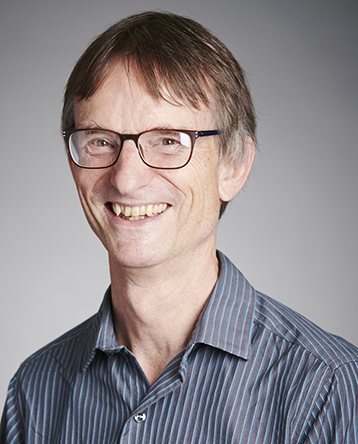
Anthony Rollett is a Professor in the Department of Materials Science and Engineering at Carnegie Mellon University , where he has been a faculty member since 1995. He serves as the Principal Investigator and Co-Director of the NASA-supported Institute for Model-Based Qualification & Certification of Additive Manufacturing (IMQCAM) and co-director of the Next Manufacturing Center . Prior to CMU, he held leadership roles at Los Alamos National Laboratory (1991-1995). Education: Ph.D., Materials Engineering, Drexel University (1987) MA, Metallurgy and Materials Science, Cambridge University (1977) Research Interests: Rollett’s work focuses on microstructural evolution and microstructure-property relationships in 3D using experiments and simulations. His expertise spans additive manufacturing , metal 3D printing , materials for energy systems , grain growth , recrystallization , and stereology , with techniques like high-energy diffraction microscopy (HEDM) and dynamic x-ray radiography (DXR) . Scientific Contributions: He has over 320 peer-reviewed publications and an h-index >80 . His recent articles highlight machine learning for laser processing , fatigue analysis of additively manufactured alloys, and design optimization for heat exchangers in supercritical CO2 and solar thermal applications . Scientific Awards: Fellow of ASM International (1996) Fellow of the Institute of Physics (UK) (2004) Fellow of The Minerals, Metals & Materials Society (TMS) (2011) Cyril Stanley Smith Award (TMS, 2014) Member of Honor, French Metallurgical Society (2015) US Steel Professor (2017) Francqui International Professor (2020-2021) International FAME Award (2023) Leadership & Impact: Rollett co-led the development of a NASA Space Technology Research Institute for additive manufacturing and established a new master’s program in additive manufacturing (2018). His research group is funded by industry , federal agencies , and Pennsylvania state grants . He also serves on the Basic Energy Science Advisory Committee and Defense Programs Advisory Committee for the Department of Energy.
Christopher L. Tucci is a Professor of Digital Strategy & Innovation at Imperial College London's Business School and currently serves as Interim Vice Dean of Education. He is also the Founding Dean of NEOM's College of Business & Innovation in Saudi Arabia. Previously, he held the Chair in Corporate Strategy & Innovation at École Polytechnique Fédérale de Lausanne (EPFL), where he served as Dean of the College of Management from 2013 to 2018. His academic qualifications include a PhD in Management from MIT and multiple degrees from Stanford University: an AB in Music, BS in Mathematical Sciences, and MS in Computer Science and Computer Science. His research focuses on digital strategy, innovation management, open innovation, and business model innovation, with particular emphasis on how firms transition to new technologies and organizational forms. He has pioneered work on crowdsourcing, inter-networking, and AI-driven innovation. His award-winning article 'Crowdsourcing as a Solution to Distant Search' (co-authored with Allan Afuah) has received multiple accolades, including the AMR Decade Award in 2022. Professor Tucci teaches courses such as AI Ventures, Co-Creation in AI & Robotics, and Design Thinking. He actively contributes to academic leadership roles, including serving on the Academy of Management's Board of Governors and leading initiatives like Imperial's I-X (Artificial Intelligence and Digital Innovation hub). His work integrates technology, strategy, and organizational dynamics to address modern business challenges. Educations: PhD in Management, MIT (1992–1997) SM in Technology & Policy/EECS, MIT (1989–1991) BS in Mathematical Sciences, Stanford (1978–1982) AB in Music, Stanford (1979–1983) MS in Computer Science, Stanford (1982–1984) Labs/Teams: Co-Director of Imperial's I-X initiative, focusing on AI, data science, and digital innovation.
Danick Briandمشاهده پروفایل
پژوهشگر
Danick Briand is a Senior Scientist at the Soft Transducers Laboratory within the Microsystems for Space Applications Group (LMTS) at École Polytechnique Fédérale de Lausanne (EPFL). His work focuses on MEMS and Microsystems for environmentally friendly technology , integrating flexible and printed electronics with applications in energy harvesting , smart sensing systems , and advanced gas sensing . Research Themes : Environmental sensors using microsystem technology Green microtechnologies and micromanufacturing Ultra-low energy MEMS Energy-saving and harvesting systems Recent Publications : Developed transient biodegradable sensors and microwave sensing technologies using printed and degradable materials Explored flexible piezoelectric systems and wearable sweat analyzers for biomedical applications Advanced inkjet-printed biosensors and eco-friendly fabrication methods Labs & Collaborations : Soft Transducers Laboratory (EPFL) Laboratory for Microsystems (LMTS)
Xinan Zhangمشاهده پروفایل
دانشیار
Dr. Xinan Zhang is an Associate Professor in the School of Engineering at The University of Western Australia (UWA), specializing in Electrical, Electronic, and Computer Engineering. He holds a BEng from Fudan University (2008) and a PhD from Nanyang Technological University (2014). Before joining UWA in 2019, he held roles as a Lecturer and Research Fellow in Singapore and Australia. His research focuses on power electronics, electrical machine drives, and renewable energy, with over 60 top-tier publications. He is the Portfolio Lead for Industry Engagement in UWA's School of Engineering and co-leads the Power and Clean Energy (PACE) research group. Education: BEng in Electrical Engineering, Fudan University (2004–2008) PhD in Electrical Engineering, Nanyang Technological University (2010–2014) Research Interests: Dr. Zhang’s work spans power electronics, renewable energy systems, energy storage, and smart grid technologies. He emphasizes practical applications, such as battery management systems for vanadium redox flow batteries and adaptive control strategies for microgrids. His contributions address challenges in energy efficiency, grid stability, and sustainable power solutions. Articles & Trends: Recent publications focus on advanced control algorithms for inverters, battery modeling, and renewable energy integration. His work combines data-driven methods with traditional control theory to enhance system efficiency and reliability. Notable areas include DC microgrid control, vanadium redox flow battery optimization, and model predictive control for power electronics. Awards: Listed in Stanford University’s Top 2% Scientists (2020–2022) Grants & Collaborations: He leads or co-leads projects funded by the Australian government and industry partners, including the GenX Betavoltaic Battery Pilot Manufacturing Process and Mine Electrification . These projects aim to advance clean energy technologies and industrial applications. Labs & Teams: As co-lead of the PACE group, he fosters interdisciplinary collaboration to tackle global energy challenges, aligning with UN Sustainable Development Goals for affordable and clean energy (SDG 7).
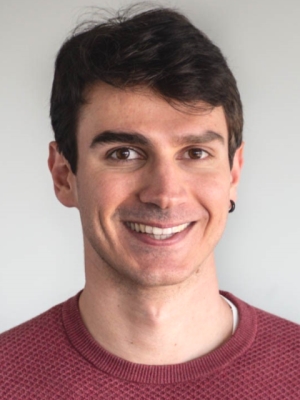
Iason Siderisمشاهده پروفایل
پژوهشگر
Dr. Iason Sideris is affiliated with ETH Zürich's Department of Neue Fertigungstechnologien (New Manufacturing Technologies), holding a Researcher position within the Professorship for Advanced Manufacturing. His work focuses on advancing additive manufacturing techniques, particularly in path planning optimization, temperature control, and material processing. He contributes to fields like Direct Energy Deposition, Wire-Arc Additive Manufacturing (WAAM), and data-driven finite volume methods. Key Research Areas: Additive Manufacturing, Thermal Modeling, Process Optimization, Materials Science Recent research emphasizes scalable path planning for temperature uniformity in AM processes, with publications addressing challenges in WAAM thermal management and real-time simulation methods. His work combines computational modeling with experimental validation to enhance manufacturing efficiency and material properties.
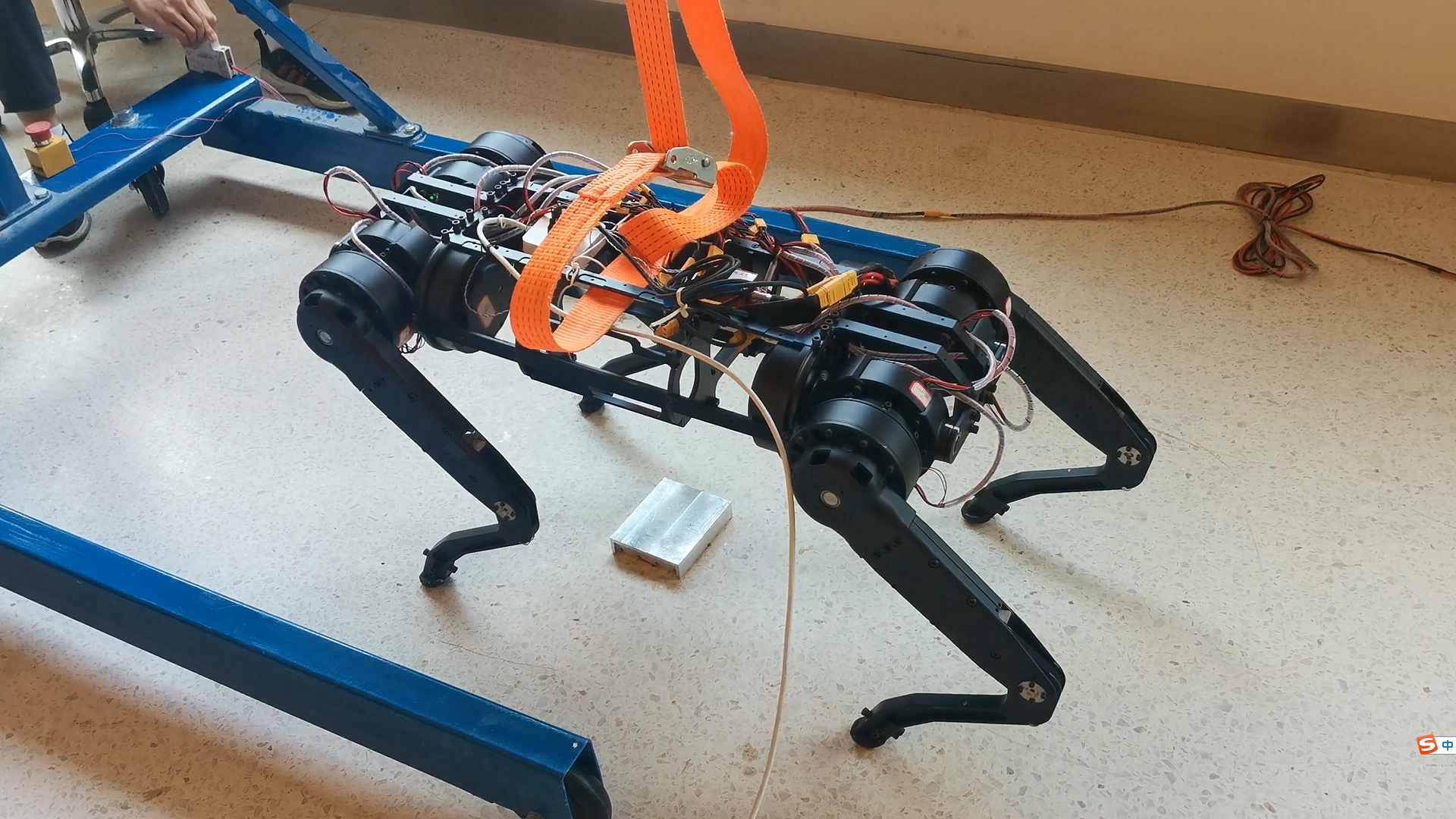
Wei Zhang is a tenured Professor at the Southern University of Science and Technology (SUSTech) , Shenzhen, China, and a Senior Member of IEEE. He serves as Associate Editor for IEEE Transactions on Control System Technology and leads the CLEAR Lab (Control & Learning for Robotics and Autonomy) within the School of Automation and Intelligent Manufacturing (AiM). His career spans institutions including the University of California, Berkeley (postdoc), and The Ohio State University (Assistant/Associate Professor). Education: PhD in Electrical Engineering from Purdue University (2009), MS in Electrical and Computer Engineering from University of Kentucky (2005), BS in Automation from University of Science and Technology of China (2003) Research Interests focus on integrating control theory, optimization, and machine learning to develop intelligent systems. Key areas include: Legged Robots: Dynamic locomotion control, bio-inspired gait design, and push recovery mechanisms Autonomous Systems: Real-time motion planning, obstacle avoidance, and safe navigation in adversarial environments Smart Grids: Distributed control for energy systems and transactive energy optimization Machine Learning: Reinforcement learning for robotics, Q-learning convergence analysis, and hybrid control-learning frameworks Publication Trends highlight interdisciplinary work at the intersection of robotics and control systems. His recent 2024 papers address: Whole-body control for wheeled-quadrupedal robots Geometric object pose refinement in computer vision Task-space Riccati feedback for underactuated systems Teacher-student reinforcement learning architectures Scientific Awards include: 2016 : NSF CAREER Award 2015 : Lumley Research Award (Ohio State University) 2013 : AFOSR Summer Faculty Fellowship 2018 : National Distinguished Expert (Young, China) 2019 : International Underwater Robot Competition 2nd Prize (team advisor) Academic Leadership involves editorial roles at IEEE Transactions on Control System Technology and IEEE Transactions on Power Systems. His lab provides state-of-the-art robotics platforms including quadruped robots, Kuka manipulators, and UAVs for algorithm validation. Research collaborators span The Ohio State University , UC Berkeley , CMU , and The University of Hong Kong .

Chris Harrisonمشاهده پروفایل
دانشیار
Chris Harrison is an Associate Professor at Carnegie Mellon University's School of Computer Science, directing the Future Interfaces Group . His research focuses on novel human-computer interaction technologies, including haptics, AR/VR/XR, and ubiquitous computing. Research Interests: Ubiquitous Computing, Human-Centered AI, Physical Interfaces (Sensing, Haptics, Fabrication), AR/VR/XR, Social Computing Advisees: Daehwa Kim, Nathan DeVrio, Vimal Mollyn, Vivian Shen Scientific Recognition: Forbes 30 Under 30 (Science), MIT Technology Review 35 Innovators Under 35, Smithsonian Innovator (2013), Google/Microsoft/Qualcomm Fellows Contact: chris.harrison@cs.cmu.edu His recent publications explore advanced haptic systems (Reel Feel, Fluid Reality), body-centric sensing (SkinTrack), and environment-embedded interfaces (Wall++). Current work integrates UWB/IMU fusion for pose estimation and synthetic jet haptics.

- Control of nonlinear systems
- Control of distributed parameter systems
- Nonlinear oscillations
- +۷ مورد دیگر
Joseph Bentsman is a Professor in the Department of Mechanical Science and Engineering at the University of Illinois at Urbana-Champaign's Grainger College of Engineering. He also holds affiliate appointments in the Department of Aerospace Engineering (since 2015) and the Department of Electrical and Computer Engineering (since 2018). His academic journey began with an M.S. from Byelorussian Polytechnic Institute in Minsk, USSR (1979), followed by a Ph.D. in Electrical Engineering from Illinois Institute of Technology (1984). Professor Bentsman's research focuses on control of nonlinear and distributed parameter systems, nonlinear oscillations, network control, stability theory, and stochastic multiscale methods. He pioneered a new class of dynamical systems with active singularities that admit control actions during singular phases of motion, which represent a novel category of hybrid systems characterized by impulsively controlled discrete transitions. His recent work has expanded into biomedical applications, particularly thermophysical modeling of tissue during electrosurgery and control of phase change processes. His recent publications (2021-2024) reveal a strong trend toward biomedical applications of control theory, particularly in modeling heat conduction in biological tissues, electrosurgical processes, and phase change phenomena. Approximately 60% of his recent work focuses on biomedical applications, while the remainder continues his foundational work on nonlinear control systems, distributed parameter systems, and systems with active singularities. Key subfields include Stefan problems, enthalpy-based control, telegraph equation modeling, and PDE-based control of complex physical processes. NSF Presidential Young Investigator Award (1989) Life Fellow of American Society of Mechanical Engineers Life Senior Member of IEEE IEEE Control Systems Society Technical Committee Chair on Power Generation (2015-2019) International Society of Automation POWID Achievement Award (2014) 2018 AIST Computer Applications Best Paper Award Featured in 'People in Control', IEEE Control Systems Magazine (2018) Professor Bentsman has been instrumental in developing educational approaches that integrate signal processing, instrumentation, control, and machine learning, as evidenced by his two textbooks. His work on the steel continuous casting process, particularly the mold oscillation system, has led to practical industrial applications. He has also made significant contributions to power plant control systems and boiler/turbine control. His research group appears to focus on both theoretical control systems development and practical implementation in industrial and biomedical settings, with strong connections to steel manufacturing, power generation, and medical device industries.
Magda Posaniمشاهده پروفایل
استادیار
Magda Posani is an Assistant Professor in the Department of Civil Engineering at Aalto University, focusing on building physics, hygrothermal behavior of materials, and environmental sustainability. Her research explores the use of bio-based insulation, thermally massive stone and earth walls, and additive manufacturing techniques to enhance indoor comfort and address climate change challenges in Nordic regions. Integrated Master's Degree in 'Building Engineering and Architecture' from the University of Bologna (Italy) Ph.D. in Civil Engineering from the National Laboratory for Civil Engineering (LNEC) and the University of Porto (FEUP, Portugal) Postdoctoral Research at ETH Zürich (Switzerland) Her research integrates vernacular solutions with modern technology, such as combining additive manufacturing with super-hygroscopic materials to develop components for passive humidity regulation. She addresses critical issues like occupant comfort, health risks from improper humidity, and climate change impacts on traditional constructions. The articles highlight her work on low-carbon materials, 3D-printed building components, and strategies for enhancing hygrothermal performance in both modern and historic structures. Key themes include moisture buffering, thermal insulation compatibility, and climate-resilient renovation.

Lara Ferry is the Vice President of Research at Arizona State University (ASU), holding the title of President’s Professor. She is affiliated with the New College of Interdisciplinary Arts and Sciences, specifically the School of Mathematical and Natural Sciences, and serves as graduate faculty in the School of Life Sciences. Her roles include advancing research strategies, fostering interdisciplinary collaborations, and enhancing partnerships with institutions, communities, donors, and industry. Ferry is also a PLuS Alliance Fellow, a Senior Global Futures Scientist at the Global Institute of Sustainability and Innovation, and affiliated with the Biodesign Institute and Global Security Initiative. She holds honors faculty status in ASU’s Barrett Honors College. Her academic background includes a B.S. in Biology from Cal Poly State University, M.S. in Marine Science from San Francisco State University, Ph.D. in Ecology and Evolutionary Biology from UC Irvine, and postdoctoral work at UC Davis. Her research focuses on functional morphology, particularly the evolution of jaws and skeletal materials in aquatic organisms. She has contributed to understanding prey capture mechanisms in fish and the biomechanics of cartilage in elasmobranchs. Ferry’s awards include the 2016 Outstanding Faculty Mentor Award, 2014 Outstanding Research/Creative Activity Award, and the 2018 President’s Professor title. She has led initiatives in equity, diversity, and inclusion (JEDI) and served on boards of professional societies like the American Elasmobranch Society and Society for Integrative and Comparative Biology. Her editorial roles include Senior Executive Editor of Functional Ecology and editorial board memberships in journals like Integrative & Comparative Biology . Her research activity spans functional morphology, biomechanics, and marine physiology, with grants focused on interdisciplinary education and diversity in STEM. Notable projects include studies on cartilage strength in sharks and collaborations on cultural change in professional societies.