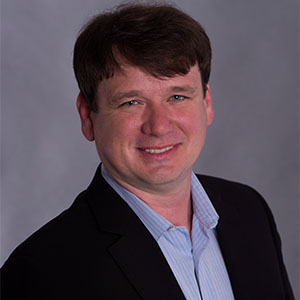
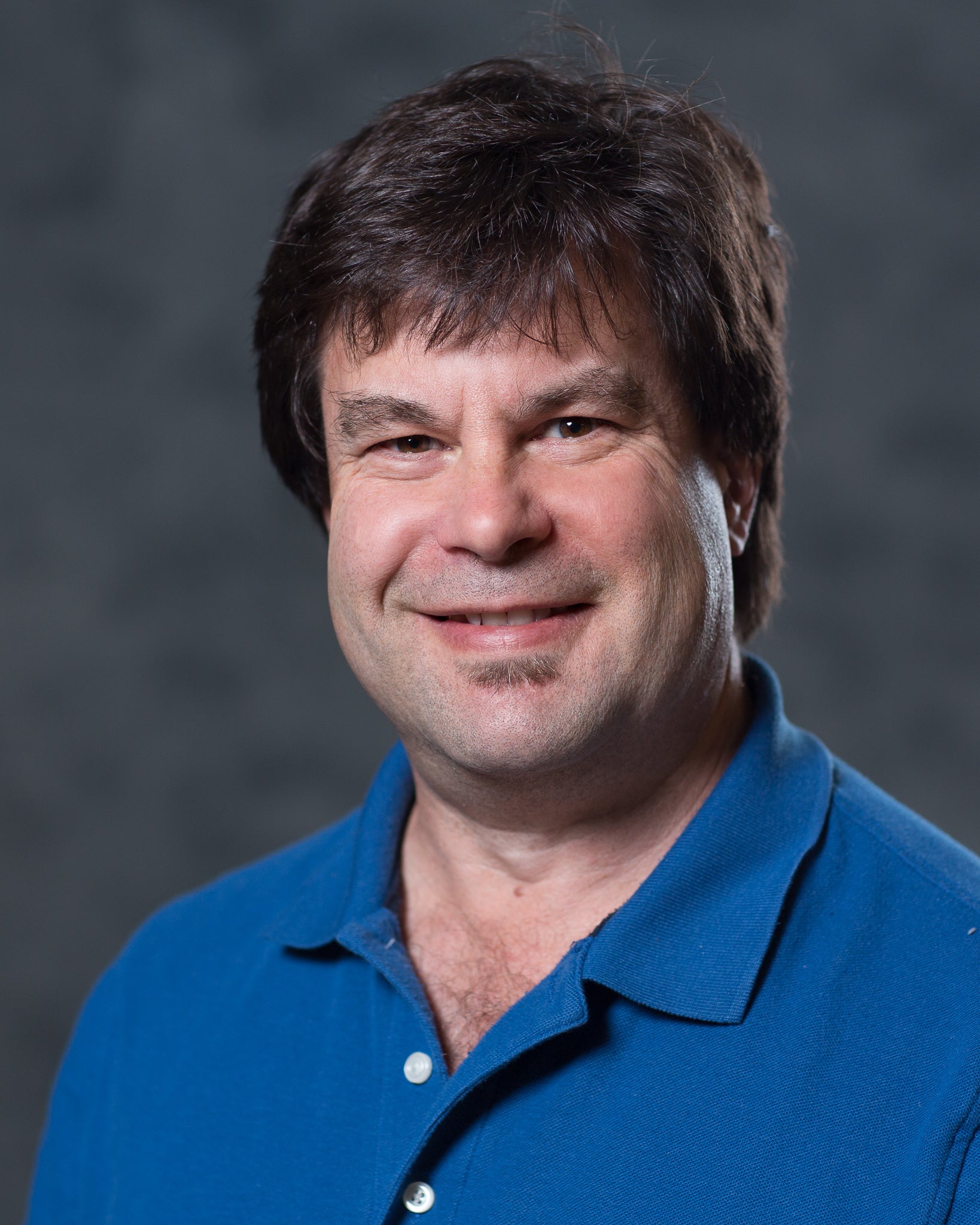
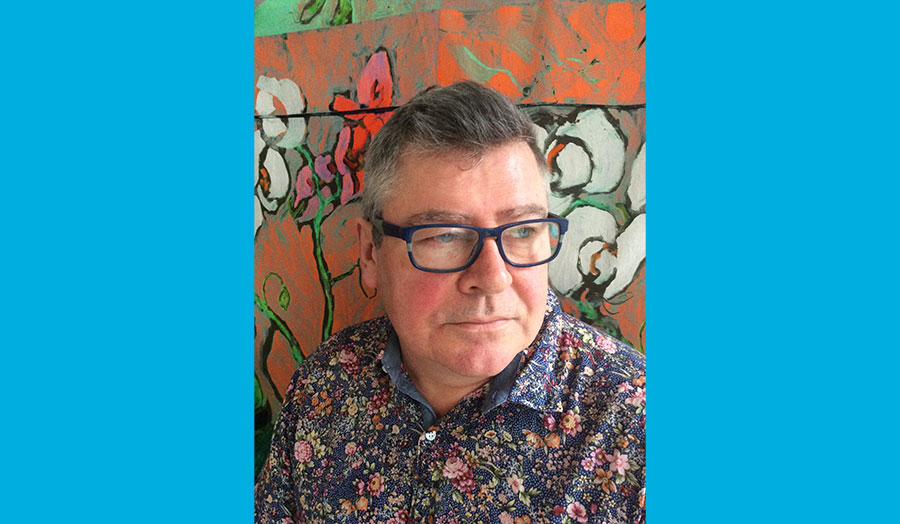
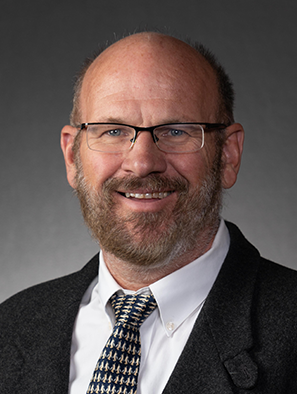
Professor Gustaaf Jacobs is a Full Professor in the Department of Aerospace Engineering at San Diego State University (SDSU), within the College of Engineering. He holds a M.Sc. in Aerospace Engineering from Delft University of Technology (1998) and a Ph.D. in Mechanical Engineering from the University of Illinois at Chicago (2003). His research focuses on computational multiphase and multi-scale flow physics, particularly in particle-laden flows, flow separation in complex geometries, and plasma-based flow control for applications in combustion optimization and drag reduction. Jacobs has received the AFOSR Young Investigator Award (2009) and became an Associate Fellow of AIAA (2013). His academic journey includes roles as a Visiting Assistant Professor at Brown University (2003–2006) and Postdoctoral Fellow at MIT (2003–2006). At SDSU, he advanced from Assistant Professor (2006) to Associate Professor (2010) before becoming Full Professor in 2013. Research interests span high-order numerical methods, shock wave interactions, and aerodynamic design, with a strong emphasis on experimental validation and computational modeling. Jacobs’ recent work includes studies on synthetic surface generation for additive manufacturing, turbulence transition on airfoils, and stochastic modeling of particle dynamics. His contributions address challenges in fluid-structure interactions, flow control, and predictive simulation techniques for aerospace systems. He collaborates on projects involving high-fidelity CFD, experimental aerodynamics, and data-driven modeling to advance engineering applications.
Sayantan Ghosh Dastidar is a Senior Lecturer in Economics at the College of Business, Law and Social Sciences. His research focuses on development economics, environmental policy, international trade, and macroeconomic dynamics. He has published extensively on topics such as foreign direct investment, remittance impacts, public health effects of energy extraction, and regional economic growth. Key research interests include analyzing how economic policies and global trends influence growth, equity, and sustainability. Notable studies explore the role of environmental taxes in curbing pollution, the relationship between holidays and economic productivity in Indian states, and the effects of fracking on public health in Oklahoma. His work often integrates spatial econometric methods and panel data analysis. Recent publications highlight his contributions to understanding liquidity in US corporate markets, the effectiveness of environmental taxation, and the cultural economics of India’s film industry. His research spans multiple disciplines, including development economics, health economics, and international finance.
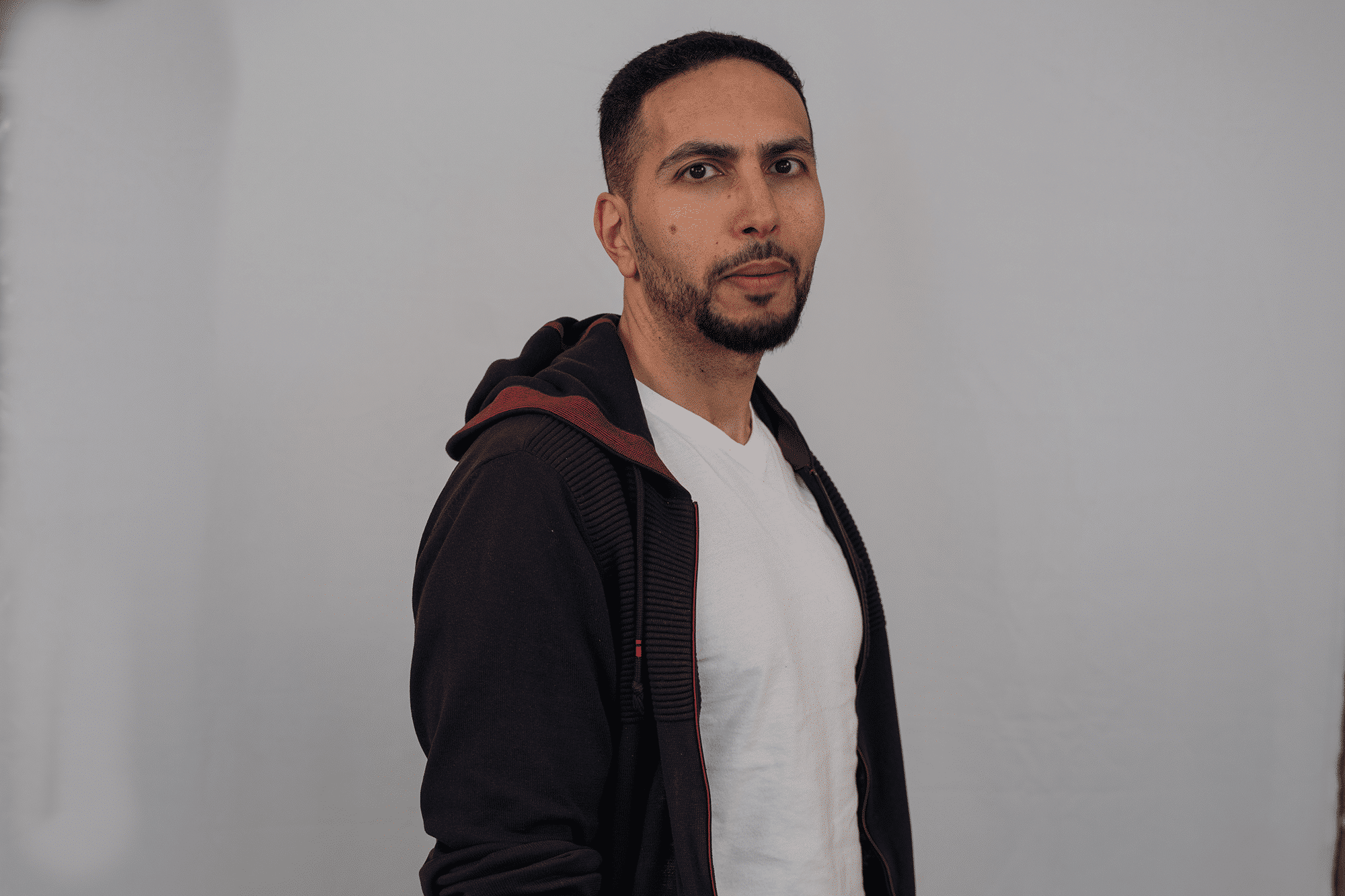
Mohamad Bayat is an Associate Professor at the Department of Civil and Mechanical Engineering, Technical University of Denmark (DTU). He holds a Master's from Sharif University of Technology (2017) and a Ph.D. from DTU (2020). His roles include teaching courses like Heat Transfer, Finite Element Analysis, and Thermo-Mechanics at undergraduate and graduate levels. His research focuses on multiphysics simulations of advanced manufacturing, particularly in additive manufacturing (AM), thermal management systems, and laser-material interactions. Long-term goals include expanding into space-related and biomedical applications. Research interests include metal 3D printing, online process monitoring, and thermal-fluid dynamics in AM. He supervises PhD students in projects involving laser welding, powder bed fusion, and thermal modeling. Awards include the Energies Prize (2022), IIW Kenneth Easterling Award (2018), and NAFEMS Nordic PhD Award (2021). His work contributes to UN Sustainable Development Goals by advancing efficient manufacturing and thermal technologies. Education: Ph.D. in Mechanical Engineering, DTU (2017–2020) Master of Mechanical Engineering, Sharif University of Technology (2017) Grants/Projects: Multiphysics simulation of metal AM for topology optimization Thermal modeling of heat pipes for space applications Laser welding for battery pack manufacturing Awards: Energies Prize for Best Multi Physics Paper (2022) IIW Kenneth Easterling Best Paper Award (2018) NAFEMS Nordic PhD Student Award (2021) Lab/Team: Active in DTU's Construct group, focusing on AM process development and thermal-fluid modeling.
Andrew J. Gross is an Assistant Professor in the Department of Mechanical Engineering and Aerospace Engineering at the Molinaroli College of Engineering and Computing, University of South Carolina. His research focuses on advancing material science through experimental and computational approaches to mechanical behavior. His academic credentials include: Ph.D. in Aerospace Engineering, The University of Texas at Austin, August 2015 B.S. in Aerospace Engineering, Iowa State University, May 2010 Dr. Gross's research program spans three interconnected domains: Architected Materials involving nanoscale design and fabrication of materials with extraordinary properties; Model Calibration integrating full-field experimental data with simulations to refine material models; and Material Characterization using in situ microscopy to observe deformation mechanisms in metals and nanostructures. His work bridges fundamental mechanics with practical engineering applications. Analysis of his 2014-2019 publications reveals consistent focus on metal failure prediction (aluminum/titanium alloys), architected material mechanics, and calibration methodologies. Key trends include advancing in situ experimental techniques, developing strain-based failure criteria, and exploring topological effects in lattice structures across aerospace and robotics applications. Dr. Gross directs the Gross Materials Laboratory established in August 2019 at USC, employing analytical, numerical, and experimental methods. He actively recruits graduate students for research on architected materials, with positions available for August 2020 start dates.
Dr. Mahdi Shavarani is a Lecturer in Business Analytics at the Kent Business School, University of Kent. He holds two Ph.D.s: one in Industrial Engineering from Eastern Mediterranean University (2018), and another in Multi-Objective Optimization and Multi-Criteria Decision-Making from the University of Manchester. His research focuses on optimizing real-world business challenges through advanced algorithms, with specialties in logistics, supply chain management, transportation, and manufacturing systems. Education: - Ph.D. in Industrial Engineering, Eastern Mediterranean University (2018) - Ph.D. in Multi-Objective Optimization and Multi-Criteria Decision-Making, University of Manchester Research Interests: Dr. Shavarani specializes in developing sustainable optimization models using machine learning and interactive evolutionary algorithms. His work emphasizes reducing decision-makers' cognitive load while improving computational efficiency. Key areas include multi-criteria decision-making, dimension reduction in high-dimensional objective spaces, and simulating decision-making behaviors. He is affiliated with the Decision and Cognitive Science Research Center at Alliance Manchester Business School. Publications: His recent work explores topics like energy-efficient robotic systems, dynamic preference adaptation in algorithms, and congested facility location problems. Over 30 peer-reviewed publications demonstrate his contributions to optimization theory and practical applications. Grants and Advising: No specific grants or advising roles are detailed in the provided text. Affiliations: - Member, International Society on Multiple Criteria Decision Making - Affiliated Researcher, Decision and Cognitive Science Research Center
John Summerscales is a Professor of Composites Engineering at the University of Plymouth, affiliated with the School of Engineering, Computing and Mathematics within the Faculty of Science and Engineering. He leads the MAterials and STructures (MAST) research group and is part of the Advanced Composites Manufacturing Centre and Marine Institute. His research focuses on composite materials, marine applications, and sustainability, addressing challenges like recycling and environmental impact. He teaches modules including Composites Design and Manufacture, Composites Engineering, and Quality Management, emphasizing practical applications in aerospace and marine sectors. Summerscales has supervised numerous PhD and MPhil students, contributing to advancements in composite materials and manufacturing processes. His work spans natural fiber composites, resin infusion techniques, and lifecycle assessments. Key contributions include developing energy-efficient manufacturing methods like the Cool-Clave autoclave and exploring sustainable composites for marine environments. He actively engages in academic partnerships, industry collaborations, and professional organizations such as the Society of Manufacturing Engineers.
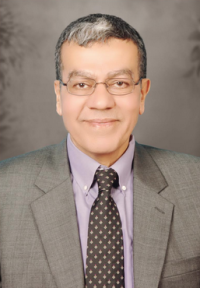
Professor Ahmad Elshennawy is a distinguished academic in the Department of Industrial Engineering and Management Systems at the University of Central Florida's College of Engineering and Computer Science. His expertise spans Quality Management, Lean Six Sigma, Industry 4.0 implementation, and healthcare process optimization. He holds a Ph.D. in Industrial Engineering from Penn State University (1987) and has over four decades of research and teaching experience. Education: Ph.D. - Industrial Engineering, The Pennsylvania State University, 1987 M.Eng. - Industrial Engineering, The Pennsylvania State University, 1982 BS - Production Engineering, Alexandria University, Egypt, 1974 His research focuses on advancing quality systems through Industry 4.0 technologies, Lean Six Sigma methodologies, and innovative applications in healthcare and aerospace sectors. Notable contributions include frameworks for quality 4.0 maturity assessment, Kano model applications in education, and predictive maintenance using machine learning. He has authored over 200 publications and textbooks on quality engineering and manufacturing processes. Professor Elshennawy's work bridges theoretical advancements with practical industry applications, emphasizing sustainability and ethical considerations in technological adoption. His research trends reflect a strong focus on digital transformation in education, healthcare efficiency, and aerospace manufacturing innovation. His advising and grant activities have significantly impacted modular homebuilding quality, healthcare process optimization, and defense industry innovation. He leads interdisciplinary teams exploring the intersection of artificial intelligence and traditional quality control systems.
Wesley Turner is a Senior Lecturer in the Department of Computer Science at Rensselaer Polytechnic Institute (RPI). His research spans computational methods in healthcare, forensic reconstruction, and industrial applications, with a focus on solving interdisciplinary challenges through mathematical modeling and software development. Notable research areas include: Computational Linear Algebra: Hierarchical preconditioning for large-scale finite element analysis. Forensic Facial Reconstruction: Statistical modeling of facial flesh depth using medical imaging. Cancer Detection: Automated lesion characterization in CT/MRI scans. Manufacturing Inspection: Virtual environments for anomaly detection and CAD alignment. Big Data in Healthcare: Secure data exchange and domain expert-friendly analysis tools. Education: Integration of H/FOSS projects into computing curricula. His publications reflect collaborations across disciplines, with emphasis on medical imaging, open-source software, and surgical simulation frameworks like OpenSurgSim. While no formal awards are listed, his work highlights practical applications of computational methods in real-world scenarios. Turner's recent articles focus on: 2023: Educational models for H/FOSS projects 2018-2016: Game-based diagnostics, surgical simulation frameworks 2013-2011: Medical image analysis, occlusion detection, and 3D registration 2010: Forensic facial approximation and CT volumetric measurement tools
Dilhan M. Kalyon is an Institute Professor and Director of the Highly Filled Materials Institute at Stevens Institute of Technology, where he has held academic and administrative positions since 1980. He serves in the Department of Chemical Engineering and Materials Science within the Charles V. Schaefer, Jr. School of Engineering and Science. Previously, he held faculty appointments in the Departments of Chemistry and Chemical Engineering; Chemical, Biomedical, and Materials Engineering; and served as Interim Vice Provost for Research, Innovation, and Entrepreneurship (2019-2020) and Vice Provost for Research and Innovation (2020-2022). Professor Kalyon earned his B.Eng. from Middle East Technical University in Ankara, and his M.Eng. and Ph.D. in Chemical Engineering from McGill University in Canada. His academic progression at Stevens includes Assistant Professor (1984-1987), Associate Professor (1987-1990), Professor (1990-1999), and Institute Professor (1999-present). He also served as Joint Affiliate Professor in the Department of Chemistry, Chemical Biology and Biomedical Engineering from 2010-2015. Professor Kalyon's research focuses on rheology, simulation, and processing of complex fluids including polymers, biopolymers, and energetic, ceramic, magnetic, and composite materials. His work places particular emphasis on suspensions filled with rigid particles at concentrations approaching their maximum packing fraction. His multidisciplinary research integrates mathematical modeling, experimental studies using industrial-scale processing equipment, and detailed analysis of microstructure and final material properties. Key innovations from his group include new rheometers and methods for rheological characterization of viscoplastic fluids, mathematical models for optimizing processing of viscoplastic fluids subject to wall slip, functionally graded constructs for bone grafting, novel methods for manufacturing nanofibers with nanoparticles, and X-ray diffraction techniques for analyzing particle size distribution. Analysis of Professor Kalyon's recent publications reveals a strong focus on advanced biomaterials, particularly for tissue engineering and regenerative medicine applications. His work demonstrates continued expertise in rheology and processing of complex fluids, with increasing emphasis on 3D bioprinting, hydrogel scaffolds with controlled mineral gradients, and novel fabrication techniques like electrowriting. His research bridges traditional polymer processing with cutting-edge biomedical applications, showing particular strength in translating fundamental rheological understanding into practical biomaterial solutions for bone and tissue regeneration. Thomas Baron Award in Fluid-Particle Systems by AIChE (2008) International Research Award by Society of Plastics Engineers (2008) Harvey N. Davis Distinguished Teaching Assistant Professor Award (1987) Henry Morton Distinguished Teaching Full Professor Award (2000) Faculty Appreciation Award (2017) DuPont Central Research and Development Fellowship (1997) Exxon Education Foundation Fellowship (1990) Unilever Education Fellowship (1991) Fellow of Society of Plastics Engineers (2004) Fellow of American Institute of Chemical Engineers (2006) Professor Kalyon has advised numerous graduate students and postdoctoral researchers throughout his career, with research spanning biomaterials development, rheological characterization, and advanced processing techniques. His work has been supported by various funding sources including industry fellowships and research grants. He directs the Highly Filled Materials Institute at Stevens, which serves as the hub for his multidisciplinary research team working on complex fluids and advanced materials. The institute facilitates collaboration between chemical engineers, materials scientists, and biomedical researchers to develop innovative solutions for challenges in materials processing, tissue engineering, and environmental safety.
Professor Raj Patel is Head of Chemical Engineering at the University of Bradford, affiliated with the School of Engineering under the Faculty of Engineering & Digital Technologies. He holds a PhD in Chemical Engineering from the University of Bradford, focusing on fluid mechanics of gravure roll coating. His research emphasizes sustainable technologies, including novel methods for titanium production, water desalination via reverse osmosis, biodiesel, and transition metals like tantalum and niobium. He led the re-design of Bradford’s Chemical Engineering programs, which now boast high student satisfaction and enrollment growth. Education: Bachelor’s in Chemical Engineering, University of Bradford PhD in Fluid Mechanics of Gravure Roll Coating, University of Bradford Research Interests: Professor Patel’s work spans energy-efficient metals production (e.g., a greener titanium process surpassing the Kroll method), environmental engineering (water desalination), and renewable energy (biodiesel). His novel titanium process is undergoing scale-up trials and shows promise for producing other transition metals. He collaborates with research groups in Mechanical and Process Engineering and Advanced Materials Engineering. Grants & Projects: He has led or contributed to seven major EPSRC-funded projects on coating flows and polymer processing. His initiatives have driven innovation in materials science and sustainable manufacturing. Labs/Teams: Central to revitalizing Bradford’s Chemical Engineering curriculum, his programs integrate cutting-edge research into teaching, fostering student success and industry relevance.
Hakim BOUDAOUD is a Professor at ENSGSI - Groupe INP in Nancy, France. He coordinates 2nd Year Engineering Projects and teaches courses in Mechanical Engineering, including Modeling, Design, Thermal Mechanics, Vibration Mechanics, and Circular Economy. His research focuses on additive manufacturing, polymer recycling, and sustainable materials. He holds a PhD in Mechanical Engineering from Centrale de Lille and an Engineering Degree. His teaching responsibilities include courses such as Functional Materials and Design, Non-deformable Solid Mechanics, and the IDEAS Master’s program in Innovation and Design. He is involved in engineering degree programs in Systems and Innovation Engineering, offering apprenticeship and continuing education tracks. BOUDAOUD’s research emphasizes distributed recycling via additive manufacturing, vibration analysis of composite structures, and open-source fabrication technologies. His work bridges mechanical engineering with environmental sustainability, addressing challenges in material science and circular economy.
Véronique FALK is a Professor and Deputy Director at ENSGSI (Groupe INP) in Nancy, France. She coordinates the Pharma+ Track and oversees 2nd-year engineering studies. Her academic roles include Deputy Director of Studies and leadership in chemical engineering education. She holds a 1991 Engineering diploma from ENSIC and a DEA in Process Engineering from LSGC. Her research at the LRGP laboratory focuses on product engineering, powder technology, mixing, granulation, compression, and flow behavior . Key areas include pharmaceutical processes, sustainable development, and material science applications in cosmetics and energy storage. Recent work explores silica nanoparticles' impact on dustiness, 3D printing for soil science, and ontology-based decision systems for emulsion design. Dr. FALK teaches core engineering courses such as Physics/Chemistry, Process Design, and Chemical Reaction Engineering. She actively contributes to curriculum development in systems innovation and pharmacist engineering programs. Her research bridges theoretical mechanics (e.g., granular material modeling) with practical applications like battery electrode design and cosmetic formulation 4.0.
Michael Booty is a Professor in the Department of Mathematical Sciences at New Jersey Institute of Technology (NJIT). His research focuses on fluid dynamics, interfacial flows, electrokinetic phenomena, and surfactant behavior, with applications in microfluidics and computational mathematics. Booty is a co-principal investigator on multiple federal grants, including projects on numerical methods for interfacial flows with ionic fluids and surfactants, and has contributed to conferences on applied and computational mathematics. His work bridges theoretical analysis and numerical simulation, addressing challenges in fluid-structure interaction, electrokinetic flow, and surfactant-mediated processes. Grants & Collaborations: Booty has secured 8 federal grants, including a long-term project (2017–2024) on numerical methods for interfacial flows. Collaborations span topics like magnetic field-assisted assembly and computational mechanics. His research also includes experimental validation in microfluidic systems, such as tipstreaming dynamics. Research Interests: Booty’s expertise spans computational fluid dynamics, surfactant solubility effects, and electrostatic-driven phenomena. His recent work emphasizes hybrid numerical methods for complex interfacial problems, with applications to vesicle deformation, drop breakup, and electrokinetic systems. He has contributed to both theoretical frameworks (e.g., long-wave equations) and practical methodologies (e.g., boundary integral techniques). Awards & Recognition: While specific awards are not listed, his sustained contributions to fluid dynamics and computational methods reflect high scholarly impact, as evidenced by 452 citations and an h-index of 13.
Professor Nigel Caldwell is a faculty member at London Metropolitan University, serving as Professor in Operations and Supply Management since May 2020. His expertise spans supply chain management, public procurement, logistics innovation, and cross-cultural business practices. Research interests include complex procurement lifecycle analysis, cybersecurity in supply chains, and value co-creation in B2B contexts. His work emphasizes strategic supply chain governance, risk mitigation (e.g., counterfeit goods, cyber threats), and leveraging social network analysis to enhance operational resilience. Caldwell’s contributions bridge academic theory and practical applications, particularly in healthcare supply networks and infrastructure projects. He has published extensively on topics like agency-institutional theory in public procurement, competitive logistics strategies, and digital transformation challenges. Notable themes in his research include ethical procurement practices, innovation diffusion in regulated markets (e.g., healthcare), and the role of brokers in ETO projects. His publications reflect a focus on both theoretical advancements and actionable insights for businesses and policymakers.
Paul C. Sutton is a Professor in the Department of Geography & the Environment at the University of Denver's College of Natural Sciences and Mathematics. He holds academic affiliations with Urban Studies and serves on the town of Morrison's Board of Trustees. His research focuses on sustainability science, ecological economics, and population geography, utilizing nighttime satellite imagery for mapping human impacts and ecosystem services valuation. Sutton is involved in UN initiatives like the Global Environmental Outlook (GEO 6) and serves on editorial boards for journals including Sustainability and Ecological Economics . He co-founded the NGO 'The Real Green New Deal' and contributes to the Wellbeing Economy Alliance (WEALL), focusing on Sustainable Development Goals (SDGs) and indicators of well-being economies. Education includes a BS in Chemistry (Union College, 1983) followed by three advanced degrees from UCSB: MA in Geography (1995), MA in Statistics (1997), and PhD in Geography (1999). His dissertation pioneered the use of satellite imagery for population estimation. Professional certifications include ESRI Cartography, Permaculture Design, and Denver Citizen's Academy completion. Research interests span remote sensing applications, urban metabolism, and spatial analysis of ecosystem services. Recent work examines light pollution's ecological and economic impacts, global GDP mapping via nighttime lights, and scenarios for sustainable well-being economies. Sutton teaches courses on ecological economics and utopian visions for sustainable futures, emphasizing community-engaged scholarship. His collaborative projects include valuing coastal wetlands' storm protection services and developing metrics for equitable resource governance. Sutton critiques mainstream economic paradigms, advocating for post-growth frameworks aligning with planetary boundaries. He maintains active roles in international expert panels addressing land degradation and sustainable development.